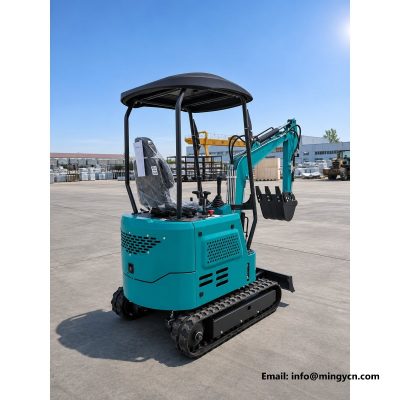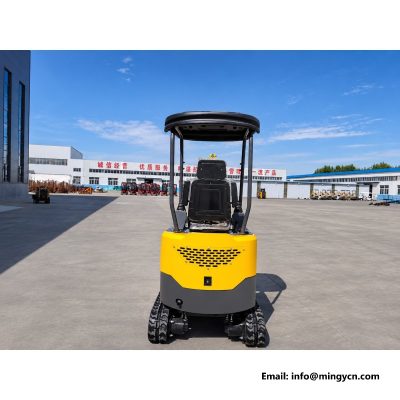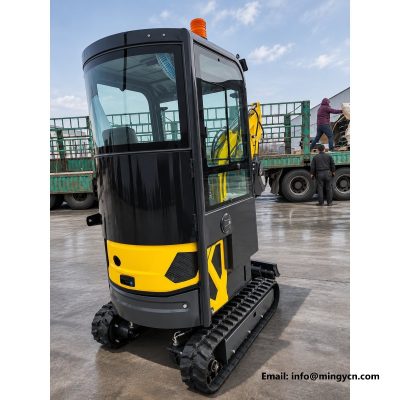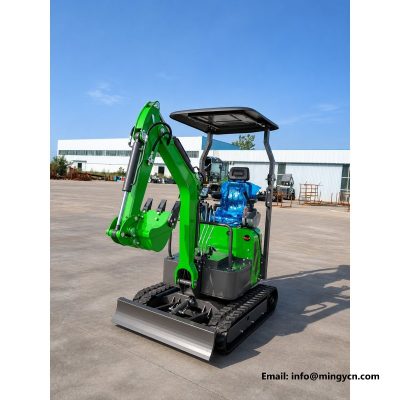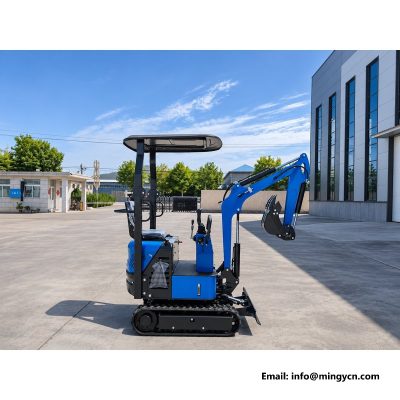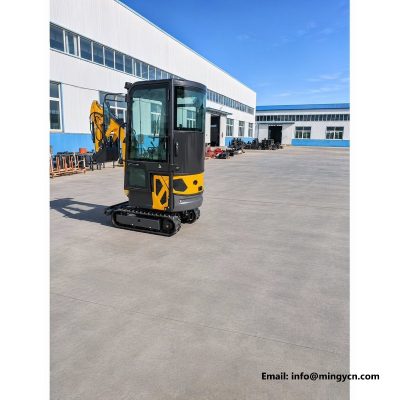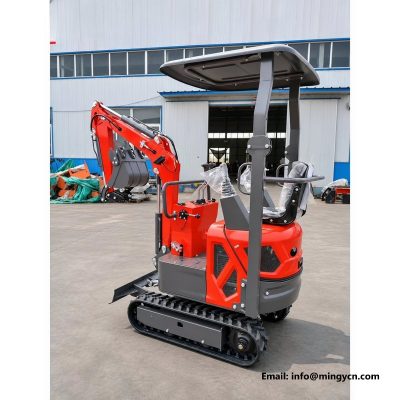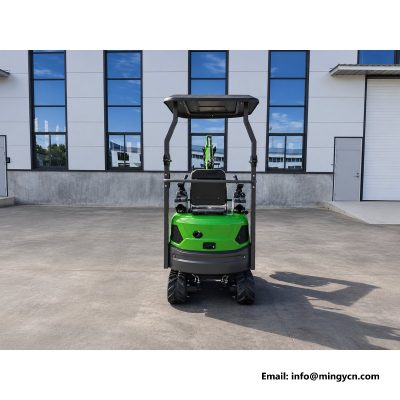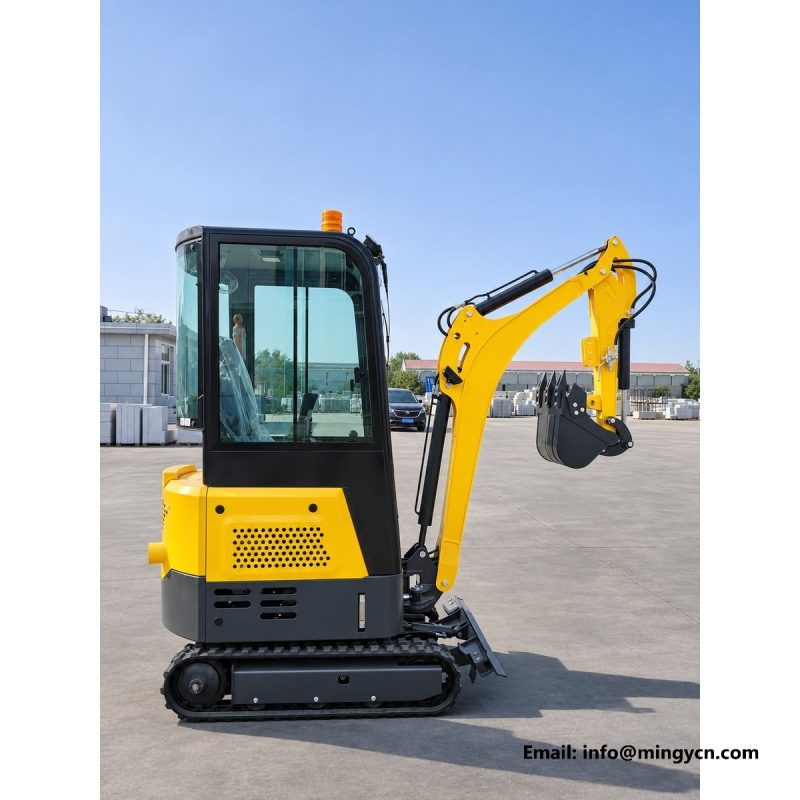
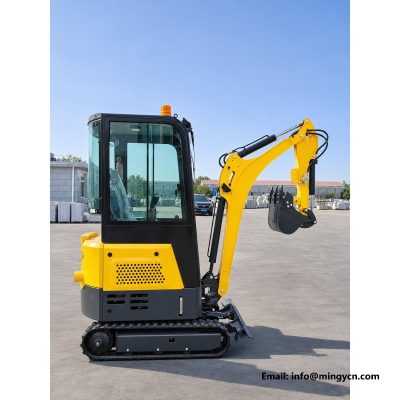
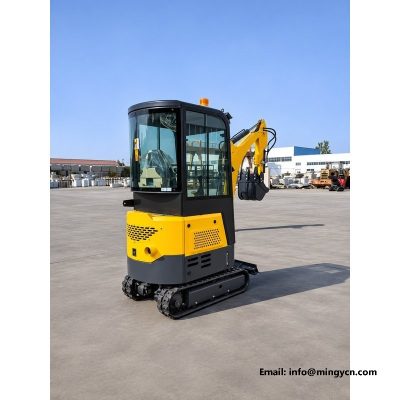
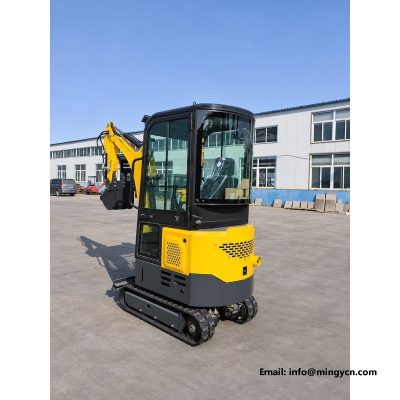
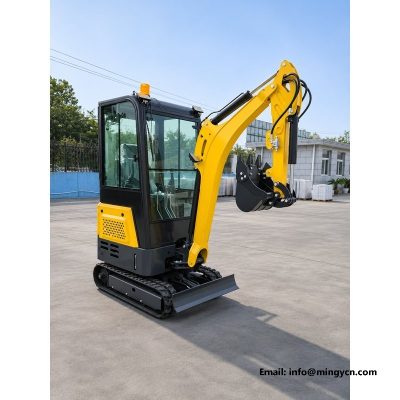
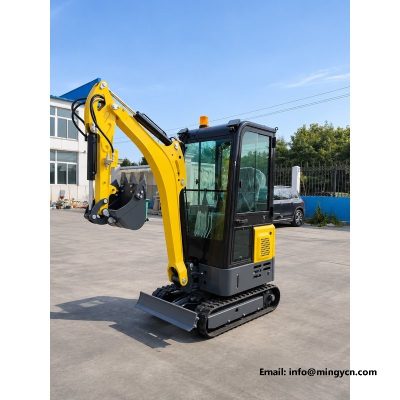
MY17C cab machine on the heavy 17 platform with sheet-metal bodywork.
The MY17C is the enclosed version of the largest machine below the three-tonne class in the MINGYI range. It brings together the heavy build of the 17 platform, with sheet-metal bodywork and a steel counterweight, and a glazed operator station that keeps an operator working through weather that would stop an open machine. For buyers who run machines year round in a cold or wet climate and who keep them for a long time, this is the configuration that makes the most sense. This page covers what the combination delivers and what it costs back.
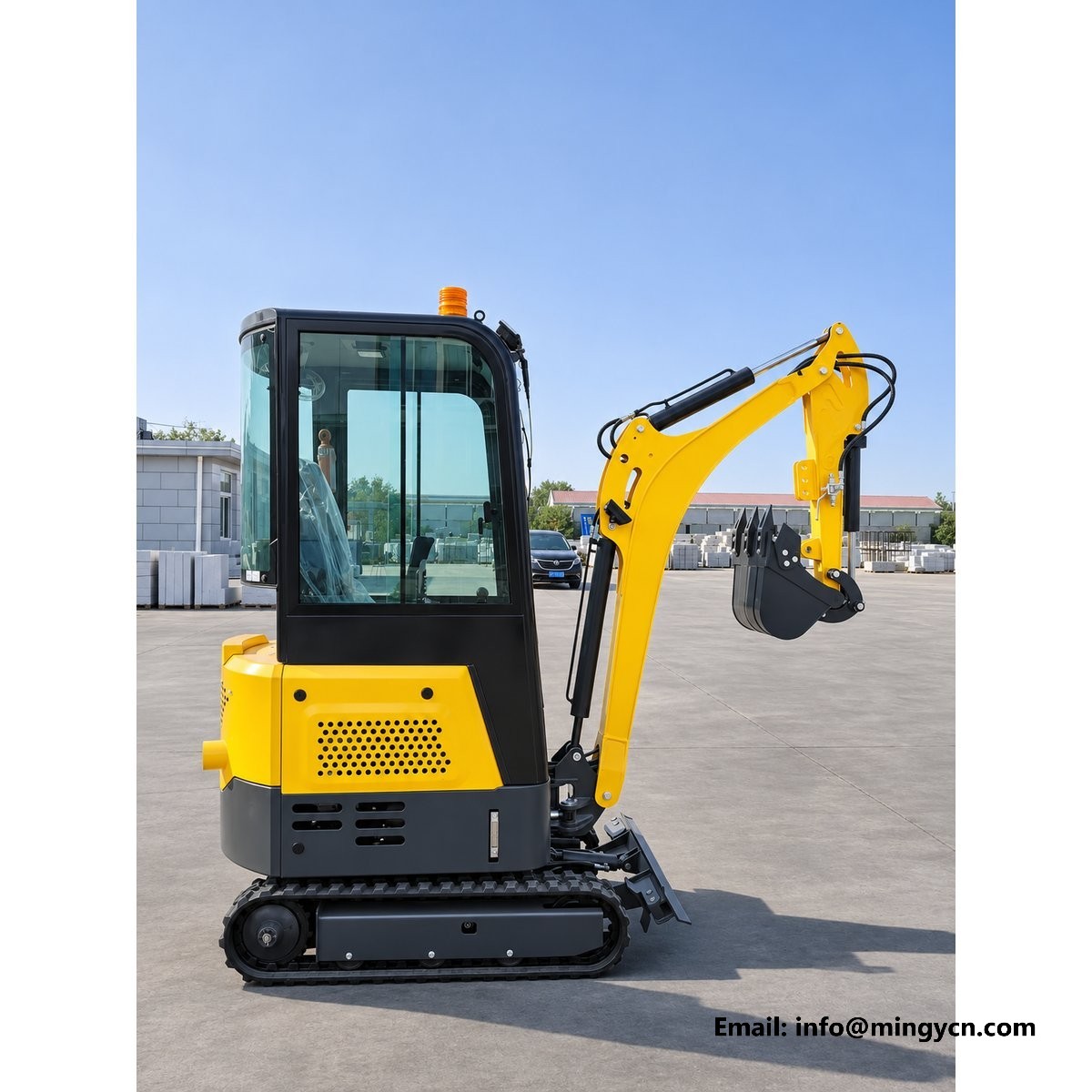
The 17 platform is specified with a steel counterweight and sheet-metal panels, which makes it heavier and more durable than the smaller models. Adding a cab to that base produces a machine that can be worked hard in poor conditions, which is exactly what a contractor in a northern market needs: ground that stays firm in winter, bodywork that survives being handled by third parties, and an operator who is not exposed to the weather. Each of those three is a separate decision, and this model is the only one in the range where all three are standard.
The cab raises the overall height of the machine, and on this platform it should be checked against the ways the machine will travel. If it goes into a container, confirm whether the cab can be shipped assembled or must be partly dismounted, and get the packed dimensions rather than the working dimensions. If it travels on a trailer, check the deck height and the ramps. If it works under structures, measure the lowest obstruction before the machine arrives, because a cab machine cannot be reduced in height after the fact.
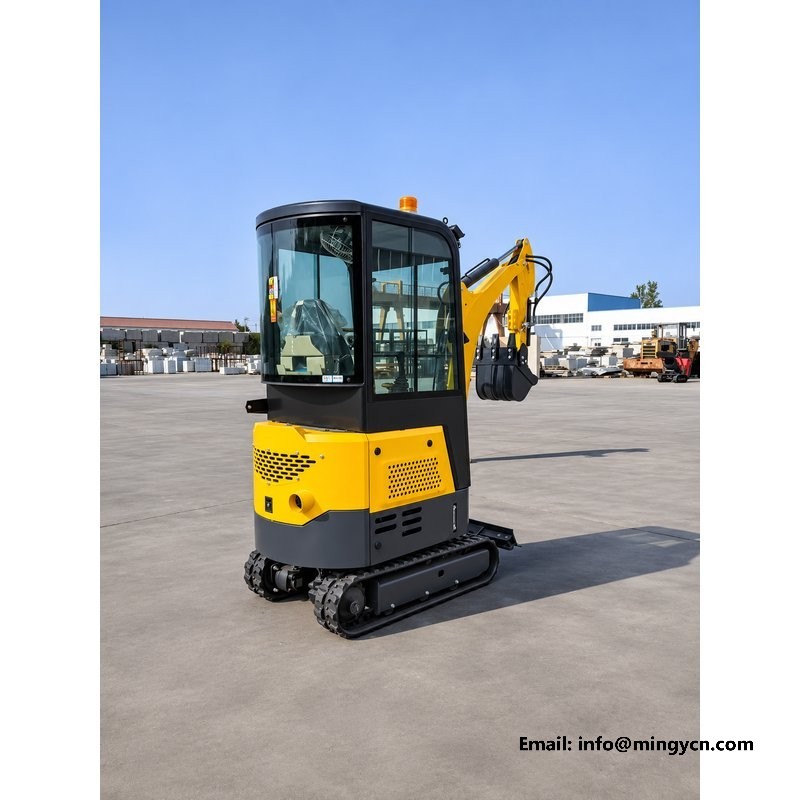
The control system is hydraulic pilot with joysticks. Inside a cab, the benefit compounds: the operator is not fighting wind, rain or noise, and the joysticks require only light movement, so a full shift leaves the operator able to work accurately in the last hour as well as the first. That has a direct commercial effect for a contractor paid by the job rather than the hour, and it is the reason cab machines command a higher day rate in most markets even where the open version is also available.
This machine sits against cabbed compact excavators from larger brands, and it competes on two arguments. First, the specification is honest: the counterweight is steel, the panels are metal, and the undercarriage is a proper rubber track with a grease tensioner. Second, the machine is straightforward to maintain without a dealer, which matters in markets where the nearest authorised workshop is a long drive away. Buyers who need a brand name for financing reasons will go elsewhere; buyers who need a machine that keeps working will not.
| Model | MY17C |
| Control | Hydraulic pilot joystick control |
| Hydraulic system | Domestic hydraulic components |
| Engine | Water-cooled diesel |
| Undercarriage | 180 x 41 x 72 mm rubber track, grease tensioner |
| Bodywork | Sheet-metal bonnet, steel counterweight, sheet-metal armrest console |
| Operator station | Enclosed cab with glazed front, wiper and opening side glass |
| Standard engine | Laidong 385 |
| Options | Heater, air conditioning, front glass guard, quick coupler |
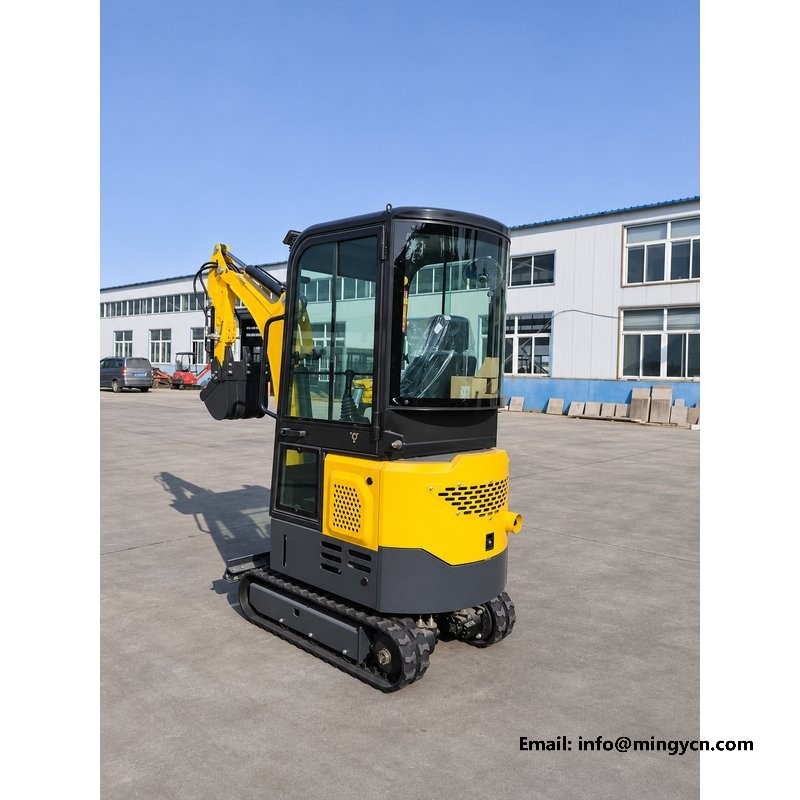
A cab machine working near trees, demolition or in a yard where material is dropped should carry a front glass guard, and that guard is far cheaper specified at the factory than fabricated later. For cold markets, confirm whether a heater is available and how it is plumbed into the cooling circuit, and ask about the door seal specification, because that is where cold air and water enter. For hot markets, confirm whether air conditioning can be fitted to this cab before ordering rather than after delivery.
Check every pane for chips and correct bonding, operate the wiper and washer, and open and close the side glass fully. Look for gaps at the corners of the door seal. Sit in the seat and verify the three sight lines that decide daily usability: bucket edge at full reach, right track when trenching, and the rear corner when slewing. Confirm both joysticks return to centre and every function stops. Test the heater if fitted. Record any rattle, because a rattle identified on delivery is a warranty item while one reported three months later usually is not.
Order spare track bolts, bucket teeth, an engine oil filter, a fuel filter and a hydraulic filter with the machine, and ask for the part numbers and the filter cross-reference list so consumables can be bought locally. Confirm that an English operator manual and a hydraulic schematic are in the crate. For a cab machine, also ask for the glass part numbers, since a broken side glass should be replaced with the correct laminated or toughened item rather than whatever fits.
Ordering and technical support
Email: sales@mingycn.com
LINE (ID): mingyicn
Tell us the trench width, ground conditions and attachments you need, and we will confirm the right configuration and shipping details.