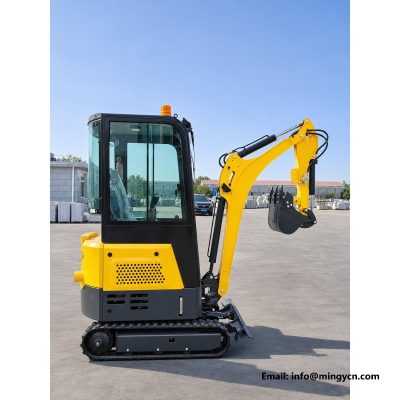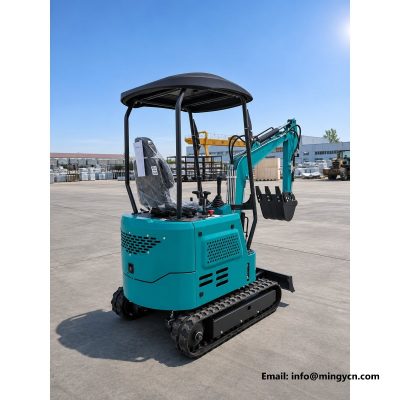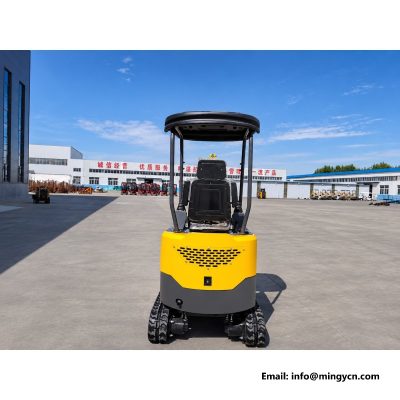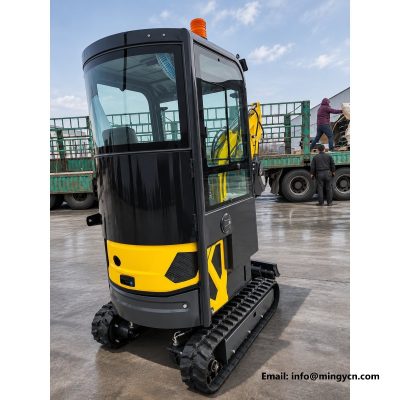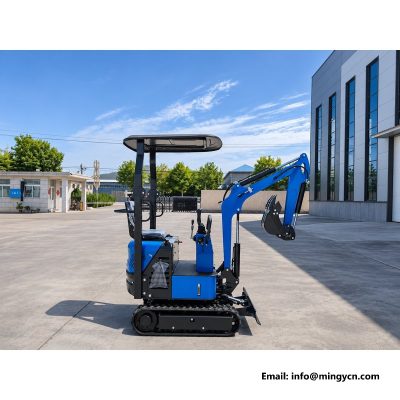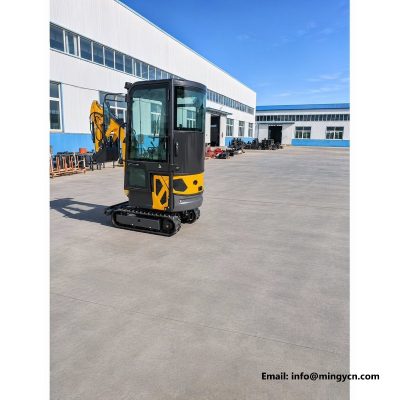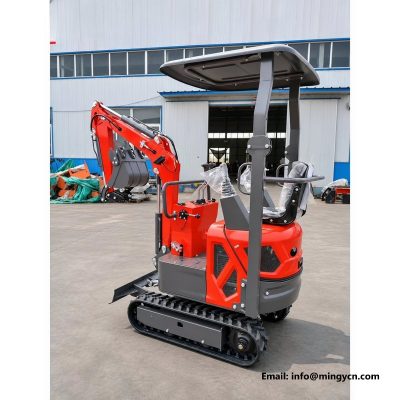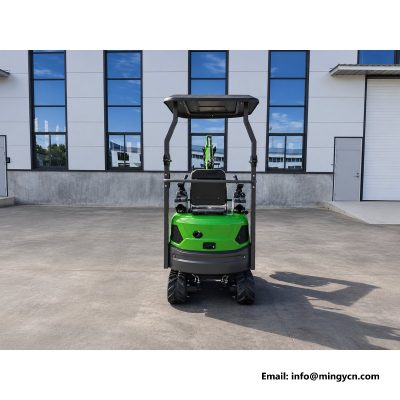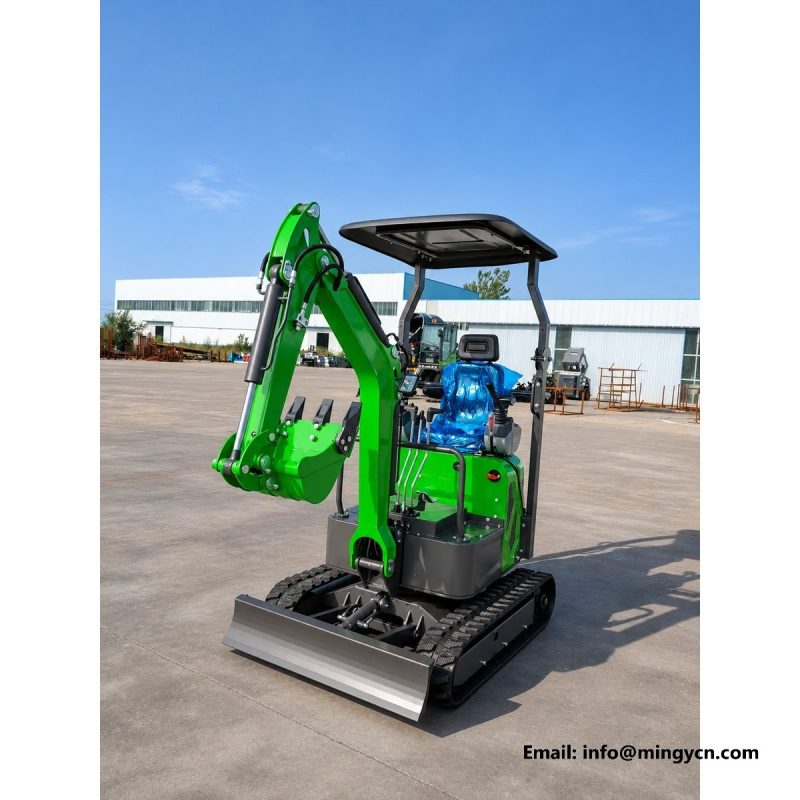
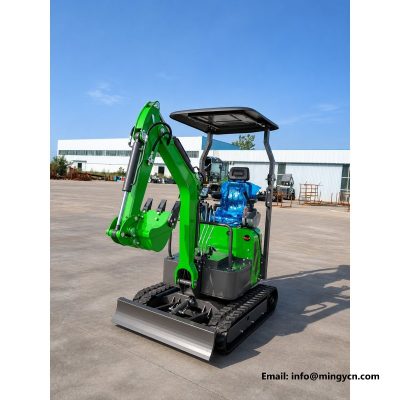
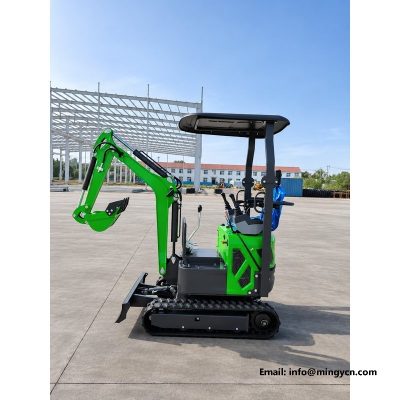
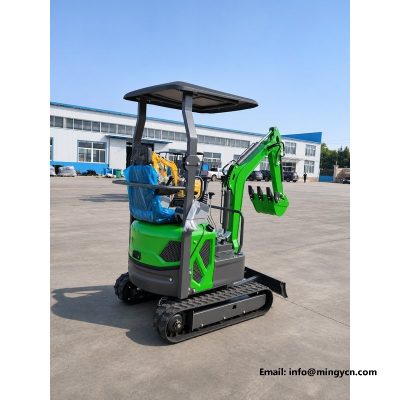
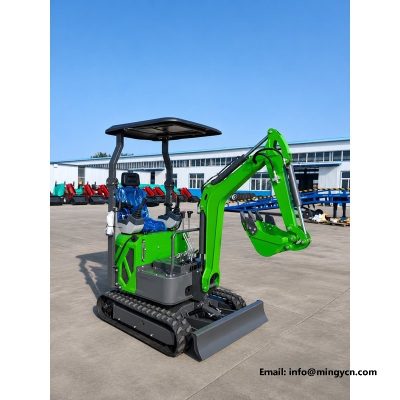
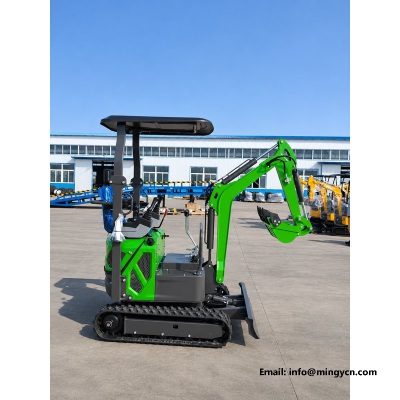
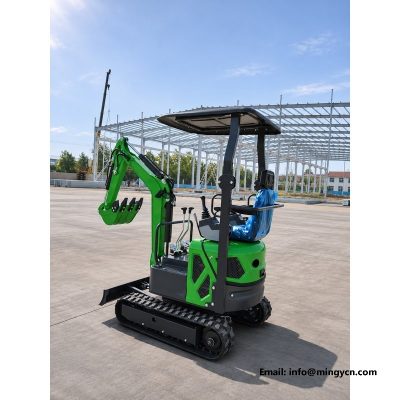
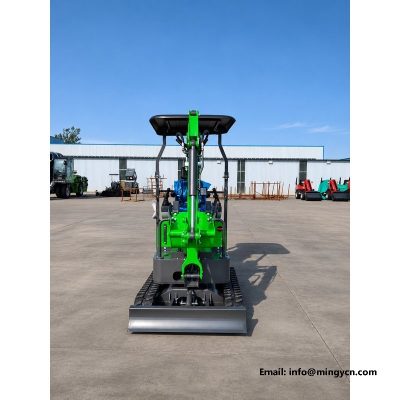
MY15 pilot-control mini excavator on a 200 x 41 x 72 mm rubber track undercarriage.
The MY15 is the first machine in the MINGYI range with a genuinely heavier undercarriage. The track is a 200 x 41 x 72 mm rubber track, which is wider and taller than the track on the smaller models, and this is the specification that decides what the machine can do: more ground contact, lower ground pressure, better stability with the boom at full reach, and a track that survives abrasive ground for longer. Everything else on the machine is built around that undercarriage. This page sets out the differences in practice, the features that are specific to this model, and how to inspect one on delivery.
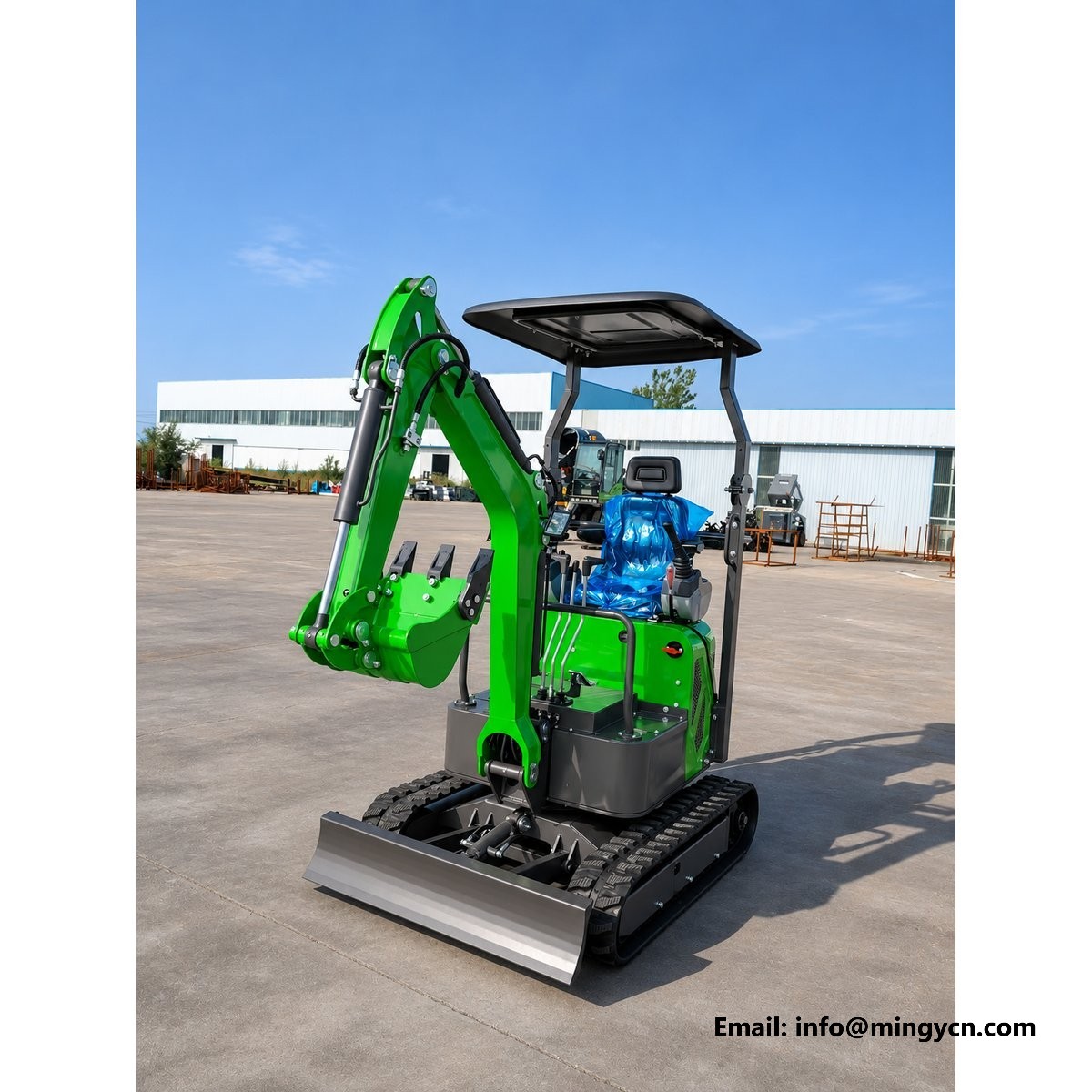
A wider, taller track spreads the weight of the machine over a larger footprint. On soft ground, that is the difference between crossing a lawn in spring and leaving ruts in it, and between working on a building site after rain and sinking. On firm ground, the benefit is stability: with the boom extended to the side, a machine on a narrow track feels like it is about to lift a track off the ground, while a machine on a 200 mm track stays planted. The taller track also carries more rubber, so it takes longer to wear through on gravel.
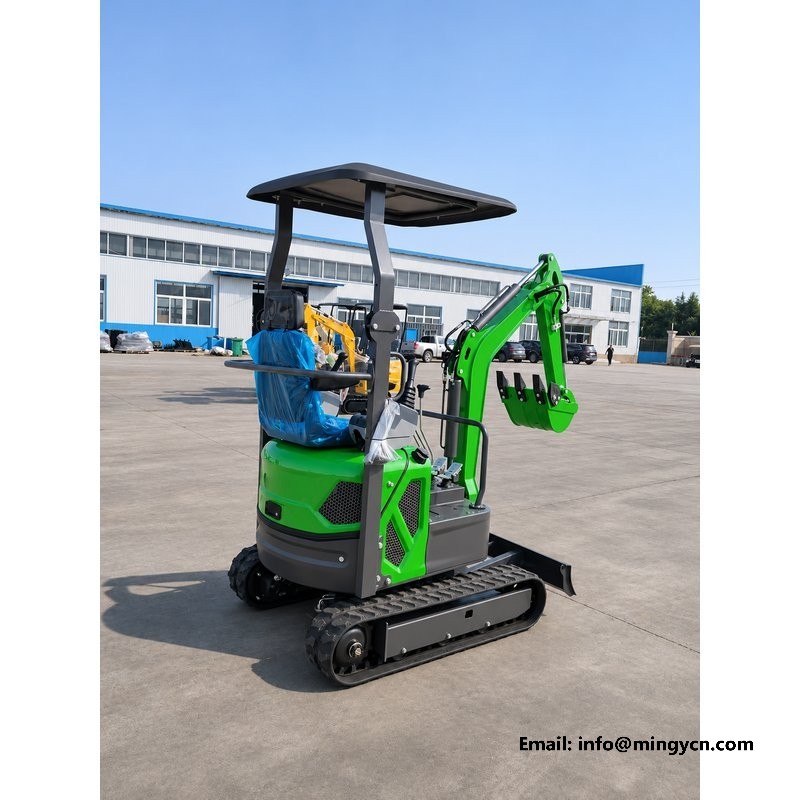
This machine uses a water-cooled diesel engine rather than an air-cooled unit. The practical difference is heat rejection: a water-cooled engine holds its operating temperature far more steadily during a long shift in a hot climate, and the radiator can be cleaned and serviced separately from the engine block. For a machine that will be run continuously rather than intermittently, that is the right choice. It does mean the radiator and the coolant system become maintenance items: keep the radiator core clear of dust and chaff, and check the coolant level and the hose clamps as part of the daily walk-around.
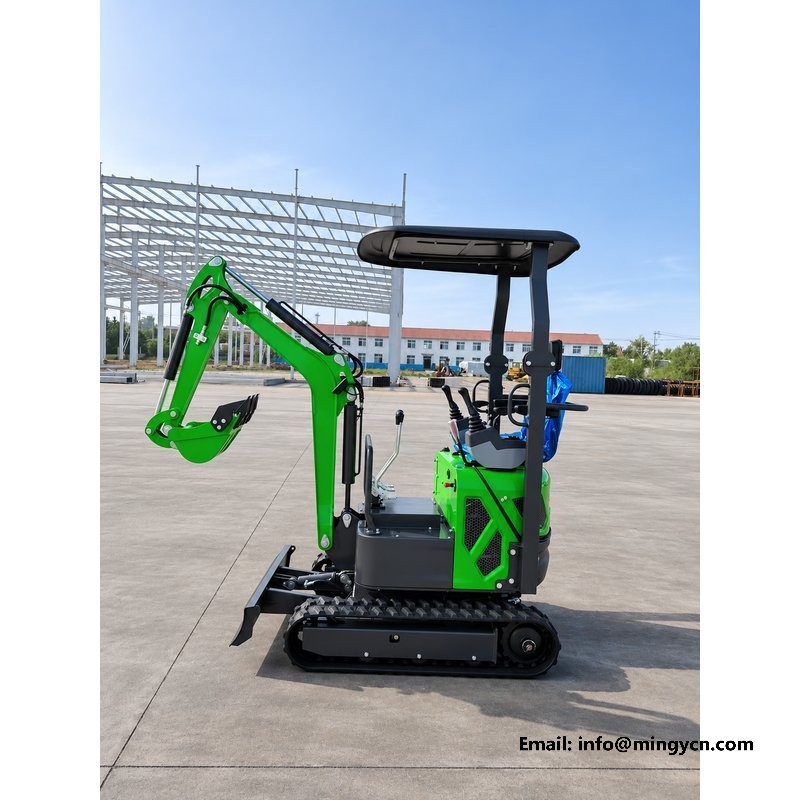
The MY15 is fitted with both hand levers and foot pedals for travel. An operator working a long trench will usually set the travel with the feet and keep both hands on the joysticks, which is the efficient way to track the machine along a line while grading. An operator loading a trailer or working in a tight corner will often prefer the hand levers, because they allow a short, precise movement without moving the feet. Having both means the operator chooses per task rather than per machine, and for a crew where different operators have different habits, that removes a daily argument.
The dozer blade on this model is built from two layers of steel rather than a single plate, which is aimed squarely at the way a compact excavator blade is actually used: back-blading to pull material into a trench, scraping a driveway, and levelling spoil. A single-plate blade on a machine of this weight distorts over time, and once the edge is bent it will not cut cleanly again. The heavier blade holds its shape, and the wear edge can be replaced when it is worn through rather than the whole blade being scrapped.
| Model | MY15 |
| Control | Hydraulic pilot joystick control, hand and foot travel |
| Hydraulic system | Gear pump, domestic hydraulic components |
| Engine | Water-cooled diesel |
| Undercarriage | 200 x 41 x 72 mm rubber track, grease tensioner |
| Dozer blade | Double-layer steel blade with replaceable wear edge |
| Operator station | Simple canopy with integrated armrest console |
| Standard engine | Kepu 192 |
| Engine options | Kepu 192 Stage V, Kepu 292, Briggs & Stratton X2100, Runtong R420D, Kubota D722, Kubota Z482, Youpu 2V80 |
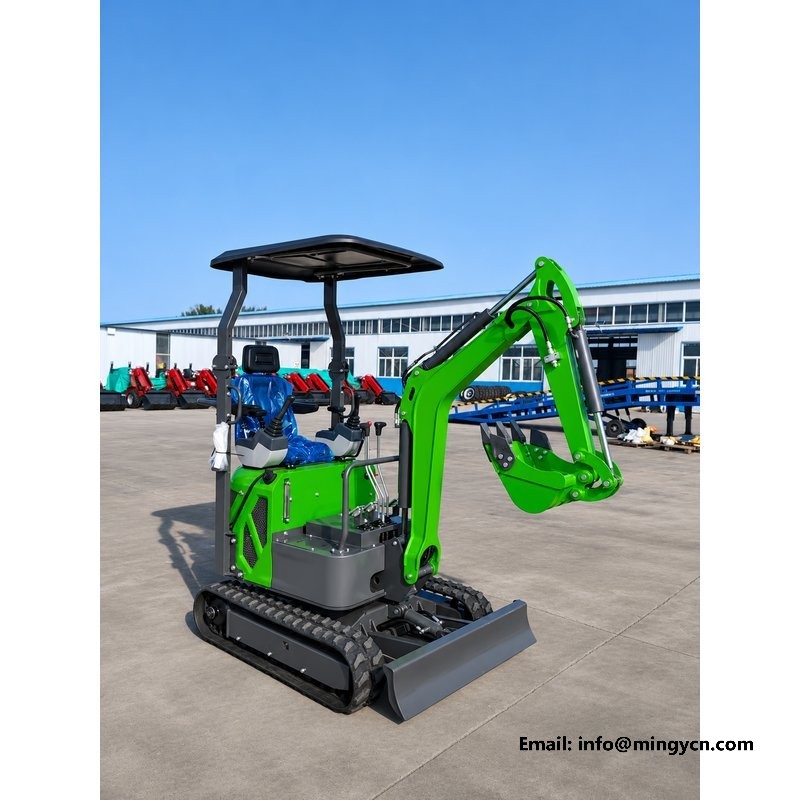
Rubber tracks on a machine of this weight will hold a moderate slope in dry conditions and will struggle on wet clay or loose gravel, regardless of the track width. The limit is not the engine but traction, and no specification sheet substitutes for trying it. When assessing a site, look at what the operator will do when the machine slides: with rubber tracks there is little warning before a slide starts, so working across a slope should be avoided in favour of working up and down it, with the dozer blade kept low as a brake.
On delivery, measure track tension on both sides after the machine has been run and parked on level ground, and confirm that both sides match. Check the dozer blade pivots for play and confirm the wear edge is bolted correctly. Inspect the radiator for packing material left from shipping and confirm the coolant is at the correct level. Run every function and confirm the pilot joysticks centre cleanly. Change the engine oil and filter after the running-in period, and check the hydraulic filter for metal at the same time.
Ordering and technical support
Email: sales@mingycn.com
LINE (ID): mingyicn
Tell us the trench width, ground conditions and attachments you need, and we will confirm the right configuration and shipping details.