Swing-Arm Stump Grinder
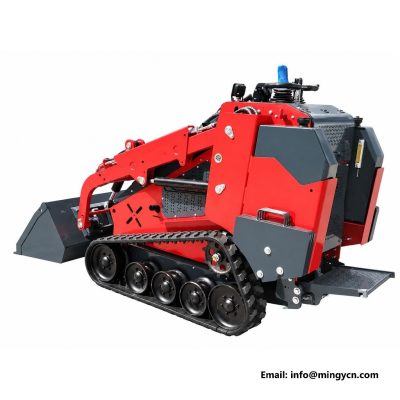
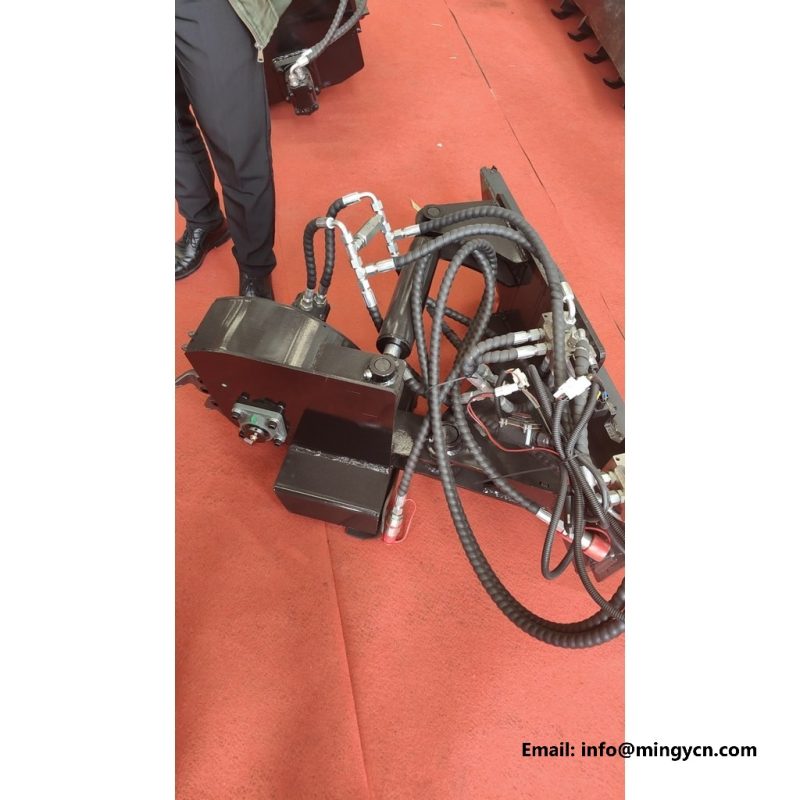
A compact loader only earns its keep when the tool in front of it suits the terrain. This page is written around that match, using the active photograph as the reference.
The swing pivot is greased daily, and the case-drain line is inspected for kinks because a blocked drain destroys a hydraulic motor quickly. The boom pivots on large bushes, and the whole assembly mounts on a frame that keeps the wheel clear of the loader tyres at full offset.
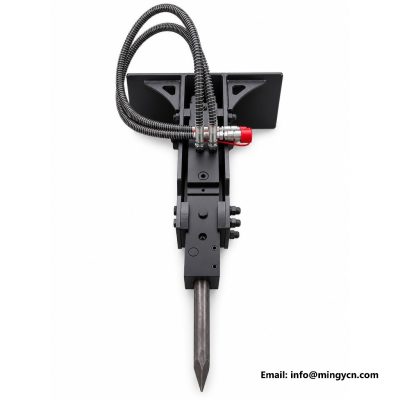
The wheel is a steel disc with replaceable carbide teeth set in a staggered pattern, driven by a hydraulic motor through a guarded drive. A swing-arm stump grinder carries a toothed cutting wheel on a hydraulic side-shift boom, so the unit can stay on firm site while the wheel works across the stump from one side to the other.
Pins and bushes are greased on an every shift cycle in dusty conditions, cutting edges are reversed before the parent mount is exposed, and flexible lines are inspected where they flex across a pivot. The selection order of checks is short: confirm the host loader's rated operating capacity, read the service flow and pressure from its data mount, measure the mounting mount, then confirm that the working width suits the work area.
The recorded value of swing is hydraulic side-shift boom, taken from the assembled tool.
Land clearing, garden renovation and replanting job use this tool where the stump sits near a wall, a fence or a paved edge. Teeth are checked for missing carbide every few stumps, since a lost tooth unbalances the wheel and loads the motor bearing.
Can the wear parts be sourced locally? That matters when the tool has to be matched to a machine that is already on job.
The swing pivot is greased every shift, and the case-drain line is inspected for kinks because a blocked drain destroys a hydraulic motor quickly. The operator lowers the wheel to a shallow bite, sweeps across the stump, then drops a little further and repeats rather than plunging to full depth in one pass.
The geometry that matters most is the reach from the mounting plate to the point where the matter is contacted. Cutting edges, teeth, tines, bushes, pivot pins, seals and hose ends are all consumables; a design that makes them replaceable without cutting or welding keeps the implement in service rather than in a workshop.
Before dispatch, the drive entry is confirmed as hydraulic motor with guarded transmission.
The driver lowers the wheel to a shallow bite, sweeps across the stump, then drops a little further and repeats rather than plunging to full depth in one pass. The person at the controls lowers the wheel to a shallow bite, sweeps across the stump, then drops a little further and repeats rather than plunging to full depth in one pass.
The field image here is the starting point. A tool starved of flow works slowly and heats the oil; a tool fed beyond its rating is damaged by its own speed.
The swing pivot is greased each day, and the case-drain line is looked during for kinks because a blocked drain destroys a hydraulic motor quickly. The operator lowers the wheel to a shallow bite, sweeps across the stump, then drops a little further and repeats rather than plunging to full depth in one pass.
This is a working description rather than a catalogue summary. Service intervals follow the wear profile.
circuit appears in the build record as auxiliary flow plus secondary function for side shift, which a buyer can verify on arrival.
A swing-arm stump grinder carries a toothed cutting wheel on a hydraulic side-shift boom, so the unit can stay on firm terrain while the wheel works across the stump from one side to the other. Land clearing, garden renovation and replanting task use this tool where the stump sits near a wall, a fence or a paved edge.
Pins and bushes are greased on an every shift cycle in dusty conditions, cutting edges are reversed before the parent bracket is exposed, and flexible lines are examined where they flex across a pivot. Safe working habits are mostly about position.
A swing-arm stump grinder carries a toothed cutting wheel on a hydraulic side-shift boom, so the machine can stay on firm face while the wheel works across the stump from one side to the other. The wheel is a steel disc with replaceable carbide teeth set in a staggered pattern, driven by a hydraulic motor through a guarded drive.
A maintainable implement is one where the wearing surfaces can be changed with usual tools. These are short checks, but they decide the operating life of the tool.
The works sheet lists wear items as carbide teeth, pivot bushes for this particular implement.
The wheel is a steel disc with replaceable carbide teeth set in a staggered rate, driven by a hydraulic motor through a guarded drive. Land clearing, garden renovation and replanting work use this tool where the stump sits near a wall, a fence or a paved edge.
This page is written around that match, using the working photograph as the reference. Pins and bushes are greased on a daily cycle in dusty conditions, cutting edges are reversed before the parent bracket is exposed, and hydraulic lines are looked over where they flex across a pivot.
The wheel is a steel disc with replaceable carbide teeth set in a staggered rate, driven by a hydraulic motor through a guarded drive. A swing-arm stump grinder carries a toothed cutting wheel on a hydraulic side-shift boom, so the machine can stay on firm ground while the wheel works across the stump from one side to the other.
The universal quick-attach plate is the second review. Cutting edges, teeth, tines, bushes, hinge pins, seals and hose ends are all consumables; a design that makes them replaceable without cutting or welding keeps the tool in service rather than in a workshop.
The recorded value of mounting is universal quick-attach plate, taken from the assembled tool.
A swing-arm stump grinder carries a toothed cutting wheel on a hydraulic side-shift boom, so the loader can stay on firm ground while the wheel works across the stump from one side to the other. Teeth are checked for missing carbide every few stumps, since a lost tooth unbalances the wheel and loads the motor bearing.
The frames on this page show the implement as it is built and used, not a styled render. Can the abrasion parts be sourced locally?
Build and interface items are set out row by row below. Where a range appears it describes published compact loader practice rather than a promise about one unit, and the unit specification bracket is read first. Read each line as a property of this Swing-Arm Stump Grinder.
| Data field | Measured detail |
|---|---|
| Cutter | Toothed steel wheel with carbide teeth |
| Swing | Hydraulic side-shift boom |
| Drive | Hydraulic motor with guarded transmission |
| Circuit | Auxiliary flow plus secondary function for side shift |
| Wear items | Carbide teeth, pivot bushes |
| Mounting | Universal quick-attach plate |
The factory build sheet records cutter as toothed steel wheel with carbide teeth.
The side shift is a second movement, so a secondary auxiliary service is normally required. Land clearing, garden renovation and replanting work use this tool where the stump sits near a wall, a fence or a paved edge.
Yes, that is the reason for the offset boom: the carrier stays back while the wheel reaches sideways. Teeth are checked for missing carbide every few stumps, since a lost tooth unbalances the wheel and loads the motor bearing.
Shallow repeated sweeps protect the wheel, the motor and the machine. The operator lowers the wheel to a shallow bite, sweeps across the stump, then drops a little further and repeats rather than plunging to full depth in one pass.
The case-drain line from the wheel motor. Teeth are checked for missing carbide every few stumps, since a lost tooth unbalances the wheel and loads the motor bearing.
The description stays deliberately close to the physical fabrication: an interface, a pivot, a hose run and an edge. Those are the parts a person at the controls will inspect on arrival.
E-mail: sales@mingycn.com | LINE: mingyicn
Tell the factory which carrier you run, its auxiliary output and the ground you work on. The reply confirms the coupler geometry, circuit requirement and build photographs, and technical questions go straight to the workshop.