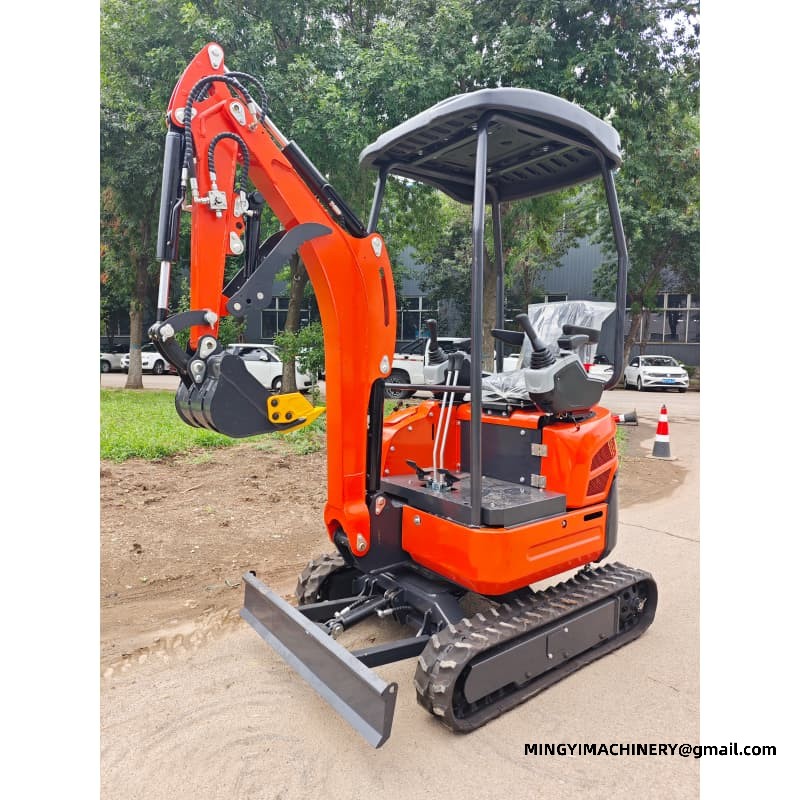
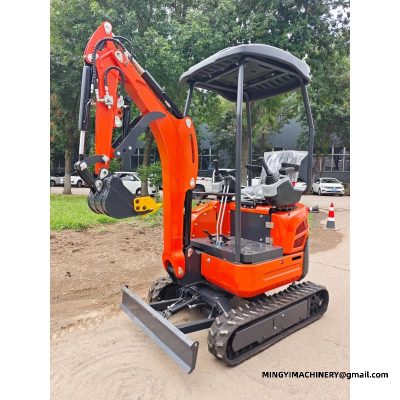
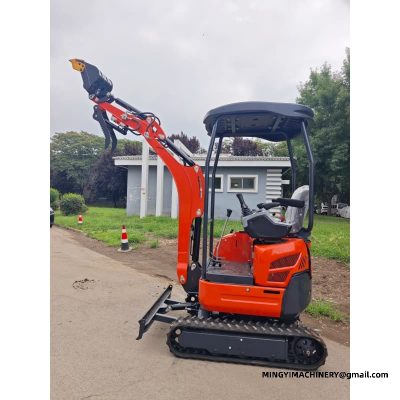
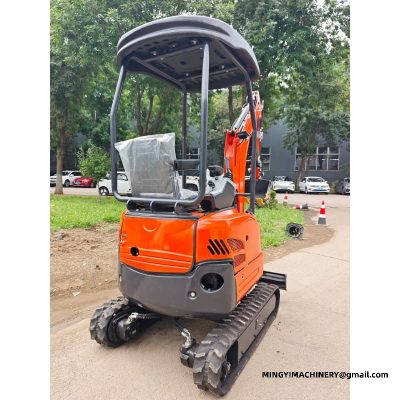
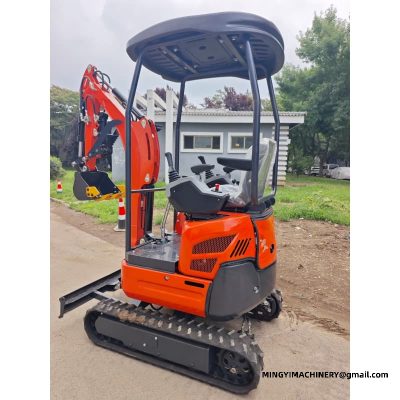
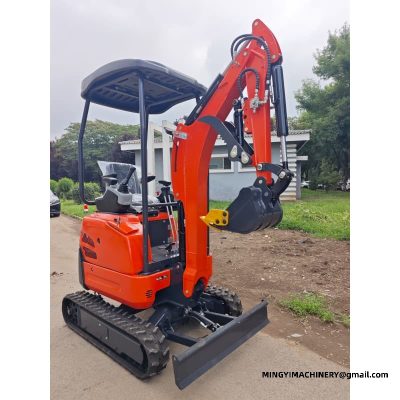
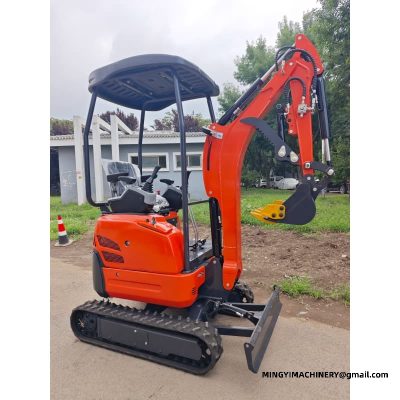
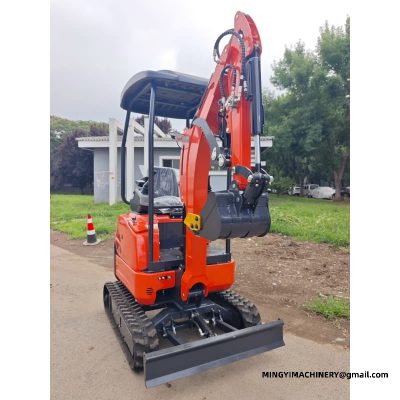
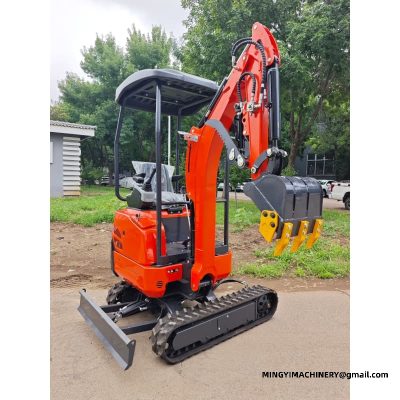
Urban sites bring constraints that do not appear on open ground: limited space, passing pedestrians, and neighbours who notice noise and dust.
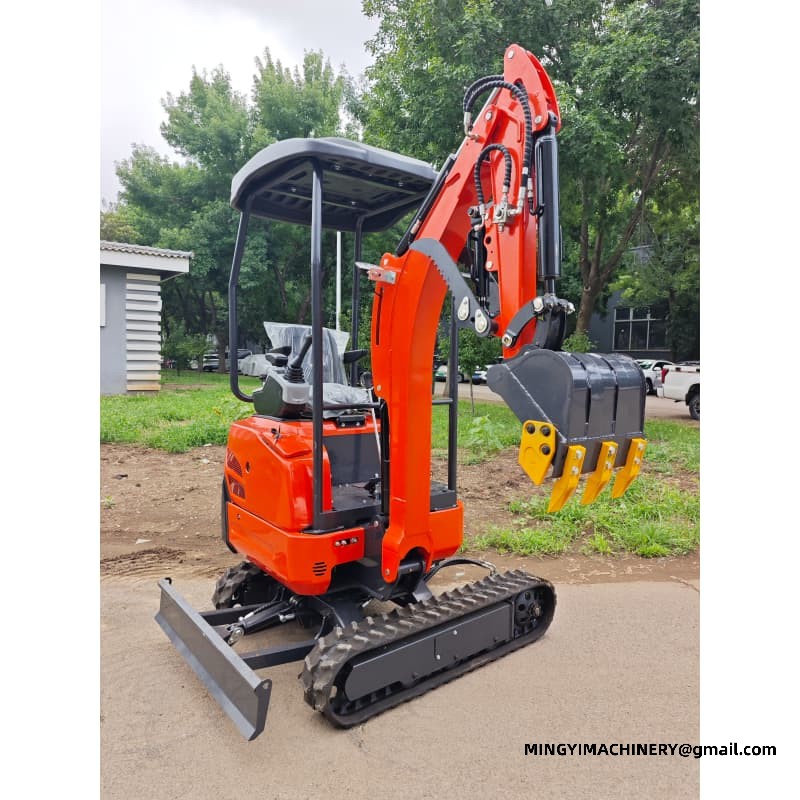
A small crawler excavator is chosen for this work because it can complete a city job within a narrow footprint, while a cab or canopy keeps the operator protected through the shift.
Working small sites in built-up areas
Front gardens, courtyards, service yards and footpath works are all jobs where a compact crawler fits between structures and finishes the excavation without damaging the surroundings.
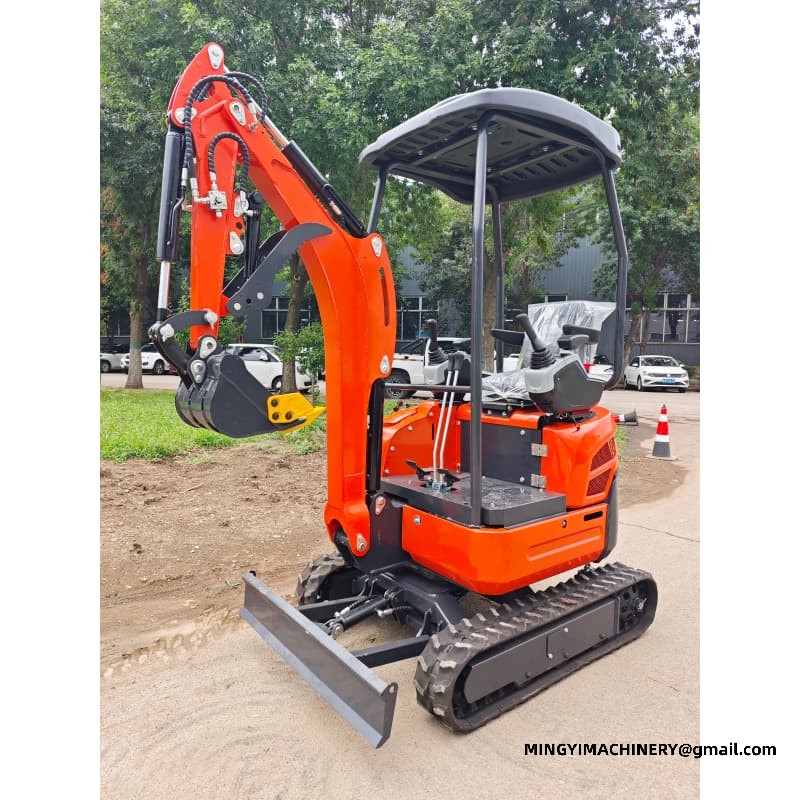
A short or zero tail swing keeps the rear of the machine inside the site boundary, which matters where a wall, a shop front or a parked vehicle sits along the edge.
Reducing disturbance on residential and commercial sites
Rubber tracks cross paving, decking and setts without leaving the deep marks that steel tracks make, so less reinstatement is needed at the end of the job.
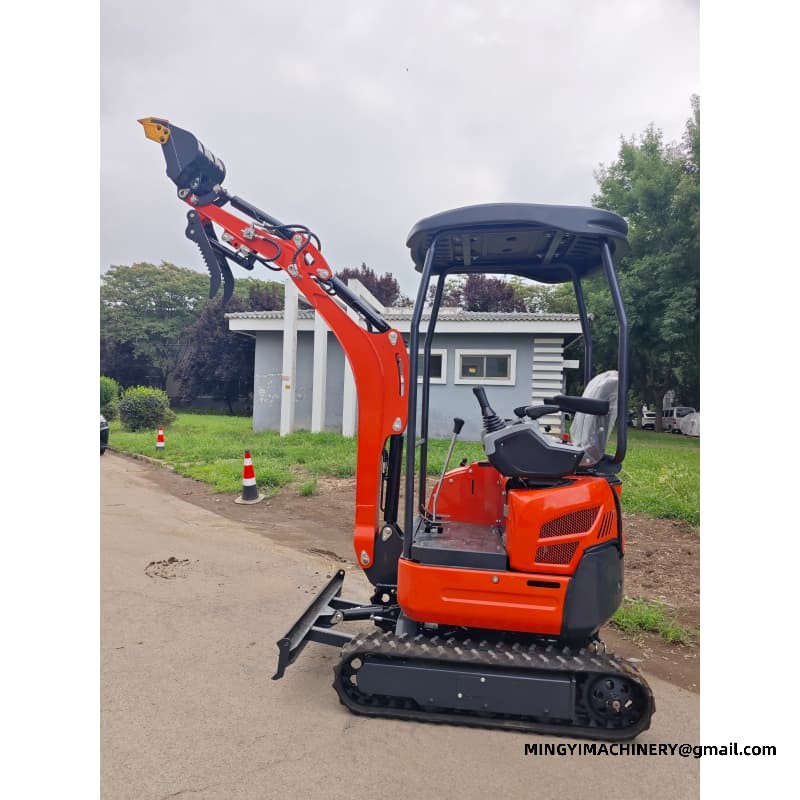
Attachments are chosen to keep the work compact: a narrow bucket, a breaker hammer for paved surfaces and a compaction wheel for closing the excavation.
Because these machines are built to order, the tail swing, the track type, the cab form and the attachment list are agreed before assembly starts.
Working near live services with small crawler excavator for urban work The risk on utility work is not machine power but machine placement. The excavator that fits the working width leaves the surrounding ground undisturbed, which keeps the trench stable and the reinstatement small. Utility crews specify this class of machine with a narrow bucket and good visibility for exactly this reason: the machine has to stop at the service, not at the edge of the operator's view. Export packing and shipping of small crawler excavator for urban work Machines leave the factory prepared for container or flat rack shipment. The unit in daily use is normally shipped with the attachment set and the spare parts list agreed in advance so the container is planned once. Buyers who import regularly plan the spare parts with the machine. A machine of this size ordered with a wearing-parts kit arrives ready to work rather than ready to wait for the first service interval. Boom configuration for small crawler excavator for urban work A swing boom lets the machine dig parallel to its tracks without repositioning, which is what makes trenching beside a wall or a fence practical. On the equipment on site this is often the option that decides whether a job is possible at all. Detachable boom sections are used where transport length matters. The machine itself that has to travel on a standard trailer can be built so the arm comes off for the road and goes back on at the site. Working on slopes and uneven ground with small crawler excavator for urban work Slope work is a stability question before it is a traction question. Knowing the gradient the model in question is rated for, and working across rather than straight up where the ground allows, removes most of the risk. Planning the direction of travel helps. Working so that the machine in that duty is stable under load and not required to turn on a slope is a decision made before the job starts, not a correction made during it. Attachments that turn small crawler excavator for urban work into several machines The base machine is a carrier; the tool on the end of the arm decides the task. The unit on the job fitted with a toothed bucket digs, and the same machine with a breaker, an auger or a grab does work that would otherwise need a second unit on site. Most of the daily variety on a machine built for the work comes from the attachment rack rather than from the machine itself. Bucket, breaker, auger, ripper, rake and grab cover the large majority of the work a contractor will see. Running small crawler excavator for urban work in a rental fleet Rental fleets buy for utilisation, not for a single job. The equipment in service with a quick coupler and a common attachment standard is hired more often because it suits more of the calls that come in. Fleet buyers also weigh transport. The excavator that a customer can tow on a normal licence and a standard trailer is a hire that does not need a delivery truck, which changes how often it goes out. Operator technique for this class of machine Output on a compact machine comes from placement rather than power. An experienced operator keeps the unit in daily use working inside the swing arc, positions once and digs a full run instead of repositioning for every bucket. Stability is the third. A machine of this size working across the tracks rather than over the corners keeps the machine steady and the undercarriage loaded evenly, which shows up as track life at the end of the season. Acceptance checks when the equipment on site arrives Delivery day is the best time to find a problem. Checking the specification against the order, the fluid levels, the fasteners and any transport damage while the model in question is still on the trailer is faster than claiming later. Documentation should arrive with the machine. Parts list, service schedule and any certificates for the machine itself are what the workshop needs later, and they are much easier to obtain at delivery than in month six. Getting the machine in that duty through a narrow gap The first question on most job lists is whether the machine can reach the work at all. The unit on the job is chosen against the narrowest point on the route - a garden gate, a doorway, a gap between two walls - because a machine that arrives and then cannot pass loses a day, not an hour. Access decides the machine before output does. With a machine built for the work the limiting dimension is usually the widest point on the way in, so measuring the gate, the corridor and the turning space first saves a wasted delivery and a second visit. Municipal and public works with the equipment in service Municipal crews work on streets, footpaths and parks where the public is present. The excavator is specified because it occupies little space, works inside a small exclusion zone and can be moved on a standard trailer. Noise and surface protection matter on public work. This class of machine on rubber tracks across paving, with a sealed cab for the operator, suits the conditions better than a larger tracked machine. Trailering and moving the unit in daily use Loading practice matters as much as the numbers. A machine of this size is driven up ramps under its own power with the boom lowered and the tracks aligned, and secured at the points the manufacturer specifies. Detachable components reduce transport length. The equipment on site built with a removable arm section or a folding step fits a shorter trailer and may avoid an oversize movement permit. Specification data for the machine itself Where the model in question is being specified for a job list, the table below gives the factory figures that matter most: what the machine weighs, how deep and how far it works, and what it measures on a trailer. These are the reference figures for the machine in that duty. MINGYI confirms the final build sheet, including engine and attachment choices, against the destination and the job list before production. Distributors and rental fleets usually need the machine to look like theirs. Paint, decals, seat colour and attachment branding can be specified on the unit on the job at build time rather than applied after import. Customisation also covers the specification sheet. A fleet buyer may want every machine built for the work delivered with the same coupler, the same engine and the same tool kit so training and parts stock stay simple.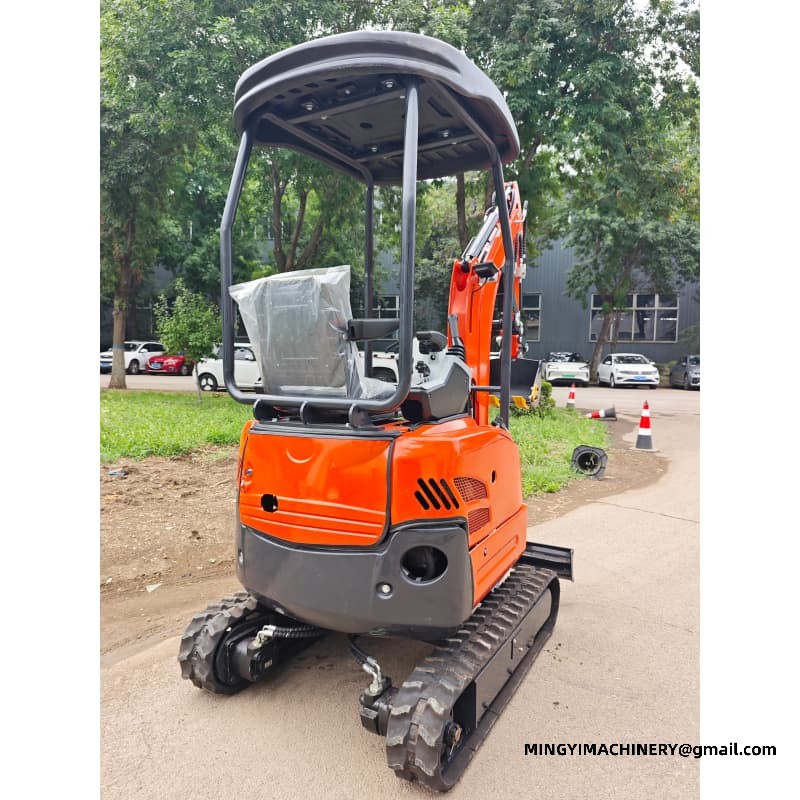
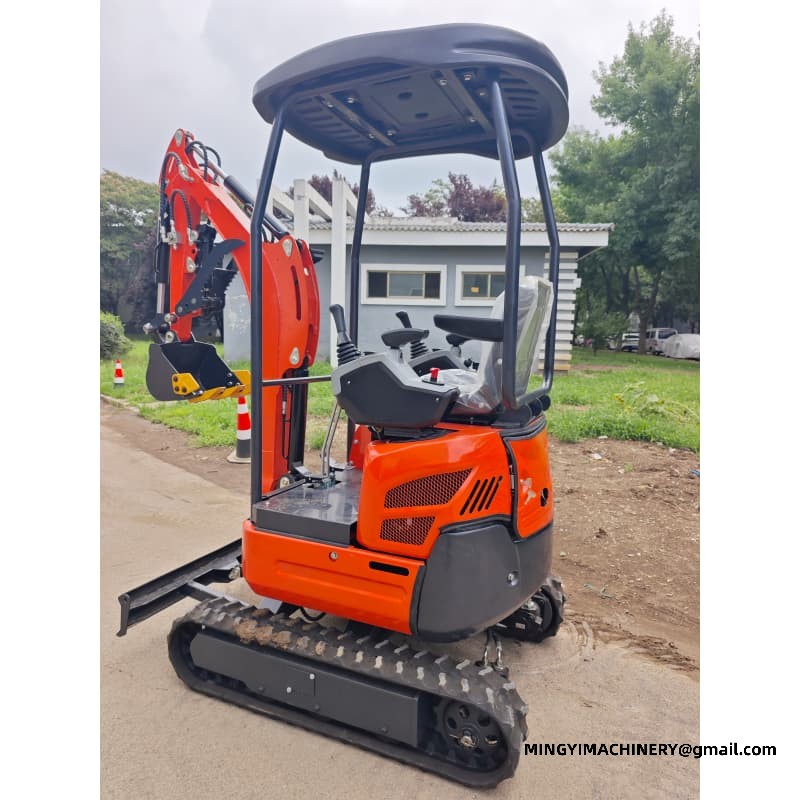
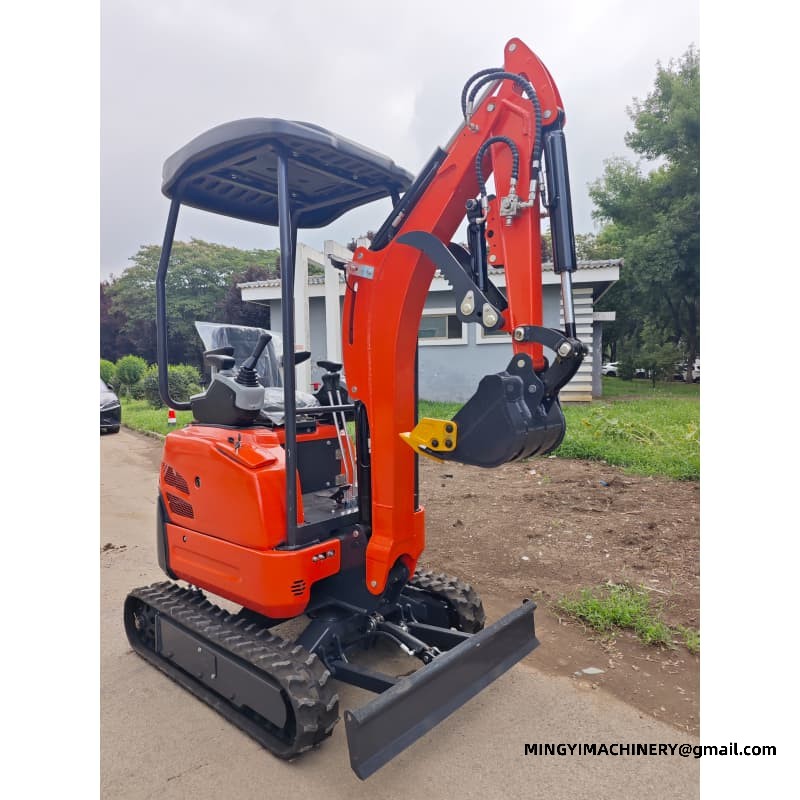
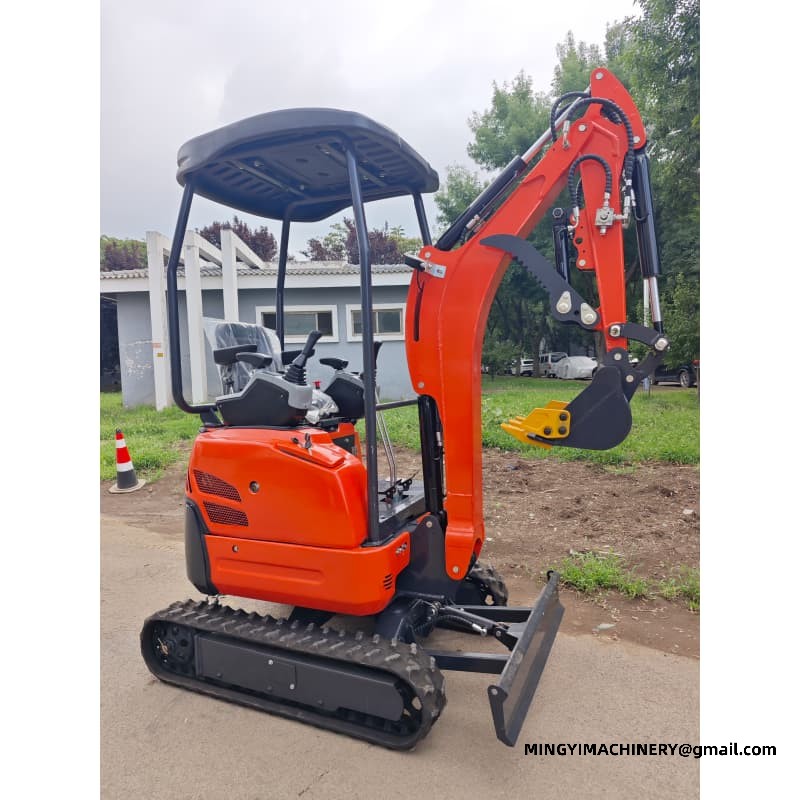
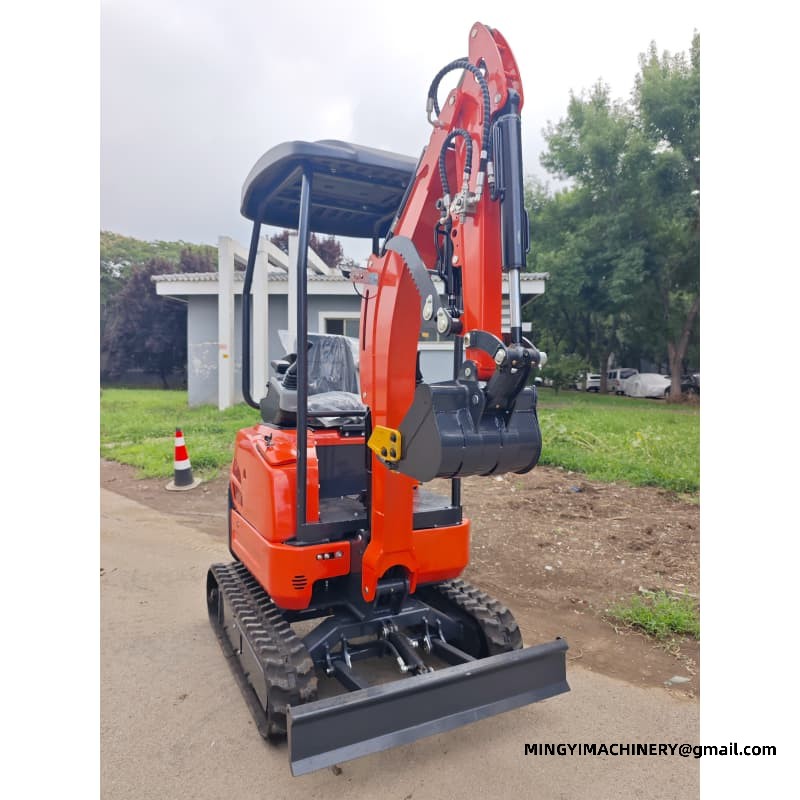
Reference specification — mini excavator range 15W 09L 12L 15L Operating weight 1400 kg (3086.47 lb) 1100 kg (2425.08 lb) 1200 kg (2645.55 lb) 1400 kg (3086.47 lb) Transport size (L×W×H) 2200 × 930 × 2250 mm 2300 × 720 × 1870 mm 2200 × 930 × 2250 mm 2200 × 930 × 2250 mm Max digging depth 1630 mm (64.17 in) 1400 mm (55.12 in) 1700 mm (66.93 in) 1700 mm (66.93 in) Max digging height 2750 mm (108.27 in) 2800 mm (110.24 in) 2600 mm (102.36 in) 2750 mm (108.27 in) Max dumping height 1960 mm (77.17 in) 1880 mm (74.02 in) 1800 mm (70.87 in) 1960 mm (77.17 in) Max digging radius 2900 mm (114.17 in) 2490 mm (98.03 in) 2900 mm (114.17 in) 2900 mm (114.17 in) Max digging distance 2100 mm (82.68 in) 2000 mm (78.74 in) 2300 mm (90.55 in) 2300 mm (90.55 in) Minimum turning radius 1300 mm (51.18 in) 1400 mm (55.12 in) 1450 mm (57.09 in) 1450 mm (57.09 in) Travel speed 3 km/h (1.86 mph) 3 km/h (1.86 mph) 3 km/h (1.86 mph) 3 km/h (1.86 mph) Gradeability 30° 30° 30° 30° Fuel consumption 1-1.3 L/h (0.264—0.343 gal) 1-1.3 L/h (0.264—0.343 gal) 1-1.3 L/h (0.264—0.343 gal) 1-1.3 L/h (0.264—0.343 gal) Fuel tank capacity 10 L (2.64 gal) 8 L (2.11 gal) 10 L (2.64 gal) 10 L (2.64 gal) Hydraulic oil tank 16 L (4.23 gal) 16 L (4.23 gal) 16 L (4.23 gal) 16 L (4.23 gal) Dozer blade lift height 180 mm (7.09 in) 180 mm (7.09 in) 180 mm (7.09 in) 180 mm (7.09 in) Dozer blade drop depth 210 mm (8.27 in) 210 mm (8.27 in) 210 mm (8.27 in) 210 mm (8.27 in)
Q. What is the equipment in service?
A. The compact class exists for the jobs in between - too much for hand tools, too tight or too short for a full-size machine. Trenching on Monday, loading and grading through the week, fence posts and drainage to finish - the attachment set specifications the work. MINGYI builds the 08, 12 and 18 models covering the 0.8 to 6 tonne class, and the excavator is where that range meets urban work.
Q. Where does the compact class stop making sense?
A. When the jobs need full-size reach or mass digging for weeks on end - within its envelope, though, the compact machine holds a work rate that surprises first-time buyers.
Q. Does MINGYI supply attachments with the machine?
A. Yes - buckets, breakers, augers, rakes and the rest of the working set ship with the carrier, matched to the hydraulic flow and the coupler. For urban work the package is confirmed on the build sheet, so machine and tools arrive together and start work together.
Planning the season around this class of machine
Seasonal work rewards a machine that can change duty. Through the year the unit in daily use may move from one task to another, and the attachment list should be chosen for the whole year rather than for the first job.
Packing, loading and shipment of a machine of this size
How a machine travels decides how it starts on arrival. Securing the equipment on site against movement, protecting the exposed cylinders and keeping the battery and fluids in the right state for the voyage all belong to the packing list.
Hot, humid and dusty conditions around the machine itself
Dust is the enemy of every rotating joint. Keeping the radiator and the air intake of the model in question clean, and cleaning them before they are blocked rather than after, is what separates a machine that lasts from one that overheats.
E-mail : sales@mingycn.com
LINE ( ID ): mingyicn
Common operator mistakes with small crawler excavator for urban work
Ignoring a small change in sound or feel is the mistake that turns a service item into a repair, and reporting it early is the habit worth building.
Filling the tank at the end of the shift rather than the start reduces condensation in the tank overnight.
Leaving the machine idling for long periods adds hours without adding output, and it is the easiest waste to remove.
Fire prevention and emergency steps for small crawler excavator for urban work
Most machine fires start with heat, oil and a dry screen of debris, and the first defence is a clean engine bay.
Related pages
mini excavator for small contractors · mini digger for irrigation trenches · Construction Wheel Loader: Site Loading, Backfill, Hardstands · Mini Excavators








