
mini excavator export crate packing and yard inspection
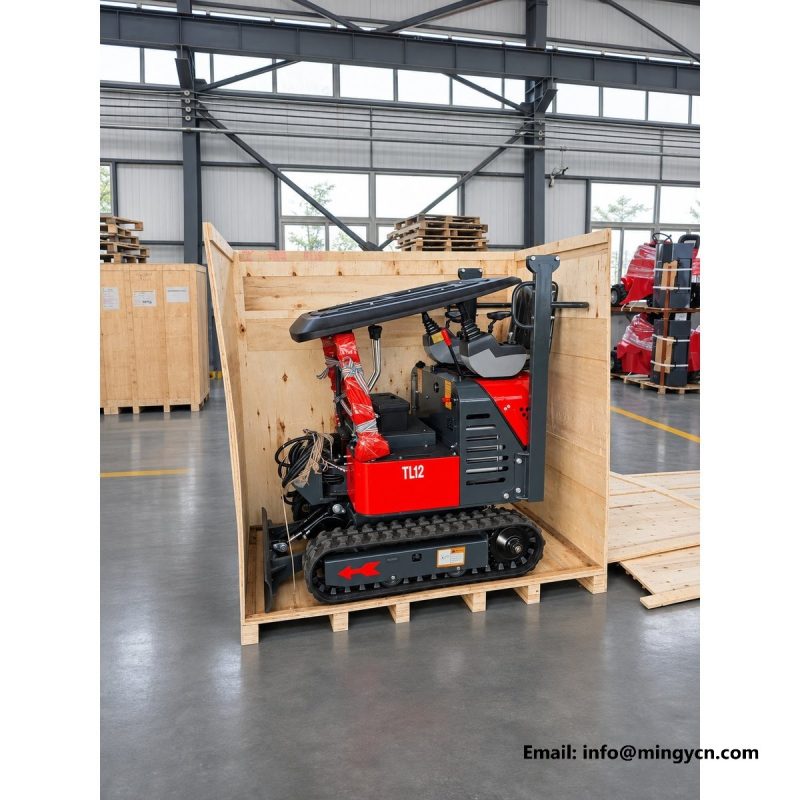
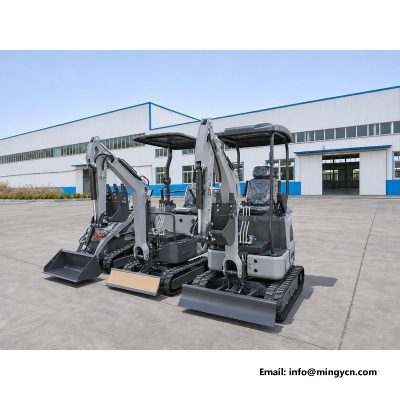
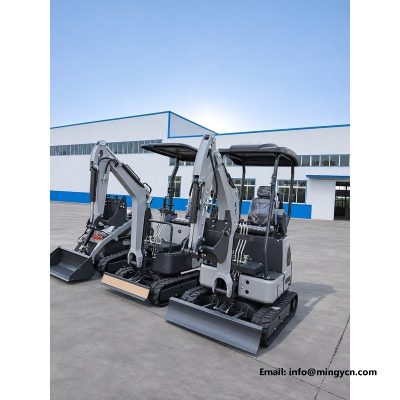
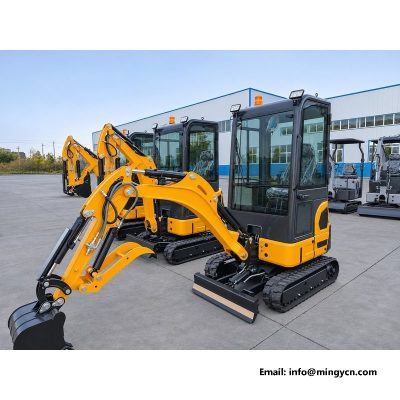
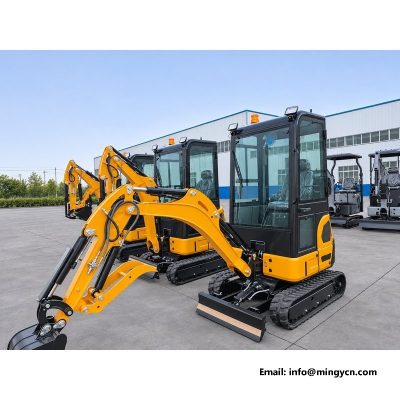
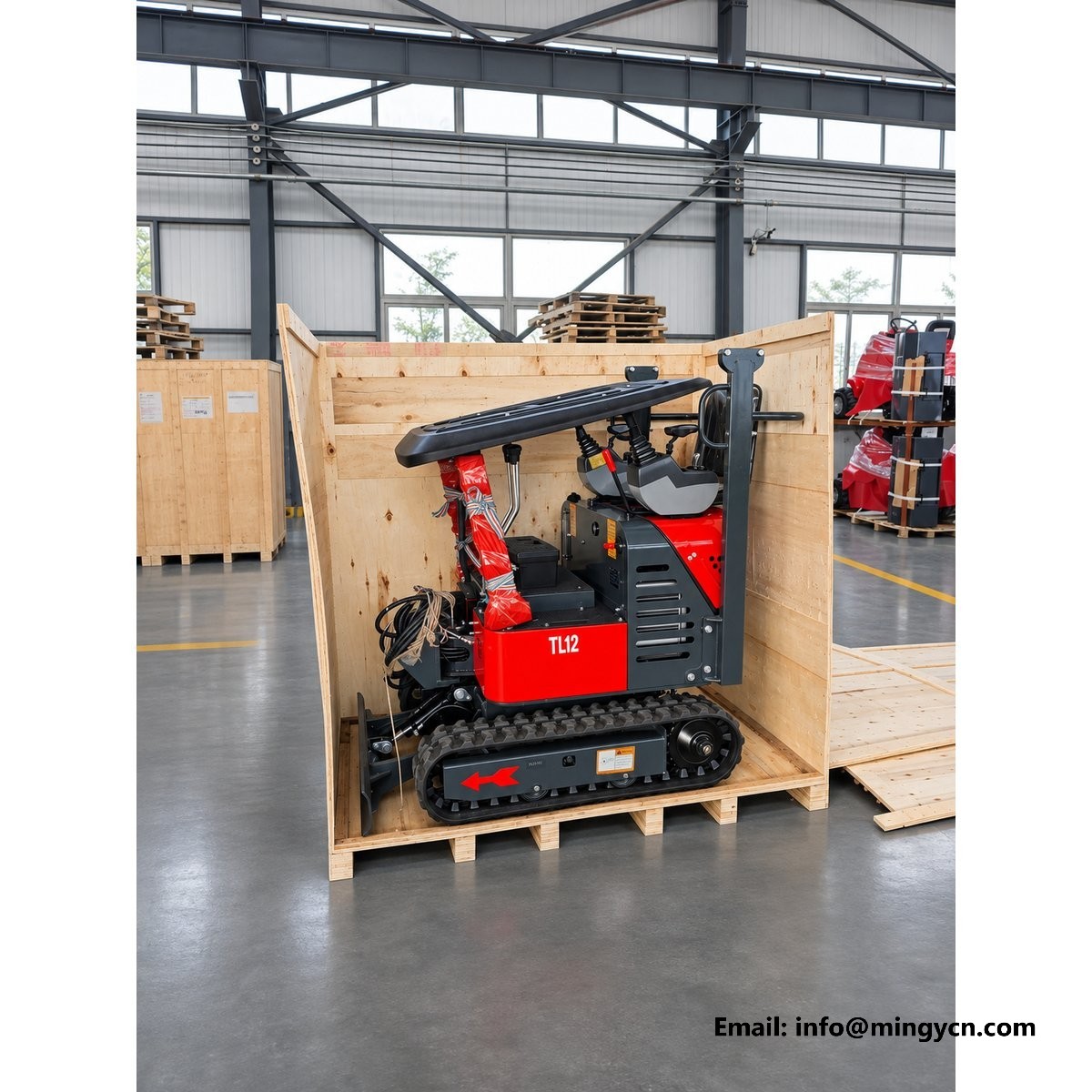
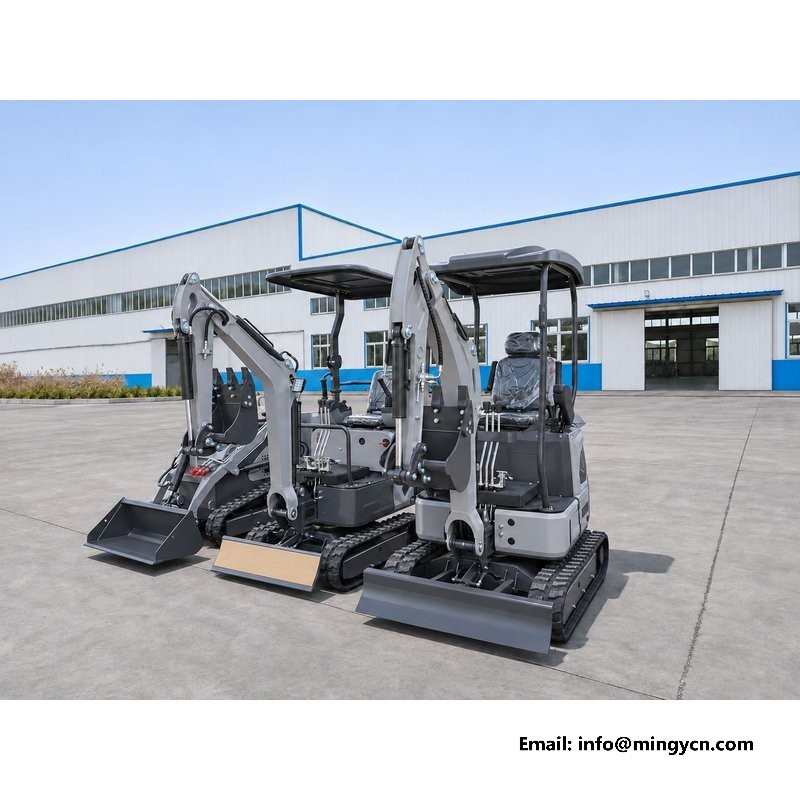
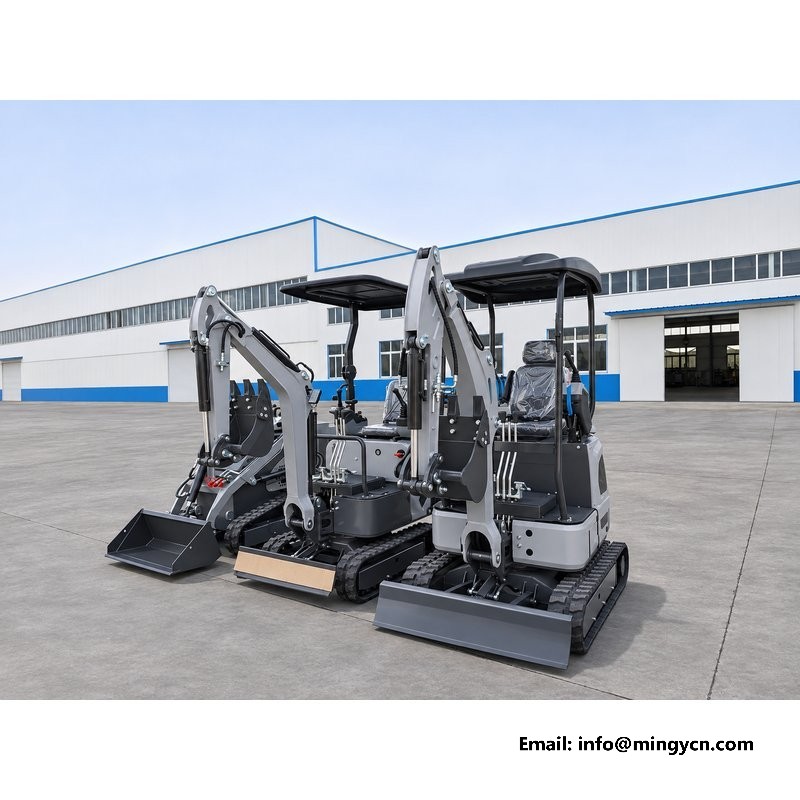
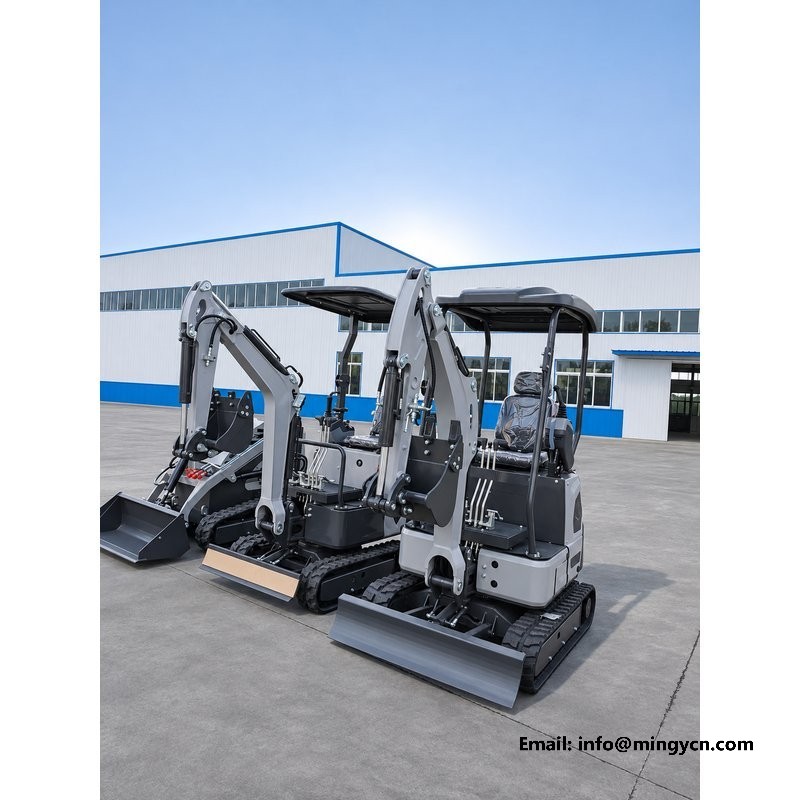
The photographs on this page follow a batch of mini excavators from the packing hall to the factory yard, and they are posted for one reason: to let a buyer judge what is inside the crate before it is sealed. The red TL12 tracked machine is shown inside its wooden export crate, wrapped and secured, while the grey and yellow machines are shown complete on the ground so their paint, tracks and hydraulic routing can be examined openly. The page explains how export crating is done, why the machine is fixed the way it is, what the yard photographs actually prove, and how a buyer should inspect and unpack the machine on arrival. No specification numbers are invented here; the photographs are the specification.
A mini excavator that works well in a showroom still has to survive a sea journey, port handling and a truck ride before it earns anything for its new owner. The photographs on this page follow one export batch through the packing hall and across the factory yard, and they are worth reading closely because the packing tells you what the supplier assumes about the machine. A builder who wraps a machine loosely and lashes it to a thin pallet is betting that the machine will not move in transit. A builder who bolts it to a framed crate is protecting against reality: vibration, forklift turns, and the long wait in a container where condensation gathers. The crate is not a box around a machine; it is the first warranty statement the factory makes about its own work.
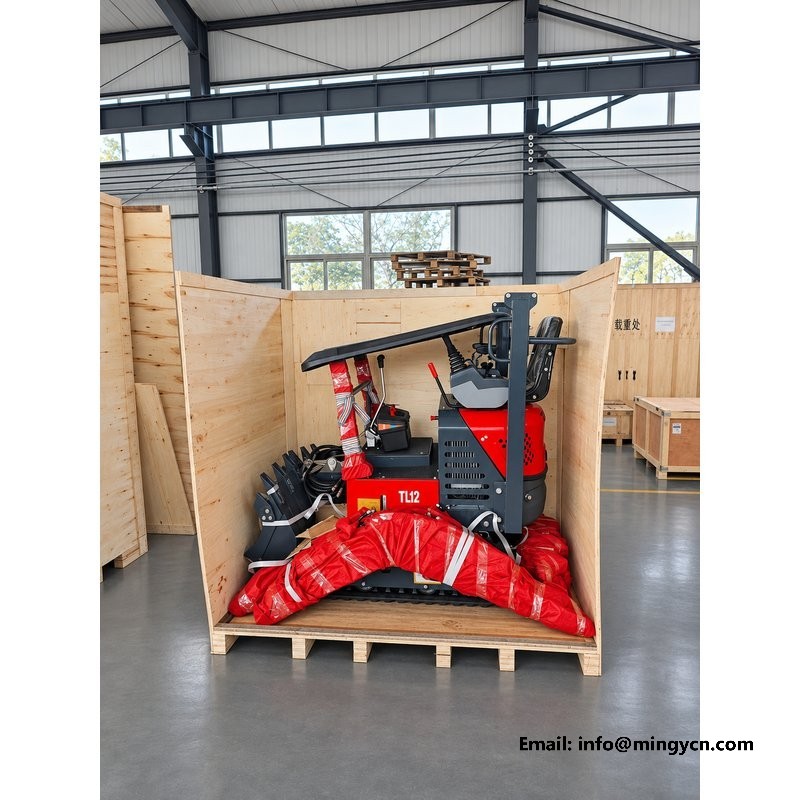
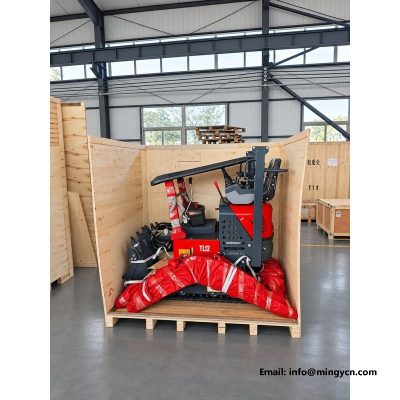
The red TL12 tracked machine in the first photographs is already inside its wooden crate, and the crate deserves the same attention as the excavator it holds. The frame is built from timber sections braced at the corners, and the machine is wrapped in a red cover before the side panels go on, so no bare metal is exposed to the packing crew's boots or the warehouse dust. The wrap is not decoration; it is the first of several moisture barriers between the paintwork and the air inside the crate. Look at how the wrap is folded around the counterweight and the boom rather than draped loosely. A tidy fold means the cover was fitted over a machine that had already stopped moving, which is the only condition in which a wrap does its job.
The single most important detail in any export crate is how the excavator is fixed to the base, and the second photograph shows the method clearly: the undercarriage is blocked and strapped to the floor plate, with the track assemblies resting on timber that stops them sliding. A mini excavator carries almost all its weight low in the track frame, so the fixing has to resist sideways and forward movement rather than simple downward pressure. Look for chocks at both ends of each track, straps that pull against the frame rather than around the hydraulic cylinders, and no load resting on the slew ring. When a machine is strapped down by the boom or the blade only, the straps work the joints and can start a leak before the machine ever reaches the buyer.
The tracks and the working end are the two surfaces most likely to be damaged in transit, and the packing photographs show how each is treated. The track assemblies are wrapped over the drive sprockets and idlers, which keeps road spray and salt air off the running gear, and the boom is pinned down in a travel position so it cannot swing against the crate wall. The bucket edge, the quick coupler and the cylinder rods are the parts a buyer should inspect first at the destination, because a ding on a rod will destroy a seal in weeks. The factory has already made that check for you by protecting the exposed metal; the job of the crate is to keep those protected surfaces protected from the moment the machine leaves the yard until the moment it is uncrated.
A closed wooden crate is a small climate of its own, and the biggest enemy inside it is not impact but condensation. As a container moves between warm ports and cold seas, the air inside sweats, and that moisture settles on the coldest surfaces, usually bare steel and machined parts. The packing on this batch answers with a vapour barrier and a desiccant charge fixed inside the crate, placed where the air circulates rather than buried under the machine. Rust on an export excavator is rarely caused by the paint; it is caused by water sitting on unpainted bores and fittings. A buyer who sees a desiccant pouch and a sealed liner in the photographs knows the factory has thought about the weeks the machine will spend closed up.
The crate is sized around the machine rather than around a standard pallet, and that is worth noticing because it changes how the unit travels. A crate built close to the excavator's own footprint keeps the whole assembly rigid without a huge mass of empty space, and the smaller the empty volume the less air there is to sweat. The lifting and fork pockets are part of the crate design, not an afterthought, so the unit can be moved by forklift from both sides at the port without the tines touching the machine. Buyers should ask for the packed dimensions before the shipment leaves, because the crate has to pass through container doors, warehouse aisles and the buyer's own gate, and a supplier that cannot state its packed size has not planned the journey.
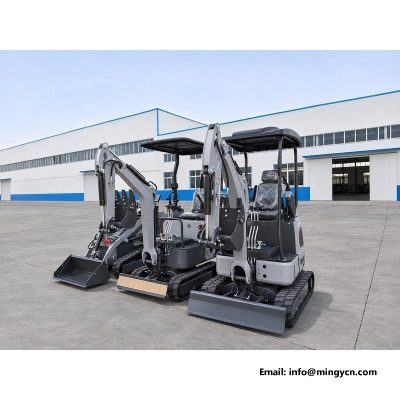
The grey tracked machines photographed on the factory ground are fully assembled, and that is the point of a yard walkaround photograph: a machine that stands complete on its own tracks has passed the stage where faults are hidden by an empty engine bay or a missing panel. Look at the paint in the yard shots, particularly where the track frames meet the main frame and along the boom. A factory that paints its machines after assembly rather than before will show an even coat over the welds, because nothing was welded through fresh paint. The tracks sit evenly on the ground with no sag at the idlers, and the hydraulic hoses run in visible, clipped paths rather than a loose bundle. These are the details a photograph can actually prove.
The grey tracked excavators in the yard show the machine in its working clothes, without the shine of a brochure studio, and that is exactly why they matter. A yard photograph catches the machines the way a buyer will see them on delivery day, with the boom folded into travel position and the tracks under load. Look at the space between the tracks and the body, where mud and debris will collect in service; a machine with generous clearance there is easier to hose down and less likely to pack dirt into the swing area. The grey colour also lets you judge the finish honestly, because lighter paint shows runs, thin spots and rough masking more readily than a dark colour would. Everything a buyer needs to judge is on display, nothing is retouched away.
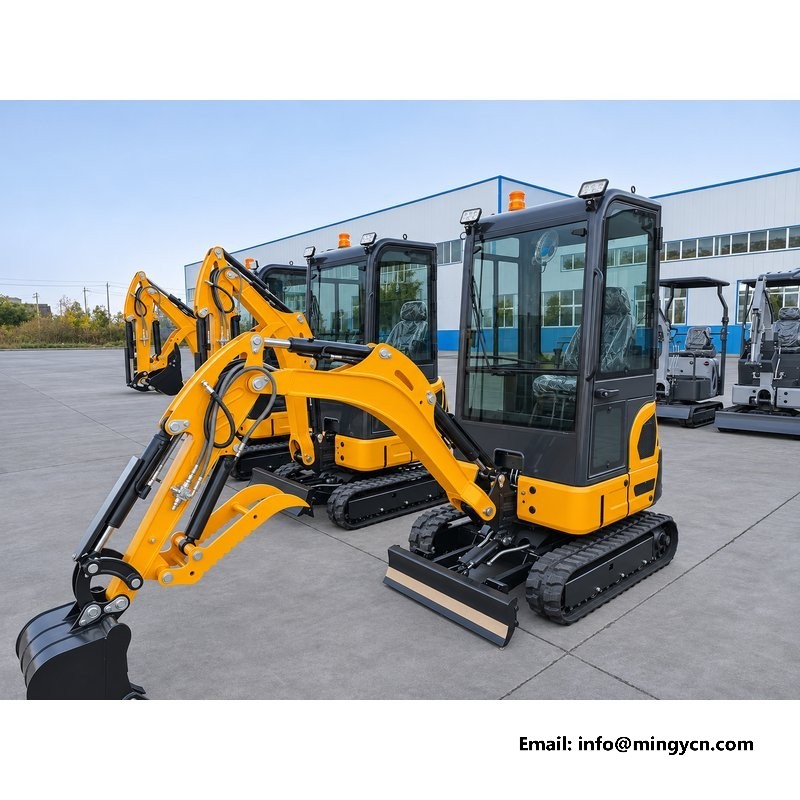
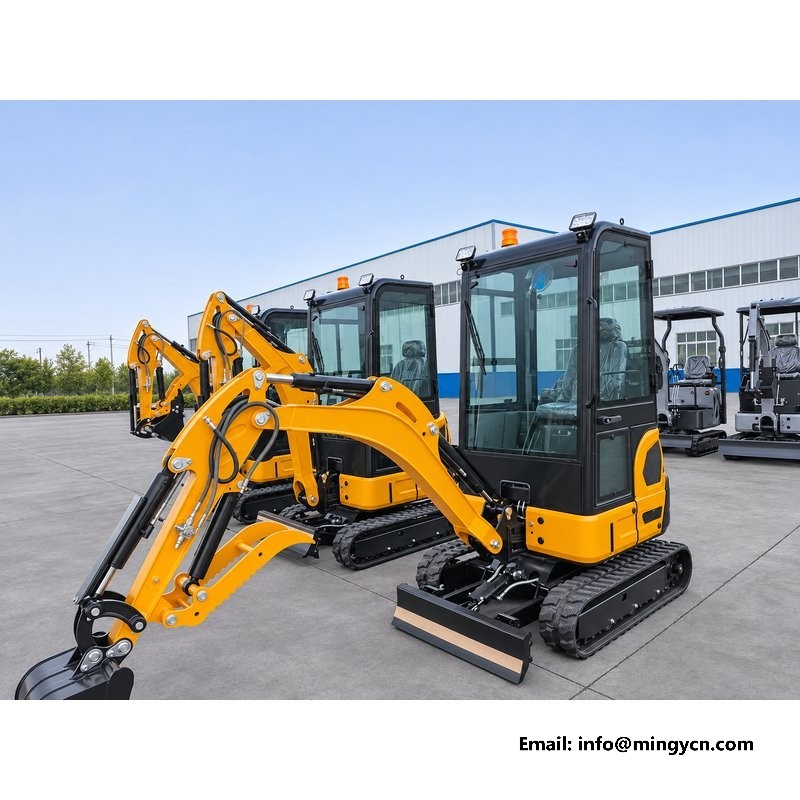
The yellow machines with the fitted cab show the top of the range as it leaves the factory, and the cab changes what a buyer should look at in the photographs. A cab adds weight and height, so the first thing to check is how the cab is mounted: through rubber isolators onto the frame, which keeps vibration out of the operator's seat, rather than bolted hard to sheet metal that will rattle. Inside the glazing, look for a windscreen wiper, a lockable door and a roof that covers the whole operator station, because these are the small items that turn a cab from a shelter into a workplace. The yellow paint should follow the cab edges without overspray onto the glass or the seals, which tells you the cab was fitted before final paint and masking was done with care.
A buyer who is offered this batch should work through a short inspection list before the crate is sealed, and most of it can be confirmed from photographs alone. Check that the machine serial number and the crate markings match the invoice, that the track assemblies are wrapped and chocked, that the boom is pinned, and that the desiccant and vapour barrier are in place. Ask for a photo of the hour meter and a short video of the machine running and walking before it is loaded, because a machine that digs on the factory pad has already proven its hydraulics. None of this is a substitute for an on-site visit, but it is the honest minimum a supplier should offer, and a supplier that resists sending these photographs is telling you something about what the crate contains.
The crate does its job until the moment the buyer's own hands are on the machine, and the unpacking should follow the same order the packing did, in reverse. Lift the crate clear of the machine rather than dragging the excavator out of the timber, cut the straps only after the machine is on firm ground, and photograph every stage as you go, because that record is what you will send back if anything arrived damaged. The first checks are the same list the yard photographs covered: paint around the welds, rods free of nicks, tracks tensioned and dry, fluids at their marks. Start the machine and let it idle, then walk it a few metres and swing the boom before the transport is released. The crate protected the machine to this point; the buyer now takes over.
The red wrap is a protective and moisture barrier between the paintwork and the air inside the crate. It is fitted after the machine has stopped moving, folded tightly around the counterweight, boom and track assemblies, so no bare metal is exposed to dust or the crew's boots. It is the first of several barriers against the condensation that forms inside a closed container, and it also keeps the crate liner from chafing the paint. A neatly fitted wrap tells a buyer the machine was still and clean when the packing crew covered it.
Work in the same order the packing did, in reverse. Lift the crate away rather than dragging the machine out, cut the straps only once the excavator is on firm ground, and photograph every stage as a record for any claim. Then check the paint around the welds, the hydraulic rods for nicks, the track tension and the fluid levels. Start the machine, let it idle, walk it a short distance and swing the boom before you release the transport. The crate carried the machine to your gate; the first walk is the handover.
For the current specification, build options and a formal quotation for your market, contact MINGYI Machinery. E-mail: sales@mingycn.com | LINE (ID): mingyicn
Mini Excavator for Containerized Export · Mini Excavator for House Demolition · Small Digger for Startup Farms








