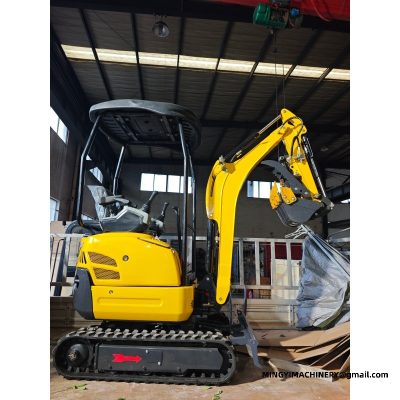
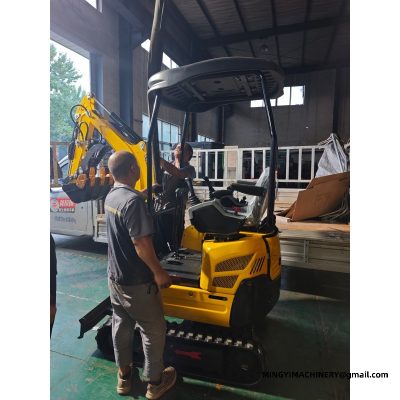
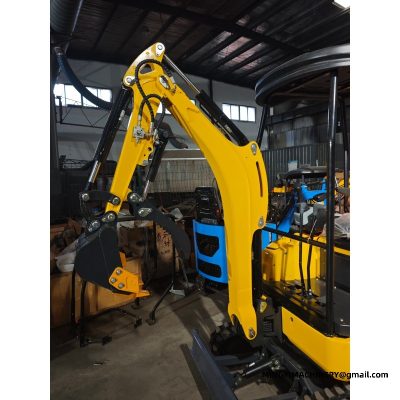
Wet farmland is hard on any machine. Soft ground gives little support, mud fills track frames, and a digger that cannot hold its position will slip instead of digging. Rubber tracks address several of these problems at once, which is why they are common on agricultural work.
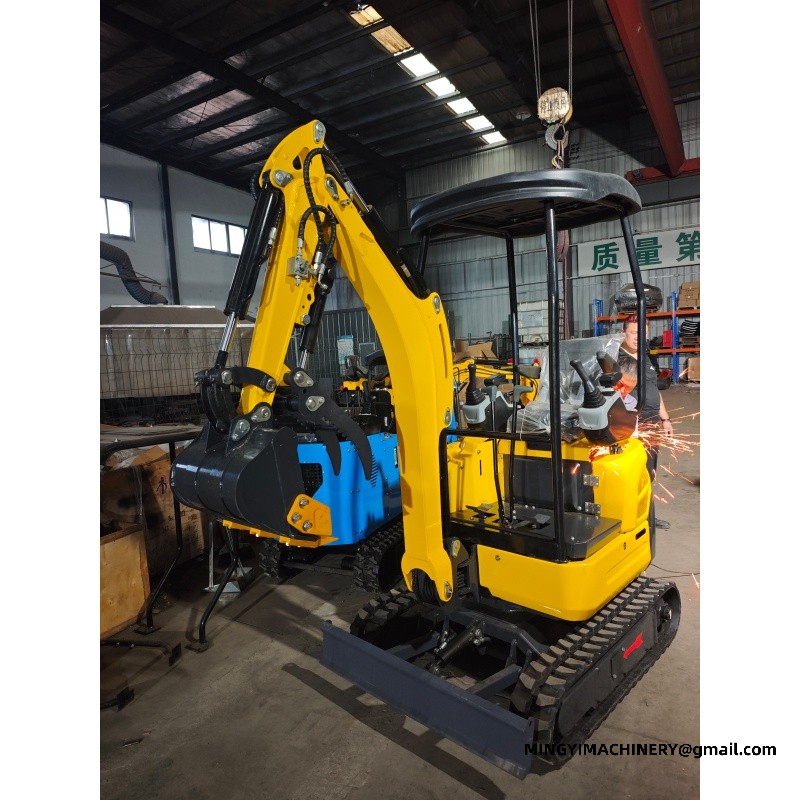
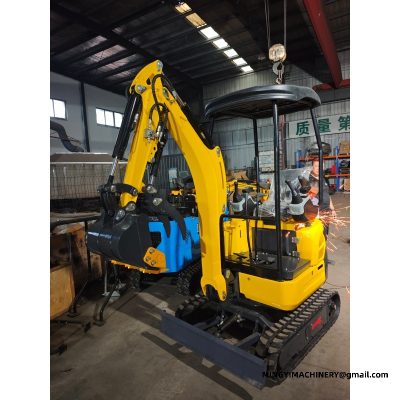
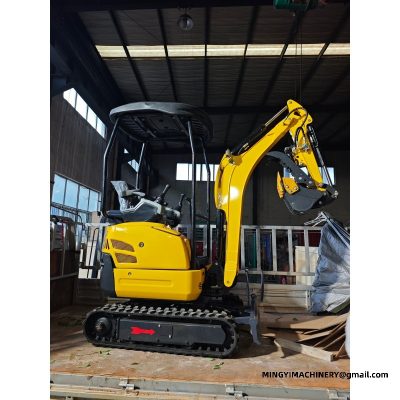
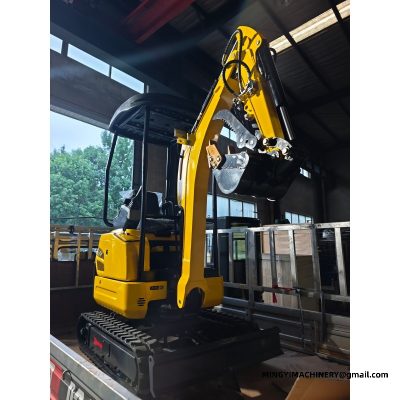
MINGYI builds compact excavators with rubber tracks for soft ground. Track type is chosen at the ordering stage, so the machine arrives with the undercarriage that suits the land it will work on.
Rubber tracks on wet and muddy ground
Rubber tracks spread the machine weight across a long contact patch, which reduces sink and keeps the excavator moving where steel tracks would dig in. They also clear mud more readily because the belt is smooth on the inside.
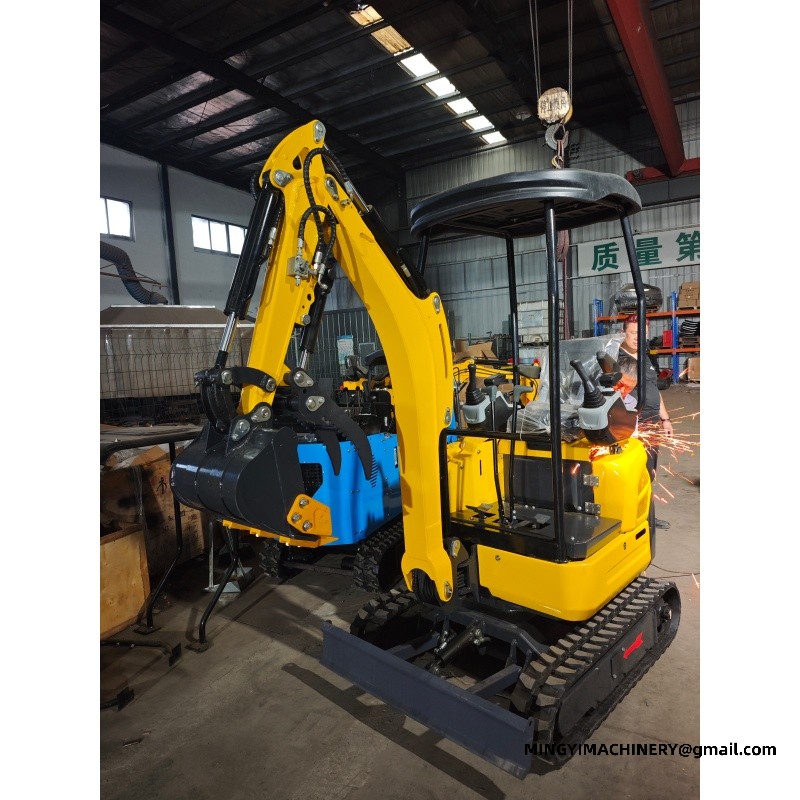
The softer ride of rubber also limits damage to the ground beneath. On farmland, where fields are reseeded and gateways kept firm, that difference is often the reason a rubber-tracked machine is specified over a steel one.
Track choice for soft farmland and mixed duty
Rubber is not universally better. On rocky ground or steep, dry slopes steel tracks with rubber blocks grip harder and last longer, so the choice should follow the worst ground the machine will cross, not the average.
Buyers working both farmland and construction should describe both uses when ordering. A machine can be supplied with one track type and a spare set, so the undercarriage can be changed to suit the season.
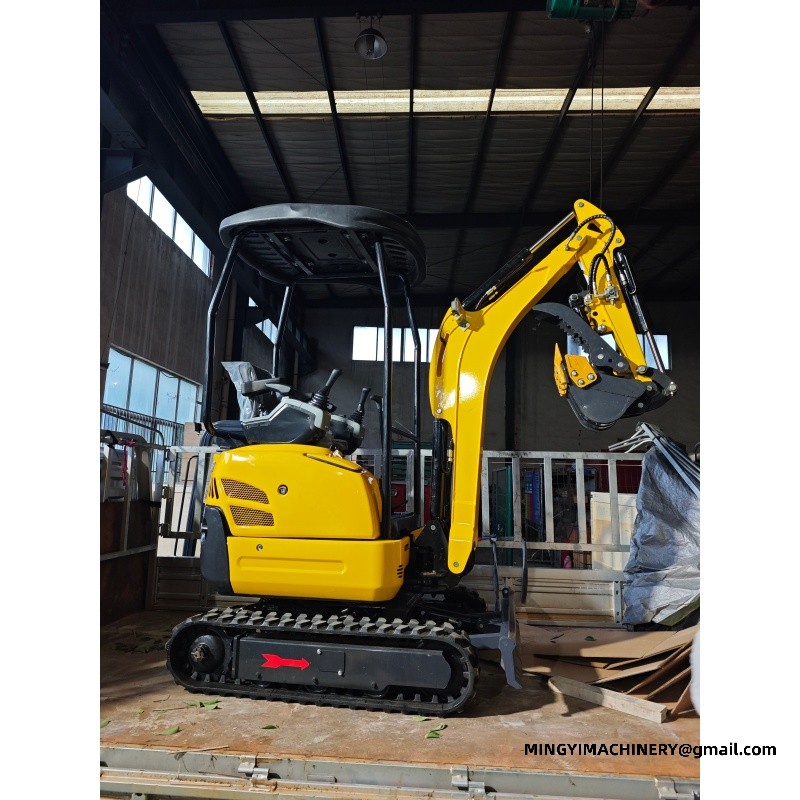
Rubber tracks suit wet farmland by spreading load and limiting damage to the ground. MINGYI supplies compact excavators built to order with the undercarriage the land requires.
Hiring versus owning a mini digger with rubber tracks for mud The choice follows the hours. Work that fills a few weeks a year is usually better hired, while the excavator that would be on site most weeks starts to justify ownership once the transport and booking time is counted. Availability is part of the decision. Owning this class of machine means it is there on the day the ground is ready; hiring means competing for the same machine at the same time as everyone else in the season. OEM and fleet customisation of mini digger with rubber tracks for mud Distributors and rental fleets usually need the machine to look like theirs. Paint, decals, seat colour and attachment branding can be specified on the unit in daily use at build time rather than applied after import. Customisation also covers the specification sheet. A fleet buyer may want every machine of this size delivered with the same coupler, the same engine and the same tool kit so training and parts stock stay simple. Working a mini digger with rubber tracks for mud in confined spaces Clearance above matters as much as around. Door heights, pipework and overhead services set the limit for the equipment on site indoors, and measuring them first avoids a machine that arrives and cannot be used. Ventilation is the other indoor constraint. Running the machine itself inside a closed structure needs air movement, and that is a planning item rather than something to discover after the first hour. Trailering and moving mini digger with rubber tracks for mud Transport weight and width decide whether a machine needs a specialist haulier. The model in question sized to travel on a standard plant trailer behind a suitable vehicle moves with the crew rather than on a scheduled low loader. Loading practice matters as much as the numbers. The machine in that duty is driven up ramps under its own power with the boom lowered and the tracks aligned, and secured at the points the manufacturer specifies. Running mini digger with rubber tracks for mud in a rental fleet The specification that rents best is usually the simplest one to explain at the counter. The unit on the job with rubber tracks, a canopy and a coupler covers the majority of weekend and short-term hires. Fleet buyers also weigh transport. A machine built for the work that a customer can tow on a normal licence and a standard trailer is a hire that does not need a delivery truck, which changes how often it goes out. Municipal and public works with mini digger with rubber tracks for mud Municipal crews work on streets, footpaths and parks where the public is present. The equipment in service is specified because it occupies little space, works inside a small exclusion zone and can be moved on a standard trailer. Drainage repair, tree planting, footway reconstruction and cemetery work are all within the range of the excavator. The jobs are small individually and continuous across the year. Acceptance checks when this class of machine arrives Delivery day is the best time to find a problem. Checking the specification against the order, the fluid levels, the fasteners and any transport damage while the machine of this size is still on the trailer is faster than claiming later. A function check before the machine goes to work is worth the hour. Running through the controls, the travel and the attachment circuit on the unit in daily use confirms it is set up as specified and ready for the site. Matching the equipment on site to ground conditions Soft ground is a flotation problem, not a power problem. The machine itself on wide rubber tracks crosses lawn, sand and cultivated soil that would stop a narrower machine or a wheeled unit of the same capacity. Hard and abrasive ground reverses the specification. On rock, demolition rubble or sharp gravel, steel tracks with rubber blocks on the model in question survive conditions that cut a rubber belt quickly. Landscaping and ground care with the machine in that duty Landscape contractors use the unit on the job for planting holes, pond excavation, grading and retaining work. The machine is light enough to cross finished lawn and narrow enough to work between established trees. On soft landscape work the surface is the constraint. A machine built for the work on rubber tracks crosses turf without stripping it, which is why the same jobs are not given to a wheeled machine. Engine options behind the equipment in service Power unit selection is settled against the service network the buyer already uses. MINGYI offers Kubota D722, Kubota D902, YANMAR, Changchai, Laidong, Runtong, YARMAX, Youpu 2V80 and Youpu 195, so a fleet running one brand of engine can keep the same filters, the same parts supplier and the same mechanic. Two buyers can order the same the excavator and receive different engines. The decision is rarely about peak power; it is about which parts counter is closest to the site and which engine the local mechanic already knows. Hydraulic circuits on this class of machine Flow and pressure are matched to the tool, not to the machine size. Asking for the attachment list first means the unit in daily use leaves the factory with circuits that suit the heaviest tool the buyer intends to run. Hydraulic specification is easier to settle at build time than to correct later. A machine of this size delivered without auxiliary lines can still dig, but every additional tool becomes a retrofit project. Specification data for the equipment on site The figures below are the factory figures for the models most often matched to the machine itself. They are the numbers to check against the site: the depth the work needs, the reach from one position, and the width of the narrowest point on the route in. Figures are factory figures and are confirmed on the build sheet for the model in question. Where a job sits between two models, the larger machine usually takes less time than the smaller one spends on rework. Work near housing or occupied premises brings constraints that open sites do not. Start times, exhaust condition and how often the machine in that duty needs to reverse are the practical limits that neighbours notice. Enclosure and machine condition both reduce noise. The unit on the job with intact panels, sound mounts and a maintained exhaust is measurably quieter than the same machine with loose guards, and the difference matters on restricted sites.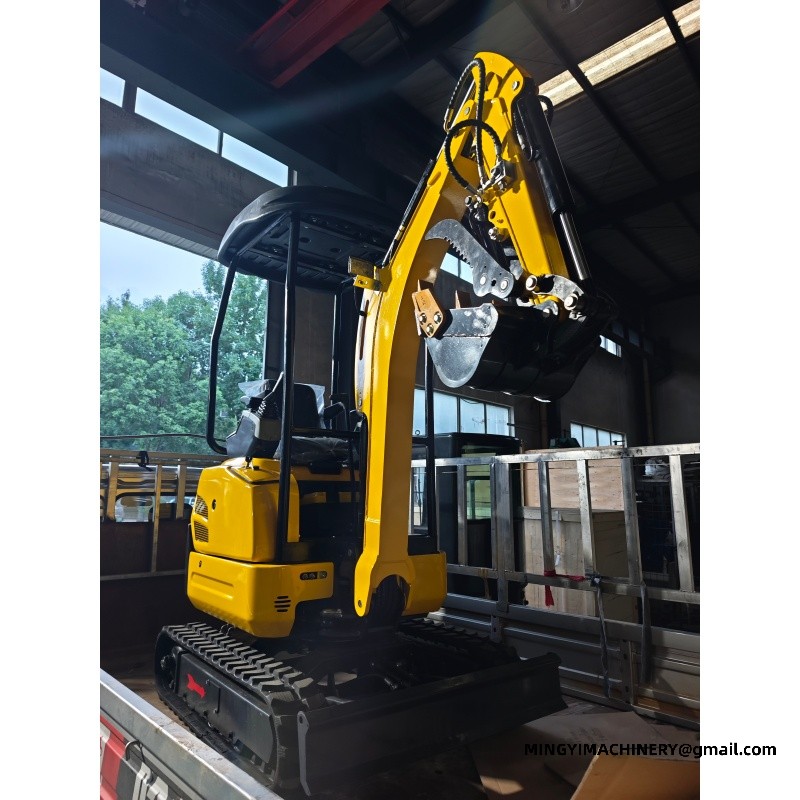
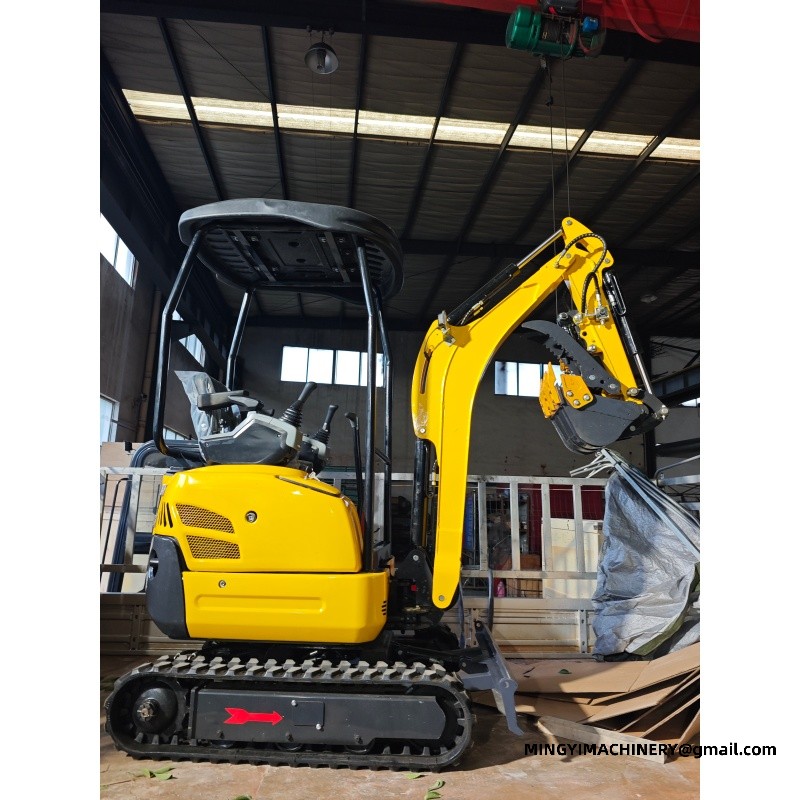
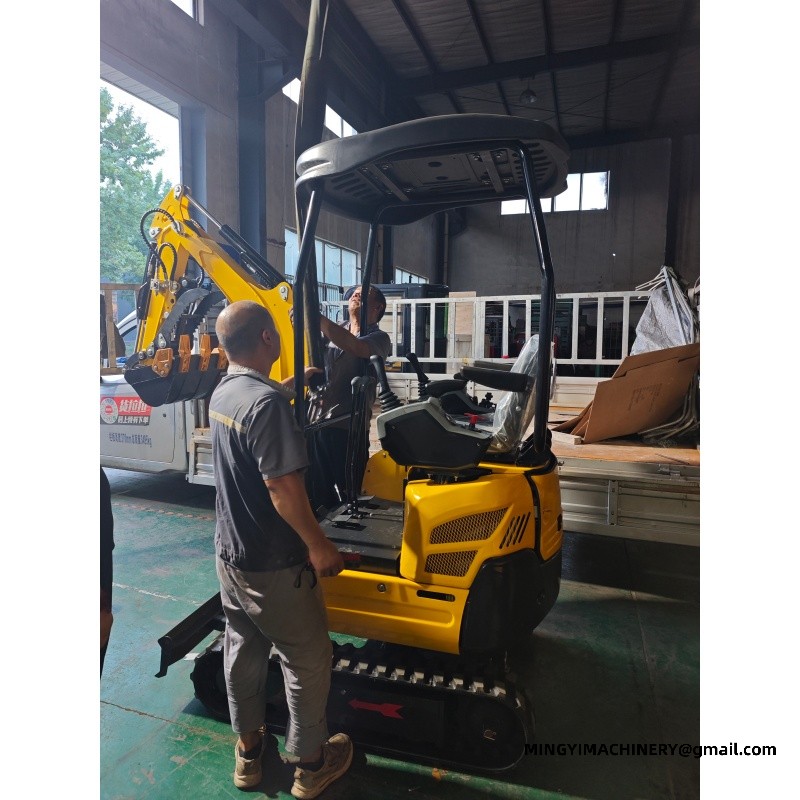
Reference specification — mini excavator range 13W 20-3W 30-2W 25L Operating weight 1300 kg (2866.01 lb) 1900 kg (4188.78 lb) 2700 kg (5952.48 lb) 2200 kg (4850.17 lb) Transport size (L×W×H) 2200 × 930 × 2250 mm 2550 × 1100 × 2200 mm 3000 × 1100 × 2700 mm 3000 × 1300 × 2700 mm Max digging depth 1630 mm (64.17 in) 1800 mm (70.87 in) 2200 mm (86.61 in) 2300 mm (90.55 in) Max digging height 2750 mm (108.27 in) 2820 mm (111.02 in) 3000 mm (118.11 in) 3100 mm (122.05 in) Max dumping height 1960 mm (77.17 in) 2050 mm (80.71 in) 2000 mm (78.74 in) 2050 mm (80.71 in) Max digging radius 2900 mm (114.17 in) 3050 mm (120.08 in) 3800 mm (149.61 in) 3900 mm (153.54 in) Max digging distance 2100 mm (82.68 in) 2300 mm (90.55 in) 3050 mm (120.08 in) 3100 mm (125.05 in) Minimum turning radius 1300 mm (51.18 in) 1450 mm (57.09 in) 1750 mm (68.9 in) 1800 mm (70.87 in) Travel speed 3 km/h (1.86 mph) 5 km/h (3.11 mph) 7 km/h (4.35 mph) 7 km/h (4.35 mph) Gradeability 30° 30° 30° 30° Fuel consumption 1-1.3 L/h (0.264—0.343 gal) 2-3 L/h (0.528—0.793 gal) 2-3 L/h (0.528—0.793 gal) 2-3 L/h (0.528—0.793 gal) Fuel tank capacity 10 L (2.64 gal) 16 L (4.23 gal) 16 L (4.23 gal) 16 L (4.23 gal) Hydraulic oil tank 16 L (4.23 gal) 18 L (4.76 gal) 20 L (5.28 gal) 18 L (4.76 gal) Dozer blade lift height 180 mm (7.09 in) 180 mm (7.09 in) 230 mm (9.06 in) 230 mm (9.06 in) Dozer blade drop depth 210 mm (8.27 in) 210 mm (8.27 in) 280 mm (11.02 in) 280 mm (11.02 in)
Q. Who chooses a machine built for the work?
A. Tracks decide where a compact excavator is allowed to work: rubber runs quiet and kind over lawns and paving, steel takes the abuse of gravel, rubble and slopes. Tension checks and a walk-around for wrapped debris are the whole of daily track care, and they protect the part of the digger that is hardest to put right. For rubber tracks for mud applications the practical route is to send the job list to the factory and let the build sheet answer it - which is exactly what this page invites.
Q. How much maintenance do tracks need?
A. A daily tension check and a walk-around for stones, wire and debris wrapped in the idlers. Keep the tension right and the undercarriage - the most lengthy part of a compact digger - lasts the machine out.
Q. What about colours and branding?
A. OEM colours and decals are part of the build: private-label machines carry the buyer brand on the standard MINGYI platform, and the rubber tracks for mud order confirms colours, marks and documents before production starts.
Later additions and retrofits on the equipment in service
Most additions are easier to plan than to add. Hydraulic services, mounting brackets and electrical capacity on the excavator are build items, and deciding them at the specification stage is far easier than doing it later.
Keeping a service record for this class of machine
The record should follow the machine, not the owner. When the unit in daily use changes hands the service history travels with it, and a complete folder is often the difference between a quick sale and a long one.
E-mail : sales@mingycn.com
LINE ( ID ): mingyicn
Planning utilisation for mini digger with rubber tracks for mud
Seasonal peaks are easier handled with a clear service window before them than with a repair during them.
Keeping one machine as the planned spare is simpler than scheduling around an unplanned stop in the middle of a programme.
Hours per month tell more than hours in total, and they show whether a second machine or a second operator is the real constraint.
Lifting, tie-down and transport securing of mini digger with rubber tracks for mud
Tie-down chains go to the designated lashing points and are tensioned after the first hour of travel, then again after the first long stop.
Related pages
mini excavator for house demolition · small digger for startup farms · Front Wheel Loader: Weight Transfer, Boom Length and Axle Choice · Mini Excavators









