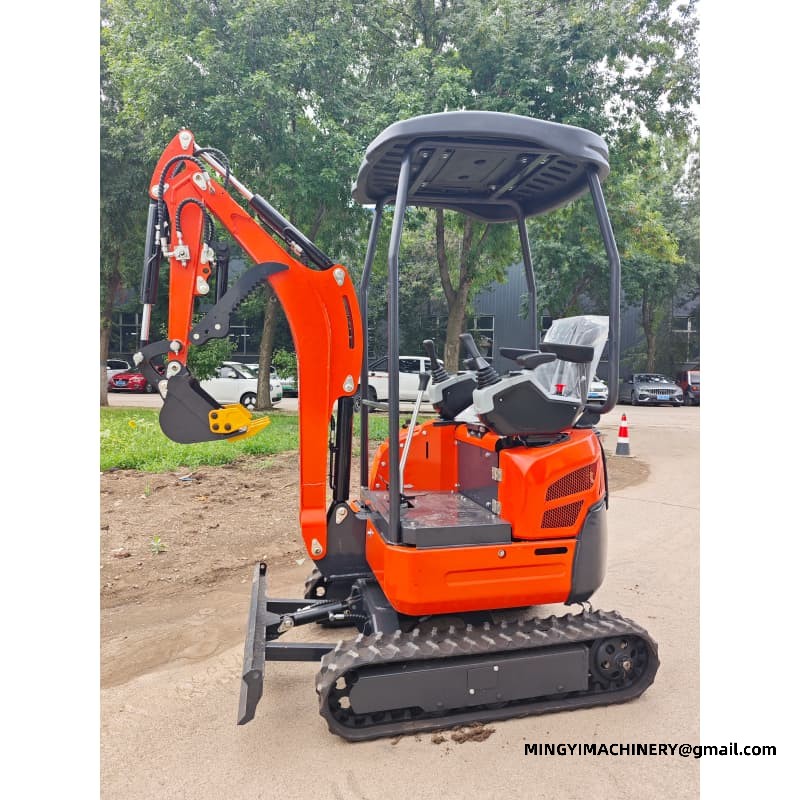
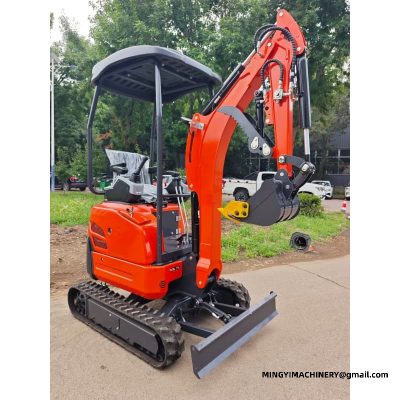
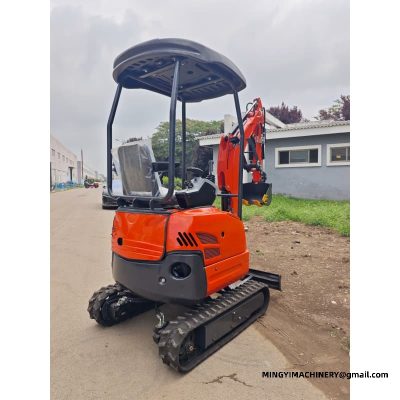
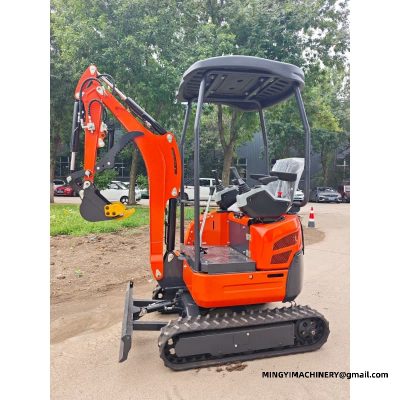
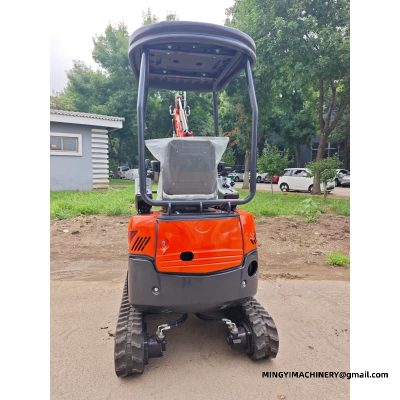
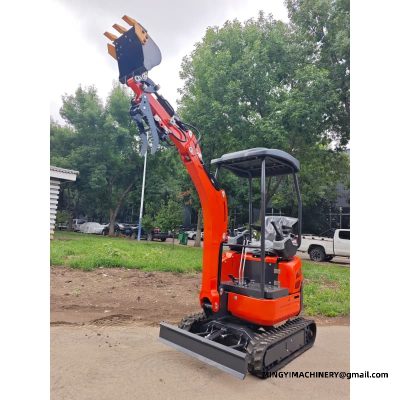
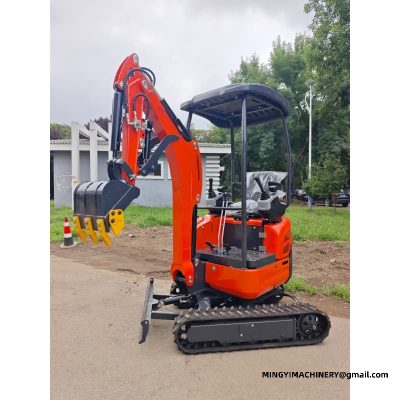
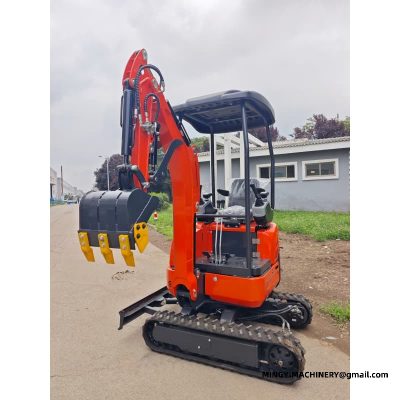
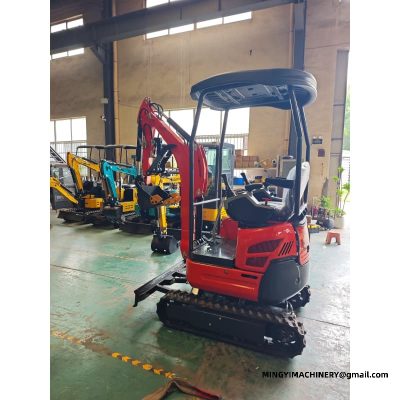
Working on a hillside is as much about staying in place as it is about digging. A machine on a slope has to hold its position while the boom is loaded, and the undercarriage and ballast decide how well it does that.
MINGYI builds compact excavators to order, and machines for sloped ground are specified with stability in mind. Track type, undercarriage width and counterweight are agreed with the work the machine will do.
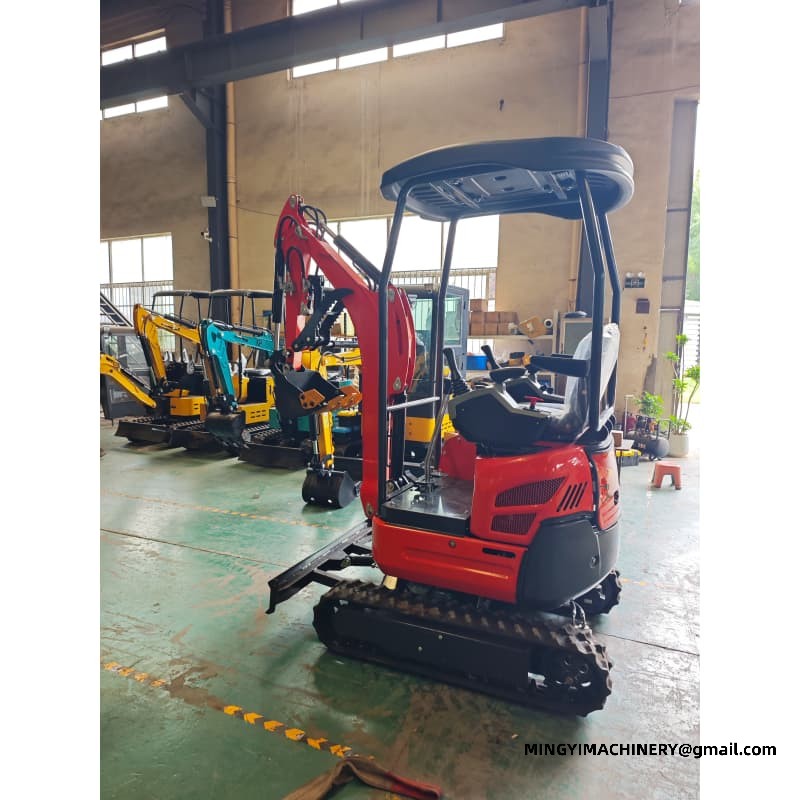
Heavy duty work on mountain slopes
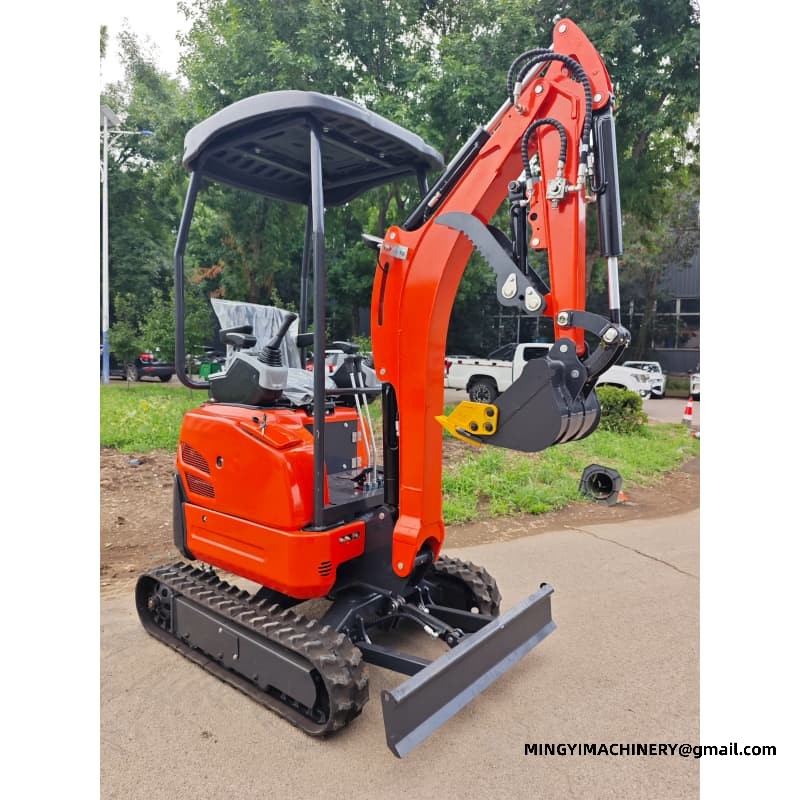
Terracing, small road cutting and drainage on hillside land all put a compact excavator at an angle for much of the day. A wider track base and the right counterweight keep the machine planted while the arm is under load.
Steel tracks with rubber blocks are often chosen here, because hillside ground is usually stony and abrasive. The rubber blocks give grip on hard surfaces while the steel structure takes the wear.
Stability and travel on steep hillside ground
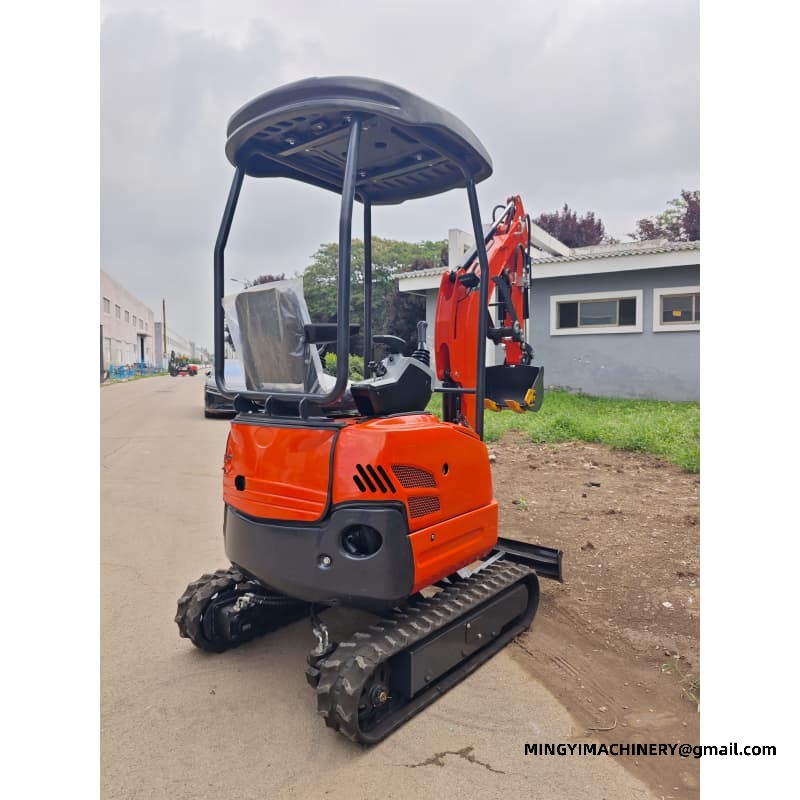
Travel on a slope is planned rather than improvised. Moving along the contour, keeping the load low and using the boom as a support are all part of working a hillside machine safely.
The attachment set reflects the same conditions. A ripper for hard layers, a bucket matched to the soil and a grab for clearing brash all help the machine finish a hillside job without repeated trips.
On hillside work a compact excavator is judged on whether it can hold its position, not on how much it can lift. Specifying the undercarriage and attachments for the slope is what turns a difficult site into a workable one.
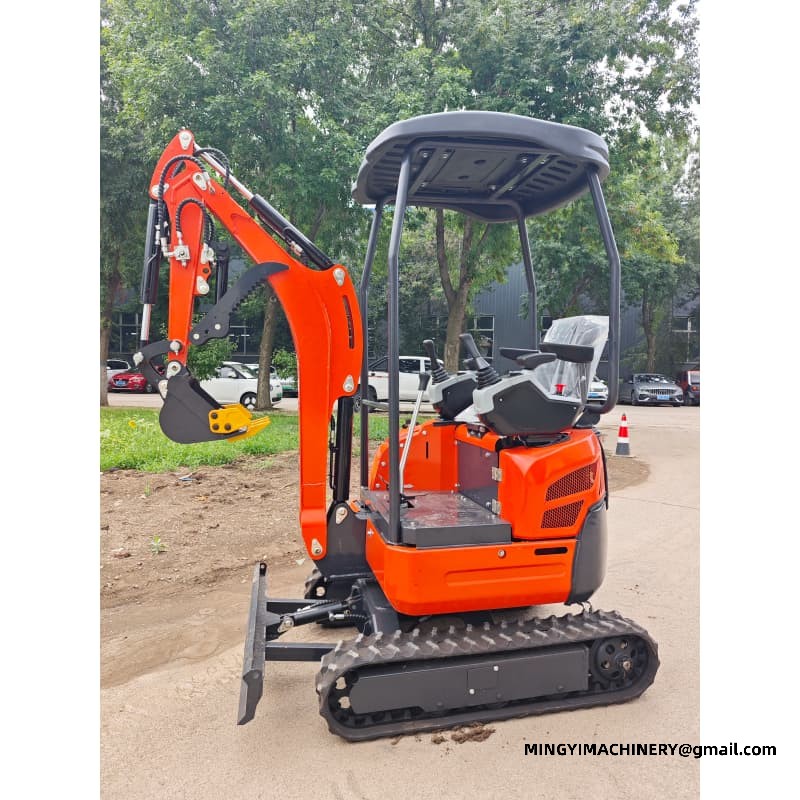
Municipal and public works with heavy duty mini excavator for slopes Municipal crews work on streets, footpaths and parks where the public is present. The excavator is specified because it occupies little space, works inside a small exclusion zone and can be moved on a standard trailer. Drainage repair, tree planting, footway reconstruction and cemetery work are all within the range of this class of machine. The jobs are small individually and continuous across the year. Operator technique for heavy duty mini excavator for slopes The second habit is tool discipline. Running the unit in daily use with the right bucket width for the trench means less spoil, less reinstatement and a cleaner job than a wide bucket and a lot of trimming. Stability is the third. A machine of this size working across the tracks rather than over the corners keeps the machine steady and the undercarriage loaded evenly, which shows up as track life at the end of the season. Working a heavy duty mini excavator for slopes in confined spaces Confined sites are decided by dimensions. Overall width, tail swing and the space needed to work the arm are what let the equipment on site operate inside a building, between walls or in a courtyard. Ventilation is the other indoor constraint. Running the machine itself inside a closed structure needs air movement, and that is a planning item rather than something to discover after the first hour. Getting heavy duty mini excavator for slopes through a narrow gap The first question on most job lists is whether the machine can reach the work at all. The model in question is chosen against the narrowest point on the route - a garden gate, a doorway, a gap between two walls - because a machine that arrives and then cannot pass loses a day, not an hour. Contractors who buy the machine in that duty normally have one job in mind that nothing else reaches. The purchase order follows the access measurement, not the other way round, and the build sheet is then settled around it. Lifting and material handling with a heavy duty mini excavator for slopes Lifting with a machine built to dig needs a plan. The load, the radius and the ground under the machine built for the work all matter, and the safe figure is the one on the chart rather than the one that looks possible. Stability changes with reach. A load the unit on the job handles close in becomes a different proposition at full extension, so the working radius belongs in the plan before the lift rather than during it. Attachments that turn heavy duty mini excavator for slopes into several machines Attachment lists are best written before delivery. Specifying the equipment in service with the tools the job list needs avoids the work and delay of adding hydraulics later, and a quick coupler makes the swap a few minutes instead of a workshop job. Most of the daily variety on the excavator comes from the attachment rack rather than from the machine itself. Bucket, breaker, auger, ripper, rake and grab cover the large majority of the work a contractor will see. Engine options behind this class of machine Power unit selection is settled against the service network the buyer already uses. MINGYI offers Kubota D722, Kubota D902, YANMAR, Changchai, Laidong, Runtong, YARMAX, Youpu 2V80 and Youpu 195, so a fleet running one brand of engine can keep the same filters, the same parts supplier and the same mechanic. Two buyers can order the same the unit in daily use and receive different engines. The decision is rarely about peak power; it is about which parts counter is closest to the site and which engine the local mechanic already knows. Matching a machine of this size to ground conditions Soft ground is a flotation problem, not a power problem. The equipment on site on wide rubber tracks crosses lawn, sand and cultivated soil that would stop a narrower machine or a wheeled unit of the same capacity. Hard and abrasive ground reverses the specification. On rock, demolition rubble or sharp gravel, steel tracks with rubber blocks on the machine itself survive conditions that cut a rubber belt quickly. Working the model in question through the seasons Weather decides which days are productive. Rain turns some ground unusable and cold changes how the machine in that duty starts and warms up, so planning the wet months around maintenance is more useful than planning around output. Seasonal planning smooths the workload. Machines that are busy for a few months and idle for the rest benefit from a service slot in the quiet period, and the unit on the job prepared in the off-season starts the busy months reliably. Running a machine built for the work in a rental fleet The specification that rents best is usually the simplest one to explain at the counter. The equipment in service with rubber tracks, a canopy and a coupler covers the majority of weekend and short-term hires. Fleet buyers also weigh transport. The excavator that a customer can tow on a normal licence and a standard trailer is a hire that does not need a delivery truck, which changes how often it goes out. Track choice for this class of machine Rubber tracks suit paved and landscaped ground because they spread the machine weight and leave the surface intact. Steel tracks with rubber blocks are specified where the ground is rougher or the working day is longer, and the choice can be made per machine rather than accepted as a factory default. Track type changes what the machine can cross and what it leaves behind. Buyers specify rubber for lawns, driveways and municipal work, and steel with rubber blocks for sites where sharp material would cut a rubber belt in a week. Specification data for the unit in daily use The figures below are the factory figures for the models most often matched to a machine of this size. They are the numbers to check against the site: the depth the work needs, the reach from one position, and the width of the narrowest point on the route in. These are the reference figures for the equipment on site. MINGYI confirms the final build sheet, including engine and attachment choices, against the destination and the job list before production. Buyers who skip this step either over-buy or under-buy. The machine itself specified only from machine size tends to arrive without the coupler, the circuits or the track type the work actually needs. Useful information to send with an enquiry includes working width, required digging depth, ground conditions and the attachment set. Those four items let the factory specify the model in question that fits rather than a generic build.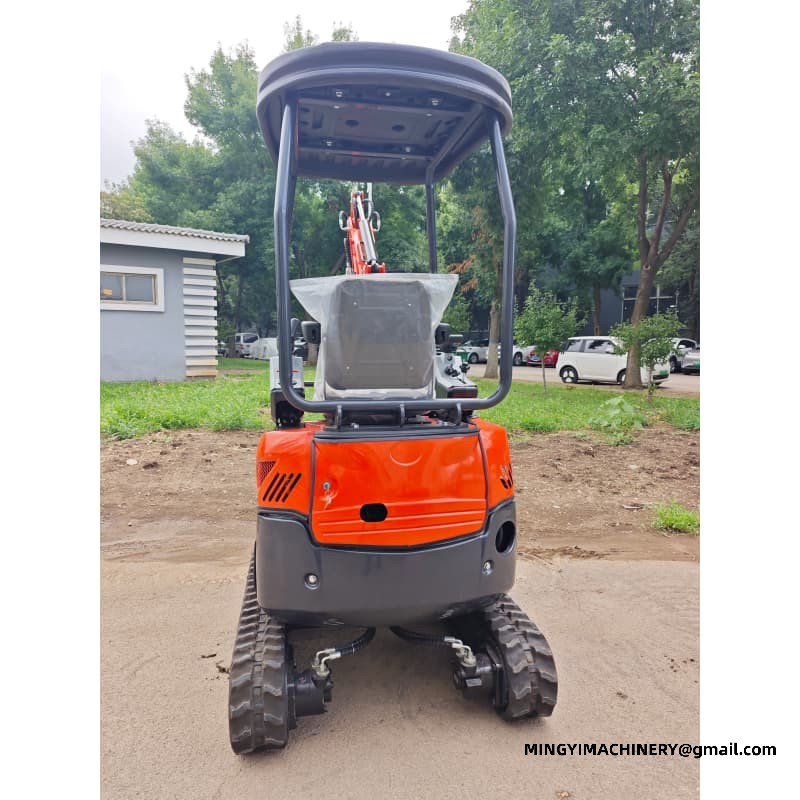
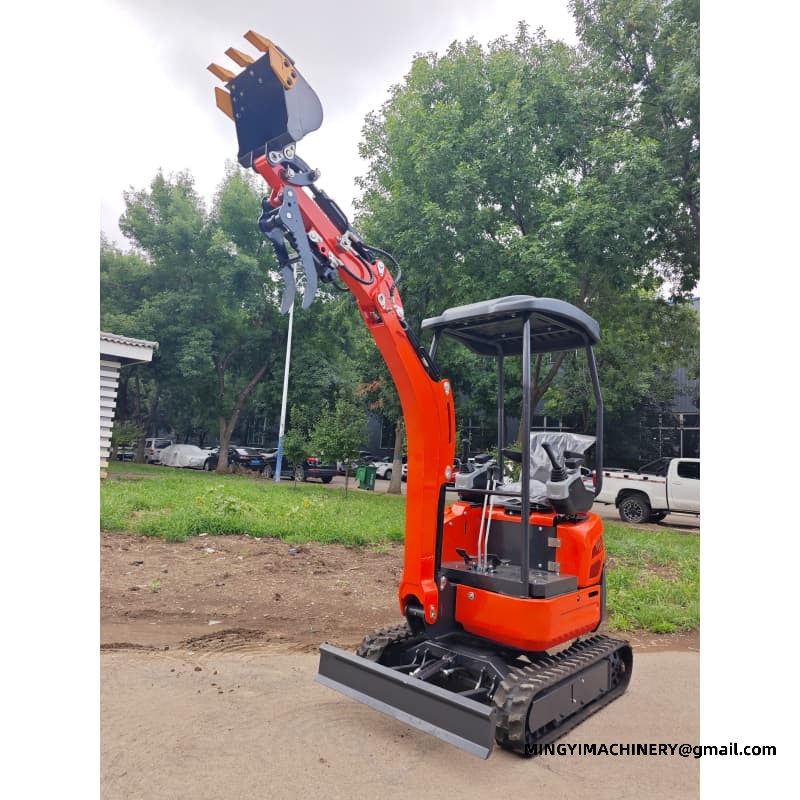
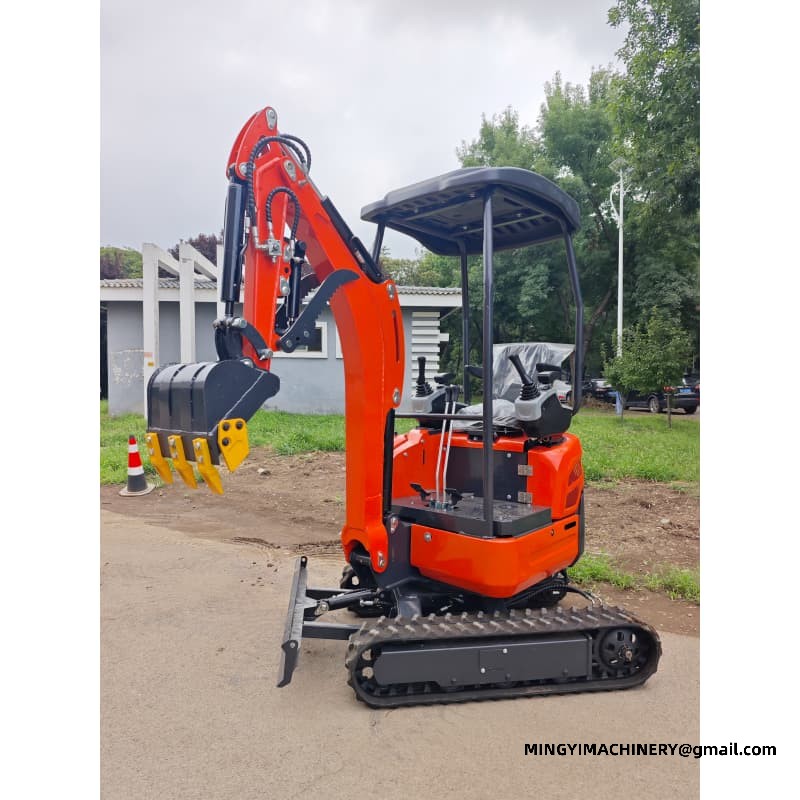
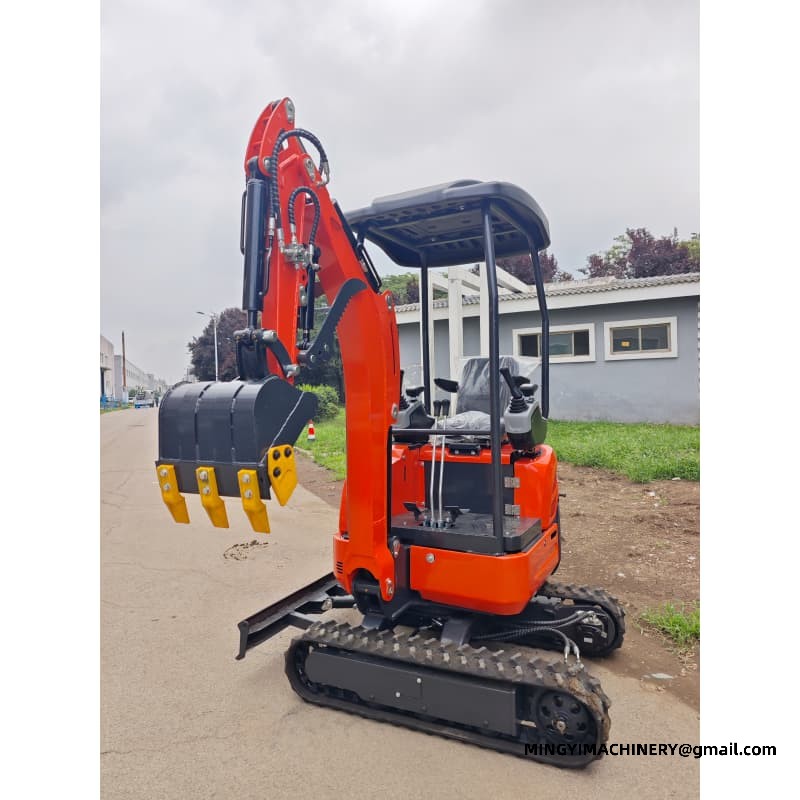
Reference specification — mini excavator range 09W 20-1W 20-2L 25L Operating weight 1100 kg (2425.08 lb) 1800 kg (3968.32 lb) 1900 kg (4188.78 lb) 2200 kg (4850.17 lb) Transport size (L×W×H) 1800 × 750 × 1970 mm 2550 × 1100 × 2200 mm 2600 × 1300 × 2344 mm 3000 × 1300 × 2700 mm Max digging depth 1250 mm (49.21 in) 1800 mm (70.87 in) 2100 mm (82.68 in) 2300 mm (90.55 in) Max digging height 2800 mm (110.24 in) 2820 mm (111.02 in) 2880 mm (113.39 in) 3100 mm (122.05 in) Max dumping height 1700 mm (66.93 in) 2050 mm (80.71 in) 2100 mm (82.68 in) 2050 mm (80.71 in) Max digging radius 2570 mm (101.18 in) 3050 mm (120.08 in) 3215 mm (126.57 in) 3900 mm (153.54 in) Max digging distance 1869 mm (73.58 in) 2300 mm (90.55 in) 2460 mm (96.85 in) 3100 mm (125.05 in) Minimum turning radius 1000 mm (39.37 in) 1450 mm (57.09 in) 1587 mm (62.48 in) 1800 mm (70.87 in) Travel speed 3 km/h (1.86 mph) 5 km/h (3.11 mph) 5 km/h (3.11 mph) 7 km/h (4.35 mph) Gradeability 30° 30° 30° 30° Fuel consumption 1-1.3 L/h (0.264—0.343 gal) 2-3 L/h (0.528—0.793 gal) 2-3 L/h (0.528—0.793 gal) 2-3 L/h (0.528—0.793 gal) Fuel tank capacity 8 L (2.11 gal) 16 L (4.23 gal) 16 L (4.23 gal) 16 L (4.23 gal) Hydraulic oil tank 16 L (4.23 gal) 18 L (4.76 gal) 18 L (4.76 gal) 18 L (4.76 gal) Dozer blade lift height 180 mm (7.09 in) 180 mm (7.09 in) 180 mm (7.09 in) 230 mm (9.06 in) Dozer blade drop depth 210 mm (8.27 in) 210 mm (8.27 in) 210 mm (8.27 in) 280 mm (11.02 in)
Q. What are the machine in that duty?
A. Wetland, mud and hillside work is a track and stability problem first, and the machine is set up for it before it is bought. The rule on difficult ground is simple: the ground decides the track, not the other way round. Read the unit on the job together with the engine, track and attachment pages: jobs around slopes are decided by how those choices line up, not by any single number on the sheet.
Q. Is mud a machine problem or a setup problem?
A. Setup: matched tracks, slow slew and a dig plan that keeps the carrier on the firmest ground available. Set up right, wetland and mud digging is steady production rather than recovery work.
Q. Which models does MINGYI build?
A. The 08, 12 and 18 models cover the 0.8 to 6 tonne class with engine, track, cab and attachment options across the range - dealer programmes can mix models in one shipment, and each slopes machine is confirmed on its own build sheet.
Storage and long idle periods for a machine built for the work
A stored machine should be brought back carefully. Before the equipment in service returns to work the fluids, the brakes and the controls are checked, because months of standing change more than a weekend does.
Packing, loading and shipment of the excavator
Container loading is a planning exercise. The overall dimensions and the operating weight of this class of machine decide whether it ships whole, partly disassembled or with the attachment removed, and that decision is made before the booking.
E-mail : sales@mingycn.com
LINE ( ID ): mingyicn
Water, mud and recovery planning for heavy duty mini excavator for slopes
Water is the enemy of bearings, electrical connectors and anything that is supposed to be sealed, and it rarely announces where it got in.
Wading to the hub, the track frame or the axle line is a limit rather than a target, and it is printed in the manual for a reason.
A stuck machine is usually recovered badly, and a rated recovery point, a proper sling and a second machine with enough capacity keep a delay from becoming a repair.
Related pages
mini excavator for backyard pool digging · small crawler excavator for urban work · China Wheel Loader Factory: How Each Model Is Built and Checked · Mini Excavators








