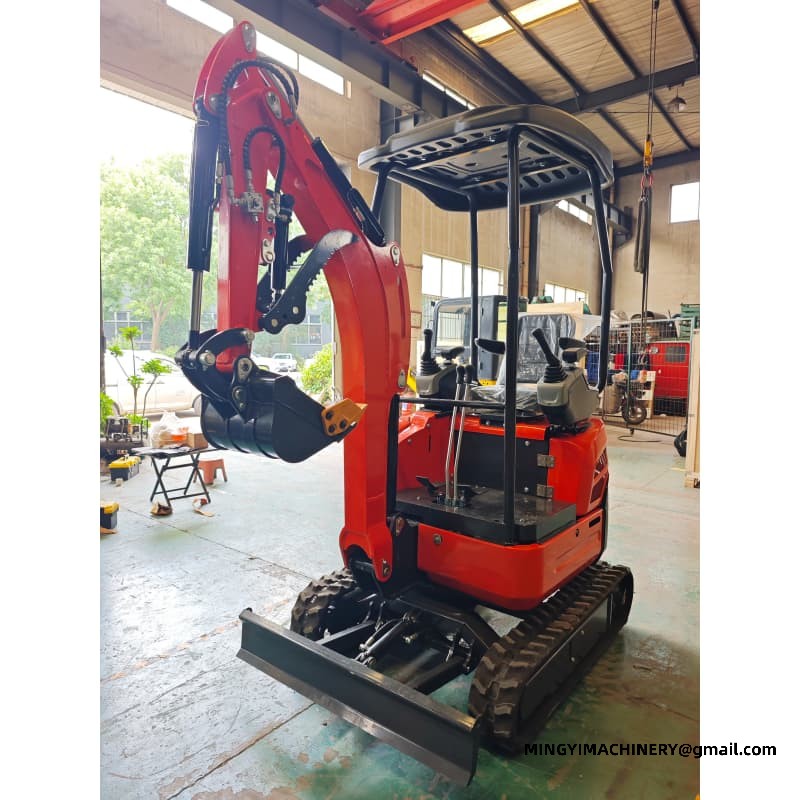
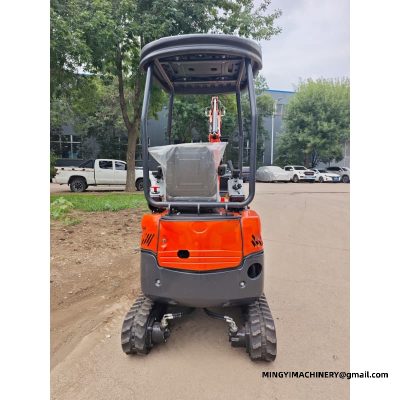
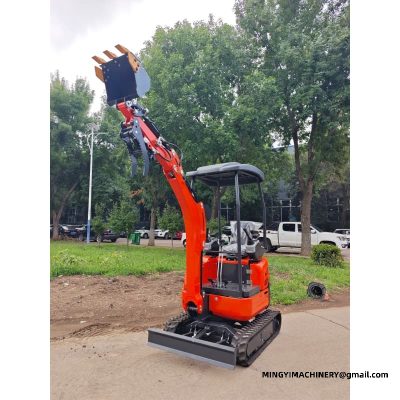
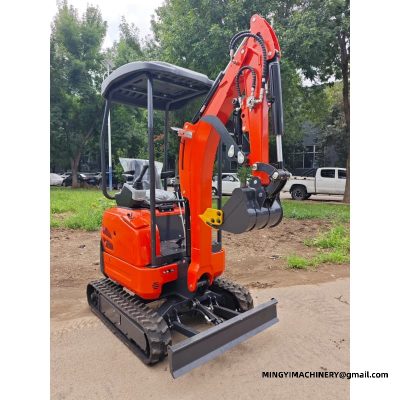
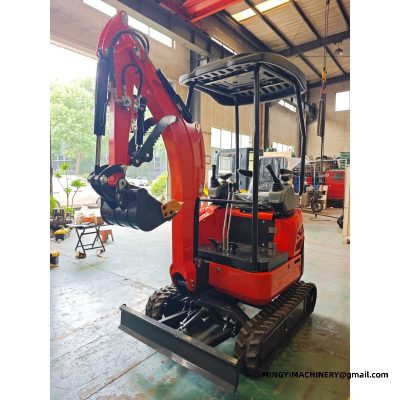
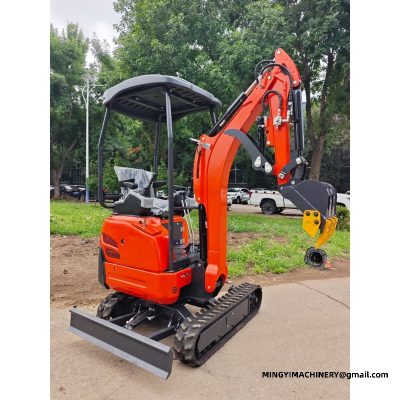
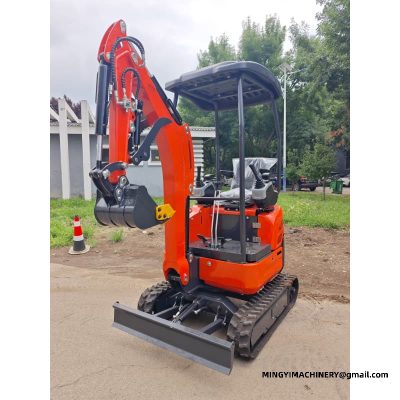
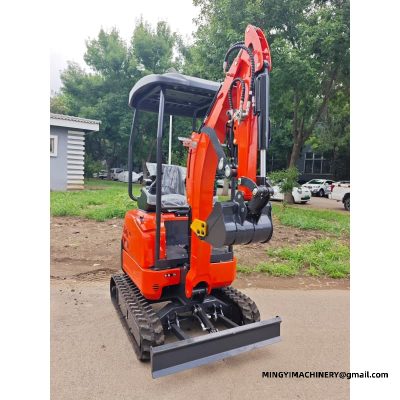
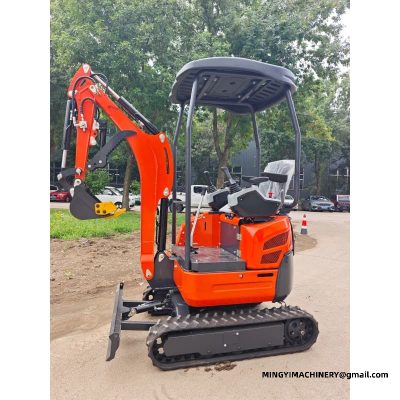
Farmland irrigation runs have to be cut to a consistent depth and left ready for the pipe. A compact machine can follow a field boundary and a headland closely, which is where a larger carrier would struggle.
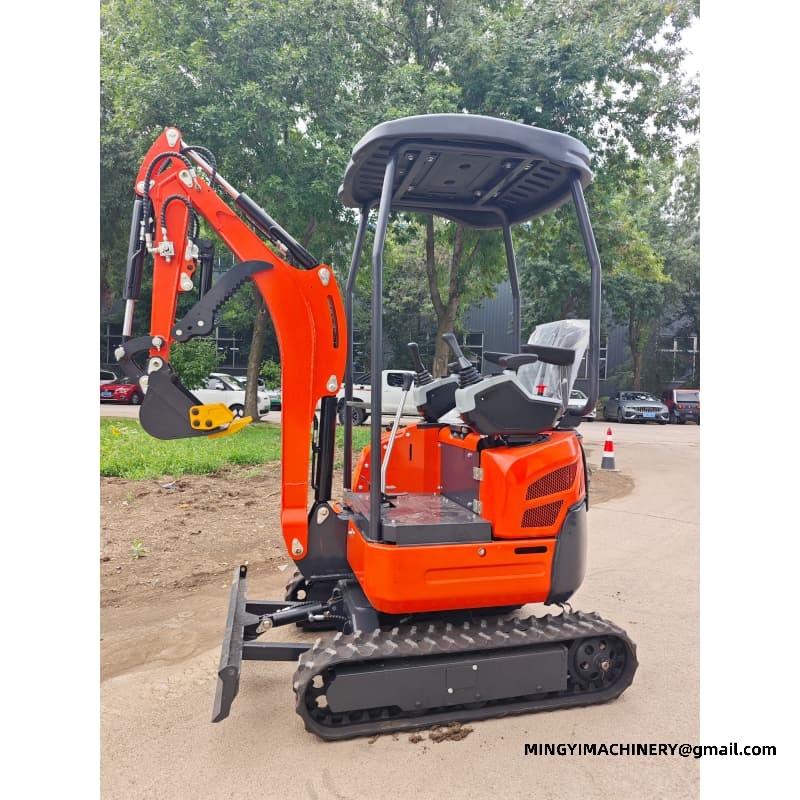
MINGYI mini crawler excavators can be set up for that work at ordering, with a narrow bucket, the coupler to change it and the tracks to suit the ground the run crosses.
Cutting irrigation runs across farmland
Depth control is the sensitive part of an irrigation trench, since the pipe has to sit below the working layer. Working to a steady invert keeps the run even and reduces the pipe the job needs.
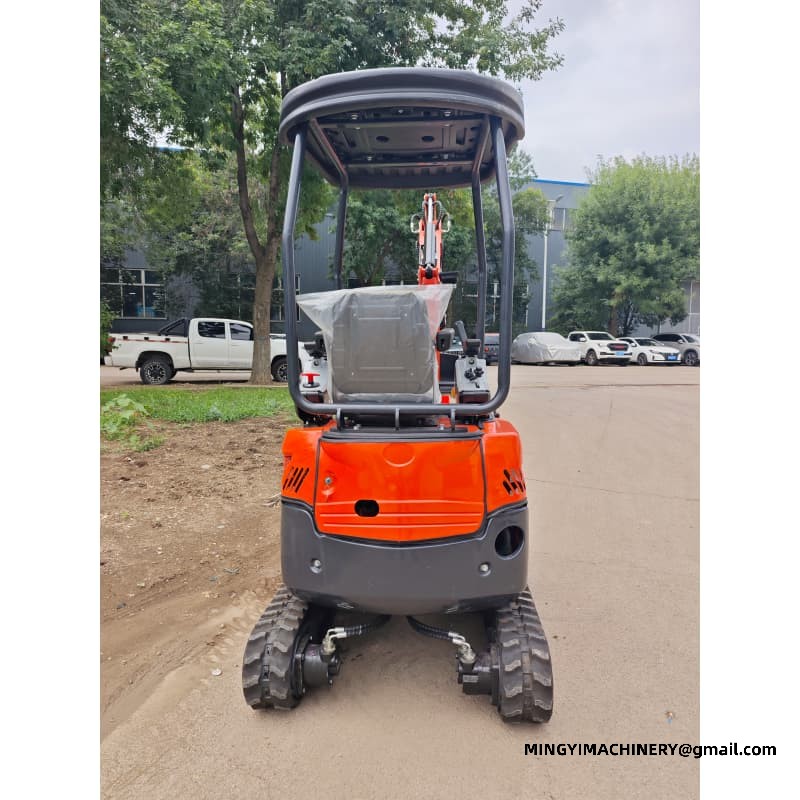
A narrow bucket limits the spoil and the surface disturbed, which matters where the run crosses pasture that returns to use straight after. Cutting the channel cleanly leaves less to make good.
Attachments and tracks for field trenching
A grading bucket shapes the banks and levels the backfill once the pipe is laid, so the field is ready to work again. A breaker hammer is fitted through the same coupler where the route meets hard ground.
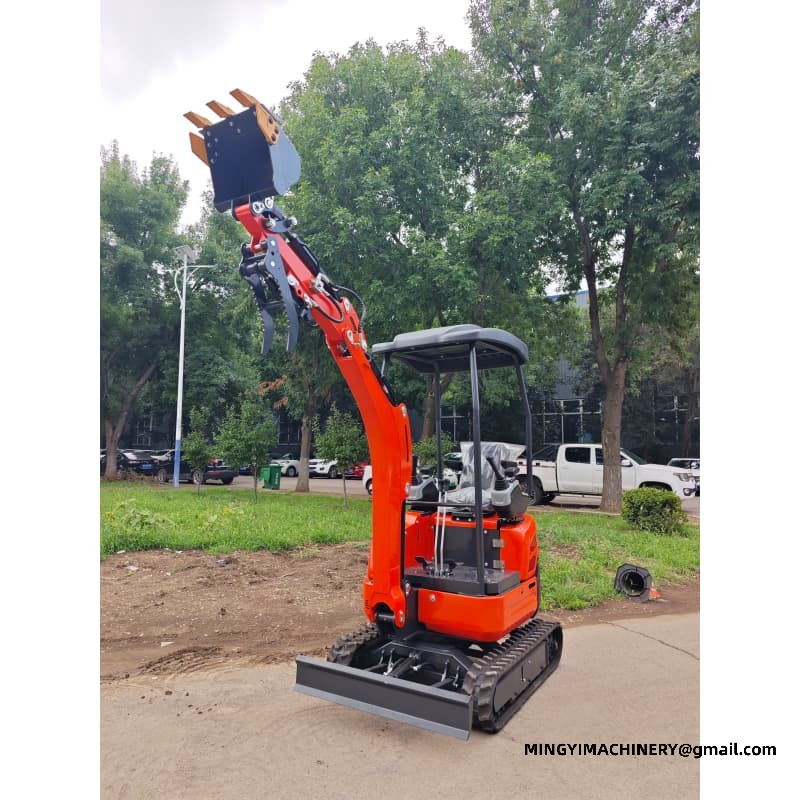
Rubber tracks let the machine cross field tracks and yards without cutting them up, while steel tracks with rubber blocks are chosen for firmer ground. The choice is fixed with the order.
Trench width, coupler and track type should be confirmed before an irrigation machine is ordered. Fixing them in advance is what lets one carrier cut, lay and make good a field run before the season turns.
Noise, dust and working near occupied buildings Work near housing or occupied premises brings constraints that open sites do not. Start times, exhaust condition and how often the excavator needs to reverse are the practical limits that neighbours notice. Dust control is often part of the same conversation. Water, timing and work sequence reduce what leaves the site, and agreeing them in advance keeps this class of machine working rather than stopped after a complaint. OEM and fleet customisation of mini digger for irrigation trenches Distributors and rental fleets usually need the machine to look like theirs. Paint, decals, seat colour and attachment branding can be specified on the unit in daily use at build time rather than applied after import. Documentation can be prepared to suit the importer. Manuals, parts books and decal sets for a machine of this size can be supplied with the buyer's own branding where the order size justifies it. Working near live services with mini digger for irrigation trenches Digging near water, gas and cable is a precision job. The equipment on site is used here because the operator can work in short controlled cuts and because the machine can be positioned without driving over the run being exposed. Utility crews specify the machine itself with a narrow bucket and good visibility for exactly this reason: the machine has to stop at the service, not at the edge of the operator's view. Export packing and shipping of mini digger for irrigation trenches Export documentation, decals and paint are settled before packing. Asking for them with the machine in that duty order avoids a second handling session and keeps the machine on the booked vessel. Buyers who import regularly plan the spare parts with the machine. The model in question ordered with a wearing-parts kit arrives ready to work rather than ready to wait for the first service interval. Working a mini digger for irrigation trenches through the seasons Seasonal planning smooths the workload. Machines that are busy for a few months and idle for the rest benefit from a service slot in the quiet period, and the unit on the job prepared in the off-season starts the busy months reliably. Heat and dust are as limiting as rain. Air intake condition and cooling cleanliness decide how a machine built for the work behaves in a dry season, and both are checked in a minute rather than repaired later. Specifying mini digger for irrigation trenches against a job list The practical way to specify is to write the job list first: the narrowest access, the deepest trench, the heaviest tool and the surfaces the machine must cross. The equipment in service is then matched to those four numbers. Useful information to send with an enquiry includes working width, required digging depth, ground conditions and the attachment set. Those four items let the factory specify the excavator that fits rather than a generic build. Attachments that turn this class of machine into several machines The base machine is a carrier; the tool on the end of the arm decides the task. The unit in daily use fitted with a toothed bucket digs, and the same machine with a breaker, an auger or a grab does work that would otherwise need a second unit on site. Attachment lists are best written before delivery. Specifying a machine of this size with the tools the job list needs avoids the work and delay of adding hydraulics later, and a quick coupler makes the swap a few minutes instead of a workshop job. Working the equipment on site in confined spaces Confined sites are decided by dimensions. Overall width, tail swing and the space needed to work the arm are what let the machine itself operate inside a building, between walls or in a courtyard. Ventilation is the other indoor constraint. Running the model in question inside a closed structure needs air movement, and that is a planning item rather than something to discover after the first hour. Matching the machine in that duty to ground conditions Hard and abrasive ground reverses the specification. On rock, demolition rubble or sharp gravel, steel tracks with rubber blocks on the unit on the job survive conditions that cut a rubber belt quickly. Mixed sites are common and argue for a compromise specification. Most buyers choose rubber for a machine built for the work and accept the wear, unless the majority of the work is on material that will damage it. Landscaping and ground care with the equipment in service Landscape contractors use the excavator for planting holes, pond excavation, grading and retaining work. The machine is light enough to cross finished lawn and narrow enough to work between established trees. Grass cutting heads, rakes and tillers extend this class of machine into ground care. The same carrier that digs a border in spring can cut and clear the same area later in the season. Working on slopes and uneven ground with the unit in daily use Slope work is a stability question before it is a traction question. Knowing the gradient a machine of this size is rated for, and working across rather than straight up where the ground allows, removes most of the risk. Ground that looks level often is not. The equipment on site crossing a filled trench, a soft edge or a hidden void behaves differently from one on undisturbed ground, and those are the places worth walking before driving. Daily checks and maintenance on the machine itself Daily maintenance on the model in question is a short list: engine oil level, coolant, track tension, hydraulic oil level and a look at the hoses. Ten minutes at the start of the shift prevents most of the failures that stop a machine. Greasing is the second item. The slew ring, the boom and arm pins and the bucket linkage on the machine in that duty take grease daily in dusty work, and the intervals shorten further when the machine is used in water or mud. Specification data for the unit on the job Buyers comparing a machine built for the work usually start from four numbers - weight, digging depth, reach and transport width - because those are the ones that decide whether the machine can be delivered and whether it can do the job once it is there. These are the reference figures for the equipment in service. MINGYI confirms the final build sheet, including engine and attachment choices, against the destination and the job list before production. The choice follows the hours. Work that fills a few weeks a year is usually better hired, while the excavator that would be on site most weeks starts to justify ownership once the transport and booking time is counted. Ownership brings obligations that hiring does not. Storage, servicing, insurance and an operator are the items to set against the hire rate before deciding which way this class of machine should be supplied.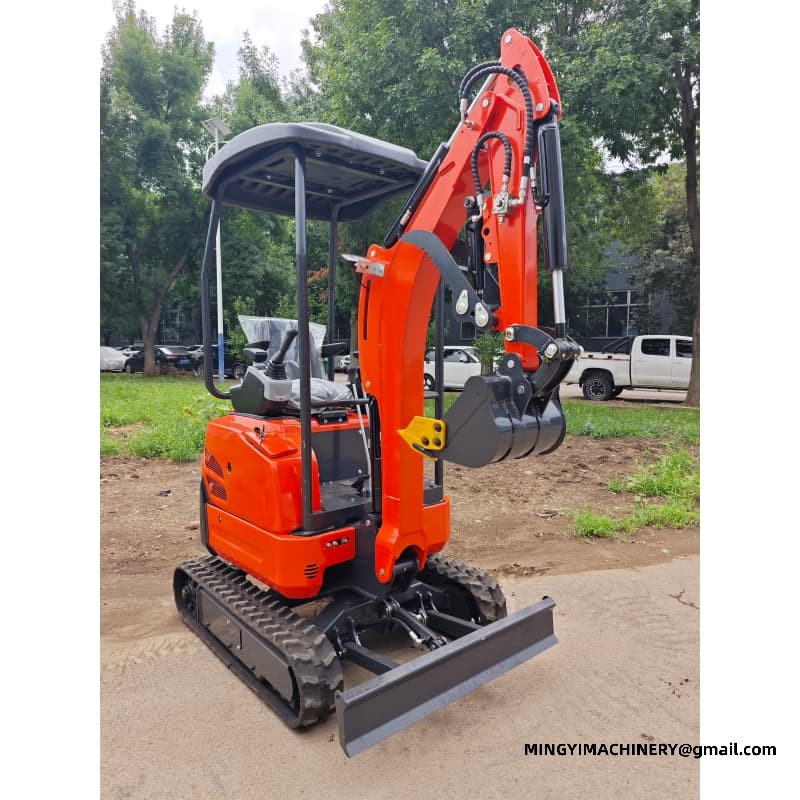
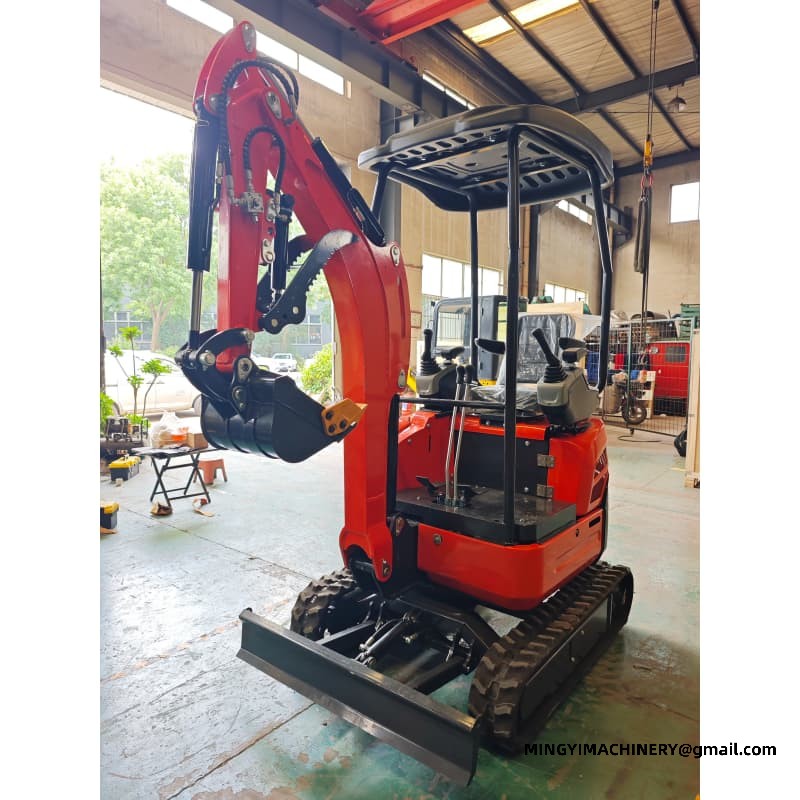
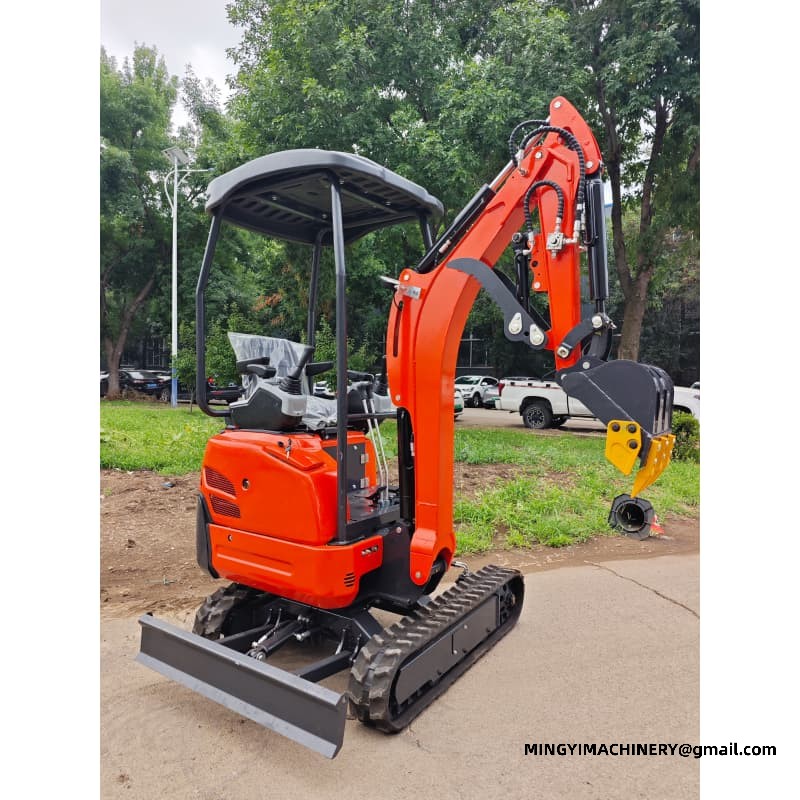
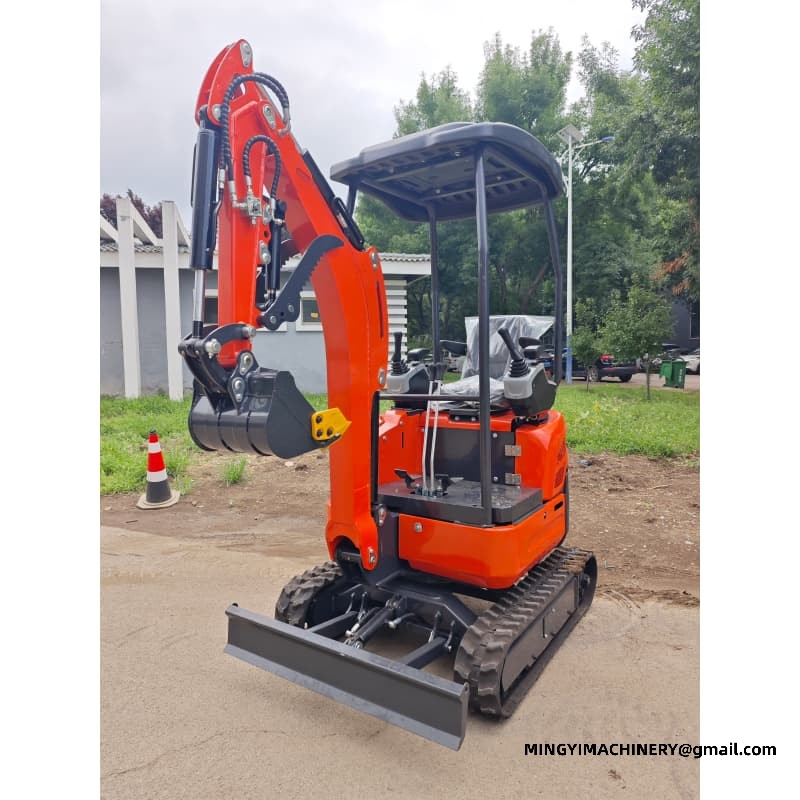
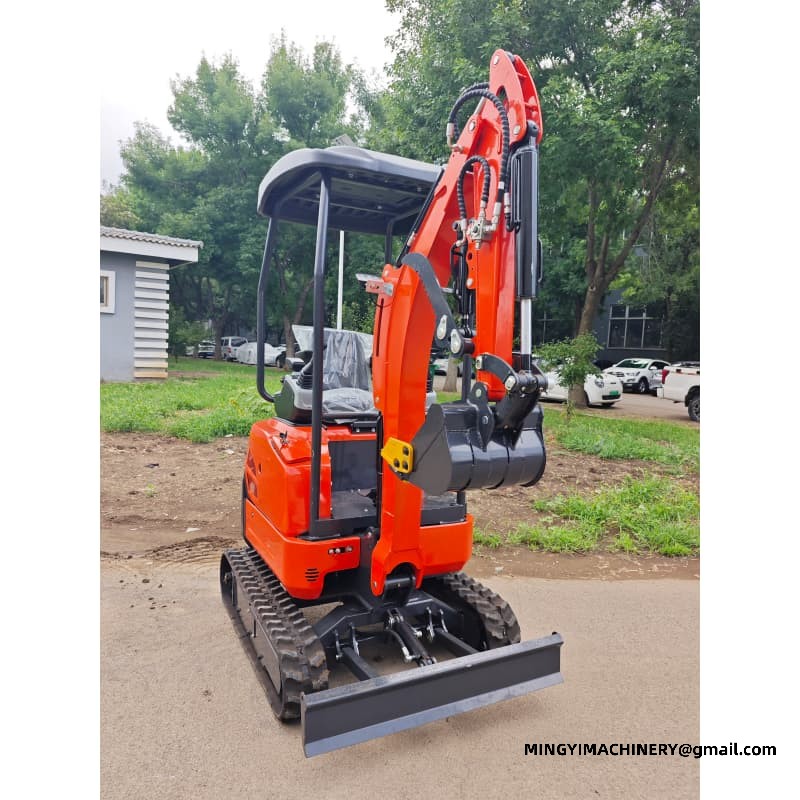
Reference specification — mini excavator range 15W 30-1W 09L 15L Operating weight 1400 kg (3086.47 lb) 2900 kg (6393.41 lb) 1100 kg (2425.08 lb) 1400 kg (3086.47 lb) Transport size (L×W×H) 2200 × 930 × 2250 mm 3000 × 1250 × 2780 mm 2300 × 720 × 1870 mm 2200 × 930 × 2250 mm Max digging depth 1630 mm (64.17 in) 2200 mm (86.61 in) 1400 mm (55.12 in) 1700 mm (66.93 in) Max digging height 2750 mm (108.27 in) 3400 mm (133.86 in) 2800 mm (110.24 in) 2750 mm (108.27 in) Max dumping height 1960 mm (77.17 in) 2400 mm (94.49 in) 1880 mm (74.02 in) 1960 mm (77.17 in) Max digging radius 2900 mm (114.17 in) 4000 mm (157.48 in) 2490 mm (98.03 in) 2900 mm (114.17 in) Max digging distance 2100 mm (82.68 in) 2800 mm (110.24 in) 2000 mm (78.74 in) 2300 mm (90.55 in) Minimum turning radius 1300 mm (51.18 in) 2000 mm (78.74 in) 1400 mm (55.12 in) 1450 mm (57.09 in) Travel speed 3 km/h (1.86 mph) 5 km/h (3.11 mph) 3 km/h (1.86 mph) 3 km/h (1.86 mph) Gradeability 30° 30° 30° 30° Fuel consumption 1-1.3 L/h (0.264—0.343 gal) 2-3 L/h (0.528—0.793 gal) 1-1.3 L/h (0.264—0.343 gal) 1-1.3 L/h (0.264—0.343 gal) Fuel tank capacity 10 L (2.64 gal) 16 L (4.23 gal) 8 L (2.11 gal) 10 L (2.64 gal) Hydraulic oil tank 16 L (4.23 gal) 20 L (5.28 gal) 16 L (4.23 gal) 16 L (4.23 gal) Dozer blade lift height 180 mm (7.09 in) 420 mm (16.54 in) 180 mm (7.09 in) 180 mm (7.09 in) Dozer blade drop depth 210 mm (8.27 in) 210 mm (8.27 in) 210 mm (8.27 in) 210 mm (8.27 in)
Q. What are the unit in daily use?
A. A trench is judged by what happens after the dig: a straight line, a stable wall and a backfill that settles without sinking - all set by bucket width and machine control. Depth control comes from the machine holding position, not from the operator chasing the grade. A machine of this size is one of the pages buyers land on when comparing machines for irrigation trenches, and the factory treats it as a specification conversation rather than a catalogue line.
Q. What about trenches across soft ground?
A. Wider shoes or longer tracks spread the load, and working from mats keeps the trench wall intact while the machine digs alongside it - the same rules the soft-ground pages set out.
Q. What support follows the sale?
A. Spare-part kits, wear items and service documentation ship with the programme, and the parts team works from the serial plate to match components exactly. Warranty and support terms for the irrigation trenches order are confirmed in writing before the machine leaves.
Handover and getting familiar with the equipment on site
Familiarisation is not the same as reading the manual. Sitting on the machine itself, working through the controls at low speed and learning where the machine balances takes an hour, and that hour is what keeps the first week uneventful.
A second operator for the model in question
Training is simpler than repair. An hour spent with a new operator on the machine in that duty, covering the limits and the awkward cases, is the least lengthy hour in the whole ownership.
E-mail : sales@mingycn.com
LINE ( ID ): mingyicn
Slope working and stability with mini digger for irrigation trenches
Tracks or tyres, the contact patch is what holds the machine, and worn or wrongly inflated running gear reduces it more than most operators expect.
Working up and down the fall line rather than across it keeps the load predictable, and where that is impossible the load is reduced.
A machine parked on a gradient needs the parking brake applied, the attachment lowered and, where the ground allows, chocks under the wheels or tracks.
Related pages
cabin mini excavator for long shifts · mini digger with rubber tracks for mud · Heavy Duty Wheel Loader: Frame Steel, Cylinders and Cooling · Mini Excavators








