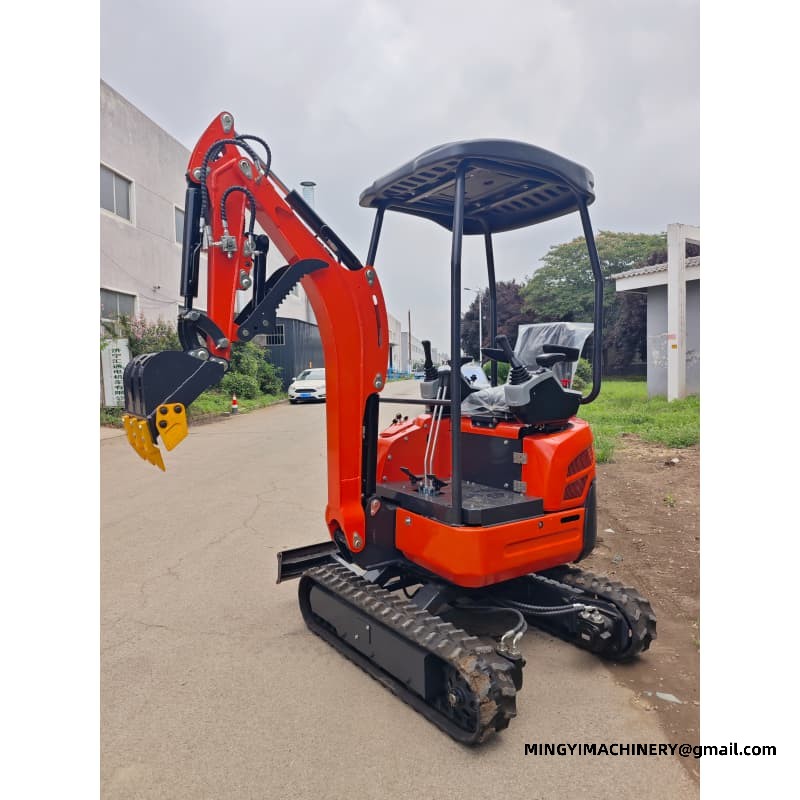
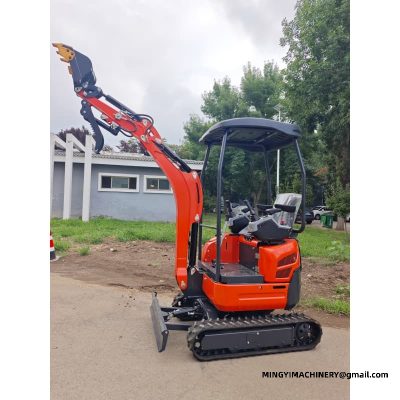
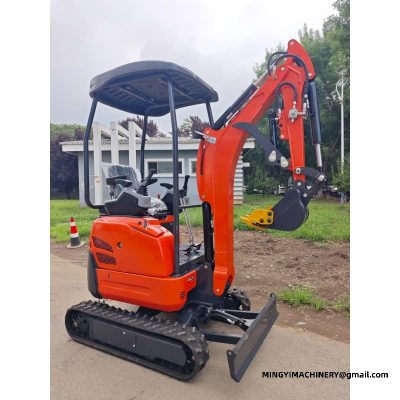
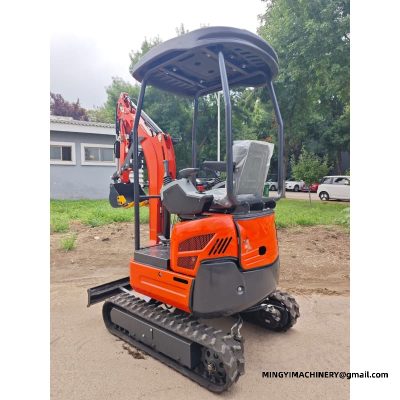
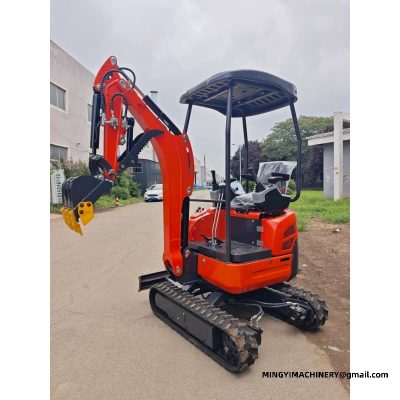
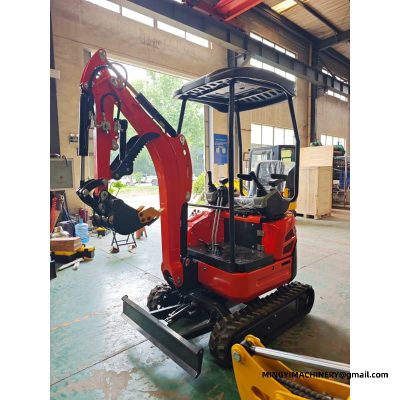
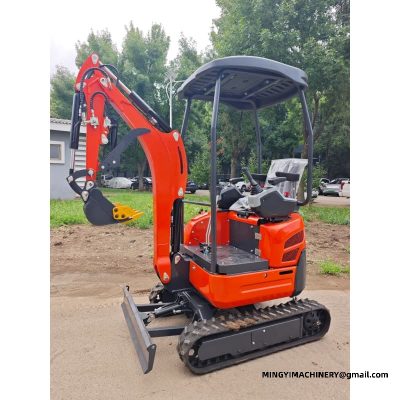
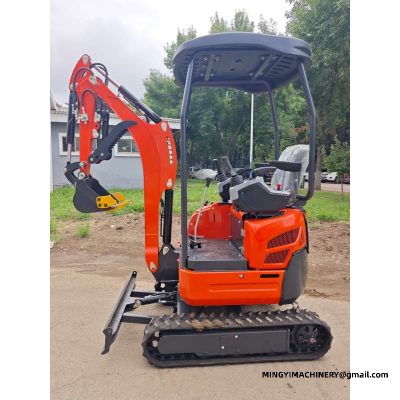
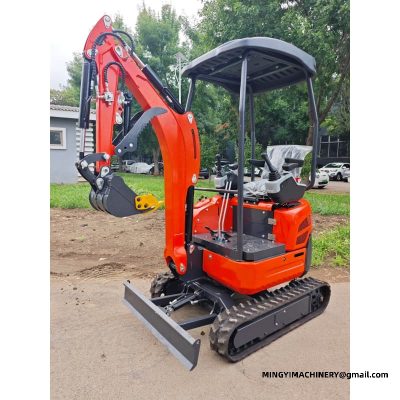
On a compact excavator the operator is in the seat for the whole shift, and the working position is where the day is spent. Weather protection, visibility and control layout therefore affect output as directly as the machine's hydraulic performance.
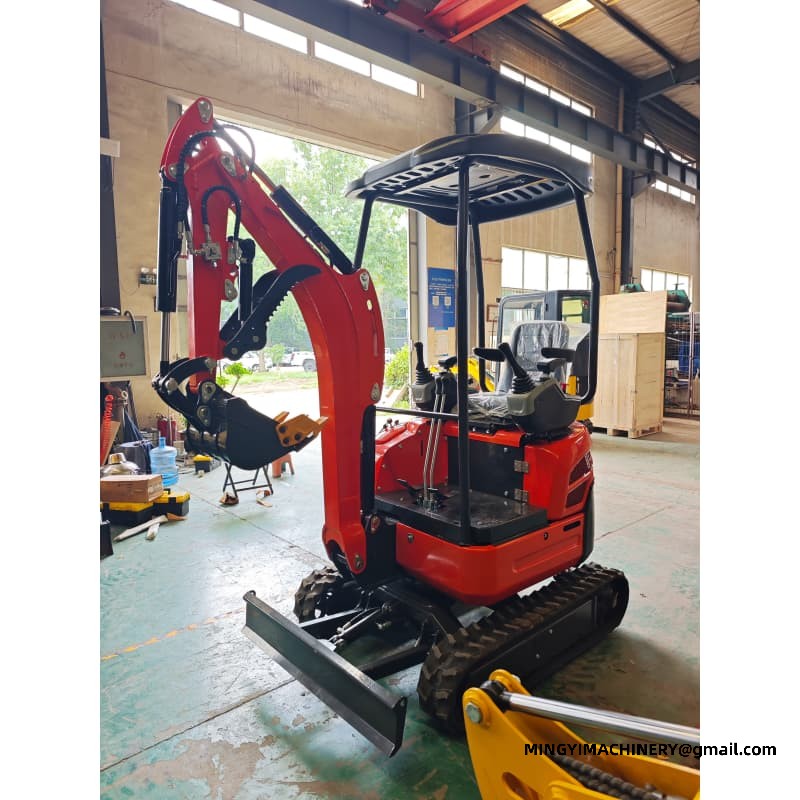
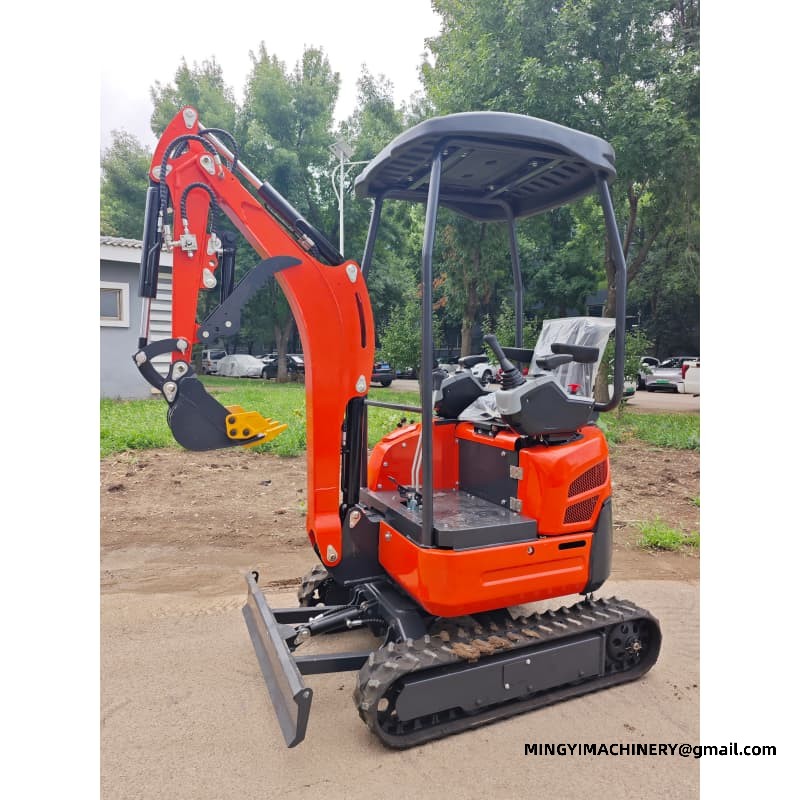
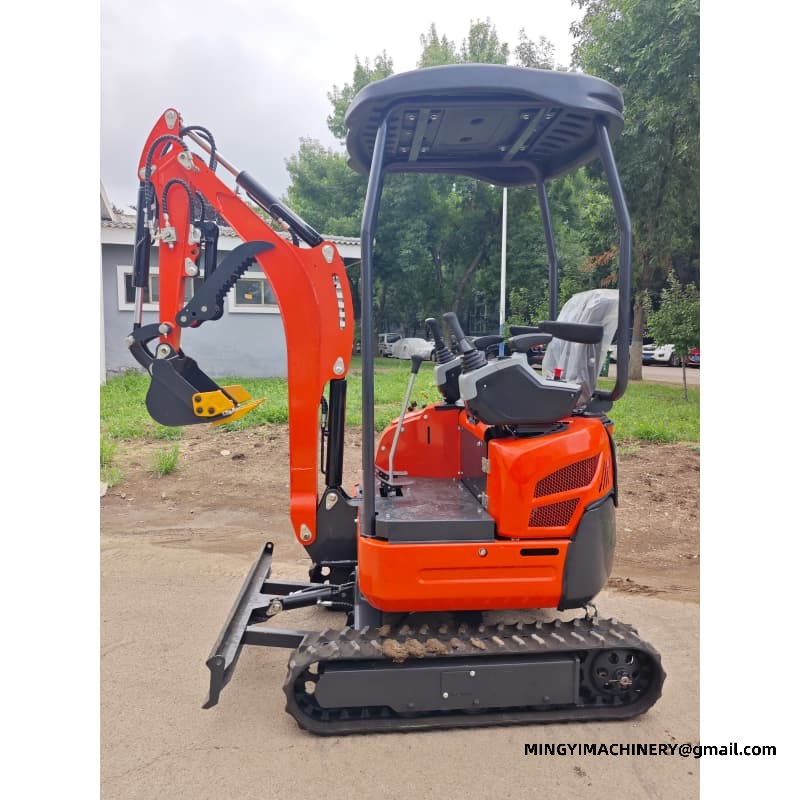
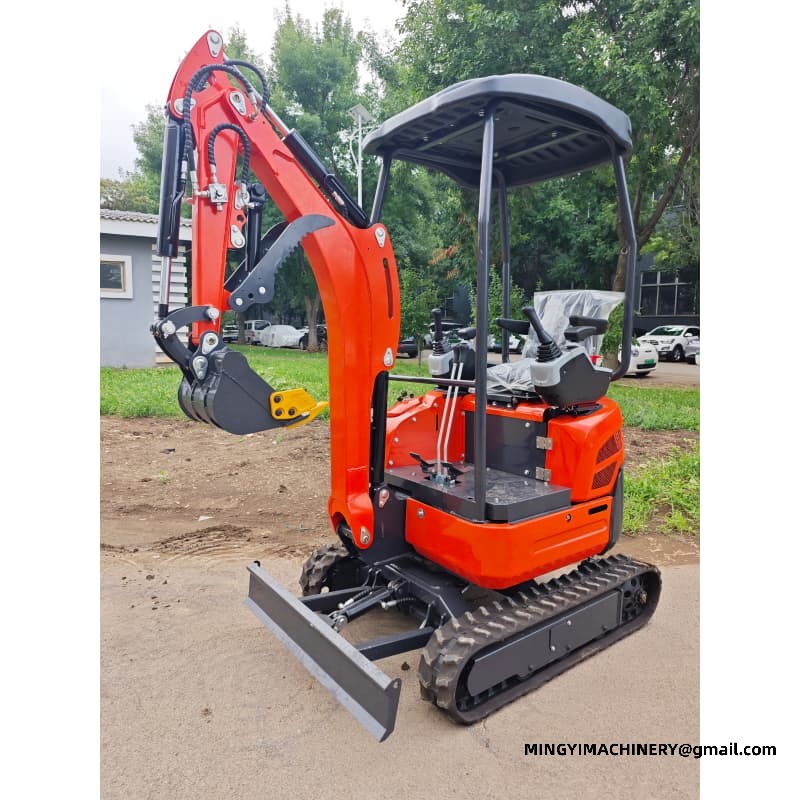
MINGYI offers enclosed cab versions across its compact crawler range alongside canopy machines. Each unit is built to order, so the cab form is chosen at the ordering stage together with the engine, the track type and the attachment set.
Comfort across a full working shift
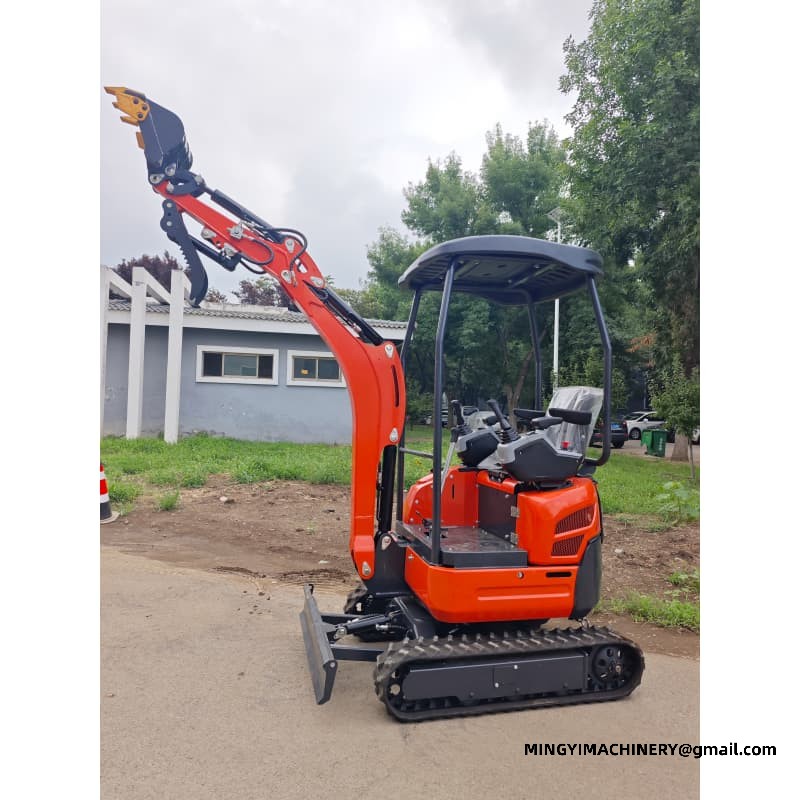
An enclosed cab keeps rain, wind and dust away from the operator, which matters on sites where the machine runs from early morning until dark. A glazed cab also allows the screens to be cleared and kept clear, which helps visibility in wet or dusty conditions.
Heat and cold are experienced differently in a cab. On long contracts in exposed locations, protection from the weather allows a full day of accurate work rather than a shorter one interrupted by the conditions.
Deciding between a cab and a canopy machine
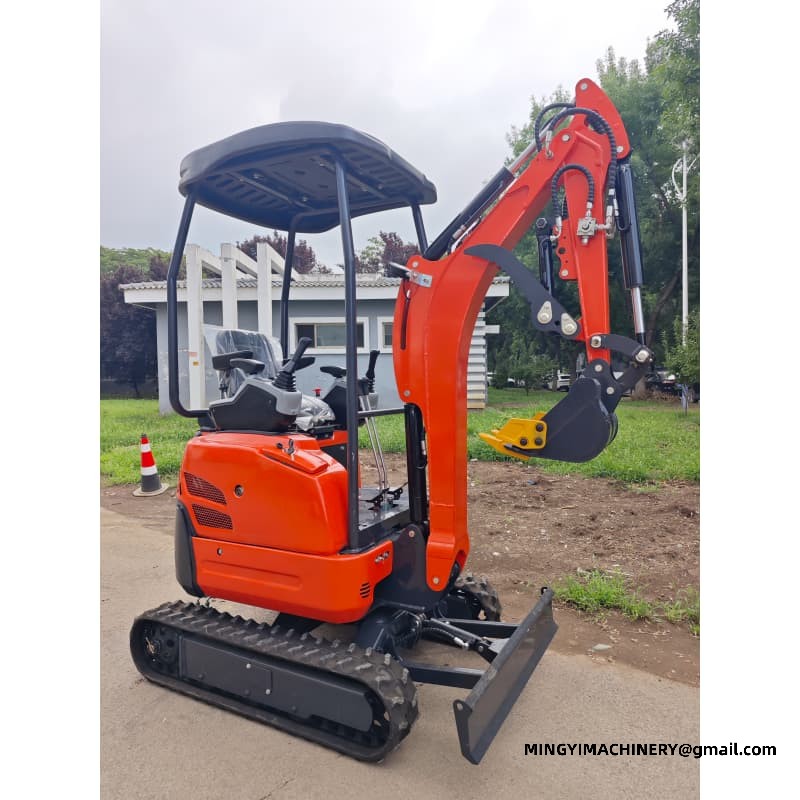
A cab adds weight and height, and those are real constraints where the machine has to pass under an obstruction or travel on a small trailer. A canopy version is lighter and lower, and is often chosen for domestic and landscape work in mild conditions.
Neither form changes the digging performance. Boom arrangement, undercarriage and attachments are the same specification decisions on both, and they are settled with the cab question when the machine is ordered rather than after it is delivered.
For contractors working long shifts in exposed locations, the cab is a working condition rather than a comfort extra. A cabin mini excavator ordered with the rest of the specification around it keeps the operator productive for the whole of a long day.
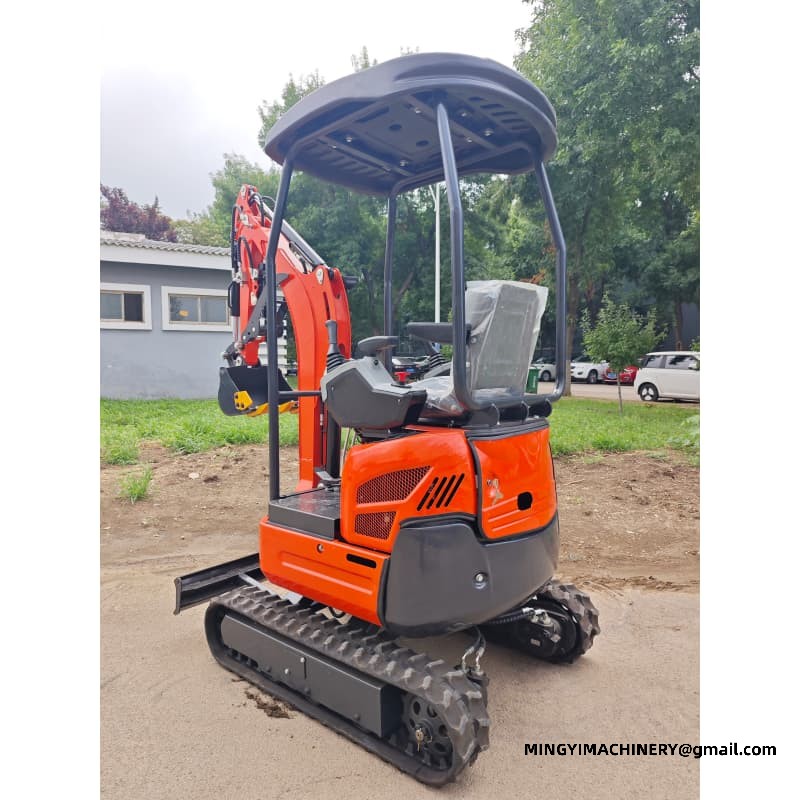
Trailering and moving cabin mini excavator for long shifts Transport weight and width decide whether a machine needs a specialist haulier. The excavator sized to travel on a standard plant trailer behind a suitable vehicle moves with the crew rather than on a scheduled low loader. Detachable components reduce transport length. This class of machine built with a removable arm section or a folding step fits a shorter trailer and may avoid an oversize movement permit. Working near live services with cabin mini excavator for long shifts Digging near water, gas and cable is a precision job. The unit in daily use is used here because the operator can work in short controlled cuts and because the machine can be positioned without driving over the run being exposed. The risk on utility work is not machine power but machine placement. A machine of this size that fits the working width leaves the surrounding ground undisturbed, which keeps the trench stable and the reinstatement small. Boom configuration for cabin mini excavator for long shifts A swing boom lets the machine dig parallel to its tracks without repositioning, which is what makes trenching beside a wall or a fence practical. On the equipment on site this is often the option that decides whether a job is possible at all. Extended and offset boom configurations change reach and working range. The machine itself with a longer arm reaches further but lifts less at full extension, so the specification is set against the deepest and furthest point on the job list. Hydraulic circuits on a cabin mini excavator for long shifts Auxiliary hydraulic lines are what let a machine drive a tool rather than only a bucket. The model in question specified with the right circuits and flow runs a breaker or an auger without an add-on power pack bolted to the frame. Hydraulic specification is easier to settle at build time than to correct later. The machine in that duty delivered without auxiliary lines can still dig, but every additional tool becomes a retrofit project. Road and paving work for cabin mini excavator for long shifts Road repair generates short, interrupted jobs - a patch, a drainage connection, a kerb line. The unit on the job is economical here because it travels on a small trailer and starts working minutes after arriving. Patching and reinstatement favour a machine that can work in a lane closure. A machine built for the work occupies less road than a full-size excavator, which reduces the traffic management needed and the length of the closure. Lifting and material handling with a cabin mini excavator for long shifts Lifting with a machine built to dig needs a plan. The load, the radius and the ground under the excavator all matter, and the safe figure is the one on the chart rather than the one that looks possible. Ground condition under the machine is part of every lift. Soft or uneven support is the common factor in handling incidents, and checking it takes less time than recovering the equipment in service that has settled. Canopy or enclosed cab on this class of machine The cab decision follows the climate and the hours. Operators working a full shift in the unit in daily use benefit from a sealed cab with wipers and heating; operators stepping on and off every few minutes usually prefer the canopy for the visibility and the quick exit. Enclosure also changes noise and dust exposure. A sealed cab on a machine of this size keeps dust out on dry sites and lets the machine work through weather that would otherwise stop a canopy machine for the day. Getting the equipment on site through a narrow gap Access decides the machine before output does. With the machine itself the limiting dimension is usually the widest point on the way in, so measuring the gate, the corridor and the turning space first saves a wasted delivery and a second visit. Contractors who buy the model in question normally have one job in mind that nothing else reaches. The purchase order follows the access measurement, not the other way round, and the build sheet is then settled around it. Engine options behind the machine in that duty Power unit selection is settled against the service network the buyer already uses. MINGYI offers Kubota D722, Kubota D902, YANMAR, Changchai, Laidong, Runtong, YARMAX, Youpu 2V80 and Youpu 195, so a fleet running one brand of engine can keep the same filters, the same parts supplier and the same mechanic. Engine choice is also an emissions and documentation question for some markets. Listing the available units with the unit on the job enquiry lets the factory confirm what can be supplied and documented for the destination country. Export packing and shipping of a machine built for the work Machines leave the factory prepared for container or flat rack shipment. The equipment in service is normally shipped with the attachment set and the spare parts list agreed in advance so the container is planned once. Export documentation, decals and paint are settled before packing. Asking for them with the excavator order avoids a second handling session and keeps the machine on the booked vessel. Track choice for this class of machine Rubber tracks suit paved and landscaped ground because they spread the machine weight and leave the surface intact. Steel tracks with rubber blocks are specified where the ground is rougher or the working day is longer, and the choice can be made per machine rather than accepted as a factory default. Track type changes what the machine can cross and what it leaves behind. Buyers specify rubber for lawns, driveways and municipal work, and steel with rubber blocks for sites where sharp material would cut a rubber belt in a week. Specification data for the unit in daily use Where a machine of this size is being specified for a job list, the table below gives the factory figures that matter most: what the machine weighs, how deep and how far it works, and what it measures on a trailer. These are the reference figures for the equipment on site. MINGYI confirms the final build sheet, including engine and attachment choices, against the destination and the job list before production. Output on a compact machine comes from placement rather than power. An experienced operator keeps the machine itself working inside the swing arc, positions once and digs a full run instead of repositioning for every bucket. The second habit is tool discipline. Running the model in question with the right bucket width for the trench means less spoil, less reinstatement and a cleaner job than a wide bucket and a lot of trimming.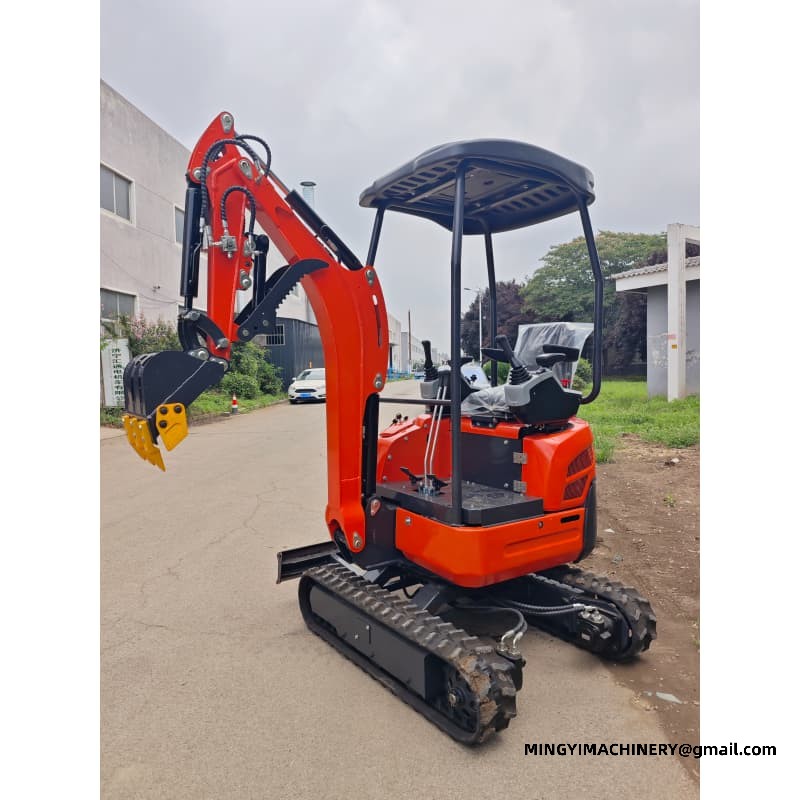
Reference specification — mini excavator range 13W 30-1W 12L 25L Operating weight 1300 kg (2866.01 lb) 2900 kg (6393.41 lb) 1200 kg (2645.55 lb) 2200 kg (4850.17 lb) Transport size (L×W×H) 2200 × 930 × 2250 mm 3000 × 1250 × 2780 mm 2200 × 930 × 2250 mm 3000 × 1300 × 2700 mm Max digging depth 1630 mm (64.17 in) 2200 mm (86.61 in) 1700 mm (66.93 in) 2300 mm (90.55 in) Max digging height 2750 mm (108.27 in) 3400 mm (133.86 in) 2600 mm (102.36 in) 3100 mm (122.05 in) Max dumping height 1960 mm (77.17 in) 2400 mm (94.49 in) 1800 mm (70.87 in) 2050 mm (80.71 in) Max digging radius 2900 mm (114.17 in) 4000 mm (157.48 in) 2900 mm (114.17 in) 3900 mm (153.54 in) Max digging distance 2100 mm (82.68 in) 2800 mm (110.24 in) 2300 mm (90.55 in) 3100 mm (125.05 in) Minimum turning radius 1300 mm (51.18 in) 2000 mm (78.74 in) 1450 mm (57.09 in) 1800 mm (70.87 in) Travel speed 3 km/h (1.86 mph) 5 km/h (3.11 mph) 3 km/h (1.86 mph) 7 km/h (4.35 mph) Gradeability 30° 30° 30° 30° Fuel consumption 1-1.3 L/h (0.264—0.343 gal) 2-3 L/h (0.528—0.793 gal) 1-1.3 L/h (0.264—0.343 gal) 2-3 L/h (0.528—0.793 gal) Fuel tank capacity 10 L (2.64 gal) 16 L (4.23 gal) 10 L (2.64 gal) 16 L (4.23 gal) Hydraulic oil tank 16 L (4.23 gal) 20 L (5.28 gal) 16 L (4.23 gal) 18 L (4.76 gal) Dozer blade lift height 180 mm (7.09 in) 420 mm (16.54 in) 180 mm (7.09 in) 230 mm (9.06 in) Dozer blade drop depth 210 mm (8.27 in) 210 mm (8.27 in) 210 mm (8.27 in) 280 mm (11.02 in)
Q. What are the machine in that duty?
A. Cab or canopy is a specification decision tied to headroom, weather and operator retention - not a comfort afterthought. Suspension seats and sensible control layout decide how the operator feels at hour eight, which decides how the work looks. The unit on the job is one of the pages buyers land on when comparing machines for long shifts, and the factory treats it as a specification conversation rather than a catalogue line.
Q. What makes a long shift tolerable?
A. A suspension seat, sensible lever geometry and a cab that seals against dust and weather - operator comfort is a productivity specification, not a luxury.
Q. Can I see the machine before it ships?
A. Inspection is arranged at the factory, in person or by a scheduled video walk-around - the same session covers paint, decals and attachment fitment for the long shifts specification, so the machine inspected is the machine that ships.
Hot, humid and dusty conditions around a machine built for the work
Dust is the enemy of every rotating joint. Keeping the radiator and the air intake of the equipment in service clean, and cleaning them before they are blocked rather than after, is what separates a machine that lasts from one that overheats.
Planning the season around the excavator
The calendar decides more than the specification does. Planning when this class of machine will be working, when it will be serviced and when it can be spared keeps the maintenance out of the weeks that matter.
E-mail : sales@mingycn.com
LINE ( ID ): mingyicn
Common operator mistakes with cabin mini excavator for long shifts
Most early damage comes from three habits, namely working with the wrong attachment angle, carrying loads too high and skipping the walk-around.
Ignoring a small change in sound or feel is the mistake that turns a service item into a repair, and reporting it early is the habit worth building.
Filling the tank at the end of the shift rather than the start reduces condensation in the tank overnight.
Related pages
mini digger with rubber tracks for mud · mini excavator for house demolition · Compact Wheel Loader: Clearance, Footprint and Low Profile · Mini Excavators









