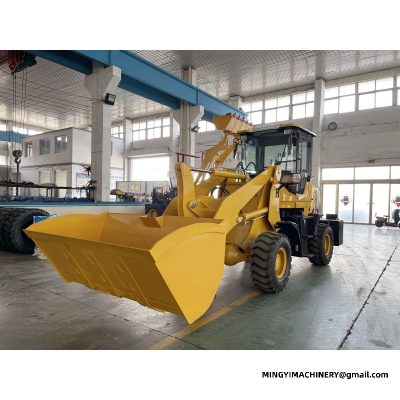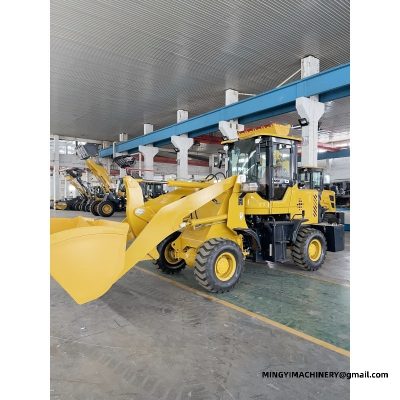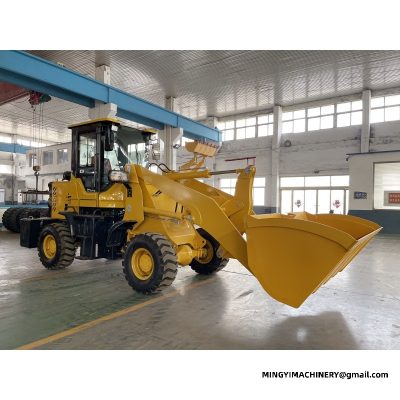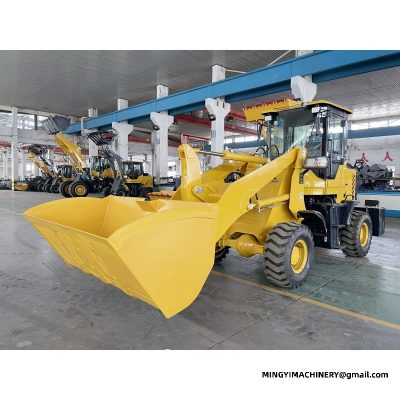
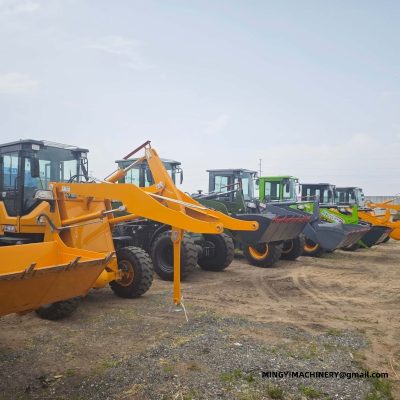
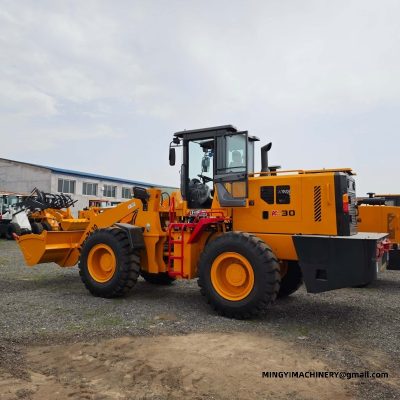
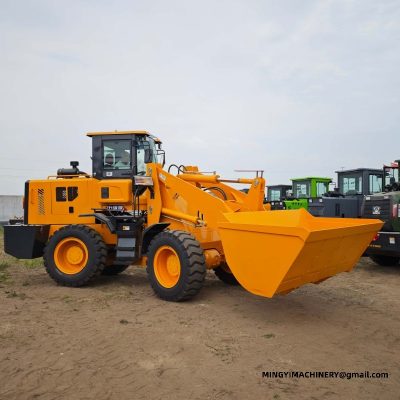
A compact wheel loader that cannot turn in the space you have is a compact wheel loader that cannot work there, whatever its specification says. Access is a hard constraint and it fails silently: track 1.5 m (wheel-side reduction axle); 1.45 m (Isuzu axle) on the heavy-duty 3.8 m small-frame wheel-side reduction wheel loader against 1.5 m (wheel-side reduction axle); 1.45 m (Isuzu axle) on the heavy-duty 4.2 m small-frame wheel-side reduction wheel loader, footprint 4.2 m against 4.25 m. Once access is settled, the real selection begins — bucket 0.4 m³ or 0.4 m³, dump height 3.8 m or 4.2 m, and the hinge and cross-member steel that decides whether the frame lasts. All of it is set out below.
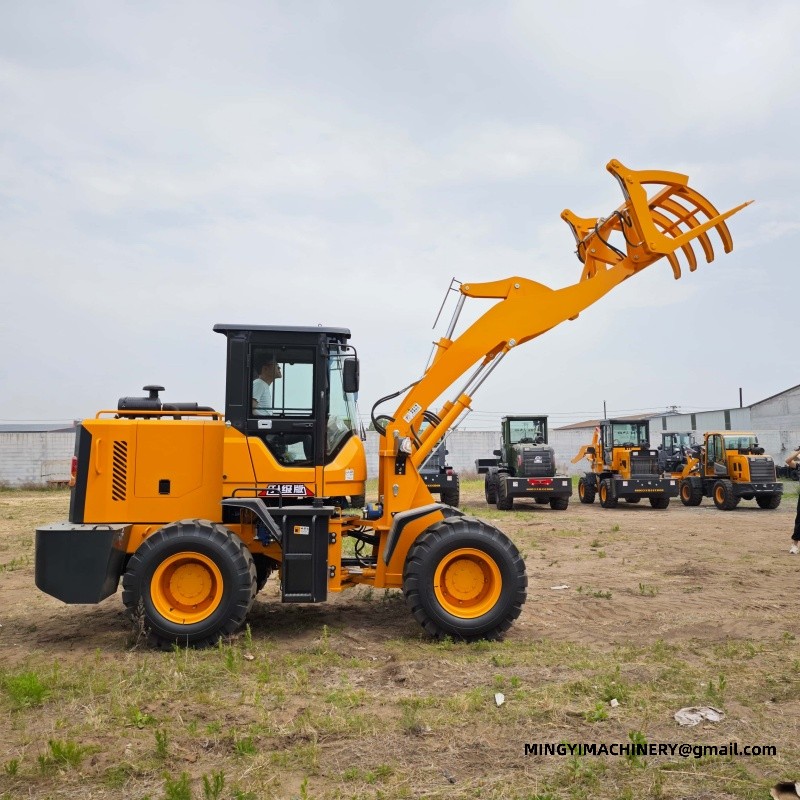
A loader is a tool carrier that happens to come with a bucket. What it can carry is decided at the factory — section width and pin geometry — which is why the heavy-duty 3.8 m small-frame wheel-side reduction wheel loader with its 430 mm section and the light-duty 3.5 m medium-frame wheel-side reduction wheel loader with 430 mm do not share tooling even where their bucket capacities look close.
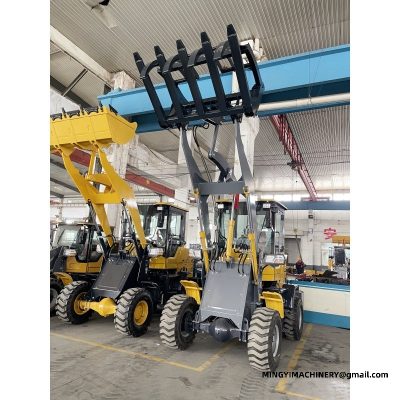
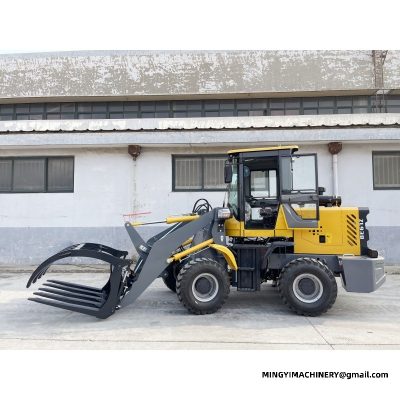
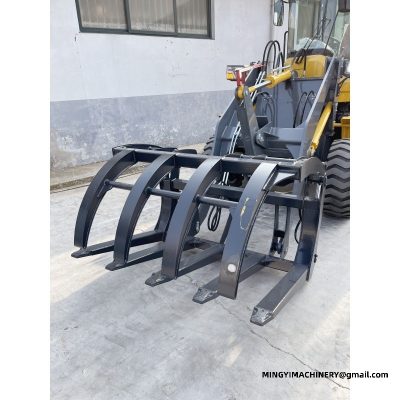
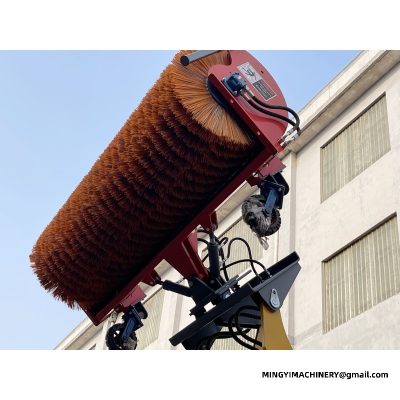
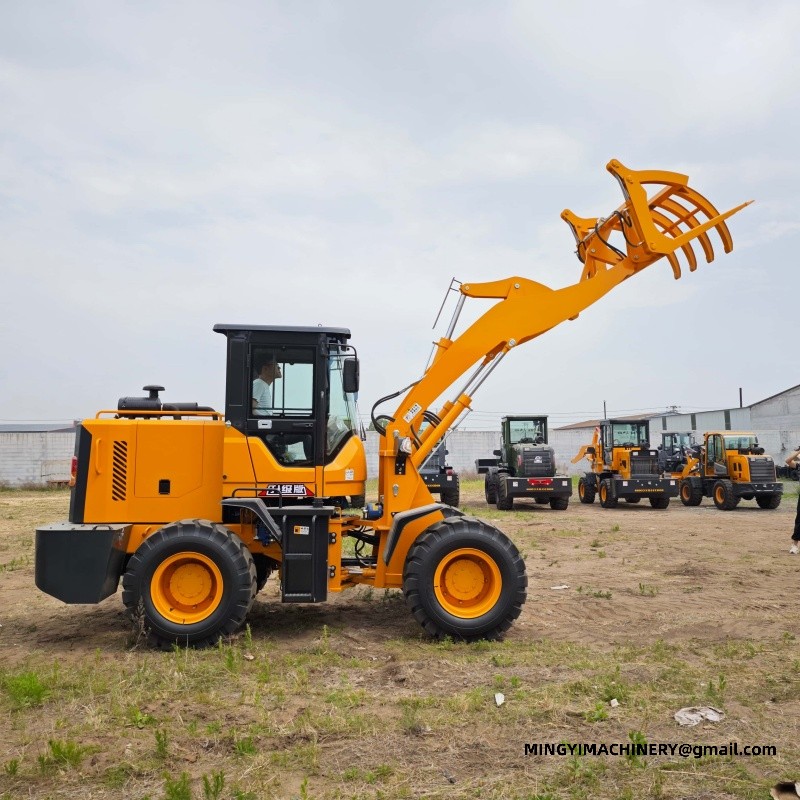
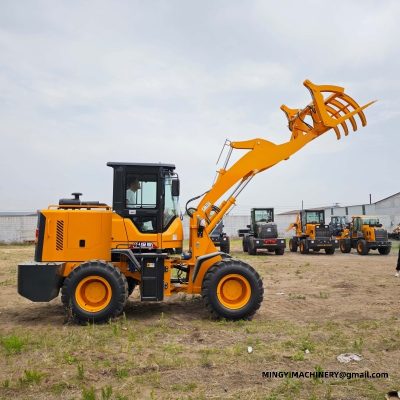
Plan the tool set with the machine order. Bucket plus forks covers most general work; add a grapple for silage, scrap or demolition; add a snow tool where winters are real. If any tool is hydraulically actuated, order the third circuit now, because the 40 pump (490 engine); 1045 pump (4102 turbo engine) on the heavy-duty 3.8 m small-frame wheel-side reduction wheel loader and the 2063 pump on the light-duty 3.5 m medium-frame wheel-side reduction wheel loader were sized for the base machine and a retrofit means a valve block, plumbing and labour in the field.
Every axle specification is a compromise between traction and speed, and the range resolves it with two families: 1.5 m (wheel-side reduction axle); 1.45 m (Isuzu axle) track on the heavy-duty 4.2 m small-frame wheel-side reduction wheel loader and 1.6 m on the light-duty 3.5 m medium-frame wheel-side reduction wheel loader. The wider track adds stability; the reduction layout decides whether the torque reaches the ground. Ask which ground the machine will spend eighty per cent of its hours on, then read the axle line.
Stability also comes from elsewhere in the table. The heavy-duty 4.2 m small-frame wheel-side reduction wheel loader carries a 4.25 m front-wheel-to-counterweight length and a 0.4 m³ bucket at 4.2 m; the light-duty 3.5 m medium-frame wheel-side reduction wheel loader carries 4.3 m with 0.52 m³ at 3.5 m. A wide track on a short wheelbase is less stable than a narrower track on a long one, which is why the footprint figure belongs in the same conversation as the axle. On soft or rutted ground, take the hub reduction every time.
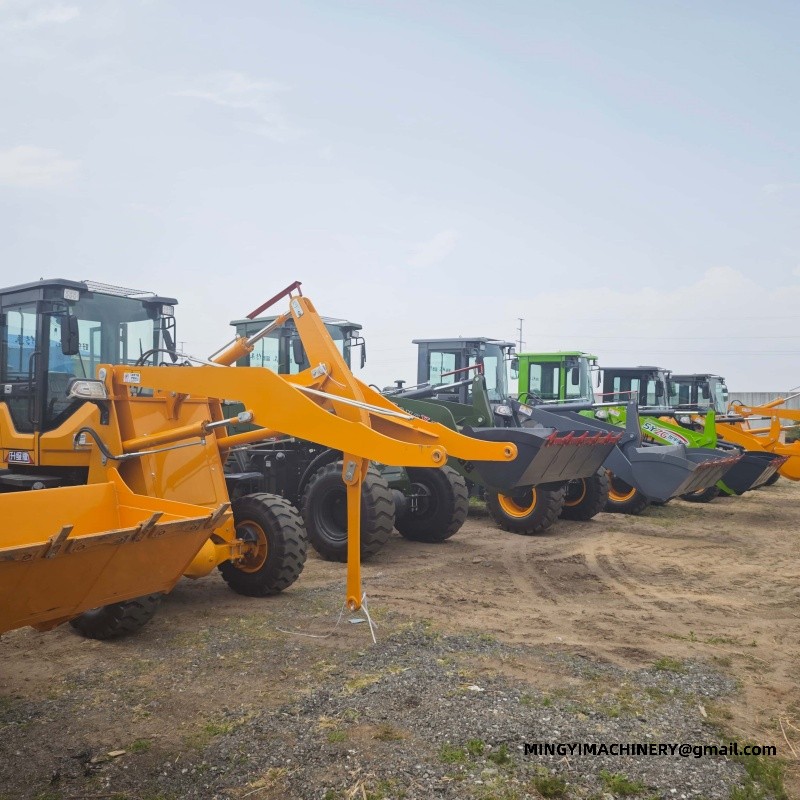
Winter changes three things: the battery has less to give, the oil is thicker, and the operator is working in gloves. The first two are specification questions. 80 Ah covers the first. The hydraulic side, centre cylinder 60 / side cylinder 50 with a 2063 pump, is sized for the loads it will see at working temperature and will simply be slower until it warms.
The third is a machine-layout question and comes down to the rear frame and the tank: 300 mm high x 800 mm wide of rear section and 70 L (75# large tank) of fuel. Cold-weather work also means more idling, so tank capacity should be read against winter consumption rather than summer consumption. A machine that needs refuelling at minus ten with an operator standing outside is a specification failure, not a weather problem.
| Specification extract — light-duty 4.2 m medium-frame wheel-side reduction wheel loader | |
|---|---|
| Bucket capacity | 0.52 m³ |
| Dump height | 4.2 m |
| Track width | 1.6 m |
| Boom arm thickness | 30 mm |
| Boom arm width | 450 mm |
| Boom arm length | 2.9 m |
| Boom arm centre distance | 900 mm |
| Cross-member thickness | 45 mm |
| Front hinge plate thickness | 45 mm |
| Rear hinge plate thickness | 30 mm |
| Rear frame section | 300 mm high x 800 mm wide |
| Hydraulic cylinders | centre cylinder 60 / side cylinder 50 |
| Fuel tank | 70 L (75# large tank) |
| Battery | 80 Ah |
| Front wheel to counterweight | 4.3 m |
| Radiator | 4105 core |
| Work pump | 2063 pump |
| Travel pump | 25 pump |
Operators get blamed for slow cycles that were decided in the frame shop. Where the lift is long, the pump and the cylinders set the pace: this build runs 32 pump with centre cylinder 40 / side cylinder 40. Where the run between face and truck is long, travel matters more, and that is the 316 pump and the 3.5 m wheelbase. Where the heap is packed, breakout matters most, and breakout comes from boom wall, 20 mm, working against bucket width.
Compare two builds on the same heap and the difference shows up as a few seconds a pass. The light-duty 4.2 m medium-frame wheel-side reduction wheel loader carries 0.52 m³ against 0.3 m³ on the standard 2.4 m low-profile wheel loader, and lifts to 4.2 m against 2.4 m. Bigger is not automatically faster: a bucket that fills completely in two passes beats one that fills partly in three, and the frame that stays tight keeps doing it in month thirty.
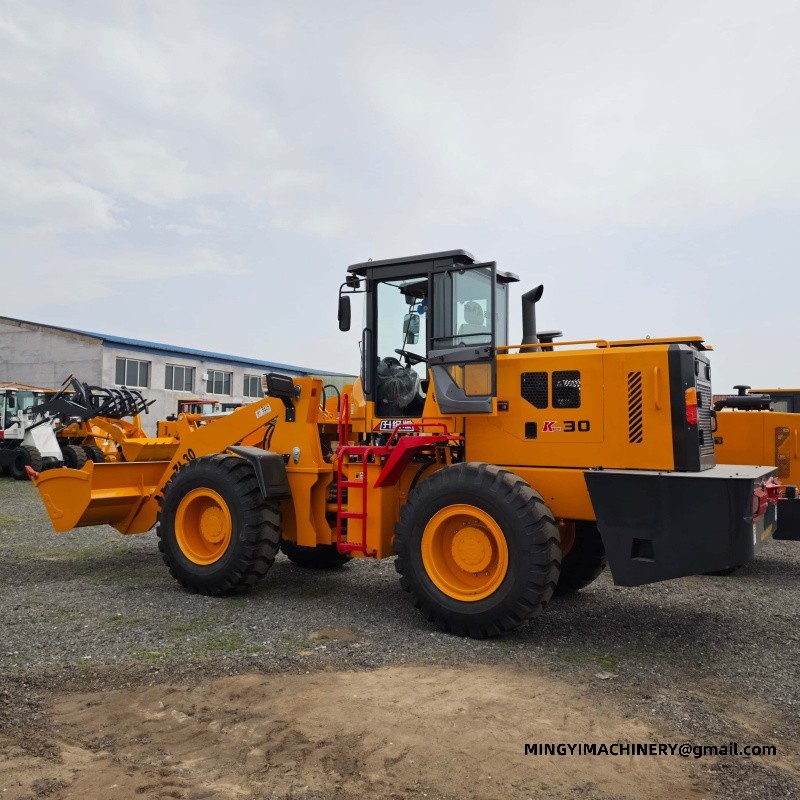
Fuel and cooling capacity are not comfort figures; they are shift-planning figures. A 54 L (50# tank) tank on the light-duty 3.2 m low-profile wheel loader is sized so a full working day at operating throttle does not need a mid-shift refuel, which matters on sites where the bowser is a long way from the face. The heavy-duty 3.8 m small-frame wheel-side reduction wheel loader carries 64.7 L (75# small tank).
The radiator is the other side of the same question. 4100 core (490 engine); 4105 core (4102T engine) on this build against 4100 core (490 engine); 4105 core (4102T engine) on the other. Where a build offers two cores, the raised one serves the turbo engine, and it is the correct specification for dusty work, high ambient temperature, or any duty where the machine spends its day at high load and low speed with little air passing through the core.
Relief pressure is only half the story; the other half is lever geometry, and lever geometry is decided by the boom and hinge dimensions. The light-duty 3.2 m low-profile wheel loader pairs a centre cylinder 45 / side cylinder 40 cylinder set with a 890 mm boom centre distance and a 2.3 m arm; the light-duty 4.2 m medium-frame wheel-side reduction wheel loader pairs centre cylinder 60 / side cylinder 50 with a 900 mm spacing and a 2.9 m arm. Wider spacing means the cylinders work through a better lever, which is how a bigger bucket is lifted without simply raising system pressure and heat.
Pump pairing is the second half. Work pump and travel pump are separate circuits on both machines — 40 pump (490 engine); 1045 pump (4102 turbo engine) and 316 pump on the light-duty 3.2 m low-profile wheel loader, 2063 pump and 25 pump on the light-duty 4.2 m medium-frame wheel-side reduction wheel loader — so steering and drive do not steal flow from the boom at the top of a lift. If you intend to run hydraulically actuated attachments, a grapple or a four-in-one bucket, order the third circuit at build time; retrofitting a valve block and plumbing in the field takes far more than specifying it on the order.
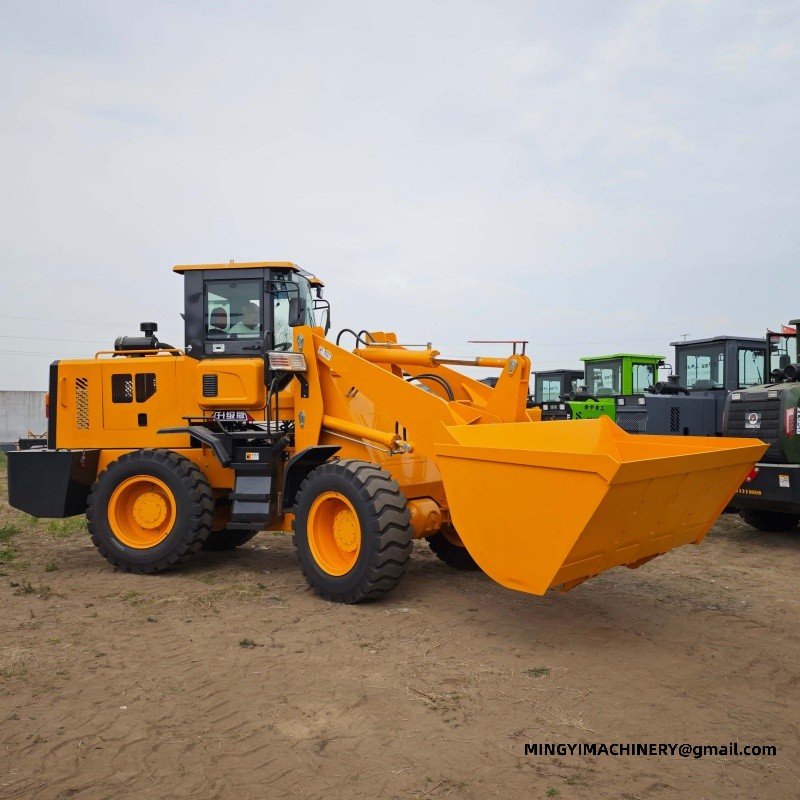
Fleet effort is driven by the size of the spares bin, and that is decided at purchase. Machines sharing an engine share a pump, 2063 pump, a radiator, 4105 core, and a battery rating, 80 Ah. Machines sharing a frame share cylinder sizes, centre cylinder 60 / side cylinder 50, and hinge geometry. Buy within one frame family and the bin halves.
The figures to compare are the ones that differ: bucket 0.52 m³ against 0.52 m³, dump height 3.8 m against 4.5 m, track 1.6 m against 1.6 m. Where those differ, the wearing parts behind them usually differ too. Where they match, one part number covers both machines.
Indoor work changes the priority completely. Height clearance replaces dump height as the first figure, and the machine has to lift its load under a lintel rather than over a truck board. The light-duty 3.5 m medium-frame wheel-side reduction wheel loader reaches 3.5 m, which is the outdoor figure; what matters indoors is whether that height is usable in the space available.
Length and track matter next. 4.3 m from front wheel to counterweight and 1.6 m of track. Ventilation matters too, which is an engine question rather than a frame one, and the cooling specification is the place it shows: 4105 core, sized for air that is not moving. Where the machine works inside, the larger core is the safer specification even in a temperate climate.
How does a compact wheel loader cope with dust?
Specify the raised core: 4100 core (490 engine); 4105 core (4102T engine) on the light-duty 3.2 m low-profile wheel loader against 4100 core (490 engine); 4105 core (4102T engine) on the heavy-duty 3.8 m small-frame wheel-side reduction wheel loader, and blow the fins out at the end of every shift in fines or grain.
What should the first service on a compact wheel loader cover?
Torque the hinge pins, grease the 890 mm boom mounts, check the centre cylinder 45 / side cylinder 40 cylinder connections and the 4100 core (490 engine); 4105 core (4102T engine) cooling circuit, then re-check the build figures.
How often should the articulation of a compact wheel loader be greased?
Every shift in stockpile or face work, weekly in light duty. The 16 mm front and 16 mm rear plates take every steering load, and missed greasing takes pins and bores.
How many hours a day can a compact wheel loader run?
As many as the cooling and fuel allow: a 64.7 L (75# small tank) tank on the heavy-duty 3.8 m small-frame wheel-side reduction wheel loader and a 4100 core (490 engine); 4105 core (4102T engine) radiator. In dusty work the radiator, not the tank, is usually what sets the limit.
Can one spares kit cover a mixed compact wheel loader fleet?
Within a frame family, largely yes: the centre cylinder 40 / side cylinder 40 cylinder set and the 32 pump and 316 pump pumps are shared. Across families the cylinder set changes to centre cylinder 45 / side cylinder 45.
What radiator comes with this compact wheel loader build?
4100 core (490 engine); 4105 core (4102T engine) on the heavy-duty 3.8 m small-frame wheel-side reduction wheel loader and 4105 core on the light-duty 3.5 m medium-frame wheel-side reduction wheel loader. Where a build offers two engines, the raised core serves the turbo and is the one to specify for dusty work.
Where is the extra steel in a heavier compact wheel loader?
Boom wall 25 mm against 25 mm, front hinge 30 mm against 30 mm, rear hinge 20 mm against 20 mm, cross-member 30 mm against 30 mm.
Whether the duty is farm, site or stockpile, the compact wheel loader choice comes back to ground, board height and cycle count. Tell us those three and the build follows: axle, radiator, cylinder set and the 0.4 m³ or 0.4 m³ bucket to suit.
Moving Compact Wheel Loader: Clearance, Footprint and Low Profile between sites
Loading is where most damage happens. Ramps, angle of approach and the condition of the ground under them matter more than the machine when Compact Wheel Loader: Clearance, Footprint and Low Profile is being loaded, and a careful driver is worth more than a fast one.
Pre-delivery inspection before Compact Wheel Loader: Clearance, Footprint and Low Profile leaves the shop
A machine should be inspected while it is still on our floor rather than after it lands. For Compact Wheel Loader: Clearance, Footprint and Low Profile that means the engine is run to temperature, the hydraulics are cycled through full travel, and every function is checked against the build sheet before the crate is closed.
Contact MINGYI Machinery for the current wheel loader lineup, configuration options and a formal specification for your market. E-mail: sales@mingycn.com | LINE (ID): mingyicn
Front Wheel Loader: Weight Transfer, Boom Length and Axle Choice · Loader Machine for Construction: 0.4 m3 or 0.65 m3 Bucket · Construction Equipment Loader: Specs Worth Checking Twice · Loaders