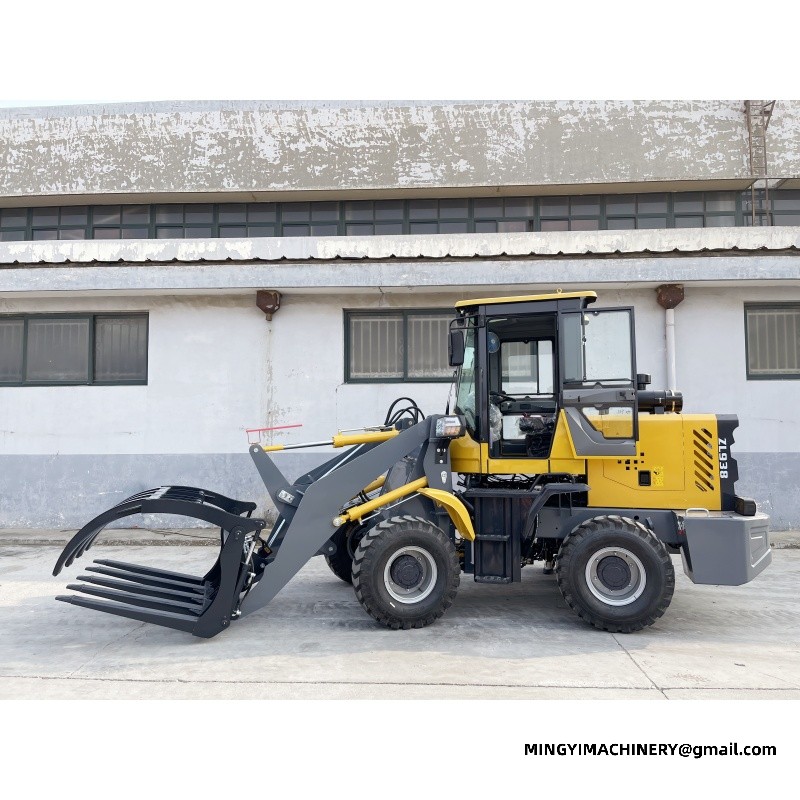
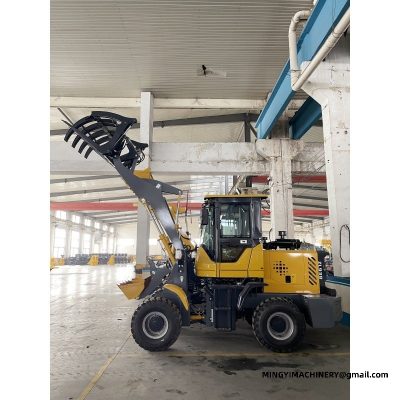
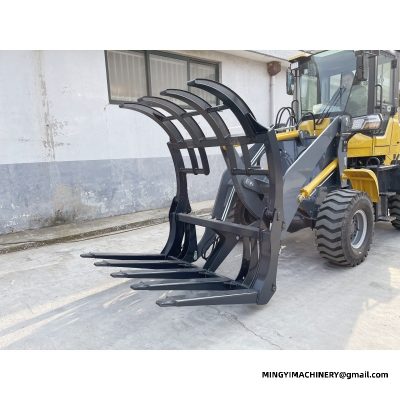
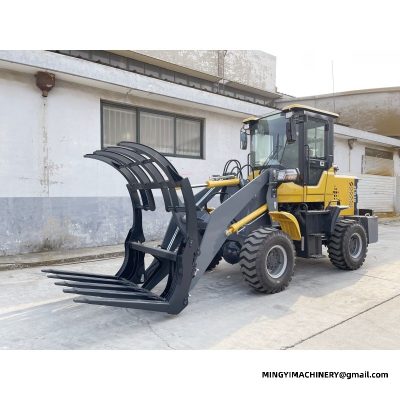
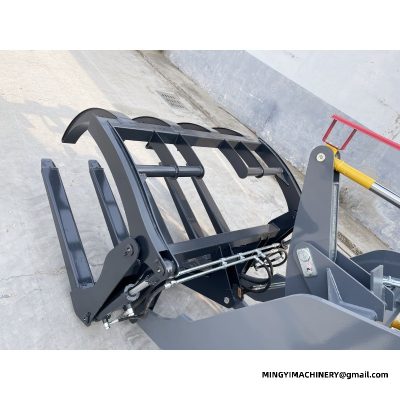
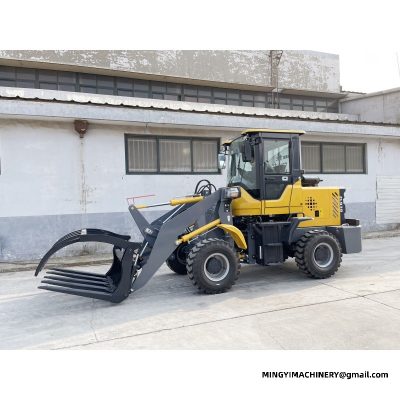
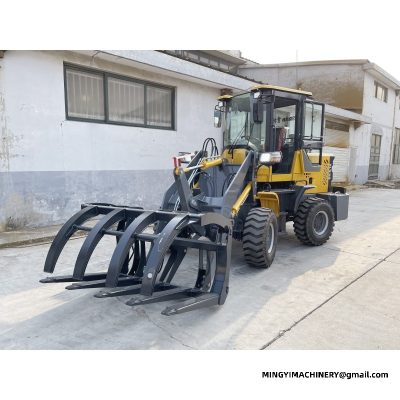
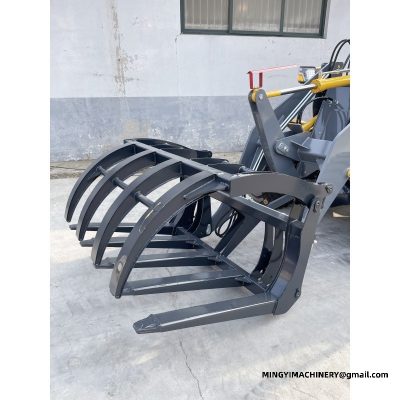
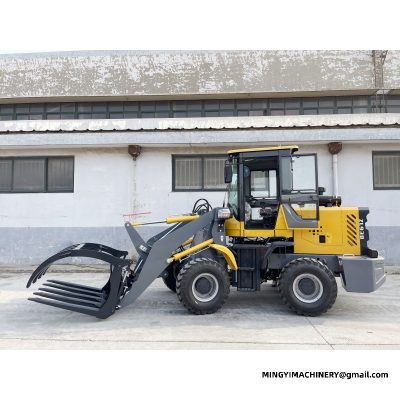
Every front end loader log grapple enquiry comes down to three numbers: how much the bucket holds, how high it dumps, and how much steel sits behind the hinge. The rest of a specification sheet is consequence. On this range the first two run from 0.38 m³ on the light-duty 3.5 m small-frame wheel-side reduction wheel loader to 0.38 m³ on the light-duty 3.8 m small-frame wheel-side reduction wheel loader, and the third is published per build — 25 mm front and 14 mm rear hinge plates over a 25 mm cross-member. This page sets out how those figures are chosen, what they predict about behaviour on site, and where each build in the range fits.
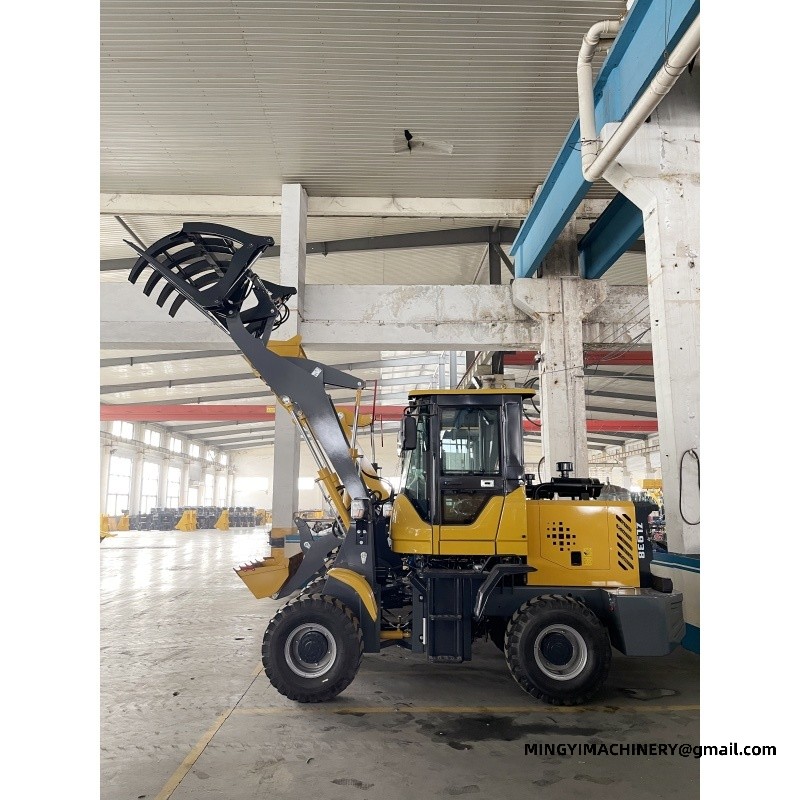
Every axle specification is a compromise between traction and speed, and the range resolves it with two families: 1.5 m (wheel-side reduction axle); 1.45 m (Isuzu axle) track on the light-duty 4.2 m small-frame wheel-side reduction wheel loader and 1.6 m on the heavy-duty 3.5 m medium-frame wheel-side reduction wheel loader. The wider track adds stability; the reduction layout decides whether the torque reaches the ground. Ask which ground the machine will spend eighty per cent of its hours on, then read the axle line.
Stability also comes from elsewhere in the table. The light-duty 4.2 m small-frame wheel-side reduction wheel loader carries a 4.1 m front-wheel-to-counterweight length and a 0.38 m³ bucket at 4.2 m; the heavy-duty 3.5 m medium-frame wheel-side reduction wheel loader carries 4.55 m with 0.65 m³ at 3.5 m. A wide track on a short wheelbase is less stable than a narrower track on a long one, which is why the footprint figure belongs in the same conversation as the axle. On soft or rutted ground, take the hub reduction every time.
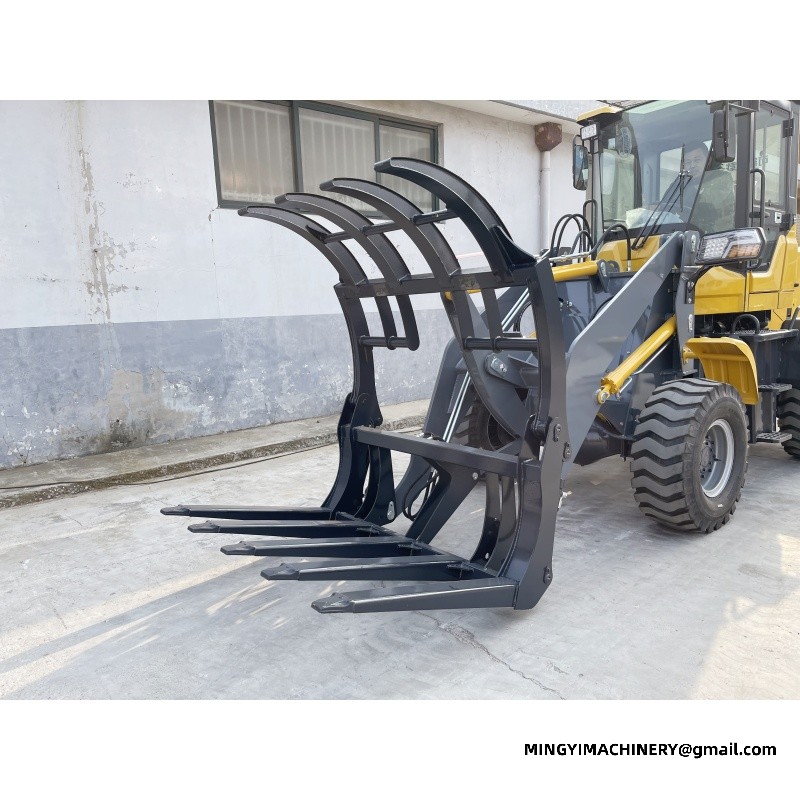
Radiator size follows the engine, not the frame. The light-duty 4.2 m small-frame wheel-side reduction wheel loader lists 4100 core (490 engine); 4105 core (4102T engine); the heavy-duty 3.5 m medium-frame wheel-side reduction wheel loader lists 4105 core. Where two engine options exist on one build, the cores differ — a 4100 core on the 490 engine and a 4105 on the 4102 turbo — and the taller, raised core is the one to specify wherever dust, chaff or dry sand blankets a standard radiator part-way through a shift.
Overheating is the single most common cause of a loader losing days rather than hours. It presents as power loss, then as a shift cut short, then as a head gasket. Choosing the raised core takes almost nothing at order time and cannot be retrofitted easily later. Pair that with the electrical package — 60 Ah (490 engine); 80 Ah (4102 turbo engine) on the light-duty 4.2 m small-frame wheel-side reduction wheel loader, 80 Ah on the heavy-duty 3.5 m medium-frame wheel-side reduction wheel loader — and note that a battery specified for a naturally aspirated engine is often marginal for a turbo one in cold climates.
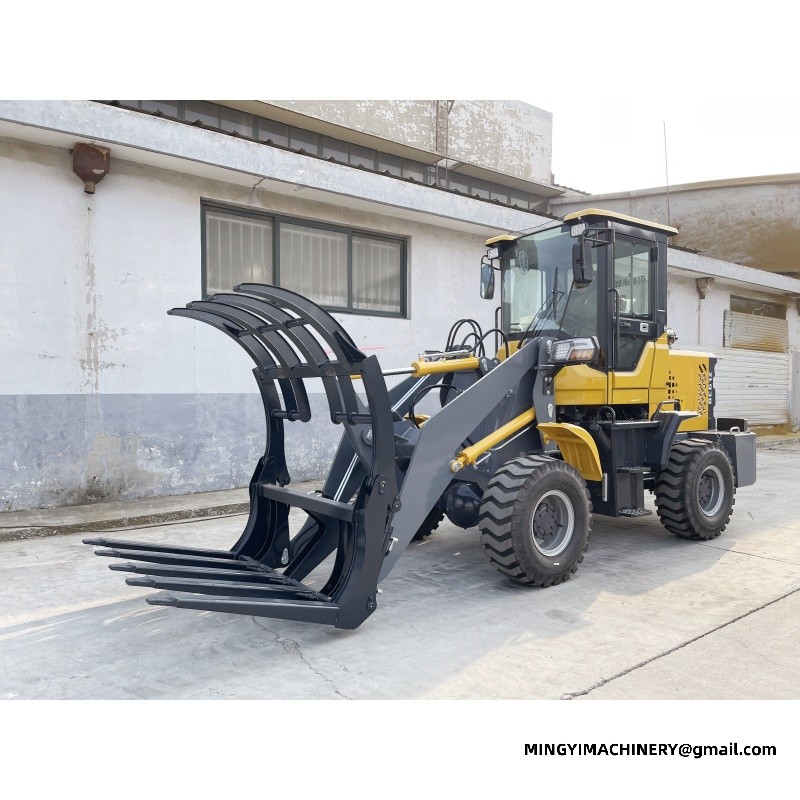
When a loaded machine turns, the load does not go straight down through the hinge. It goes through the plates at an angle, and the rear frame takes the twist. Rear section here is 280 mm high x 800 mm wide; cross-member 25 mm; rear hinge plate 14 mm. Read those three together and you have the answer to how a frame behaves when it is both loaded and turning.
The front plate, at 25 mm, is the thicker of the pair, and the boom ahead of it is designed to give way first anyway: the bucket hits the ground, the arm takes the shock, and the cylinders at centre cylinder 45 / side cylinder 40 absorb what is left. That is the intended load path. Protecting it means protecting the pins, and protecting the pins means the cross-member stays at the thickness it was built with.
| Reference specification — light-duty 3.5 m small-frame wheel-side reduction wheel loader | |
|---|---|
| Bucket capacity | 0.38 m³ |
| Dump height | 3.5 m |
| Track width | 1.5 m (wheel-side reduction axle); 1.45 m (Isuzu axle) |
| Boom arm thickness | 25 mm |
| Boom arm width | 370 mm |
| Boom arm length | 2.62 m |
| Boom arm centre distance | 890 mm |
| Cross-member thickness | 25 mm |
| Front hinge plate thickness | 25 mm |
| Rear hinge plate thickness | 14 mm |
| Rear frame section | 280 mm high x 800 mm wide |
| Hydraulic cylinders | centre cylinder 45 / side cylinder 40 |
| Fuel tank | 64.7 L (75# small tank) |
| Battery | 60 Ah (490 engine); 80 Ah (4102 turbo engine) |
| Front wheel to counterweight | 4 m |
| Radiator | 4100 core (490 engine); 4105 core (4102T engine) |
| Work pump | 40 pump (490 engine); 1045 pump (4102 turbo engine) |
| Travel pump | 316 pump |
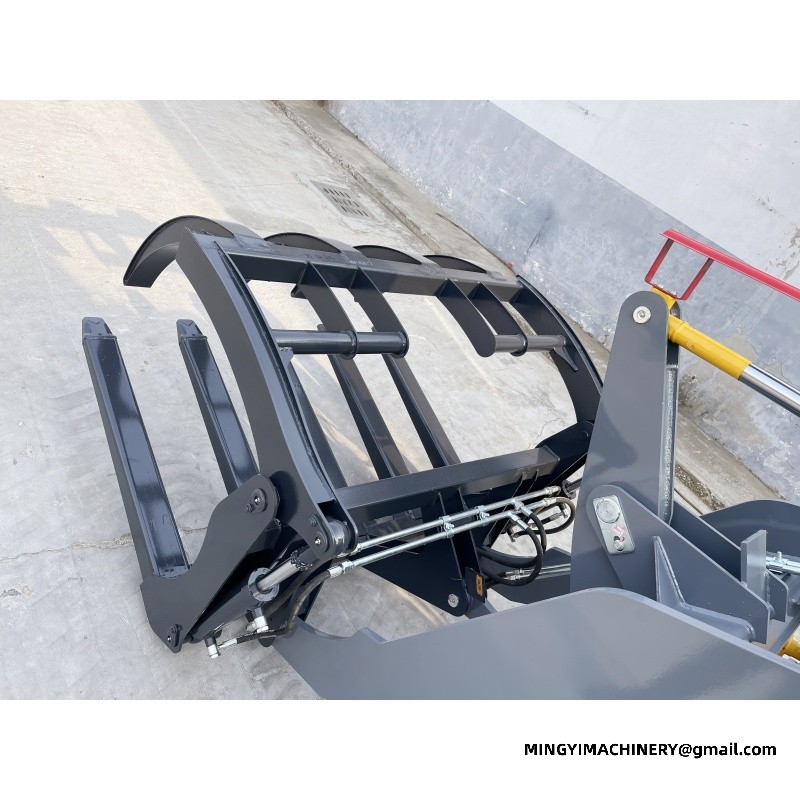
Some choices can be made after delivery and some cannot. Steel cannot: hinge plates at 25 mm and 20 mm, a 25 mm cross-member and a 280 mm high x 800 mm wide rear frame are decided when the frame is welded. Hydraulics mostly can: this build runs centre cylinder 45 / side cylinder 40 on a 40 pump (490 engine); 1045 pump (4102 turbo engine), and adding a service later is possible even if it is never as tidy as specifying it first.
The engine is the other early decision, because it drags three figures with it. Where two engines are offered, battery, radiator and pump all change: 60 Ah (490 engine); 80 Ah (4102 turbo engine), 4100 core (490 engine); 4105 core (4102T engine), 40 pump (490 engine); 1045 pump (4102 turbo engine). Choosing the engine late means choosing all three late, and usually accepting whatever is in stock.
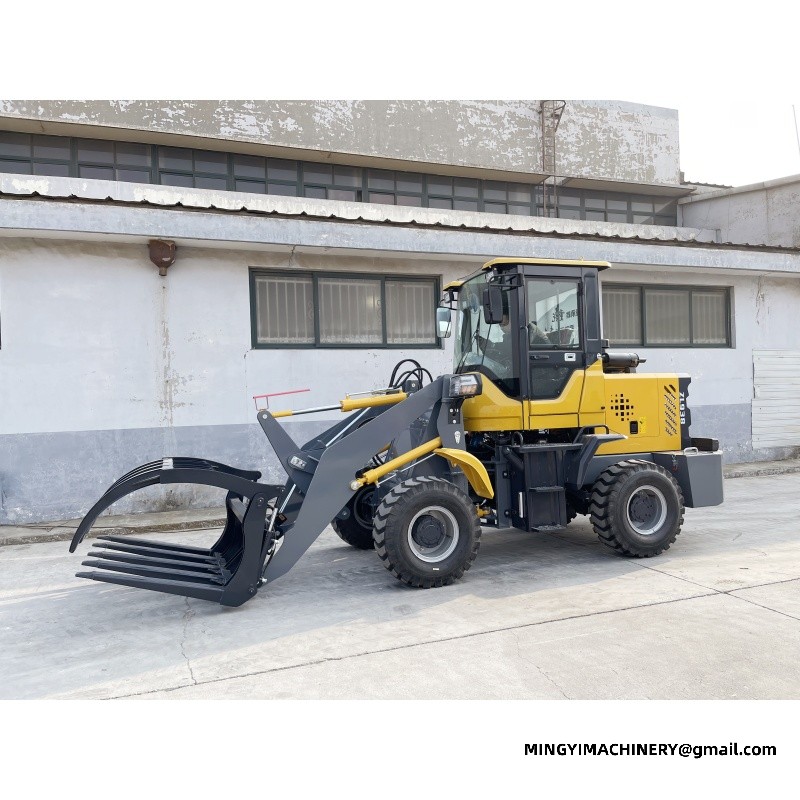
Keep the delivery photographs and the specification sheet with the machine. Bucket 0.65 m³, dump height 4.2 m, cylinders centre cylinder 60 / side cylinder 50, pump 2063 pump, track 1.6 m: a buyer who can verify five figures against the machine will pay for the certainty.
The frame figures do the rest. 45 mm and 30 mm hinge plates, 45 mm cross-member, 300 mm high x 800 mm wide rear section. Two machines of the same age and hours can be worth materially different amounts on those four rows alone, because they tell the buyer how much life is left in the part that is most lengthy to put right.
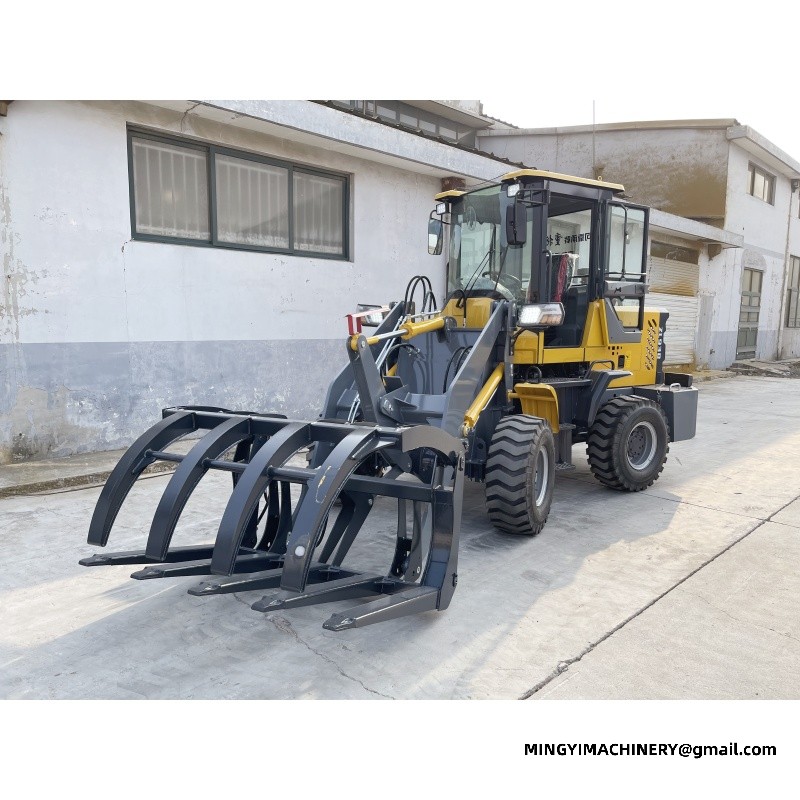
Construction duty is repetitive, dusty and unforgiving of a light frame. Specified for it, the heavy-duty 4.5 m medium-frame wheel-side reduction wheel loader carries a 0.65 m³ bucket to 4.5 m on 45 mm front and 30 mm rear hinge plates with a 45 mm cross-member and a 300 mm high x 800 mm wide rear frame. Lighter builds — the light-duty 4.2 m small-frame wheel-side reduction wheel loader at 0.38 m³, 4.2 m, 20 mm and 25 mm — suit smaller sites and lighter material.
Two site conditions change the specification. The first is the board height of the trucks, which fixes dump height and is measured, not guessed. The second is ground: a rough, rutted site with soft spots wants the wheel-side reduction axle at 1.6 m track over the lighter axle, and a site with long internal haul roads wants the opposite. Tell the factory both and the axle choice follows from the site, not from the catalogue.
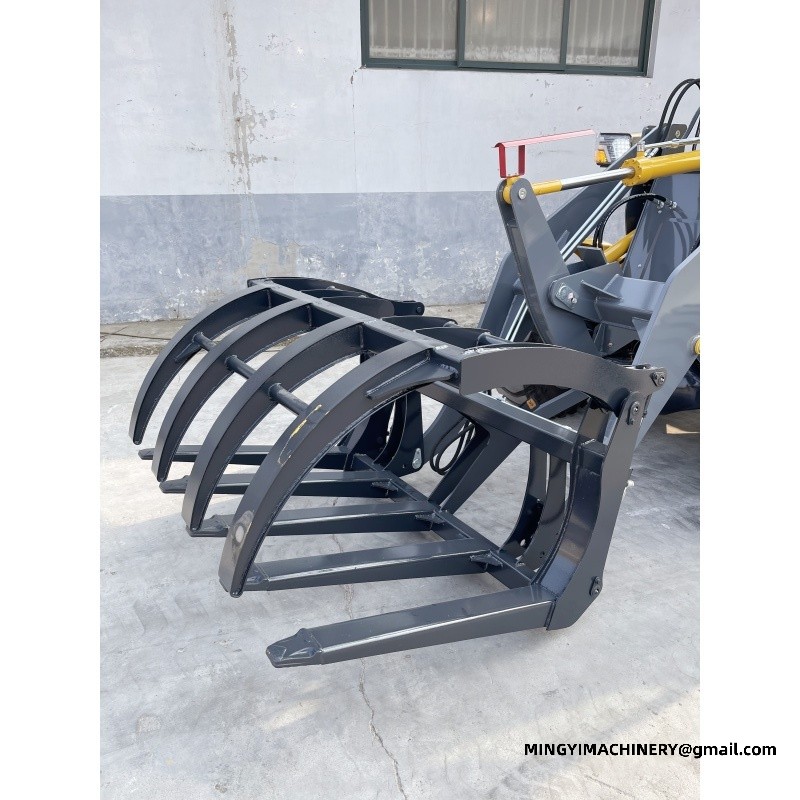
Front wheel to counterweight is the figure that decides whether a machine fits the space you have. Here it is 4 m on the light-duty 3.5 m small-frame wheel-side reduction wheel loader and 4.95 m on the heavy-duty 4.5 m medium-frame wheel-side reduction wheel loader. Measure your tightest working bay, add the swing of the bucket, and compare — because a loader that has to reverse out of every corner loses more time than a bigger bucket ever recovers.
Track width closes the same question from the side. 1.5 m (wheel-side reduction axle); 1.45 m (Isuzu axle) on this build. Where two figures are listed, the narrower belongs to the hard-ground axle, and a narrow machine on a narrow gate is often the right answer even where the work itself would suit something bigger. The rear frame section, 280 mm high x 800 mm wide, is what keeps a compact machine from feeling flimsy once it is loaded.
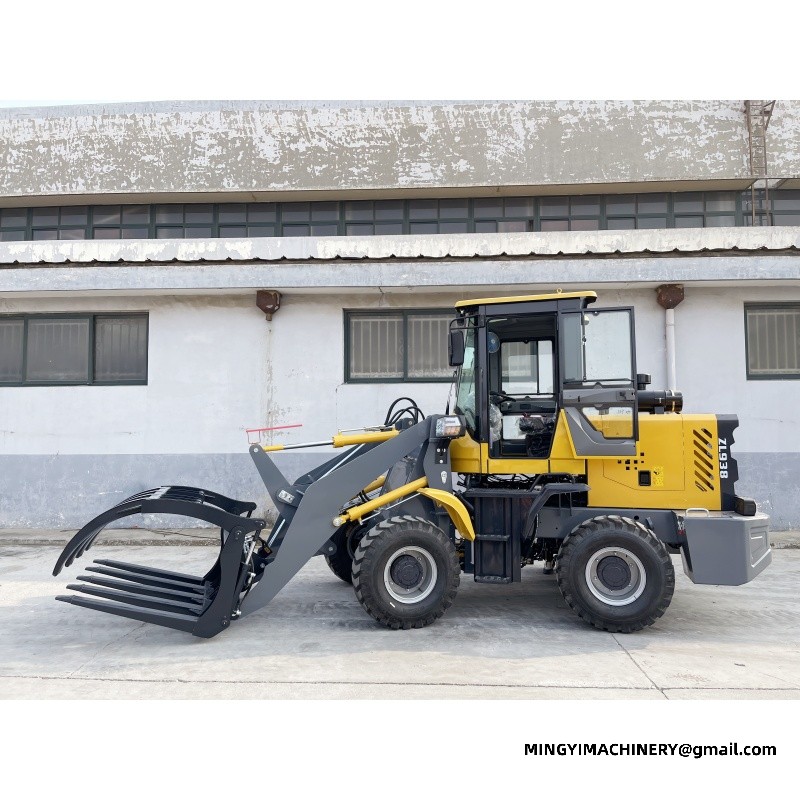
A radiator does not fail; it gets blocked. On this build the core is 4100 core (490 engine); 4105 core (4102T engine), and in dusty or chaff-heavy work it needs cleaning from the clean side outwards, in the reverse direction to normal airflow, because pushing debris further into the fins makes the blockage permanent.
Watch the cap and the seat while you are there. A system that loses pressure boils at a lower temperature, and the symptom is intermittent overheating under load that disappears on the level - - which is routinely misdiagnosed as a pump problem. The pump is 40 pump (490 engine); 1045 pump (4102 turbo engine); the travel circuit is 316 pump; neither produces that symptom. A cap does.
A machine that wanders on the road and feels vague in the turn has worn hinge pins. The plates are 25 mm front and 14 mm rear over a 25 mm cross-member; when the pin bores ovalise, the geometry the frame was built to hold is gone, and no amount of steering adjustment brings it back.
Check it by loading the bucket, holding the machine on a slope and watching the joint while an operator rocks the steering. Movement there is wear; movement at the rear, over the 280 mm high x 800 mm wide section, is a different and more serious problem. Catching the first case takes a set of pins; missing it takes a frame.
How is the battery specified on a front end loader log grapple?
60 Ah (490 engine); 80 Ah (4102 turbo engine) on the heavy-duty 4.5 m small-frame wheel-side reduction wheel loader, matched to the engine it has to crank. The higher capacity belongs to the turbo option and matters in cold climates.
What does a front end loader log grapple need to run a grapple?
A grapple sized to the 370 mm boom section and a hydraulic third circuit. The 40 pump (490 engine); 1045 pump (4102 turbo engine) work pump is specified per build, so order the circuit with the machine.
What is the largest front end loader log grapple in the range?
The medium-frame heavy builds: a 0.38 m³ bucket at 3.8 m on a 2.61 m boom with centre cylinder 45 / side cylinder 40 cylinders.
Can one spares kit cover a mixed front end loader log grapple fleet?
Within a frame family, largely yes: the centre cylinder 45 / side cylinder 40 cylinder set and the 40 pump (490 engine); 1045 pump (4102 turbo engine) and 316 pump pumps are shared. Across families the cylinder set changes to centre cylinder 60 / side cylinder 50.
How many units of a front end loader log grapple fit one container?
Two to three, loaded knock-down. Rear frame sections stay between 280 mm high x 800 mm wide and 280 mm high x 800 mm wide across the range, so a forty-foot box takes a mixed pair or trio.
What is the smallest front end loader log grapple in the range?
The entry low-profile builds: a 0.38 m³ bucket at 3.5 m, 1.5 m (wheel-side reduction axle); 1.45 m (Isuzu axle) track and a 4 m front-to-counterweight length for indoor and nursery work.
Where is the extra steel in a heavier front end loader log grapple?
Boom wall 25 mm against 30 mm, front hinge 30 mm against 45 mm, rear hinge 20 mm against 30 mm, cross-member 30 mm against 45 mm.
The short version for any front end loader log grapple: fix the dump height first, check the track against your narrowest opening second, and read the rear hinge plate — 14 mm on the light-duty 3.5 m small-frame wheel-side reduction wheel loader, 14 mm on the light-duty 3.8 m small-frame wheel-side reduction wheel loader — third. Everything else on the sheet is detail.
Keeping a service record for Front End Loader Log Grapple: Section Widths and Pin Geometry
Patterns show up in the record before they show up in the machine. Rising oil consumption or a filter that keeps blocking on Front End Loader Log Grapple: Section Widths and Pin Geometry is obvious on paper long before it becomes a failure on site.
Planning the season around Front End Loader Log Grapple: Section Widths and Pin Geometry
The calendar decides more than the specification does. Planning when Front End Loader Log Grapple: Section Widths and Pin Geometry will be working, when it will be serviced and when it can be spared keeps the maintenance out of the weeks that matter.
Contact MINGYI Machinery for the current wheel loader lineup, configuration options and a formal specification for your market. E-mail: sales@mingycn.com | LINE (ID): mingyicn
Hydraulic Wheel Loader Log Grapple: Circuit and Cylinders · Compact Wheel Loader: Choosing Between the Two Entry Builds · Wheel Loader for Mining: Cooling Care on Every Shift · Loaders








