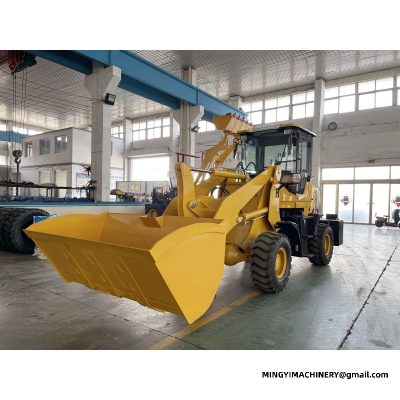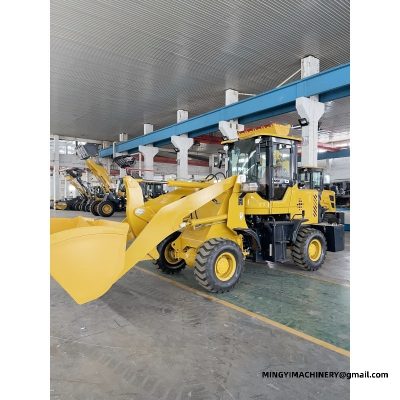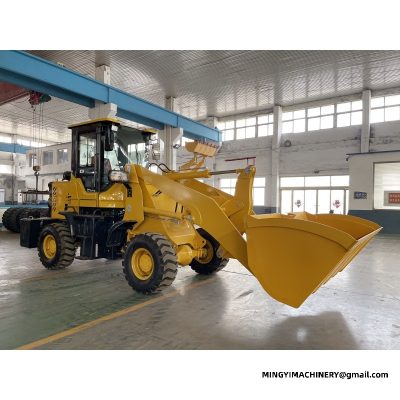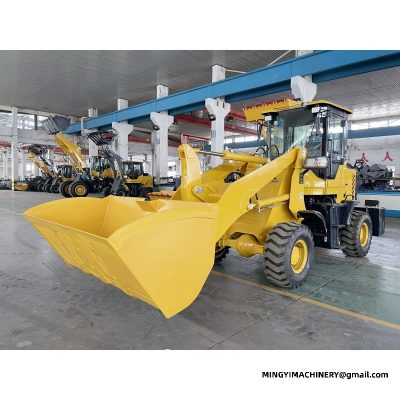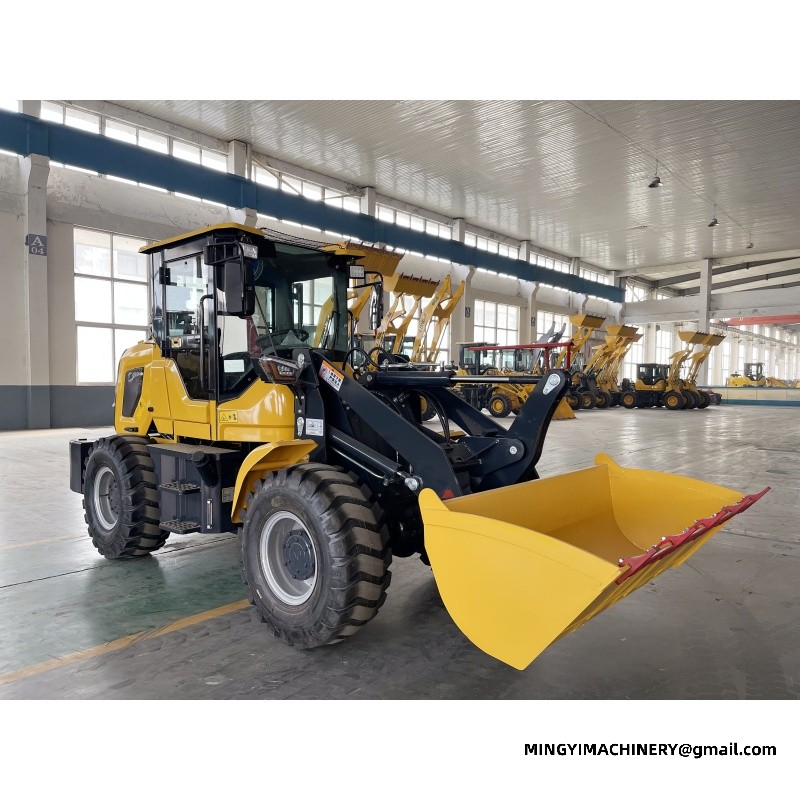
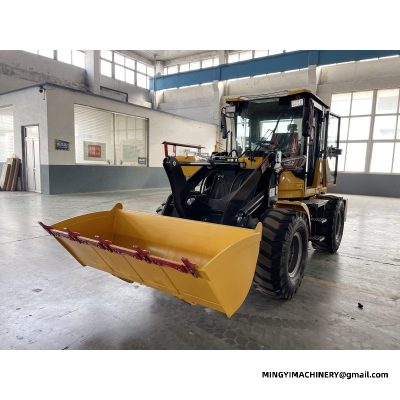
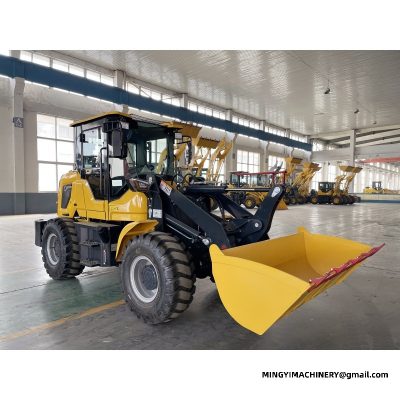
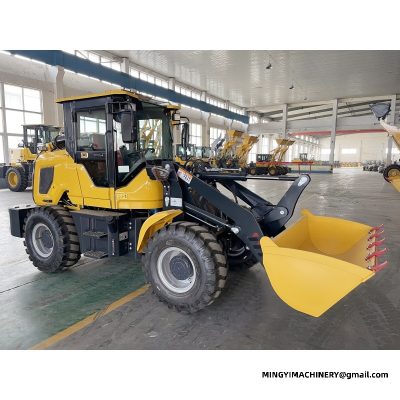
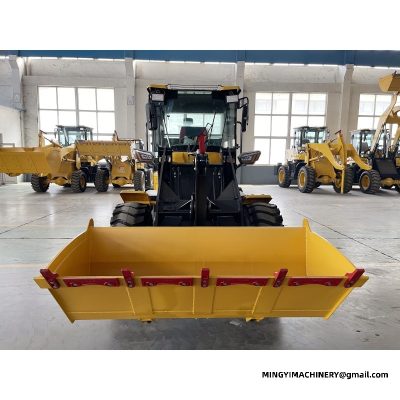
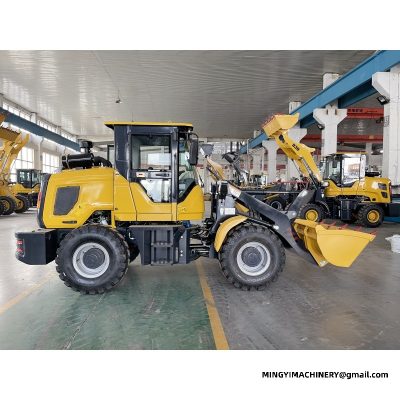
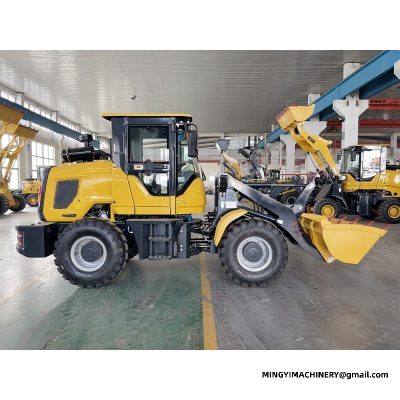
Two loaders can share a name and behave nothing alike. The difference is in the rows nobody reads: cross-member thickness, rear frame section, pump size, tyre fitment. Across this range those rows are published, which makes comparison possible rather than theoretical. Taking the light-duty 3.2 m low-profile wheel loader with its 0.38 m³ bucket and 3.2 m of lift against the light-duty 3.2 m small-frame wheel-side reduction wheel loader with 0.38 m³ and 3.2 m, this page sets out which figures change behaviour on site, which change the maintenance burden, and which change nothing at all.
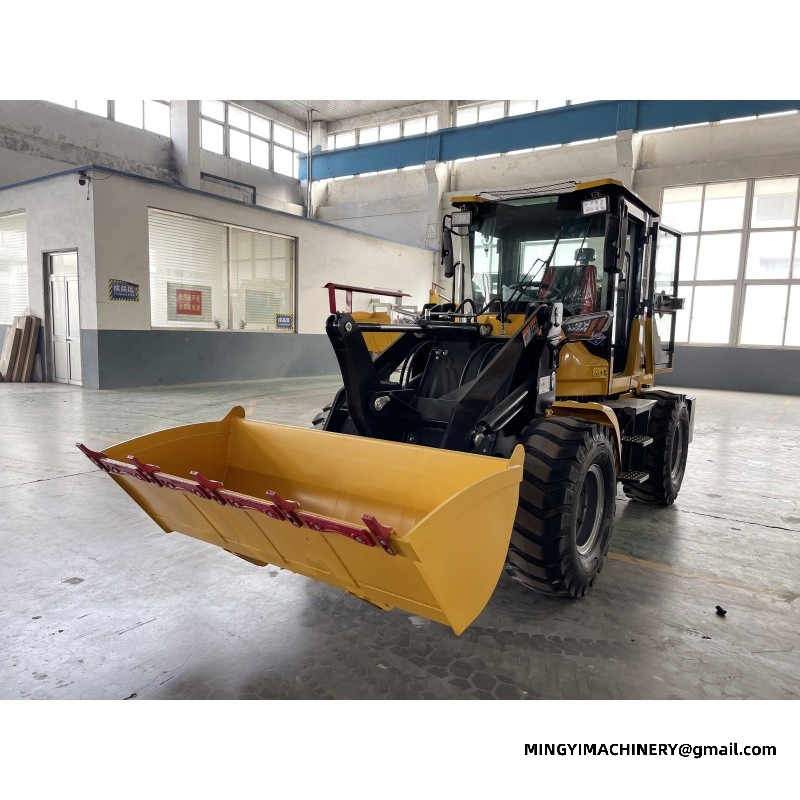
0.38 m³ on the light-duty 3.5 m small-frame wheel-side reduction wheel loader is a volume, and what it means depends entirely on what goes into it. Sand, gravel and crushed rock all weigh differently per cubic metre, and a bucket that is correct for one will overload the frame with another. The frame limit is the cross-member at 25 mm and the hinge plates behind it.
The practical method is to work backwards from the receiving body. If a truck takes four passes from 0.38 m³, it takes three from 0.38 m³ on the light-duty 4.2 m small-frame wheel-side reduction wheel loader, and the saving is real only if the loader clears the board — 3.5 m here against 4.2 m. Capacity without clearance is a specification that looks better in a brochure than on a site.
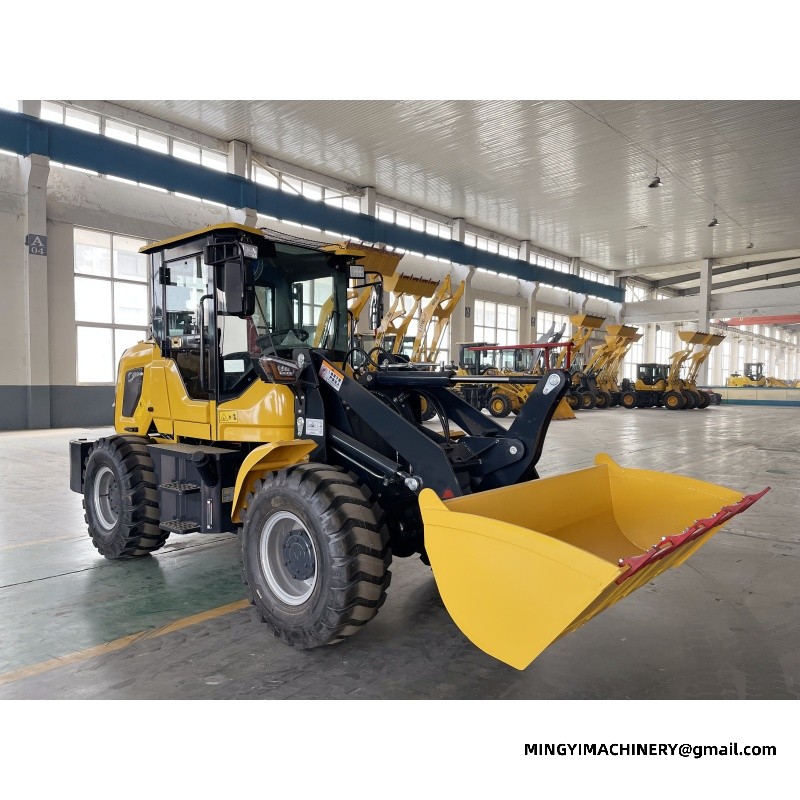
The bucket figures in the table are engineering capacities: 0.38 m³ on the light-duty 3.2 m low-profile wheel loader, 0.38 m³ on the light-duty 3.2 m small-frame wheel-side reduction wheel loader. They assume a material density, and the machine is stable with them at full lift because the counterweight and the 4 m or 3.8 m footprint were sized around that density.
Change the material and you change the limit, not the machine. Light material — grain, woodchip, compost, snow — lets you run a larger bucket and a higher cycle. Heavy material — wet sand, crushed stone, ore — means the 0.38 m³ bucket needs the 14 mm rear hinge plate and 25 mm cross-member behind it, and the 0.38 m³ bucket on the lighter frame is the honest specification for the lighter material. Tell the factory what you are moving and let them match the bucket to it.
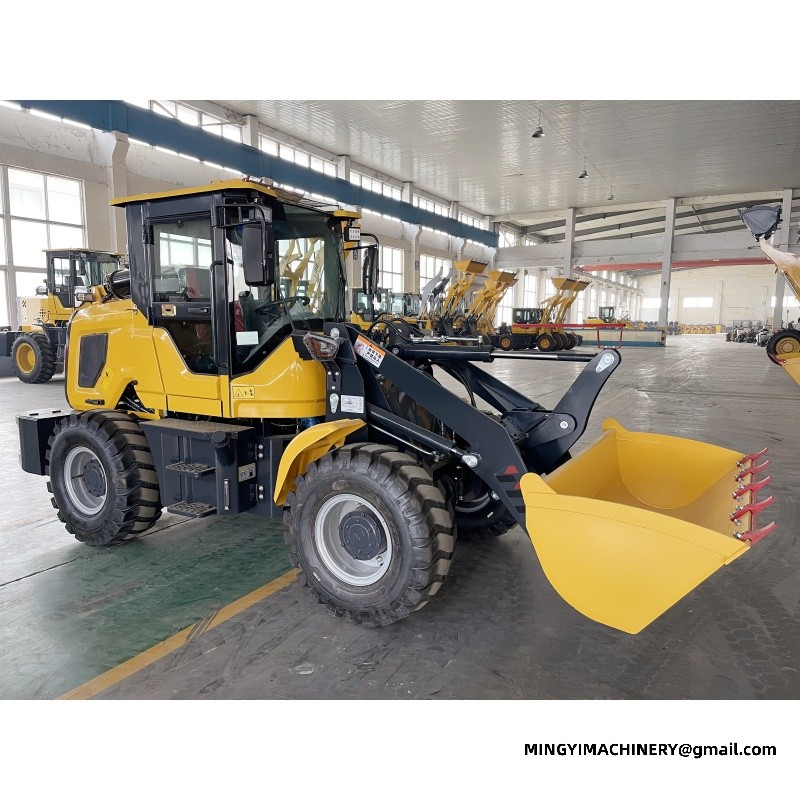
Two figures govern refuelling: tank capacity and consumption per hour, and only the first is published — 54 L (50# tank) on the light-duty 3.2 m low-profile wheel loader, 64.7 L (75# small tank) on the light-duty 3.2 m small-frame wheel-side reduction wheel loader. Consumption depends on duty, and the duty differences between a 0.38 m³ bucket at 3.2 m and a 0.38 m³ bucket at 3.2 m are mostly about how hard the engine works per cycle.
What you can plan on: a machine working a short, level cycle will finish a shift on one tank; the same machine ripping from a face or loading up a ramp will not. If your site has no refuelling point, size the tank to the worst day rather than the average one, and specify the larger option where a build offers it. The cooling package is the other half of the same calculation — 4100 core (490 engine); 4105 core (4102T engine) on the light-duty 3.2 m low-profile wheel loader and 4100 core (490 engine); 4105 core (4102T engine) on the light-duty 3.2 m small-frame wheel-side reduction wheel loader — because a machine that stops for temperature stops wherever it is.
| Sample build from the range — heavy-duty 4.5 m small-frame wheel-side reduction wheel loader | |
|---|---|
| Bucket capacity | 0.4 m³ |
| Dump height | 4.5 m |
| Track width | 1.5 m (wheel-side reduction axle); 1.45 m (Isuzu axle) |
| Boom arm thickness | 25 mm |
| Boom arm width | 500 mm |
| Boom arm length | 3.15 m |
| Boom arm centre distance | 890 mm |
| Cross-member thickness | 30 mm |
| Front hinge plate thickness | 30 mm |
| Rear hinge plate thickness | 20 mm |
| Rear frame section | 280 mm high x 800 mm wide |
| Hydraulic cylinders | centre cylinder 45 / side cylinder 45 |
| Fuel tank | 64.7 L (75# small tank) |
| Battery | 60 Ah (490 engine); 80 Ah (4102 turbo engine) |
| Front wheel to counterweight | 4.25 m |
| Radiator | 4100 core (490 engine); 4105 core (4102T engine) |
| Work pump | 40 pump (490 engine); 1045 pump (4102 turbo engine) |
| Travel pump | 316 pump |
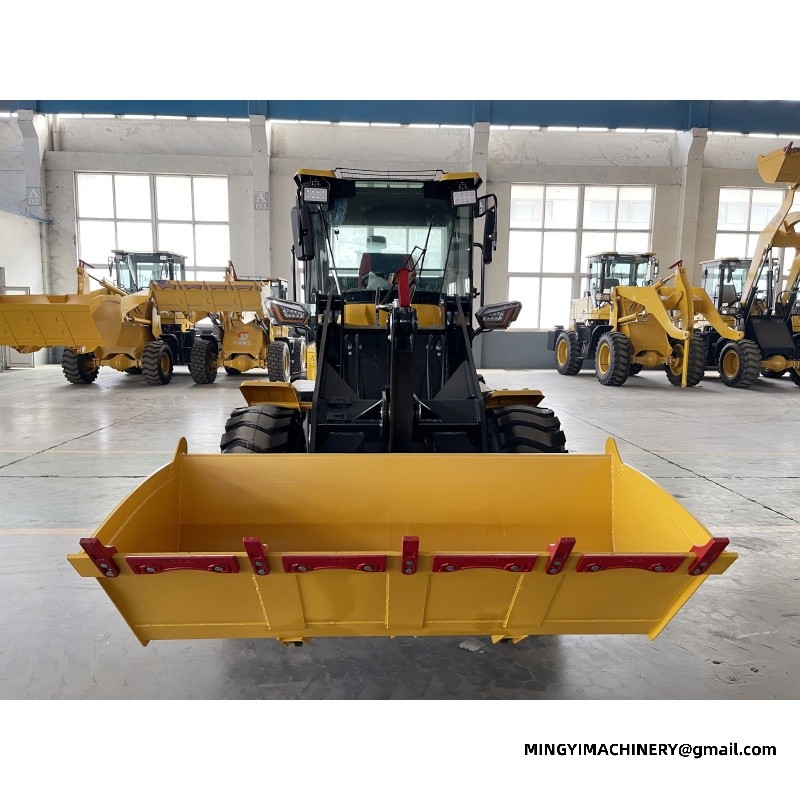
Track width decides two things at once: whether the machine stays upright on a slope, and whether it fits through what you need it to fit through. This build runs 1.5 m (wheel-side reduction axle); 1.45 m (Isuzu axle), against 1.6 m on the heavy-duty 3.8 m medium-frame wheel-side reduction wheel loader. Wider is more stable and needs more room. The choice is made by your narrowest gate, not by your widest heap.
The axle behind the track matters as much as the number. A wheel-side reduction axle puts the final reduction at the hub, which lowers the load on the half-shafts and suits soft, rutted or sandy ground. The alternative pattern suits hard, level surfaces and runs cooler at road speed. Where a build offers both, the hub-reduction figure in 1.5 m (wheel-side reduction axle); 1.45 m (Isuzu axle) is the one for quarry floors and unmade haul roads.
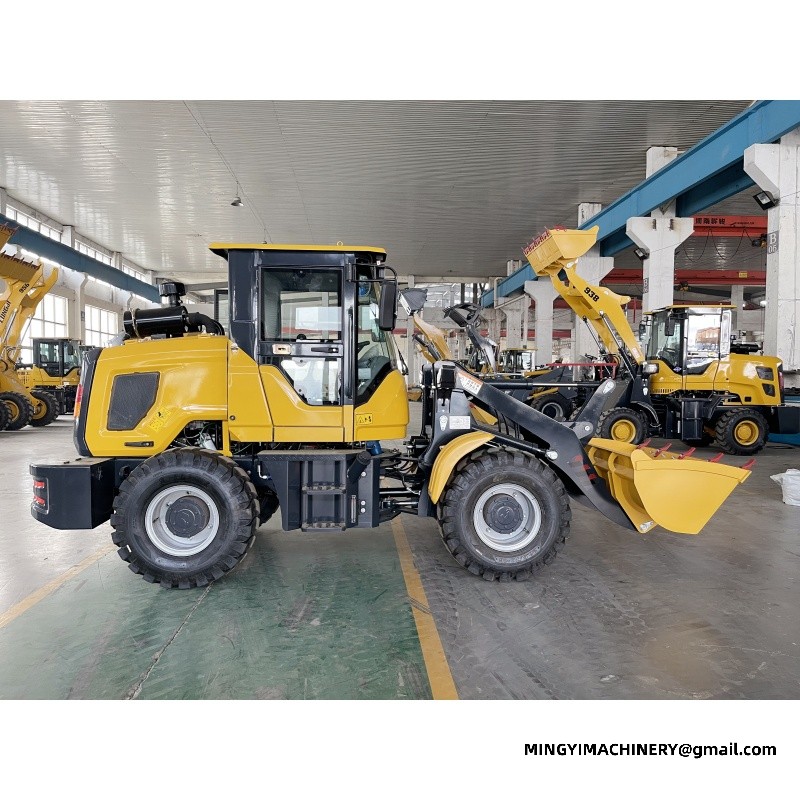
When a loaded machine turns, the load does not go straight down through the hinge. It goes through the plates at an angle, and the rear frame takes the twist. Rear section here is 280 mm high x 800 mm wide; cross-member 25 mm; rear hinge plate 20 mm. Read those three together and you have the answer to how a frame behaves when it is both loaded and turning.
The front plate, at 25 mm, is the thicker of the pair, and the boom ahead of it is designed to give way first anyway: the bucket hits the ground, the arm takes the shock, and the cylinders at centre cylinder 45 / side cylinder 40 absorb what is left. That is the intended load path. Protecting it means protecting the pins, and protecting the pins means the cross-member stays at the thickness it was built with.
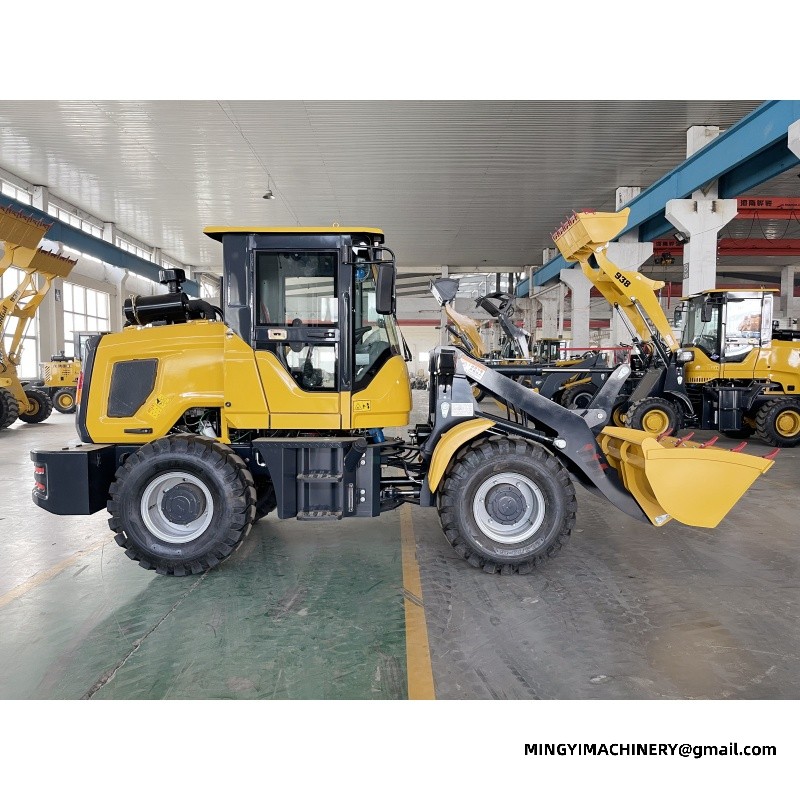
Relief pressure is only half the story; the other half is lever geometry, and lever geometry is decided by the boom and hinge dimensions. The heavy-duty 4.5 m small-frame wheel-side reduction wheel loader pairs a centre cylinder 45 / side cylinder 45 cylinder set with a 890 mm boom centre distance and a 3.15 m arm; the heavy-duty 3.8 m medium-frame wheel-side reduction wheel loader pairs centre cylinder 60 / side cylinder 50 with a 920 mm spacing and a 2.9 m arm. Wider spacing means the cylinders work through a better lever, which is how a bigger bucket is lifted without simply raising system pressure and heat.
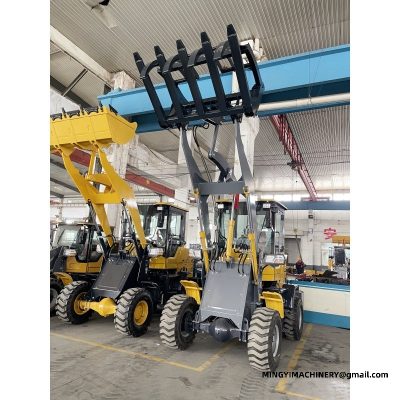
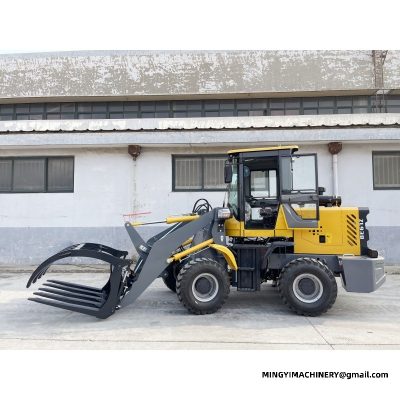
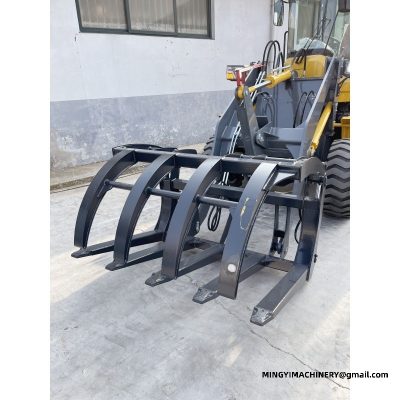
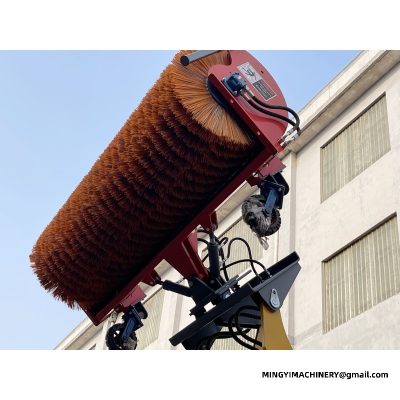
Pump pairing is the second half. Work pump and travel pump are separate circuits on both machines — 40 pump (490 engine); 1045 pump (4102 turbo engine) and 316 pump on the heavy-duty 4.5 m small-frame wheel-side reduction wheel loader, 2063 pump and 25 pump on the heavy-duty 3.8 m medium-frame wheel-side reduction wheel loader — so steering and drive do not steal flow from the boom at the top of a lift. If you intend to run hydraulically actuated attachments, a grapple or a four-in-one bucket, order the third circuit at build time; retrofitting a valve block and plumbing in the field takes far more than specifying it on the order.
Keep the delivery photographs and the specification sheet with the machine. Bucket 0.38 m³, dump height 3.2 m, cylinders centre cylinder 45 / side cylinder 40, pump 40 pump (490 engine); 1045 pump (4102 turbo engine), track 1.5 m (wheel-side reduction axle); 1.45 m (Isuzu axle): a buyer who can verify five figures against the machine will pay for the certainty.
The frame figures do the rest. 25 mm and 14 mm hinge plates, 25 mm cross-member, 280 mm high x 800 mm wide rear section. Two machines of the same age and hours can be worth materially different amounts on those four rows alone, because they tell the buyer how much life is left in the part that is most lengthy to put right.
Work from the longest dimension. 4 m from front wheel to counterweight on this machine, 4.55 m on the heavy-duty 3.5 m medium-frame wheel-side reduction wheel loader. The bucket usually comes off; the counterweight usually stays, because removing it changes the securing plan far more than the space it saves.
Track is the second constraint, 1.5 m (wheel-side reduction axle); 1.45 m (Isuzu axle), and it is the one that decides whether two machines can travel side by side. Where a build offers two axles the track differs slightly between them, so confirm which axle is on the unit before booking space. Fuel is drained to a residue for shipping, and the tank on this build is 54 L (50# tank); that figure matters for the hazmat paperwork rather than for the loading plan.
How much clearance do I need over a truck board?
Dump height is measured at the bucket edge, so subtract the crest of the material. The light-duty 3.8 m small-frame wheel-side reduction wheel loader gives 3.8 m and the heavy-duty 3.5 m medium-frame wheel-side reduction wheel loader gives 3.5 m; the board has to sit under the lower of the two with allowance.
Where do frames on a wheel loader for mining crack first?
Weld toes at the cross-member and around the rear hinge. The section is 280 mm high x 800 mm wide over a 25 mm member on this build; check both monthly on hard duty.
How do I keep one spares bin covering a mixed fleet?
Buy within one frame family and one engine. That keeps the 2063 pump pump, the 4105 core core and the 80 Ah battery common across every machine.
Is a wheel loader for mining suitable for night work?
With adequate lighting, yes. Electrical capacity is the constraint and the rating is 60 Ah (490 engine); 80 Ah (4102 turbo engine); extra lamps and beacons come out of the same plan.
Why does my wheel loader for mining turn over slowly on cold mornings?
Cranking capacity falls with temperature, and the rating is 60 Ah (490 engine); 80 Ah (4102 turbo engine) on this build. Where two engines are offered the higher rating belongs to the turbo; specify it if the machine starts cold or stops often.
What paperwork should come with a wheel loader for mining?
A specification listing bucket 0.38 m³, lift 3.2 m, cylinders centre cylinder 45 / side cylinder 40, core 4100 core (490 engine); 4105 core (4102T engine), battery 60 Ah (490 engine); 80 Ah (4102 turbo engine) and track 1.5 m (wheel-side reduction axle); 1.45 m (Isuzu axle). If those six are present, parts and warranty questions are answerable.
Can worn pins on a wheel loader for mining be repaired?
Yes, if the plates are sound. Re-machining restores geometry for a while; once the 45 mm cross-member and 300 mm high x 800 mm wide rear section have been flexing, it will not hold.
The range exists so that a wheel loader for mining can be matched to the work rather than approximated to it. Start with dump height, check the steel, then let bucket volume follow from the material — that order gets it right more often than any other.
Cold weather and winter care for Wheel Loader for Mining: Cooling Care on Every Shift
Cold exposes weak batteries, thick oil and water in the fuel. Preparing Wheel Loader for Mining: Cooling Care on Every Shift for winter means the right grade of oil, a battery in good condition and fuel that will not wax in the tank overnight.
Storage and long idle periods for Wheel Loader for Mining: Cooling Care on Every Shift
The battery and the fuel are the first things to suffer in storage. Preparing Wheel Loader for Mining: Cooling Care on Every Shift properly at the start of the idle period avoids the flat battery and the contaminated tank that greet an unprepared machine.
Contact MINGYI Machinery for the current wheel loader lineup, configuration options and a formal specification for your market. E-mail: sales@mingycn.com | LINE (ID): mingyicn
Wheel Loader for Agriculture: Gates, Yards and Wagon Sides · Wheel Loader for Construction Site: Working Beside Tippers · Wheel Loader Snow Blower: Specifying the Third Circuit · Wheel Loader