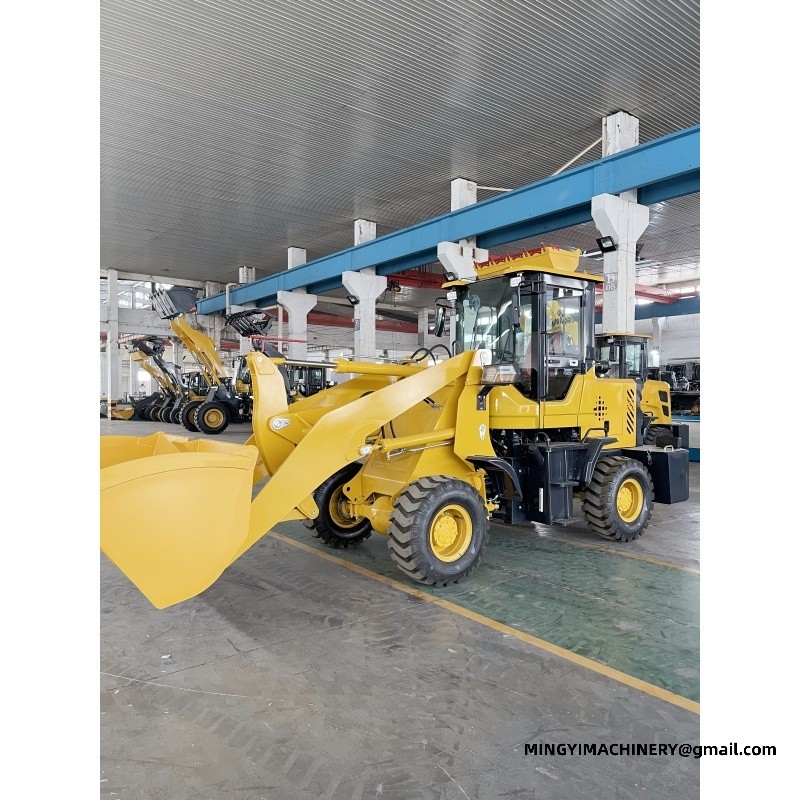
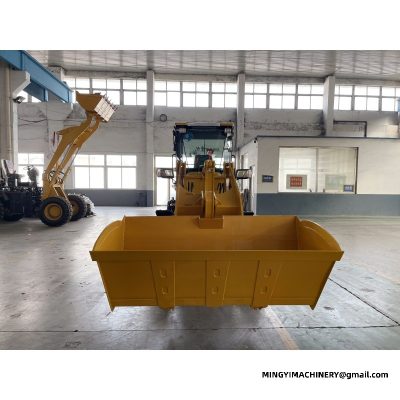
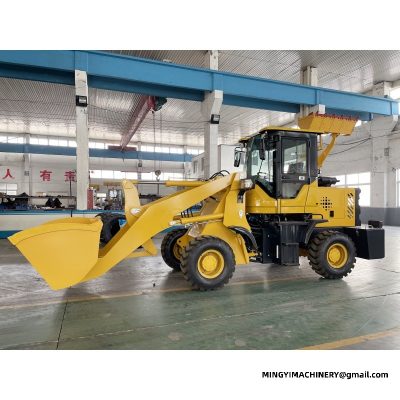
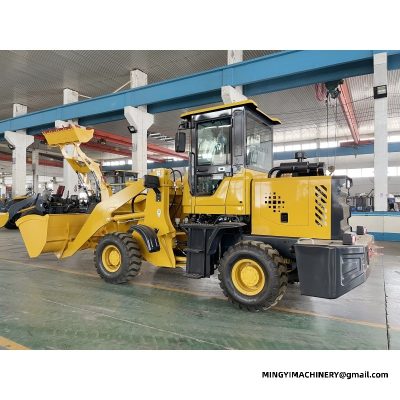
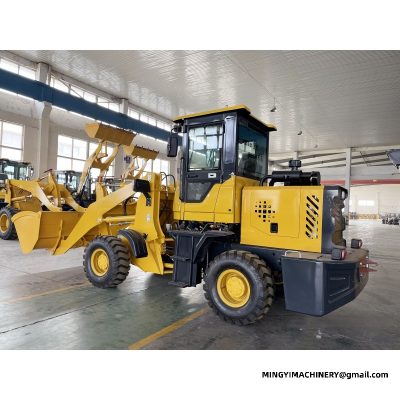
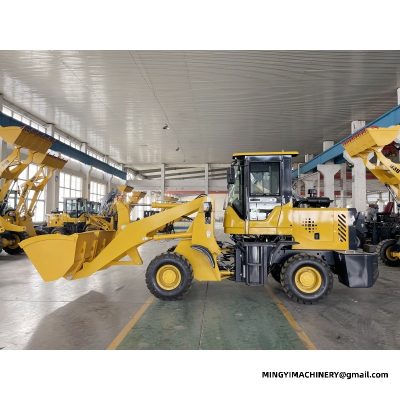
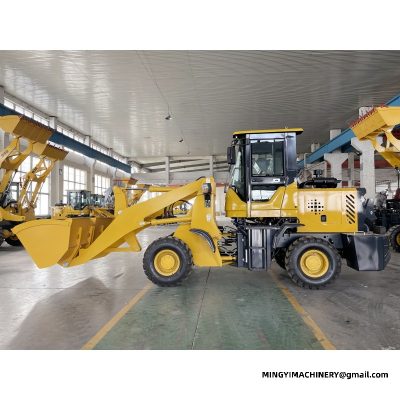
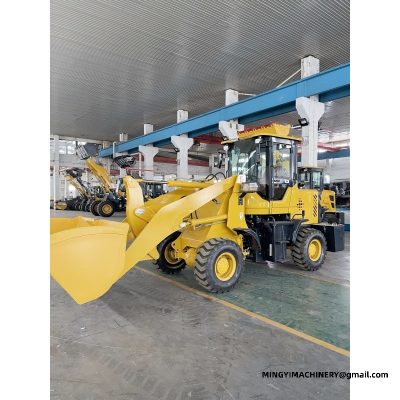
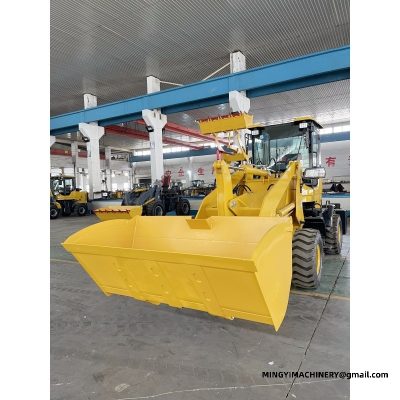
A wheel loader for sale that suits the work is quiet about it. It clears the board on the first pass, it does not hunt for grip, and nothing under it leaks at the end of the shift. Machines that draw attention are usually mis-specified rather than badly built. This page works through the rows that produce the quiet ones — 3.8 m of dump height, 1.5 m (wheel-side reduction axle); 1.45 m (Isuzu axle) of track, 25 mm across the cross-member — and compares the light-duty 3.8 m small-frame wheel-side reduction wheel loader against the light-duty 4.2 m small-frame wheel-side reduction wheel loader at each step.
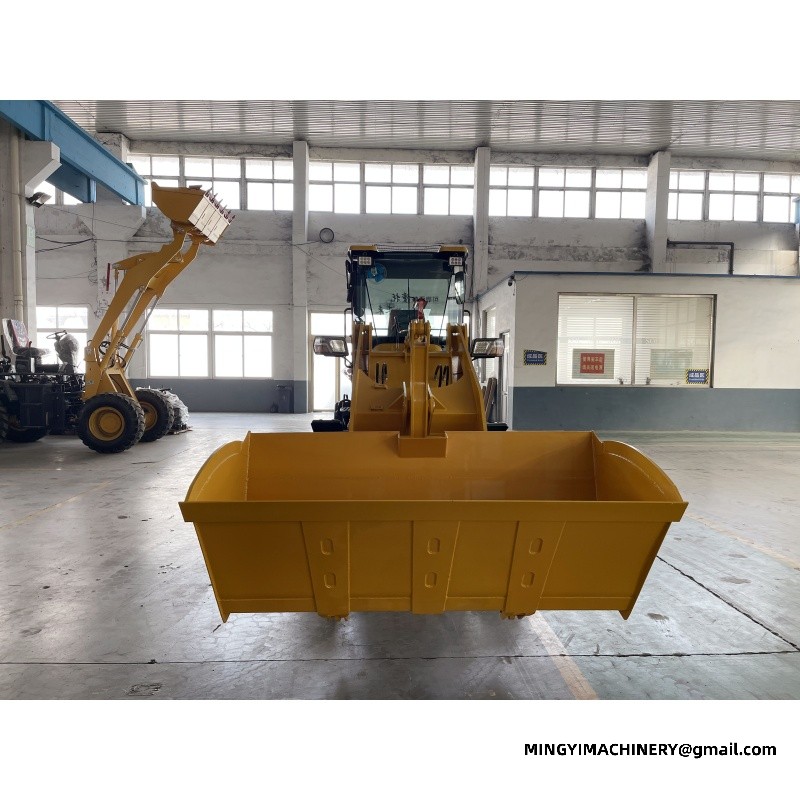
0.38 m³ on the light-duty 4.2 m small-frame wheel-side reduction wheel loader is a volume, and what it means depends entirely on what goes into it. Sand, gravel and crushed rock all weigh differently per cubic metre, and a bucket that is correct for one will overload the frame with another. The frame limit is the cross-member at 25 mm and the hinge plates behind it.
The practical method is to work backwards from the receiving body. If a truck takes four passes from 0.38 m³, it takes three from 0.4 m³ on the heavy-duty 4.5 m small-frame wheel-side reduction wheel loader, and the saving is real only if the loader clears the board — 4.2 m here against 4.5 m. Capacity without clearance is a specification that looks better in a brochure than on a site.
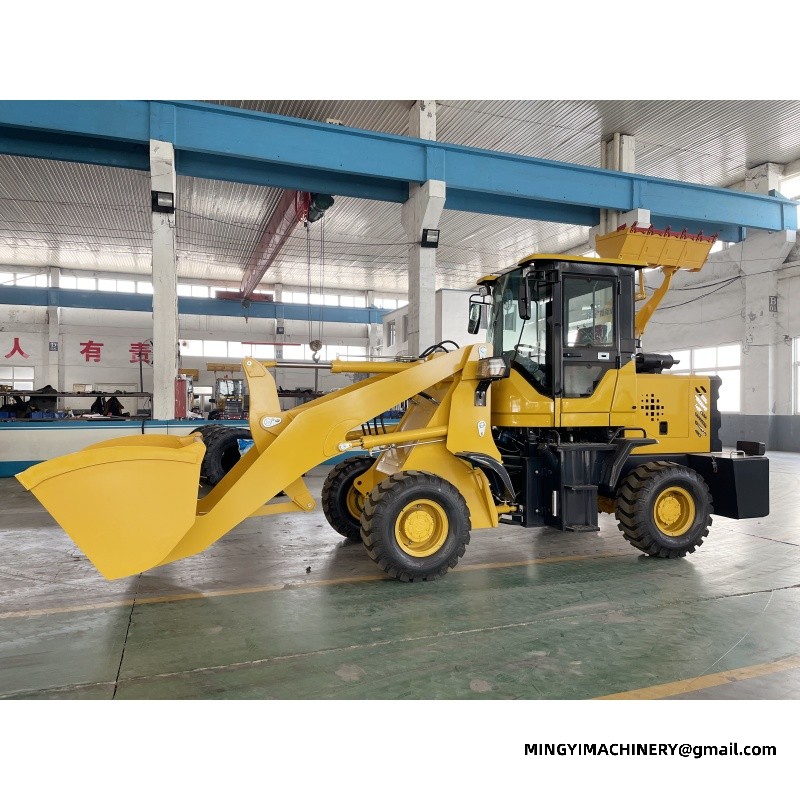
Fuel and cooling capacity are not comfort figures; they are shift-planning figures. A 30.8 L (48# large tank, 20.5/70-16 tyres); 24.6 L (48# small tank, 8.25-16 tyres) tank on the standard 2.8 m low-profile wheel loader is sized so a full working day at operating throttle does not need a mid-shift refuel, which matters on sites where the bowser is a long way from the face. The light-duty 3.8 m small-frame wheel-side reduction wheel loader carries 64.7 L (75# small tank).
The radiator is the other side of the same question. 4100 core on this build against 4100 core (490 engine); 4105 core (4102T engine) on the other. Where a build offers two cores, the raised one serves the turbo engine, and it is the correct specification for dusty work, high ambient temperature, or any duty where the machine spends its day at high load and low speed with little air passing through the core.
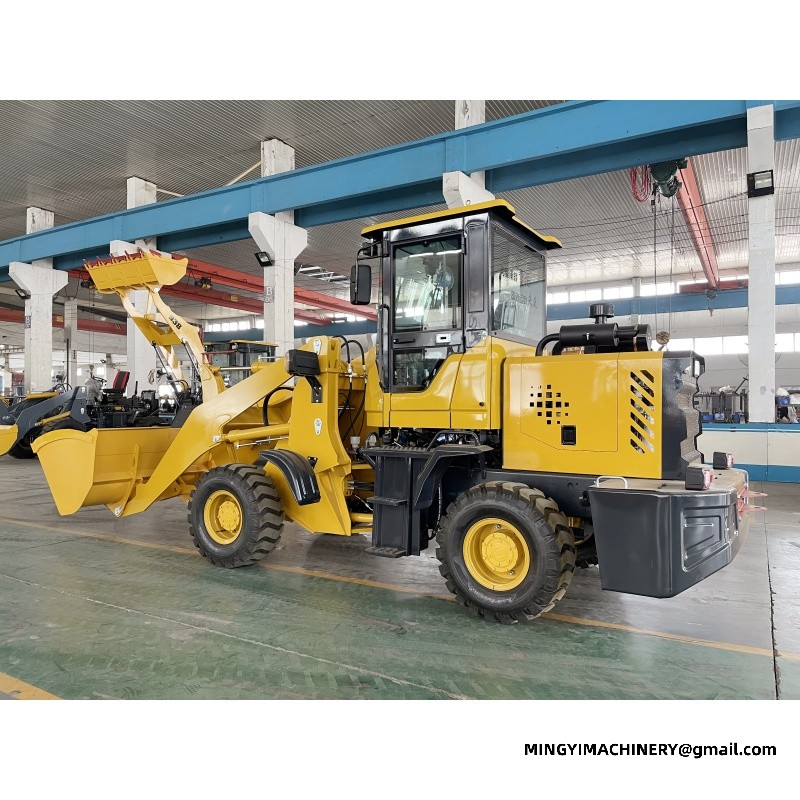
Hinge plates carry the pin loads that the boom and the steering articulation put into the frame, and they are where a loader shows its age first. The light-duty 3.8 m small-frame wheel-side reduction wheel loader runs 25 mm front plates and 14 mm rear plates over a 25 mm cross-member; the heavy-duty 3.5 m medium-frame wheel-side reduction wheel loader runs 45 mm and 30 mm over 45 mm. Rear frame sections follow at 280 mm high x 800 mm wide and 300 mm high x 800 mm wide respectively.
The rear plate is the more telling of the two. Articulated steering loads the rear hinge every time the machine turns under load, and reversing out of a face with a full bucket doubles it. A 14 mm rear plate with a 25 mm cross-member is a light-duty specification; 30 mm over 45 mm is a heavy-duty one. Put those alongside the 0.38 m³ and 0.65 m³ buckets and the specification difference between the two builds stops looking arbitrary — it is steel.
| Published build data — light-duty 4.2 m small-frame wheel-side reduction wheel loader | |
|---|---|
| Bucket capacity | 0.38 m³ |
| Dump height | 4.2 m |
| Track width | 1.5 m (wheel-side reduction axle); 1.45 m (Isuzu axle) |
| Boom arm thickness | 25 mm |
| Boom arm width | 370 mm |
| Boom arm length | 3.15 m |
| Boom arm centre distance | 890 mm |
| Cross-member thickness | 25 mm |
| Front hinge plate thickness | 25 mm |
| Rear hinge plate thickness | 20 mm |
| Rear frame section | 280 mm high x 800 mm wide |
| Hydraulic cylinders | centre cylinder 45 / side cylinder 40 |
| Fuel tank | 64.7 L (75# small tank) |
| Battery | 60 Ah (490 engine); 80 Ah (4102 turbo engine) |
| Front wheel to counterweight | 4.1 m |
| Radiator | 4100 core (490 engine); 4105 core (4102T engine) |
| Work pump | 40 pump (490 engine); 1045 pump (4102 turbo engine) |
| Travel pump | 316 pump |
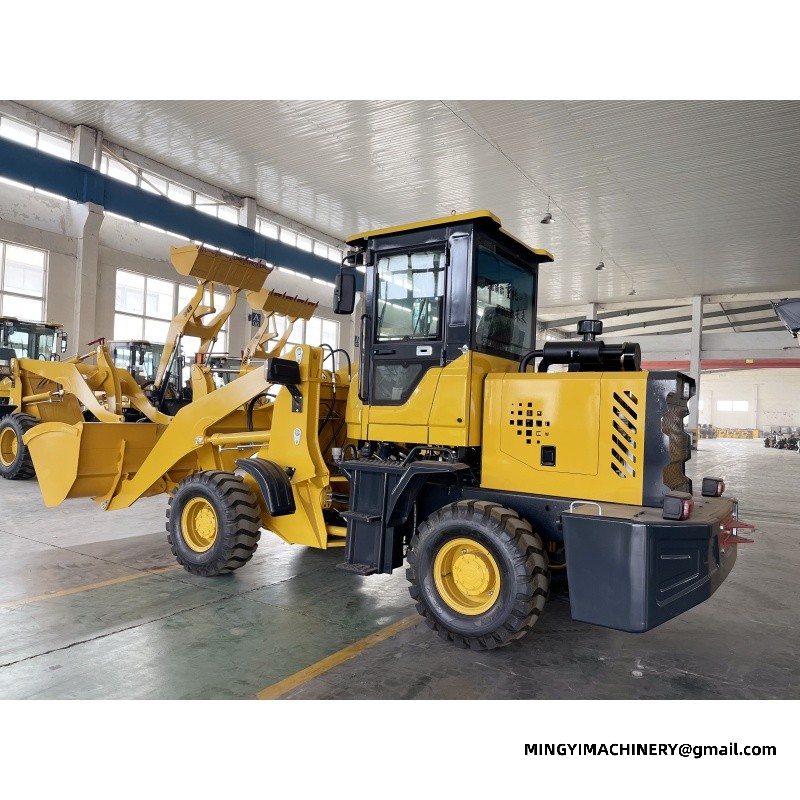
Most loader downtime is avoidable and most of what is avoidable is grease, coolant and hoses. Grease the articulation and the boom pins on the interval — on the light-duty 3.8 m small-frame wheel-side reduction wheel loader that is the 25 mm and 14 mm plates and the 890 mm boom mounts. Keep the 4100 core (490 engine); 4105 core (4102T engine) core clean, because overheating presents as lost power long before it presents as a fault.
Hoses are the second most common cause of a stopped machine and the easiest to plan for: a chafing hose on the centre cylinder 45 / side cylinder 40 circuit weeps before it bursts, and a weekly look finds it. Pumps — 40 pump (490 engine); 1045 pump (4102 turbo engine) and 316 pump on the light-duty 3.8 m small-frame wheel-side reduction wheel loader — rarely fail without warning; they get noisy first. On the light-duty 4.2 m small-frame wheel-side reduction wheel loader the equivalents are centre cylinder 45 / side cylinder 40, 40 pump (490 engine); 1045 pump (4102 turbo engine) and 316 pump. Keep a hose set and a filter set on site and most of this becomes a tea break rather than a week.
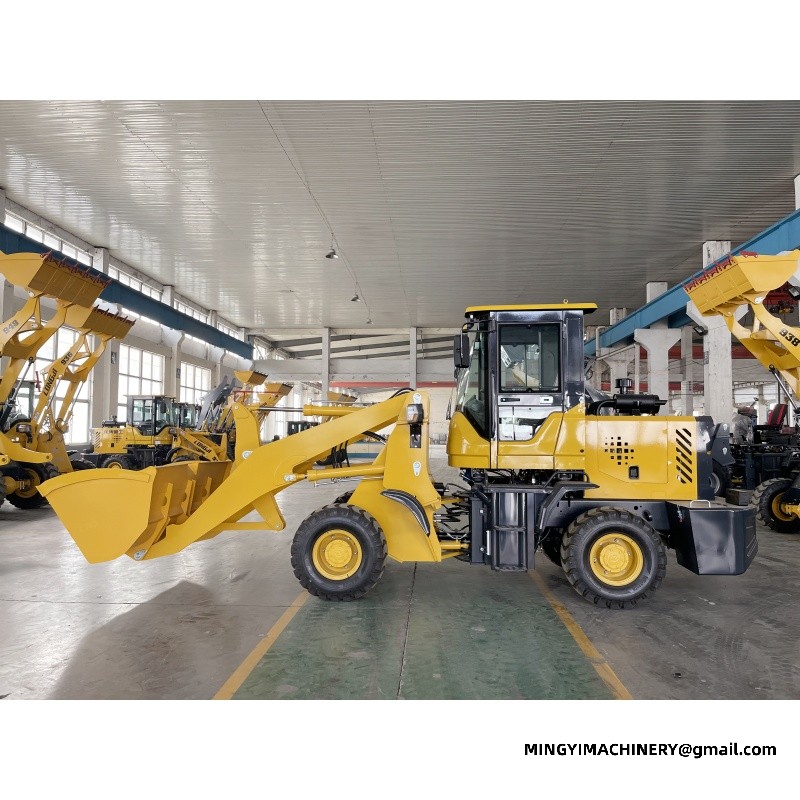
Over a full season, the differences that matter are not the ones on the sales sheet. Two machines, the light-duty 3.8 m small-frame wheel-side reduction wheel loader with 0.38 m³ at 3.8 m and the light-duty 4.2 m small-frame wheel-side reduction wheel loader with 0.38 m³ at 4.2 m, will differ in fuel by less than they differ in uptime, and they will differ in uptime mostly because of the cooling package — 4100 core (490 engine); 4105 core (4102T engine) against 4100 core (490 engine); 4105 core (4102T engine) — and the frame — 14 mm against 20 mm.
plan on the duty, then check the specification supports it. A light build in a quarry is a false economy; a heavy build on a farm is money spent for nothing. Where the duty is mixed, buy the frame for the hardest week of the year and the bucket for the average one — buckets are simple, frames are not, and the 40 pump (490 engine); 1045 pump (4102 turbo engine) and 316 pump on the light-duty 3.8 m small-frame wheel-side reduction wheel loader will run either.
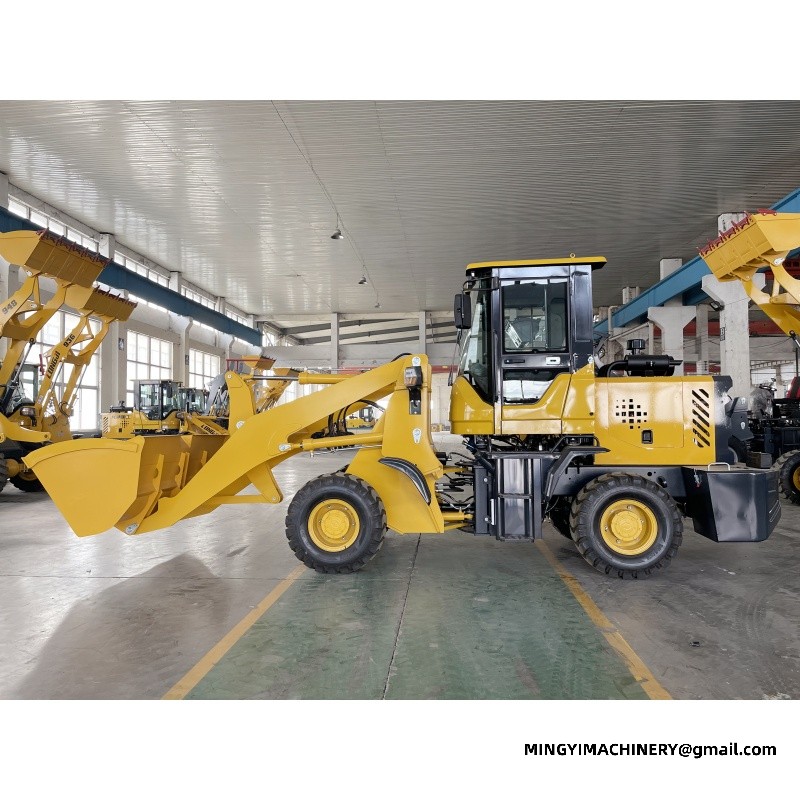
Site work is a truck-loading problem. The machine fills, reverses, turns, approaches and dumps, several hundred times a day, and the numbers that govern it are dump height, hinge steel and cycle time. The light-duty 3.8 m small-frame wheel-side reduction wheel loader brings 0.38 m³ at 3.8 m with 25 mm and 14 mm hinge plates; the light-duty 4.2 m small-frame wheel-side reduction wheel loader brings 0.38 m³ at 4.2 m with 25 mm and 20 mm.
Backfilling and heel-in work load the rear hinge harder than loading does, because the machine turns while pushing. That is why the rear plate figure — 14 mm against 20 mm — is the one to read for a site machine, ahead of engine power. Add the cooling question: site dust loads a radiator fast, so the raised core and the 4100 core (490 engine); 4105 core (4102T engine) package earn their keep where the 4100 core (490 engine); 4105 core (4102T engine) spec would need blowing out at lunch.
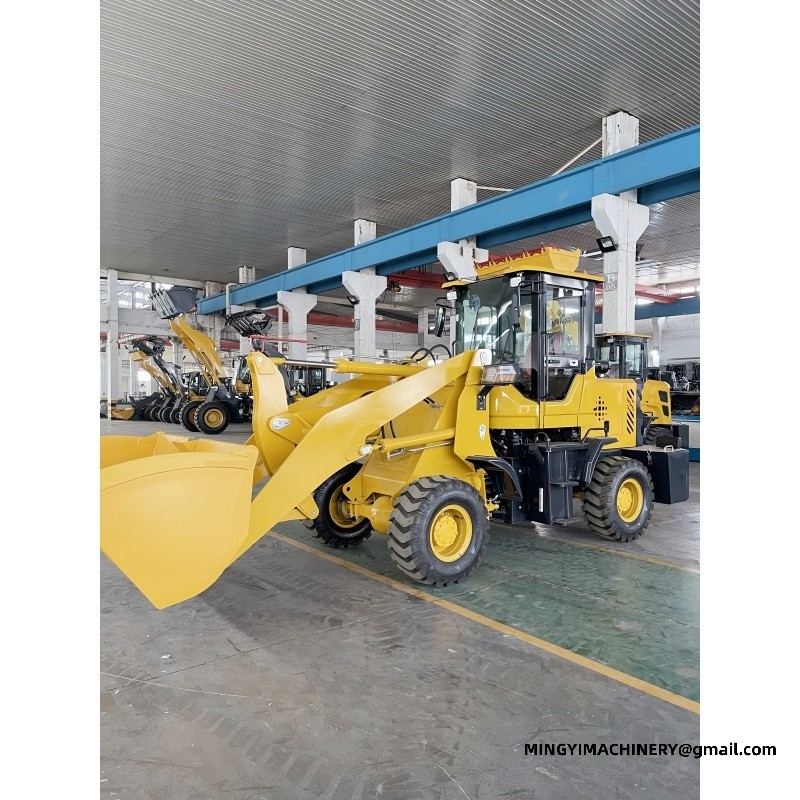
Front wheel to counterweight is the figure that decides whether a machine fits the space you have. Here it is 4.1 m on the light-duty 4.2 m small-frame wheel-side reduction wheel loader and 4.55 m on the heavy-duty 4.2 m medium-frame wheel-side reduction wheel loader. Measure your tightest working bay, add the swing of the bucket, and compare — because a loader that has to reverse out of every corner loses more time than a bigger bucket ever recovers.
Track width closes the same question from the side. 1.5 m (wheel-side reduction axle); 1.45 m (Isuzu axle) on this build. Where two figures are listed, the narrower belongs to the hard-ground axle, and a narrow machine on a narrow gate is often the right answer even where the work itself would suit something bigger. The rear frame section, 280 mm high x 800 mm wide, is what keeps a compact machine from feeling flimsy once it is loaded.
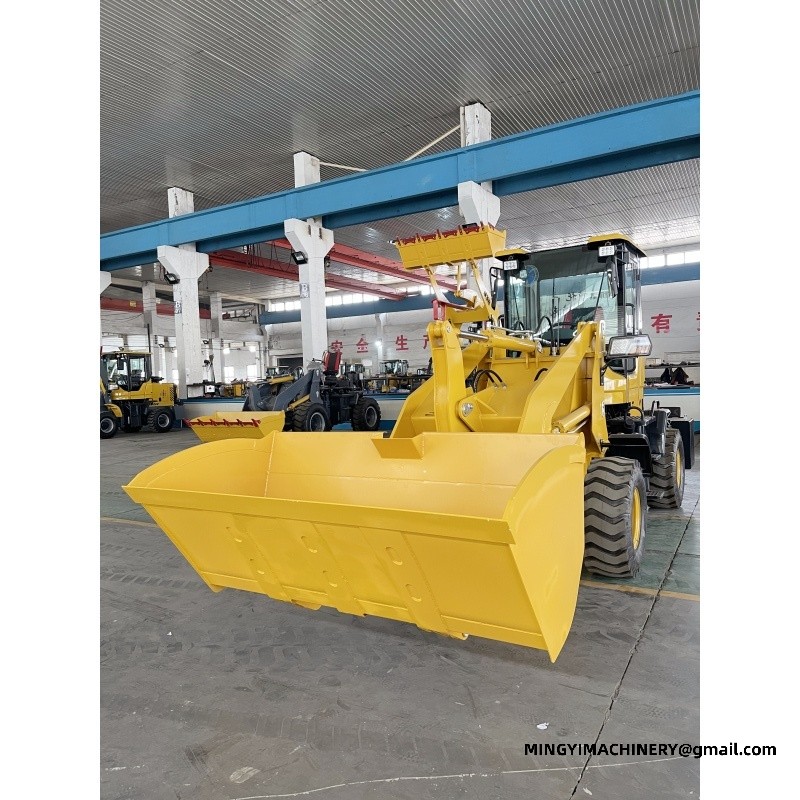
A starter spares box for the light-duty 3.8 m small-frame wheel-side reduction wheel loader is short: filters to match the 4100 core (490 engine); 4105 core (4102T engine) cooling package and the engine, a hose set for the centre cylinder 45 / side cylinder 40 cylinders, a pin and bush kit for the 890 mm boom mounts, and a cutting edge. On the light-duty 4.2 m small-frame wheel-side reduction wheel loader the same list applies with centre cylinder 45 / side cylinder 40, 890 mm and the 4100 core (490 engine); 4105 core (4102T engine) package.
Beyond that, stock by consequence. A failed hose stops the machine for a day; a failed pump stops it for a week; a failed hinge plate stops it for a season. Filters and hoses are simple and universal enough to keep on site. Pumps — 40 pump (490 engine); 1045 pump (4102 turbo engine) and 316 pump on the light-duty 3.8 m small-frame wheel-side reduction wheel loader, 40 pump (490 engine); 1045 pump (4102 turbo engine) and 316 pump on the light-duty 4.2 m small-frame wheel-side reduction wheel loader — are worth one spare per fleet, not per machine.
How do I choose the axle on a wheel loader for sale?
By surface. Track is 1.5 m (wheel-side reduction axle); 1.45 m (Isuzu axle) here; where two figures are listed the wider one is the hub-reduction axle for soft or rutted ground, the narrower one suits hard standing.
What affects operator fatigue on a wheel loader for sale?
Seat, visibility and how much the machine has to be corrected. A tight frame wanders less; a loose one behind the 25 mm plate is tiring to hold on the road.
Where do frames on a wheel loader for sale crack first?
Weld toes at the cross-member and around the rear hinge. The section is 200 mm high x 750 mm wide over a 16 mm member on this build; check both monthly on hard duty.
What extra care does a wheel loader for sale need in dusty work?
Core cleaning at the end of every shift and more frequent air filter changes. The core is 4100 core (490 engine); 4105 core (4102T engine); a blocked one shows up as a slow loss of power rather than a stoppage.
Which engine option should a wheel loader for sale be ordered with?
It follows the duty. The engine drags three rows with it: pump 32 pump, core 4100 core and battery 45 Ah (24 V). Choose it early rather than accepting whatever is in stock.
What should an operator be shown on a new wheel loader for sale?
Board clearance against the 4.5 m of lift, why the bucket should be squared to the face, and the daily walk-round. Most frame damage comes from corner-loading, not from overloading.
How much does material weight matter on a wheel loader for sale?
It sets the real limit, not the bucket. Volume is 0.38 m³; what the frame takes is set by the 25 mm cross-member and the 280 mm high x 800 mm wide rear section behind it.
None of this requires taking a wheel loader for sale on faith. The rows are published, the machines can be measured on delivery, and the five figures that matter — bucket, dump height, cylinders, track and hinge steel — are checkable in twenty minutes.
Storage and long idle periods for Wheel Loader for Sale: Comparing Builds Side by Side
Rubber, seals and hoses age whether the machine works or not. Keeping Wheel Loader for Sale: Comparing Builds Side by Side out of direct sun and off damp ground slows that, and running it briefly at intervals keeps everything moving.
Reading the early symptoms on Wheel Loader for Sale: Comparing Builds Side by Side
Machines rarely fail without warning. A change in sound, a slower function or a new leak on Wheel Loader for Sale: Comparing Builds Side by Side is the machine saying something early, and listening then takes a fraction of the time that waiting does.
Contact MINGYI Machinery for the current wheel loader lineup, configuration options and a formal specification for your market. E-mail: sales@mingycn.com | LINE (ID): mingyicn
Wheel Loader Manufacturer: What a Build Sheet Must Show · Compact Wheel Loader: Working Tight Bays and Low Sheds · Wheel Loader for Aggregate Yard: Stockpiles and Haul Cycles · Wheel Loader








