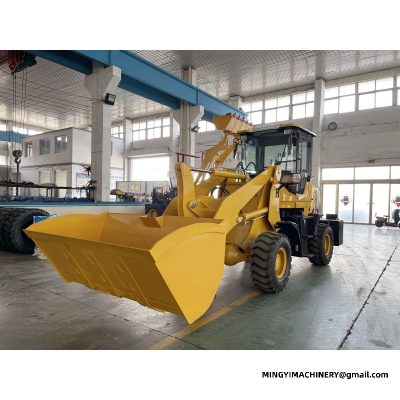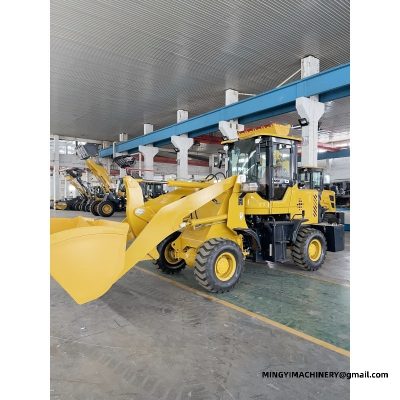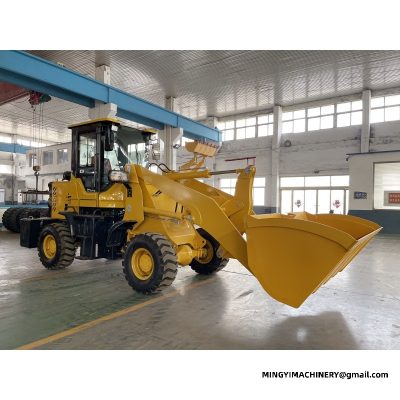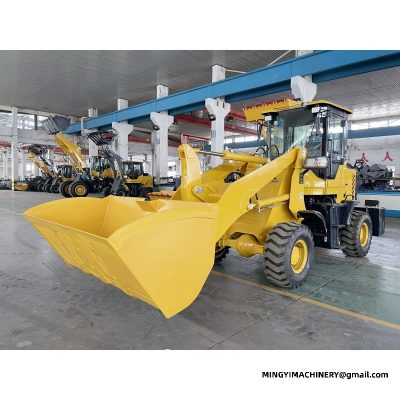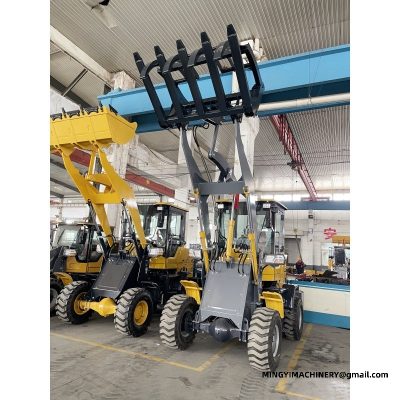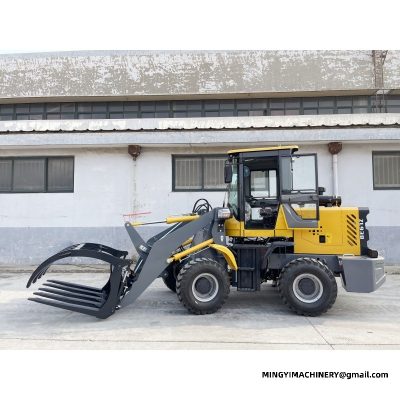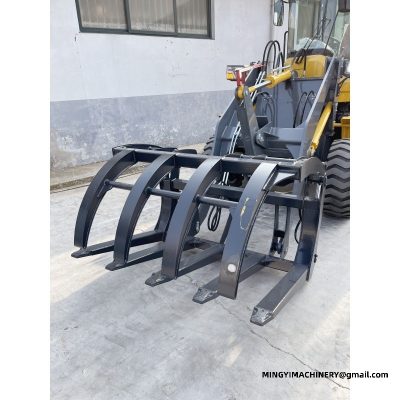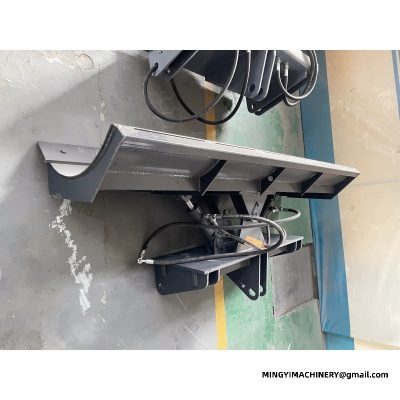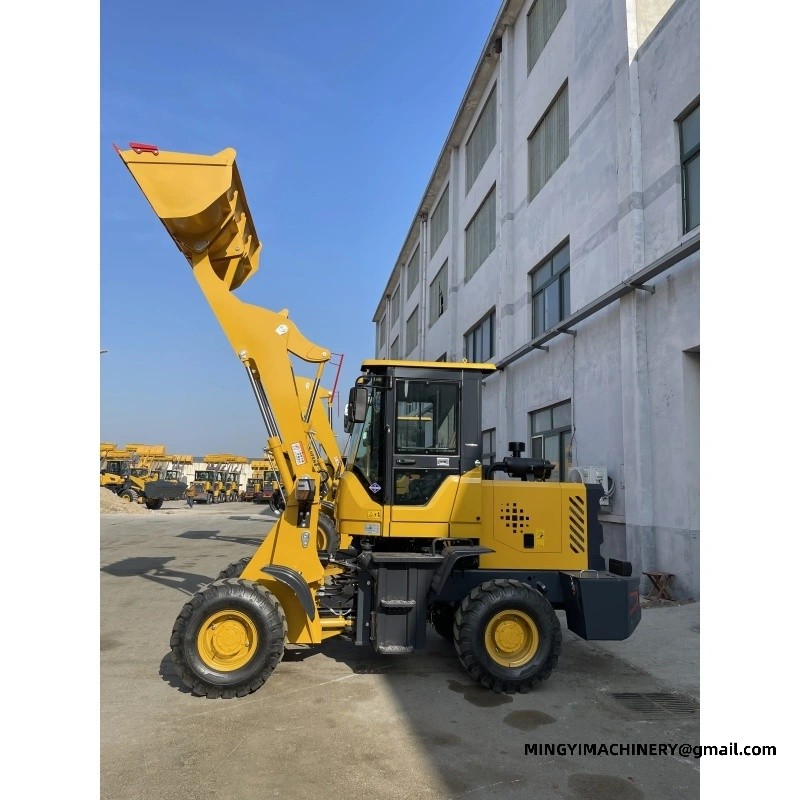
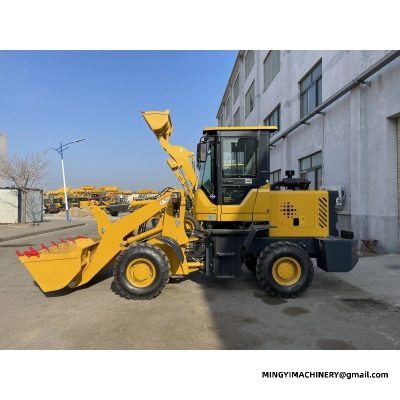
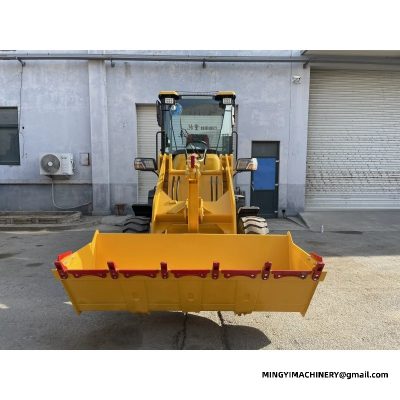
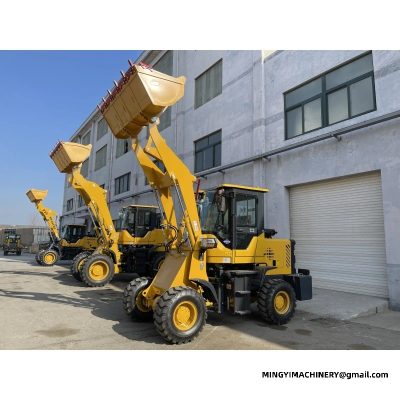
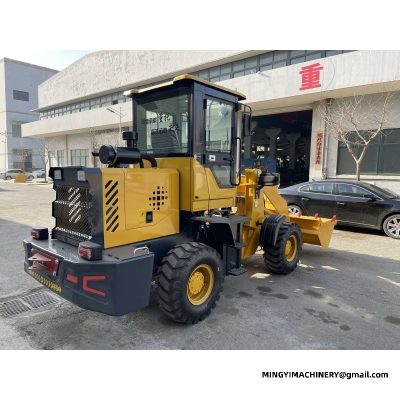
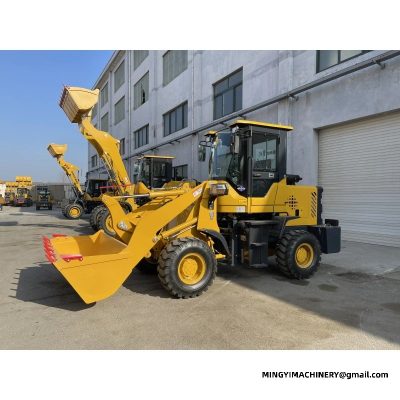
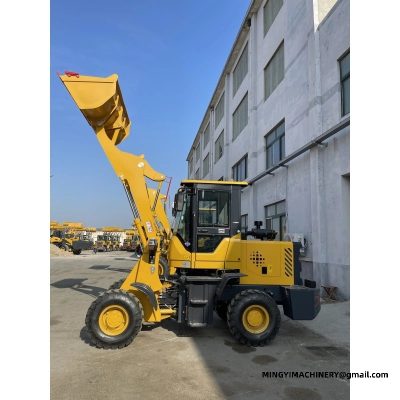
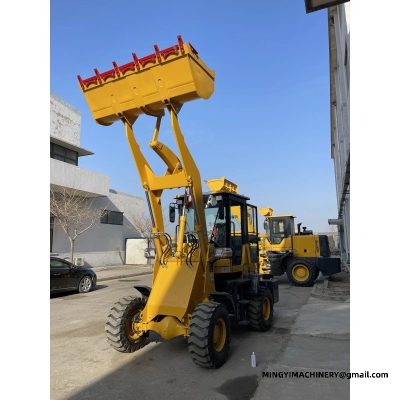
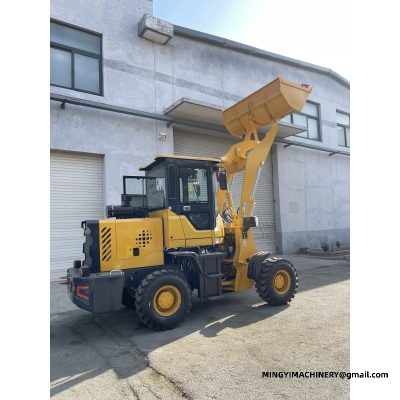
Most compact wheel loader problems are decided before the machine arrives. A bucket that is too big for the material, a dump height that misses the board by a hand's width, a hinge plate thinner than the duty needs — none of those can be fixed afterwards, and all of them are printed on the sheet. This page walks the figures in the order an owner meets them: what the machine carries, where it puts it, what wears first, and what to check before it leaves the factory. Two builds run through the comparisons, the heavy-duty 3.2 m low-profile wheel loader at 3.2 m and the heavy-duty 3.2 m small-frame wheel-side reduction wheel loader at 3.2 m.
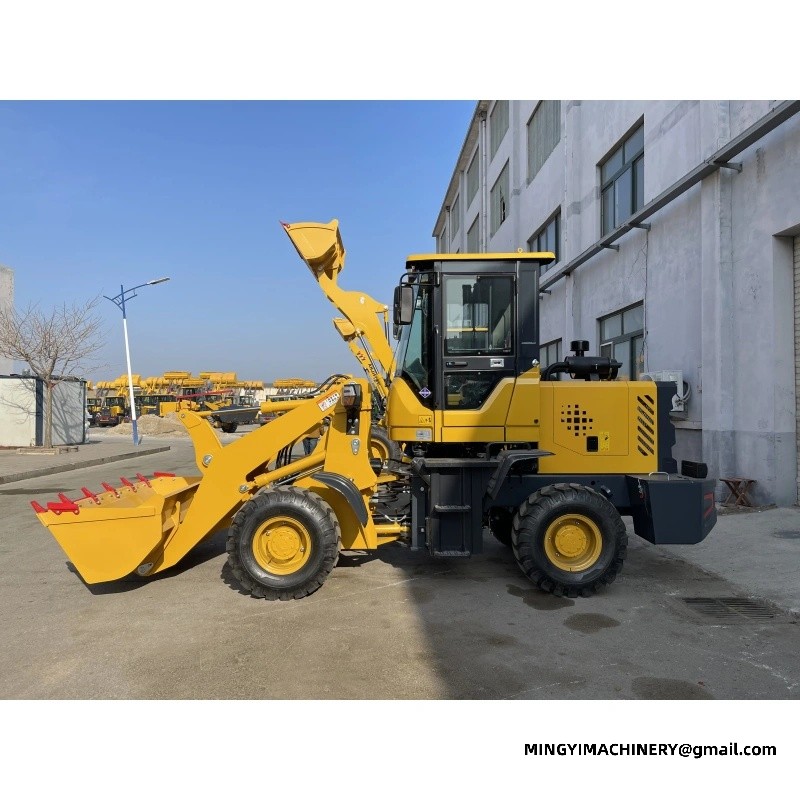
A boom is a beam, and a beam is specified by length, section and material thickness. On the heavy-duty 3.2 m low-profile wheel loader that means 2.3 m long, 430 mm wide and 25 mm thick, mounted on a 890 mm centre distance. On the heavy-duty 3.2 m small-frame wheel-side reduction wheel loader the same three figures are 2.3 m, 430 mm and 25 mm on a 890 mm spacing. Those six numbers decide breakout behaviour, side-load tolerance and how the machine feels on the last metre of lift.
The practical test is simple. If your day is loose material on level ground, a shorter arm on a tight machine will out-cycle a longer one, because every millimetre of reach is travel time. If your day is faces, banks and truck loading, the longer arm of the two — 2.3 m at 3.2 m — earns its keep, provided the 25 mm wall and 430 mm section are there to carry it. Ask which bucket the boom was engineered around — 0.4 m³ on the heavy-duty 3.2 m low-profile wheel loader, 0.4 m³ on the heavy-duty 3.2 m small-frame wheel-side reduction wheel loader — and you will know whether the arm and the frame were designed together.
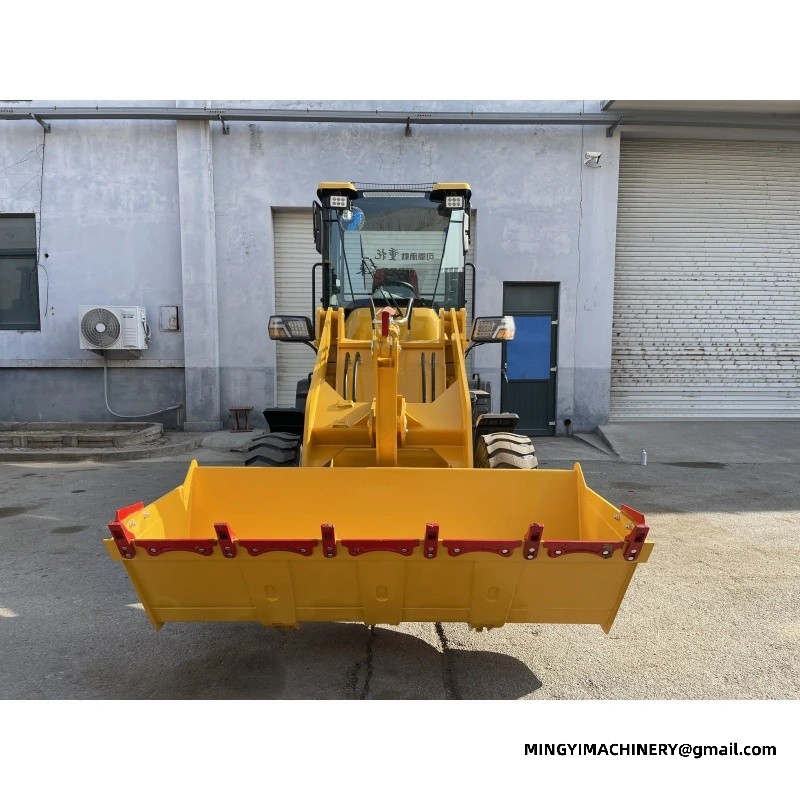
Cold cranking is the one specification that is easy to ignore and impossible to work around at five in the morning. This build is specified with 60 Ah (490 engine); 80 Ah (4102 turbo engine), matched to the engine it has to turn. Capacity in ampere-hours is only half the story; the other half is whether the rating is honest at low temperature, which is why the figure should be read together with the engine option.
Where two engines are offered, the turbo option asks for more from the battery and gets it: the higher rating in 60 Ah (490 engine); 80 Ah (4102 turbo engine) belongs to that build. If the machine will start cold, stop often, or run a short-haul duty with many restarts, specify the higher capacity at the order stage rather than discovering the limit in January.
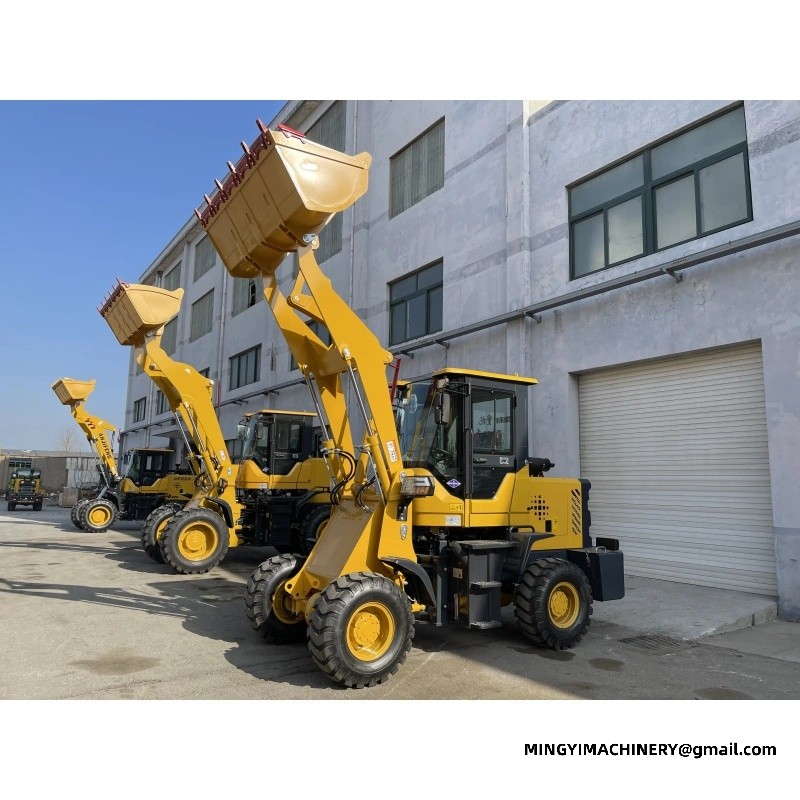
Radiator size follows the engine, not the frame. The heavy-duty 3.2 m low-profile wheel loader lists 4100 core (490 engine); 4105 core (4102T engine); the heavy-duty 3.2 m small-frame wheel-side reduction wheel loader lists 4100 core (490 engine); 4105 core (4102T engine). Where two engine options exist on one build, the cores differ — a 4100 core on the 490 engine and a 4105 on the 4102 turbo — and the taller, raised core is the one to specify wherever dust, chaff or dry sand blankets a standard radiator part-way through a shift.
Overheating is the single most common cause of a loader losing days rather than hours. It presents as power loss, then as a shift cut short, then as a head gasket. Choosing the raised core takes almost nothing at order time and cannot be retrofitted easily later. Pair that with the electrical package — 60 Ah (490 engine); 80 Ah (4102 turbo engine) on the heavy-duty 3.2 m low-profile wheel loader, 60 Ah (490 engine); 80 Ah (4102 turbo engine) on the heavy-duty 3.2 m small-frame wheel-side reduction wheel loader — and note that a battery specified for a naturally aspirated engine is often marginal for a turbo one in cold climates.
| Published build data — heavy-duty 3.2 m small-frame wheel-side reduction wheel loader | |
|---|---|
| Bucket capacity | 0.4 m³ |
| Dump height | 3.2 m |
| Track width | 1.5 m (wheel-side reduction axle); 1.45 m (Isuzu axle) |
| Boom arm thickness | 25 mm |
| Boom arm width | 430 mm |
| Boom arm length | 2.3 m |
| Boom arm centre distance | 890 mm |
| Cross-member thickness | 30 mm |
| Front hinge plate thickness | 30 mm |
| Rear hinge plate thickness | 20 mm |
| Rear frame section | 280 mm high x 800 mm wide |
| Hydraulic cylinders | centre cylinder 45 / side cylinder 45 |
| Fuel tank | 64.7 L (75# small tank) |
| Battery | 60 Ah (490 engine); 80 Ah (4102 turbo engine) |
| Front wheel to counterweight | 4.1 m |
| Radiator | 4100 core (490 engine); 4105 core (4102T engine) |
| Work pump | 40 pump (490 engine); 1045 pump (4102 turbo engine) |
| Travel pump | 316 pump |
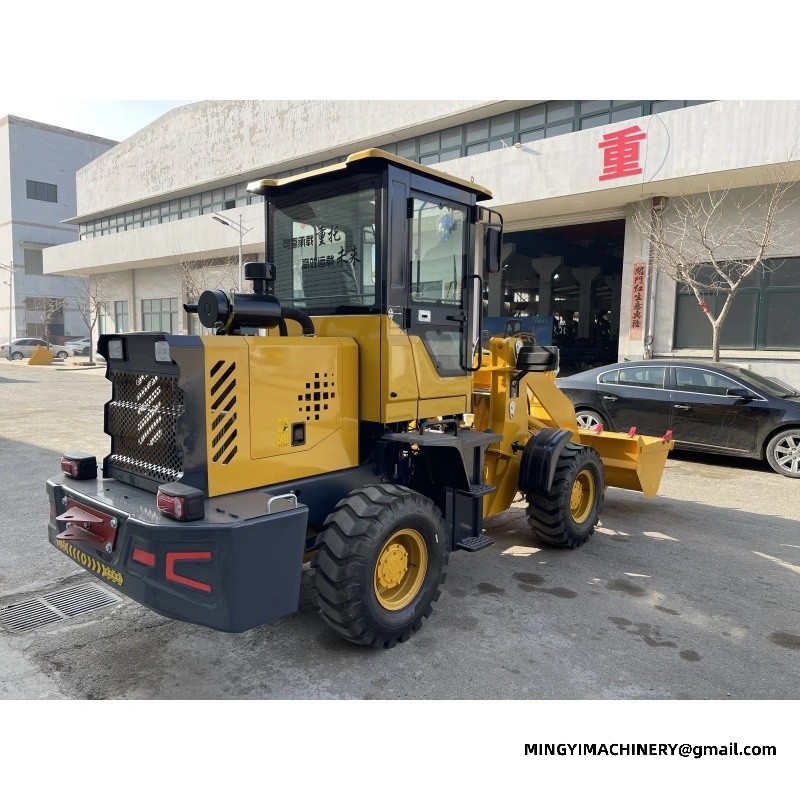
A loading cycle is four movements repeated a few hundred times a shift: approach, fill, lift, dump. Each one loads a different part of the machine, and the specification that matters changes with the movement. Filling asks for bucket volume and breakout, so 0.4 m³ on the heavy-duty 3.2 m small-frame wheel-side reduction wheel loader is the first figure to read. Lifting asks for boom section and cylinder size, which is 25 mm of wall and centre cylinder 45 / side cylinder 45. Dumping asks for height over the receiving board, 3.2 m here against 4.2 m on the light-duty 4.2 m medium-frame wheel-side reduction wheel loader.
The approach is the movement nobody specifies for, and it is where frames age. Every run at a face loads the front hinge plate, 30 mm on this build against 20 mm at the rear; the rear plate carries the weight of the counterweight and the swing of the whole rear frame, which is why it is the heavier of the two. A 4.1 m wheelbase keeps the machine settled when the bucket meets resistance rather than air.
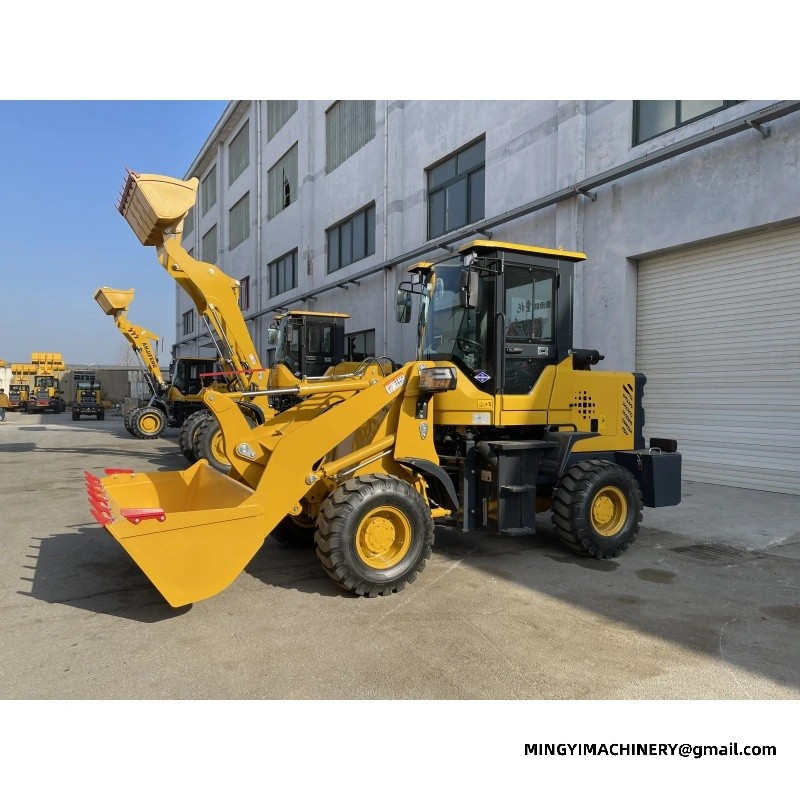
Daily: walk the machine, look at the ground under it, check the coolant level in the 4100 core (490 engine); 4105 core (4102T engine) package, and grease the hinge pins. The hinge is where wear starts, and on the heavy-duty 3.2 m low-profile wheel loader those are 30 mm front and 20 mm rear plates over a 30 mm cross-member — a greasing interval missed there takes pins and bores, not just grease.
Weekly: check the centre cylinder 45 / side cylinder 45 cylinder rods for scoring, the hoses for chafe, and the 40 pump (490 engine); 1045 pump (4102 turbo engine) and 316 pump connections for weeping. Monthly: torque the boom mount pins to the 890 mm spacing and inspect the cutting edge. On the heavy-duty 3.2 m small-frame wheel-side reduction wheel loader the same schedule applies with 4100 core (490 engine); 4105 core (4102T engine), centre cylinder 45 / side cylinder 45, 40 pump (490 engine); 1045 pump (4102 turbo engine) and 890 mm. None of it is skilled work, and all of it is simpler than the failure it prevents.
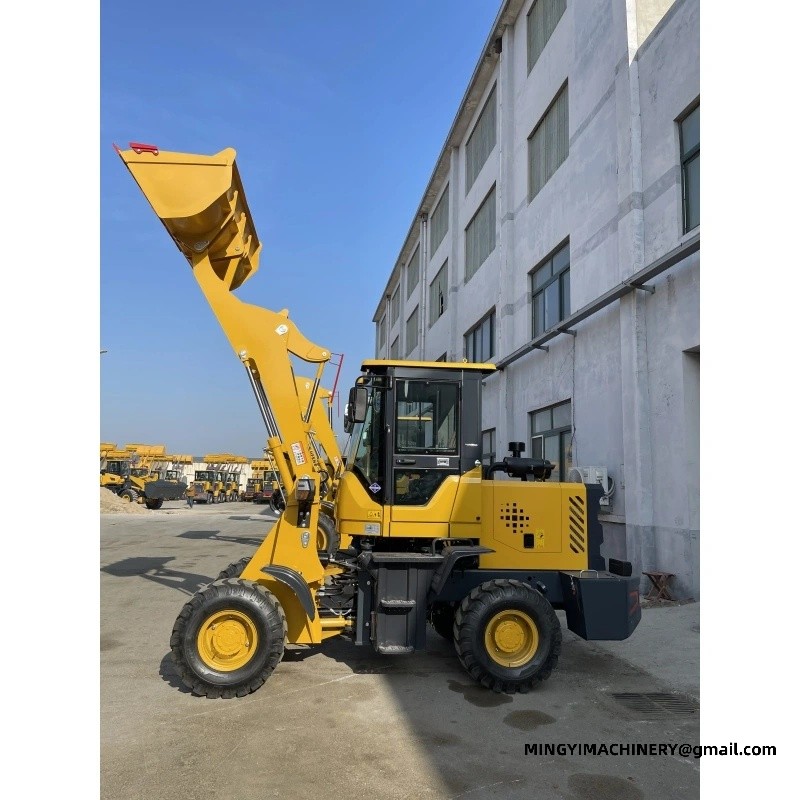
Three takes dominate ownership: fuel, downtime and the residual value of the machine when it is sold. Fuel is set by duty and tank planning — 54 L (50# tank) on the heavy-duty 3.2 m low-profile wheel loader, 64.7 L (75# small tank) on the heavy-duty 3.2 m small-frame wheel-side reduction wheel loader. Residual value is set by whether the frame is still tight, which is set by the 20 mm and 20 mm rear hinge plates and the 30 mm and 30 mm cross-members.
Downtime is the lengthy one, and it is usually caused by the simplest components: a hose on the centre cylinder 45 / side cylinder 45 circuit, a blocked 4100 core (490 engine); 4105 core (4102T engine) core, a flat battery from a machine that sat on the dock. None of them is a reason to buy a bigger machine, and all of them are reasons to keep a small spares box. plan for filters, hoses and a cutting edge per year, and for pins and bushes every second year.
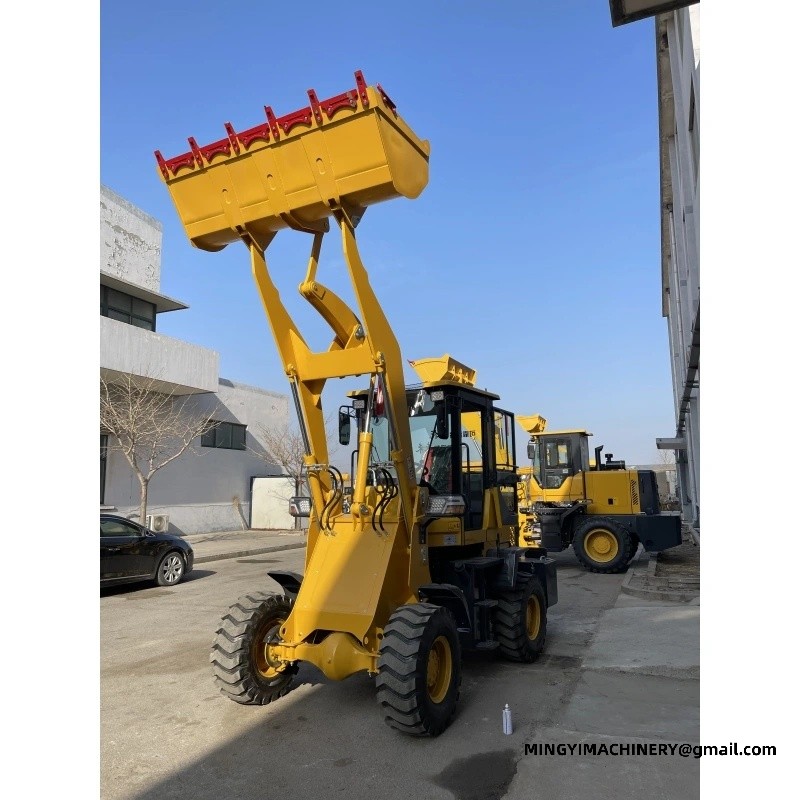
Work from the longest dimension. 4.1 m from front wheel to counterweight on this machine, 4.25 m on the heavy-duty 4.2 m small-frame wheel-side reduction wheel loader. The bucket usually comes off; the counterweight usually stays, because removing it changes the securing plan far more than the space it saves.
Track is the second constraint, 1.5 m (wheel-side reduction axle); 1.45 m (Isuzu axle), and it is the one that decides whether two machines can travel side by side. Where a build offers two axles the track differs slightly between them, so confirm which axle is on the unit before booking space. Fuel is drained to a residue for shipping, and the tank on this build is 64.7 L (75# small tank); that figure matters for the hazmat paperwork rather than for the loading plan.
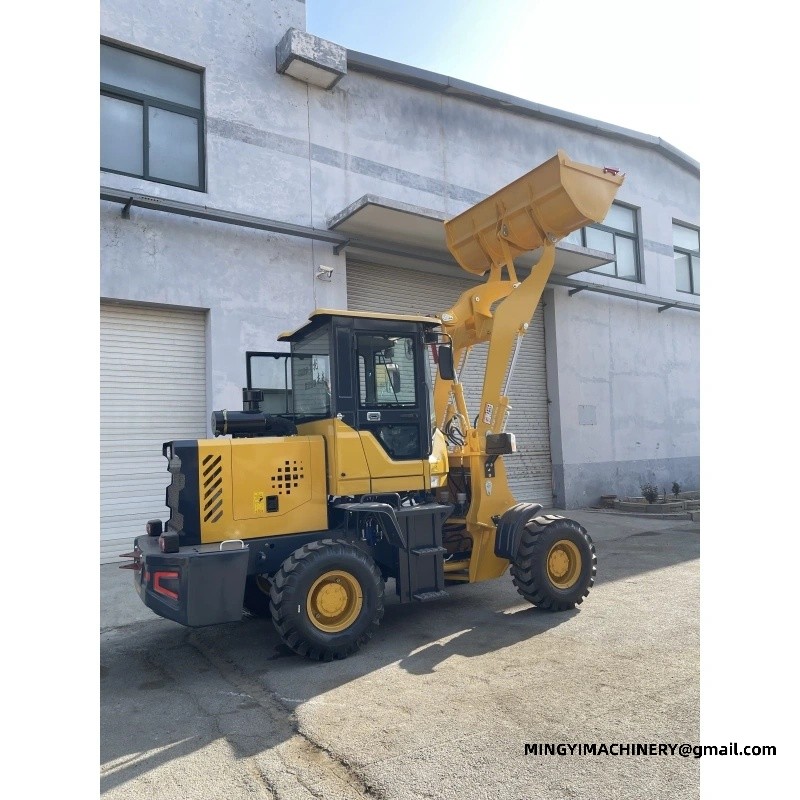
Articulated steering lets a loader turn inside its footprint, and every one of those turns is carried by two plates. Front hinge 30 mm, rear hinge 20 mm. The rear is the heavier because it carries the counterweight and the whole rear frame through every steering input.
Short wheelbase machines articulate harder and more often, which is why plate thickness matters more on a compact build, not less. At 4.1 m front wheel to counterweight and 1.5 m (wheel-side reduction axle); 1.45 m (Isuzu axle) of track, this machine will spend its life turning in tight spaces; a 30 mm cross-member is what keeps those plates in line while it does.
What do I check the day a compact wheel loader is delivered?
Bucket 0.4 m³, lift 3.2 m, cylinders centre cylinder 45 / side cylinder 45, track 1.5 m (wheel-side reduction axle); 1.45 m (Isuzu axle) and length 4.1 m. Photograph all five; they settle any later question about what was ordered.
How should the battery on a compact wheel loader be cared for?
Keep the terminals clean and tight and use the isolator if the machine will stand. The rating is 60 Ah (490 engine); 80 Ah (4102 turbo engine), and a machine left connected for weeks will not start when it is needed.
What extra care does a compact wheel loader need in dusty work?
Core cleaning at the end of every shift and more frequent air filter changes. The core is 4100 core (490 engine); 4105 core (4102T engine); a blocked one shows up as a slow loss of power rather than a stoppage.
How does wet ground change how a compact wheel loader is used?
Rolling resistance rises, so wheel spin and driveline load rise with it. Track is 1.5 m (wheel-side reduction axle); 1.45 m (Isuzu axle), and the hub-reduction option is the one for soft ground.
Why does my compact wheel loader turn over slowly on cold mornings?
Cranking capacity falls with temperature, and the rating is 60 Ah (490 engine); 80 Ah (4102 turbo engine) on this build. Where two engines are offered the higher rating belongs to the turbo; specify it if the machine starts cold or stops often.
Can worn pins on a compact wheel loader be repaired?
Yes, if the plates are sound. Re-machining restores geometry for a while; once the 30 mm cross-member and 280 mm high x 800 mm wide rear section have been flexing, it will not hold.
Which records should I keep for a compact wheel loader?
The delivery measurements and the specification. Bucket 0.4 m³, lift 3.5 m, cylinders centre cylinder 45 / side cylinder 40, pump 40 pump (490 engine); 1045 pump (4102 turbo engine) and track 1.5 m (wheel-side reduction axle); 1.45 m (Isuzu axle) identify the build for parts and for resale.
None of this requires taking a compact wheel loader on faith. The rows are published, the machines can be measured on delivery, and the five figures that matter — bucket, dump height, cylinders, track and hinge steel — are checkable in twenty minutes.
Hot, humid and dusty conditions around Compact Wheel Loader: Working Tight Bays and Low Sheds
Heat and dust shorten service intervals rather than machine life. In these conditions the filters on Compact Wheel Loader: Working Tight Bays and Low Sheds need attention more often, and the cooling surfaces need to be kept clear to hold the working temperature.
Wear items and spares worth holding for Compact Wheel Loader: Working Tight Bays and Low Sheds
Wear items are predictable once the machine has settled in. After the first service interval the pattern on Compact Wheel Loader: Working Tight Bays and Low Sheds is visible, and the parts that were replaced become the parts that are kept.
Contact MINGYI Machinery for the current wheel loader lineup, configuration options and a formal specification for your market. E-mail: sales@mingycn.com | LINE (ID): mingyicn
Small Wheel Loader: Day-to-Day Work on a Light Build · Wheel Loader for Sale: What to Confirm Before Ordering · Compact Wheel Loader: Small-Frame Builds for Tight Sites · Wheel Loader