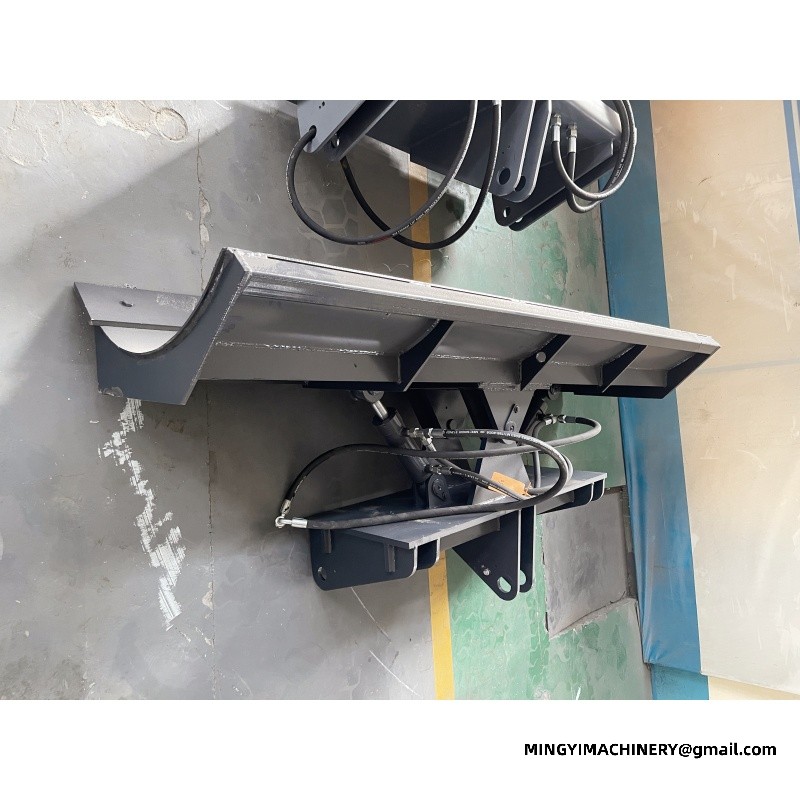
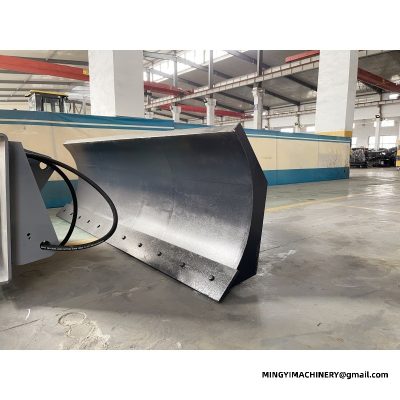
Two loaders can share a name and behave nothing alike. The difference is in the rows nobody reads: cross-member thickness, rear frame section, pump size, tyre fitment. Across this range those rows are published, which makes comparison possible rather than theoretical. Taking the heavy-duty 4.5 m medium-frame wheel-side reduction wheel loader with its 0.65 m³ bucket and 4.5 m of lift against the standard 2.8 m low-profile wheel loader with 0.3 m³ and 2.8 m, this page sets out which figures change behaviour on site, which change the maintenance burden, and which change nothing at all.
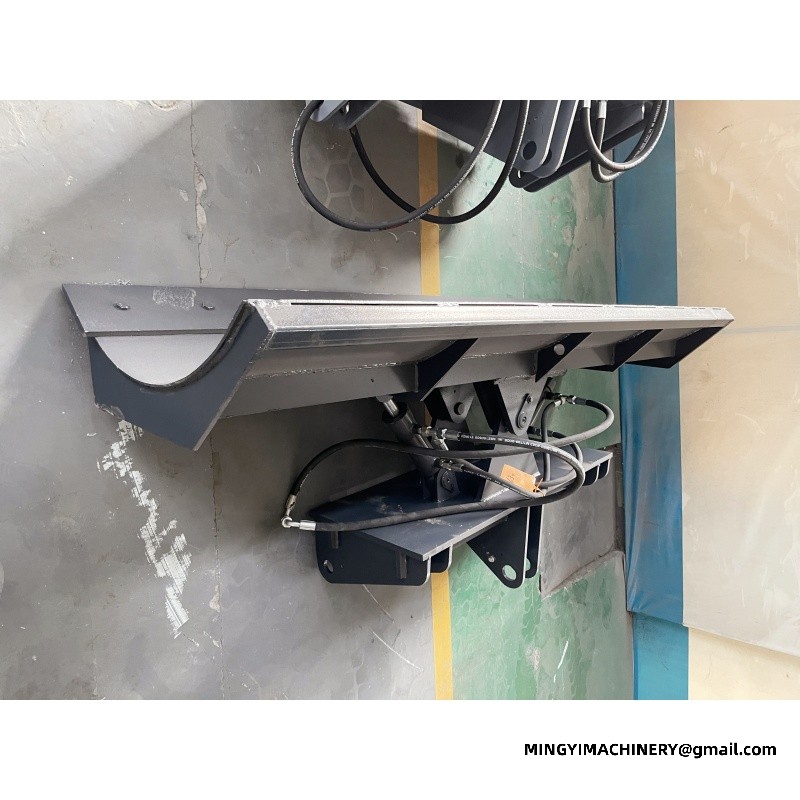
Adding a circuit after delivery is possible and never as good as specifying it at build. The pump is the constraint: 40 pump (490 engine); 1045 pump (4102 turbo engine) on this machine, 316 pump alongside it. Flow has to be shared, and a circuit added later shares it through plumbing that was not laid out for it.
The cylinders are less often the limit than people assume. centre cylinder 45 / side cylinder 45 gives the mechanical advantage; the pump gives the speed. If an attachment works but works slowly, look at flow before looking at bore. If it works but the arm twists, look at section instead: 430 mm of width and 890 mm of spacing resist that, and neither can be improved after the frame is welded.
The two axle options on this range are differentiated by track: 1.6 m on the heavy-duty 4.5 m medium-frame wheel-side reduction wheel loader, 1.2 m (Isuzu axle); 1.3 m (wheel-side reduction axle) on the standard 2.8 m low-profile wheel loader. Behind the number is a different reduction layout. The Isuzu-pattern bridge is lighter, faster on hard ground and simpler to service. The wheel-side reduction bridge puts the final drive at the hub, which lowers the load on the shafts and raises the torque available at the tyre.
Choose by surface and gradient. On compacted hardstanding and long haul roads the Isuzu-pattern axle is the better machine; on a soft lane, a loading ramp or an uncompacted stockyard, hub reduction is what keeps the machine moving when a wheel would otherwise spin. Track width interacts with it: 1.6 m on the heavy-duty 4.5 m medium-frame wheel-side reduction wheel loader and 1.2 m (Isuzu axle); 1.3 m (wheel-side reduction axle) on the standard 2.8 m low-profile wheel loader are the figures to check against your narrowest gate, door or aisle before anything else on the sheet.
Soft ground punishes driveline parts before it punishes the frame. Sand, clay and loose overburden all increase rolling resistance, which increases torque at the hub, which is exactly where a non-reduction axle is weakest. Where the specification lists two track figures, as it does here at 1.5 m (wheel-side reduction axle); 1.45 m (Isuzu axle), the wider one belongs to the hub-reduction axle and is the specification for that ground.
Hard ground is the opposite case. On concrete, compacted hardstand or a paved yard, rolling resistance is low and sustained travel speed is high, so heat rather than torque becomes the limit. The light-duty 3.5 m medium-frame wheel-side reduction wheel loader lists 1.6 m, and the narrower figure there is the one for hard standing. Matching axle to surface takes nothing at the order stage and saves a driveline later.
| Sample build from the range — heavy-duty 3.8 m small-frame wheel-side reduction wheel loader | |
|---|---|
| Bucket capacity | 0.4 m³ |
| Dump height | 3.8 m |
| Track width | 1.5 m (wheel-side reduction axle); 1.45 m (Isuzu axle) |
| Boom arm thickness | 25 mm |
| Boom arm width | 430 mm |
| Boom arm length | 2.61 m |
| Boom arm centre distance | 890 mm |
| Cross-member thickness | 30 mm |
| Front hinge plate thickness | 30 mm |
| Rear hinge plate thickness | 20 mm |
| Rear frame section | 280 mm high x 800 mm wide |
| Hydraulic cylinders | centre cylinder 45 / side cylinder 45 |
| Fuel tank | 64.7 L (75# small tank) |
| Battery | 60 Ah (490 engine); 80 Ah (4102 turbo engine) |
| Front wheel to counterweight | 4.2 m |
| Radiator | 4100 core (490 engine); 4105 core (4102T engine) |
| Work pump | 40 pump (490 engine); 1045 pump (4102 turbo engine) |
| Travel pump | 316 pump |
Four numbers describe a loader frame: front hinge plate, rear hinge plate, cross-member thickness and rear frame section. The heavy-duty 4.5 m medium-frame wheel-side reduction wheel loader lists 45 mm, 30 mm, 45 mm and 300 mm high x 800 mm wide. The standard 2.8 m low-profile wheel loader lists 16 mm, 16 mm, 16 mm and 200 mm high x 750 mm wide. Everything else on a specification sheet — paint, cab trim, lighting package — is cosmetic next to those four.
The rear frame section is the one that surprises people. A wider rear frame lets the counterweight bolt directly to the chassis instead of hanging off brackets, and bracket-mounted counterweights crack. On the heavy-duty 4.5 m medium-frame wheel-side reduction wheel loader the 300 mm high x 800 mm wide section carries the ballast for a 0.65 m³ bucket at 4.5 m; on the standard 2.8 m low-profile wheel loader the 200 mm high x 750 mm wide section carries it for 0.3 m³ at 2.8 m. Compare those against the 4.95 m and 3.5 m front-wheel-to-counterweight lengths and you have the whole stability picture in four figures.
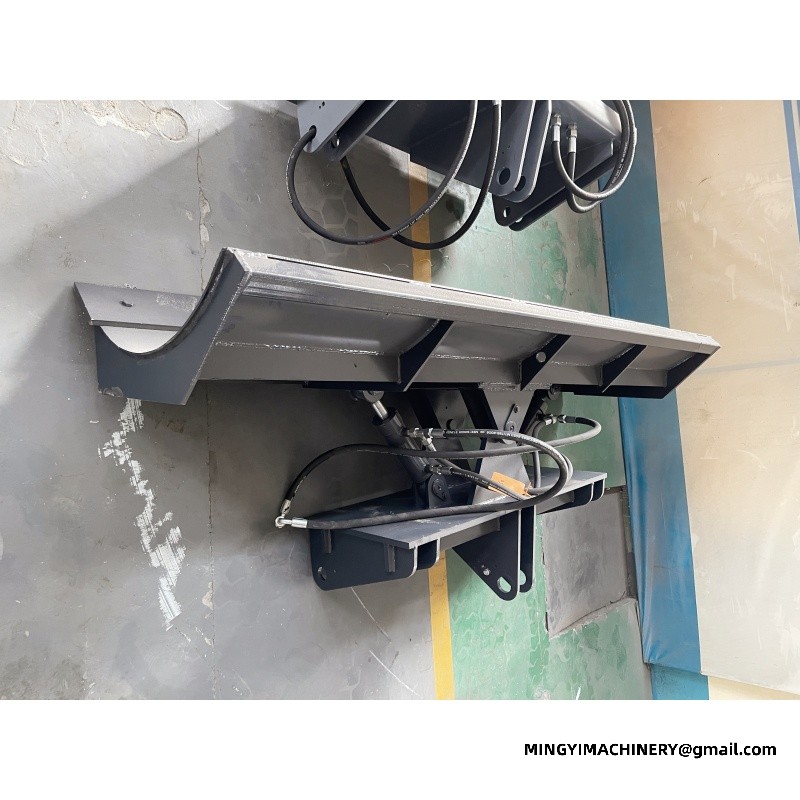
Lift and tilt come from a cylinder set and a pump pair, and both are specified per build. The heavy-duty 4.5 m medium-frame wheel-side reduction wheel loader runs centre cylinder 60 / side cylinder 50 with a 2063 pump work pump and a 25 pump travel pump; the standard 2.8 m low-profile wheel loader runs centre cylinder 45 / side cylinder 40 with a 32 pump work pump and a 316 pump travel pump. Splitting lift from travel is what keeps boom speed up while the machine is climbing a ramp loaded.
Cycle time is a product, not a published figure: bucket fill, lift height, travel distance and the operator's line all move it. What you can compare honestly is the hardware behind it. A centre cylinder 60 / side cylinder 50 set working a 3.35 m arm to 4.5 m is a different proposition from a centre cylinder 45 / side cylinder 40 set working 2.05 m to 2.8 m. On a short haul the smaller combination wins; over a longer push, or where the bucket is digging rather than shovelling, the larger bore and the 680 mm centre distance earn back the extra seconds of lift.
Three takes dominate ownership: fuel, downtime and the residual value of the machine when it is sold. Fuel is set by duty and tank planning — 70 L (75# large tank) on the heavy-duty 4.5 m medium-frame wheel-side reduction wheel loader, 30.8 L (48# large tank, 20.5/70-16 tyres); 24.6 L (48# small tank, 8.25-16 tyres) on the standard 2.8 m low-profile wheel loader. Residual value is set by whether the frame is still tight, which is set by the 30 mm and 16 mm rear hinge plates and the 45 mm and 16 mm cross-members.
Downtime is the lengthy one, and it is usually caused by the simplest components: a hose on the centre cylinder 60 / side cylinder 50 circuit, a blocked 4105 core core, a flat battery from a machine that sat on the dock. None of them is a reason to buy a bigger machine, and all of them are reasons to keep a small spares box. plan for filters, hoses and a cutting edge per year, and for pins and bushes every second year.
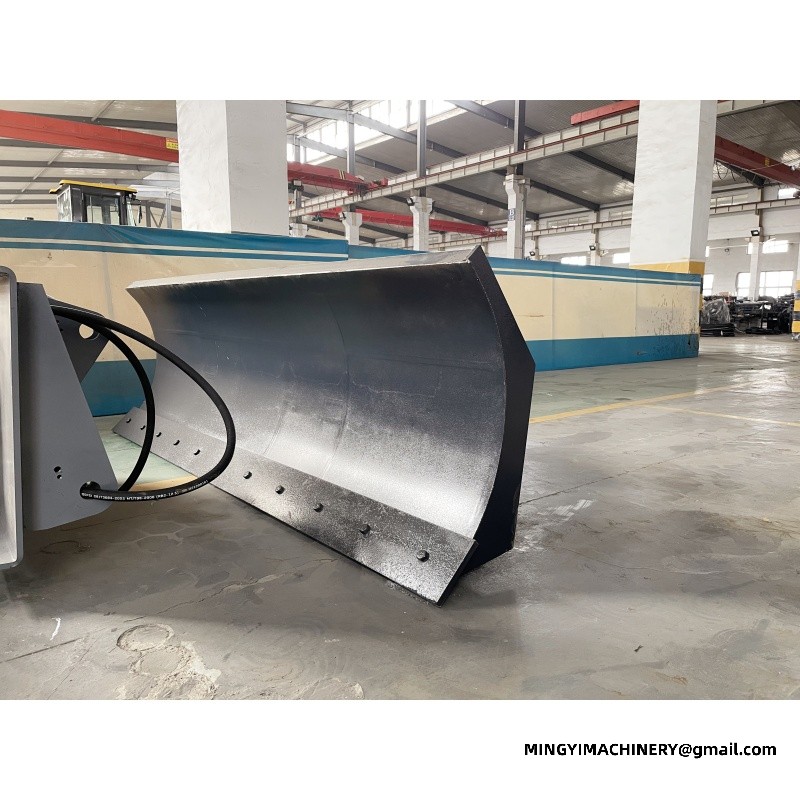
Model names are marketing; build codes are what the shop floor works from. Two machines with the same name can leave the factory with different hinge steel, and the difference is invisible until something wears. On this range the differences are published: 45 mm of cross-member against 45 mm, 45 mm of front hinge plate against 45 mm.
Specify the machine the way you would specify a pump: by the numbers. Bucket 0.52 m³, dump height 3.5 m, cylinders centre cylinder 60 / side cylinder 50, track 1.6 m. Write those into the order and the confirmation, and the machine that arrives is the machine you compared. Anything else relies on a name meaning the same thing to two people.
Second-hand buyers check three things and none of them is the hour meter. They rock the hinge and look for movement at the 30 mm front and 20 mm rear plates. They look along the boom for twist, which is a 430 mm section and 890 mm spacing question. They start it cold and listen, which is a 60 Ah (490 engine); 80 Ah (4102 turbo engine) question.
Steel thickness is what makes the first check pass or fail, and it is on the sheet: cross-member 30 mm, rear frame 230 mm high x 800 mm wide. A machine built with those figures published and verifiable is easier to sell than one with a lower hour count and no specification, because the buyer can check the claim instead of trusting it.
How do I clean the radiator on a wheel loader snow pusher working in dust?
From the clean side outwards, against normal airflow, so debris comes out rather than being pushed deeper. The core on this build is 4100 core (490 engine); 4105 core (4102T engine); blocked fins are the usual cause of gradual power loss.
What extra care does a wheel loader snow pusher need in dusty work?
Core cleaning at the end of every shift and more frequent air filter changes. The core is 4105 core; a blocked one shows up as a slow loss of power rather than a stoppage.
Why does my wheel loader snow pusher bucket only fill two-thirds?
The material is denser than the bucket was matched to. At 0.65 m³ on the heavy-duty 4.5 m medium-frame wheel-side reduction wheel loader against 0.3 m³ on the standard 2.8 m low-profile wheel loader, a smaller bucket that fills completely moves more per hour than a larger one that does not.
How often do hydraulic hoses need replacing?
On condition rather than on a calendar: look for cracking, rubbing and weeping at the crimps. The circuit runs centre cylinder 45 / side cylinder 40 on a 32 pump, and a burst hose is a day while a failed pump is a week.
My wheel loader snow pusher overheats every afternoon. What is the cause?
In order of likelihood: blocked fins on the 4100 core (490 engine); 4105 core (4102T engine) core, a cap that will not hold pressure, a fan drive problem, or genuine overloading. Clean the core first, from the clean side.
How often should the hinge pins of a wheel loader snow pusher be greased?
Measured in hours, not weeks, on short-cycle work. The pins behind the 30 mm and 20 mm plates take every steering input; dry pins are how a frame goes loose.
What paperwork should come with a wheel loader snow pusher?
A specification listing bucket 0.4 m³, lift 3.2 m, cylinders centre cylinder 45 / side cylinder 45, core 4100 core (490 engine); 4105 core (4102T engine), battery 60 Ah (490 engine); 80 Ah (4102 turbo engine) and track 1.5 m (wheel-side reduction axle); 1.45 m (Isuzu axle). If those six are present, parts and warranty questions are answerable.
Those are the rows that decide how a wheel loader snow pusher behaves once it is working. The full table for every build in the range is available on request, along with the engine options that change the pump, radiator and battery figures stated here.
Documents that travel with Wheel Loader Snow Pusher: Pushing Loads on Cold Ground
A clear parts book saves more time than any other document. When Wheel Loader Snow Pusher: Pushing Loads on Cold Ground needs a replacement, the illustration and the part number are what turn a phone call into a shipment instead of a description.
Packing, loading and shipment of Wheel Loader Snow Pusher: Pushing Loads on Cold Ground
How a machine travels decides how it starts on arrival. Securing Wheel Loader Snow Pusher: Pushing Loads on Cold Ground against movement, protecting the exposed cylinders and keeping the battery and fluids in the right state for the voyage all belong to the packing list.
Contact MINGYI Machinery for the current wheel loader lineup, configuration options and a formal specification for your market. E-mail: sales@mingycn.com | LINE (ID): mingyicn
Wheel Loader Log Grapple: Grapple Work and Pin Loads · Front End Loader Log Grapple: Timber Work and Section Width · Construction Wheel Loader: Site Loading, Backfill, Hardstands · Wheel Loader








