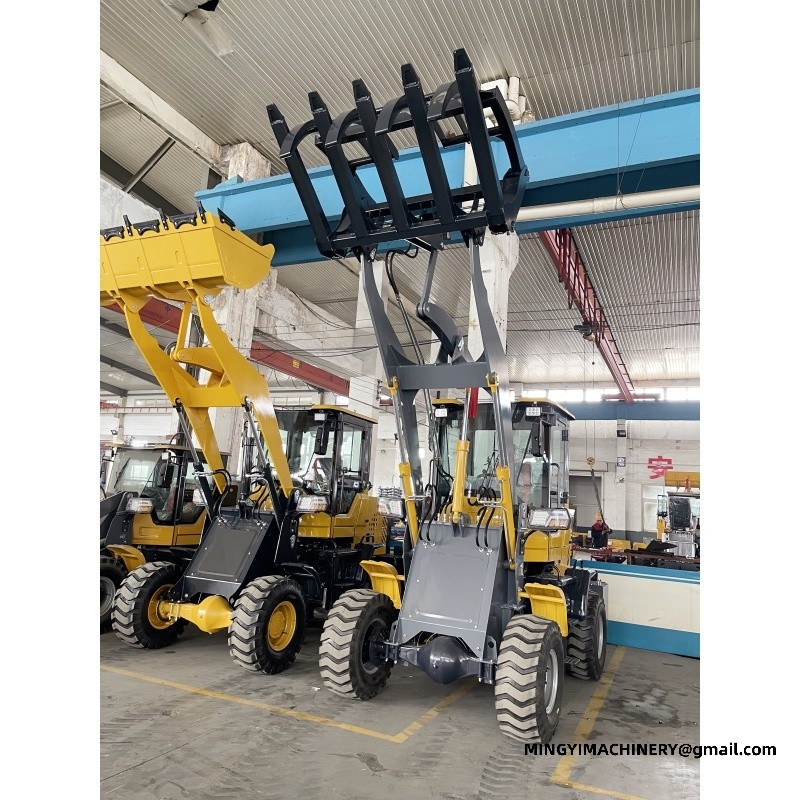
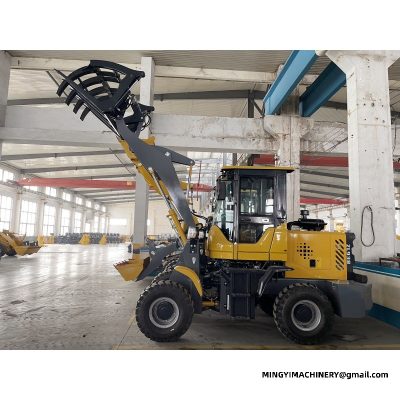
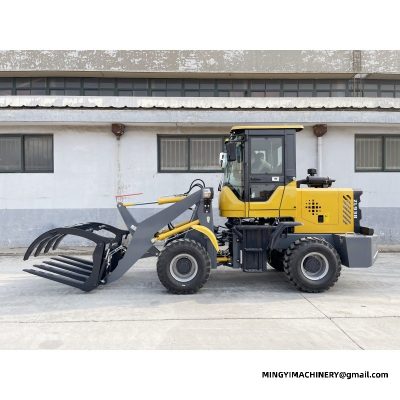
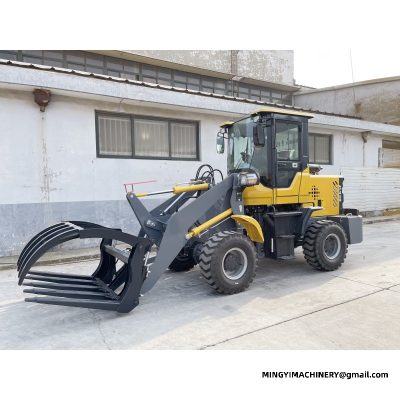
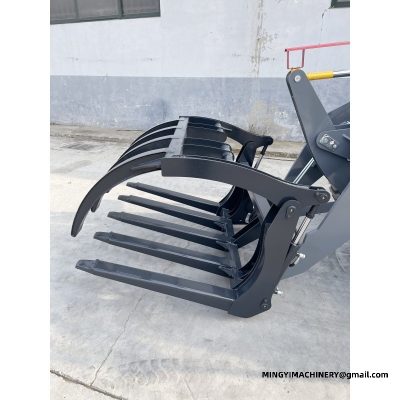
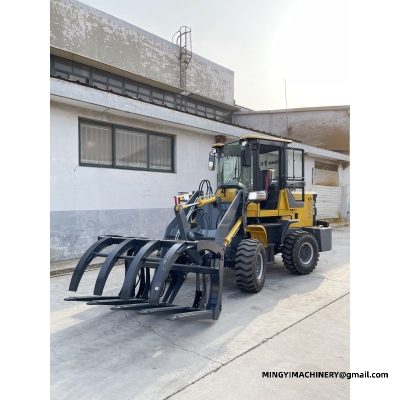
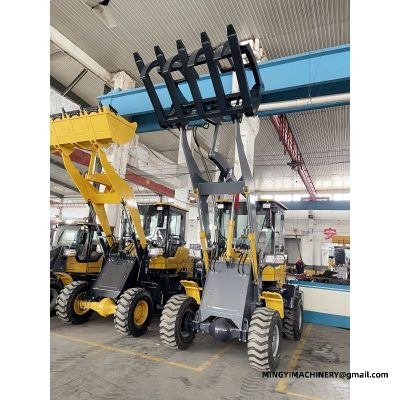
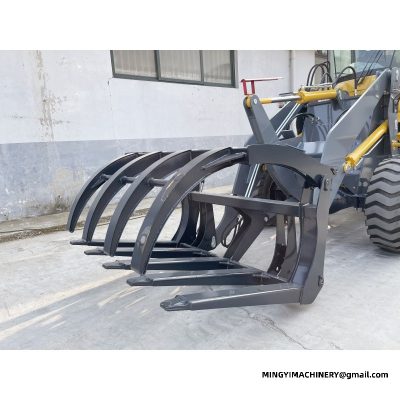
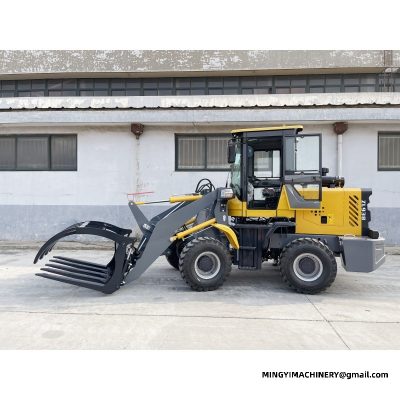
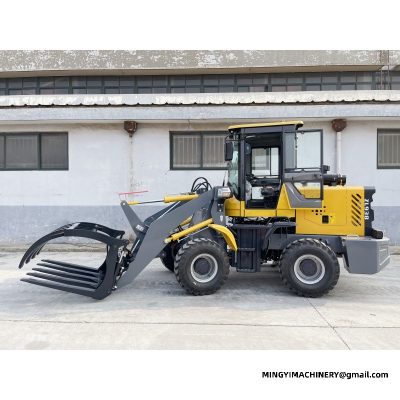
Everything on a hydraulic wheel loader log grapple is a compromise, and the sheet shows which one was made. Reach against stability. Capacity against weight. Speed against heat. The heavy-duty 3.5 m medium-frame wheel-side reduction wheel loader runs a 3.15 m arm with a 30 mm wall and 920 mm of spacing behind a 0.65 m³ bucket; the heavy-duty 3.8 m medium-frame wheel-side reduction wheel loader runs 2.9 m, 30 mm and 920 mm behind 0.65 m³. Neither is the better machine in the abstract. This page is about reading those trade-offs against your own ground, your own bodies and your own shift pattern.
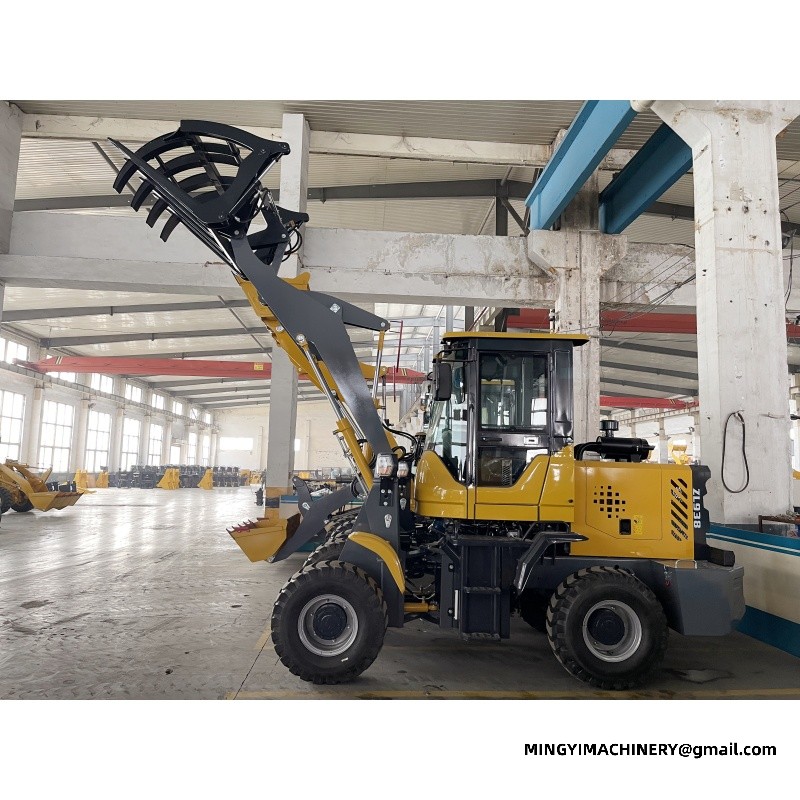
A loader is a tool carrier that happens to come with a bucket. What it can carry is decided at the factory — section width and pin geometry — which is why the heavy-duty 3.5 m medium-frame wheel-side reduction wheel loader with its 500 mm section and the heavy-duty 3.8 m medium-frame wheel-side reduction wheel loader with 500 mm do not share tooling even where their bucket capacities look close.
Plan the tool set with the machine order. Bucket plus forks covers most general work; add a grapple for silage, scrap or demolition; add a snow tool where winters are real. If any tool is hydraulically actuated, order the third circuit now, because the 2063 pump on the heavy-duty 3.5 m medium-frame wheel-side reduction wheel loader and the 2063 pump on the heavy-duty 3.8 m medium-frame wheel-side reduction wheel loader were sized for the base machine and a retrofit means a valve block, plumbing and labour in the field.
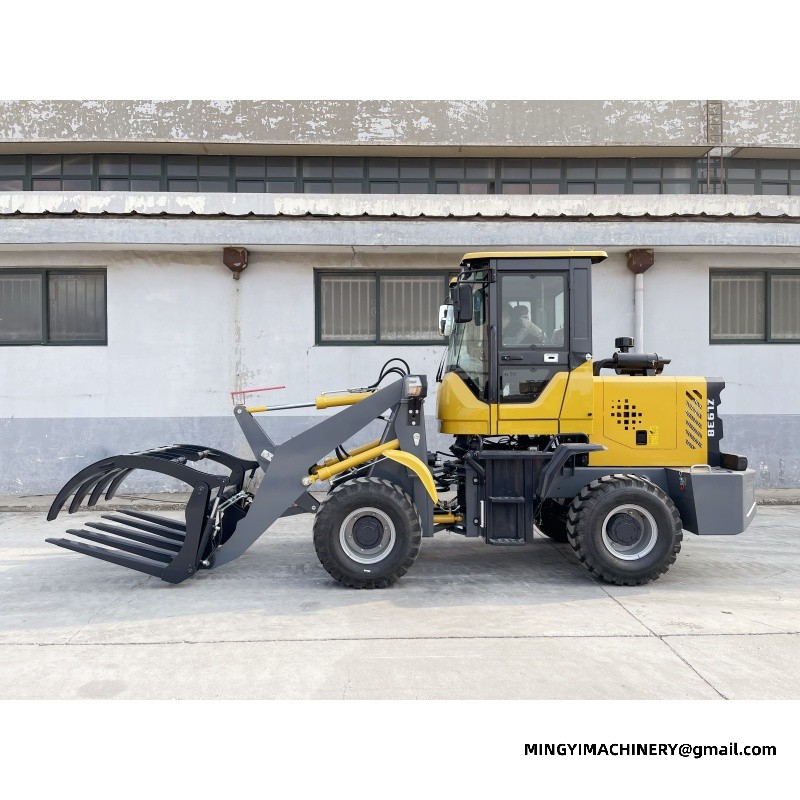
Fuel and cooling capacity are not comfort figures; they are shift-planning figures. A 64.7 L (75# small tank) tank on the heavy-duty 3.2 m small-frame wheel-side reduction wheel loader is sized so a full working day at operating throttle does not need a mid-shift refuel, which matters on sites where the bowser is a long way from the face. The heavy-duty 3.5 m small-frame wheel-side reduction wheel loader carries 64.7 L (75# small tank).
The radiator is the other side of the same question. 4100 core (490 engine); 4105 core (4102T engine) on this build against 4100 core (490 engine); 4105 core (4102T engine) on the other. Where a build offers two cores, the raised one serves the turbo engine, and it is the correct specification for dusty work, high ambient temperature, or any duty where the machine spends its day at high load and low speed with little air passing through the core.
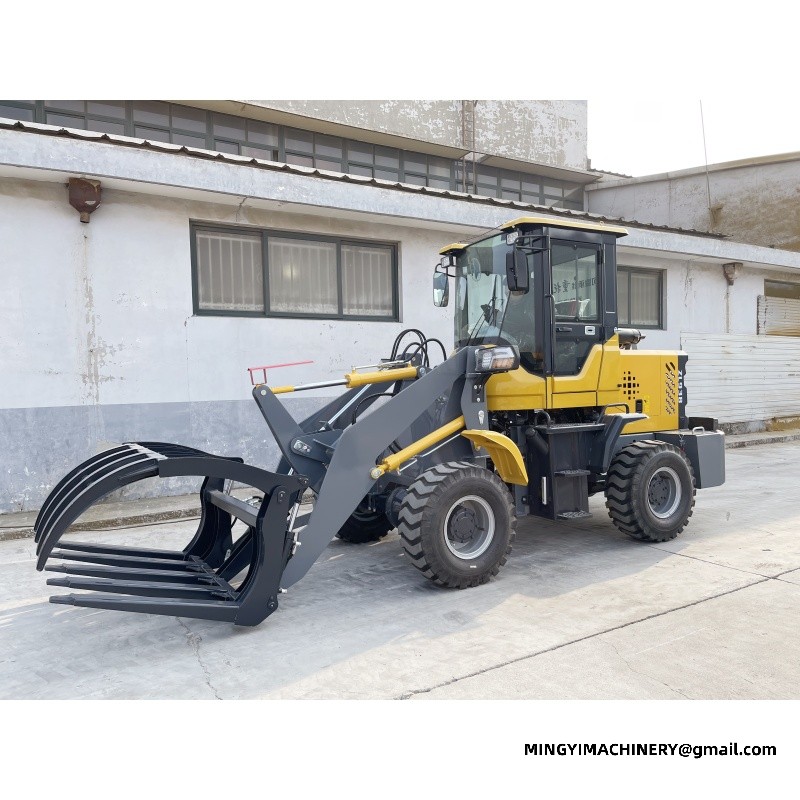
Two figures govern refuelling: tank capacity and consumption per hour, and only the first is published — 70 L (75# large tank) on the heavy-duty 3.5 m medium-frame wheel-side reduction wheel loader, 70 L (75# large tank) on the heavy-duty 3.8 m medium-frame wheel-side reduction wheel loader. Consumption depends on duty, and the duty differences between a 0.65 m³ bucket at 3.5 m and a 0.65 m³ bucket at 3.8 m are mostly about how hard the engine works per cycle.
What you can plan on: a machine working a short, level cycle will finish a shift on one tank; the same machine ripping from a face or loading up a ramp will not. If your site has no refuelling point, size the tank to the worst day rather than the average one, and specify the larger option where a build offers it. The cooling package is the other half of the same calculation — 4105 core on the heavy-duty 3.5 m medium-frame wheel-side reduction wheel loader and 4105 core on the heavy-duty 3.8 m medium-frame wheel-side reduction wheel loader — because a machine that stops for temperature stops wherever it is.
| Specification extract — heavy-duty 4.5 m medium-frame wheel-side reduction wheel loader | |
|---|---|
| Bucket capacity | 0.65 m³ |
| Dump height | 4.5 m |
| Track width | 1.6 m |
| Boom arm thickness | 30 mm |
| Boom arm width | 520 mm |
| Boom arm length | 3.35 m |
| Boom arm centre distance | 960 mm |
| Cross-member thickness | 45 mm |
| Front hinge plate thickness | 45 mm |
| Rear hinge plate thickness | 30 mm |
| Rear frame section | 300 mm high x 800 mm wide |
| Hydraulic cylinders | centre cylinder 60 / side cylinder 50 |
| Fuel tank | 70 L (75# large tank) |
| Battery | 80 Ah |
| Front wheel to counterweight | 4.95 m |
| Radiator | 4105 core |
| Work pump | 2063 pump |
| Travel pump | 25 pump |
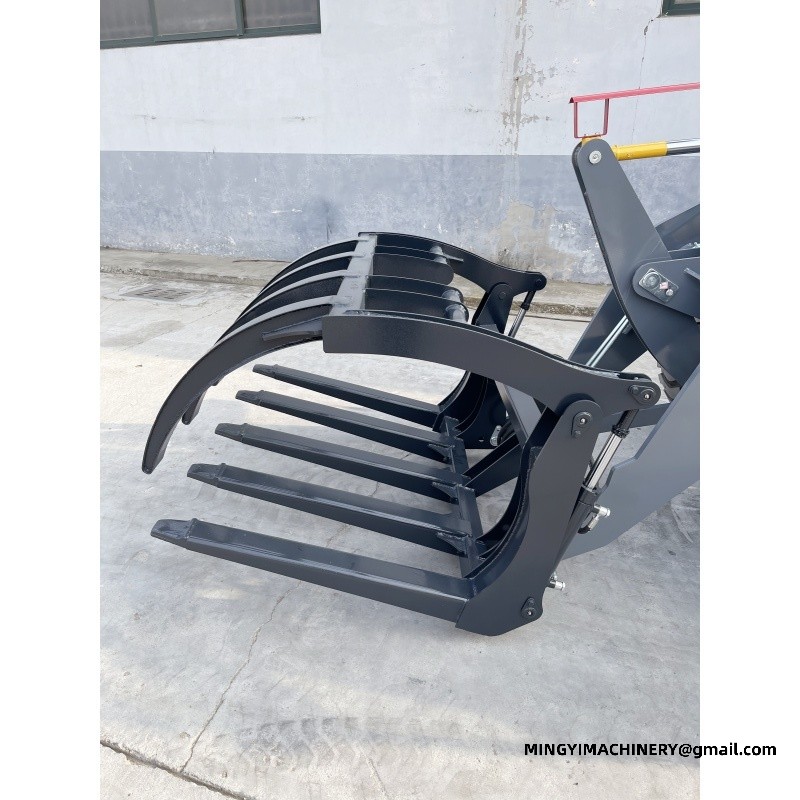
Four numbers describe a loader frame: front hinge plate, rear hinge plate, cross-member thickness and rear frame section. The heavy-duty 3.5 m medium-frame wheel-side reduction wheel loader lists 45 mm, 30 mm, 45 mm and 300 mm high x 800 mm wide. The heavy-duty 3.8 m medium-frame wheel-side reduction wheel loader lists 45 mm, 30 mm, 45 mm and 300 mm high x 800 mm wide. Everything else on a specification sheet — paint, cab trim, lighting package — is cosmetic next to those four.
The rear frame section is the one that surprises people. A wider rear frame lets the counterweight bolt directly to the chassis instead of hanging off brackets, and bracket-mounted counterweights crack. On the heavy-duty 3.5 m medium-frame wheel-side reduction wheel loader the 300 mm high x 800 mm wide section carries the ballast for a 0.65 m³ bucket at 3.5 m; on the heavy-duty 3.8 m medium-frame wheel-side reduction wheel loader the 300 mm high x 800 mm wide section carries it for 0.65 m³ at 3.8 m. Compare those against the 4.55 m and 4.55 m front-wheel-to-counterweight lengths and you have the whole stability picture in four figures.
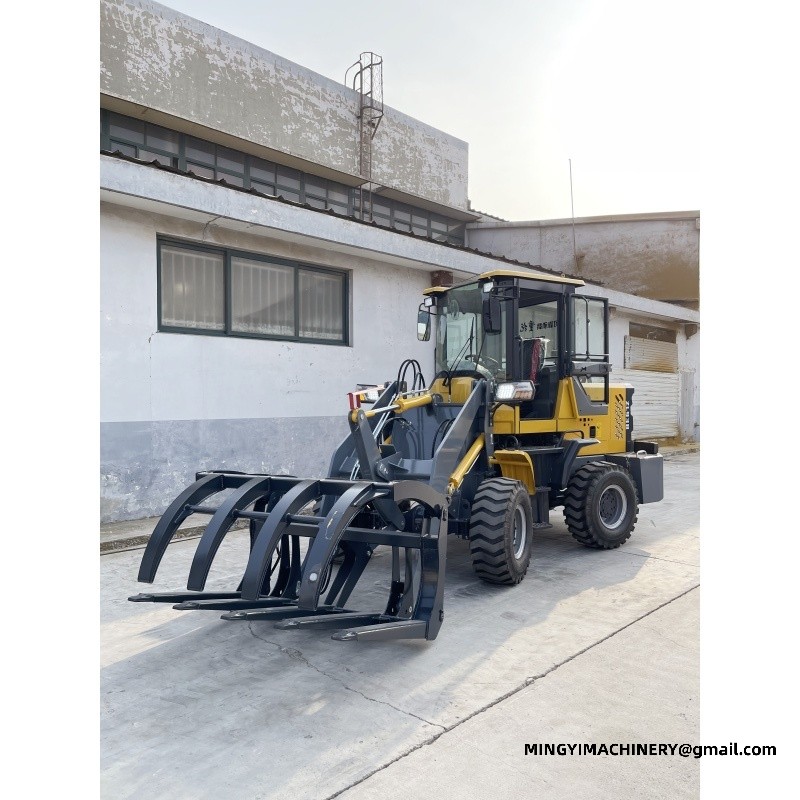
Hold the parts that stop the machine and cannot be improvised: hoses and seals for the centre cylinder 60 / side cylinder 50, a belt set, filters, and a battery to the 80 Ah rating. Do not hold the parts that are welded in — hinge plates at 45 mm and 30 mm, the 45 mm cross-member. Those are a repair, not a spare, and they are the same steel on every machine in the family.
The pump is the judgement call. 2063 pump is a stocked item and a week of downtime if it is not; the 25 pump fails less often and is the one most fleets choose to order rather than hold. Decide on that by distance from the supplier, not by the effort of the part.
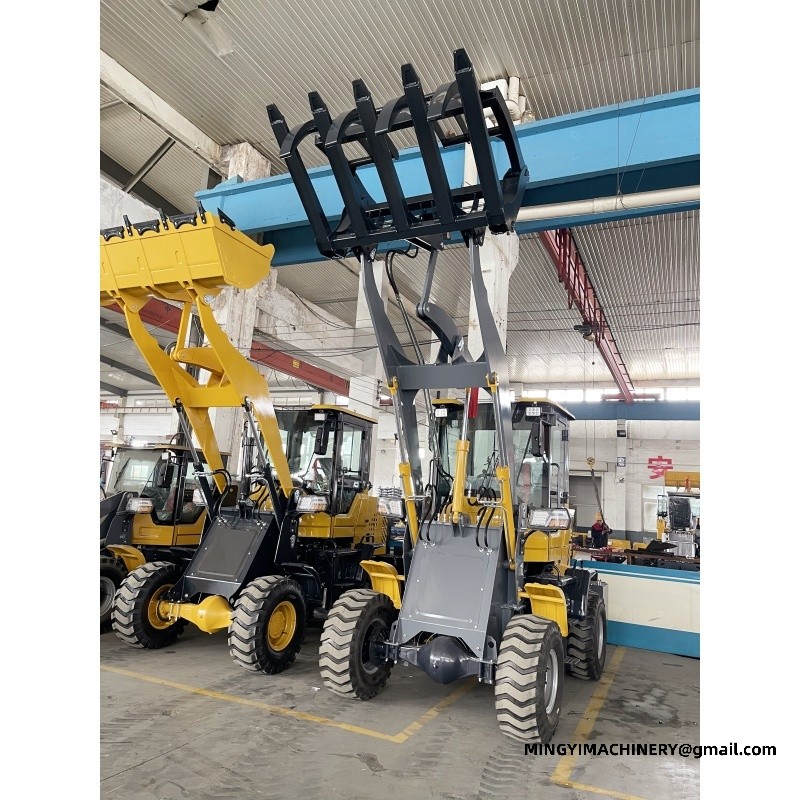
A machine crossing an ocean is exposed to salt air for weeks, and the parts that suffer are the ones that were never painted: cylinder rods, hinge pins and electrical terminals. This build carries centre cylinder 60 / side cylinder 50 and hinge plates of 45 mm and 30 mm; all three should be greased and wrapped before loading rather than cleaned on arrival.
The battery is the other item to plan for. 80 Ah will not survive a long voyage connected, and a flat machine cannot be driven off a container. Specify a disconnect, and specify the radiator, 4105 core, to be checked for fin corrosion on arrival — salt air attacks the core from outside and the symptom is overheating in the first month, which everyone blames on the thermostat.
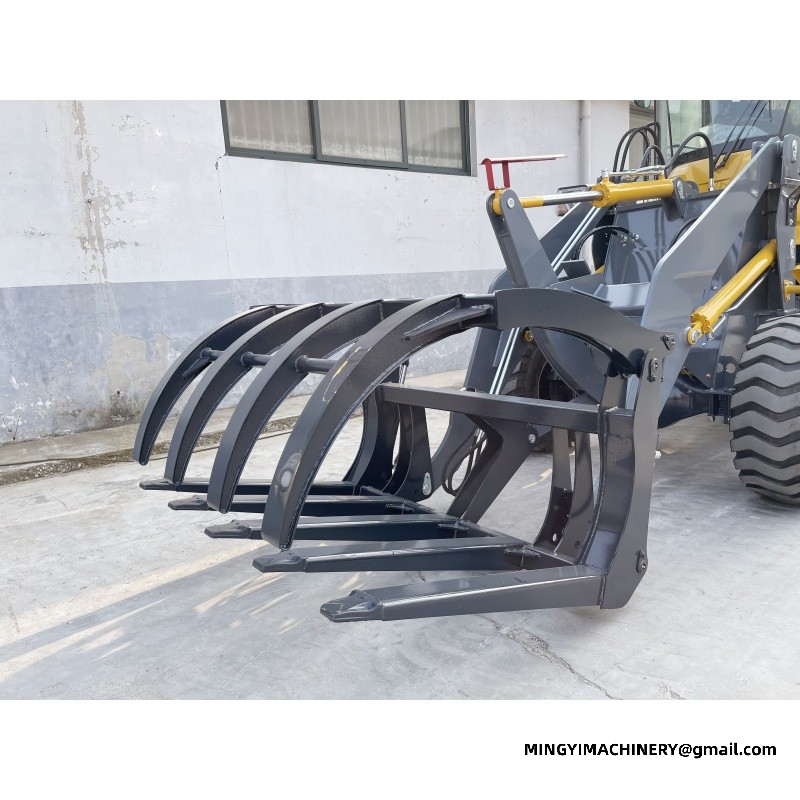
The commercial logic of a family-built range is parts commonality. Within a frame family the centre cylinder 60 / side cylinder 50 cylinder set, the 2063 pump work pump and the 25 pump travel pump are shared, and the boom section — 500 mm on the heavy-duty 3.5 m medium-frame wheel-side reduction wheel loader — is the same, so attachments interchange. Across families, as between the heavy-duty 3.5 m medium-frame wheel-side reduction wheel loader and the heavy-duty 3.8 m medium-frame wheel-side reduction wheel loader, the cylinder set moves to centre cylinder 60 / side cylinder 50 and the section to 500 mm.
For a distributor that translates into a small, fast-moving inventory: one seal kit per cylinder family, one pump pair per family, pins and bushes per boom section, and cutting edges per bucket. Add the model-specific items — the 45 mm or 45 mm cross-member is not a wear part and does not need stocking — and the whole range is supported from a shelf that fits in a container.
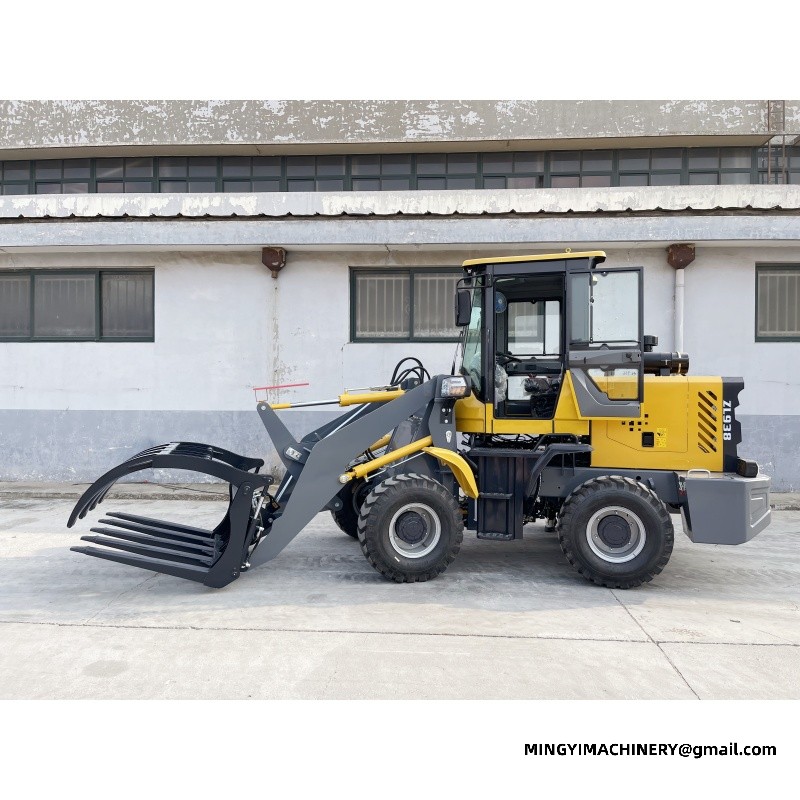
A boom that lifts slowly is usually a flow question, not a force question. The cylinders on this build are centre cylinder 60 / side cylinder 50 and the pump is 2063 pump; if lift is slow but breakout is normal, look at flow before looking at the cylinders. If breakout is weak as well, look at pressure.
Before either, rule out the simple causes: a blocked return filter, a low oil level, a suction leak, or a relief valve that has been tampered with to make a weak machine feel strong. Raising relief pressure above the setting the 30 mm wall and 45 mm cross-member were specified for is how frames get bent, and it is the most common fault found on machines that arrived second-hand.
How much clearance do I need over a truck board?
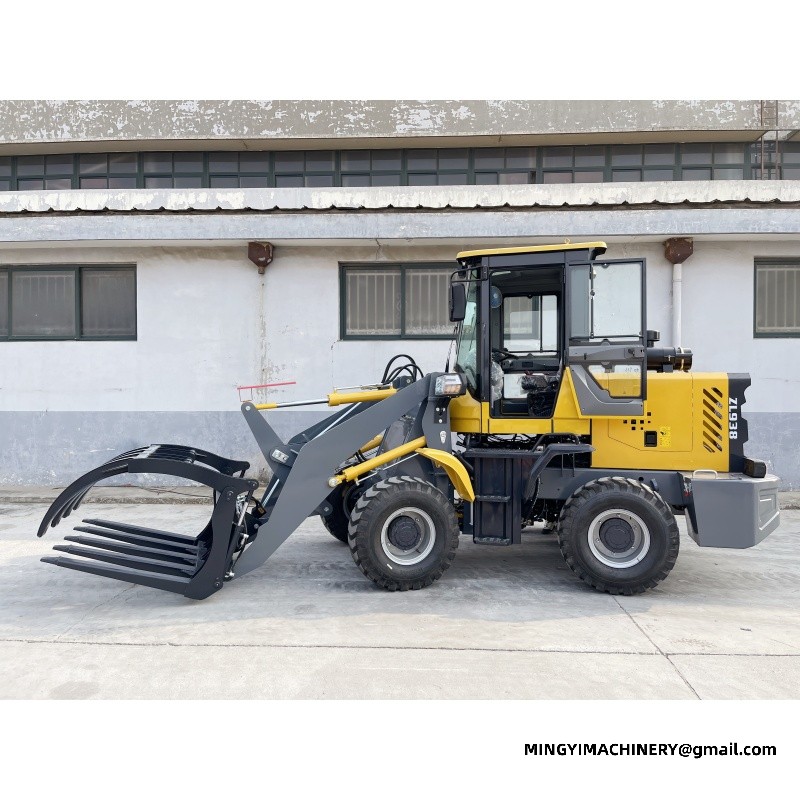
Dump height is measured at the bucket edge, so subtract the crest of the material. The heavy-duty 3.5 m medium-frame wheel-side reduction wheel loader gives 3.5 m and the heavy-duty 3.8 m medium-frame wheel-side reduction wheel loader gives 3.8 m; the board has to sit under the lower of the two with allowance.
Will a hydraulic wheel loader log grapple ship assembled in a container?
It depends on the longest dimension, 4.55 m from front wheel to counterweight, and on track, 1.6 m. The bucket usually comes off; the arm must be lowered to clear the door.
How do I clean the radiator on a hydraulic wheel loader log grapple working in dust?
From the clean side outwards, against normal airflow, so debris comes out rather than being pushed deeper. The core on this build is 4105 core; blocked fins are the usual cause of gradual power loss.
Which spares should I hold for a hydraulic wheel loader log grapple?
Hoses and seals for the centre cylinder 60 / side cylinder 50, filters, belts and a battery to the 80 Ah rating. Do not stock welded items; plates at 45 mm and 30 mm are a repair, not a spare.
Which records should I keep for a hydraulic wheel loader log grapple?
The delivery measurements and the specification. Bucket 0.65 m³, lift 3.5 m, cylinders centre cylinder 60 / side cylinder 50, pump 2063 pump and track 1.6 m identify the build for parts and for resale.
What should I check before the first start of a hydraulic wheel loader log grapple?
Coolant level in the 4105 core package, oil level, battery charge to the 80 Ah rating, and a walk-round for anything loosened in transit. Then run it light for ten minutes before loading it.
What is involved in changing attachments on a hydraulic wheel loader log grapple?
Mechanical mounting plus hydraulics. The cylinders are centre cylinder 60 / side cylinder 50 and the pump is 2063 pump; flow, not force, is usually what limits an added service.
Every figure stated on this page — bucket 0.65 m³, lift 3.5 m, hinge plates 45 mm and 30 mm — comes from the published build data for the heavy-duty 3.5 m medium-frame wheel-side reduction wheel loader and the heavy-duty 3.8 m medium-frame wheel-side reduction wheel loader. Send your board heights, material and shift pattern and the comparison can be run against your own numbers.
Planning the season around Hydraulic Wheel Loader Log Grapple: Flow and Cylinder Care
Seasonal work rewards a machine that can change duty. Through the year Hydraulic Wheel Loader Log Grapple: Flow and Cylinder Care may move from one task to another, and the attachment list should be chosen for the whole year rather than for the first job.
Commissioning Hydraulic Wheel Loader Log Grapple: Flow and Cylinder Care on site
Transport shakes things loose. A short check of Hydraulic Wheel Loader Log Grapple: Flow and Cylinder Care after the crate is opened, covering the same points the pre-delivery inspection covered, is the most useful insurance available on delivery day.
Contact MINGYI Machinery for the current wheel loader lineup, configuration options and a formal specification for your market. E-mail: sales@mingycn.com | LINE (ID): mingyicn
Compact Wheel Loader: Choosing Light Builds for Daily Use · Small Wheel Loader: Light Work on Farms and Nurseries · Compact Wheel Loader: Clearance, Footprint and Low Profile · Wheel Loader








