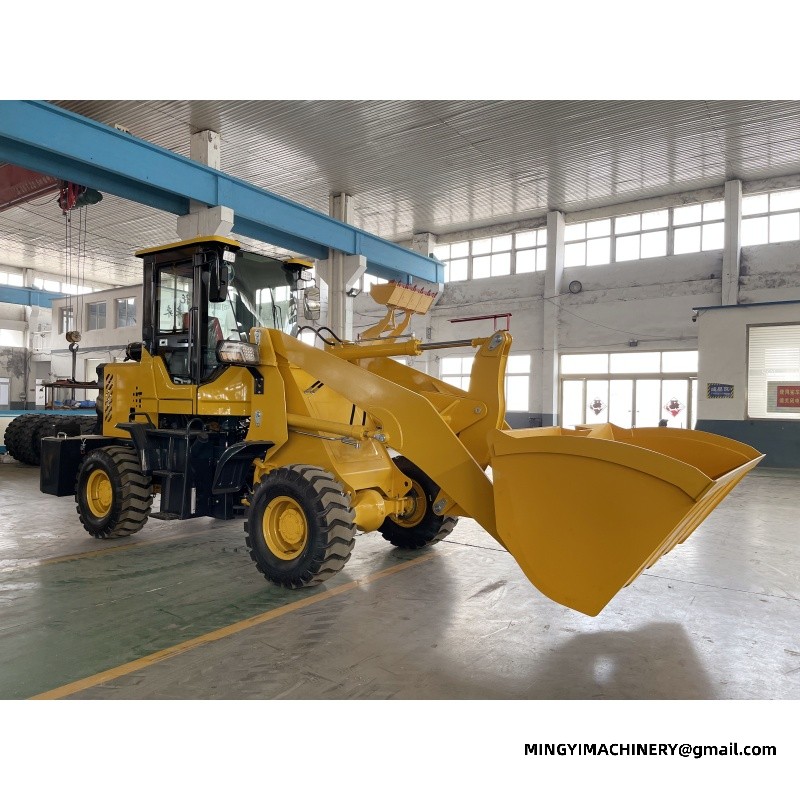
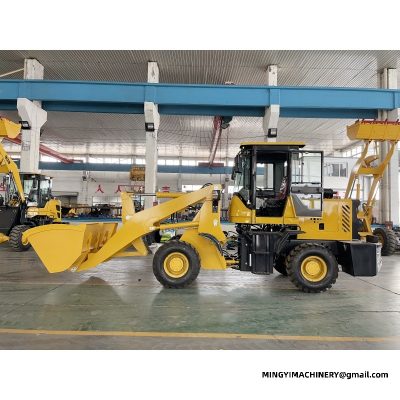
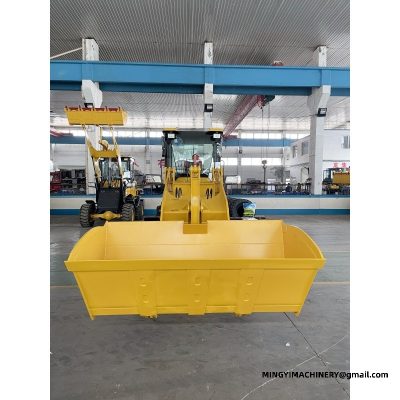
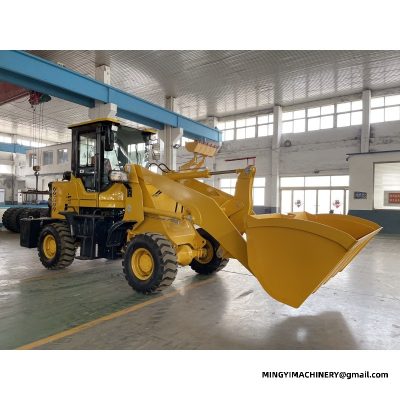
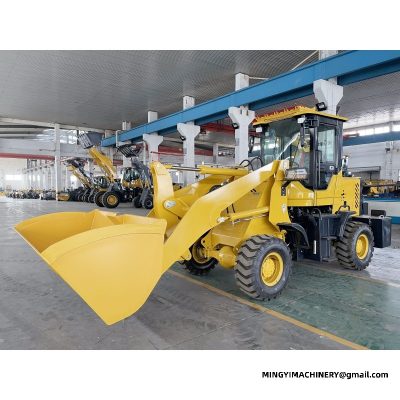
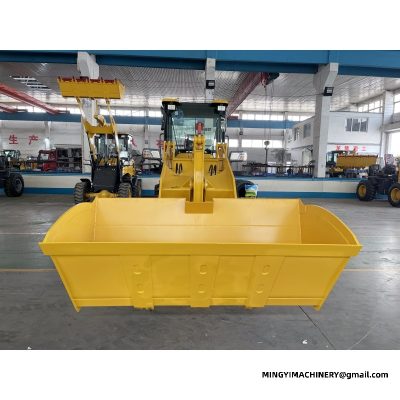
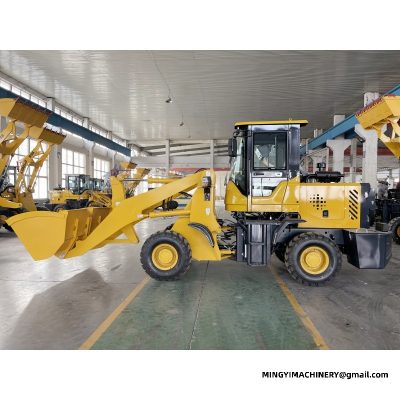
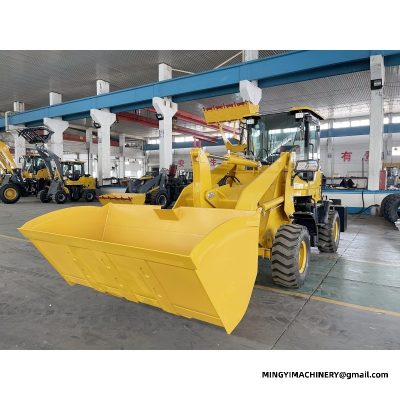
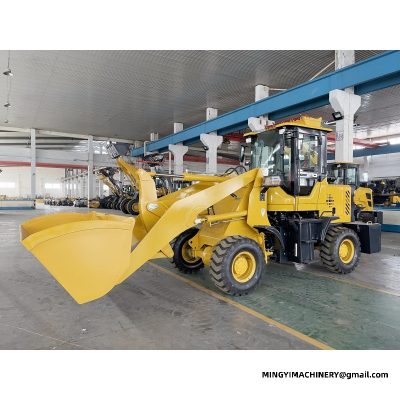
A small wheel loader earns its keep in the fourth hour of a shift, not the first. By then the cooling system is heat-soaked, the operator has stopped being careful, and the machine is working the face it will work all week. What holds up is what was specified: radiator 4100 core (490 engine); 4105 core (4102T engine), tank 54 L (50# tank), cylinders centre cylinder 45 / side cylinder 45. What fails is usually what was assumed. This page follows a working day through the specification, from cold start to shut-down, using the heavy-duty 3.2 m low-profile wheel loader and the heavy-duty 3.2 m small-frame wheel-side reduction wheel loader as the two reference builds.
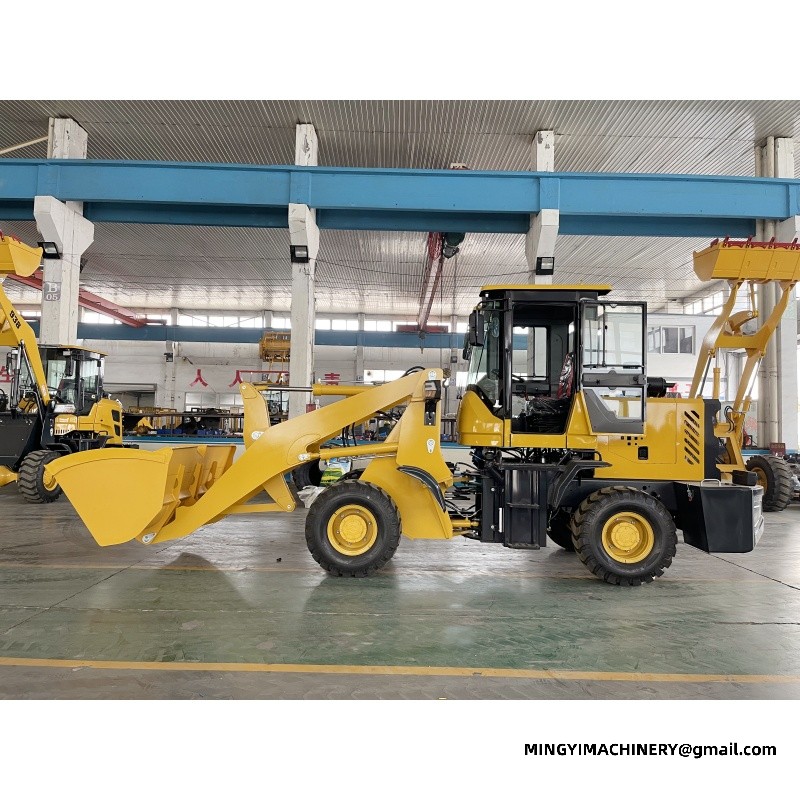
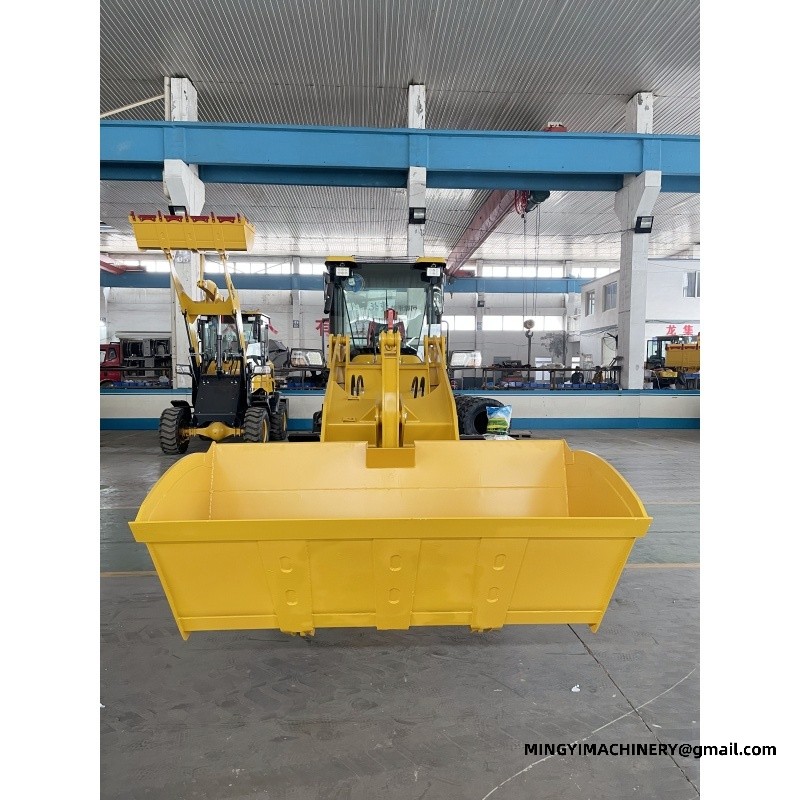
A loader is a tool carrier that happens to come with a bucket. What it can carry is decided at the factory — section width and pin geometry — which is why the heavy-duty 3.2 m low-profile wheel loader with its 430 mm section and the heavy-duty 3.2 m small-frame wheel-side reduction wheel loader with 430 mm do not share tooling even where their bucket capacities look close.
Plan the tool set with the machine order. Bucket plus forks covers most general work; add a grapple for silage, scrap or demolition; add a snow tool where winters are real. If any tool is hydraulically actuated, order the third circuit now, because the 40 pump (490 engine); 1045 pump (4102 turbo engine) on the heavy-duty 3.2 m low-profile wheel loader and the 40 pump (490 engine); 1045 pump (4102 turbo engine) on the heavy-duty 3.2 m small-frame wheel-side reduction wheel loader were sized for the base machine and a retrofit means a valve block, plumbing and labour in the field.
Radiator size follows the engine, not the frame. The heavy-duty 3.2 m low-profile wheel loader lists 4100 core (490 engine); 4105 core (4102T engine); the heavy-duty 3.2 m small-frame wheel-side reduction wheel loader lists 4100 core (490 engine); 4105 core (4102T engine). Where two engine options exist on one build, the cores differ — a 4100 core on the 490 engine and a 4105 on the 4102 turbo — and the taller, raised core is the one to specify wherever dust, chaff or dry sand blankets a standard radiator part-way through a shift.
Overheating is the single most common cause of a loader losing days rather than hours. It presents as power loss, then as a shift cut short, then as a head gasket. Choosing the raised core takes almost nothing at order time and cannot be retrofitted easily later. Pair that with the electrical package — 60 Ah (490 engine); 80 Ah (4102 turbo engine) on the heavy-duty 3.2 m low-profile wheel loader, 60 Ah (490 engine); 80 Ah (4102 turbo engine) on the heavy-duty 3.2 m small-frame wheel-side reduction wheel loader — and note that a battery specified for a naturally aspirated engine is often marginal for a turbo one in cold climates.
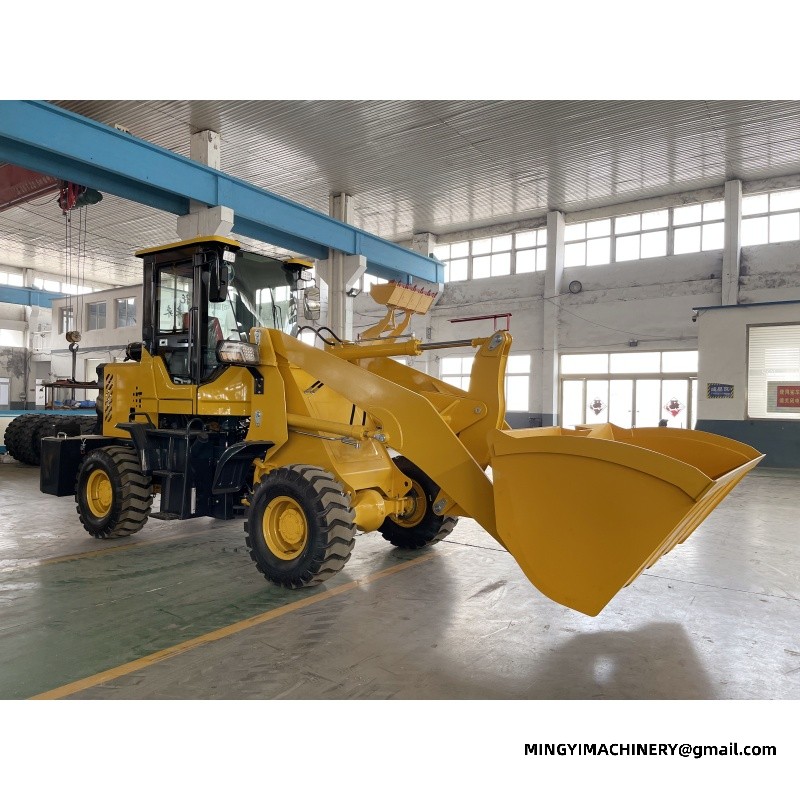
Work out how many passes fill the body, then work backwards. A body that takes four passes from a 0.4 m³ bucket will take three from 0.4 m³, but only if the machine can clear the board, and that is the part people get wrong. The heavy-duty 3.2 m low-profile wheel loader reaches 3.2 m; the heavy-duty 3.2 m small-frame wheel-side reduction wheel loader reaches 3.2 m. If the board sits between those two figures, the capacity comparison is academic.
The second check is whether the machine can dump without striking. Dump height is measured at the bucket edge with the arm at full lift, so the clearance you actually have is that figure less the height of the material crest. On the heavy-duty 3.2 m low-profile wheel loader the arm is 2.3 m and the spacing between the arms is 890 mm; a longer arm with a wider spacing tips a bucket cleanly instead of rolling it off the corner.
| Reference specification — light-duty 4.2 m medium-frame wheel-side reduction wheel loader | |
|---|---|
| Bucket capacity | 0.52 m³ |
| Dump height | 4.2 m |
| Track width | 1.6 m |
| Boom arm thickness | 30 mm |
| Boom arm width | 450 mm |
| Boom arm length | 2.9 m |
| Boom arm centre distance | 900 mm |
| Cross-member thickness | 45 mm |
| Front hinge plate thickness | 45 mm |
| Rear hinge plate thickness | 30 mm |
| Rear frame section | 300 mm high x 800 mm wide |
| Hydraulic cylinders | centre cylinder 60 / side cylinder 50 |
| Fuel tank | 70 L (75# large tank) |
| Battery | 80 Ah |
| Front wheel to counterweight | 4.3 m |
| Radiator | 4105 core |
| Work pump | 2063 pump |
| Travel pump | 25 pump |
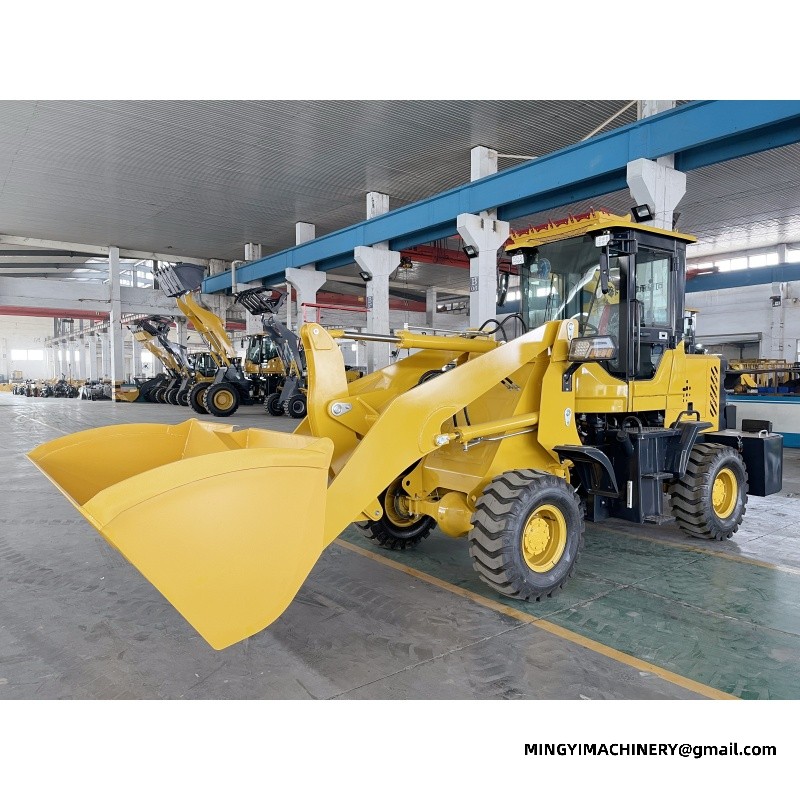
Operators describe a good machine as tight and a tired one as loose, and they are describing the hinge pins. New, the geometry is set by the plates: 30 mm forward, 20 mm aft. After a few thousand hours the geometry is set by how much those plates have allowed the pins to move, which is a function of thickness and of the 30 mm cross-member behind them.
This is why the figures are worth asking for rather than assuming. On the heavy-duty 3.2 m small-frame wheel-side reduction wheel loader the same two numbers are 30 mm and 20 mm. A machine that will spend its life on short cycles — many steering inputs per hour — should be bought on these figures rather than on bucket capacity, because capacity is simple to add and hinge life is not.
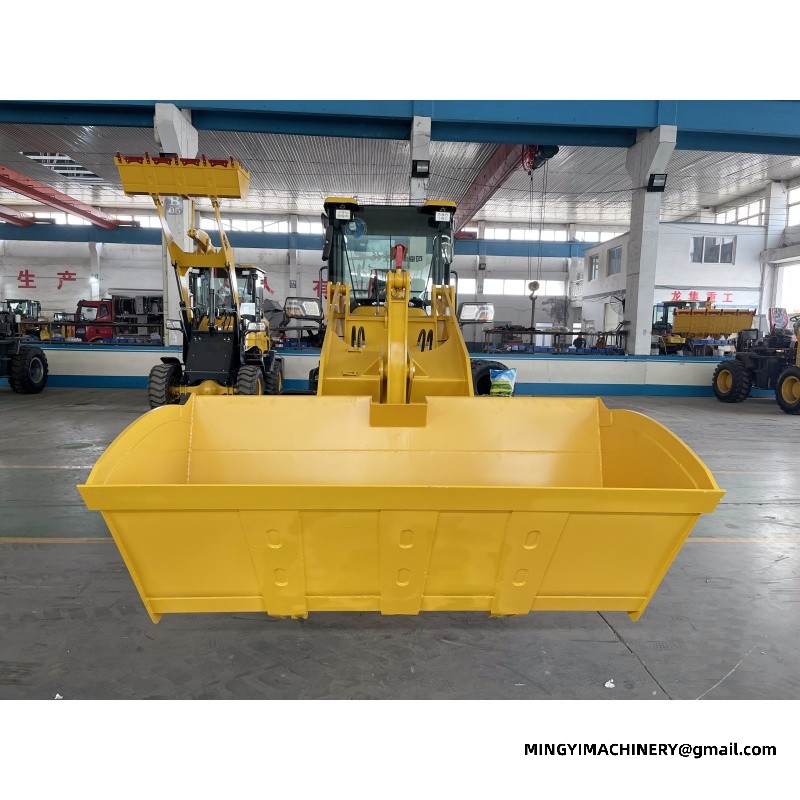
Over a full season, the differences that matter are not the ones on the sales sheet. Two machines, the heavy-duty 3.2 m low-profile wheel loader with 0.4 m³ at 3.2 m and the heavy-duty 3.2 m small-frame wheel-side reduction wheel loader with 0.4 m³ at 3.2 m, will differ in fuel by less than they differ in uptime, and they will differ in uptime mostly because of the cooling package — 4100 core (490 engine); 4105 core (4102T engine) against 4100 core (490 engine); 4105 core (4102T engine) — and the frame — 20 mm against 20 mm.
plan on the duty, then check the specification supports it. A light build in a quarry is a false economy; a heavy build on a farm is money spent for nothing. Where the duty is mixed, buy the frame for the hardest week of the year and the bucket for the average one — buckets are simple, frames are not, and the 40 pump (490 engine); 1045 pump (4102 turbo engine) and 316 pump on the heavy-duty 3.2 m low-profile wheel loader will run either.
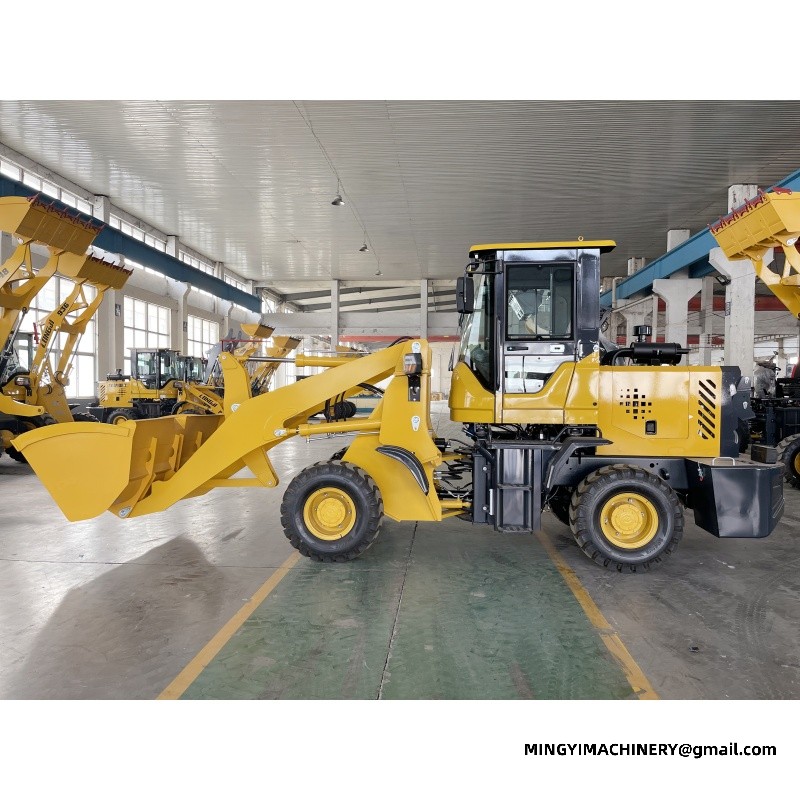
Fuel is visible and downtime is not, which is why fleets optimise the wrong one. A machine with a 54 L (50# tank) tank works a full shift without a refuel stop; that is worth a fraction of what a single day lost to a failed pump takes, and the pump is identified on the sheet as 40 pump (490 engine); 1045 pump (4102 turbo engine).
The parts worth specifying against downtime are the ones that cannot be improvised: the battery rating, 60 Ah (490 engine); 80 Ah (4102 turbo engine), the radiator, 4100 core (490 engine); 4105 core (4102T engine), and the cylinders, centre cylinder 45 / side cylinder 45. All three are simple at build and lengthy in a field, and all three are listed. Read them as an availability decision rather than as a comfort one.
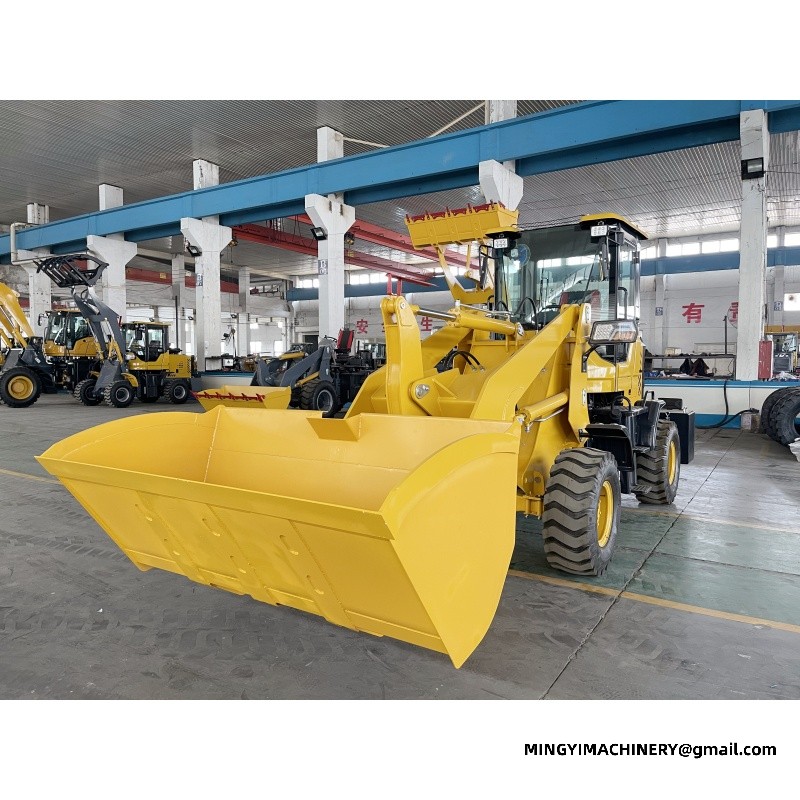
An attachment is only as useful as the hydraulics behind it. This build runs centre cylinder 45 / side cylinder 45 fed by a 40 pump (490 engine); 1045 pump (4102 turbo engine), and those two figures set the force available at the boom and the speed at which it arrives. A grapple, a fork carriage or a snow blower all ask for more flow than a bucket does.
The centre cylinder does the lifting and the side cylinders do the tilting, and they are specified together for a reason. On the heavy-duty 3.5 m small-frame wheel-side reduction wheel loader the pair is centre cylinder 45 / side cylinder 40. If an attachment needs a third service, the question to ask is whether the pump has the flow to run it without starving the lift circuit, because a machine that lifts slowly with a grapple on is not a machine with a grapple problem. It has a 40 pump (490 engine); 1045 pump (4102 turbo engine) problem.
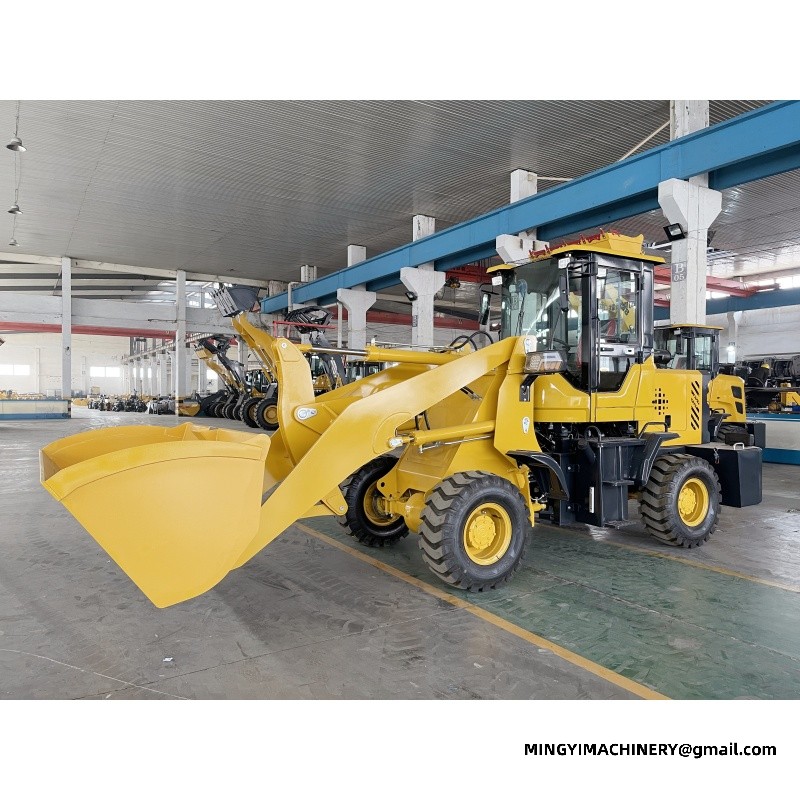
Overheating has four causes and only one of them is the radiator. In order of likelihood: blocked fins, a cap that will not hold pressure, a fan or drive problem, and genuine overloading. The core on this machine is 4100 core (490 engine); 4105 core (4102T engine); clean it first, from the clean side outwards.
If the machine is genuinely overloaded, the cause is upstream of the cooling system. A bucket carrying more than 0.4 m³ of dense material, cycled without pause, produces more heat than the system was sized to reject. The fix is a smaller bucket or a slower cycle, not a bigger radiator — and the frame, at 30 mm across the member, is the part that suffers if nobody makes that decision.
Should I go up a bucket size on a small wheel loader?
Only if the material is light enough to fill it. 0.4 m³ against 0.4 m³ looks like a gain on paper and is a loss on dense material, and the extra weight lands on the hinge.
Where do frames on a small wheel loader crack first?
Weld toes at the cross-member and around the rear hinge. The section is 230 mm high x 800 mm wide over a 30 mm member on this build; check both monthly on hard duty.
Is a small wheel loader noisy to work beside?
Engine and hydraulic noise, with the pump a contributor: 40 pump (490 engine); 1045 pump (4102 turbo engine) on this build. A pump that is cavitating is louder than a healthy one, so noise is also a diagnostic.
What are the signs of a failing pump on a small wheel loader?
Slow lift with normal breakout points to flow, which is the 40 pump (490 engine); 1045 pump (4102 turbo engine). Weak lift and weak breakout together point to pressure. Noise under load usually means aeration or a suction leak.
How often will a small wheel loader need refuelling?
The tank is 54 L (50# tank), sized for a full shift at working throttle without a mid-day stop. Machines on short cycles with a lot of idling will use more than the figure suggests.
Can a small wheel loader work safely on a slope?
Track decides that: 1.5 m (wheel-side reduction axle); 1.45 m (Isuzu axle) on this build, with the wider figure belonging to the hub-reduction axle. Work up and down the slope rather than across it.
How far can a small wheel loader travel under its own power?
Short moves between faces, not road haulage. The travel circuit is 316 pump and sustained high-speed running generates heat the 4100 core (490 engine); 4105 core (4102T engine) core was not sized to reject.
Keep this page against the delivery paperwork. Bucket 0.4 m³, lift 3.2 m, track 1.5 m (wheel-side reduction axle); 1.45 m (Isuzu axle) and cylinders centre cylinder 45 / side cylinder 45 are the four rows that settle any later question about what was actually ordered.
Keeping a service record for Small Wheel Loader: Light Work on Farms and Nurseries
Patterns show up in the record before they show up in the machine. Rising oil consumption or a filter that keeps blocking on Small Wheel Loader: Light Work on Farms and Nurseries is obvious on paper long before it becomes a failure on site.
Pre-delivery inspection before Small Wheel Loader: Light Work on Farms and Nurseries leaves the shop
What the customer sees on arrival is decided before departure. The walk-around given to Small Wheel Loader: Light Work on Farms and Nurseries covers the same points the operator will check on day one, so there are no surprises when the crate is opened at the destination.
Contact MINGYI Machinery for the current wheel loader lineup, configuration options and a formal specification for your market. E-mail: sales@mingycn.com | LINE (ID): mingyicn
Wheel Loader for Sale: Comparing Builds Side by Side · Wheel Loader Manufacturer: What a Build Sheet Must Show · Wheel Loader for Material Handling: Pallet, Bagged and Bulk Load Duty · Wheel Loader








