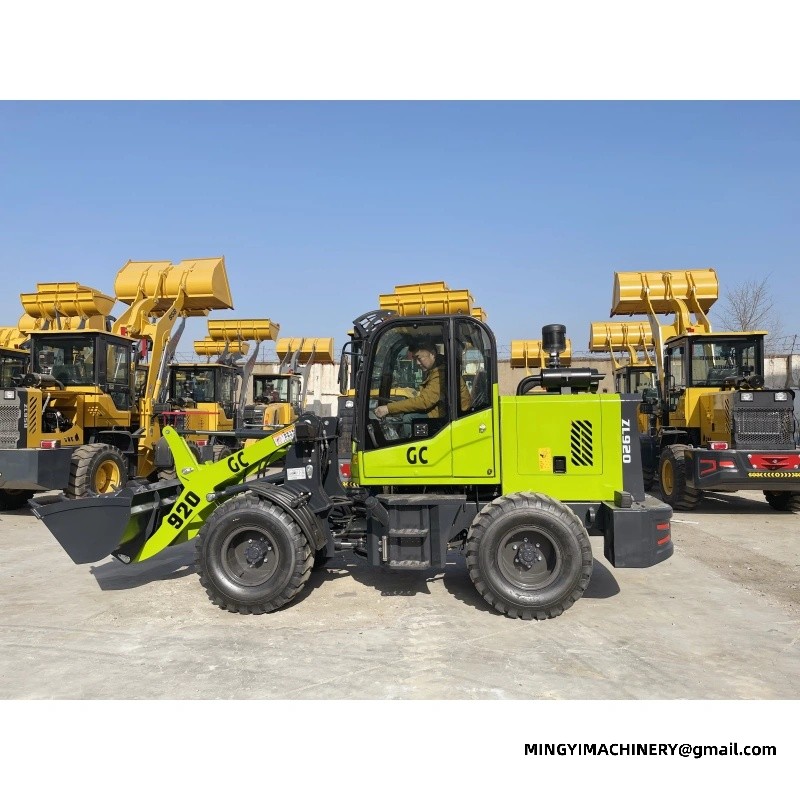
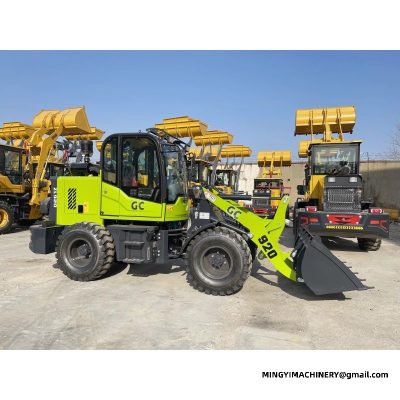
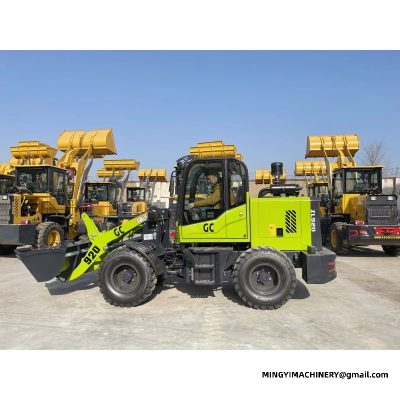
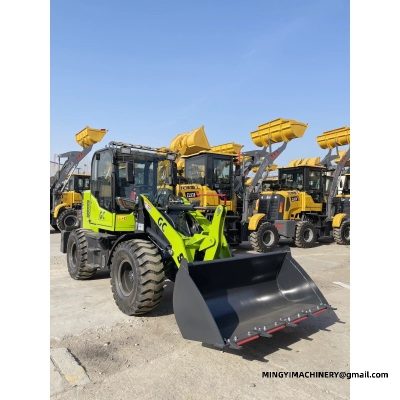
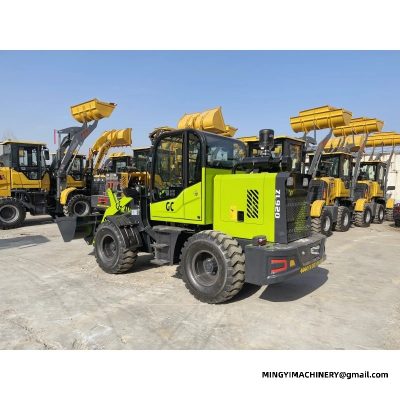
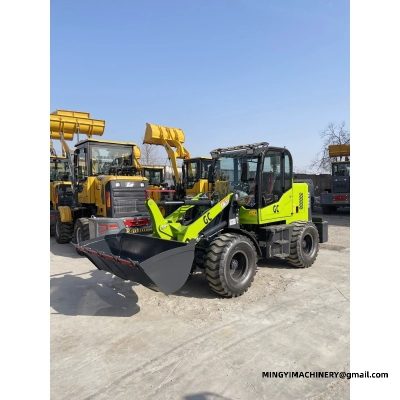
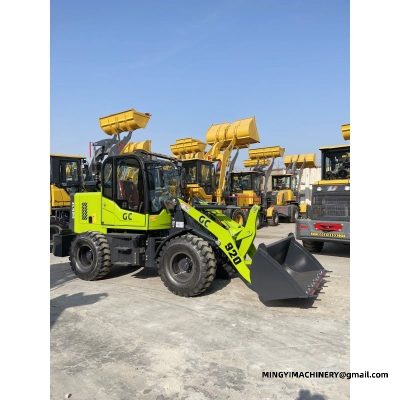
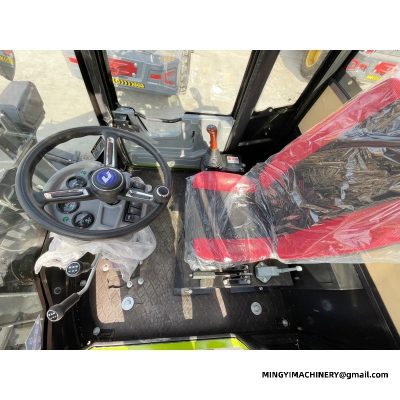
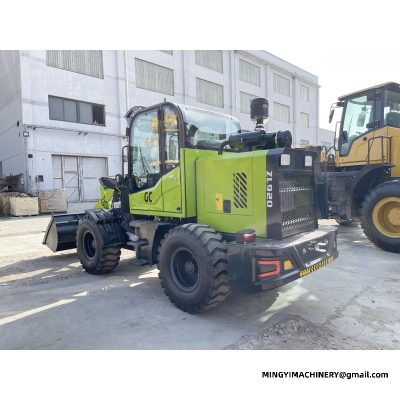
Every wheel loader for material handling enquiry comes down to three numbers: how much the bucket holds, how high it dumps, and how much steel sits behind the hinge. The rest of a specification sheet is consequence. On this range the first two run from 0.65 m³ on the heavy-duty 4.2 m medium-frame wheel-side reduction wheel loader to 0.65 m³ on the heavy-duty 4.5 m medium-frame wheel-side reduction wheel loader, and the third is published per build — 45 mm front and 30 mm rear hinge plates over a 45 mm cross-member. This page sets out how those figures are chosen, what they predict about behaviour on site, and where each build in the range fits.
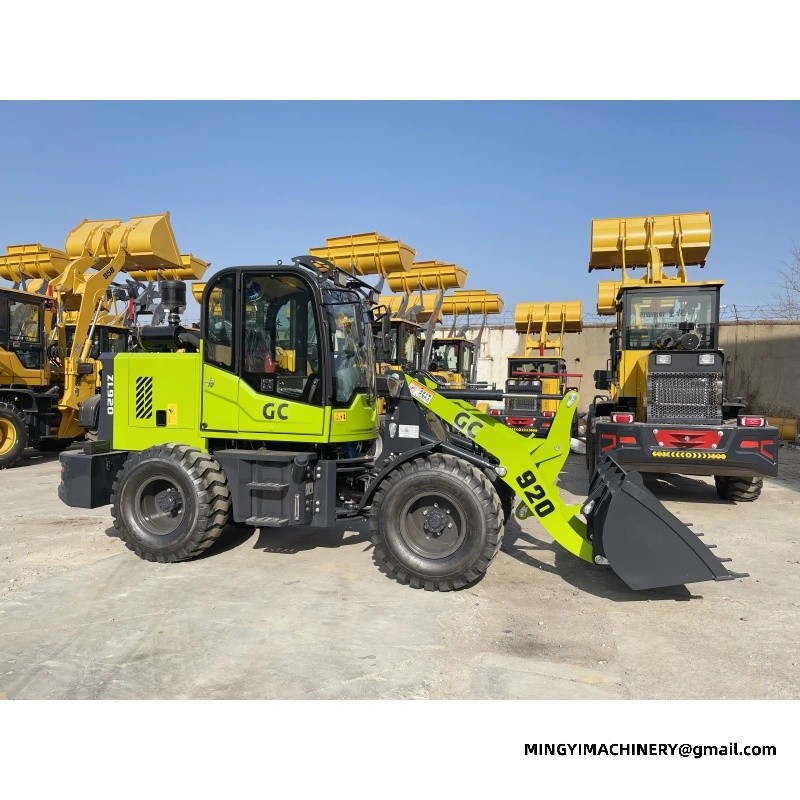
An attachment is only as useful as the hydraulics behind it. This build runs centre cylinder 45 / side cylinder 45 fed by a 40 pump (490 engine); 1045 pump (4102 turbo engine), and those two figures set the force available at the boom and the speed at which it arrives. A grapple, a fork carriage or a snow blower all ask for more flow than a bucket does.
The centre cylinder does the lifting and the side cylinders do the tilting, and they are specified together for a reason. On the heavy-duty 3.2 m low-profile wheel loader the pair is centre cylinder 45 / side cylinder 45. If an attachment needs a third service, the question to ask is whether the pump has the flow to run it without starving the lift circuit, because a machine that lifts slowly with a grapple on is not a machine with a grapple problem. It has a 40 pump (490 engine); 1045 pump (4102 turbo engine) problem.
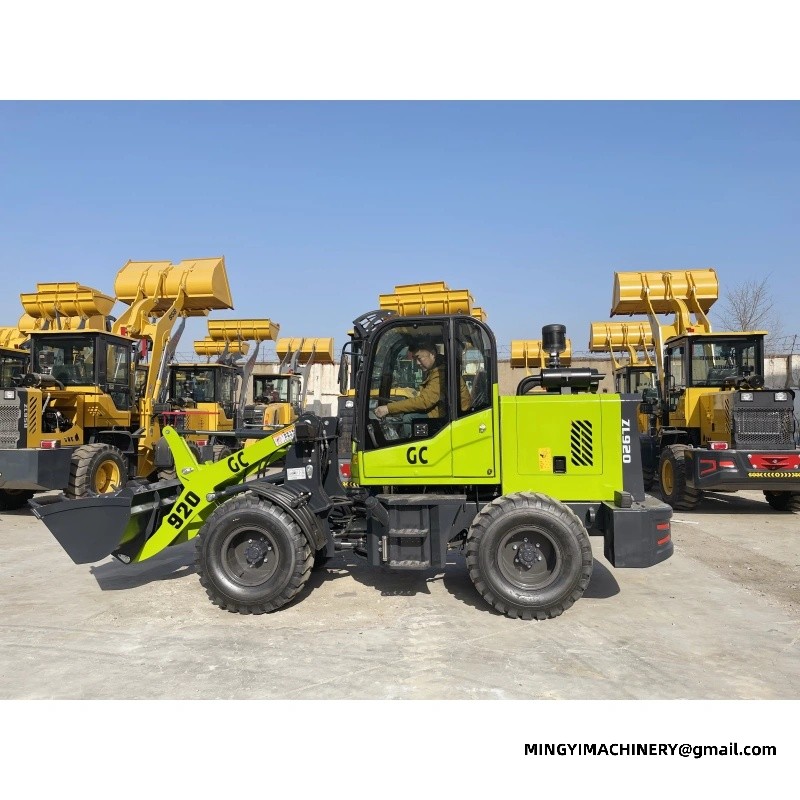
Two axle families appear across the range and the choice is about ground, not preference. Track width is the visible difference — 1.6 m on the heavy-duty 4.2 m medium-frame wheel-side reduction wheel loader against 1.6 m on the heavy-duty 4.5 m medium-frame wheel-side reduction wheel loader — but the mechanical difference is where the final reduction happens. An Isuzu-pattern axle reduces at the differential and sends torque down the shafts; a wheel-side reduction axle reduces at the hub.
Hub reduction is the right answer for soft lanes, ramps, uncompacted yards and pits, because torque arrives at the wheel instead of through a faster final drive that can spin. It is the wrong answer for long, fast, level transfers, where the extra unsprung mass and the lower top speed effort more than the traction gains. Read the track figures with the footprint — 4.55 m on the heavy-duty 4.2 m medium-frame wheel-side reduction wheel loader, 4.95 m on the heavy-duty 4.5 m medium-frame wheel-side reduction wheel loader — and the choice usually makes itself.
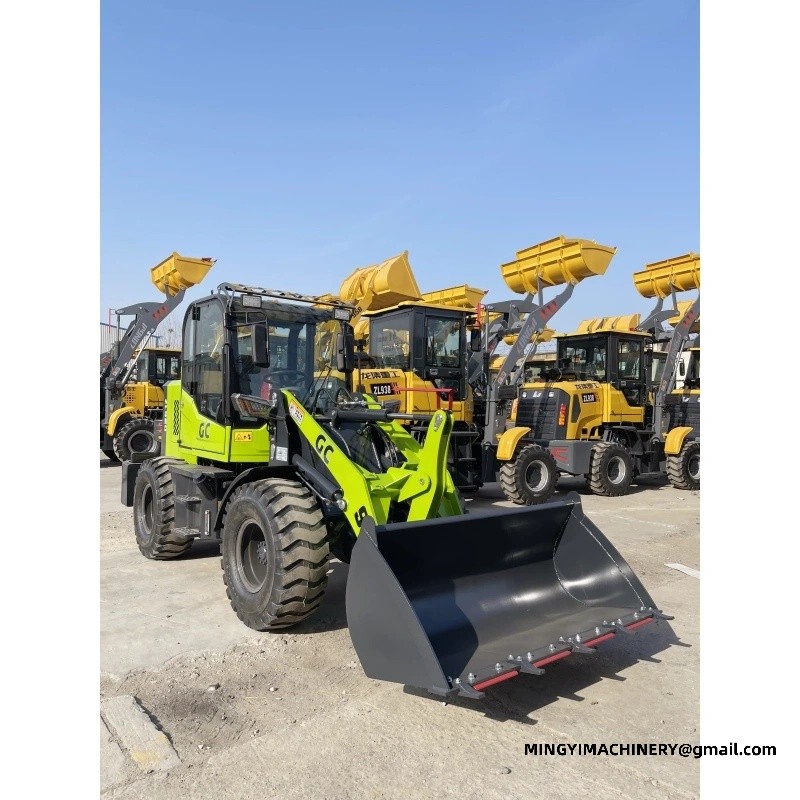
The useful way to read a range is as three decisions: how high, how heavy, and how wide. How high is dump height, 3.8 m against 4.2 m. How heavy is the steel, cross-member 30 mm against 45 mm and rear frame 280 mm high x 800 mm wide against 300 mm high x 800 mm wide. How wide is track, 1.5 m (wheel-side reduction axle); 1.45 m (Isuzu axle) against 1.6 m.
Once those three are settled, the bucket follows from the material and the boom from the height: 0.4 m³ on a 2.61 m arm here, 0.65 m³ on 3.16 m there. Reading it in that order means the specification is decided by the work rather than by whichever machine happened to be in stock.
| Reference specification — heavy-duty 4.2 m medium-frame wheel-side reduction wheel loader | |
|---|---|
| Bucket capacity | 0.65 m³ |
| Dump height | 4.2 m |
| Track width | 1.6 m |
| Boom arm thickness | 30 mm |
| Boom arm width | 520 mm |
| Boom arm length | 3.16 m |
| Boom arm centre distance | 960 mm |
| Cross-member thickness | 45 mm |
| Front hinge plate thickness | 45 mm |
| Rear hinge plate thickness | 30 mm |
| Rear frame section | 300 mm high x 800 mm wide |
| Hydraulic cylinders | centre cylinder 60 / side cylinder 50 |
| Fuel tank | 70 L (75# large tank) |
| Battery | 80 Ah |
| Front wheel to counterweight | 4.55 m |
| Radiator | 4105 core |
| Work pump | 2063 pump |
| Travel pump | 25 pump |
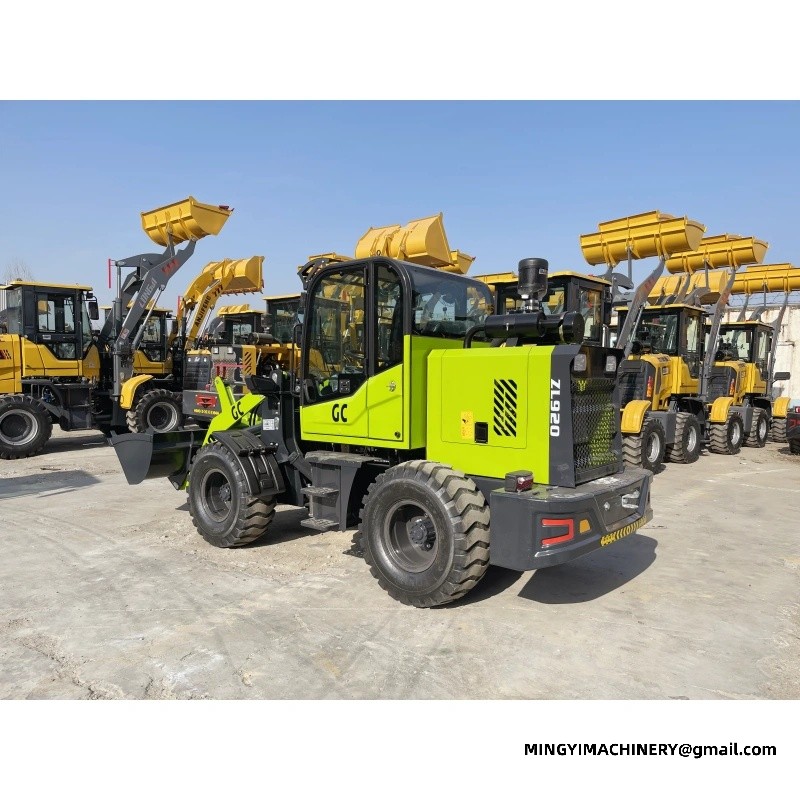
Cold cranking is the one specification that is easy to ignore and impossible to work around at five in the morning. This build is specified with 60 Ah (490 engine); 80 Ah (4102 turbo engine), matched to the engine it has to turn. Capacity in ampere-hours is only half the story; the other half is whether the rating is honest at low temperature, which is why the figure should be read together with the engine option.
Where two engines are offered, the turbo option asks for more from the battery and gets it: the higher rating in 60 Ah (490 engine); 80 Ah (4102 turbo engine) belongs to that build. If the machine will start cold, stop often, or run a short-haul duty with many restarts, specify the higher capacity at the order stage rather than discovering the limit in January.
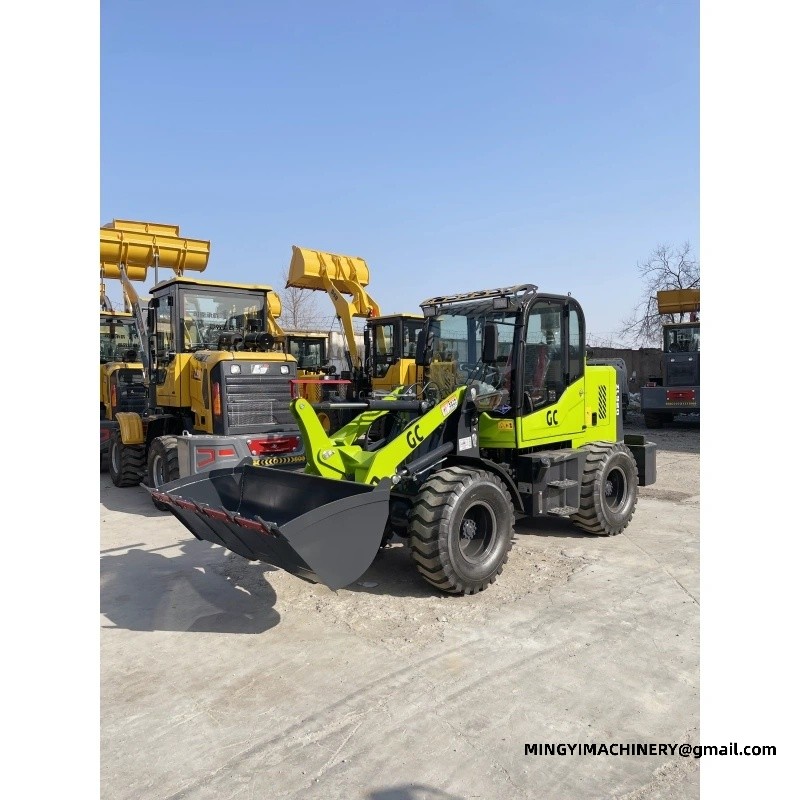
Airborne dust is the hardest thing a cooling system has to deal with, because it blocks the fin passages from the outside while the engine keeps producing heat. Core size is the buffer: 4100 core (490 engine); 4105 core (4102T engine) here against 4105 core on the heavy-duty 4.5 m medium-frame wheel-side reduction wheel loader. Screen area and access for cleaning matter as much as volume, so ask how the core is mounted before asking how big it is.
Work pumps generate heat too, not only the engine. This build runs 40 pump (490 engine); 1045 pump (4102 turbo engine) alongside 316 pump, and sustained hydraulic work in a hot climate adds load that the radiator was not sized for on a temperate machine. Where the duty is continuous rather than intermittent — a stockpile that never stops rather than a site that loads three trucks an hour — specify the larger core even if the engine is the same.
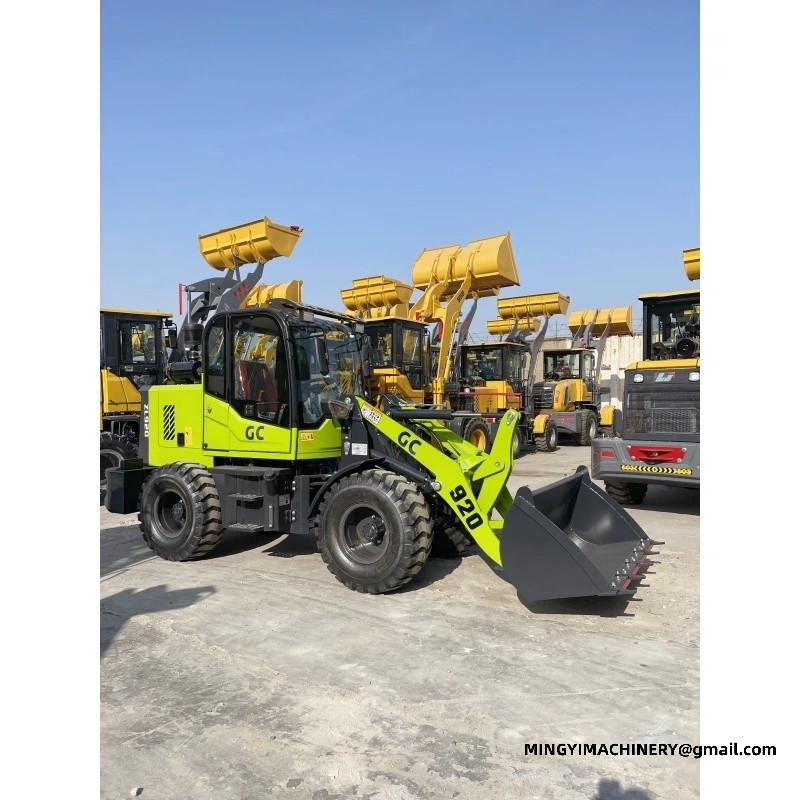
Four numbers describe a loader frame: front hinge plate, rear hinge plate, cross-member thickness and rear frame section. The standard 2.8 m low-profile wheel loader lists 16 mm, 16 mm, 16 mm and 200 mm high x 750 mm wide. The heavy-duty 3.8 m small-frame wheel-side reduction wheel loader lists 30 mm, 20 mm, 30 mm and 280 mm high x 800 mm wide. Everything else on a specification sheet — paint, cab trim, lighting package — is cosmetic next to those four.
The rear frame section is the one that surprises people. A wider rear frame lets the counterweight bolt directly to the chassis instead of hanging off brackets, and bracket-mounted counterweights crack. On the standard 2.8 m low-profile wheel loader the 200 mm high x 750 mm wide section carries the ballast for a 0.3 m³ bucket at 2.8 m; on the heavy-duty 3.8 m small-frame wheel-side reduction wheel loader the 280 mm high x 800 mm wide section carries it for 0.4 m³ at 3.8 m. Compare those against the 3.5 m and 4.2 m front-wheel-to-counterweight lengths and you have the whole stability picture in four figures.
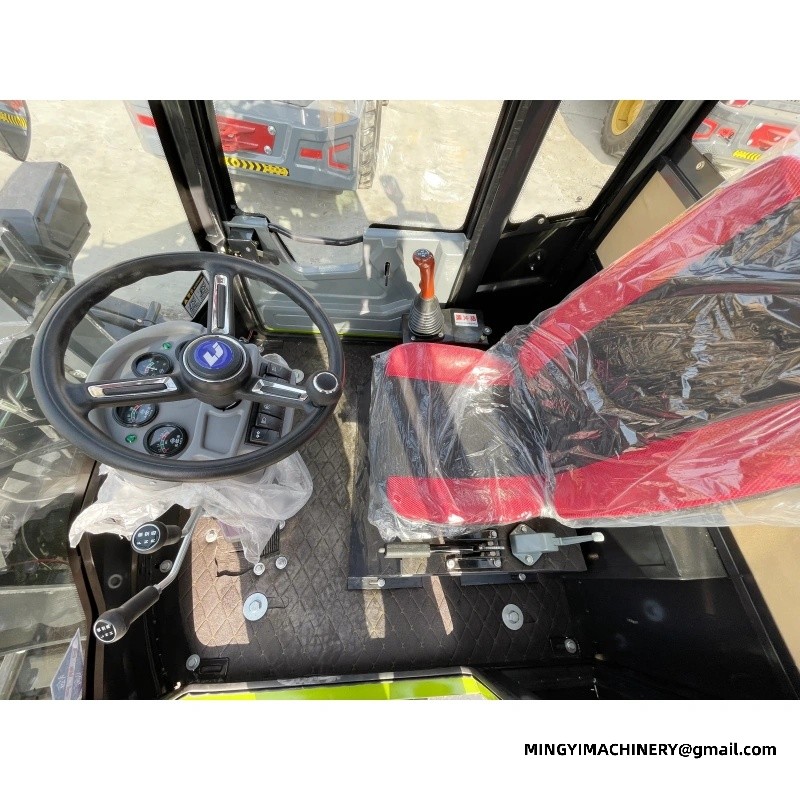
Acceptance takes twenty minutes and prevents a season of argument. Measure the bucket, 0.4 m³ on this build. Measure dump height with the arm at full lift, 3.5 m. Read the cylinders, centre cylinder 45 / side cylinder 40. Check the track, 1.5 m (wheel-side reduction axle); 1.45 m (Isuzu axle). Check the length from front wheel to counterweight, 4.1 m. Those five are on the sheet and on the machine.
The steel is harder to verify and worth verifying anyway, because it is what the money bought. Hinge plates 30 mm and 20 mm, cross-member 30 mm, boom wall 25 mm on a 430 mm section. A tape across the plate edge and a magnet will tell you whether the frame matches the order.
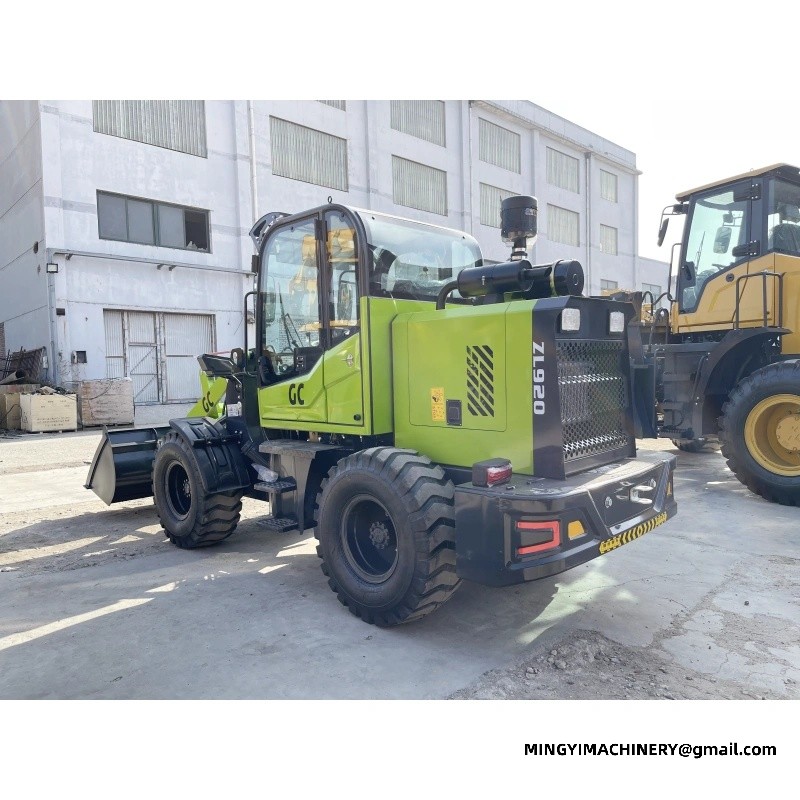
Daily: walk the machine, look at the ground under it, check the coolant level in the 4100 core package, and grease the hinge pins. Weekly: check the cylinder rods for scoring — centre cylinder 45 / side cylinder 40 — and the pins behind the 16 mm front plate for movement. Monthly: check the cross-member and rear frame, 200 mm high x 750 mm wide, for cracks at the weld toes.
None of that needs a workshop, and all of it is what keeps a machine tight. The parts that fail without warning are the ones nobody looks at: the pins, the hoses behind the 32 pump, and the battery terminals on 45 Ah (24 V). A ten-minute walk-round finds all three before they stop the machine.
Can a wheel loader for material handling take a quick coupler?
Yes, if the coupler is built for the boom section and centre distance — 500 mm wide on 890 mm spacing for the heavy-duty 4.2 m small-frame wheel-side reduction wheel loader.
What does the cross-member figure tell me about a wheel loader for material handling?
How well the frame resists the twisting that articulation puts into it: 30 mm on the heavy-duty 3.8 m small-frame wheel-side reduction wheel loader against 45 mm on the heavy-duty 4.2 m medium-frame wheel-side reduction wheel loader. It is the clearest marker of build class.
What is the difference between the two hinge plates on a wheel loader for material handling?
The front plate carries boom loads, which are mostly vertical; the rear carries articulation, which is sideways and shock-loaded. Hence 45 mm front against 30 mm rear.
How many hours a day can a wheel loader for material handling run?
As many as the cooling and fuel allow: a 64.7 L (75# small tank) tank on the heavy-duty 4.2 m small-frame wheel-side reduction wheel loader and a 4100 core (490 engine); 4105 core (4102T engine) radiator. In dusty work the radiator, not the tank, is usually what sets the limit.
Can a wheel loader for material handling work indoors?
The low-profile builds can, where height and footprint allow: 4.1 m front-to-counterweight length and 1.5 m (wheel-side reduction axle); 1.45 m (Isuzu axle) track on the heavy-duty 3.2 m small-frame wheel-side reduction wheel loader. Ventilation is the other constraint to check.
How does a wheel loader for material handling differ from a skid steer?
Articulated steering and a 4.25 m front-to-counterweight length give the loader reach and a smoother ride on rough ground; a skid steer turns in its own length but carries less, higher effort per tonne moved.
How do I verify the build of a wheel loader for material handling on delivery?
Five figures against the published table: boom wall 20 mm, boom width 300 mm, front hinge 16 mm, rear hinge 16 mm and cross-member 16 mm.
The short version for any wheel loader for material handling: fix the dump height first, check the track against your narrowest opening second, and read the rear hinge plate — 30 mm on the heavy-duty 4.2 m medium-frame wheel-side reduction wheel loader, 30 mm on the heavy-duty 4.5 m medium-frame wheel-side reduction wheel loader — third. Everything else on the sheet is detail.
Reading the early symptoms on Wheel Loader for Material Handling: Pallet, Bagged and Bulk Load Duty
The symptom is usually not at the fault. A hydraulic function that has become sluggish on Wheel Loader for Material Handling: Pallet, Bagged and Bulk Load Duty may point to a filter, a relief setting or a pump, and starting with the simple checks avoids the wrong guess.
Planning the season around Wheel Loader for Material Handling: Pallet, Bagged and Bulk Load Duty
Workload is rarely even across the year, and the machine should be specified for the busy weeks. A Wheel Loader for Material Handling: Pallet, Bagged and Bulk Load Duty sized only for the average month will be the limiting factor exactly when the work is worth the most.
Pre-delivery inspection before Wheel Loader for Material Handling: Pallet, Bagged and Bulk Load Duty leaves the shop
The last hour before packing is the best time to find a fault. Running Wheel Loader for Material Handling: Pallet, Bagged and Bulk Load Duty through its full working cycle, checking for leaks under load and confirming that the controls match the specification avoids a conversation across time zones later.
Contact MINGYI Machinery for the current wheel loader lineup, configuration options and a formal specification for your market. E-mail: sales@mingycn.com | LINE (ID): mingyicn
Wheel Loader for Aggregate Yard: Stockpiles and Haul Cycles · OEM Wheel Loader Manufacturer: Build Options and Labelling · Construction Wheel Loader: Board Heights in Real Use · Loaders









