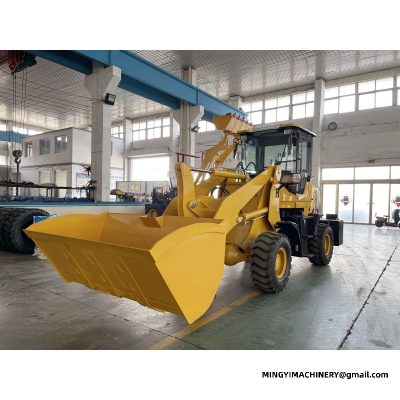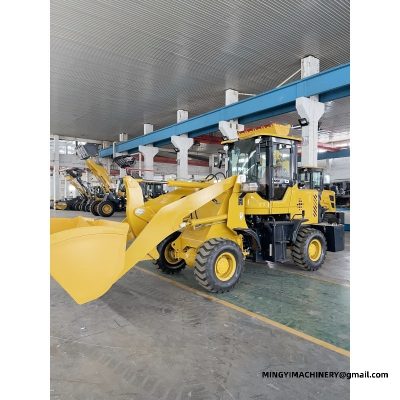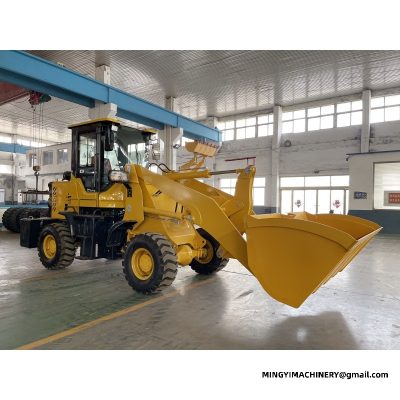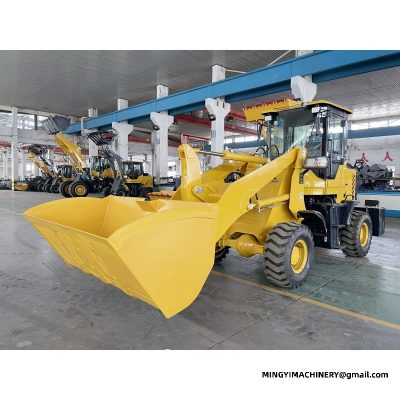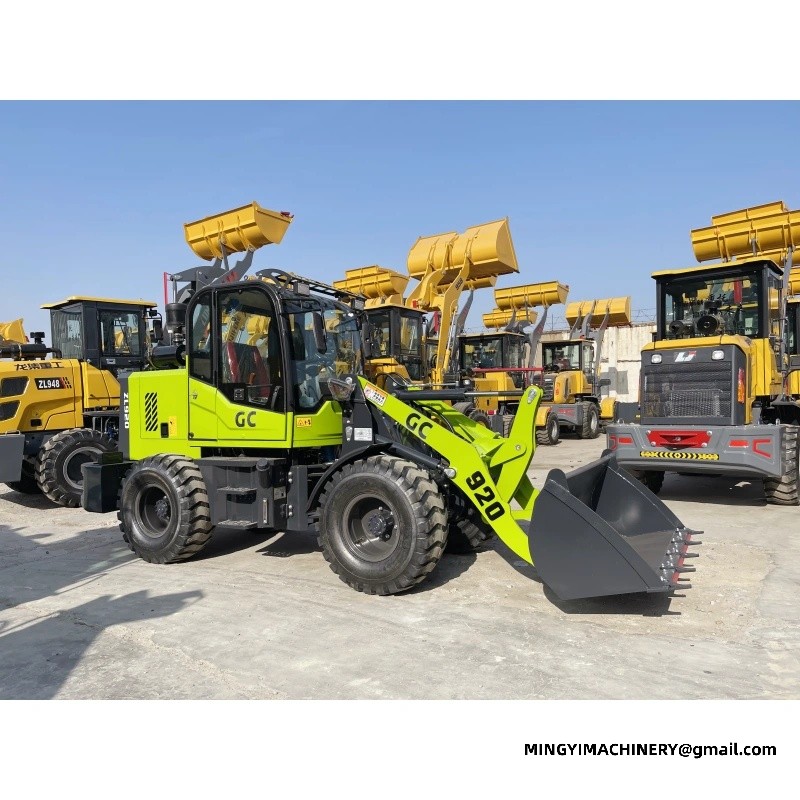
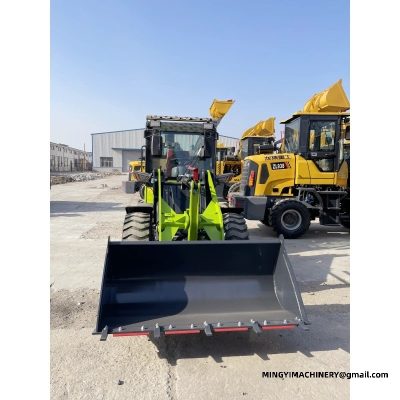
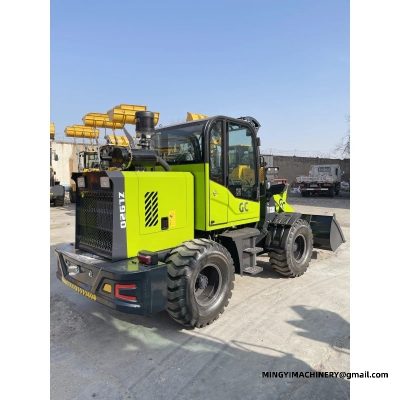
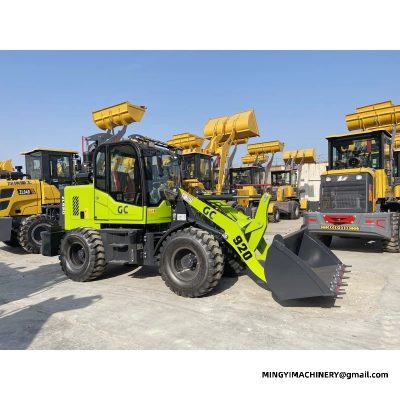
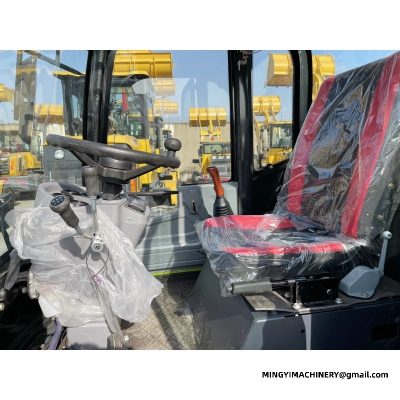
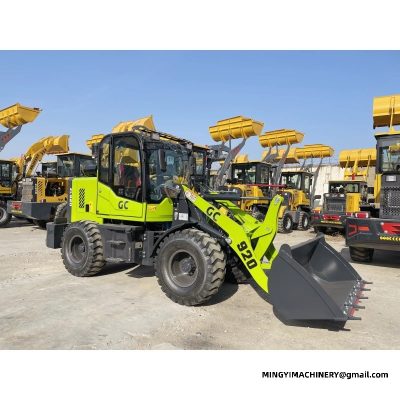
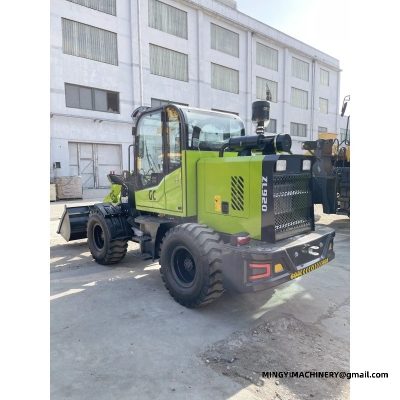
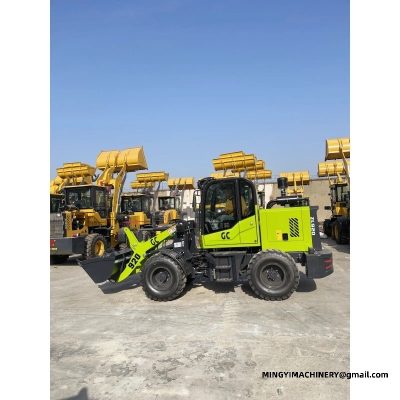
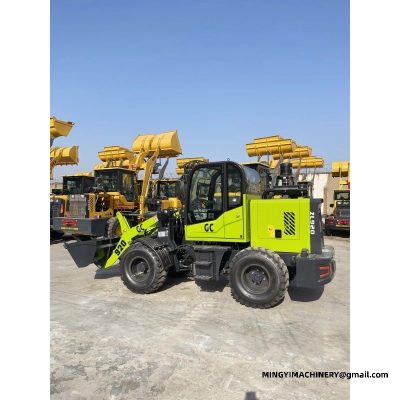
A wheel loader for aggregate yard is a frame, a boom and a counterweight arranged around one job: moving material from a heap into something that has to carry it away. Every figure on the sheet serves that job or is decoration. Bucket capacity decides how many passes; dump height decides whether the pass is possible; hinge steel decides whether the machine is still tight in year three. Here the buckets run 0.38 m³ to 0.38 m³ and the dump heights 3.2 m to 3.2 m, with front hinge plates of 25 mm and rear plates of 14 mm on the heavier build. Below: how to read them, and what to specify.
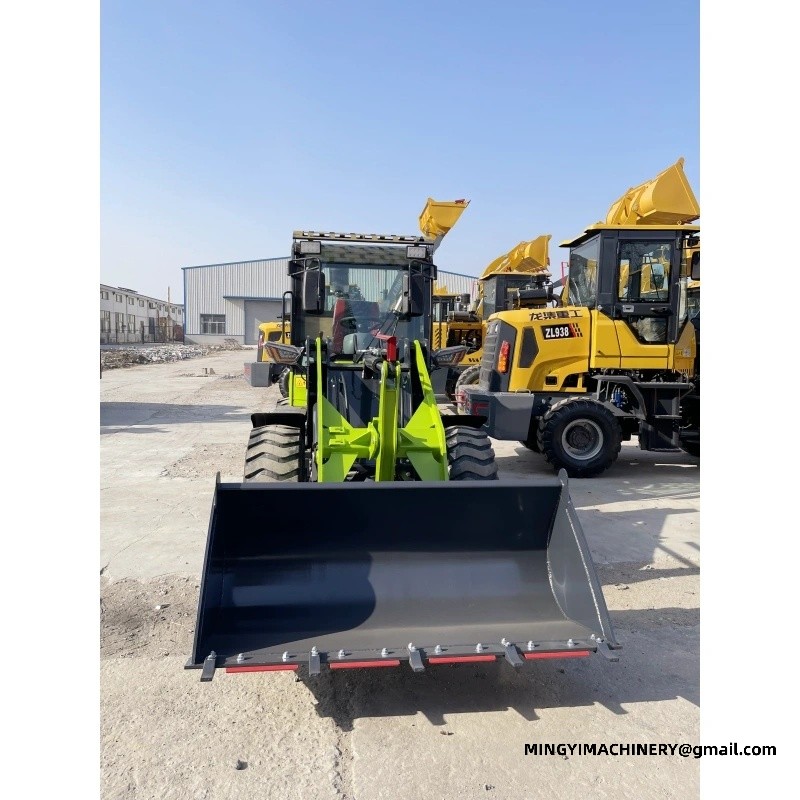
Adding a circuit after delivery is possible and never as good as specifying it at build. The pump is the constraint: 40 pump (490 engine); 1045 pump (4102 turbo engine) on this machine, 316 pump alongside it. Flow has to be shared, and a circuit added later shares it through plumbing that was not laid out for it.
The cylinders are less often the limit than people assume. centre cylinder 45 / side cylinder 40 gives the mechanical advantage; the pump gives the speed. If an attachment works but works slowly, look at flow before looking at bore. If it works but the arm twists, look at section instead: 370 mm of width and 890 mm of spacing resist that, and neither can be improved after the frame is welded.
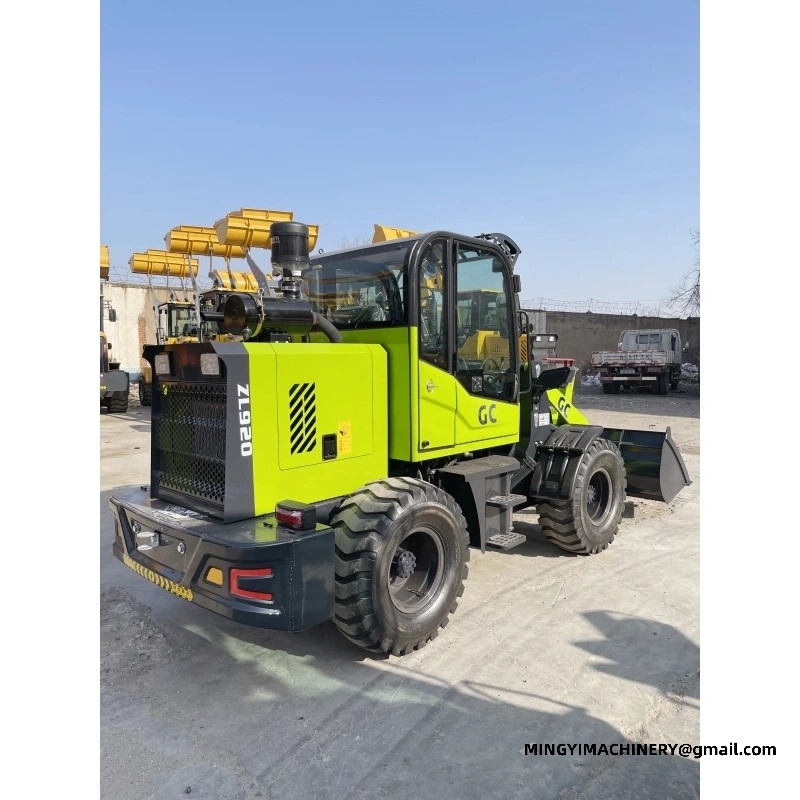
The boom section is the mounting standard. On the light-duty 3.2 m small-frame wheel-side reduction wheel loader it is 370 mm with a 890 mm centre distance; on the heavy-duty 3.5 m medium-frame wheel-side reduction wheel loader it is 500 mm with 920 mm. Fork frames, grapples and snow tools specification against those two numbers, which is why "forks to suit a three-ton loader" is not a specification.
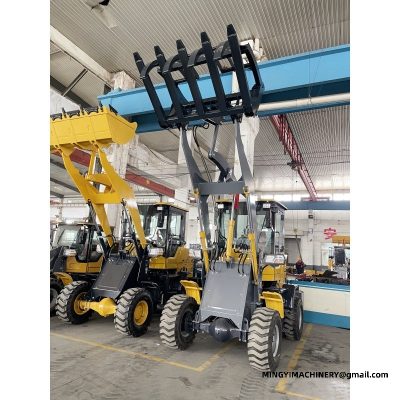
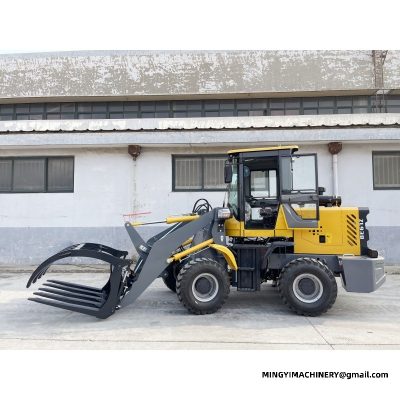
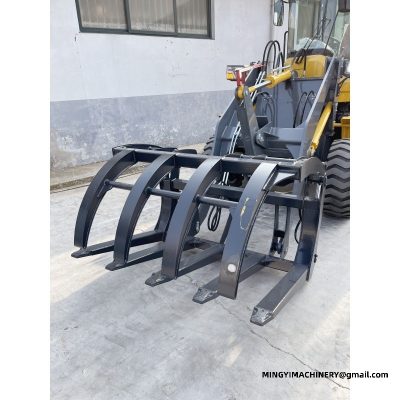
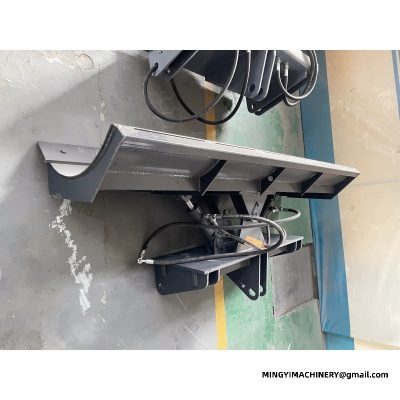
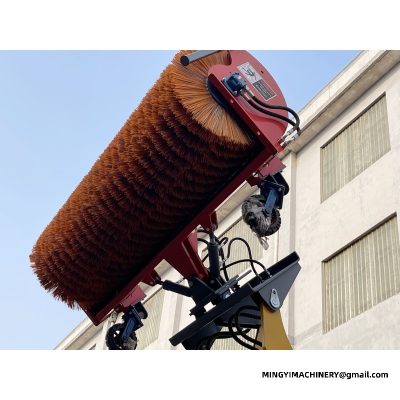
For a mixed fleet the practical set is four tools: a bucket for bulk, forks for pallets and bagged goods, a grapple for loose material and demolition, and a snow tool for winter work. Mechanical sets need no hydraulic circuit and swap in minutes; hydraulic sets need the circuit ordered with the machine. The 316 pump and 25 pump travel pumps keep drive independent either way, so steering is unaffected by tool load.
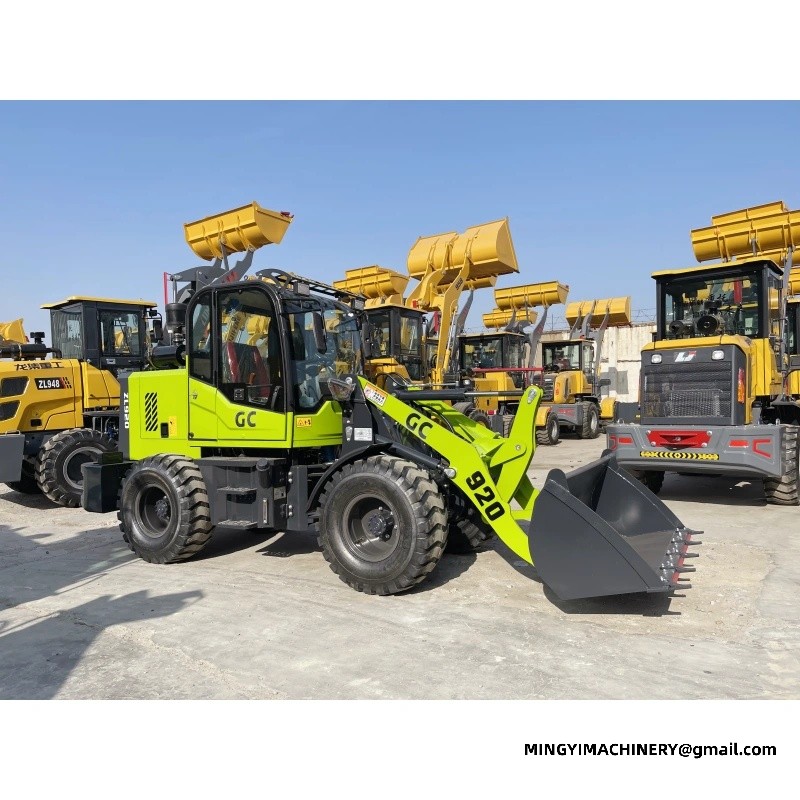
Breakout happens when the bucket is driven into the face and lifted, and it loads the boom in bending. The figures that resist it are wall 25 mm, width 370 mm, and the spacing between the two arms, 890 mm. A wider spacing spreads the load across the pins instead of concentrating it.
Length works against you here. A 2.3 m arm gives reach and height and multiplies the bending moment at the same time, which is why long-arm builds carry thicker walls. On the heavy-duty 3.8 m medium-frame wheel-side reduction wheel loader the same comparison is 2.9 m of length against 30 mm of wall. Where the material is hard to break out, the shorter, thicker combination is usually the better machine.
| Published build data — light-duty 3.5 m small-frame wheel-side reduction wheel loader | |
|---|---|
| Bucket capacity | 0.38 m³ |
| Dump height | 3.5 m |
| Track width | 1.5 m (wheel-side reduction axle); 1.45 m (Isuzu axle) |
| Boom arm thickness | 25 mm |
| Boom arm width | 370 mm |
| Boom arm length | 2.62 m |
| Boom arm centre distance | 890 mm |
| Cross-member thickness | 25 mm |
| Front hinge plate thickness | 25 mm |
| Rear hinge plate thickness | 14 mm |
| Rear frame section | 280 mm high x 800 mm wide |
| Hydraulic cylinders | centre cylinder 45 / side cylinder 40 |
| Fuel tank | 64.7 L (75# small tank) |
| Battery | 60 Ah (490 engine); 80 Ah (4102 turbo engine) |
| Front wheel to counterweight | 4 m |
| Radiator | 4100 core (490 engine); 4105 core (4102T engine) |
| Work pump | 40 pump (490 engine); 1045 pump (4102 turbo engine) |
| Travel pump | 316 pump |
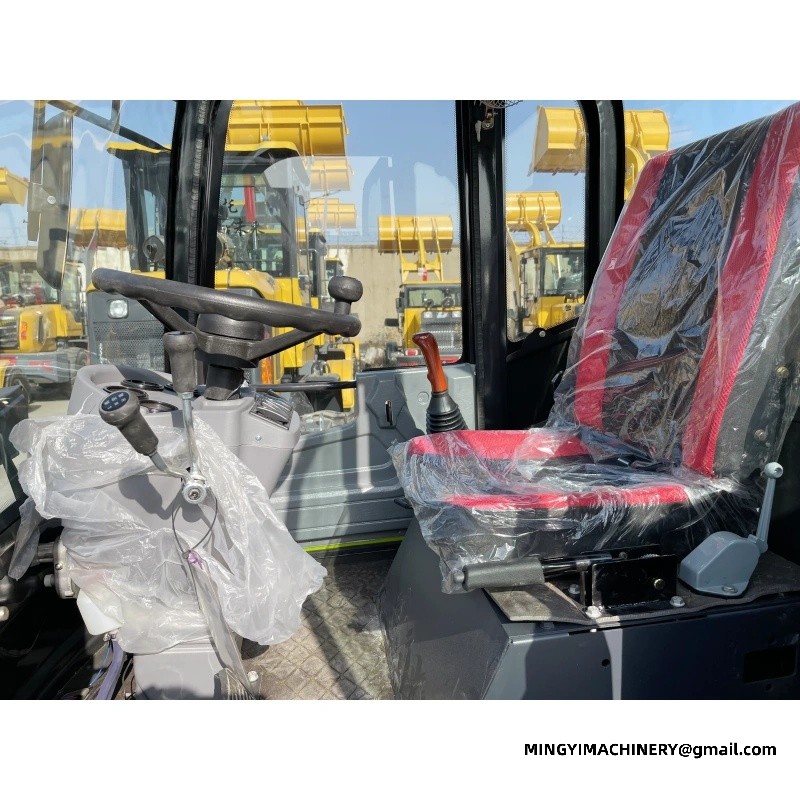
A loading cycle is four movements repeated a few hundred times a shift: approach, fill, lift, dump. Each one loads a different part of the machine, and the specification that matters changes with the movement. Filling asks for bucket volume and breakout, so 0.38 m³ on the light-duty 3.2 m low-profile wheel loader is the first figure to read. Lifting asks for boom section and cylinder size, which is 25 mm of wall and centre cylinder 45 / side cylinder 40. Dumping asks for height over the receiving board, 3.2 m here against 4.2 m on the light-duty 4.2 m small-frame wheel-side reduction wheel loader.
The approach is the movement nobody specifies for, and it is where frames age. Every run at a face loads the front hinge plate, 25 mm on this build against 14 mm at the rear; the rear plate carries the weight of the counterweight and the swing of the whole rear frame, which is why it is the heavier of the two. A 4 m wheelbase keeps the machine settled when the bucket meets resistance rather than air.
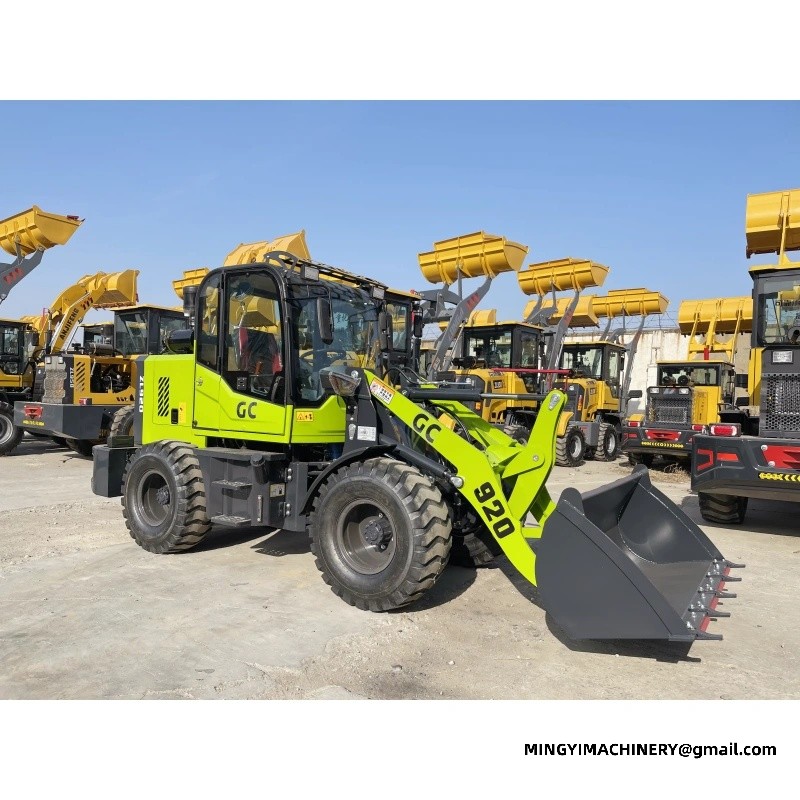
An agricultural loader is a small machine doing varied work, and the specification that matters is the one that lets it into the buildings. Track width 1.5 m (wheel-side reduction axle); 1.45 m (Isuzu axle) on the light-duty 3.2 m small-frame wheel-side reduction wheel loader against 1.6 m on the heavy-duty 3.5 m medium-frame wheel-side reduction wheel loader, footprint 3.8 m against 4.55 m, and dump height 3.2 m against 3.5 m for the wagon or hopper it fills.
Duty is seasonal and mostly light, which is why the light builds exist: a 0.38 m³ bucket with 25 mm cross-member and 14 mm rear hinge plates is correctly specified for silage, bagged goods and yard scraping. Where the machine also does heavy work — muck-out with a loaded bucket, or winter snow clearing — step to the heavier build with 45 mm and 30 mm. Over-specifying takes money once; under-specifying takes a frame.
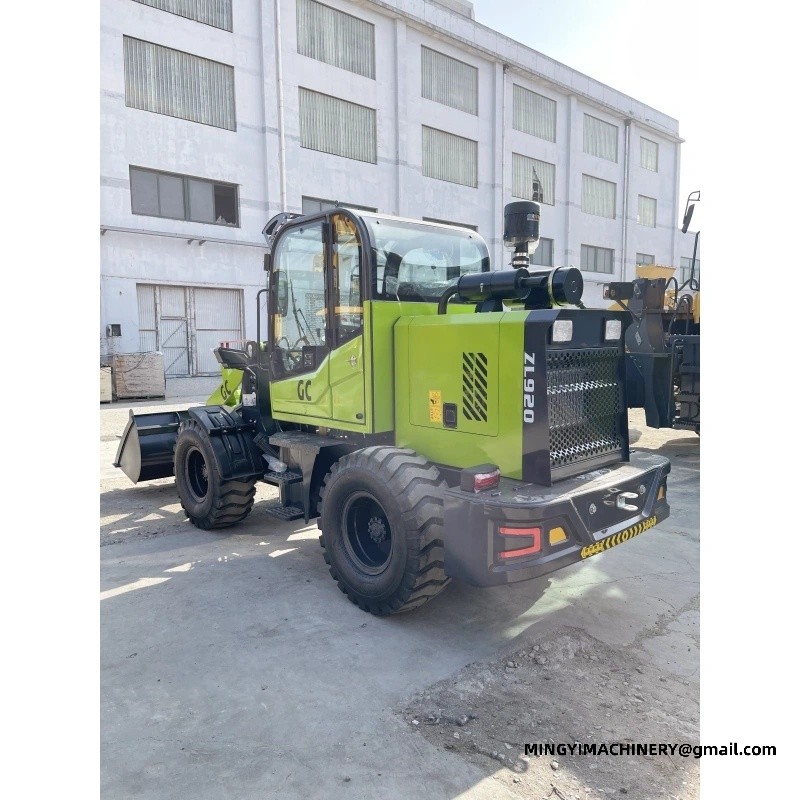
Site work is a truck-loading problem. The machine fills, reverses, turns, approaches and dumps, several hundred times a day, and the numbers that govern it are dump height, hinge steel and cycle time. The heavy-duty 4.5 m small-frame wheel-side reduction wheel loader brings 0.4 m³ at 4.5 m with 30 mm and 20 mm hinge plates; the heavy-duty 3.5 m medium-frame wheel-side reduction wheel loader brings 0.65 m³ at 3.5 m with 45 mm and 30 mm.
Backfilling and heel-in work load the rear hinge harder than loading does, because the machine turns while pushing. That is why the rear plate figure — 20 mm against 30 mm — is the one to read for a site machine, ahead of engine power. Add the cooling question: site dust loads a radiator fast, so the raised core and the 4105 core package earn their keep where the 4100 core (490 engine); 4105 core (4102T engine) spec would need blowing out at lunch.
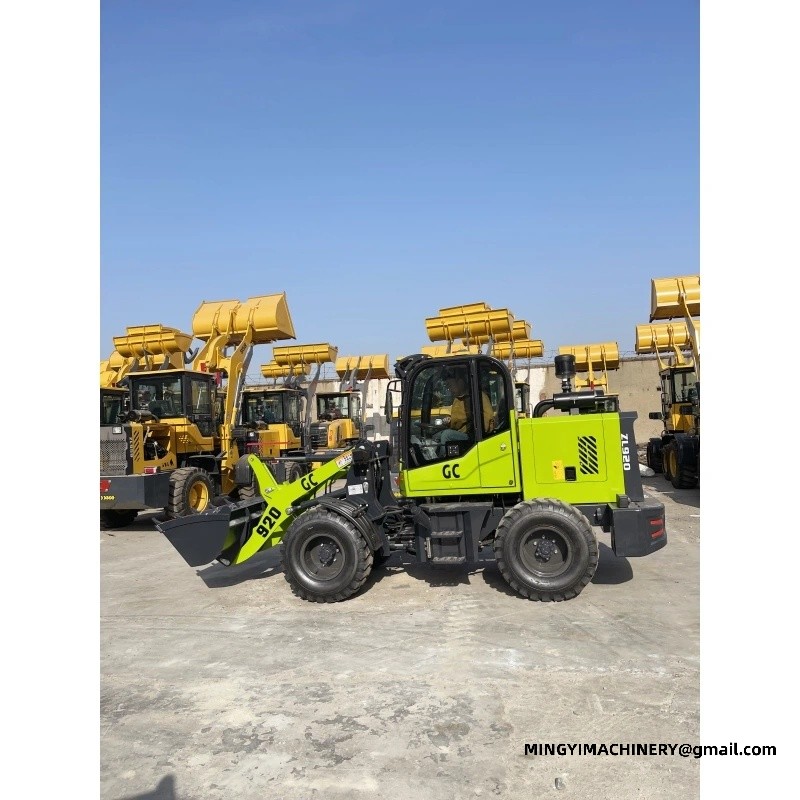
Articulated loaders wear at the pins, and pins wear because they were dry. Front plate 25 mm, rear plate 14 mm, and the cross-member behind them at 25 mm: that assembly is what steering works through, several hundred times a shift. Grease intervals are measured in hours, not months, on a machine doing short cycles.
The boom pivots are the second set, and they are the ones an operator feels first. A 2.3 m arm on a 890 mm spacing, lifted by centre cylinder 45 / side cylinder 40, loads its pins every pass. If the machine develops a clunk on lift, look there before looking at the pump — the pump, 40 pump (490 engine); 1045 pump (4102 turbo engine), is usually fine and the pin is usually not.
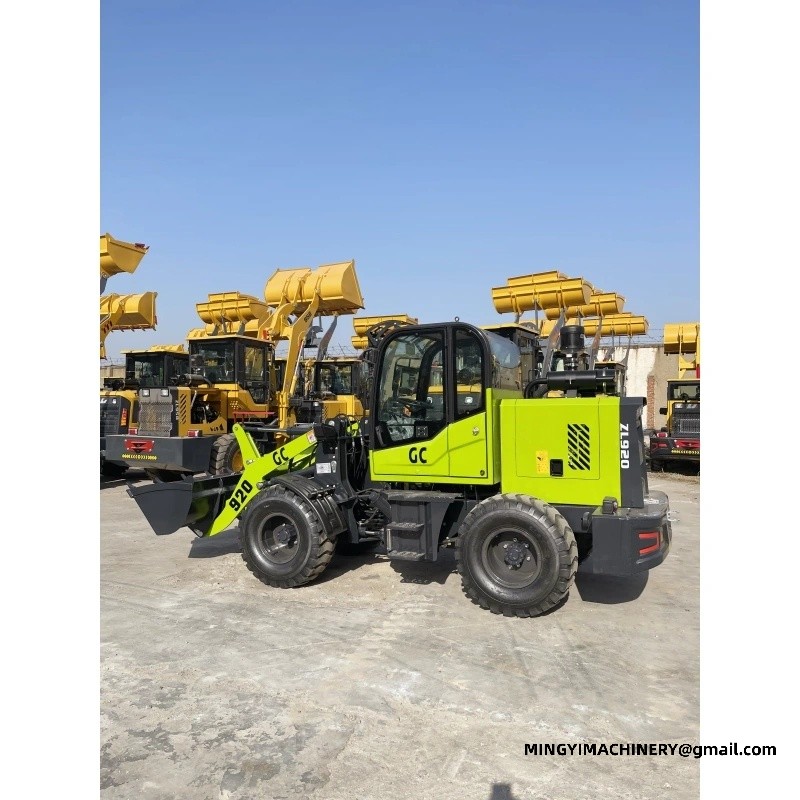
Fleet size falls out of cycle count, and cycle count falls out of bucket volume and dump height together. Take the daily tonnage, divide by what one bucket carries at 0.38 m³, and check that the receiving bodies sit under 3.2 m. If they do not, the calculation is wrong before it starts, and the heavy-duty 3.8 m medium-frame wheel-side reduction wheel loader at 3.8 m is the machine the fleet actually needs.
Reserve capacity matters more than peak capacity because a fleet runs on its worst day, with one machine down and the face further away. Specifying the whole fleet on one build keeps that simple: same centre cylinder 45 / side cylinder 40, same 40 pump (490 engine); 1045 pump (4102 turbo engine), same 1.5 m (wheel-side reduction axle); 1.45 m (Isuzu axle), so one spare parts bin covers every machine and any operator can take any unit.
How do I pick between the frame tiers of a wheel loader for aggregate yard?
By reach and duty. The light-duty 3.2 m low-profile wheel loader carries 0.38 m³ to 3.2 m on a 25 mm cross-member; the light-duty 3.8 m small-frame wheel-side reduction wheel loader carries 0.38 m³ to 3.8 m on 25 mm.
What separates a light build from a heavy build of a wheel loader for aggregate yard?
Cross-member and rear hinge plate: 30 mm and 20 mm on the heavy-duty 4.5 m small-frame wheel-side reduction wheel loader, against 45 mm and 30 mm on the heavy-duty 3.8 m medium-frame wheel-side reduction wheel loader. Boom wall and cylinder bore follow.
Can one spares kit cover a mixed wheel loader for aggregate yard fleet?
Within a frame family, largely yes: the centre cylinder 45 / side cylinder 40 cylinder set and the 40 pump (490 engine); 1045 pump (4102 turbo engine) and 316 pump pumps are shared. Across families the cylinder set changes to centre cylinder 45 / side cylinder 45.
Which wheel loader for aggregate yard build suits quarry or stockpile work?
The heavy build with the raised core: a 0.4 m³ bucket, 20 mm rear hinge plate, 30 mm cross-member and the 4100 core (490 engine); 4105 core (4102T engine) radiator for fines and dust.
What is the smallest wheel loader for aggregate yard in the range?
The entry low-profile builds: a 0.4 m³ bucket at 4.5 m, 1.5 m (wheel-side reduction axle); 1.45 m (Isuzu axle) track and a 4.25 m front-to-counterweight length for indoor and nursery work.
Can a wheel loader for aggregate yard run a hydraulic attachment?
Yes, provided the third circuit is ordered with the machine. The 40 pump (490 engine); 1045 pump (4102 turbo engine) work pump and 316 pump travel pump are specified per build, and plumbing added later is the usual source of leaks.
How wide is a wheel loader for aggregate yard?
Track width is 1.5 m (wheel-side reduction axle); 1.45 m (Isuzu axle) on the light-duty 3.2 m low-profile wheel loader and 1.6 m on the heavy-duty 3.5 m medium-frame wheel-side reduction wheel loader. Check it against the narrowest gate, door or aisle before anything else on the sheet.
Send the application and the receiving body height and we will match a wheel loader for aggregate yard to it from the published range — 0.38 m³ bucket at 3.2 m, or 0.38 m³ at 3.2 m — and specification the build, the container plan and the spares package together.
Commissioning Wheel Loader for Aggregate Yard: Stockpiles and Haul Cycles on site
The machine should be introduced to the site as well as the operator. Walking the route Wheel Loader for Aggregate Yard: Stockpiles and Haul Cycles will take, noting the soft spots and the turns, prevents the kind of first-day incident that has nothing to do with the machine.
Fuel, oil and fluid quality for Wheel Loader for Aggregate Yard: Stockpiles and Haul Cycles
Contamination is easier to prevent than to cure. Keeping the filler caps sealed, the funnels clean and the containers closed around Wheel Loader for Aggregate Yard: Stockpiles and Haul Cycles is unglamorous work that shows up as reliability later.
Packing, loading and shipment of Wheel Loader for Aggregate Yard: Stockpiles and Haul Cycles
Export packing is part of the machine, not an afterthought. Wheel Loader for Aggregate Yard: Stockpiles and Haul Cycles is blocked and braced inside the container so that it arrives in the same condition it left, and the load plan is decided by the dimensions rather than by what fits loosely.
Contact MINGYI Machinery for the current wheel loader lineup, configuration options and a formal specification for your market. E-mail: sales@mingycn.com | LINE (ID): mingyicn
OEM Wheel Loader Manufacturer: Build Options and Labelling · China Wheel Loader Factory Supplier: Specs and Order Process · Front End Loader Manufacturer: Boom and Hinge Checks · Loaders