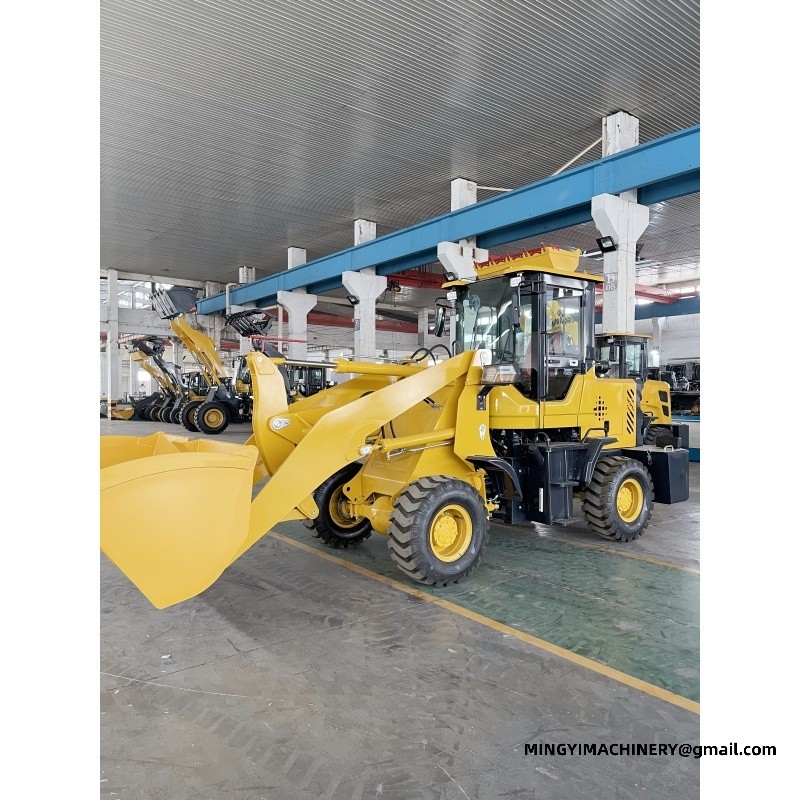
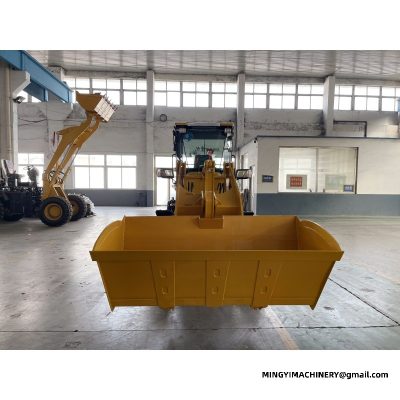
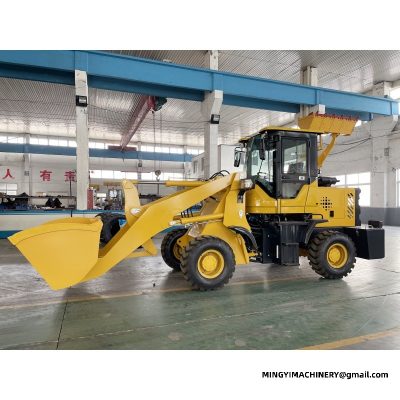
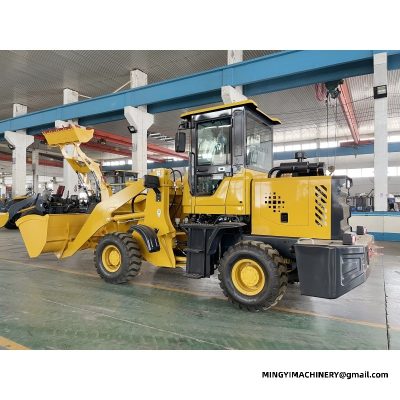
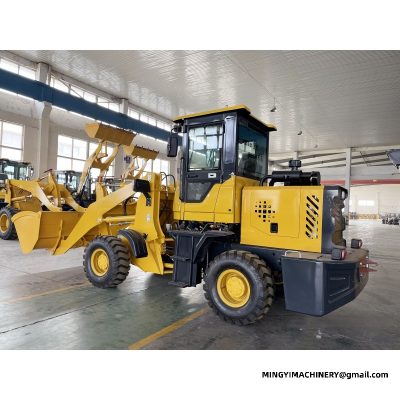
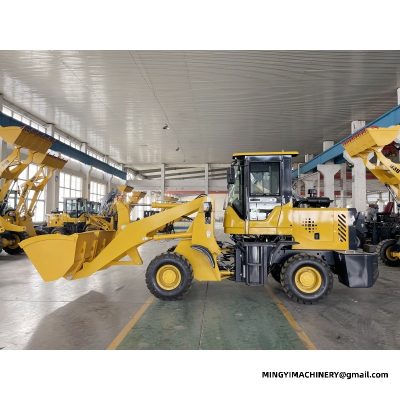
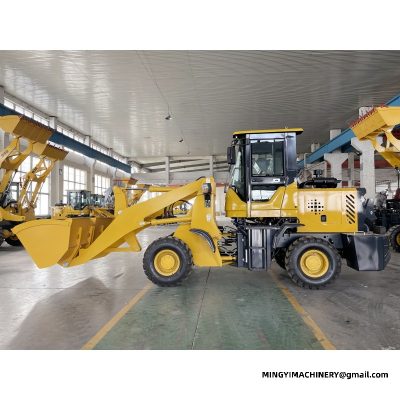
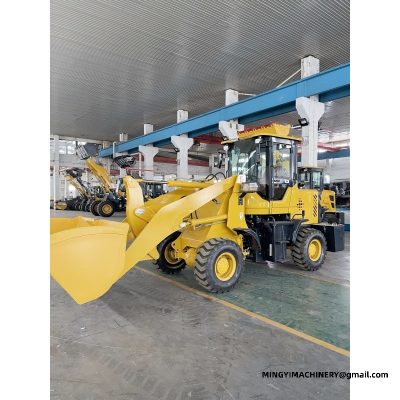
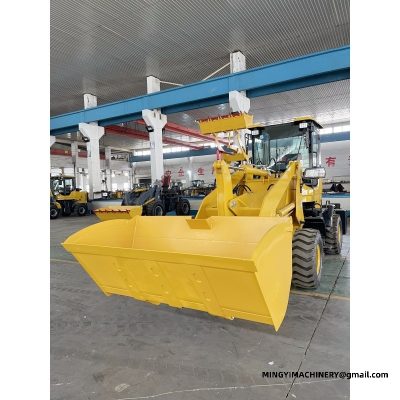
Specify a wheel loader for sale from the work backwards, not from the catalogue forwards. Start with what it loads into — that fixes dump height, 3.2 m on the heavy-duty 3.2 m small-frame wheel-side reduction wheel loader or 3.5 m on the heavy-duty 3.5 m small-frame wheel-side reduction wheel loader. Then the narrowest gap it must pass — that fixes track, 1.5 m (wheel-side reduction axle); 1.45 m (Isuzu axle) or 1.5 m (wheel-side reduction axle); 1.45 m (Isuzu axle). Only then look at bucket volume, 0.4 m³ or 0.4 m³. What follows is the full sequence, with the steel, hydraulic and cooling figures that separate one build from the next and the reasoning behind each.
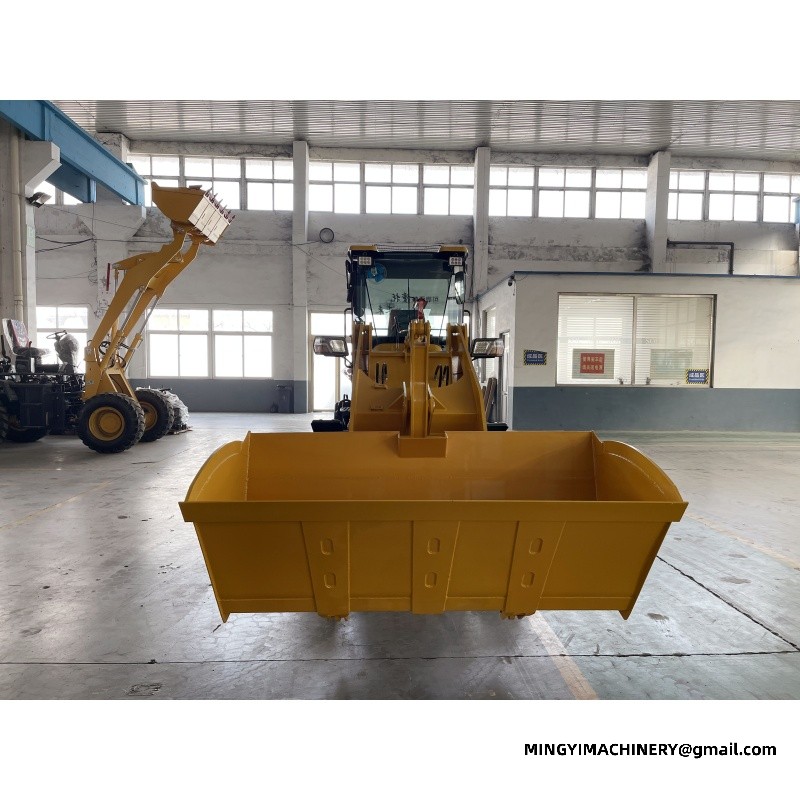
The boom section is the mounting standard. On the light-duty 3.5 m medium-frame wheel-side reduction wheel loader it is 430 mm with a 900 mm centre distance; on the light-duty 4.2 m medium-frame wheel-side reduction wheel loader it is 450 mm with 900 mm. Fork frames, grapples and snow tools specification against those two numbers, which is why "forks to suit a three-ton loader" is not a specification.
For a mixed fleet the practical set is four tools: a bucket for bulk, forks for pallets and bagged goods, a grapple for loose material and demolition, and a snow tool for winter work. Mechanical sets need no hydraulic circuit and swap in minutes; hydraulic sets need the circuit ordered with the machine. The 25 pump and 25 pump travel pumps keep drive independent either way, so steering is unaffected by tool load.
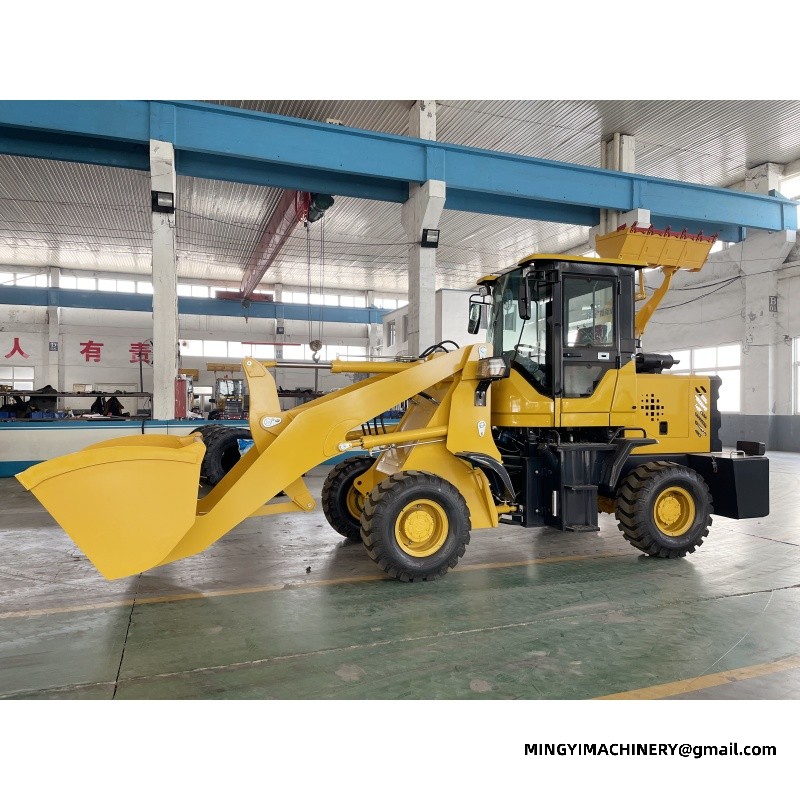
Put the two builds side by side and read four rows only. Bucket: 0.4 m³ against 0.52 m³. Dump height: 3.5 m against 3.5 m. Hinge steel: 30 mm and 20 mm against 45 mm and 30 mm. Cross-member: 30 mm against 45 mm.
Those four decide what the machine can carry, where it can put it, and how long the frame lasts doing it. Everything else on a specification sheet — paint, cab trim, lighting package — is cosmetic next to them. The pumps, 40 pump (490 engine); 1045 pump (4102 turbo engine) against 2063 pump, are the fifth row and matter only if the work is hydraulic rather than loading.
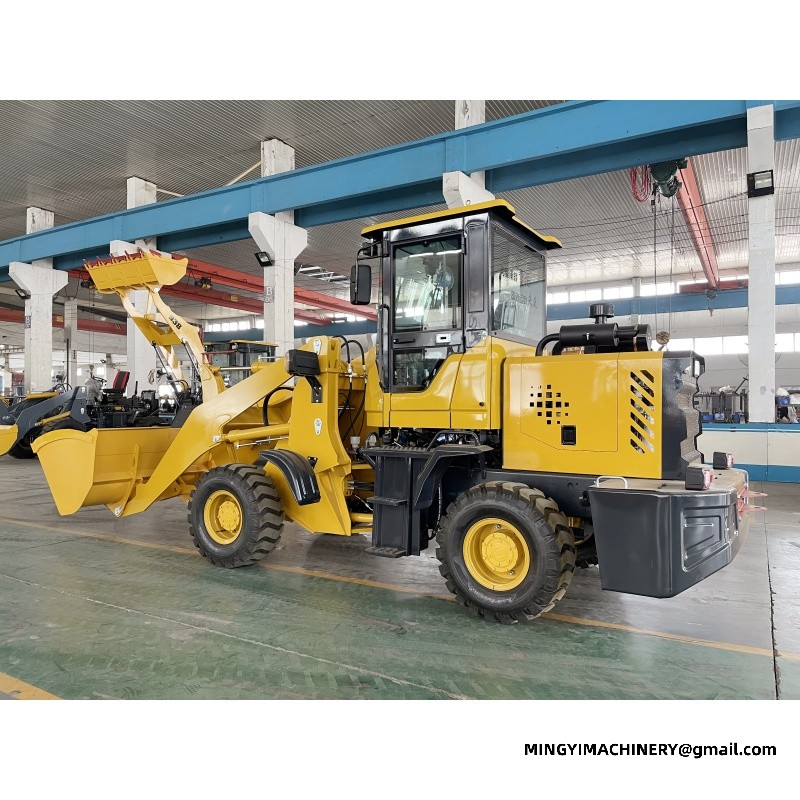
Winter changes three things: the battery has less to give, the oil is thicker, and the operator is working in gloves. The first two are specification questions. 60 Ah (490 engine); 80 Ah (4102 turbo engine) covers the first. The hydraulic side, centre cylinder 45 / side cylinder 45 with a 40 pump (490 engine); 1045 pump (4102 turbo engine), is sized for the loads it will see at working temperature and will simply be slower until it warms.
The third is a machine-layout question and comes down to the rear frame and the tank: 280 mm high x 800 mm wide of rear section and 64.7 L (75# small tank) of fuel. Cold-weather work also means more idling, so tank capacity should be read against winter consumption rather than summer consumption. A machine that needs refuelling at minus ten with an operator standing outside is a specification failure, not a weather problem.
| Reference specification — heavy-duty 3.2 m small-frame wheel-side reduction wheel loader | |
|---|---|
| Bucket capacity | 0.4 m³ |
| Dump height | 3.2 m |
| Track width | 1.5 m (wheel-side reduction axle); 1.45 m (Isuzu axle) |
| Boom arm thickness | 25 mm |
| Boom arm width | 430 mm |
| Boom arm length | 2.3 m |
| Boom arm centre distance | 890 mm |
| Cross-member thickness | 30 mm |
| Front hinge plate thickness | 30 mm |
| Rear hinge plate thickness | 20 mm |
| Rear frame section | 280 mm high x 800 mm wide |
| Hydraulic cylinders | centre cylinder 45 / side cylinder 45 |
| Fuel tank | 64.7 L (75# small tank) |
| Battery | 60 Ah (490 engine); 80 Ah (4102 turbo engine) |
| Front wheel to counterweight | 4.1 m |
| Radiator | 4100 core (490 engine); 4105 core (4102T engine) |
| Work pump | 40 pump (490 engine); 1045 pump (4102 turbo engine) |
| Travel pump | 316 pump |
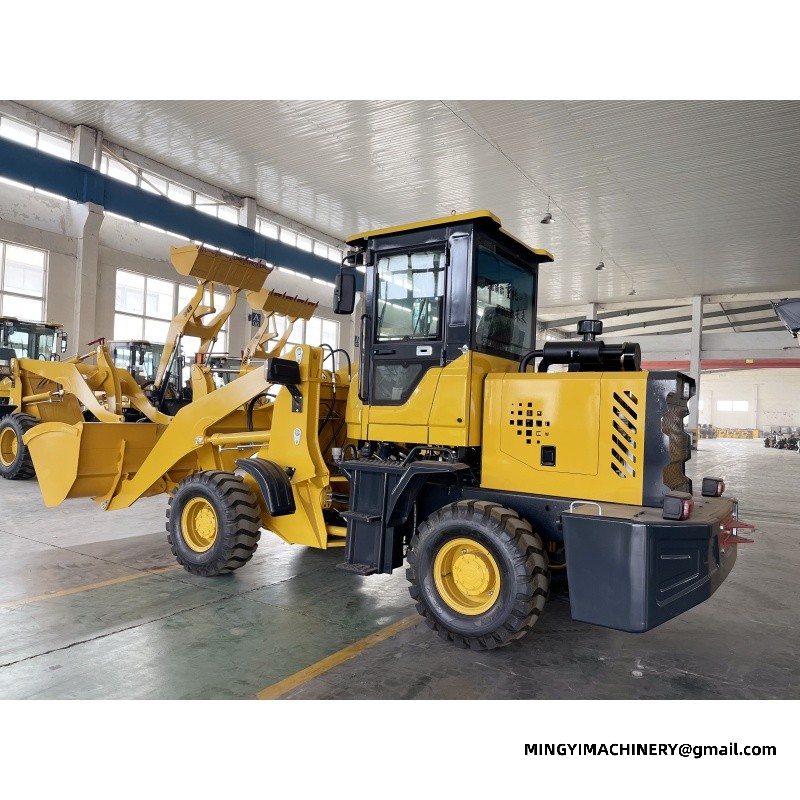
Two dimensions decide whether a loader is usable on a given site: the 4.1 m front-to-counterweight length of the heavy-duty 3.2 m small-frame wheel-side reduction wheel loader against the 4.1 m of the heavy-duty 3.5 m small-frame wheel-side reduction wheel loader, and track width at 1.5 m (wheel-side reduction axle); 1.45 m (Isuzu axle) against 1.5 m (wheel-side reduction axle); 1.45 m (Isuzu axle). Everything else on the sheet — engine, pump, cylinder bore — matters only after the machine fits.
The pairing matters too. A 0.4 m³ bucket lifted to 3.2 m on a 4.1 m footprint is a different machine in practice from a 0.4 m³ bucket at 3.5 m on 4.1 m, even where the track figures are close. Where access is tight, take the shorter machine and accept the extra pass; where the ground is open, take the longer one and take the stability it buys with the 20 mm rear hinge plate.
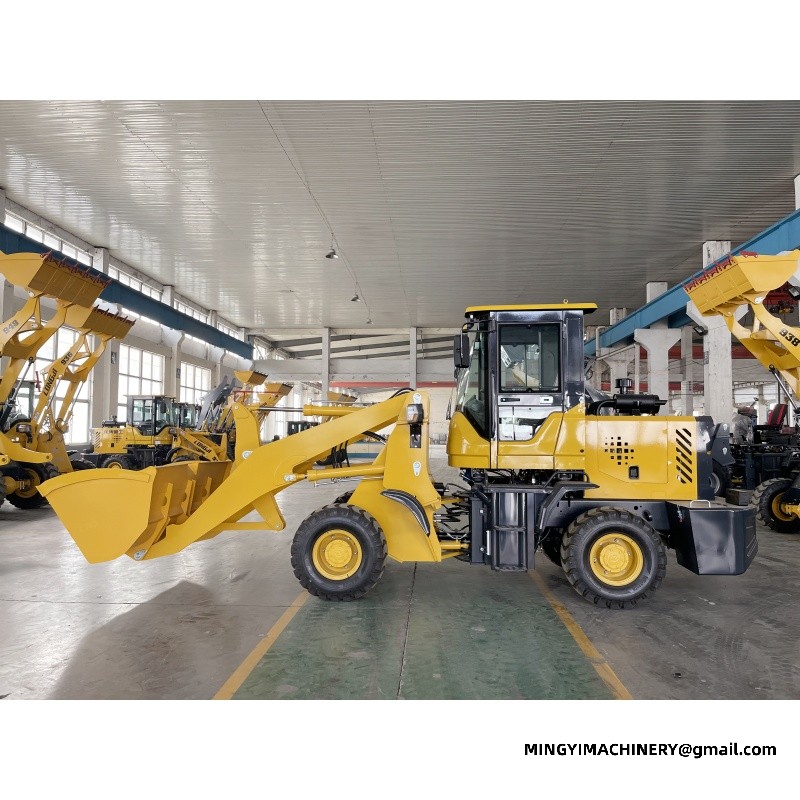
Lift and tilt come from a cylinder set and a pump pair, and both are specified per build. The heavy-duty 3.2 m small-frame wheel-side reduction wheel loader runs centre cylinder 45 / side cylinder 45 with a 40 pump (490 engine); 1045 pump (4102 turbo engine) work pump and a 316 pump travel pump; the heavy-duty 3.5 m small-frame wheel-side reduction wheel loader runs centre cylinder 45 / side cylinder 40 with a 40 pump (490 engine); 1045 pump (4102 turbo engine) work pump and a 316 pump travel pump. Splitting lift from travel is what keeps boom speed up while the machine is climbing a ramp loaded.
Cycle time is a product, not a published figure: bucket fill, lift height, travel distance and the operator's line all move it. What you can compare honestly is the hardware behind it. A centre cylinder 45 / side cylinder 45 set working a 2.3 m arm to 3.2 m is a different proposition from a centre cylinder 45 / side cylinder 40 set working 2.62 m to 3.5 m. On a short haul the smaller combination wins; over a longer push, or where the bucket is digging rather than shovelling, the larger bore and the 890 mm centre distance earn back the extra seconds of lift.
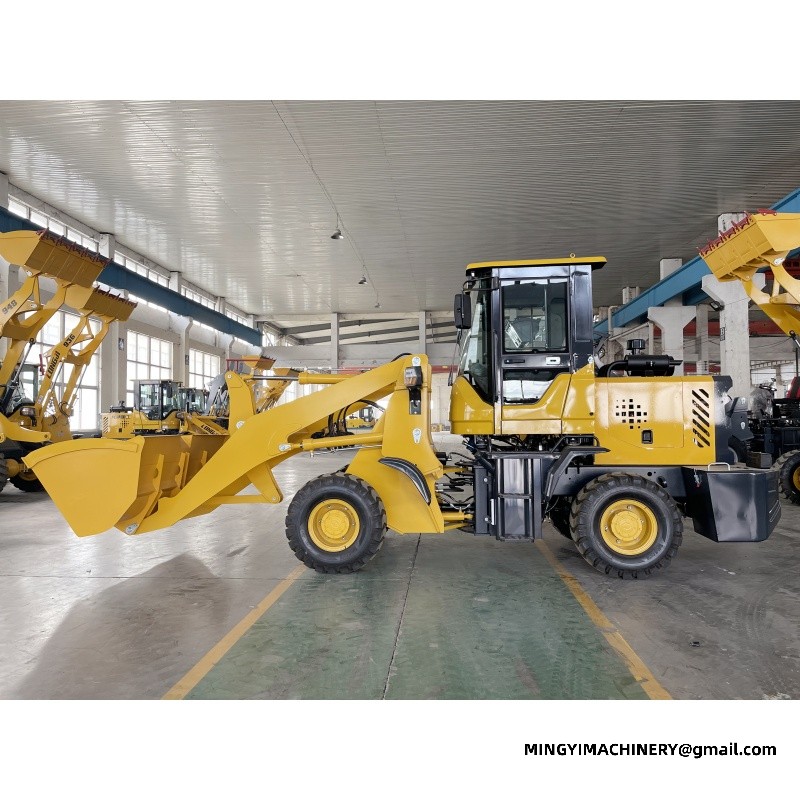
Machines kept past warranty should be bought on steel. Hinge plates 30 mm and 20 mm, cross-member 30 mm, rear frame 280 mm high x 800 mm wide: those are the figures that decide whether year five is a service year or a rebuild year.
The second decision is how repairable the machine is, and that is a parts question. Cylinders centre cylinder 45 / side cylinder 45, pump 40 pump (490 engine); 1045 pump (4102 turbo engine), radiator 4100 core (490 engine); 4105 core (4102T engine), battery 60 Ah (490 engine); 80 Ah (4102 turbo engine): if all four are standard items within the range, a machine can be kept indefinitely. If any is unique to one build, it cannot, and that is worth knowing before the order rather than at year six.
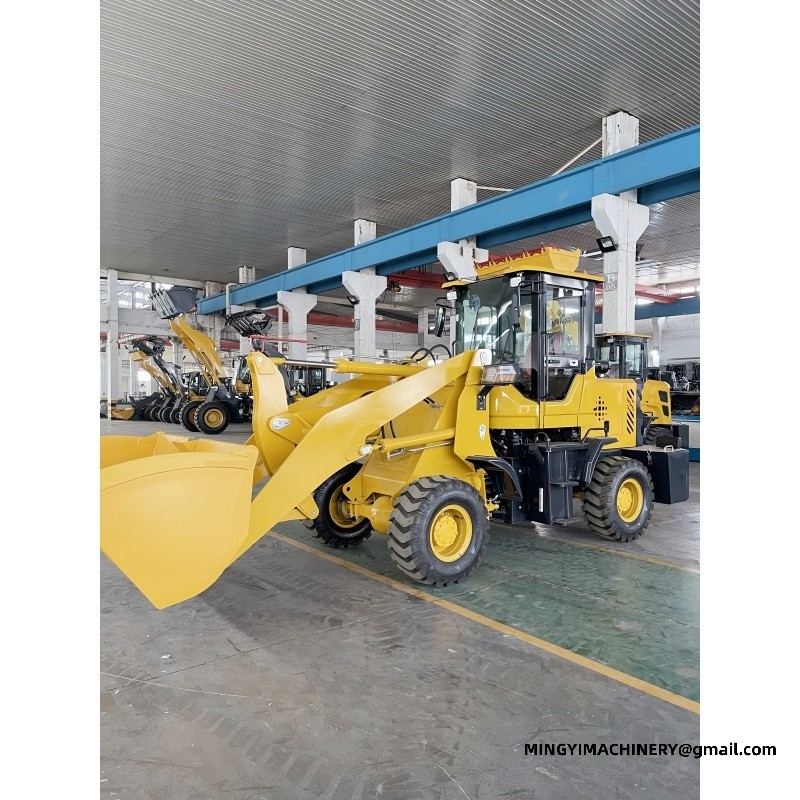
Parts are matched to a build, and the build is identified by its hydraulics and its engine long before its name. Specification centre cylinder 60 / side cylinder 50 and 2063 pump and the pump is identified; specification 4105 core and the engine is identified; specification 80 Ah and the electrical specification is identified.
Frame parts are identified by the steel: 45 mm front plate, 30 mm rear plate, 45 mm cross-member, 300 mm high x 800 mm wide rear section. Sending those four with an enquiry removes the usual round of photographs and gets the right part on the first shipment.
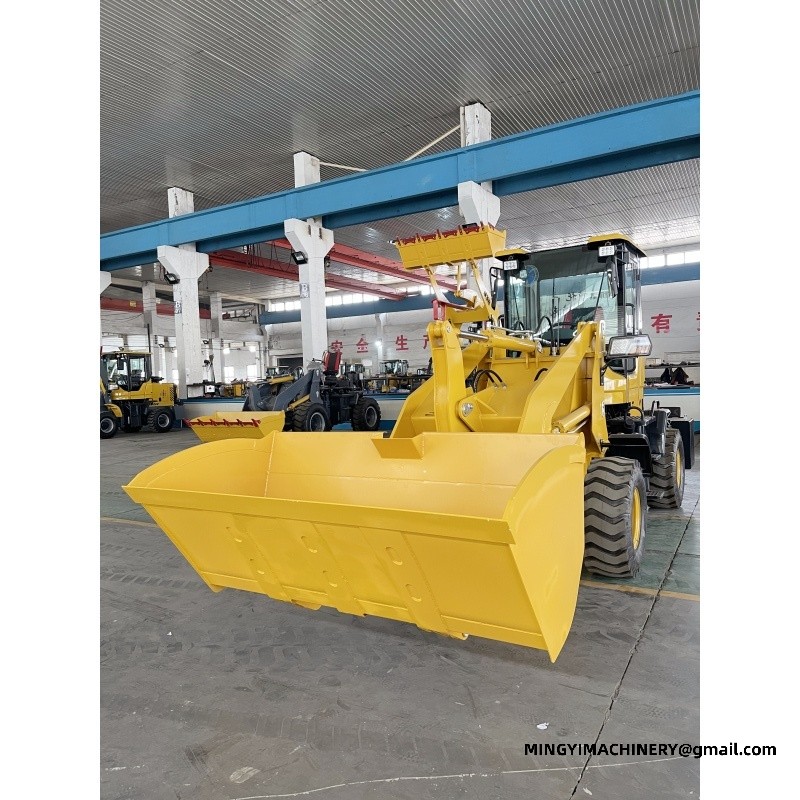
A starter spares box for the heavy-duty 3.2 m small-frame wheel-side reduction wheel loader is short: filters to match the 4100 core (490 engine); 4105 core (4102T engine) cooling package and the engine, a hose set for the centre cylinder 45 / side cylinder 45 cylinders, a pin and bush kit for the 890 mm boom mounts, and a cutting edge. On the light-duty 3.8 m medium-frame wheel-side reduction wheel loader the same list applies with centre cylinder 60 / side cylinder 50, 900 mm and the 4105 core package.
Beyond that, stock by consequence. A failed hose stops the machine for a day; a failed pump stops it for a week; a failed hinge plate stops it for a season. Filters and hoses are simple and universal enough to keep on site. Pumps — 40 pump (490 engine); 1045 pump (4102 turbo engine) and 316 pump on the heavy-duty 3.2 m small-frame wheel-side reduction wheel loader, 2063 pump and 25 pump on the light-duty 3.8 m medium-frame wheel-side reduction wheel loader — are worth one spare per fleet, not per machine.
Daily: walk the machine, look at the ground under it, check the coolant level in the 4100 core (490 engine); 4105 core (4102T engine) package, and grease the hinge pins. Weekly: check the cylinder rods for scoring — centre cylinder 45 / side cylinder 45 — and the pins behind the 30 mm front plate for movement. Monthly: check the cross-member and rear frame, 280 mm high x 800 mm wide, for cracks at the weld toes.
None of that needs a workshop, and all of it is what keeps a machine tight. The parts that fail without warning are the ones nobody looks at: the pins, the hoses behind the 40 pump (490 engine); 1045 pump (4102 turbo engine), and the battery terminals on 60 Ah (490 engine); 80 Ah (4102 turbo engine). A ten-minute walk-round finds all three before they stop the machine.
Why does boom centre distance matter on a wheel loader for sale?
It sets how side loads travel into the frame: 890 mm on the heavy-duty 3.2 m small-frame wheel-side reduction wheel loader against 890 mm on the heavy-duty 3.5 m small-frame wheel-side reduction wheel loader. Wider spacing lets the cylinders work through a better lever.
What does commissioning a wheel loader for sale involve?
Fit the 2.3 m boom to the 890 mm mounts, torque the hinge pins, fill the 64.7 L (75# small tank) tank and the 4100 core (490 engine); 4105 core (4102T engine) circuit, and connect the battery. Allow a day per machine.
Which wheel loader for sale build suits farm work?
The lighter one, for access: a 0.4 m³ bucket at 3.2 m, 1.5 m (wheel-side reduction axle); 1.45 m (Isuzu axle) track and a 4.1 m footprint that turns between sheds. Gate and door widths decide first.
What is the fuel tank capacity of a wheel loader for sale?
64.7 L (75# small tank) on the heavy-duty 3.2 m small-frame wheel-side reduction wheel loader and 64.7 L (75# small tank) on the heavy-duty 4.2 m small-frame wheel-side reduction wheel loader, both sized for a full shift at working throttle without a mid-day refuel.
What separates a light build from a heavy build of a wheel loader for sale?
Cross-member and rear hinge plate: 30 mm and 20 mm on the heavy-duty 4.2 m small-frame wheel-side reduction wheel loader, against 45 mm and 30 mm on the light-duty 4.5 m medium-frame wheel-side reduction wheel loader. Boom wall and cylinder bore follow.
Can a wheel loader for sale run a hydraulic attachment?
Yes, provided the third circuit is ordered with the machine. The 40 pump (490 engine); 1045 pump (4102 turbo engine) work pump and 316 pump travel pump are specified per build, and plumbing added later is the usual source of leaks.
Is the wheel-side reduction axle worth specifying on a wheel loader for sale?
If the ground is soft, rutted or sloped, yes: a 1.6 m track with hub reduction keeps traction where a faster axle would spin. On hard, level ground it is not needed.
Five figures settle any wheel loader for sale enquiry: dump height, track width, boom wall, rear hinge plate and cross-member. On the heavy-duty 3.5 m small-frame wheel-side reduction wheel loader those are 3.5 m, 1.5 m (wheel-side reduction axle); 1.45 m (Isuzu axle), 25 mm, 20 mm and 30 mm. Send us yours and we will tell you which build meets them.
Contact MINGYI Machinery for the current wheel loader lineup, configuration options and a formal specification for your market. E-mail: sales@mingycn.com | LINE (ID): mingyicn
Wheel Loader Manufacturer: Five Figures to Ask For · Wheel Loader Manufacturer: Frame Builds, Range and Export Terms · Agricultural Wheel Loader: Yard, Gate and Shed Clearance · Loaders








