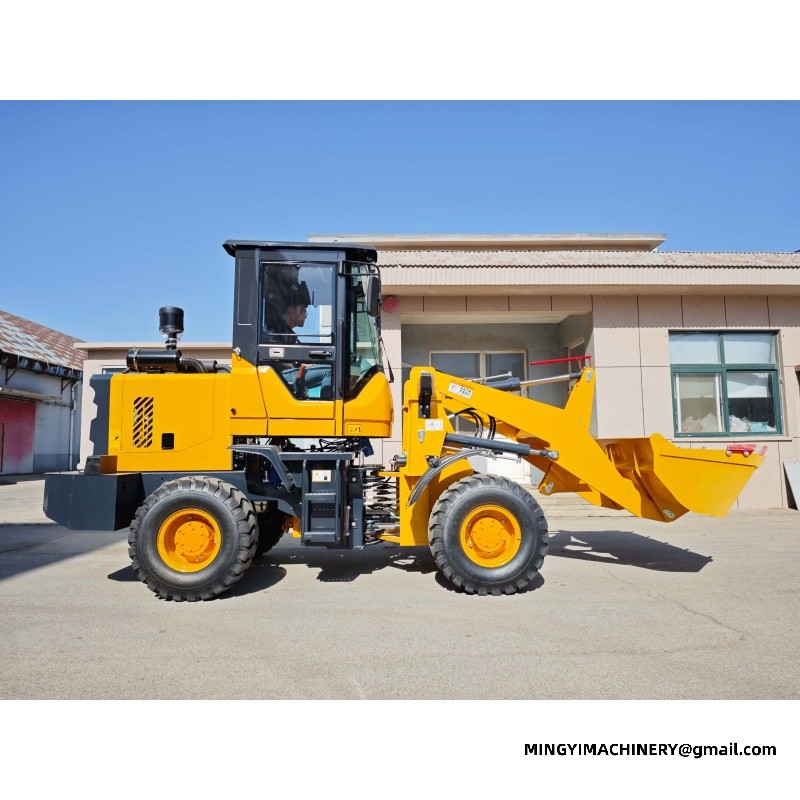
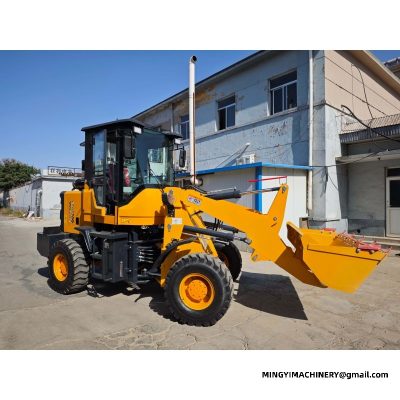
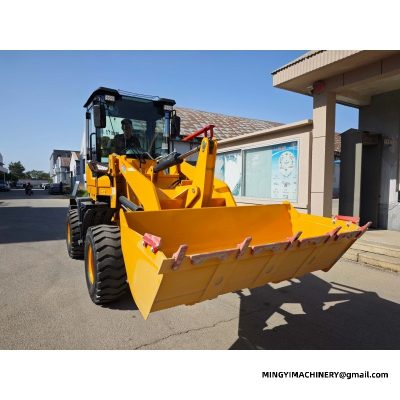
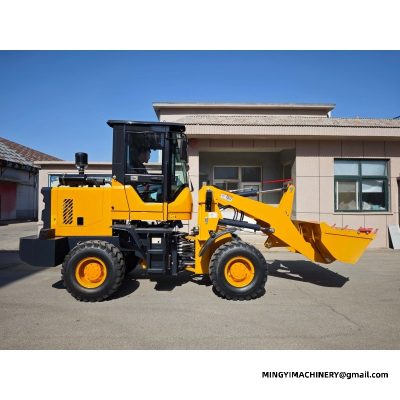
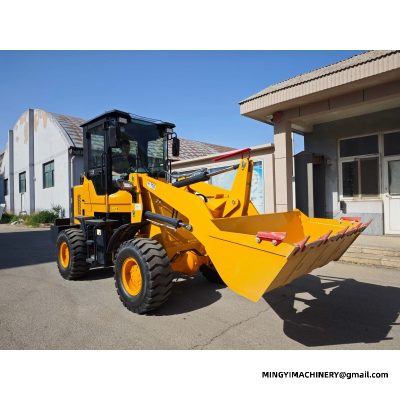
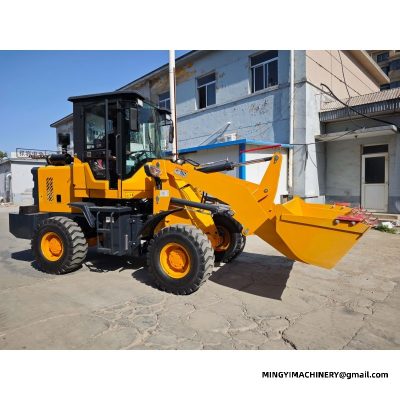
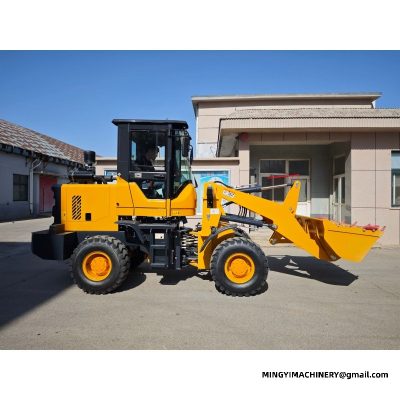
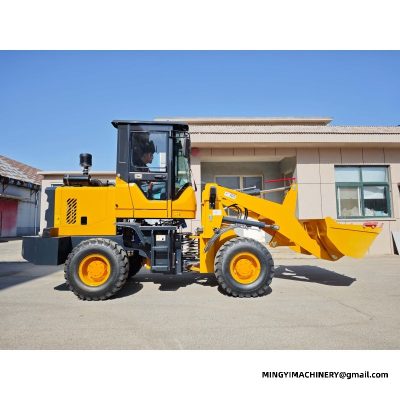
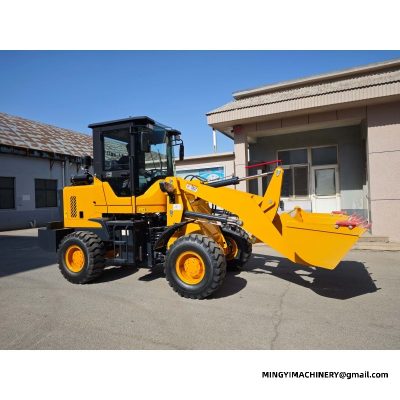
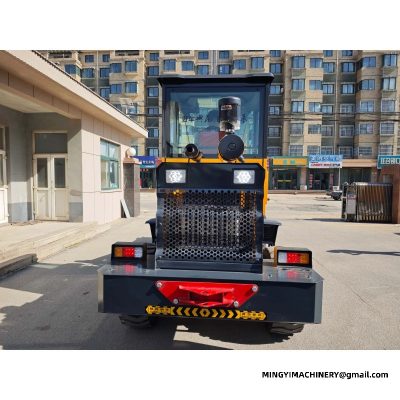
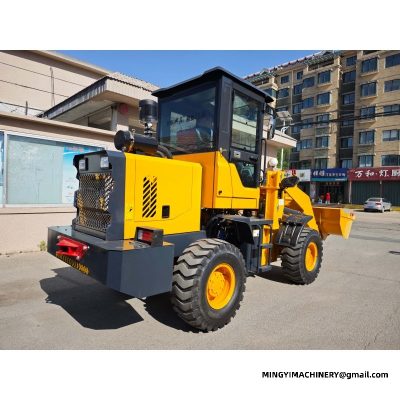
Every wheel loader manufacturer enquiry comes down to three numbers: how much the bucket holds, how high it dumps, and how much steel sits behind the hinge. The rest of a specification sheet is consequence. On this range the first two run from 0.3 m³ on the standard 2.4 m low-profile wheel loader to 0.38 m³ on the light-duty 3.2 m low-profile wheel loader, and the third is published per build — 25 mm front and 14 mm rear hinge plates over a 25 mm cross-member. This page sets out how those figures are chosen, what they predict about behaviour on site, and where each build in the range fits.
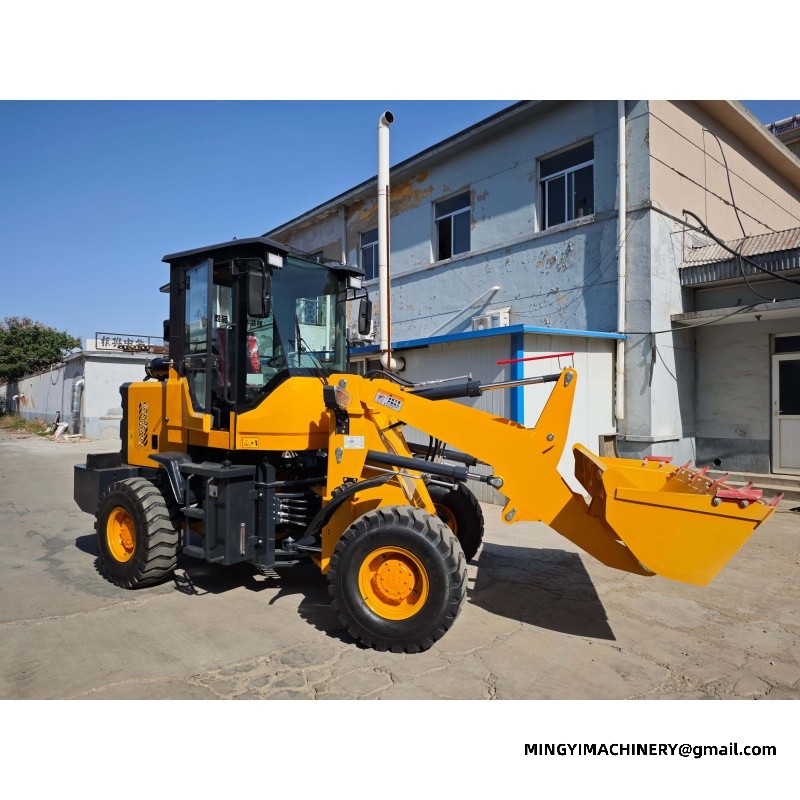
0.3 m³ on the standard 2.4 m low-profile wheel loader is a volume, and what it means depends entirely on what goes into it. Sand, gravel and crushed rock all weigh differently per cubic metre, and a bucket that is correct for one will overload the frame with another. The frame limit is the cross-member at 16 mm and the hinge plates behind it.
The practical method is to work backwards from the receiving body. If a truck takes four passes from 0.3 m³, it takes three from 0.38 m³ on the light-duty 3.5 m small-frame wheel-side reduction wheel loader, and the saving is real only if the loader clears the board — 2.4 m here against 3.5 m. Capacity without clearance is a specification that looks better in a brochure than on a site.
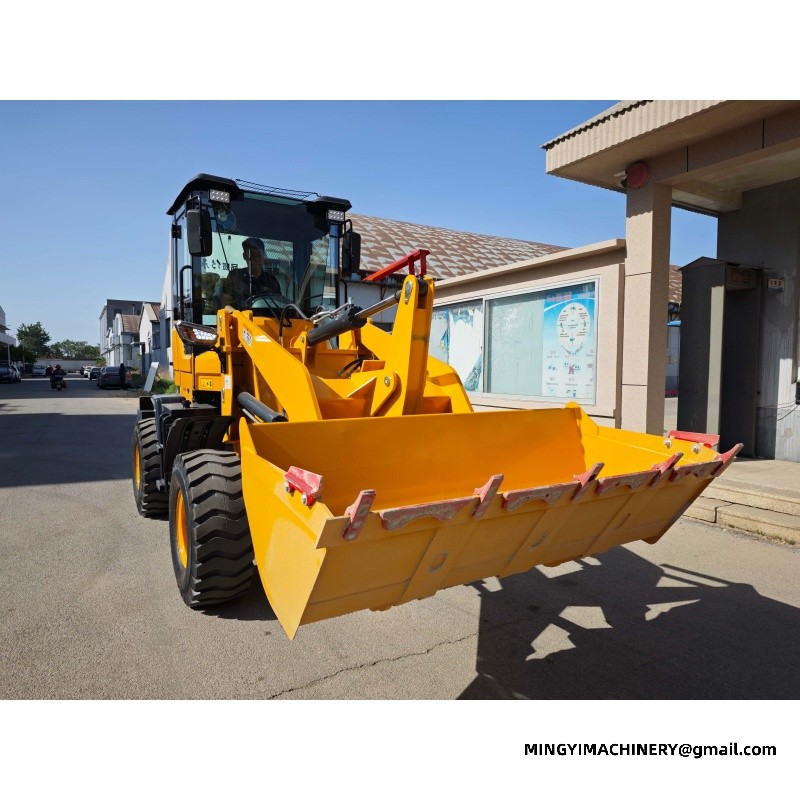
Bucket capacity decides how many passes you make; dump height decides whether the pass is possible at all. The light-duty 3.2 m small-frame wheel-side reduction wheel loader clears 3.2 m; the heavy-duty 3.5 m medium-frame wheel-side reduction wheel loader clears 3.5 m. Measure the receiving body at the front board rather than the side, because side boards sit lower and a machine that clears the side can still clip the front when it slews under load.
That single measurement eliminates most of the range before anything else is discussed. A low pan mixer or a one-ton site truck is served by 3.2 m; a body-up site tipper needs more; a crusher feed hopper or a high-board highway truck needs 3.5 m. Get it wrong and no amount of bucket volume, engine power or pump flow rescues the machine — it simply cannot put material where it has to go.
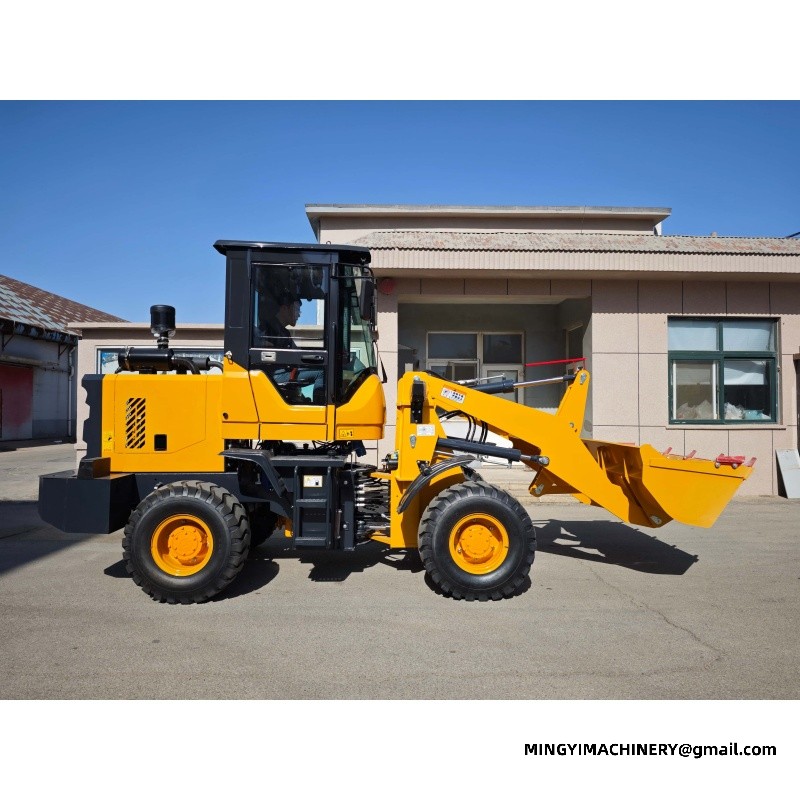
The battery is specified against the engine it has to crank: 60 Ah (490 engine); 80 Ah (4102 turbo engine) on the light-duty 3.5 m small-frame wheel-side reduction wheel loader and 60 Ah (490 engine); 80 Ah (4102 turbo engine) on the heavy-duty 4.5 m small-frame wheel-side reduction wheel loader. Where a build lists two figures, they belong to two engine options — a smaller capacity for the naturally aspirated unit, a larger one for the turbo — and the difference is starting torque in cold weather rather than anything you would notice in July.
For fleets shipping to cold markets, specify the larger capacity and a battery isolator; machines shipped knock-down arrive with batteries boxed and disconnected, and a machine that has sat for six weeks at anchor will not crank on a marginal battery. Check the rest of the electrical package at the same time — the 40 pump (490 engine); 1045 pump (4102 turbo engine) and 316 pump circuits on the light-duty 3.5 m small-frame wheel-side reduction wheel loader share the same harness, and a poor earth there presents as slow hydraulics rather than as an electrical fault.
| Reference specification — standard 2.4 m low-profile wheel loader | |
|---|---|
| Bucket capacity | 0.3 m³ |
| Dump height | 2.4 m |
| Track width | 1.2 m (Isuzu axle); 1.3 m (wheel-side reduction axle) |
| Boom arm thickness | 20 mm |
| Boom arm width | 280 mm |
| Boom arm length | 1.85 m |
| Boom arm centre distance | 680 mm |
| Cross-member thickness | 16 mm |
| Front hinge plate thickness | 16 mm |
| Rear hinge plate thickness | 16 mm |
| Rear frame section | 200 mm high x 750 mm wide |
| Hydraulic cylinders | centre cylinder 40 / side cylinder 40 |
| Fuel tank | 30.8 L (48# large tank, 20.5/70-16 tyres); 24.6 L (48# small tank, 8.25-16 tyres) |
| Battery | 45 Ah (24 V) |
| Front wheel to counterweight | 3.5 m |
| Radiator | 4100 core |
| Work pump | 32 pump |
| Travel pump | 316 pump |
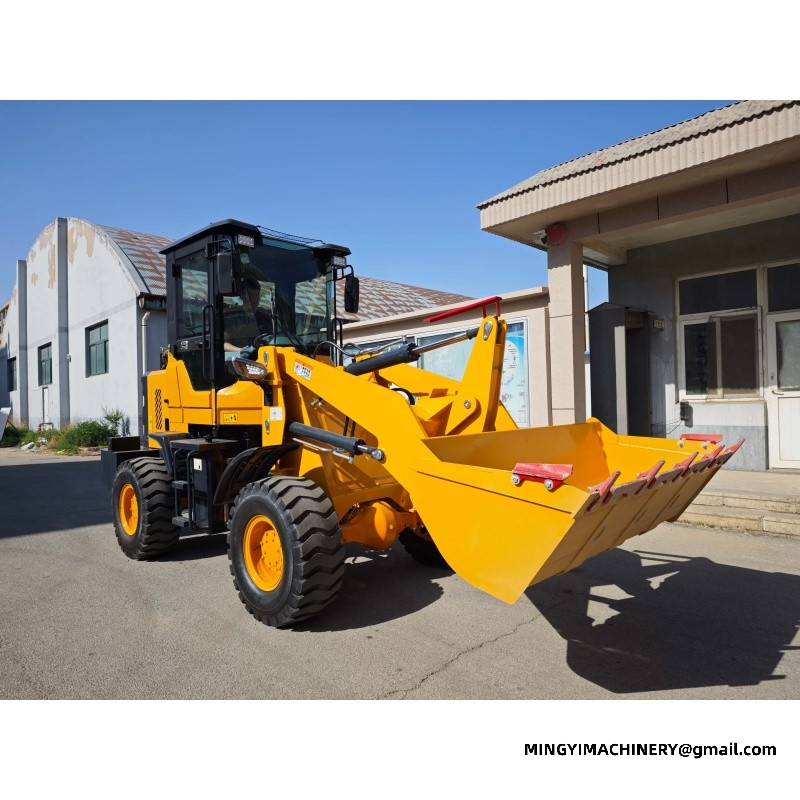
When a loaded machine turns, the load does not go straight down through the hinge. It goes through the plates at an angle, and the rear frame takes the twist. Rear section here is 280 mm high x 800 mm wide; cross-member 25 mm; rear hinge plate 14 mm. Read those three together and you have the answer to how a frame behaves when it is both loaded and turning.
The front plate, at 25 mm, is the thicker of the pair, and the boom ahead of it is designed to give way first anyway: the bucket hits the ground, the arm takes the shock, and the cylinders at centre cylinder 45 / side cylinder 40 absorb what is left. That is the intended load path. Protecting it means protecting the pins, and protecting the pins means the cross-member stays at the thickness it was built with.
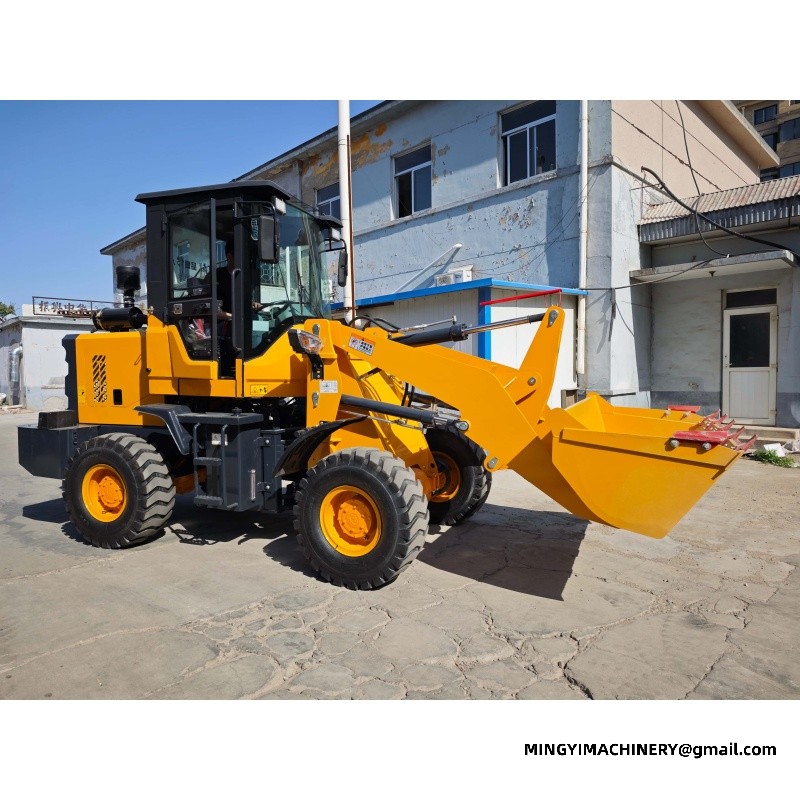
The first hour of running tells you more than the first month of paperwork. Watch the cooling: 4100 core should hold temperature at working load without the fan running continuously. Listen to the hydraulics: centre cylinder 40 / side cylinder 40 on a 32 pump should lift a full 0.3 m³ bucket to 2.4 m without the relief valve complaining.
Then check the electrical side under load, which is what the 45 Ah (24 V) rating exists for. Restart the machine hot, restart it cold, and watch the cranking. A battery that is marginal on day one will fail in the first cold week, and it is far easier to settle at commissioning than six months later.
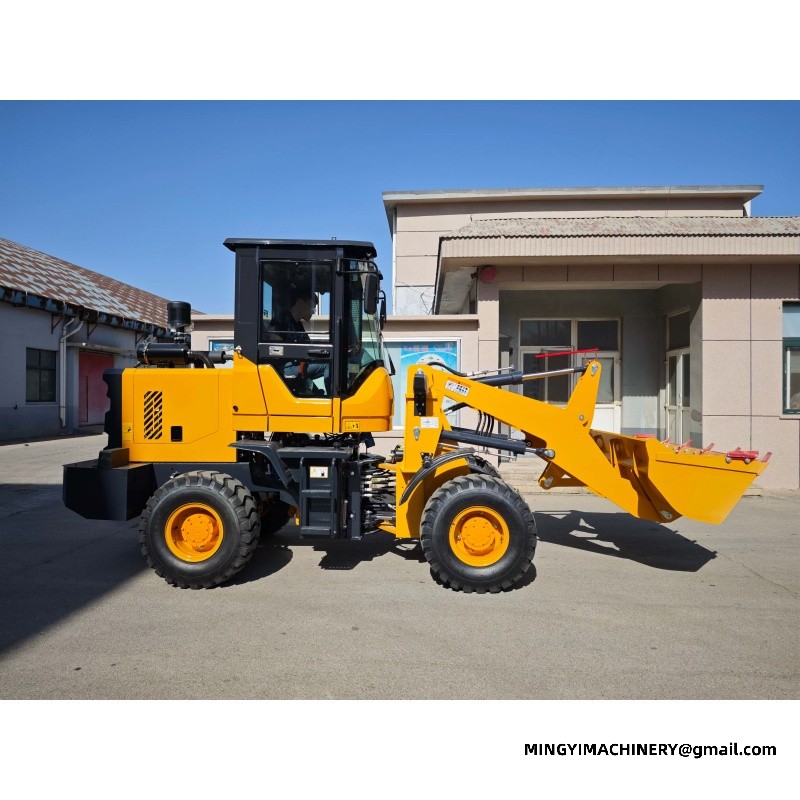
Daily: walk the machine, look at the ground under it, check the coolant level in the 4100 core (490 engine); 4105 core (4102T engine) package, and grease the hinge pins. The hinge is where wear starts, and on the light-duty 3.8 m small-frame wheel-side reduction wheel loader those are 25 mm front and 14 mm rear plates over a 25 mm cross-member — a greasing interval missed there takes pins and bores, not just grease.
Weekly: check the centre cylinder 45 / side cylinder 40 cylinder rods for scoring, the hoses for chafe, and the 40 pump (490 engine); 1045 pump (4102 turbo engine) and 316 pump connections for weeping. Monthly: torque the boom mount pins to the 890 mm spacing and inspect the cutting edge. On the heavy-duty 3.5 m medium-frame wheel-side reduction wheel loader the same schedule applies with 4105 core, centre cylinder 60 / side cylinder 50, 2063 pump and 920 mm. None of it is skilled work, and all of it is simpler than the failure it prevents.
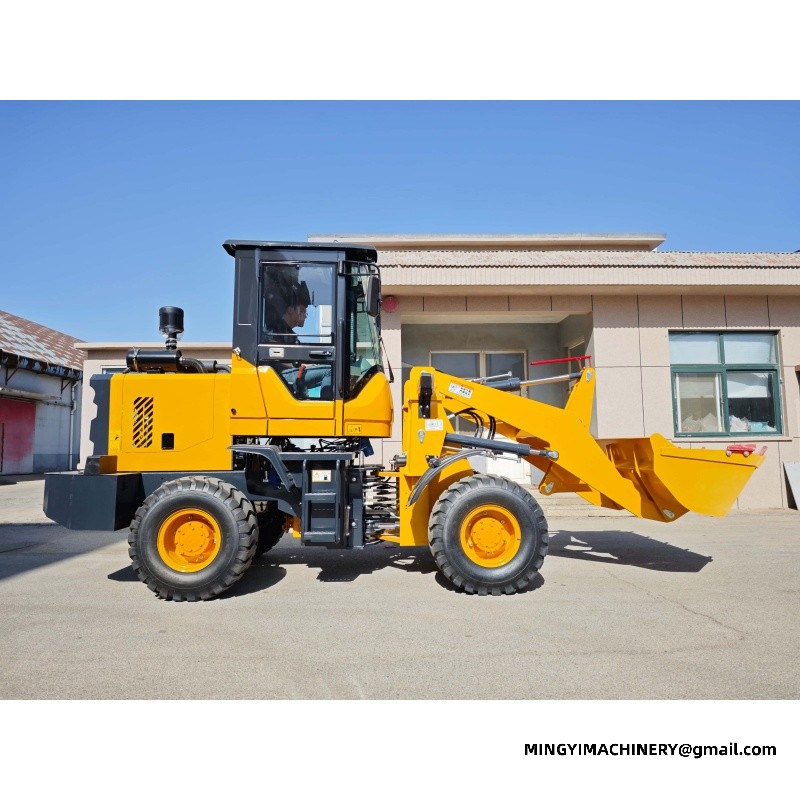
A machine crossing an ocean is exposed to salt air for weeks, and the parts that suffer are the ones that were never painted: cylinder rods, hinge pins and electrical terminals. This build carries centre cylinder 45 / side cylinder 40 and hinge plates of 25 mm and 14 mm; all three should be greased and wrapped before loading rather than cleaned on arrival.
The battery is the other item to plan for. 60 Ah (490 engine); 80 Ah (4102 turbo engine) will not survive a long voyage connected, and a flat machine cannot be driven off a container. Specify a disconnect, and specify the radiator, 4100 core (490 engine); 4105 core (4102T engine), to be checked for fin corrosion on arrival — salt air attacks the core from outside and the symptom is overheating in the first month, which everyone blames on the thermostat.
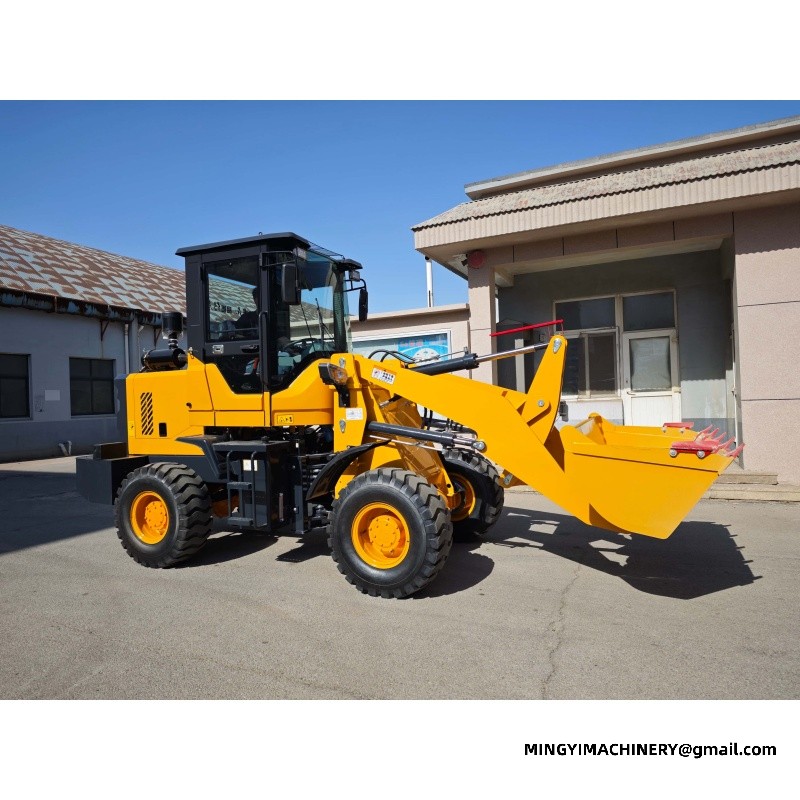
A site loader spends its life doing the same cycle, and the cycle punishes three components: the rear hinge, the cooling pack and the tyres. On the standard 2.4 m low-profile wheel loader the rear hinge is 16 mm over a 16 mm cross-member; on the light-duty 3.2 m low-profile wheel loader it is 14 mm over 25 mm. Which of those you need depends on how often the machine turns under load.
Cycle time is the economics. A 0.3 m³ bucket at 2.4 m on a 1.85 m arm loaded by centre cylinder 40 / side cylinder 40 cylinders is quick in a tight site; a 0.38 m³ bucket at 3.2 m on a 2.3 m arm with centre cylinder 45 / side cylinder 40 is quicker where there is room to work. Neither is universally faster, and any supplier who claims otherwise is describing a different site from yours.
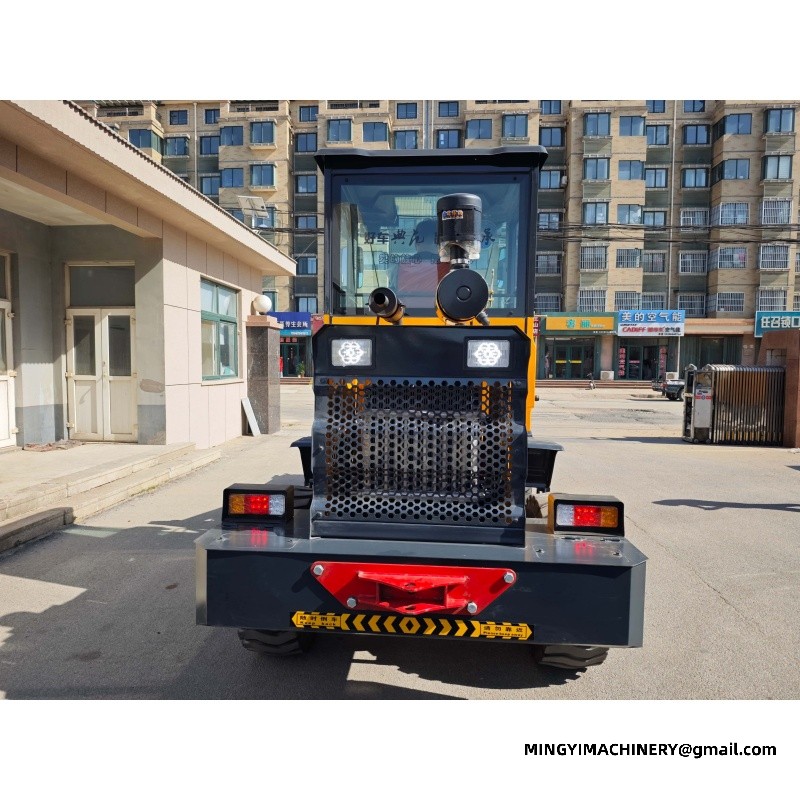
What boom wall thickness does a wheel loader manufacturer need?
20 mm on the standard 2.4 m low-profile wheel loader against 25 mm on the light-duty 4.2 m small-frame wheel-side reduction wheel loader. A long arm on a thin wall lifts on paper and feels vague in the yard, so read wall and length together.
Will a wheel loader manufacturer start in a cold climate?
With the right pack, yes: 60 Ah (490 engine); 80 Ah (4102 turbo engine) on the heavy-duty 4.5 m small-frame wheel-side reduction wheel loader, the larger capacity where the turbo engine is fitted. Specify an isolator for anything shipping long-distance.
How does a wheel loader manufacturer cope with dust?
Specify the raised core: 4100 core (490 engine); 4105 core (4102T engine) on the light-duty 3.2 m small-frame wheel-side reduction wheel loader against 4100 core (490 engine); 4105 core (4102T engine) on the light-duty 4.2 m small-frame wheel-side reduction wheel loader, and blow the fins out at the end of every shift in fines or grain.
What is the largest wheel loader manufacturer in the range?
The medium-frame heavy builds: a 0.65 m³ bucket at 3.5 m on a 3.15 m boom with centre cylinder 60 / side cylinder 50 cylinders.
Which wheel loader manufacturer build suits site work?
The heavier one, because dump height and hinge steel govern the day: 0.38 m³ at 3.8 m with 14 mm rear hinge plates and a 25 mm cross-member.
How does a wheel loader manufacturer differ from a skid steer?
Articulated steering and a 4.1 m front-to-counterweight length give the loader reach and a smoother ride on rough ground; a skid steer turns in its own length but carries less, higher effort per tonne moved.
What is the smallest wheel loader manufacturer in the range?
The entry low-profile builds: a 0.38 m³ bucket at 4.2 m, 1.5 m (wheel-side reduction axle); 1.45 m (Isuzu axle) track and a 4.1 m front-to-counterweight length for indoor and nursery work.
Five figures settle any wheel loader manufacturer enquiry: dump height, track width, boom wall, rear hinge plate and cross-member. On the light-duty 3.2 m low-profile wheel loader those are 3.2 m, 1.5 m (wheel-side reduction axle); 1.45 m (Isuzu axle), 25 mm, 14 mm and 25 mm. Send us yours and we will tell you which build meets them.
Handover and getting familiar with Wheel Loader Manufacturer: Frame Builds, Range and Export Terms
A good handover covers the awkward cases, not just the easy ones. Starting Wheel Loader Manufacturer: Frame Builds, Range and Export Terms on a slope, turning in a confined space and recovering from soft ground are the situations an operator should meet first with someone beside them.
Storage and long idle periods for Wheel Loader Manufacturer: Frame Builds, Range and Export Terms
Standing still is harder on a machine than working. Preparing Wheel Loader Manufacturer: Frame Builds, Range and Export Terms for a long idle period means clean fluids, a charged battery and protection for the exposed surfaces, because neglect is not the same as rest.
Commissioning Wheel Loader Manufacturer: Frame Builds, Range and Export Terms on site
Commissioning is where the specification meets the ground. The settings chosen for Wheel Loader Manufacturer: Frame Builds, Range and Export Terms are confirmed against the actual site, and the working pattern is adjusted before the machine is asked for a full day.
Contact MINGYI Machinery for the current wheel loader lineup, configuration options and a formal specification for your market. E-mail: sales@mingycn.com | LINE (ID): mingyicn
China Wheel Loader Factory: How Each Model Is Built and Checked · Wheel Loader Supplier: Model Coverage and Container Planning · Heavy Duty Wheel Loader: Wear Points on Hard Ground · Loaders









