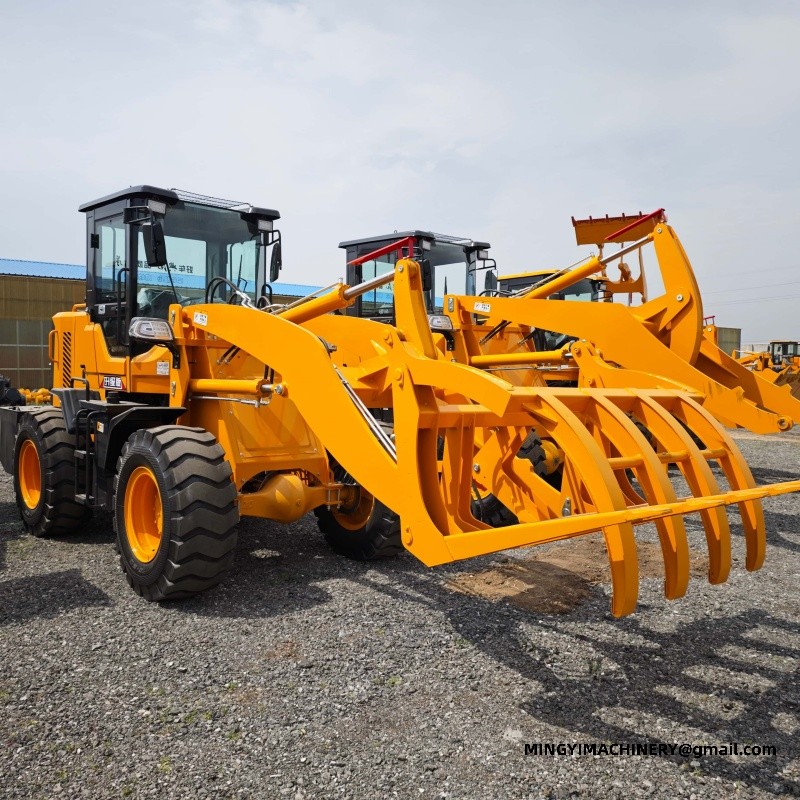
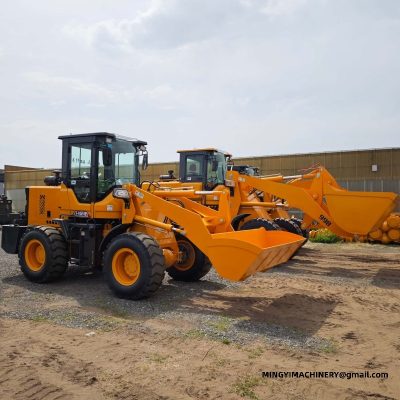
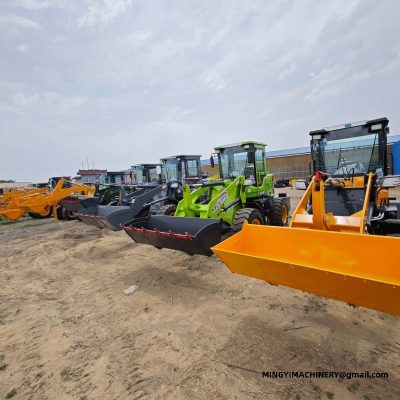
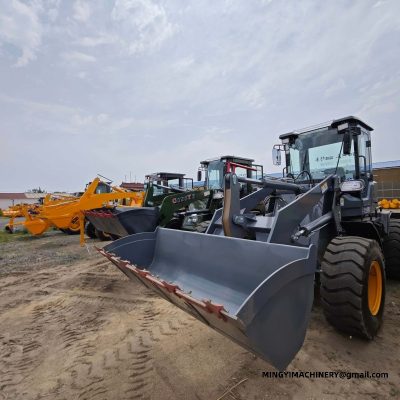
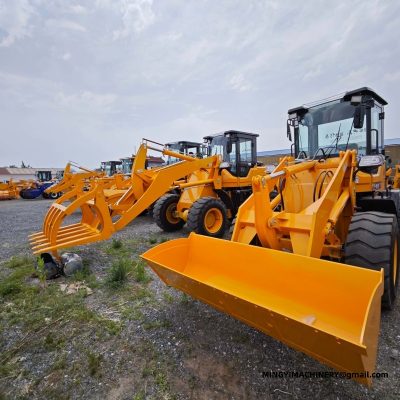
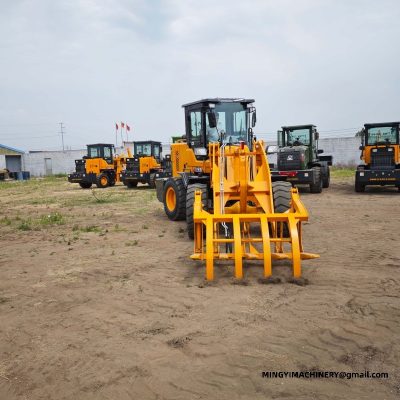
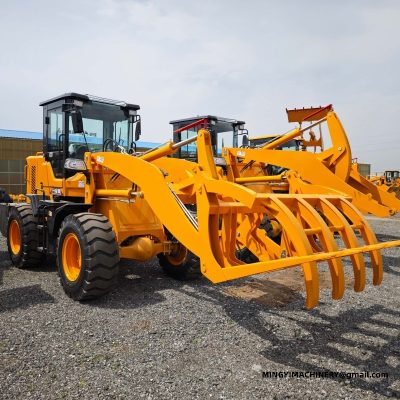
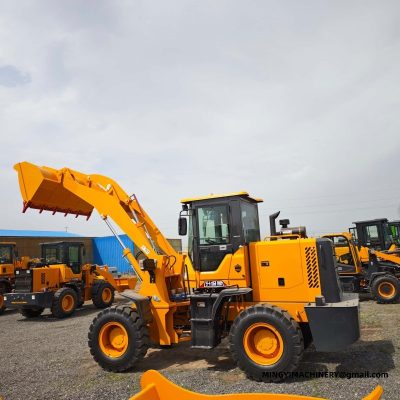
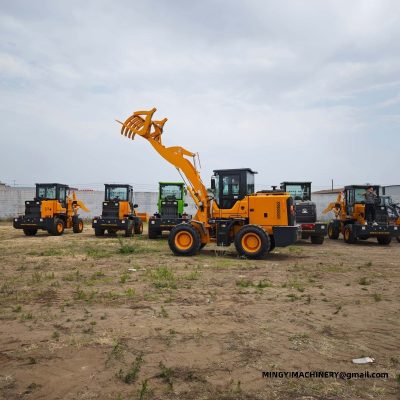
A China wheel loader factory is a frame, a boom and a counterweight arranged around one job: moving material from a heap into something that has to carry it away. Every figure on the sheet serves that job or is decoration. Bucket capacity decides how many passes; dump height decides whether the pass is possible; hinge steel decides whether the machine is still tight in year three. Here the buckets run 0.4 m³ to 0.4 m³ and the dump heights 3.2 m to 3.5 m, with front hinge plates of 30 mm and rear plates of 20 mm on the heavier build. Below: how to read them, and what to specify.
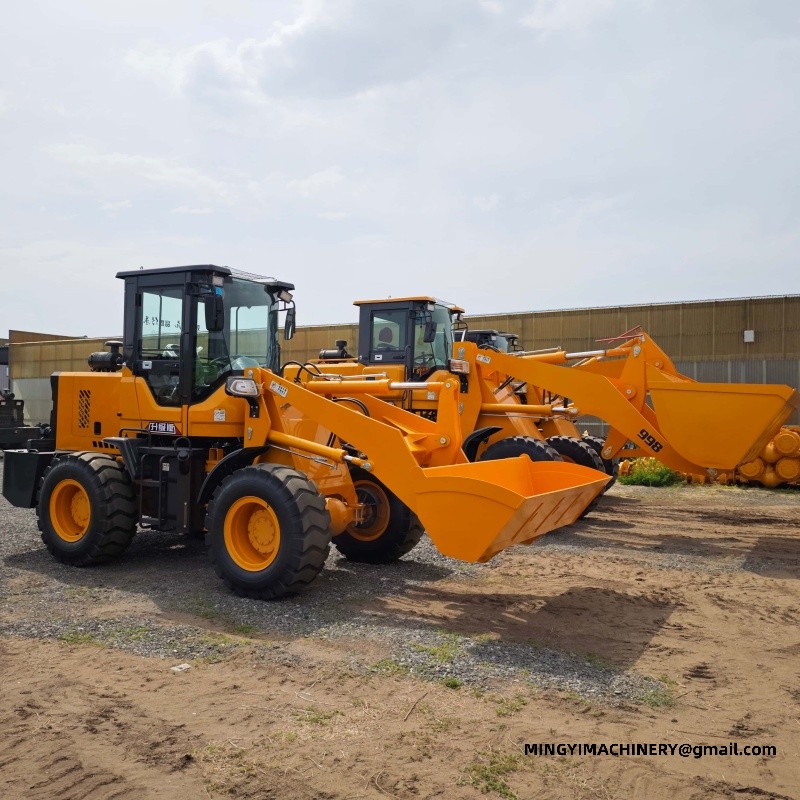
The two axle options on this range are differentiated by track: 1.5 m (wheel-side reduction axle); 1.45 m (Isuzu axle) on the heavy-duty 4.2 m small-frame wheel-side reduction wheel loader, 1.6 m on the light-duty 4.2 m medium-frame wheel-side reduction wheel loader. Behind the number is a different reduction layout. The Isuzu-pattern bridge is lighter, faster on hard ground and simpler to service. The wheel-side reduction bridge puts the final drive at the hub, which lowers the load on the shafts and raises the torque available at the tyre.
Choose by surface and gradient. On compacted hardstanding and long haul roads the Isuzu-pattern axle is the better machine; on a soft lane, a loading ramp or an uncompacted stockyard, hub reduction is what keeps the machine moving when a wheel would otherwise spin. Track width interacts with it: 1.5 m (wheel-side reduction axle); 1.45 m (Isuzu axle) on the heavy-duty 4.2 m small-frame wheel-side reduction wheel loader and 1.6 m on the light-duty 4.2 m medium-frame wheel-side reduction wheel loader are the figures to check against your narrowest gate, door or aisle before anything else on the sheet.
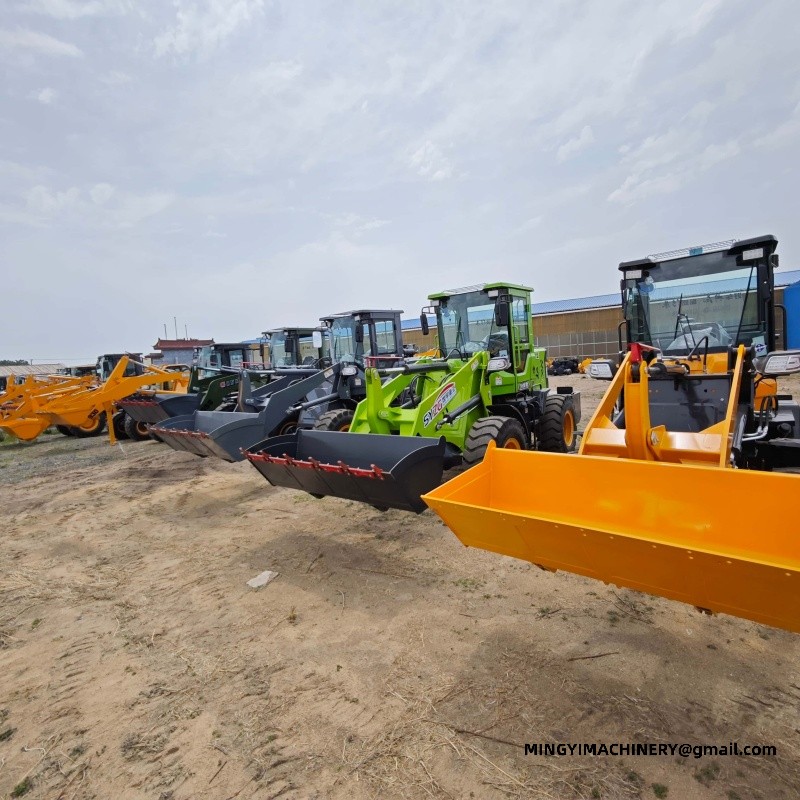
A loading cycle is four movements repeated a few hundred times a shift: approach, fill, lift, dump. Each one loads a different part of the machine, and the specification that matters changes with the movement. Filling asks for bucket volume and breakout, so 0.4 m³ on the heavy-duty 3.5 m small-frame wheel-side reduction wheel loader is the first figure to read. Lifting asks for boom section and cylinder size, which is 25 mm of wall and centre cylinder 45 / side cylinder 40. Dumping asks for height over the receiving board, 3.5 m here against 3.8 m on the heavy-duty 3.8 m small-frame wheel-side reduction wheel loader.
The approach is the movement nobody specifies for, and it is where frames age. Every run at a face loads the front hinge plate, 30 mm on this build against 20 mm at the rear; the rear plate carries the weight of the counterweight and the swing of the whole rear frame, which is why it is the heavier of the two. A 4.1 m wheelbase keeps the machine settled when the bucket meets resistance rather than air.
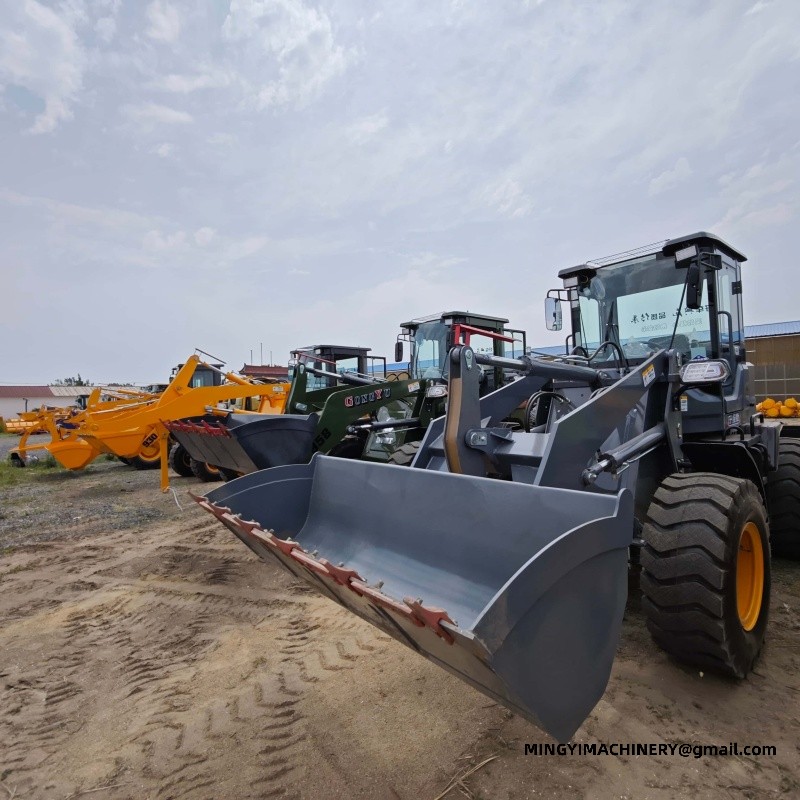
Battery capacity appears in the table as 60 Ah (490 engine); 80 Ah (4102 turbo engine) for the heavy-duty 3.5 m small-frame wheel-side reduction wheel loader and 80 Ah for the light-duty 3.5 m medium-frame wheel-side reduction wheel loader. On builds with two engine options the two figures track the engines: the naturally aspirated unit cranks on less, the turbo needs more, and the 24 V system exists precisely because cranking a turbo diesel at minus ten needs the extra headroom.
What buyers should confirm before dispatch is not the capacity but the condition and the connections. Machines ship with batteries disconnected and boxed, so the first start is also the first check of every terminal. On the heavy-duty 3.5 m small-frame wheel-side reduction wheel loader that pack feeds the 4100 core (490 engine); 4105 core (4102T engine) cooling circuit's fan drive and the instrument cluster; on the light-duty 3.5 m medium-frame wheel-side reduction wheel loader it feeds 4105 core and the same cluster. A marginal earth shows up as a slow crank in winter and as gauge flicker in summer.
| Published build data — heavy-duty 3.8 m small-frame wheel-side reduction wheel loader | |
|---|---|
| Bucket capacity | 0.4 m³ |
| Dump height | 3.8 m |
| Track width | 1.5 m (wheel-side reduction axle); 1.45 m (Isuzu axle) |
| Boom arm thickness | 25 mm |
| Boom arm width | 430 mm |
| Boom arm length | 2.61 m |
| Boom arm centre distance | 890 mm |
| Cross-member thickness | 30 mm |
| Front hinge plate thickness | 30 mm |
| Rear hinge plate thickness | 20 mm |
| Rear frame section | 280 mm high x 800 mm wide |
| Hydraulic cylinders | centre cylinder 45 / side cylinder 45 |
| Fuel tank | 64.7 L (75# small tank) |
| Battery | 60 Ah (490 engine); 80 Ah (4102 turbo engine) |
| Front wheel to counterweight | 4.2 m |
| Radiator | 4100 core (490 engine); 4105 core (4102T engine) |
| Work pump | 40 pump (490 engine); 1045 pump (4102 turbo engine) |
| Travel pump | 316 pump |
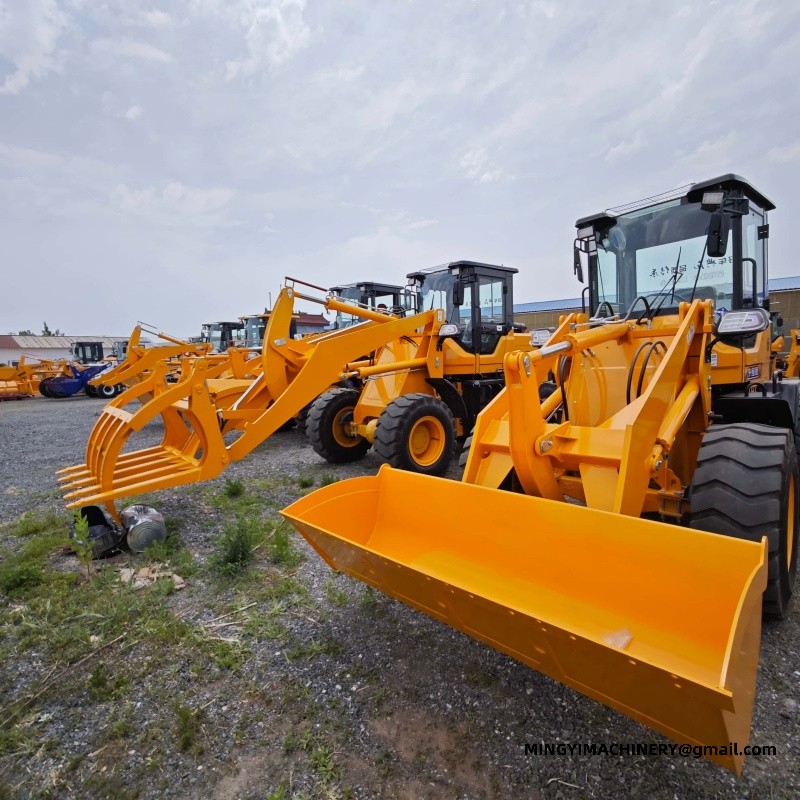
Export loading is a dimension problem. Rear frame width is the governing figure and it stays in a narrow band across this range — 280 mm high x 800 mm wide on the heavy-duty 3.2 m small-frame wheel-side reduction wheel loader, 300 mm high x 800 mm wide on the light-duty 4.5 m medium-frame wheel-side reduction wheel loader — so two to three units load in a single forty-foot container with the booms and counterweights packed alongside.
Commissioning is the part buyers under-plan. Before the first start: torque the hinge pins, fill the 64.7 L (75# small tank) tank and the 4100 core (490 engine); 4105 core (4102T engine) circuit, check the 40 pump (490 engine); 1045 pump (4102 turbo engine) and 316 pump connections, and charge or replace a battery that has sat through a voyage. Then check the five build figures — boom wall, boom width, front and rear hinge plates, cross-member — against the published table, because that is the one moment when a discrepancy is simple to fix.
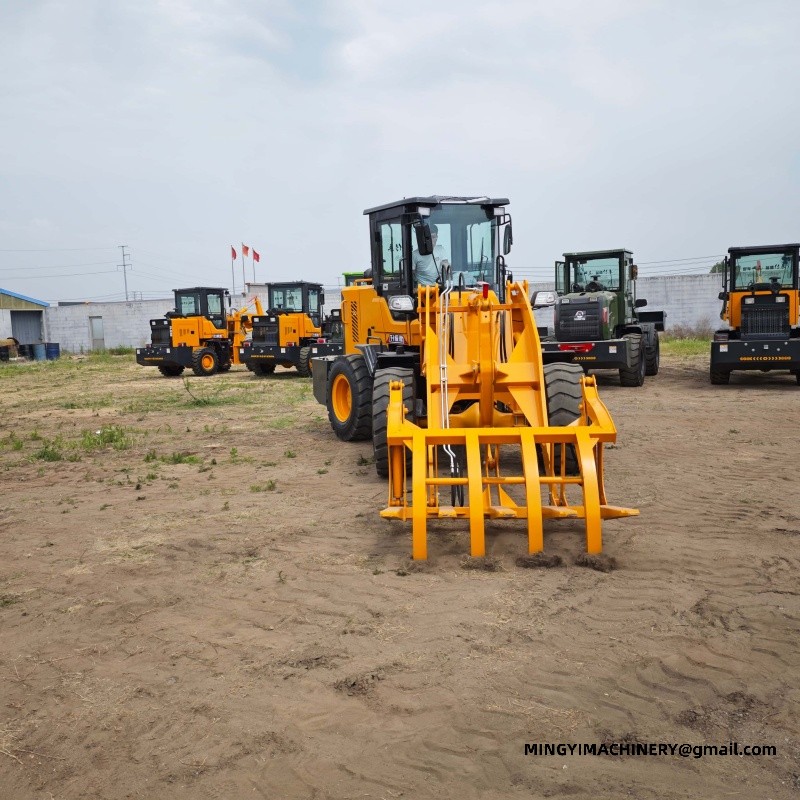
Shipping is a dimensions problem before it is a freight problem. Front wheel to counterweight is 4.1 m on this build and 4.7 m on the light-duty 4.5 m medium-frame wheel-side reduction wheel loader; track is 1.5 m (wheel-side reduction axle); 1.45 m (Isuzu axle). Those two figures, plus the bucket, decide how many units fit a container and whether the machine travels assembled.
Dump height matters here for a reason that surprises people: a machine shipped with the arm raised will not fit under a container door. At 3.5 m of lift height the arm has to be strapped down, and the securing points are on the frame — the 280 mm high x 800 mm wide rear section and the cross-member behind it, not the cylinders.
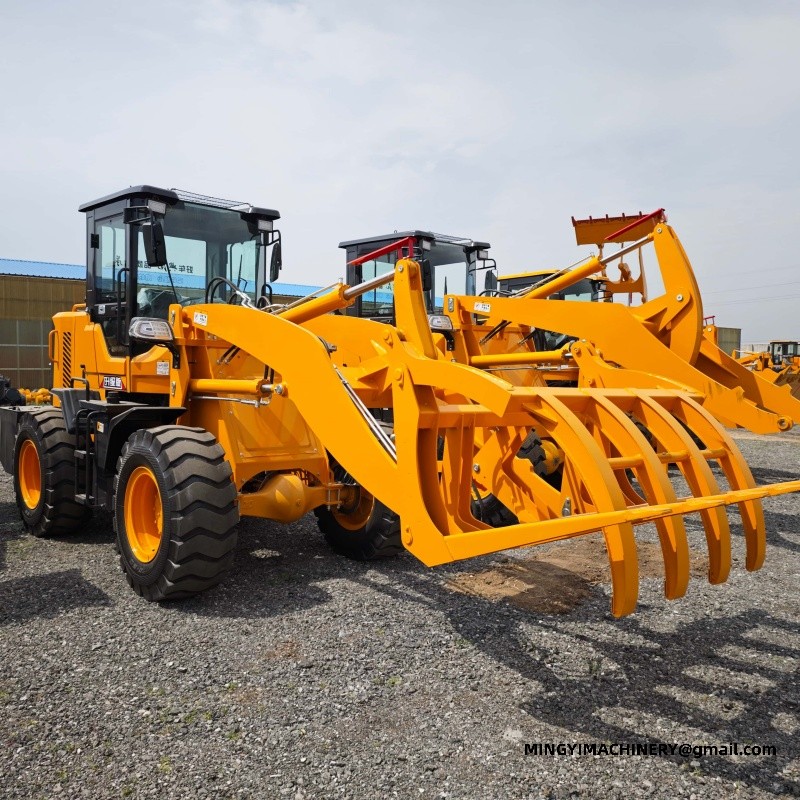
Front wheel to counterweight is the figure that decides whether a machine fits the space you have. Here it is 4.1 m on the heavy-duty 3.2 m small-frame wheel-side reduction wheel loader and 4.3 m on the light-duty 4.2 m medium-frame wheel-side reduction wheel loader. Measure your tightest working bay, add the swing of the bucket, and compare — because a loader that has to reverse out of every corner loses more time than a bigger bucket ever recovers.
Track width closes the same question from the side. 1.5 m (wheel-side reduction axle); 1.45 m (Isuzu axle) on this build. Where two figures are listed, the narrower belongs to the hard-ground axle, and a narrow machine on a narrow gate is often the right answer even where the work itself would suit something bigger. The rear frame section, 280 mm high x 800 mm wide, is what keeps a compact machine from feeling flimsy once it is loaded.
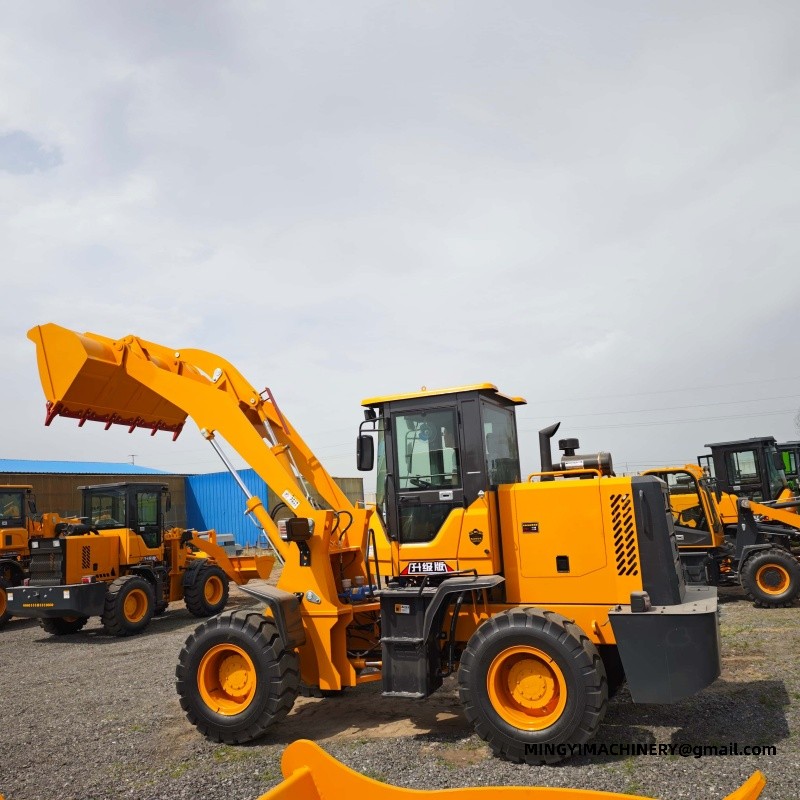
Overheating has four causes and only one of them is the radiator. In order of likelihood: blocked fins, a cap that will not hold pressure, a fan or drive problem, and genuine overloading. The core on this machine is 4100 core (490 engine); 4105 core (4102T engine); clean it first, from the clean side outwards.
If the machine is genuinely overloaded, the cause is upstream of the cooling system. A bucket carrying more than 0.4 m³ of dense material, cycled without pause, produces more heat than the system was sized to reject. The fix is a smaller bucket or a slower cycle, not a bigger radiator — and the frame, at 30 mm across the member, is the part that suffers if nobody makes that decision.
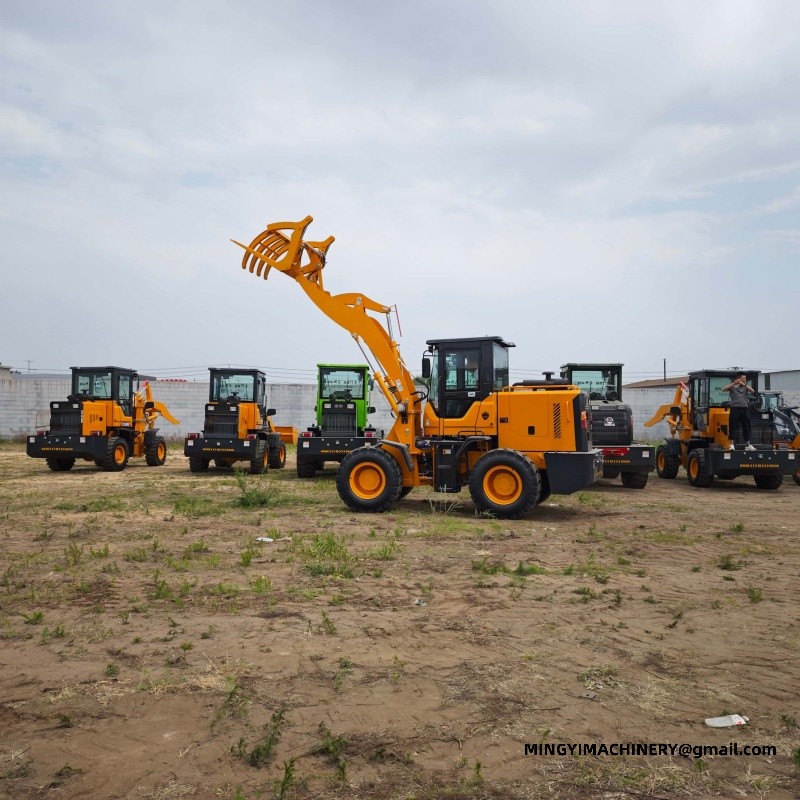
Ask any yard operator which part fails first and the answer is the articulation, not the engine. The rear hinge plate takes every reversing and turning load: 20 mm on the heavy-duty 3.2 m small-frame wheel-side reduction wheel loader against 30 mm on the light-duty 3.8 m medium-frame wheel-side reduction wheel loader, on cross-members of 30 mm and 45 mm respectively. That pair of figures predicts whether the machine is still tight at year three.
The rest of the specification follows the duty. A 0.4 m³ bucket at 3.2 m with centre cylinder 45 / side cylinder 45 cylinders is right for loose stock and loading out; 0.52 m³ at 3.8 m with centre cylinder 60 / side cylinder 50 is right where the machine has to break out of a face. Ground decides the axle — 1.5 m (wheel-side reduction axle); 1.45 m (Isuzu axle) against 1.6 m — and the material decides the radiator.
What does commissioning a China wheel loader factory involve?
Fit the 3.15 m boom to the 890 mm mounts, torque the hinge pins, fill the 64.7 L (75# small tank) tank and the 4100 core (490 engine); 4105 core (4102T engine) circuit, and connect the battery. Allow a day per machine.
What does the cross-member figure tell me about a China wheel loader factory?
How well the frame resists the twisting that articulation puts into it: 30 mm on the heavy-duty 3.2 m small-frame wheel-side reduction wheel loader against 45 mm on the light-duty 4.5 m medium-frame wheel-side reduction wheel loader. It is the clearest marker of build class.
How do I choose the right dump height for a China wheel loader factory?
Measure the receiving body at the front board rather than the side: 4.2 m on the heavy-duty 4.2 m small-frame wheel-side reduction wheel loader, 4.5 m on the light-duty 4.5 m medium-frame wheel-side reduction wheel loader. Clearance decides whether the pass is possible at all.
What is the fuel tank capacity of a China wheel loader factory?
64.7 L (75# small tank) on the heavy-duty 3.2 m small-frame wheel-side reduction wheel loader and 70 L (75# large tank) on the light-duty 4.5 m medium-frame wheel-side reduction wheel loader, both sized for a full shift at working throttle without a mid-day refuel.
Which figures predict frame life on a China wheel loader factory?
Rear hinge plate and cross-member: 20 mm and 30 mm on the heavy-duty 3.8 m small-frame wheel-side reduction wheel loader, against 30 mm and 45 mm on the light-duty 3.5 m medium-frame wheel-side reduction wheel loader. Those two rows separate light duty from heavy duty.
Which China wheel loader factory build suits quarry or stockpile work?
The heavy build with the raised core: a 0.4 m³ bucket, 20 mm rear hinge plate, 30 mm cross-member and the 4100 core (490 engine); 4105 core (4102T engine) radiator for fines and dust.
Is the wheel-side reduction axle worth specifying on a China wheel loader factory?
If the ground is soft, rutted or sloped, yes: a 1.6 m track with hub reduction keeps traction where a faster axle would spin. On hard, level ground it is not needed.
Specifications are built per order: machine, attachments, spares box and container plan together. Because rear frame sections stay between 280 mm high x 800 mm wide and 280 mm high x 800 mm wide across the China wheel loader factory range, two to three units ship in one forty-foot box.
Fuel, oil and fluid quality for China Wheel Loader Factory: How Each Model Is Built and Checked
Fluid quality is a storage problem before it is a machine problem. Water and sediment in a drum will find the injection system of China Wheel Loader Factory: How Each Model Is Built and Checked eventually, and a settling period is nothing compared with a pump.
A second operator for China Wheel Loader Factory: How Each Model Is Built and Checked
A machine that only one person can use is a single point of failure. Training a second operator on China Wheel Loader Factory: How Each Model Is Built and Checked takes a day and removes the dependency that otherwise governs holidays, illness and busy weeks.
Contact MINGYI Machinery for the current wheel loader lineup, configuration options and a formal specification for your market. E-mail: sales@mingycn.com | LINE (ID): mingyicn
Wheel Loader Supplier: Model Coverage and Container Planning · Construction Wheel Loader: Site Loading, Backfill, Hardstands · Construction Wheel Loader: Keeping a Site Cycle Moving · Loaders









