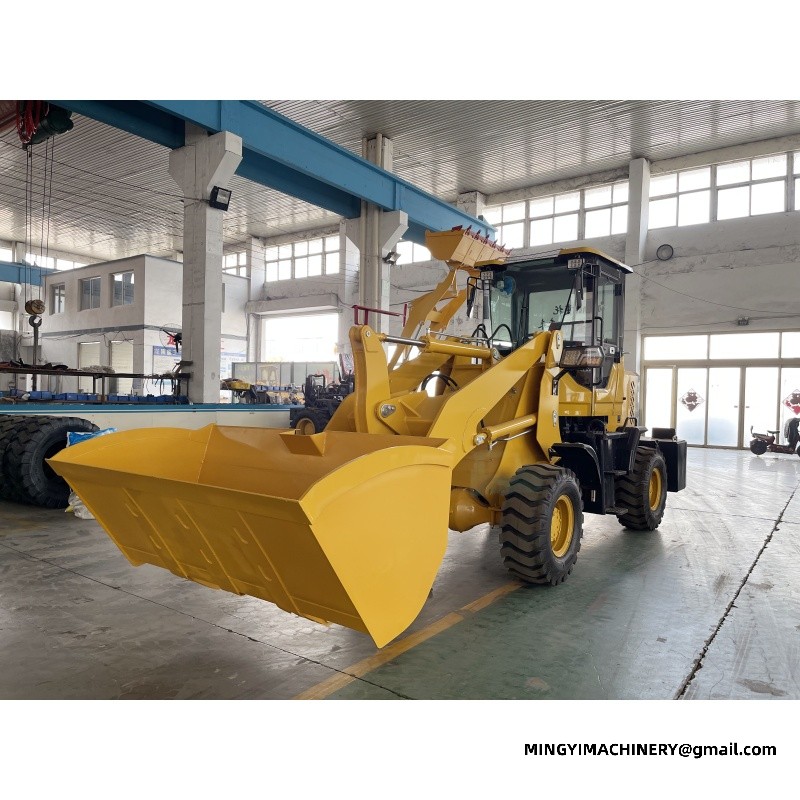
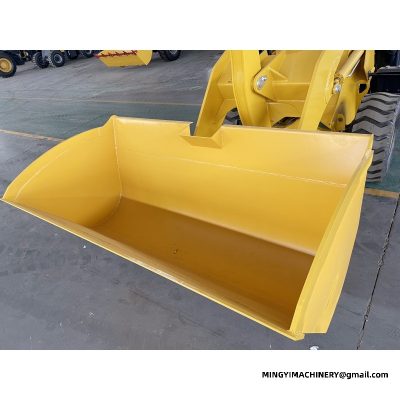
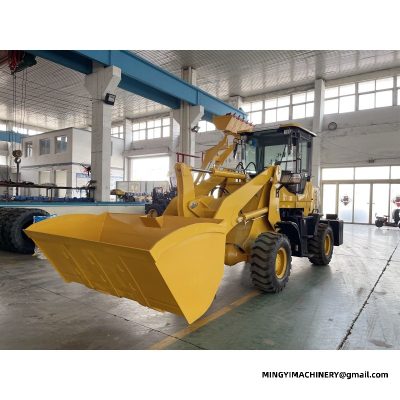
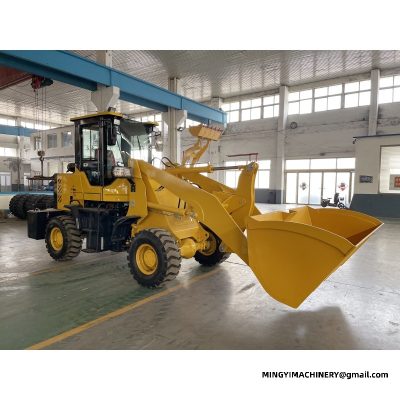
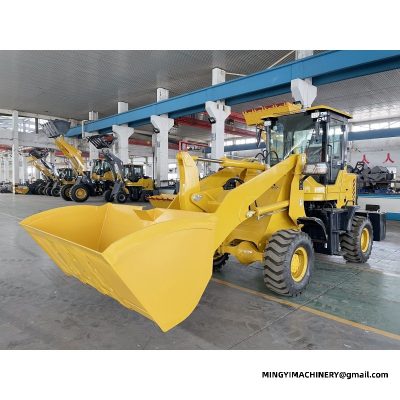
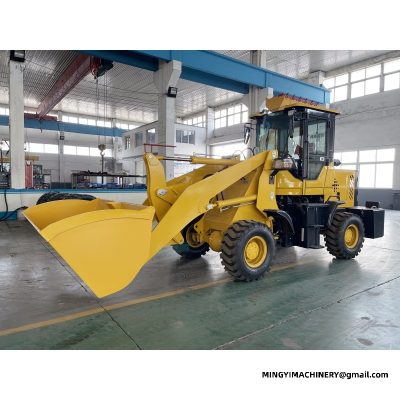
Most wheel loader manufacturer shortlists are decided on the wrong figures. Engine power and bucket volume are stated first because they are easy, but the numbers that predict whether a machine earns its keep are the ones nobody leads with: rear hinge plate thickness, cross-member thickness, boom centre distance and radiator core. On the light-duty 4.2 m small-frame wheel-side reduction wheel loader those read 20 mm, 25 mm, 890 mm and 4100 core (490 engine); 4105 core (4102T engine); on the heavy-duty 4.5 m small-frame wheel-side reduction wheel loader they read 20 mm, 30 mm, 890 mm and 4100 core (490 engine); 4105 core (4102T engine). This page explains what each one governs.
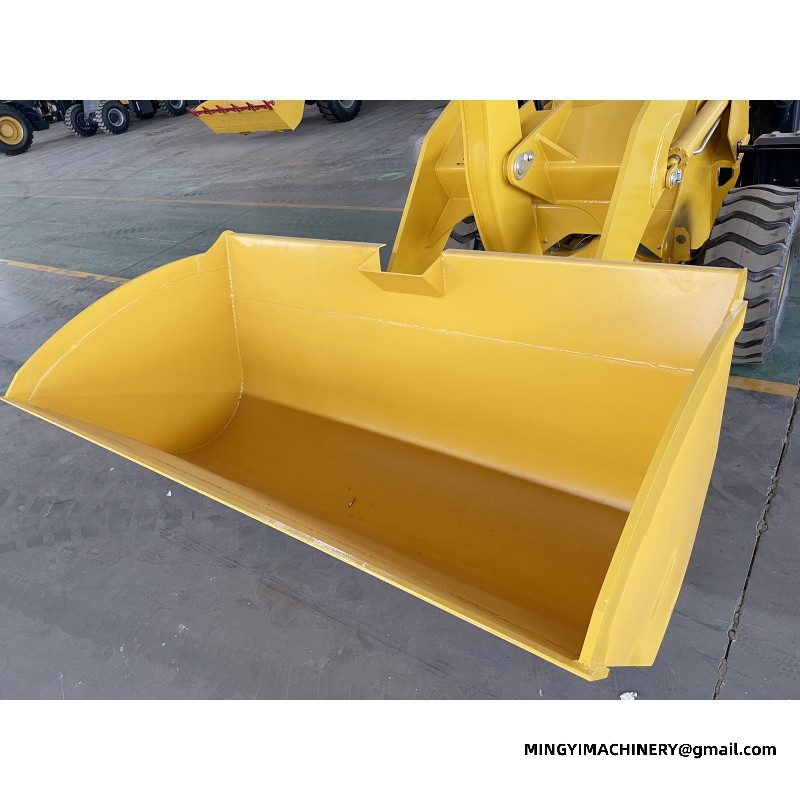
Three things stop a loader mid-shift, and two of them are in the specification. Fuel is the first: 30.8 L (48# large tank, 20.5/70-16 tyres); 24.6 L (48# small tank, 8.25-16 tyres) on the standard 2.8 m low-profile wheel loader. Cooling is the second: 4100 core, and it is the one that announces itself as a gradual loss of power rather than a stoppage, so it gets ignored until the machine is derating every afternoon.
The third is electrical, and it is specified as well: 45 Ah (24 V). Cranking capacity falls with temperature, so a battery that starts a warm engine happily can fail the same engine at dawn in winter. Where the build offers two ratings, the higher one belongs to the turbo option and is worth specifying for cold climates or for machines that start cold and stop often.
An agricultural loader is a small machine doing varied work, and the specification that matters is the one that lets it into the buildings. Track width 1.2 m (Isuzu axle); 1.3 m (wheel-side reduction axle) on the standard 2.8 m low-profile wheel loader against 1.6 m on the heavy-duty 3.5 m medium-frame wheel-side reduction wheel loader, footprint 3.5 m against 4.55 m, and dump height 2.8 m against 3.5 m for the wagon or hopper it fills.
Duty is seasonal and mostly light, which is why the light builds exist: a 0.3 m³ bucket with 16 mm cross-member and 16 mm rear hinge plates is correctly specified for silage, bagged goods and yard scraping. Where the machine also does heavy work — muck-out with a loaded bucket, or winter snow clearing — step to the heavier build with 45 mm and 30 mm. Over-specifying takes money once; under-specifying takes a frame.
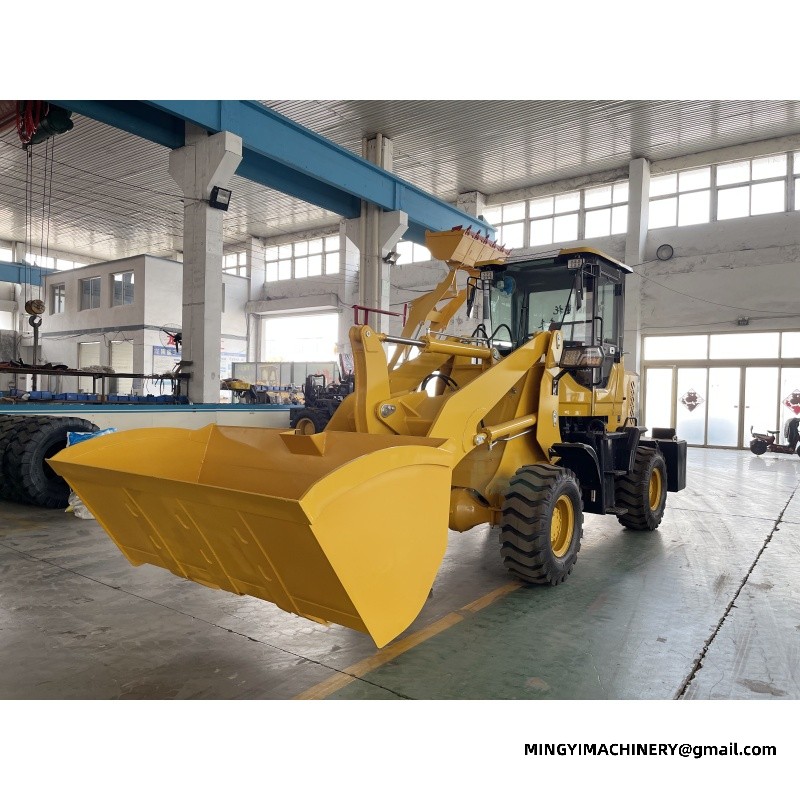
Hinge plates carry the pin loads that the boom and the steering articulation put into the frame, and they are where a loader shows its age first. The light-duty 4.2 m small-frame wheel-side reduction wheel loader runs 25 mm front plates and 20 mm rear plates over a 25 mm cross-member; the heavy-duty 3.2 m low-profile wheel loader runs 30 mm and 20 mm over 30 mm. Rear frame sections follow at 280 mm high x 800 mm wide and 230 mm high x 800 mm wide respectively.
The rear plate is the more telling of the two. Articulated steering loads the rear hinge every time the machine turns under load, and reversing out of a face with a full bucket doubles it. A 20 mm rear plate with a 25 mm cross-member is a light-duty specification; 20 mm over 30 mm is a heavy-duty one. Put those alongside the 0.38 m³ and 0.4 m³ buckets and the specification difference between the two builds stops looking arbitrary — it is steel.
| Published build data — heavy-duty 3.5 m medium-frame wheel-side reduction wheel loader | |
|---|---|
| Bucket capacity | 0.65 m³ |
| Dump height | 3.5 m |
| Track width | 1.6 m |
| Boom arm thickness | 30 mm |
| Boom arm width | 500 mm |
| Boom arm length | 3.15 m |
| Boom arm centre distance | 920 mm |
| Cross-member thickness | 45 mm |
| Front hinge plate thickness | 45 mm |
| Rear hinge plate thickness | 30 mm |
| Rear frame section | 300 mm high x 800 mm wide |
| Hydraulic cylinders | centre cylinder 60 / side cylinder 50 |
| Fuel tank | 70 L (75# large tank) |
| Battery | 80 Ah |
| Front wheel to counterweight | 4.55 m |
| Radiator | 4105 core |
| Work pump | 2063 pump |
| Travel pump | 25 pump |
Operators describe a good machine as tight and a tired one as loose, and they are describing the hinge pins. New, the geometry is set by the plates: 16 mm forward, 16 mm aft. After a few thousand hours the geometry is set by how much those plates have allowed the pins to move, which is a function of thickness and of the 16 mm cross-member behind them.
This is why the figures are worth asking for rather than assuming. On the heavy-duty 3.2 m low-profile wheel loader the same two numbers are 30 mm and 20 mm. A machine that will spend its life on short cycles — many steering inputs per hour — should be bought on these figures rather than on bucket capacity, because capacity is simple to add and hinge life is not.
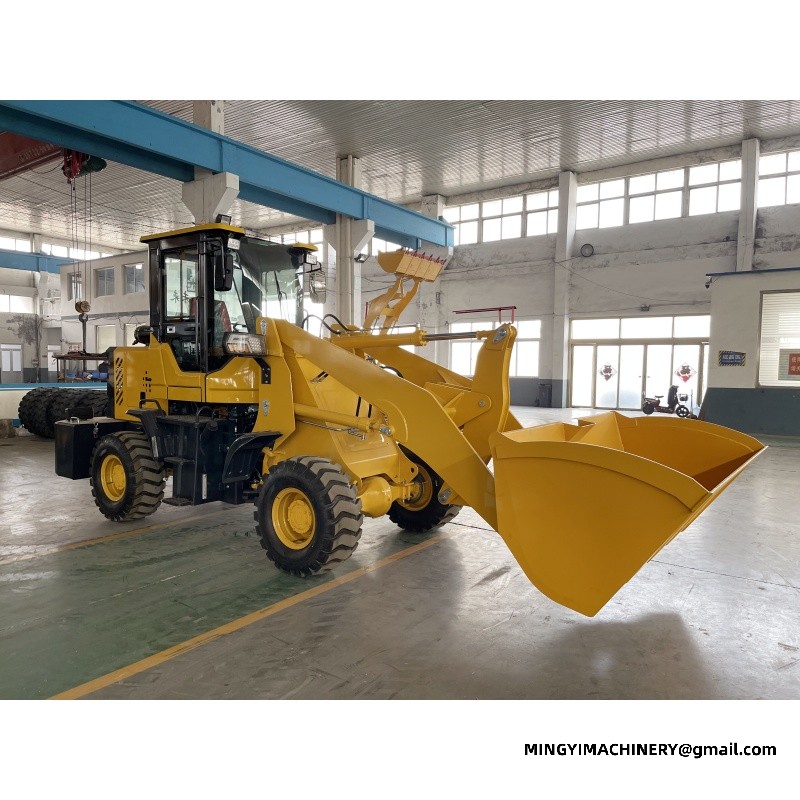
Acceptance takes twenty minutes and prevents a season of argument. Measure the bucket, 0.3 m³ on this build. Measure dump height with the arm at full lift, 2.8 m. Read the cylinders, centre cylinder 45 / side cylinder 40. Check the track, 1.2 m (Isuzu axle); 1.3 m (wheel-side reduction axle). Check the length from front wheel to counterweight, 3.5 m. Those five are on the sheet and on the machine.
The steel is harder to verify and worth verifying anyway, because it is what the money bought. Hinge plates 16 mm and 16 mm, cross-member 16 mm, boom wall 20 mm on a 300 mm section. A tape across the plate edge and a magnet will tell you whether the frame matches the order.
Purchase decision is the smallest of the three numbers that matter; the other two are downtime and residual value, and both are decided by the frame. A machine built with 20 mm rear hinge plates and a 30 mm cross-member, as on the heavy-duty 4.5 m small-frame wheel-side reduction wheel loader, will be tight at year three in light duty. A machine with 30 mm and 45 mm, as on the heavy-duty 3.5 m medium-frame wheel-side reduction wheel loader, will still be tight in heavy duty.
Fuel, tyres and filters are the predictable takes, and they scale with duty rather than with capacity. A 0.4 m³ bucket working a short cycle on a 64.7 L (75# small tank) tank takes less per day than a 0.65 m³ bucket on 70 L (75# large tank) working a long one — and moves less material. The honest comparison is effort per tonne moved, which needs your cycle, not a brochure.
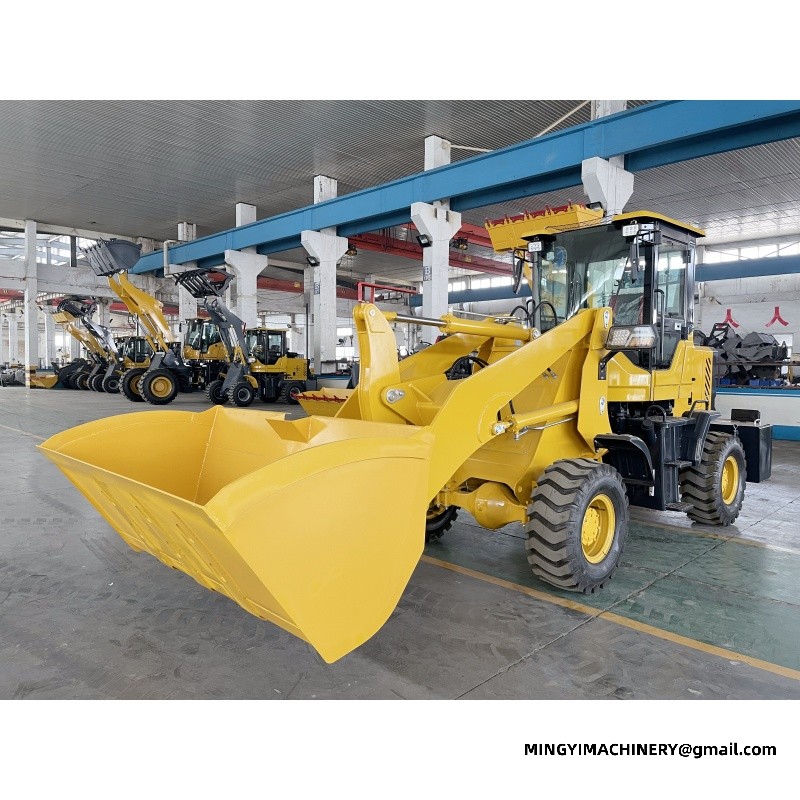
Second-hand buyers check three things and none of them is the hour meter. They rock the hinge and look for movement at the 30 mm front and 20 mm rear plates. They look along the boom for twist, which is a 430 mm section and 890 mm spacing question. They start it cold and listen, which is a 60 Ah (490 engine); 80 Ah (4102 turbo engine) question.
Steel thickness is what makes the first check pass or fail, and it is on the sheet: cross-member 30 mm, rear frame 230 mm high x 800 mm wide. A machine built with those figures published and verifiable is easier to sell than one with a lower hour count and no specification, because the buyer can check the claim instead of trusting it.
A machine crossing an ocean is exposed to salt air for weeks, and the parts that suffer are the ones that were never painted: cylinder rods, hinge pins and electrical terminals. This build carries centre cylinder 60 / side cylinder 50 and hinge plates of 45 mm and 30 mm; all three should be greased and wrapped before loading rather than cleaned on arrival.
The battery is the other item to plan for. 80 Ah will not survive a long voyage connected, and a flat machine cannot be driven off a container. Specify a disconnect, and specify the radiator, 4105 core, to be checked for fin corrosion on arrival — salt air attacks the core from outside and the symptom is overheating in the first month, which everyone blames on the thermostat.
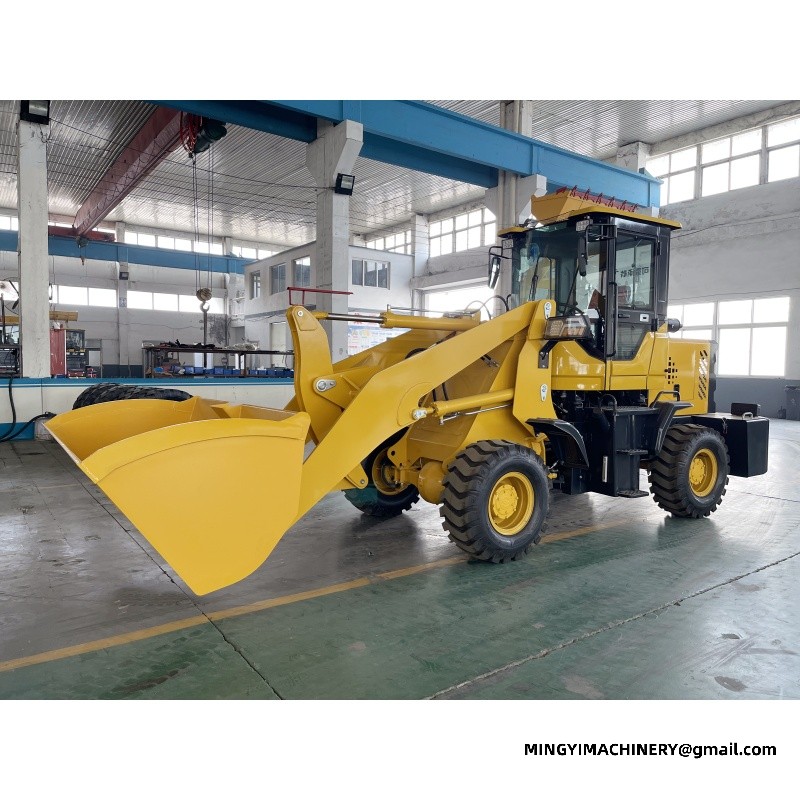
Indoor work changes the priority completely. Height clearance replaces dump height as the first figure, and the machine has to lift its load under a lintel rather than over a truck board. The heavy-duty 3.2 m low-profile wheel loader reaches 3.2 m, which is the outdoor figure; what matters indoors is whether that height is usable in the space available.
Length and track matter next. 4.1 m from front wheel to counterweight and 1.5 m (wheel-side reduction axle); 1.45 m (Isuzu axle) of track. Ventilation matters too, which is an engine question rather than a frame one, and the cooling specification is the place it shows: 4100 core (490 engine); 4105 core (4102T engine), sized for air that is not moving. Where the machine works inside, the larger core is the safer specification even in a temperate climate.
Do attachments interchange across the wheel loader manufacturer range?
Within a frame family, yes, because the boom section matches. Across families, no: a 370 mm section on the light-duty 4.2 m small-frame wheel-side reduction wheel loader is not the 500 mm section on the heavy-duty 4.5 m small-frame wheel-side reduction wheel loader.
How does a wheel loader manufacturer compare with a backhoe loader?
A loader moves more material per pass and carries it higher — 0.65 m³ at 3.5 m on the heavy-duty 3.5 m medium-frame wheel-side reduction wheel loader — while a backhoe digs below grade. Choose by which job you do most.
What boom wall thickness does a wheel loader manufacturer need?
25 mm on the light-duty 4.2 m small-frame wheel-side reduction wheel loader against 30 mm on the heavy-duty 3.8 m medium-frame wheel-side reduction wheel loader. A long arm on a thin wall lifts on paper and feels vague in the yard, so read wall and length together.
How do I pick between the frame tiers of a wheel loader manufacturer?
By reach and duty. The light-duty 4.2 m small-frame wheel-side reduction wheel loader carries 0.38 m³ to 4.2 m on a 25 mm cross-member; the heavy-duty 4.5 m small-frame wheel-side reduction wheel loader carries 0.4 m³ to 4.5 m on 30 mm.
What does the cross-member figure tell me about a wheel loader manufacturer?
How well the frame resists the twisting that articulation puts into it: 25 mm on the light-duty 4.2 m small-frame wheel-side reduction wheel loader against 30 mm on the heavy-duty 4.5 m small-frame wheel-side reduction wheel loader. It is the clearest marker of build class.
What should the first service on a wheel loader manufacturer cover?
Torque the hinge pins, grease the 890 mm boom mounts, check the centre cylinder 45 / side cylinder 45 cylinder connections and the 4100 core (490 engine); 4105 core (4102T engine) cooling circuit, then re-check the build figures.
How do I verify the build of a wheel loader manufacturer on delivery?
Five figures against the published table: boom wall 25 mm, boom width 370 mm, front hinge 25 mm, rear hinge 20 mm and cross-member 25 mm.
Specifications are built per order: machine, attachments, spares box and container plan together. Because rear frame sections stay between 280 mm high x 800 mm wide and 280 mm high x 800 mm wide across the wheel loader manufacturer range, two to three units ship in one forty-foot box.
Reading the early symptoms on Wheel Loader Manufacturer: Five Figures to Ask For
The symptom is usually not at the fault. A hydraulic function that has become sluggish on Wheel Loader Manufacturer: Five Figures to Ask For may point to a filter, a relief setting or a pump, and starting with the simple checks avoids the wrong guess.
Fuel, oil and fluid quality for Wheel Loader Manufacturer: Five Figures to Ask For
Most engine trouble starts with what went into the tank. Clean fuel, stored properly and filtered before it reaches Wheel Loader Manufacturer: Five Figures to Ask For, prevents more downtime than any other single habit an owner can adopt.
Contact MINGYI Machinery for the current wheel loader lineup, configuration options and a formal specification for your market. E-mail: sales@mingycn.com | LINE (ID): mingyicn
Wheel Loader Manufacturer: Frame Builds, Range and Export Terms · China Wheel Loader Factory: How Each Model Is Built and Checked · Payloader Machine: Specifying One for Mixed Site Work · Loaders








