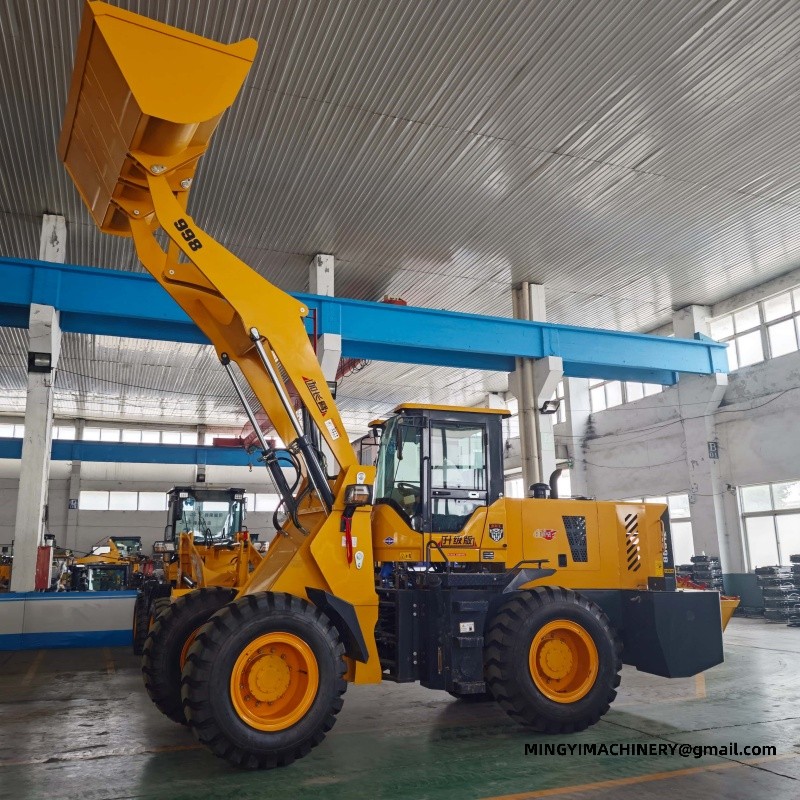
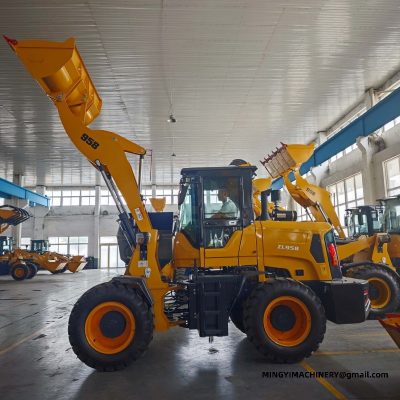
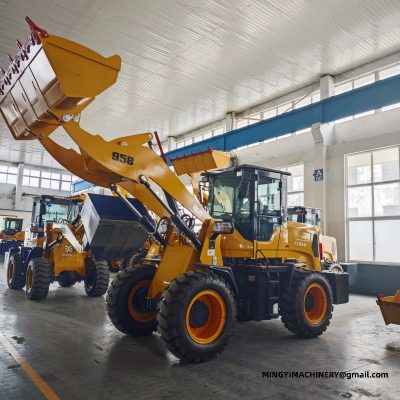
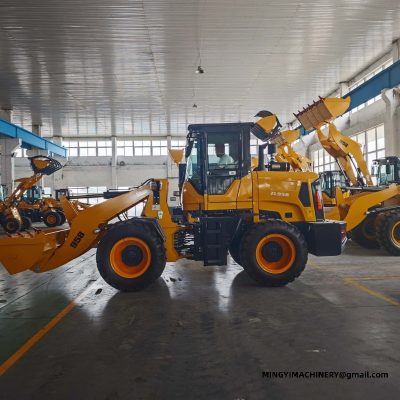
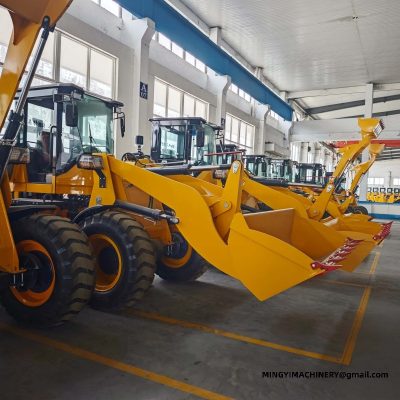
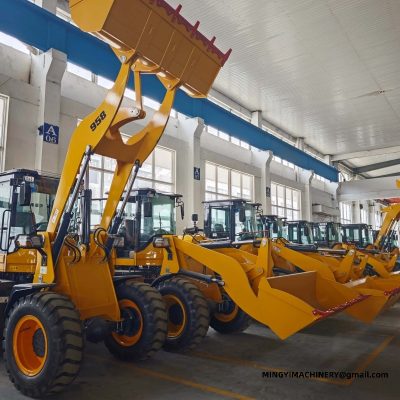
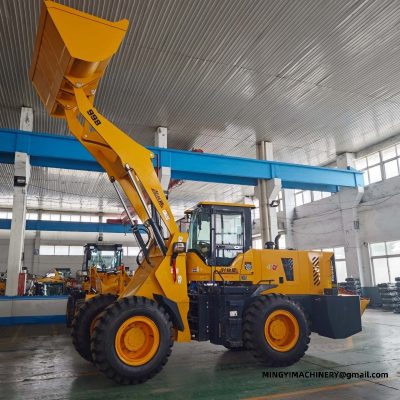
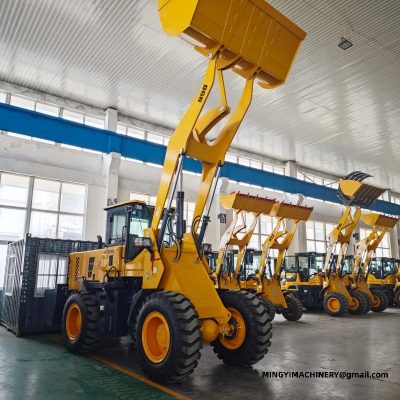
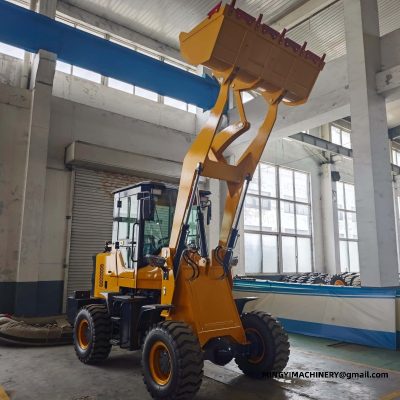
Two loaders can share a name and behave nothing alike. The difference is in the rows nobody reads: cross-member thickness, rear frame section, pump size, tyre fitment. Across this range those rows are published, which makes comparison possible rather than theoretical. Taking the heavy-duty 4.2 m small-frame wheel-side reduction wheel loader with its 0.4 m³ bucket and 4.2 m of lift against the light-duty 3.5 m medium-frame wheel-side reduction wheel loader with 0.52 m³ and 3.5 m, this page sets out which figures change behaviour on site, which change the maintenance burden, and which change nothing at all.
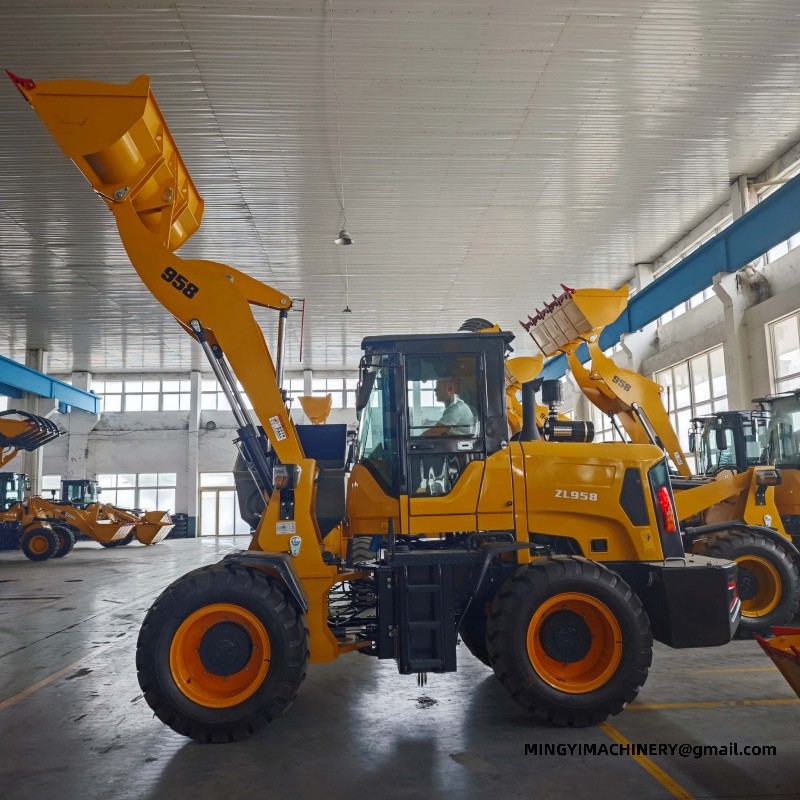
The two axle options on this range are differentiated by track: 1.5 m (wheel-side reduction axle); 1.45 m (Isuzu axle) on the heavy-duty 4.2 m small-frame wheel-side reduction wheel loader, 1.6 m on the light-duty 3.5 m medium-frame wheel-side reduction wheel loader. Behind the number is a different reduction layout. The Isuzu-pattern bridge is lighter, faster on hard ground and simpler to service. The wheel-side reduction bridge puts the final drive at the hub, which lowers the load on the shafts and raises the torque available at the tyre.
Choose by surface and gradient. On compacted hardstanding and long haul roads the Isuzu-pattern axle is the better machine; on a soft lane, a loading ramp or an uncompacted stockyard, hub reduction is what keeps the machine moving when a wheel would otherwise spin. Track width interacts with it: 1.5 m (wheel-side reduction axle); 1.45 m (Isuzu axle) on the heavy-duty 4.2 m small-frame wheel-side reduction wheel loader and 1.6 m on the light-duty 3.5 m medium-frame wheel-side reduction wheel loader are the figures to check against your narrowest gate, door or aisle before anything else on the sheet.
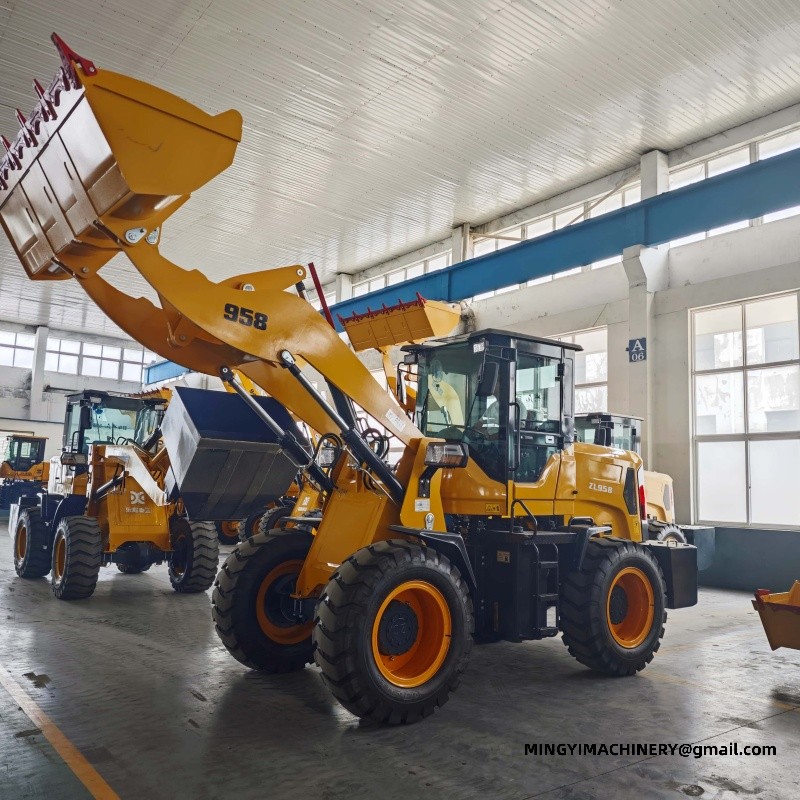
The most lengthy mistake in buying a loader is specifying capacity first. The heavy-duty 4.2 m small-frame wheel-side reduction wheel loader and the light-duty 3.5 m medium-frame wheel-side reduction wheel loader differ by 4.2 m against 3.5 m of clearance, and that difference decides which bodies each can fill. Capacity only decides how many passes it takes once clearance exists.
Where clearance is marginal, look at the boom rather than the machine: the heavy-duty 4.2 m small-frame wheel-side reduction wheel loader works a 3.15 m arm from a 890 mm centre distance, the light-duty 3.5 m medium-frame wheel-side reduction wheel loader a 2.63 m arm from 900 mm. A longer arm on a lighter frame buys height at the effort of stability, so match the arm to the counterweight — 4.25 m against 4.3 m — and not to a brochure figure.
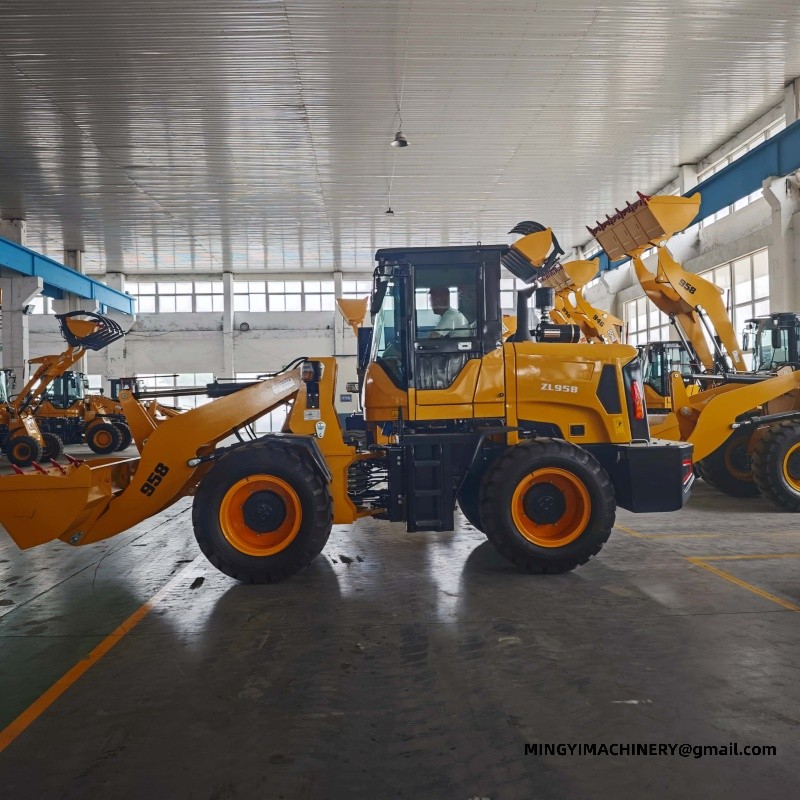
Tank size is a shift-planning figure. The heavy-duty 4.2 m small-frame wheel-side reduction wheel loader carries 64.7 L (75# small tank); the light-duty 3.5 m medium-frame wheel-side reduction wheel loader carries 70 L (75# large tank). Both are sized for a full working day at operating throttle without a mid-shift refuel, which matters on sites where the bowser is a ten-minute round trip away and on farms where refuelling means driving back to the yard.
The number to combine it with is cooling: 4100 core (490 engine); 4105 core (4102T engine) on the heavy-duty 4.2 m small-frame wheel-side reduction wheel loader, 4105 core on the light-duty 3.5 m medium-frame wheel-side reduction wheel loader. A machine that runs out of coolant capacity is stopped in the middle of a shift wherever it happens to be; a machine that runs low on fuel is stopped somewhere you chose. If the site has no refuelling point, the difference between the two tank sizes is a daily ten minutes, and over a season it is a working week.
| Sample build from the range — standard 2.4 m low-profile wheel loader | |
|---|---|
| Bucket capacity | 0.3 m³ |
| Dump height | 2.4 m |
| Track width | 1.2 m (Isuzu axle); 1.3 m (wheel-side reduction axle) |
| Boom arm thickness | 20 mm |
| Boom arm width | 280 mm |
| Boom arm length | 1.85 m |
| Boom arm centre distance | 680 mm |
| Cross-member thickness | 16 mm |
| Front hinge plate thickness | 16 mm |
| Rear hinge plate thickness | 16 mm |
| Rear frame section | 200 mm high x 750 mm wide |
| Hydraulic cylinders | centre cylinder 40 / side cylinder 40 |
| Fuel tank | 30.8 L (48# large tank, 20.5/70-16 tyres); 24.6 L (48# small tank, 8.25-16 tyres) |
| Battery | 45 Ah (24 V) |
| Front wheel to counterweight | 3.5 m |
| Radiator | 4100 core |
| Work pump | 32 pump |
| Travel pump | 316 pump |
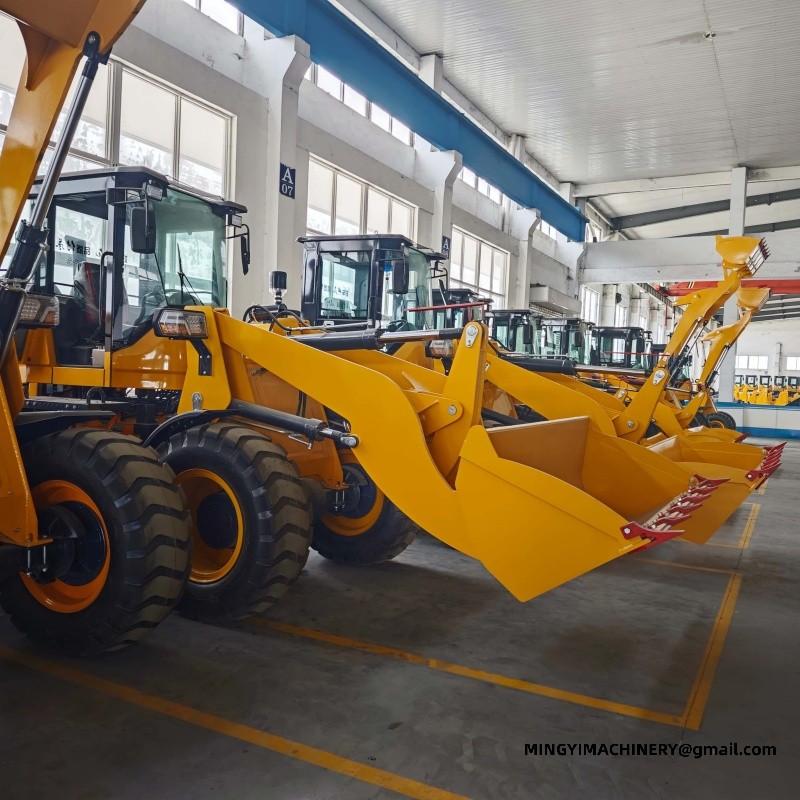
Frames do not usually fail at the boom. They fail at the hinge plates and the cross-member that ties them together, because that is where the articulated joint concentrates every steering and breakout load. On the heavy-duty 4.2 m small-frame wheel-side reduction wheel loader those figures are 30 mm front, 20 mm rear and 30 mm across; on the light-duty 3.5 m medium-frame wheel-side reduction wheel loader they are 45 mm, 30 mm and 45 mm. The rear frame sections are 280 mm high x 800 mm wide and 300 mm high x 800 mm wide.
Why the rear plate is the one to watch even though it is the thinner of the two: the front hinge sees the boom loads, which are predictable and largely vertical; the rear sees articulation loads, which are sideways, repeated and often shock-loaded when an operator turns while breaking out. A machine specified with a 30 mm rear plate and a 45 mm cross-member will still be tight at year three in reverse-loading cycles where a 20 mm plate has started to ovalise its pin bores. If your fleet keeps machines past warranty, this is the row of the table to read twice.
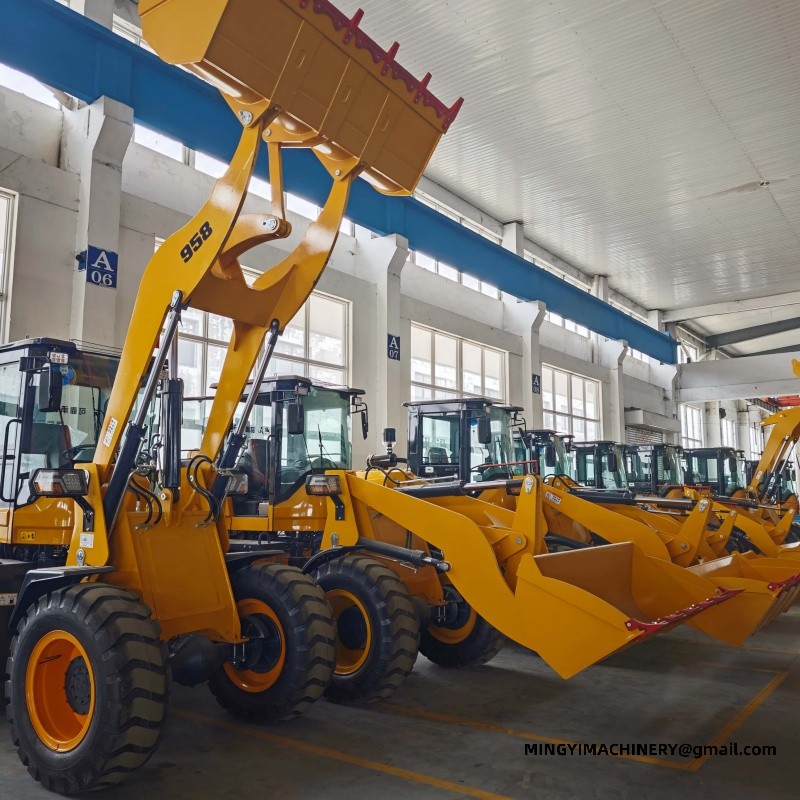
An articulated loader turns by bending in the middle, and the hinge is where that bending happens. Front plate 25 mm, rear plate 14 mm. The front is the thicker of the two on every build in the range, because it carries the boom and the payload directly, while the rear carries the engine and the counterweight through every steering movement and is sized for the twisting those movements produce rather than for the weight alone.
Pin wear is how hinges fail, and it shows up as a machine that wanders and a steering that feels vague. The cross-member is what prevents it: 25 mm holding the two sides of the frame at a fixed distance so the pins stay square. Compare 45 mm on the light-duty 3.5 m medium-frame wheel-side reduction wheel loader and the difference in plate thickness starts to make sense — they are specified together, not separately.
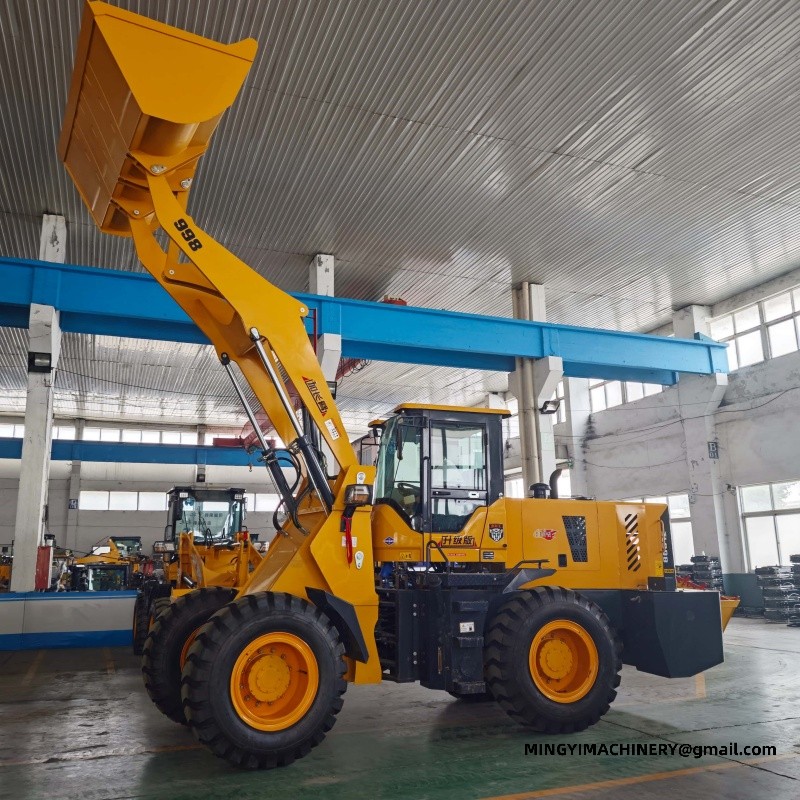
Relief pressure is only half the story; the other half is lever geometry, and lever geometry is decided by the boom and hinge dimensions. The heavy-duty 4.2 m small-frame wheel-side reduction wheel loader pairs a centre cylinder 45 / side cylinder 45 cylinder set with a 890 mm boom centre distance and a 3.15 m arm; the light-duty 3.5 m medium-frame wheel-side reduction wheel loader pairs centre cylinder 60 / side cylinder 50 with a 900 mm spacing and a 2.63 m arm. Wider spacing means the cylinders work through a better lever, which is how a bigger bucket is lifted without simply raising system pressure and heat.
Pump pairing is the second half. Work pump and travel pump are separate circuits on both machines — 40 pump (490 engine); 1045 pump (4102 turbo engine) and 316 pump on the heavy-duty 4.2 m small-frame wheel-side reduction wheel loader, 2063 pump and 25 pump on the light-duty 3.5 m medium-frame wheel-side reduction wheel loader — so steering and drive do not steal flow from the boom at the top of a lift. If you intend to run hydraulically actuated attachments, a grapple or a four-in-one bucket, order the third circuit at build time; retrofitting a valve block and plumbing in the field takes far more than specifying it on the order.
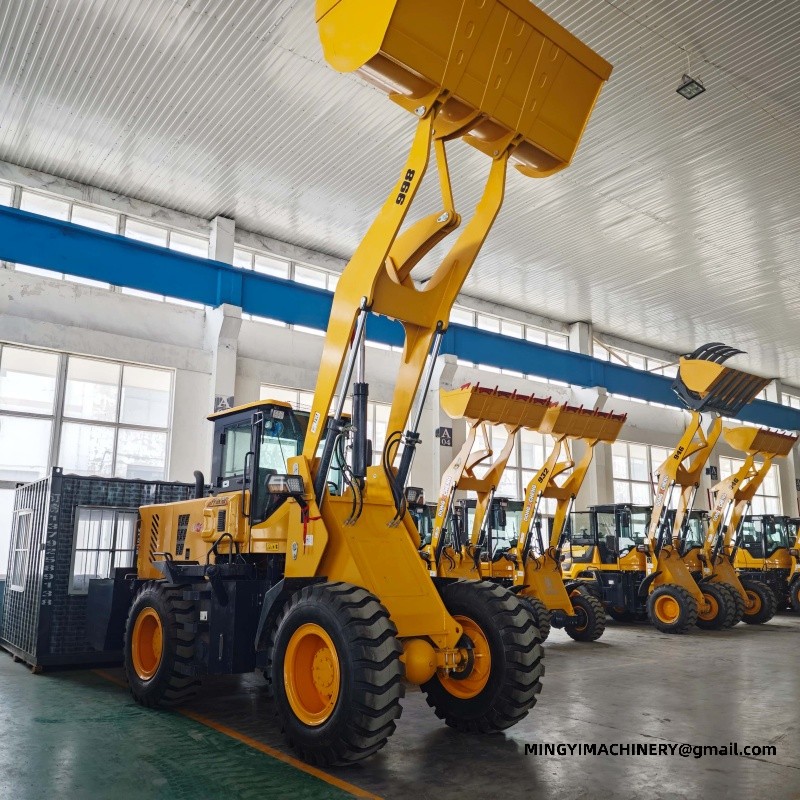
Machines ship knock-down, and rear frame width is what decides how many fit a box. Across the range that figure stays between 280 mm high x 800 mm wide and 300 mm high x 800 mm wide, which allows two to three units in a forty-foot container with booms and counterweights packed loose, tanks removed and batteries boxed disconnected.
Plan the container around the model mix rather than around a unit count. A pair of the heavy-duty 4.2 m small-frame wheel-side reduction wheel loader with its 4.25 m footprint loads differently from the light-duty 3.5 m medium-frame wheel-side reduction wheel loader at 4.3 m, and a mixed order can often be arranged to use the space better than a uniform one. Container plans are stated per order against the actual mix.
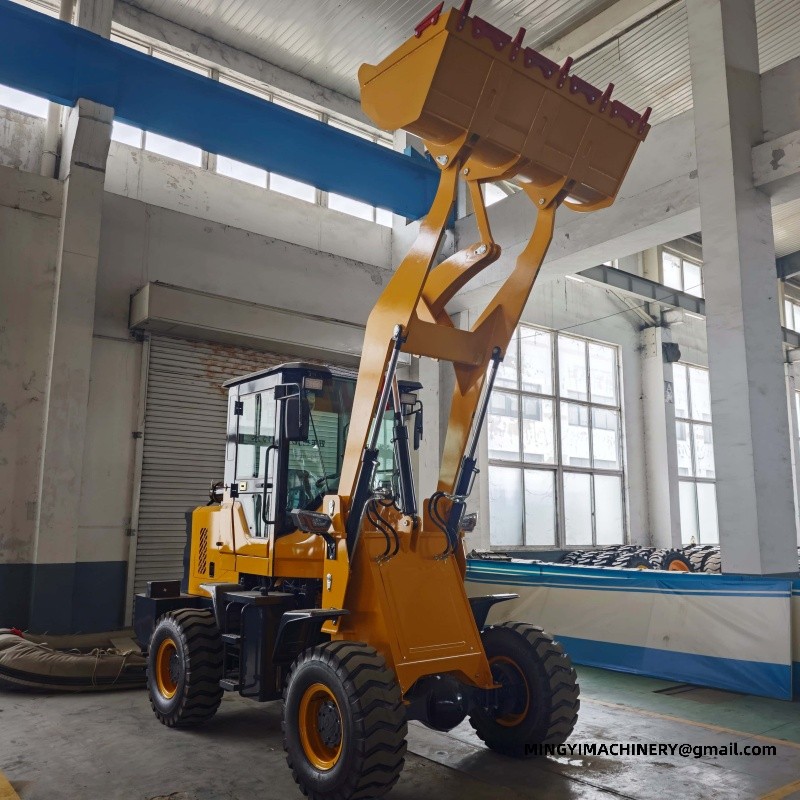
Site work is a truck-loading problem. The machine fills, reverses, turns, approaches and dumps, several hundred times a day, and the numbers that govern it are dump height, hinge steel and cycle time. The heavy-duty 4.2 m small-frame wheel-side reduction wheel loader brings 0.4 m³ at 4.2 m with 30 mm and 20 mm hinge plates; the light-duty 3.5 m medium-frame wheel-side reduction wheel loader brings 0.52 m³ at 3.5 m with 45 mm and 30 mm.
Backfilling and heel-in work load the rear hinge harder than loading does, because the machine turns while pushing. That is why the rear plate figure — 20 mm against 30 mm — is the one to read for a site machine, ahead of engine power. Add the cooling question: site dust loads a radiator fast, so the raised core and the 4105 core package earn their keep where the 4100 core (490 engine); 4105 core (4102T engine) spec would need blowing out at lunch.
How do I choose the axle on a payloader machine?
By surface. Track is 1.2 m (Isuzu axle); 1.3 m (wheel-side reduction axle) here; where two figures are listed the wider one is the hub-reduction axle for soft or rutted ground, the narrower one suits hard standing.
How should the battery on a payloader machine be cared for?
Keep the terminals clean and tight and use the isolator if the machine will stand. The rating is 60 Ah (490 engine); 80 Ah (4102 turbo engine), and a machine left connected for weeks will not start when it is needed.
What should I check before running a grapple on a payloader machine?
Side load. A grapple levers the arm in a way a bucket does not, so the 20 mm wall and 280 mm section matter more than capacity. The hinge plates at 16 mm take the reaction.
How often do hydraulic hoses need replacing?
On condition rather than on a calendar: look for cracking, rubbing and weeping at the crimps. The circuit runs centre cylinder 45 / side cylinder 40 on a 40 pump (490 engine); 1045 pump (4102 turbo engine), and a burst hose is a day while a failed pump is a week.
What paperwork should come with a payloader machine?
A specification listing bucket 0.38 m³, lift 3.2 m, cylinders centre cylinder 45 / side cylinder 40, core 4100 core (490 engine); 4105 core (4102T engine), battery 60 Ah (490 engine); 80 Ah (4102 turbo engine) and track 1.5 m (wheel-side reduction axle); 1.45 m (Isuzu axle). If those six are present, parts and warranty questions are answerable.
Why does my payloader machine wander on the road?
Worn hinge pins. Load the bucket, hold the machine on a slope and watch the joint while the steering is rocked; movement there is wear behind the 25 mm and 14 mm plates.
How much does material weight matter on a payloader machine?
It sets the real limit, not the bucket. Volume is 0.52 m³; what the frame takes is set by the 45 mm cross-member and the 280 mm high x 800 mm wide rear section behind it.
Those are the rows that decide how a payloader machine behaves once it is working. The full table for every build in the range is available on request, along with the engine options that change the pump, radiator and battery figures stated here.
Reading the early symptoms on Payloader Machine: Specifying One for Mixed Site Work
Machines rarely fail without warning. A change in sound, a slower function or a new leak on Payloader Machine: Specifying One for Mixed Site Work is the machine saying something early, and listening then takes a fraction of the time that waiting does.
Later additions and retrofits on Payloader Machine: Specifying One for Mixed Site Work
Retrofitting is limited by the base machine. Before anything is added to Payloader Machine: Specifying One for Mixed Site Work the hydraulic flow, the mounting interface and the stability allowance have to be checked, because those limits are what decide what is sensible.
Contact MINGYI Machinery for the current wheel loader lineup, configuration options and a formal specification for your market. E-mail: sales@mingycn.com | LINE (ID): mingyicn
Bucket Loader Machine: Filling the Bucket Every Pass · Construction Equipment Loader: Specs Worth Checking Twice · Wheel Loader Manufacturer China: Range, Builds and Export Terms · Wheel Loader









