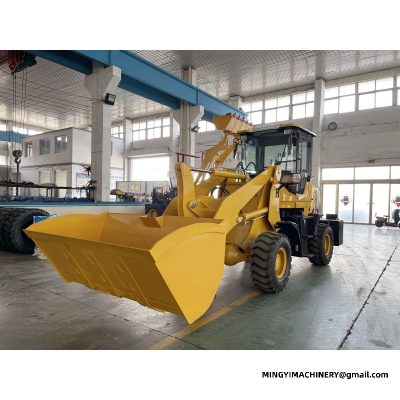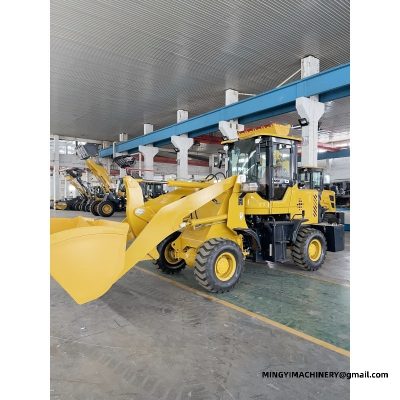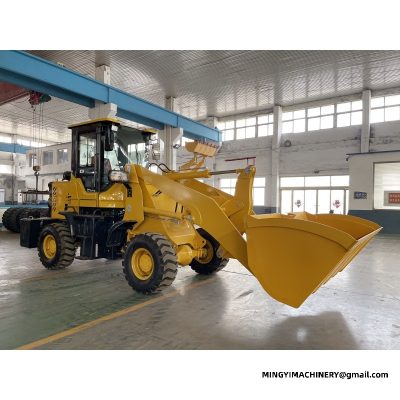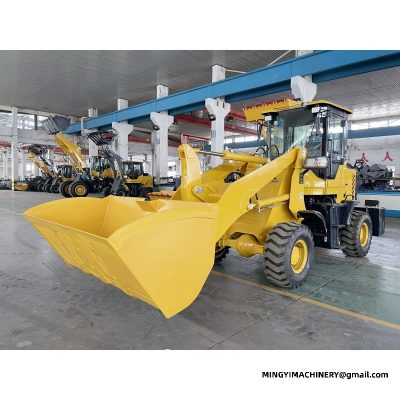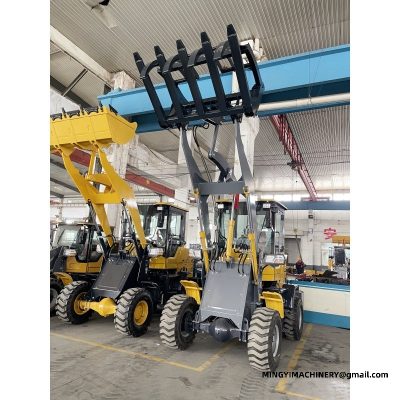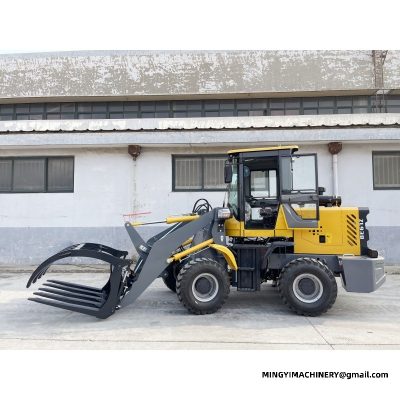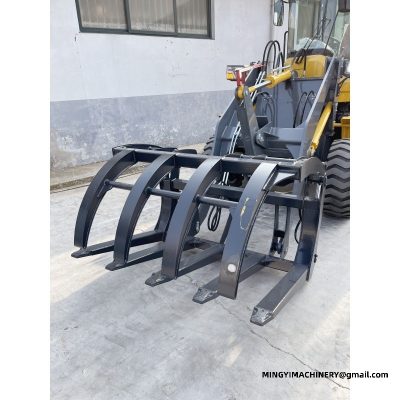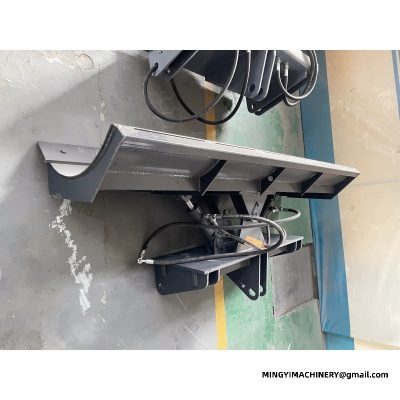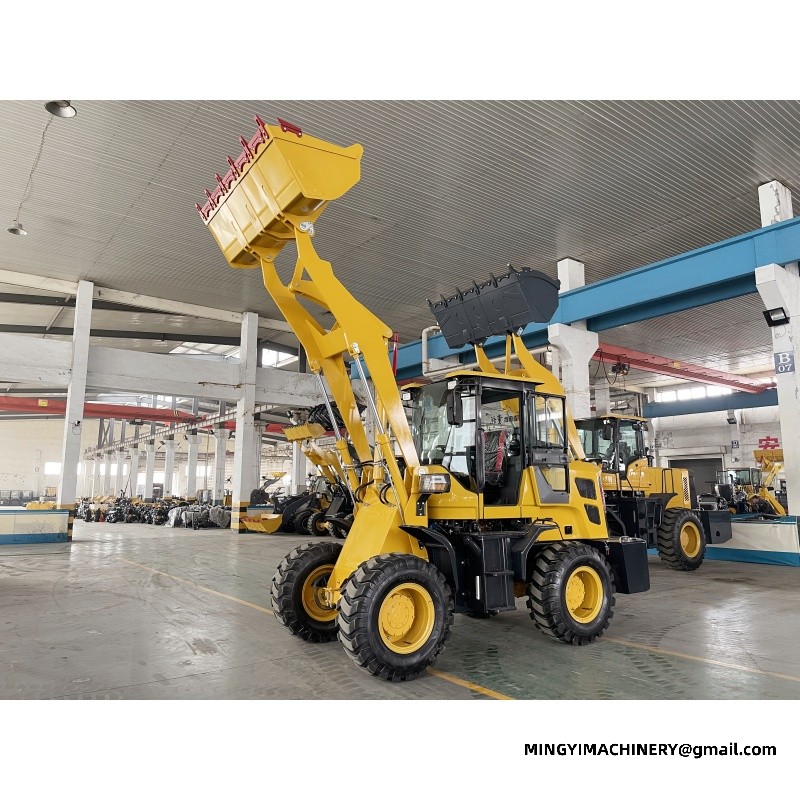
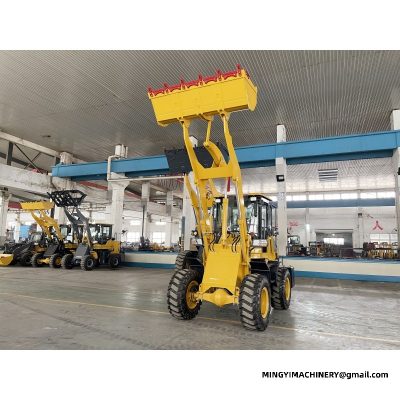
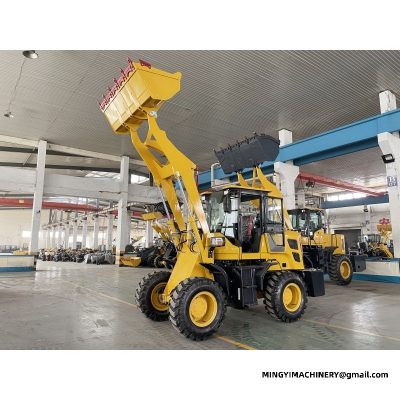
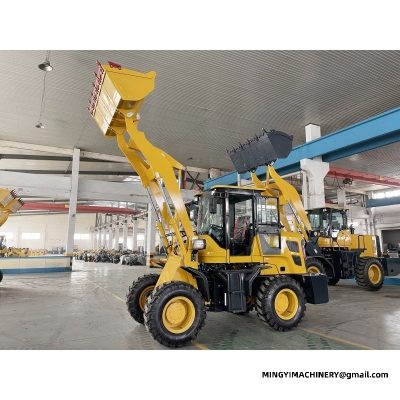
Most wheel loader manufacturer china shortlists are decided on the wrong figures. Engine power and bucket volume are stated first because they are easy, but the numbers that predict whether a machine earns its keep are the ones nobody leads with: rear hinge plate thickness, cross-member thickness, boom centre distance and radiator core. On the light-duty 3.5 m medium-frame wheel-side reduction wheel loader those read 30 mm, 45 mm, 900 mm and 4105 core; on the light-duty 3.8 m medium-frame wheel-side reduction wheel loader they read 30 mm, 45 mm, 900 mm and 4105 core. This page explains what each one governs.
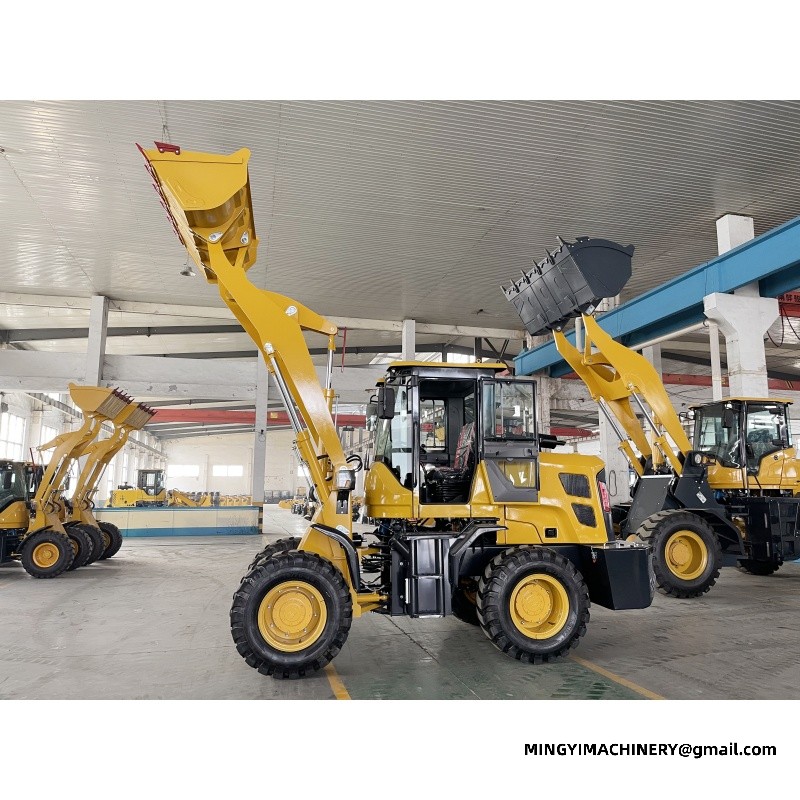
A loading cycle is four movements repeated a few hundred times a shift: approach, fill, lift, dump. Each one loads a different part of the machine, and the specification that matters changes with the movement. Filling asks for bucket volume and breakout, so 0.3 m³ on the standard 2.4 m low-profile wheel loader is the first figure to read. Lifting asks for boom section and cylinder size, which is 20 mm of wall and centre cylinder 40 / side cylinder 40. Dumping asks for height over the receiving board, 2.4 m here against 4.2 m on the light-duty 4.2 m medium-frame wheel-side reduction wheel loader.
The approach is the movement nobody specifies for, and it is where frames age. Every run at a face loads the front hinge plate, 16 mm on this build against 16 mm at the rear; the rear plate carries the weight of the counterweight and the swing of the whole rear frame, which is why it is the heavier of the two. A 3.5 m wheelbase keeps the machine settled when the bucket meets resistance rather than air.
On broken ground the rear frame takes the twisting. Cabin and counterweight sit at one end, the articulation joint at the other, and every rut loads the section between them. Here that section is 280 mm high x 800 mm wide, and it is worth reading as a beam: the height resists vertical bending, the width resists twist.
The cross-member is the other half of the same job. 25 mm on the light-duty 3.2 m small-frame wheel-side reduction wheel loader against 25 mm on the light-duty 3.2 m low-profile wheel loader. Thicker steel there means the mounting faces stay aligned through seasons of flexing, which is what keeps the rear hinge pin, at 14 mm, from wearing oval. Frames rarely break; they go loose, and looseness starts at the pins.
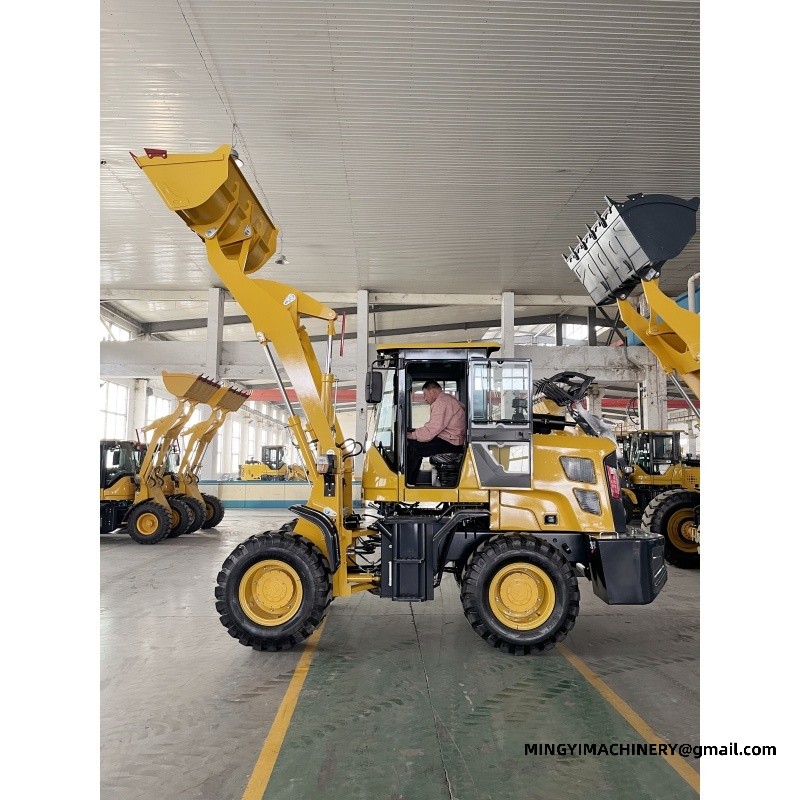
Four numbers describe a loader frame: front hinge plate, rear hinge plate, cross-member thickness and rear frame section. The standard 2.4 m low-profile wheel loader lists 16 mm, 16 mm, 16 mm and 200 mm high x 750 mm wide. The light-duty 3.5 m small-frame wheel-side reduction wheel loader lists 25 mm, 14 mm, 25 mm and 280 mm high x 800 mm wide. Everything else on a specification sheet — paint, cab trim, lighting package — is cosmetic next to those four.
The rear frame section is the one that surprises people. A wider rear frame lets the counterweight bolt directly to the chassis instead of hanging off brackets, and bracket-mounted counterweights crack. On the standard 2.4 m low-profile wheel loader the 200 mm high x 750 mm wide section carries the ballast for a 0.3 m³ bucket at 2.4 m; on the light-duty 3.5 m small-frame wheel-side reduction wheel loader the 280 mm high x 800 mm wide section carries it for 0.38 m³ at 3.5 m. Compare those against the 3.5 m and 4 m front-wheel-to-counterweight lengths and you have the whole stability picture in four figures.
| Published build data — light-duty 4.2 m medium-frame wheel-side reduction wheel loader | |
|---|---|
| Bucket capacity | 0.52 m³ |
| Dump height | 4.2 m |
| Track width | 1.6 m |
| Boom arm thickness | 30 mm |
| Boom arm width | 450 mm |
| Boom arm length | 2.9 m |
| Boom arm centre distance | 900 mm |
| Cross-member thickness | 45 mm |
| Front hinge plate thickness | 45 mm |
| Rear hinge plate thickness | 30 mm |
| Rear frame section | 300 mm high x 800 mm wide |
| Hydraulic cylinders | centre cylinder 60 / side cylinder 50 |
| Fuel tank | 70 L (75# large tank) |
| Battery | 80 Ah |
| Front wheel to counterweight | 4.3 m |
| Radiator | 4105 core |
| Work pump | 2063 pump |
| Travel pump | 25 pump |
The first hour of running tells you more than the first month of paperwork. Watch the cooling: 4100 core (490 engine); 4105 core (4102T engine) should hold temperature at working load without the fan running continuously. Listen to the hydraulics: centre cylinder 45 / side cylinder 40 on a 40 pump (490 engine); 1045 pump (4102 turbo engine) should lift a full 0.38 m³ bucket to 3.2 m without the relief valve complaining.
Then check the electrical side under load, which is what the 60 Ah (490 engine); 80 Ah (4102 turbo engine) rating exists for. Restart the machine hot, restart it cold, and watch the cranking. A battery that is marginal on day one will fail in the first cold week, and it is far easier to settle at commissioning than six months later.
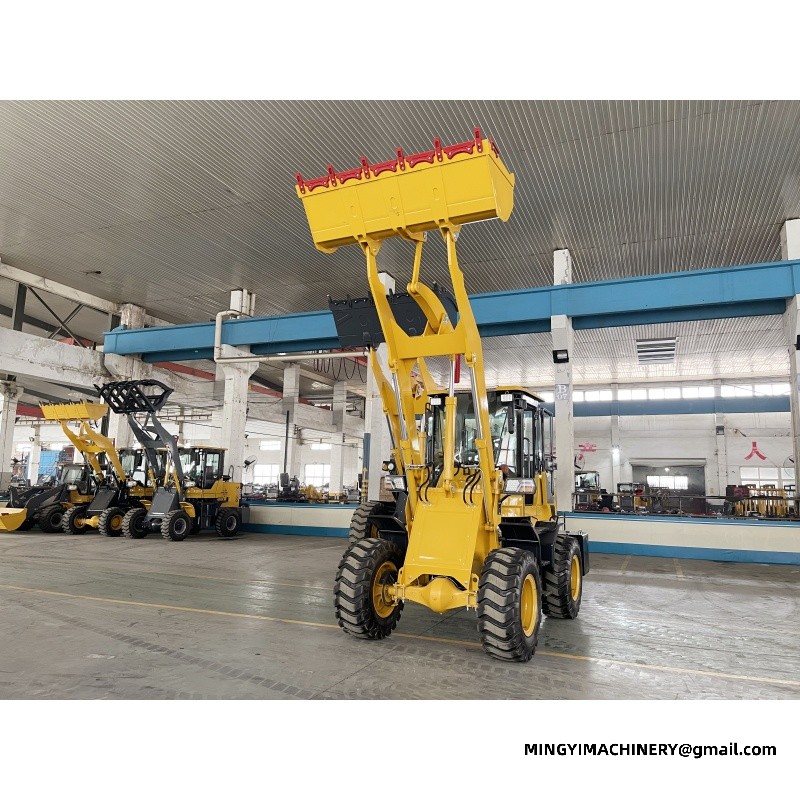
Machines ship knock-down, and rear frame width is what decides how many fit a box. Across the range that figure stays between 200 mm high x 750 mm wide and 280 mm high x 800 mm wide, which allows two to three units in a forty-foot container with booms and counterweights packed loose, tanks removed and batteries boxed disconnected.
Plan the container around the model mix rather than around a unit count. A pair of the standard 2.4 m low-profile wheel loader with its 3.5 m footprint loads differently from the light-duty 3.5 m small-frame wheel-side reduction wheel loader at 4 m, and a mixed order can often be arranged to use the space better than a uniform one. Container plans are stated per order against the actual mix.
Indoor work changes the priority completely. Height clearance replaces dump height as the first figure, and the machine has to lift its load under a lintel rather than over a truck board. The light-duty 3.5 m medium-frame wheel-side reduction wheel loader reaches 3.5 m, which is the outdoor figure; what matters indoors is whether that height is usable in the space available.
Length and track matter next. 4.3 m from front wheel to counterweight and 1.6 m of track. Ventilation matters too, which is an engine question rather than a frame one, and the cooling specification is the place it shows: 4105 core, sized for air that is not moving. Where the machine works inside, the larger core is the safer specification even in a temperate climate.
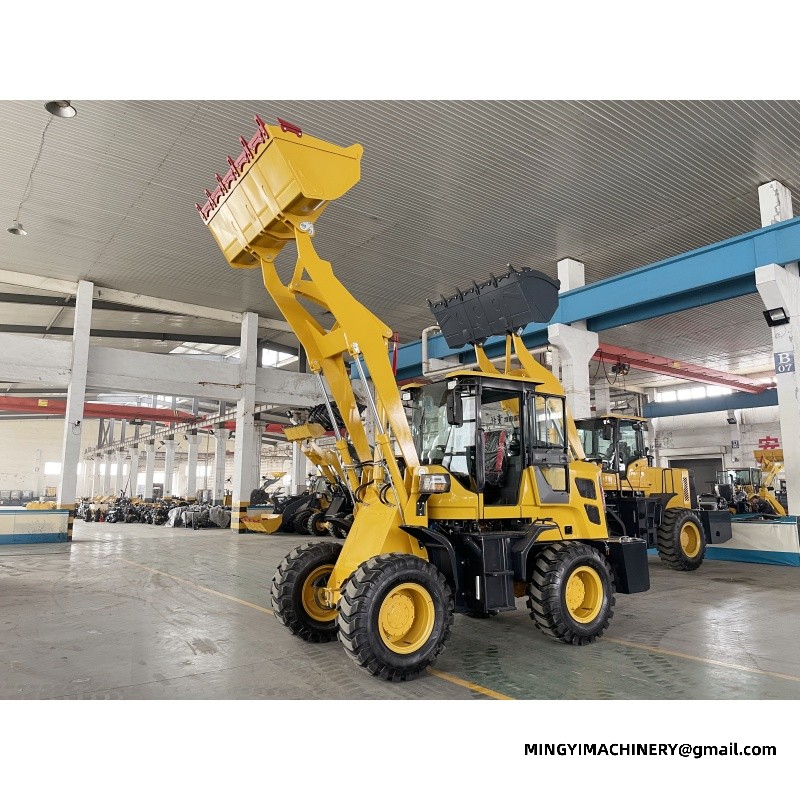
A starter spares box for the light-duty 3.5 m small-frame wheel-side reduction wheel loader is short: filters to match the 4100 core (490 engine); 4105 core (4102T engine) cooling package and the engine, a hose set for the centre cylinder 45 / side cylinder 40 cylinders, a pin and bush kit for the 890 mm boom mounts, and a cutting edge. On the light-duty 4.2 m medium-frame wheel-side reduction wheel loader the same list applies with centre cylinder 60 / side cylinder 50, 900 mm and the 4105 core package.
Beyond that, stock by consequence. A failed hose stops the machine for a day; a failed pump stops it for a week; a failed hinge plate stops it for a season. Filters and hoses are simple and universal enough to keep on site. Pumps — 40 pump (490 engine); 1045 pump (4102 turbo engine) and 316 pump on the light-duty 3.5 m small-frame wheel-side reduction wheel loader, 2063 pump and 25 pump on the light-duty 4.2 m medium-frame wheel-side reduction wheel loader — are worth one spare per fleet, not per machine.
Before specifying anything else, measure the tallest body the loader will ever have to clear, at the front board, loaded, on the worst ground on site. That number decides the machine. The light-duty 4.5 m medium-frame wheel-side reduction wheel loader in this comparison dumps at 4.5 m; the light-duty 4.5 m medium-frame wheel-side reduction wheel loader at 4.5 m. The difference looks small on paper and is decisive at the face, because a loader that cannot clear the board cannot be worked around.
Once the height is settled, capacity sets the number of passes. 0.52 m³ on the light-duty 4.2 m medium-frame wheel-side reduction wheel loader against 0.52 m³ on the light-duty 4.5 m medium-frame wheel-side reduction wheel loader. Multiply by your material weight per cubic metre and check it against what the chassis is carrying, not what the bucket holds — the frame, at 45 mm across the member, is the limit that arrives first.
Which axle should a wheel loader manufacturer china be built with?
Match it to the ground. Track runs 1.5 m (wheel-side reduction axle); 1.45 m (Isuzu axle) on the light-duty 3.5 m small-frame wheel-side reduction wheel loader and 1.6 m on the light-duty 3.5 m medium-frame wheel-side reduction wheel loader; wheel-side reduction for soft or rutted surfaces, the Isuzu-pattern axle for hard, level ground.
What boom wall thickness does a wheel loader manufacturer china need?
25 mm on the light-duty 3.5 m small-frame wheel-side reduction wheel loader against 30 mm on the light-duty 3.5 m medium-frame wheel-side reduction wheel loader. A long arm on a thin wall lifts on paper and feels vague in the yard, so read wall and length together.
Which wheel loader manufacturer china build suits farm work?
The lighter one, for access: a 0.52 m³ bucket at 3.5 m, 1.6 m track and a 4.3 m footprint that turns between sheds. Gate and door widths decide first.
How many hours a day can a wheel loader manufacturer china run?
As many as the cooling and fuel allow: a 70 L (75# large tank) tank on the light-duty 3.5 m medium-frame wheel-side reduction wheel loader and a 4105 core radiator. In dusty work the radiator, not the tank, is usually what sets the limit.
How are the pumps specified on a wheel loader manufacturer china?
Lift and travel are separate circuits: a 40 pump (490 engine); 1045 pump (4102 turbo engine) work pump with a 316 pump travel pump, so a loaded climb does not take flow away from the boom.
Which wheel loader manufacturer china build suits quarry or stockpile work?
The heavy build with the raised core: a 0.52 m³ bucket, 30 mm rear hinge plate, 45 mm cross-member and the 4105 core radiator for fines and dust.
Where is the extra steel in a heavier wheel loader manufacturer china?
Boom wall 25 mm against 30 mm, front hinge 25 mm against 45 mm, rear hinge 14 mm against 30 mm, cross-member 25 mm against 45 mm.
Send the application and the receiving body height and we will match a wheel loader manufacturer china to it from the published range — 0.52 m³ bucket at 3.5 m, or 0.52 m³ at 3.8 m — and specification the build, the container plan and the spares package together.
Commissioning Wheel Loader Manufacturer China: Range, Builds and Export Terms on site
Transport shakes things loose. A short check of Wheel Loader Manufacturer China: Range, Builds and Export Terms after the crate is opened, covering the same points the pre-delivery inspection covered, is the most useful insurance available on delivery day.
Wear items and spares worth holding for Wheel Loader Manufacturer China: Range, Builds and Export Terms
The parts that stop a machine are rarely the parts that are hardest to find. Filters, belts, seals and the ground engaging tools on Wheel Loader Manufacturer China: Range, Builds and Export Terms are easy to hold and slow to replace, which is why they belong on the shelf rather than on an order.
Packing, loading and shipment of Wheel Loader Manufacturer China: Range, Builds and Export Terms
How a machine travels decides how it starts on arrival. Securing Wheel Loader Manufacturer China: Range, Builds and Export Terms against movement, protecting the exposed cylinders and keeping the battery and fluids in the right state for the voyage all belong to the packing list.
Contact MINGYI Machinery for the current wheel loader lineup, configuration options and a formal specification for your market. E-mail: sales@mingycn.com | LINE (ID): mingyicn
Wheel Loader Series: Reliable Builds from Entry to Medium Frame · Wheel Loader Fork Attachment: Matching Forks to the Boom Section · Wheel Loader Supplier: Keeping One Build in Stock · Loaders