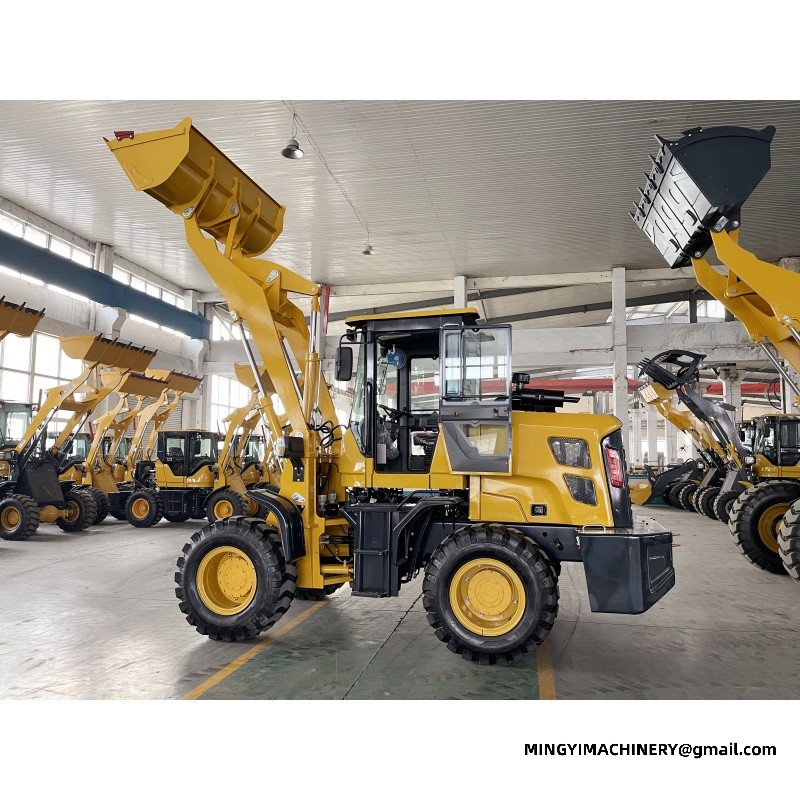
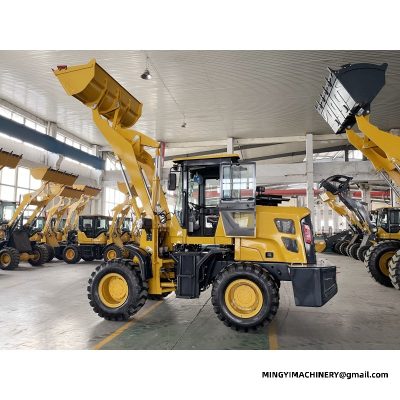
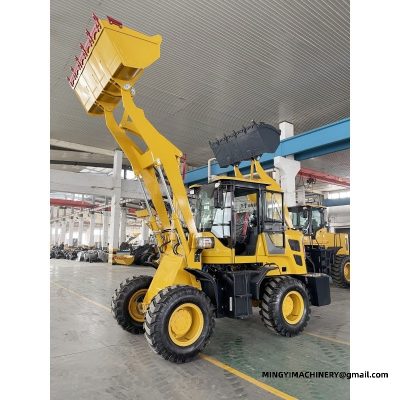
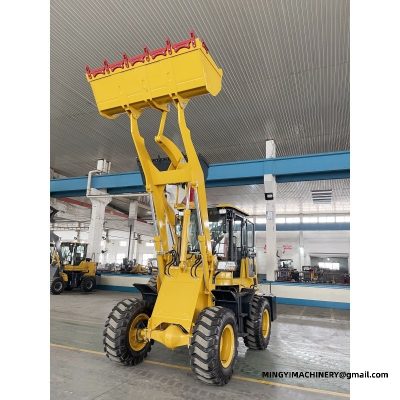
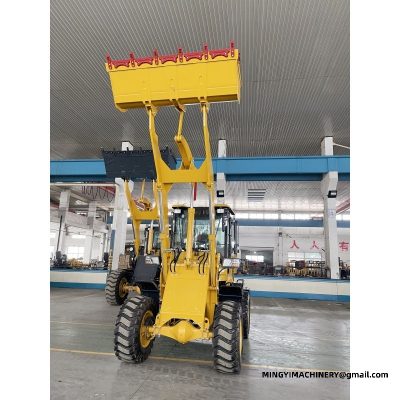
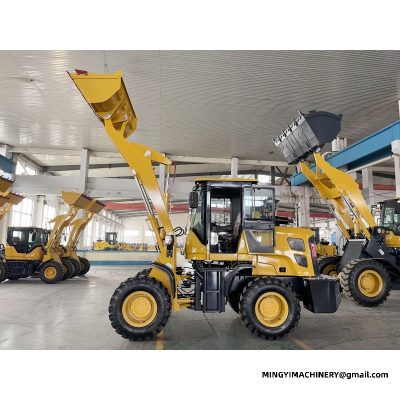
A wheel loader series that cannot turn in the space you have is a wheel loader series that cannot work there, whatever its specification says. Access is a hard constraint and it fails silently: track 1.6 m on the heavy-duty 4.2 m medium-frame wheel-side reduction wheel loader against 1.6 m on the heavy-duty 4.5 m medium-frame wheel-side reduction wheel loader, footprint 4.55 m against 4.95 m. Once access is settled, the real selection begins — bucket 0.65 m³ or 0.65 m³, dump height 4.2 m or 4.5 m, and the hinge and cross-member steel that decides whether the frame lasts. All of it is set out below.
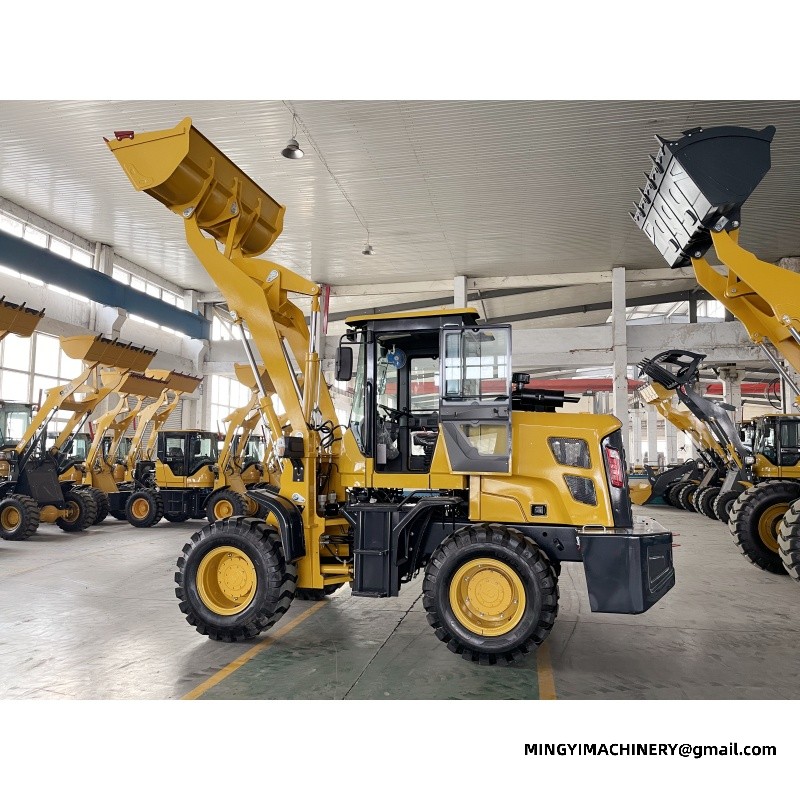
The two axle options on this range are differentiated by track: 1.5 m (wheel-side reduction axle); 1.45 m (Isuzu axle) on the heavy-duty 3.8 m small-frame wheel-side reduction wheel loader, 1.6 m on the heavy-duty 4.2 m medium-frame wheel-side reduction wheel loader. Behind the number is a different reduction layout. The Isuzu-pattern bridge is lighter, faster on hard ground and simpler to service. The wheel-side reduction bridge puts the final drive at the hub, which lowers the load on the shafts and raises the torque available at the tyre.
Choose by surface and gradient. On compacted hardstanding and long haul roads the Isuzu-pattern axle is the better machine; on a soft lane, a loading ramp or an uncompacted stockyard, hub reduction is what keeps the machine moving when a wheel would otherwise spin. Track width interacts with it: 1.5 m (wheel-side reduction axle); 1.45 m (Isuzu axle) on the heavy-duty 3.8 m small-frame wheel-side reduction wheel loader and 1.6 m on the heavy-duty 4.2 m medium-frame wheel-side reduction wheel loader are the figures to check against your narrowest gate, door or aisle before anything else on the sheet.
The battery is specified against the engine it has to crank: 60 Ah (490 engine); 80 Ah (4102 turbo engine) on the heavy-duty 3.8 m small-frame wheel-side reduction wheel loader and 80 Ah on the heavy-duty 4.5 m medium-frame wheel-side reduction wheel loader. Where a build lists two figures, they belong to two engine options — a smaller capacity for the naturally aspirated unit, a larger one for the turbo — and the difference is starting torque in cold weather rather than anything you would notice in July.
For fleets shipping to cold markets, specify the larger capacity and a battery isolator; machines shipped knock-down arrive with batteries boxed and disconnected, and a machine that has sat for six weeks at anchor will not crank on a marginal battery. Check the rest of the electrical package at the same time — the 40 pump (490 engine); 1045 pump (4102 turbo engine) and 316 pump circuits on the heavy-duty 3.8 m small-frame wheel-side reduction wheel loader share the same harness, and a poor earth there presents as slow hydraulics rather than as an electrical fault.
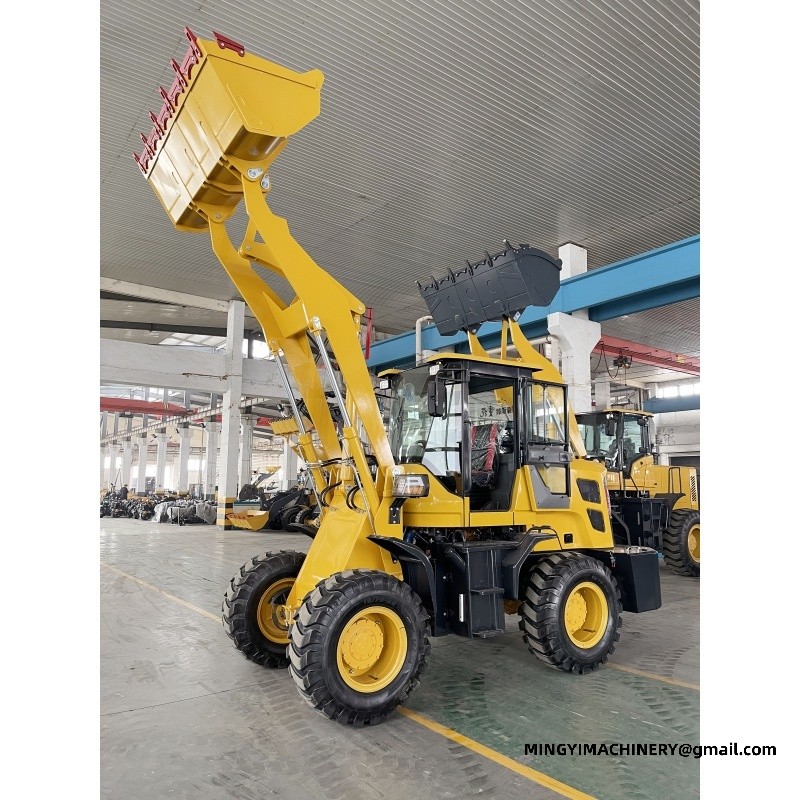
An agricultural loader is a small machine doing varied work, and the specification that matters is the one that lets it into the buildings. Track width 1.6 m on the heavy-duty 4.2 m medium-frame wheel-side reduction wheel loader against 1.6 m on the heavy-duty 4.5 m medium-frame wheel-side reduction wheel loader, footprint 4.55 m against 4.95 m, and dump height 4.2 m against 4.5 m for the wagon or hopper it fills.
Duty is seasonal and mostly light, which is why the light builds exist: a 0.65 m³ bucket with 45 mm cross-member and 30 mm rear hinge plates is correctly specified for silage, bagged goods and yard scraping. Where the machine also does heavy work — muck-out with a loaded bucket, or winter snow clearing — step to the heavier build with 45 mm and 30 mm. Over-specifying takes money once; under-specifying takes a frame.
| Specification extract — heavy-duty 3.2 m small-frame wheel-side reduction wheel loader | |
|---|---|
| Bucket capacity | 0.4 m³ |
| Dump height | 3.2 m |
| Track width | 1.5 m (wheel-side reduction axle); 1.45 m (Isuzu axle) |
| Boom arm thickness | 25 mm |
| Boom arm width | 430 mm |
| Boom arm length | 2.3 m |
| Boom arm centre distance | 890 mm |
| Cross-member thickness | 30 mm |
| Front hinge plate thickness | 30 mm |
| Rear hinge plate thickness | 20 mm |
| Rear frame section | 280 mm high x 800 mm wide |
| Hydraulic cylinders | centre cylinder 45 / side cylinder 45 |
| Fuel tank | 64.7 L (75# small tank) |
| Battery | 60 Ah (490 engine); 80 Ah (4102 turbo engine) |
| Front wheel to counterweight | 4.1 m |
| Radiator | 4100 core (490 engine); 4105 core (4102T engine) |
| Work pump | 40 pump (490 engine); 1045 pump (4102 turbo engine) |
| Travel pump | 316 pump |
Front-wheel-to-counterweight length is the figure that decides whether a machine fits your site: 4.1 m on the heavy-duty 3.2 m small-frame wheel-side reduction wheel loader against 4.25 m on the heavy-duty 4.2 m small-frame wheel-side reduction wheel loader. Track width is the second: 1.5 m (wheel-side reduction axle); 1.45 m (Isuzu axle) against 1.5 m (wheel-side reduction axle); 1.45 m (Isuzu axle). Together they set the turning circle and the narrowest gap the machine will pass, and they are the two numbers least likely to be stated in a sales conversation.
Access is a hard constraint and it fails silently. A loader that cannot turn in a shed is a loader that cannot work in that shed, whatever its bucket capacity. Compare 4.1 m at 1.5 m (wheel-side reduction axle); 1.45 m (Isuzu axle) on the heavy-duty 3.2 m small-frame wheel-side reduction wheel loader with 4.25 m at 1.5 m (wheel-side reduction axle); 1.45 m (Isuzu axle) on the heavy-duty 4.2 m small-frame wheel-side reduction wheel loader, measure your tightest turn and your narrowest doorway, and buy the machine that passes. Where the gap is marginal, the 4.1 m machine with its 0.4 m³ bucket will earn more than the 4.25 m one with 0.4 m³.
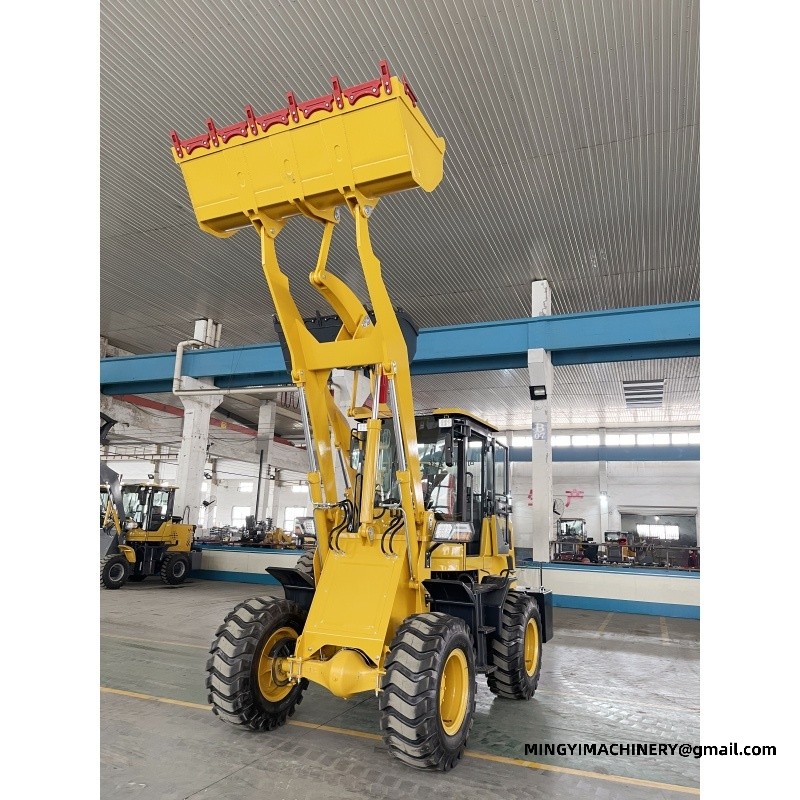
Most loader downtime is avoidable and most of what is avoidable is grease, coolant and hoses. Grease the articulation and the boom pins on the interval — on the heavy-duty 3.2 m low-profile wheel loader that is the 30 mm and 20 mm plates and the 890 mm boom mounts. Keep the 4100 core (490 engine); 4105 core (4102T engine) core clean, because overheating presents as lost power long before it presents as a fault.
Hoses are the second most common cause of a stopped machine and the easiest to plan for: a chafing hose on the centre cylinder 45 / side cylinder 45 circuit weeps before it bursts, and a weekly look finds it. Pumps — 40 pump (490 engine); 1045 pump (4102 turbo engine) and 316 pump on the heavy-duty 3.2 m low-profile wheel loader — rarely fail without warning; they get noisy first. On the heavy-duty 3.5 m small-frame wheel-side reduction wheel loader the equivalents are centre cylinder 45 / side cylinder 40, 40 pump (490 engine); 1045 pump (4102 turbo engine) and 316 pump. Keep a hose set and a filter set on site and most of this becomes a tea break rather than a week.
A specification is only as good as the figures on it. Before comparing numbers between suppliers, make sure the same figures appear on both: bucket 0.3 m³, dump height 2.8 m, boom section 300 mm over 20 mm of wall, hinge plates 16 mm front and 16 mm rear, cross-member 16 mm. If a sheet will not give you those five, it is not a specification, it is a description.
The second thing a sheet should let you check is which engine the figures belong to. Where a build offers two engines, the pump and radiator change with it: this one lists 32 pump and 4100 core. Asking for the build by engine, not by model name, is the single change that prevents most delivery disputes.
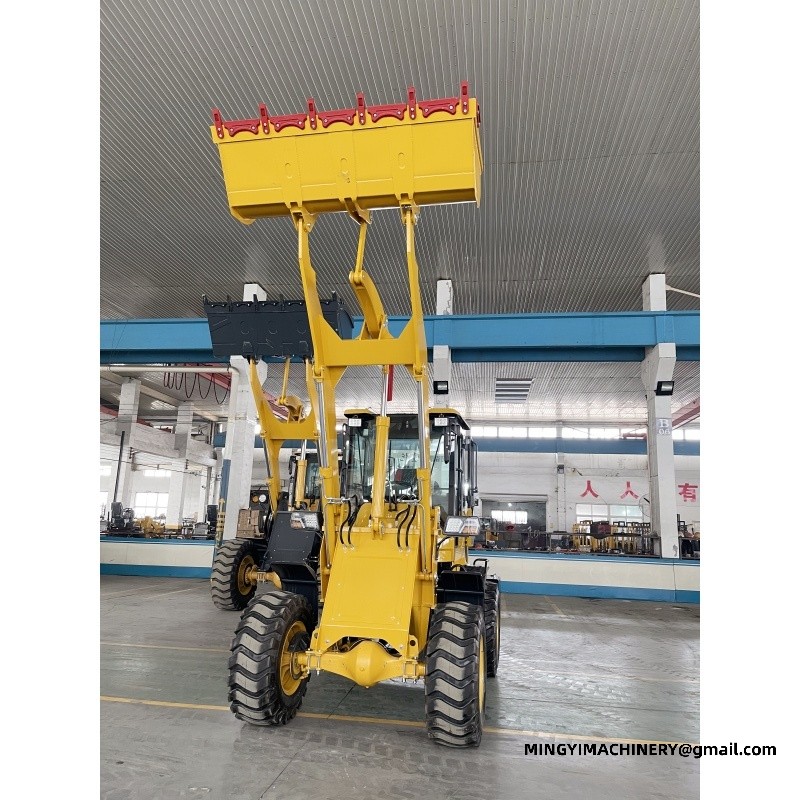
The commercial logic of a family-built range is parts commonality. Within a frame family the centre cylinder 60 / side cylinder 50 cylinder set, the 2063 pump work pump and the 25 pump travel pump are shared, and the boom section — 520 mm on the heavy-duty 4.2 m medium-frame wheel-side reduction wheel loader — is the same, so attachments interchange. Across families, as between the heavy-duty 4.2 m medium-frame wheel-side reduction wheel loader and the heavy-duty 4.5 m medium-frame wheel-side reduction wheel loader, the cylinder set moves to centre cylinder 60 / side cylinder 50 and the section to 520 mm.
For a distributor that translates into a small, fast-moving inventory: one seal kit per cylinder family, one pump pair per family, pins and bushes per boom section, and cutting edges per bucket. Add the model-specific items — the 45 mm or 45 mm cross-member is not a wear part and does not need stocking — and the whole range is supported from a shelf that fits in a container.
Stockpile work is the hardest duty a loader sees: the machine drives into a face, breaks out, reverses under load and turns, all day. The components that govern life are the rear hinge plate, the cross-member and the cooling pack. On the heavy-duty 4.2 m small-frame wheel-side reduction wheel loader those are 20 mm and 30 mm with 4100 core (490 engine); 4105 core (4102T engine); on the heavy-duty 4.5 m medium-frame wheel-side reduction wheel loader they are 30 mm and 45 mm with 4105 core.
Traction is the second half. A stockyard floor is rarely compacted and often rutted, which argues for the wheel-side reduction axle and the 1.6 m track rather than the lighter axle. Add the raised radiator core where the material is fine and dry — cement raw meal, lime, crushed fines — because a blanked core stops the machine in the middle of a shift, and a stopped loader stops everything behind it.
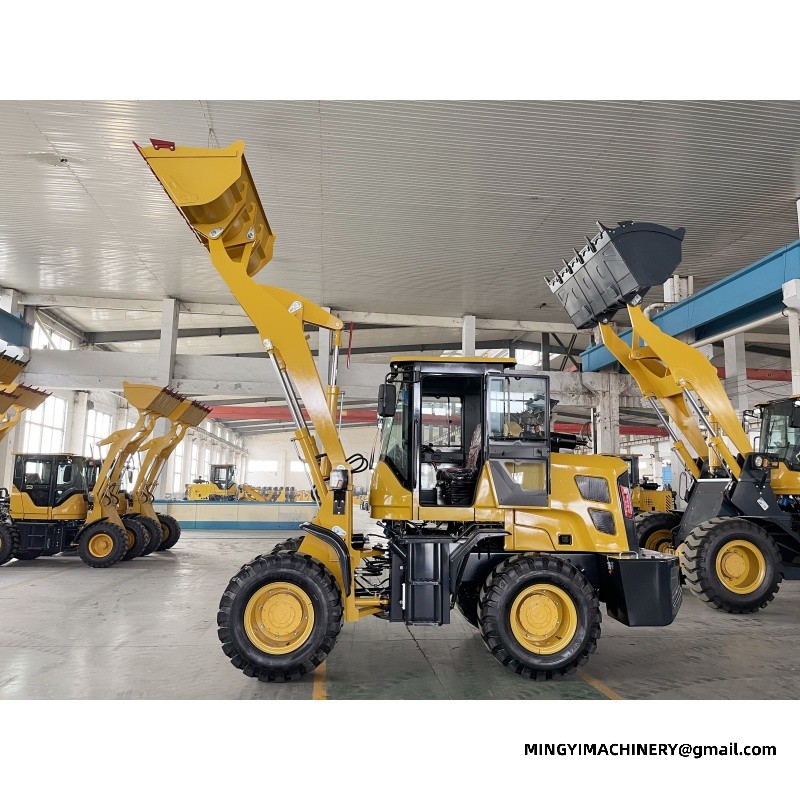
How does a wheel loader series compare with a backhoe loader?
A loader moves more material per pass and carries it higher — 0.65 m³ at 4.5 m on the heavy-duty 4.5 m medium-frame wheel-side reduction wheel loader — while a backhoe digs below grade. Choose by which job you do most.
How do I choose the right dump height for a wheel loader series?
Measure the receiving body at the front board rather than the side: 3.2 m on the heavy-duty 3.2 m low-profile wheel loader, 3.2 m on the heavy-duty 3.2 m small-frame wheel-side reduction wheel loader. Clearance decides whether the pass is possible at all.
How often should the articulation of a wheel loader series be greased?
Every shift in stockpile or face work, weekly in light duty. The 45 mm front and 30 mm rear plates take every steering load, and missed greasing takes pins and bores.
Can a wheel loader series work indoors?
The low-profile builds can, where height and footprint allow: 4.55 m front-to-counterweight length and 1.6 m track on the heavy-duty 4.2 m medium-frame wheel-side reduction wheel loader. Ventilation is the other constraint to check.
How are the pumps specified on a wheel loader series?
Lift and travel are separate circuits: a 40 pump (490 engine); 1045 pump (4102 turbo engine) work pump with a 316 pump travel pump, so a loaded climb does not take flow away from the boom.
How many units of a wheel loader series fit one container?
Two to three, loaded knock-down. Rear frame sections stay between 280 mm high x 800 mm wide and 300 mm high x 800 mm wide across the range, so a forty-foot box takes a mixed pair or trio.
How wide is a wheel loader series?
Track width is 1.5 m (wheel-side reduction axle); 1.45 m (Isuzu axle) on the heavy-duty 3.2 m low-profile wheel loader and 1.6 m on the heavy-duty 4.2 m medium-frame wheel-side reduction wheel loader. Check it against the narrowest gate, door or aisle before anything else on the sheet.
Whether the duty is farm, site or stockpile, the wheel loader series choice comes back to ground, board height and cycle count. Tell us those three and the build follows: axle, radiator, cylinder set and the 0.65 m³ or 0.65 m³ bucket to suit.
Keeping a service record for Wheel Loader Series: Reliable Builds from Entry to Medium Frame
The record should follow the machine, not the owner. When Wheel Loader Series: Reliable Builds from Entry to Medium Frame changes hands the service history travels with it, and a complete folder is often the difference between a quick sale and a long one.
A second operator for Wheel Loader Series: Reliable Builds from Entry to Medium Frame
Training is simpler than repair. An hour spent with a new operator on Wheel Loader Series: Reliable Builds from Entry to Medium Frame, covering the limits and the awkward cases, is the least lengthy hour in the whole ownership.
Contact MINGYI Machinery for the current wheel loader lineup, configuration options and a formal specification for your market. E-mail: sales@mingycn.com | LINE (ID): mingyicn
Wheel Loader Fork Attachment: Matching Forks to the Boom Section · Wheel Loader Snow Blower: Hydraulic Circuits and Winter Duty · Construction Wheel Loader: Specifying for Truck Boards · Loaders









