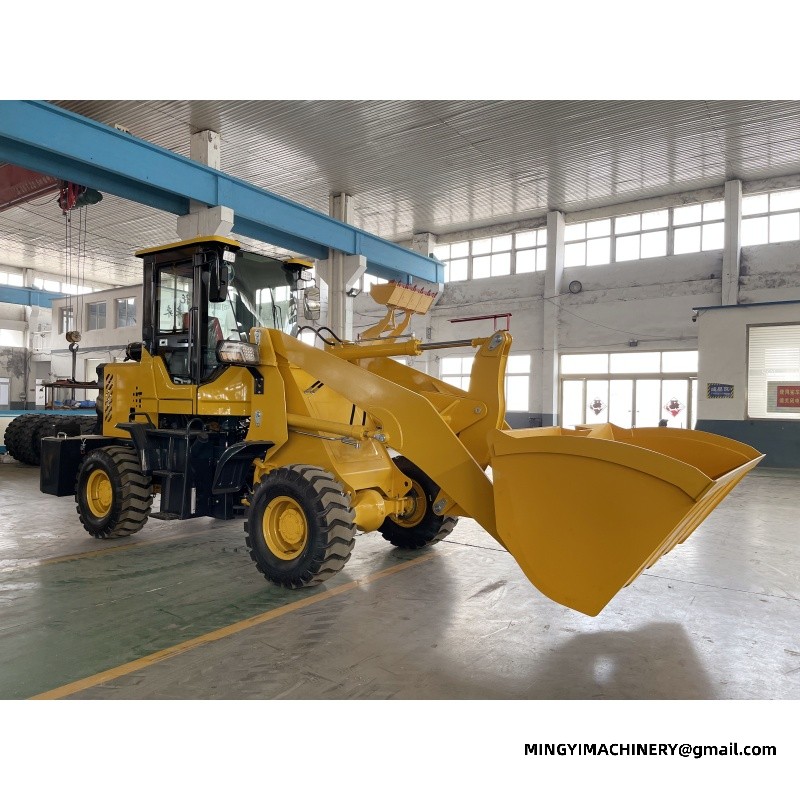
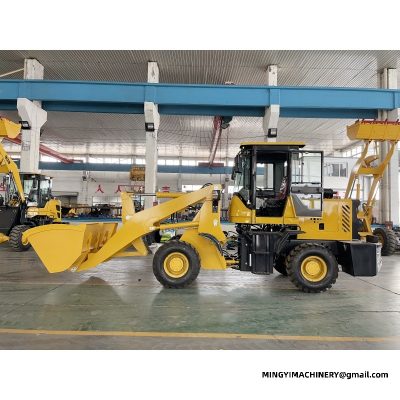
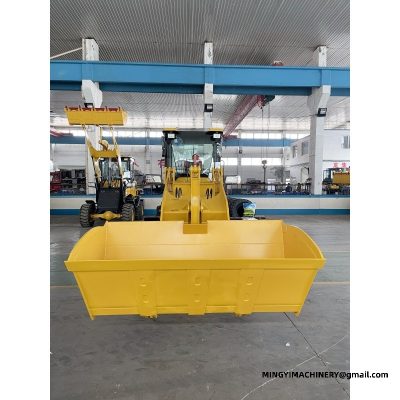
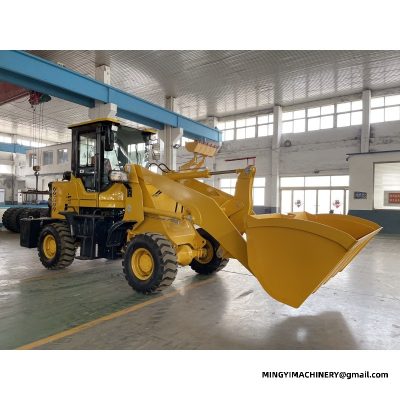
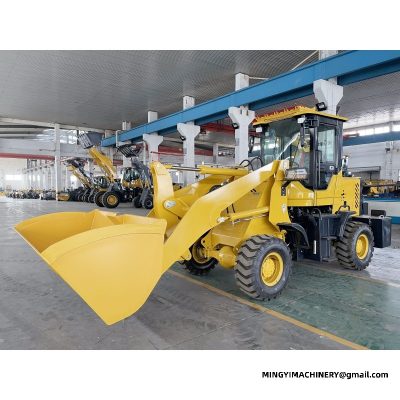
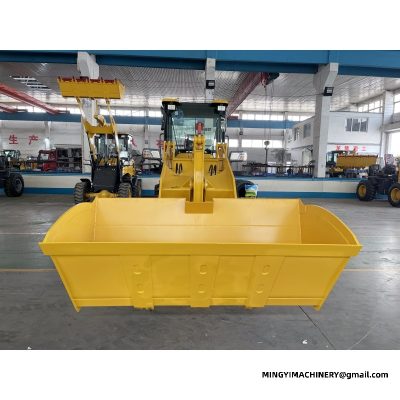
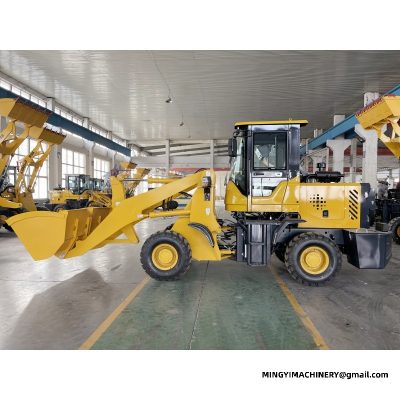
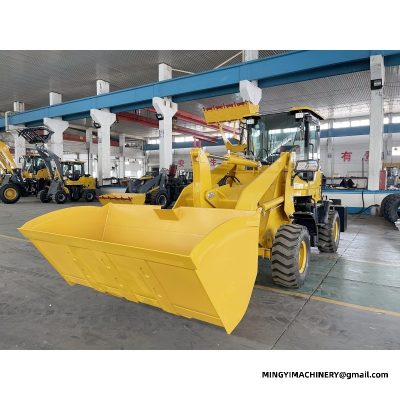
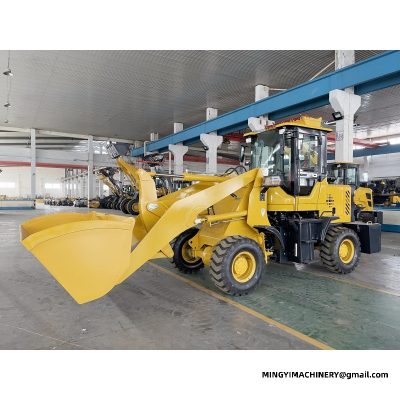
The useful question about any small wheel loader is not what it is called but which frame sits underneath it. Two machines can share a capacity class and differ in every respect that matters: boom wall 20 mm against 25 mm, rear hinge plate 16 mm against 14 mm, cross-member 16 mm against 25 mm. This page takes the published specification of the range — buckets 0.3 m³ to 0.38 m³, dump heights 2.4 m to 3.2 m — and shows how each figure translates into behaviour, effort and service life.
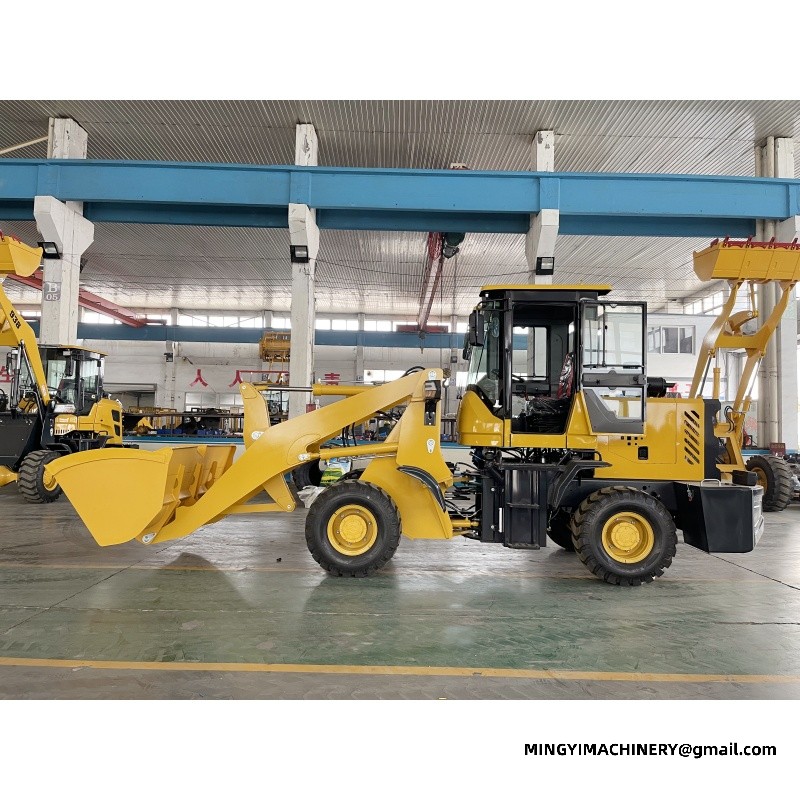
Volume is simple and stability is not. Across the range the buckets run 0.3 m³ on the standard 2.4 m low-profile wheel loader to 0.38 m³ on the light-duty 3.2 m low-profile wheel loader, and the machines behind them are built to match: 20 mm boom wall and 16 mm cross-member against 25 mm and 25 mm. That is why a bigger bucket on a lighter frame is a poor bargain.
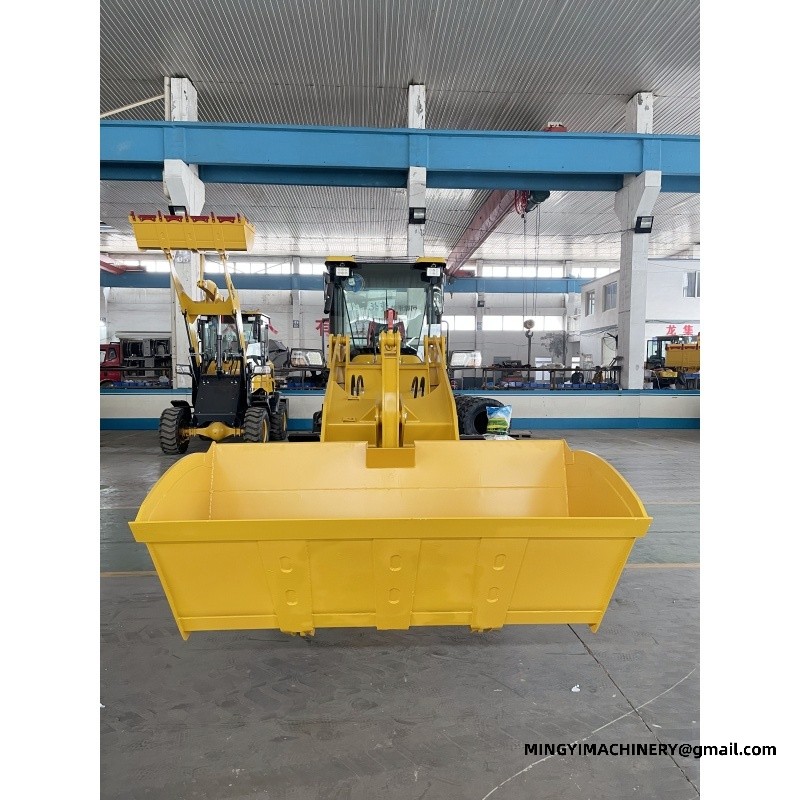
Decide in three steps. First, what are you loading into — that fixes dump height, 2.4 m on the standard 2.4 m low-profile wheel loader or 3.2 m on the light-duty 3.2 m low-profile wheel loader. Second, what is the material's weight per cubic metre — that fixes whether 0.3 m³ or 0.38 m³ is honest. Third, how many passes a day — that fixes whether the extra volume saves enough time to pay for the heavier frame. Skip the second step and you buy a machine that is either slow or overloaded.
A battery specification is really an engine specification in disguise. 45 Ah (24 V) tells you what the engine needs to turn over, and where two figures are listed it tells you the build is offered with more than one engine. The larger figure is the turbo; the smaller, the naturally aspirated option.
Match that to how the machine will be used. Continuous duty — one start, one long shift — is easy on a battery. Intermittent duty — yard work where the engine is stopped every time the operator gets out — is the hard case, and it is where the higher rating earns its keep. The rest of the electrical load is modest, so cranking is what the 45 Ah (24 V) figure is really buying.
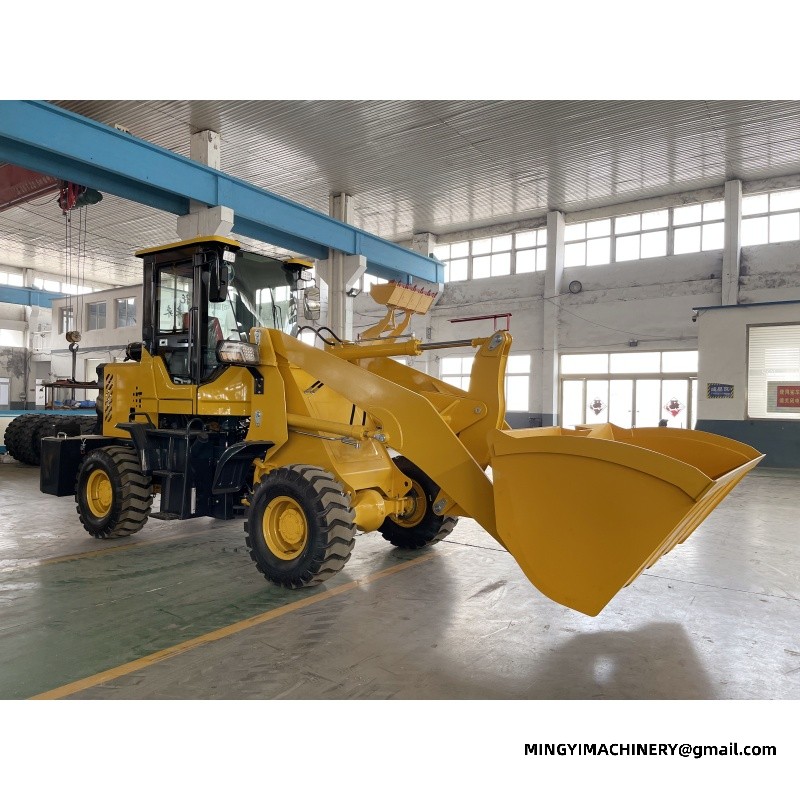
Cooling capacity is sized to the engine's heat rejection, so it appears in the table as a specification rather than a choice: 4100 core on the standard 2.4 m low-profile wheel loader, 4100 core (490 engine); 4105 core (4102T engine) on the heavy-duty 4.5 m small-frame wheel-side reduction wheel loader. Where the build offers two engines — the 490 with a 4100 core, the 4102 turbo with a 4105 raised core — the raised core is the one for hot climates, high altitude and any site where fine material hangs in the air.
Practical advice that takes nothing: blow the core out at the end of every shift in dusty work, in the reverse direction to airflow, and check the cap seat before blaming the radiator. On the standard 2.4 m low-profile wheel loader the 4100 core core sits behind a 200 mm high x 750 mm wide rear frame with limited airflow at low engine speed; on the heavy-duty 4.5 m small-frame wheel-side reduction wheel loader the 4100 core (490 engine); 4105 core (4102T engine) core is served by the same 316 pump driven circuit. Neither is difficult to keep clean, and both will lose a season to neglect.
| Sample build from the range — heavy-duty 4.5 m small-frame wheel-side reduction wheel loader | |
|---|---|
| Bucket capacity | 0.4 m³ |
| Dump height | 4.5 m |
| Track width | 1.5 m (wheel-side reduction axle); 1.45 m (Isuzu axle) |
| Boom arm thickness | 25 mm |
| Boom arm width | 500 mm |
| Boom arm length | 3.15 m |
| Boom arm centre distance | 890 mm |
| Cross-member thickness | 30 mm |
| Front hinge plate thickness | 30 mm |
| Rear hinge plate thickness | 20 mm |
| Rear frame section | 280 mm high x 800 mm wide |
| Hydraulic cylinders | centre cylinder 45 / side cylinder 45 |
| Fuel tank | 64.7 L (75# small tank) |
| Battery | 60 Ah (490 engine); 80 Ah (4102 turbo engine) |
| Front wheel to counterweight | 4.25 m |
| Radiator | 4100 core (490 engine); 4105 core (4102T engine) |
| Work pump | 40 pump (490 engine); 1045 pump (4102 turbo engine) |
| Travel pump | 316 pump |
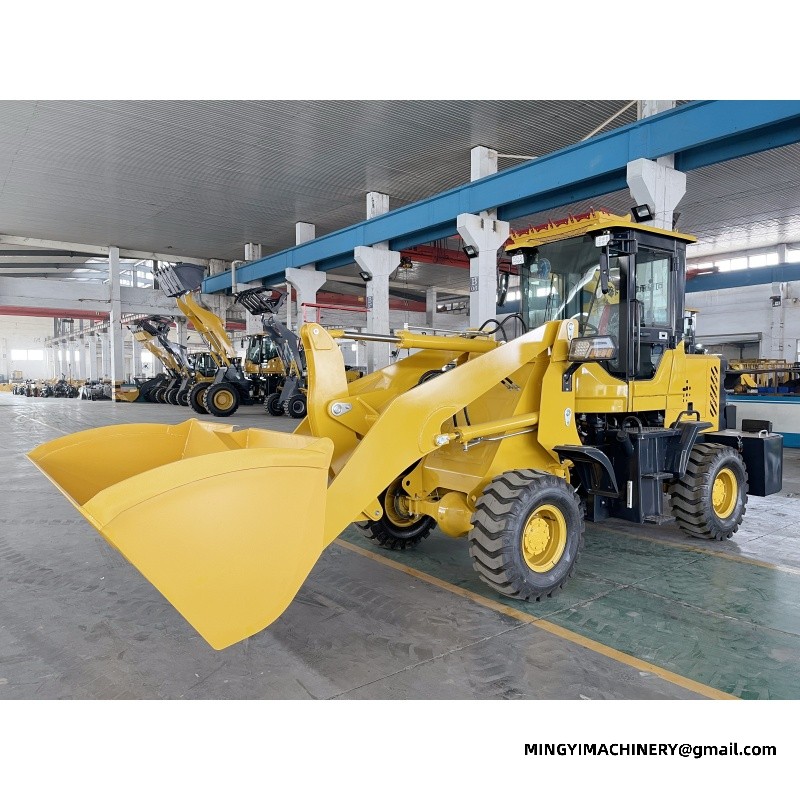
Fuel and cooling capacity are not comfort figures; they are shift-planning figures. A 30.8 L (48# large tank, 20.5/70-16 tyres); 24.6 L (48# small tank, 8.25-16 tyres) tank on the standard 2.4 m low-profile wheel loader is sized so a full working day at operating throttle does not need a mid-shift refuel, which matters on sites where the bowser is a long way from the face. The light-duty 3.8 m small-frame wheel-side reduction wheel loader carries 64.7 L (75# small tank).
The radiator is the other side of the same question. 4100 core on this build against 4100 core (490 engine); 4105 core (4102T engine) on the other. Where a build offers two cores, the raised one serves the turbo engine, and it is the correct specification for dusty work, high ambient temperature, or any duty where the machine spends its day at high load and low speed with little air passing through the core.
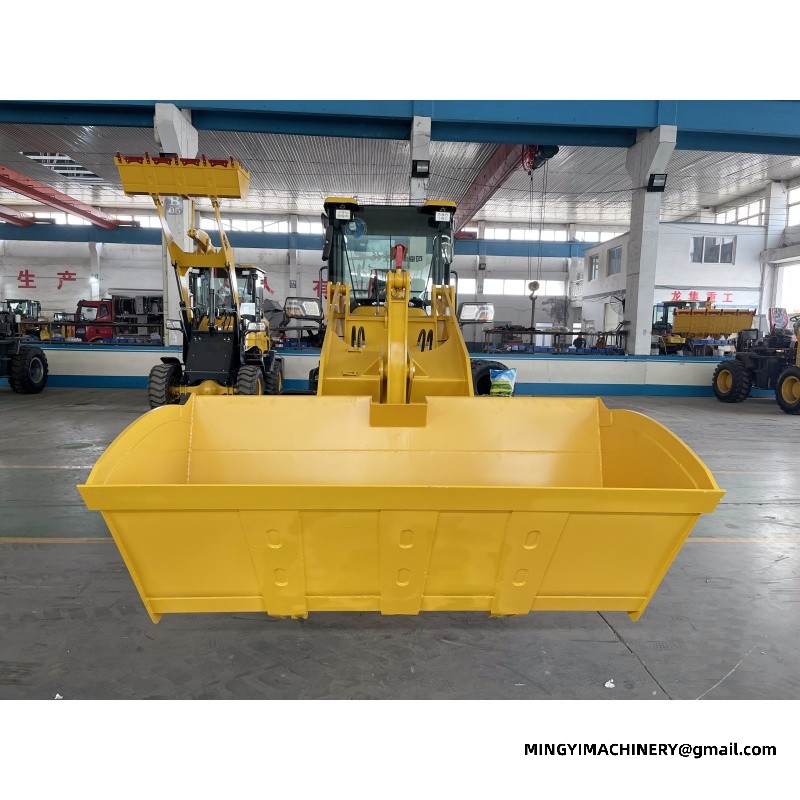
The first hour of running tells you more than the first month of paperwork. Watch the cooling: 4100 core (490 engine); 4105 core (4102T engine) should hold temperature at working load without the fan running continuously. Listen to the hydraulics: centre cylinder 45 / side cylinder 40 on a 40 pump (490 engine); 1045 pump (4102 turbo engine) should lift a full 0.38 m³ bucket to 3.5 m without the relief valve complaining.
Then check the electrical side under load, which is what the 60 Ah (490 engine); 80 Ah (4102 turbo engine) rating exists for. Restart the machine hot, restart it cold, and watch the cranking. A battery that is marginal on day one will fail in the first cold week, and it is far easier to settle at commissioning than six months later.
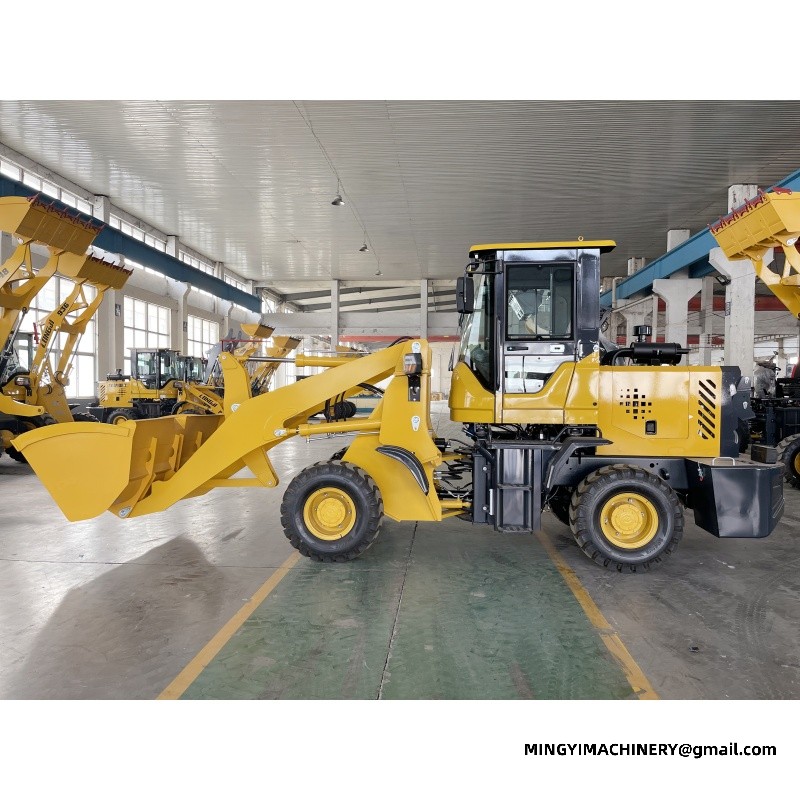
Hold the parts that stop the machine and cannot be improvised: hoses and seals for the centre cylinder 45 / side cylinder 40, a belt set, filters, and a battery to the 60 Ah (490 engine); 80 Ah (4102 turbo engine) rating. Do not hold the parts that are welded in — hinge plates at 25 mm and 14 mm, the 25 mm cross-member. Those are a repair, not a spare, and they are the same steel on every machine in the family.
The pump is the judgement call. 40 pump (490 engine); 1045 pump (4102 turbo engine) is a stocked item and a week of downtime if it is not; the 316 pump fails less often and is the one most fleets choose to order rather than hold. Decide on that by distance from the supplier, not by the effort of the part.
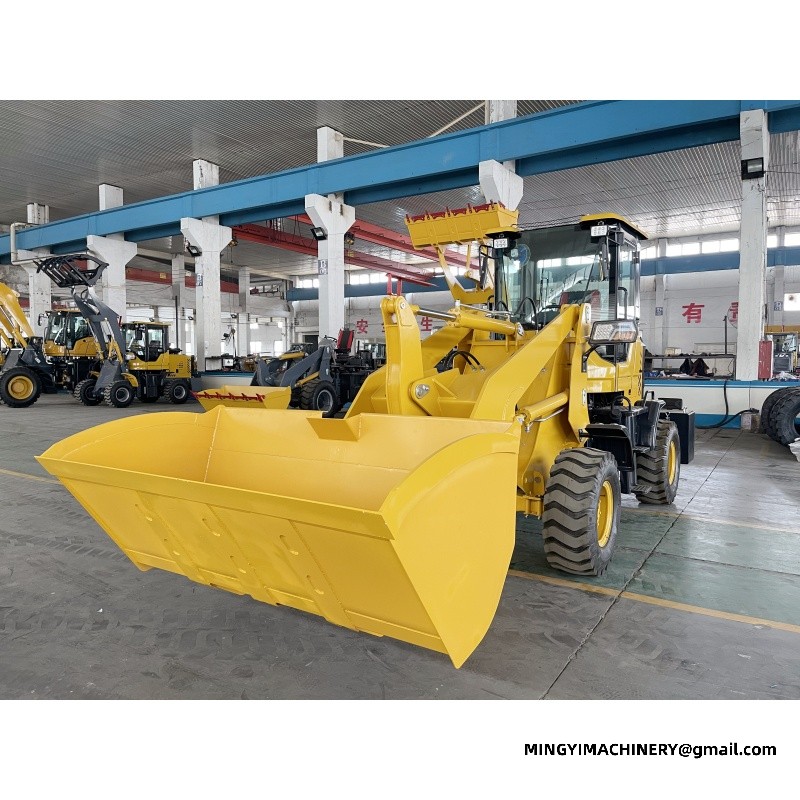
Shipping is a dimensions problem before it is a freight problem. Front wheel to counterweight is 4 m on this build and 4.1 m on the light-duty 3.8 m small-frame wheel-side reduction wheel loader; track is 1.5 m (wheel-side reduction axle); 1.45 m (Isuzu axle). Those two figures, plus the bucket, decide how many units fit a container and whether the machine travels assembled.
Dump height matters here for a reason that surprises people: a machine shipped with the arm raised will not fit under a container door. At 3.5 m of lift height the arm has to be strapped down, and the securing points are on the frame — the 280 mm high x 800 mm wide rear section and the cross-member behind it, not the cylinders.
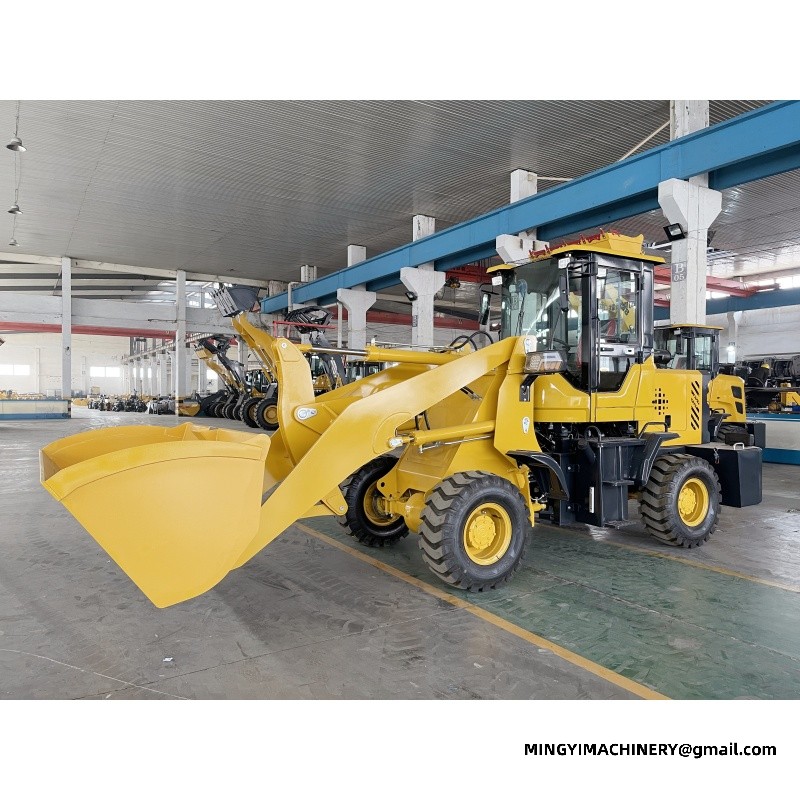
Articulated loaders wear at the pins, and pins wear because they were dry. Front plate 25 mm, rear plate 14 mm, and the cross-member behind them at 25 mm: that assembly is what steering works through, several hundred times a shift. Grease intervals are measured in hours, not months, on a machine doing short cycles.
The boom pivots are the second set, and they are the ones an operator feels first. A 2.3 m arm on a 890 mm spacing, lifted by centre cylinder 45 / side cylinder 40, loads its pins every pass. If the machine develops a clunk on lift, look there before looking at the pump — the pump, 40 pump (490 engine); 1045 pump (4102 turbo engine), is usually fine and the pin is usually not.
Continuous stockpile duty is where light builds are separated from heavy ones, and the separation is visible in steel. The heavy-duty 3.5 m medium-frame wheel-side reduction wheel loader lists 45 mm front and 30 mm rear hinge plates over a 45 mm cross-member and a 300 mm high x 800 mm wide rear frame, carrying 0.65 m³ to 3.5 m. The standard 2.4 m low-profile wheel loader lists 16 mm, 16 mm, 16 mm and 200 mm high x 750 mm wide, carrying 0.3 m³ to 2.4 m.
Choose by cycle count rather than by material. Below twenty truck loads a day the lighter machine is the better economics; above it, the heavier frame pays for itself in avoided downtime. Then specify the cooling package for the material — 4105 core raised core for fines and dust — and the axle for the floor. Both are simple at order time and neither is simple later.
Which axle should a small wheel loader be built with?
Match it to the ground. Track runs 1.2 m (Isuzu axle); 1.3 m (wheel-side reduction axle) on the standard 2.4 m low-profile wheel loader and 1.5 m (wheel-side reduction axle); 1.45 m (Isuzu axle) on the light-duty 3.2 m low-profile wheel loader; wheel-side reduction for soft or rutted surfaces, the Isuzu-pattern axle for hard, level ground.
What bucket capacity should a small wheel loader be specified with?
Match it to the material and to the body being filled: 0.3 m³ on the standard 2.4 m low-profile wheel loader against 0.38 m³ on the light-duty 4.2 m small-frame wheel-side reduction wheel loader. Heavy material limits volume before the frame does.
How is a small wheel loader prepared for export?
Knock-down: booms and counterweights packed loose, tanks removed, batteries boxed and disconnected. Rear frame sections stay between 200 mm high x 750 mm wide and 300 mm high x 800 mm wide.
How often should the articulation of a small wheel loader be greased?
Every shift in stockpile or face work, weekly in light duty. The 16 mm front and 16 mm rear plates take every steering load, and missed greasing takes pins and bores.
Can a small wheel loader be used for snow clearance?
Yes, with a snow tool specified against the boom section — 370 mm on the light-duty 3.8 m small-frame wheel-side reduction wheel loader — and the third circuit ordered if the tool is hydraulically actuated.
How wide is a small wheel loader?
Track width is 1.5 m (wheel-side reduction axle); 1.45 m (Isuzu axle) on the light-duty 4.2 m small-frame wheel-side reduction wheel loader and 1.6 m on the heavy-duty 3.5 m medium-frame wheel-side reduction wheel loader. Check it against the narrowest gate, door or aisle before anything else on the sheet.
Is the wheel-side reduction axle worth specifying on a small wheel loader?
If the ground is soft, rutted or sloped, yes: a 1.5 m (wheel-side reduction axle); 1.45 m (Isuzu axle) track with hub reduction keeps traction where a faster axle would spin. On hard, level ground it is not needed.
Models, options and container plans are stated per order against the actual mix. Send the application, the material and the receiving body height, and we will specify the small wheel loader — axle, radiator, bucket and third circuit — in one pass.
Documents that travel with Small Wheel Loader: Light Builds for Farms and Nurseries
Keeping the documents together is part of ownership. The manual, the service record and the build sheet for Small Wheel Loader: Light Builds for Farms and Nurseries belong in one folder, and the machine is easier to sell later when that folder is complete.
Wear items and spares worth holding for Small Wheel Loader: Light Builds for Farms and Nurseries
The parts that stop a machine are rarely the parts that are hardest to find. Filters, belts, seals and the ground engaging tools on Small Wheel Loader: Light Builds for Farms and Nurseries are easy to hold and slow to replace, which is why they belong on the shelf rather than on an order.
Contact MINGYI Machinery for the current wheel loader lineup, configuration options and a formal specification for your market. E-mail: sales@mingycn.com | LINE (ID): mingyicn
Wheel Loader for Sale: Builds, Options and Container Planning · Wheel Loader Manufacturer: Five Figures to Ask For · Mining Wheel Loader: Dust, Heat and Cooling Care · Loaders








