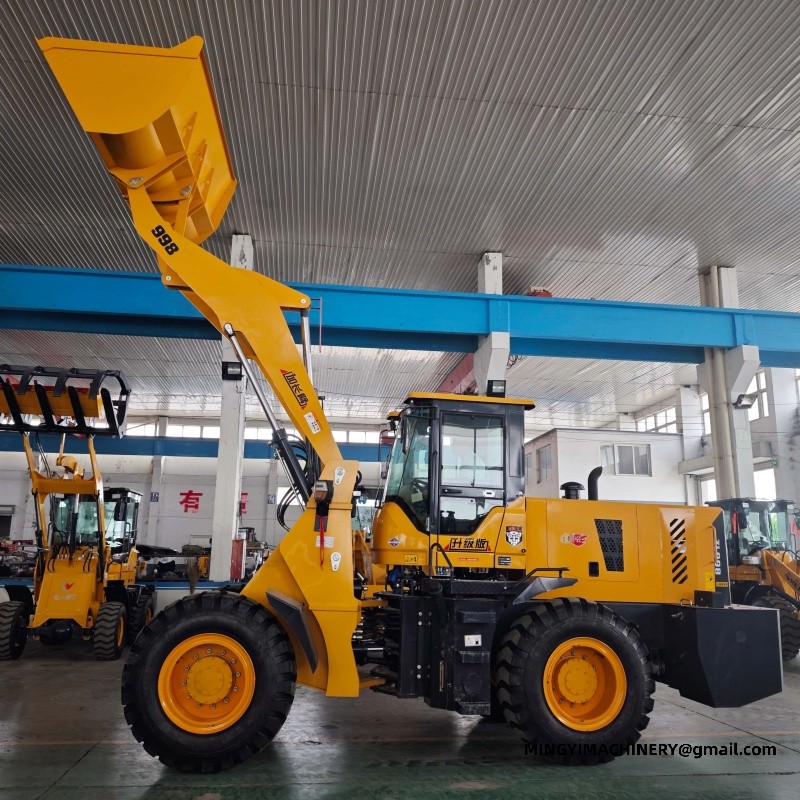
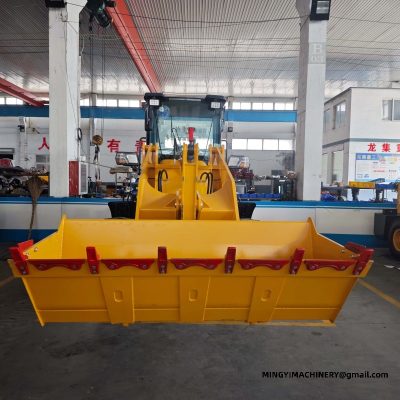
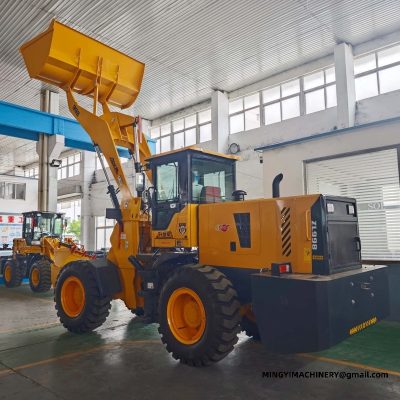
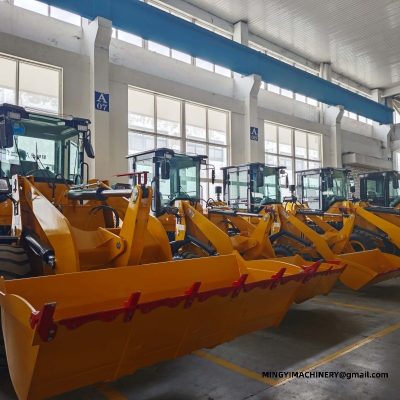
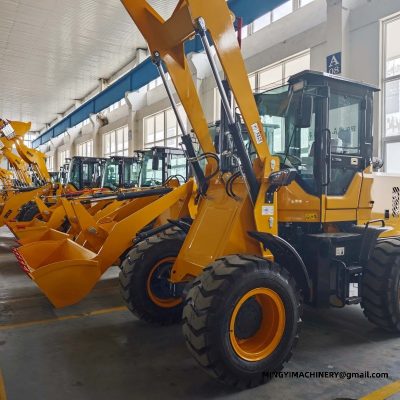
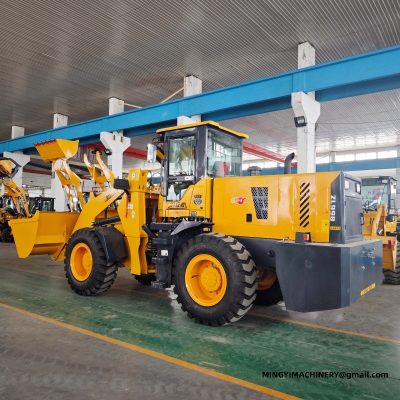
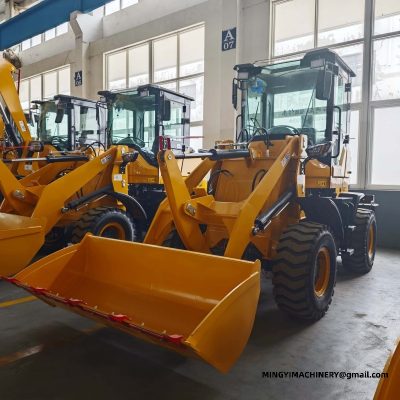
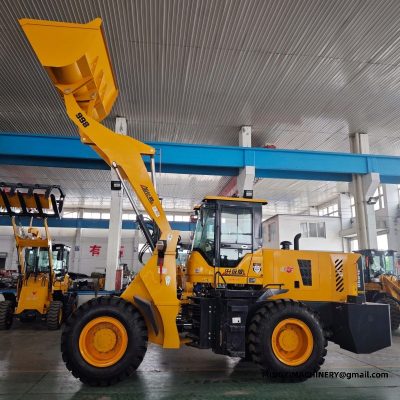
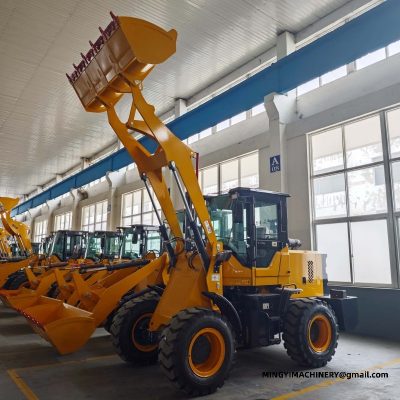
The simplest mining wheel loader decision is the one made on paper.Choosing the wrong dump height takes a machine; choosing the wrong axle takes a driveline; choosing the wrong hinge steel takes a frame. Each of those is a row on a specification sheet, and each is published for every build here. The two machines compared throughout are the standard 2.8 m low-profile wheel loader, lifting 2.8 m, and the heavy-duty 3.2 m low-profile wheel loader, lifting 3.2 m. Read the rows in the order they will effort you money and the choice usually makes itself.
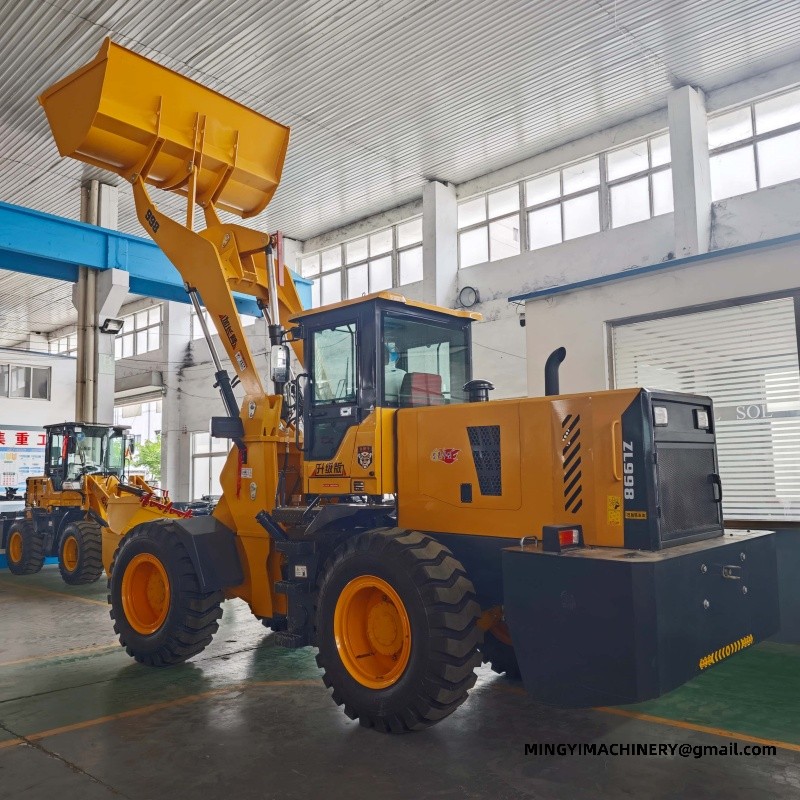
Every axle specification is a compromise between traction and speed, and the range resolves it with two families: 1.2 m (Isuzu axle); 1.3 m (wheel-side reduction axle) track on the standard 2.8 m low-profile wheel loader and 1.5 m (wheel-side reduction axle); 1.45 m (Isuzu axle) on the heavy-duty 3.2 m low-profile wheel loader. The wider track adds stability; the reduction layout decides whether the torque reaches the ground. Ask which ground the machine will spend eighty per cent of its hours on, then read the axle line.
Stability also comes from elsewhere in the table. The standard 2.8 m low-profile wheel loader carries a 3.5 m front-wheel-to-counterweight length and a 0.3 m³ bucket at 2.8 m; the heavy-duty 3.2 m low-profile wheel loader carries 4.1 m with 0.4 m³ at 3.2 m. A wide track on a short wheelbase is less stable than a narrower track on a long one, which is why the footprint figure belongs in the same conversation as the axle. On soft or rutted ground, take the hub reduction every time.
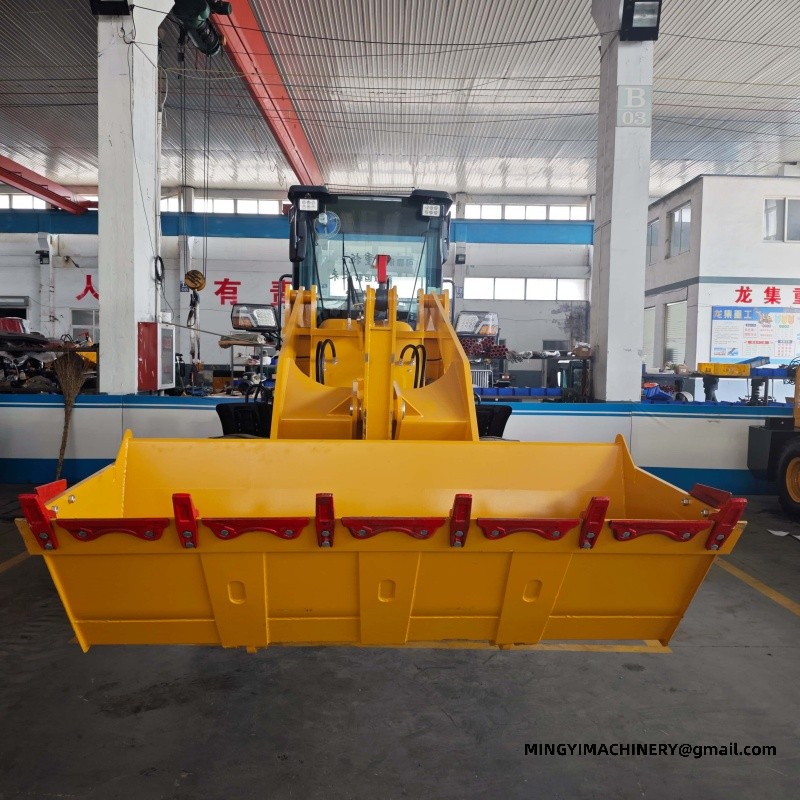
A bucket that fills completely every pass beats a larger one that fills partly, because a partly filled bucket is carrying air at the same effort as material. On a dense face, 0.3 m³ will fill where 0.4 m³ might not, and the smaller machine finishes the job first while putting less load into the 16 mm hinge.
There is also the question of what the load does to the machine in motion. Carrying a full bucket across rough ground loads the front axle, the hinge and the boom all at once. At 3.5 m front wheel to counterweight and 1.2 m (Isuzu axle); 1.3 m (wheel-side reduction axle) of track, the shorter machine with the right bucket is more stable as well as quicker, and stability is what keeps a cycle time consistent rather than occasionally fast.
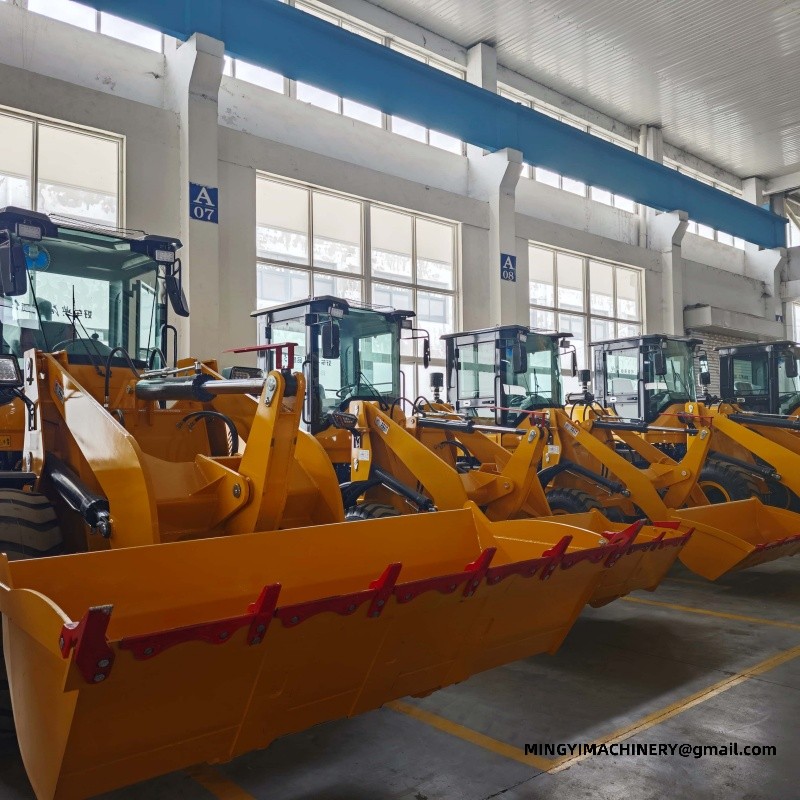
Battery capacity appears in the table as 45 Ah (24 V) for the standard 2.8 m low-profile wheel loader and 60 Ah (490 engine); 80 Ah (4102 turbo engine) for the heavy-duty 3.2 m low-profile wheel loader. On builds with two engine options the two figures track the engines: the naturally aspirated unit cranks on less, the turbo needs more, and the 24 V system exists precisely because cranking a turbo diesel at minus ten needs the extra headroom.
What buyers should confirm before dispatch is not the capacity but the condition and the connections. Machines ship with batteries disconnected and boxed, so the first start is also the first check of every terminal. On the standard 2.8 m low-profile wheel loader that pack feeds the 4100 core cooling circuit's fan drive and the instrument cluster; on the heavy-duty 3.2 m low-profile wheel loader it feeds 4100 core (490 engine); 4105 core (4102T engine) and the same cluster. A marginal earth shows up as a slow crank in winter and as gauge flicker in summer.
| Published build data — heavy-duty 3.2 m low-profile wheel loader | |
|---|---|
| Bucket capacity | 0.4 m³ |
| Dump height | 3.2 m |
| Track width | 1.5 m (wheel-side reduction axle); 1.45 m (Isuzu axle) |
| Boom arm thickness | 25 mm |
| Boom arm width | 430 mm |
| Boom arm length | 2.3 m |
| Boom arm centre distance | 890 mm |
| Cross-member thickness | 30 mm |
| Front hinge plate thickness | 30 mm |
| Rear hinge plate thickness | 20 mm |
| Rear frame section | 230 mm high x 800 mm wide |
| Hydraulic cylinders | centre cylinder 45 / side cylinder 45 |
| Fuel tank | 54 L (50# tank) |
| Battery | 60 Ah (490 engine); 80 Ah (4102 turbo engine) |
| Front wheel to counterweight | 4.1 m |
| Radiator | 4100 core (490 engine); 4105 core (4102T engine) |
| Work pump | 40 pump (490 engine); 1045 pump (4102 turbo engine) |
| Travel pump | 316 pump |
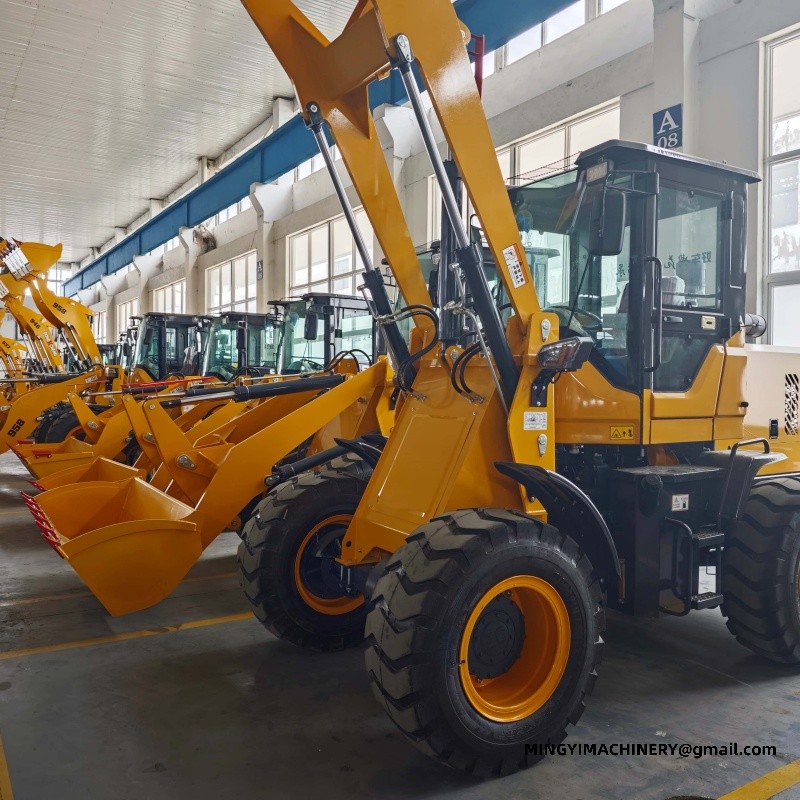
Soft ground punishes driveline parts before it punishes the frame. Sand, clay and loose overburden all increase rolling resistance, which increases torque at the hub, which is exactly where a non-reduction axle is weakest. Where the specification lists two track figures, as it does here at 1.5 m (wheel-side reduction axle); 1.45 m (Isuzu axle), the wider one belongs to the hub-reduction axle and is the specification for that ground.
Hard ground is the opposite case. On concrete, compacted hardstand or a paved yard, rolling resistance is low and sustained travel speed is high, so heat rather than torque becomes the limit. The heavy-duty 3.8 m small-frame wheel-side reduction wheel loader lists 1.5 m (wheel-side reduction axle); 1.45 m (Isuzu axle), and the narrower figure there is the one for hard standing. Matching axle to surface takes nothing at the order stage and saves a driveline later.
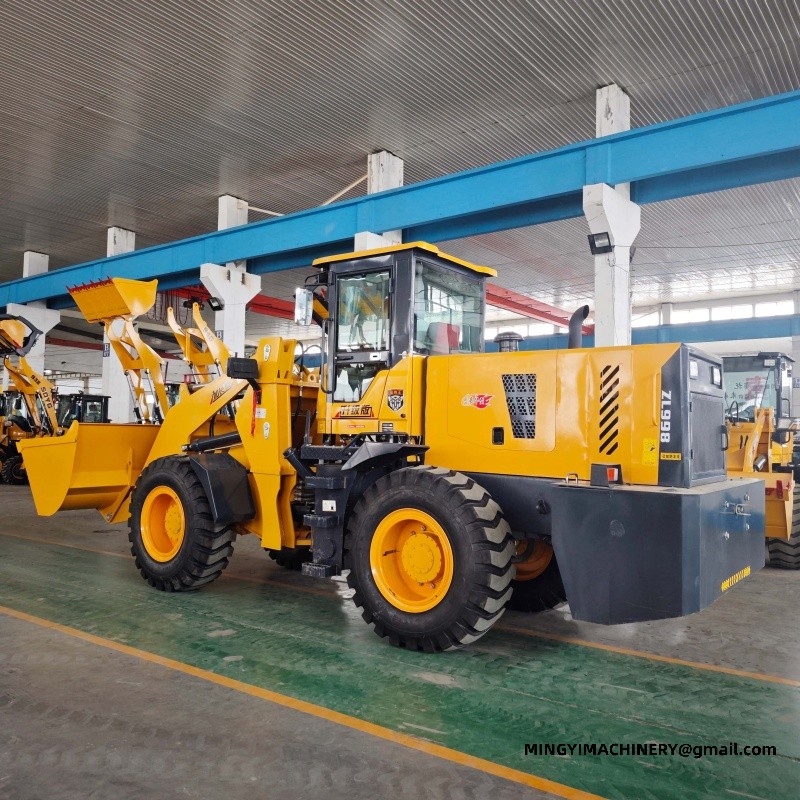
Breakout force is advertised; what you feel in the cab is the combination behind it. On the standard 2.8 m low-profile wheel loader that is a centre cylinder 45 / side cylinder 40 cylinder set on a 2.05 m boom with a 680 mm centre distance, lifting a 0.3 m³ bucket to 2.8 m. On the heavy-duty 3.2 m low-profile wheel loader it is centre cylinder 45 / side cylinder 45 on a 2.3 m arm with 890 mm spacing, lifting 0.4 m³ to 3.2 m.
Heat is the failure mode nobody plans for. A pump working at the top of its flow all shift, in dust, at altitude, will cook its oil — and the 32 pump on the standard 2.8 m low-profile wheel loader and the 40 pump (490 engine); 1045 pump (4102 turbo engine) on the heavy-duty 3.2 m low-profile wheel loader were each sized against their own cylinder volumes and duty. The matching travel pumps, 316 pump and 316 pump, keep drive independent so a loaded climb does not stall the boom. Specify the third circuit at order time if a hydraulic tool is in the plan; plumbing added later is the most common source of leaks we see in the field.
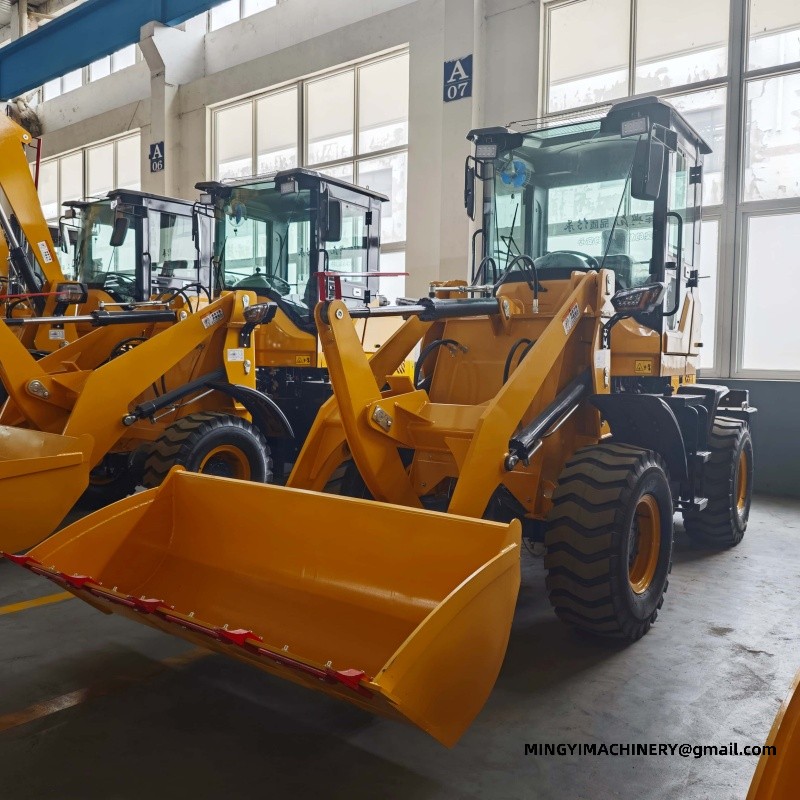
Daily: walk the machine, look at the ground under it, check the coolant level in the 4100 core package, and grease the hinge pins. The hinge is where wear starts, and on the standard 2.8 m low-profile wheel loader those are 16 mm front and 16 mm rear plates over a 16 mm cross-member — a greasing interval missed there takes pins and bores, not just grease.
Weekly: check the centre cylinder 45 / side cylinder 40 cylinder rods for scoring, the hoses for chafe, and the 32 pump and 316 pump connections for weeping. Monthly: torque the boom mount pins to the 680 mm spacing and inspect the cutting edge. On the heavy-duty 3.2 m low-profile wheel loader the same schedule applies with 4100 core (490 engine); 4105 core (4102T engine), centre cylinder 45 / side cylinder 45, 40 pump (490 engine); 1045 pump (4102 turbo engine) and 890 mm. None of it is skilled work, and all of it is simpler than the failure it prevents.
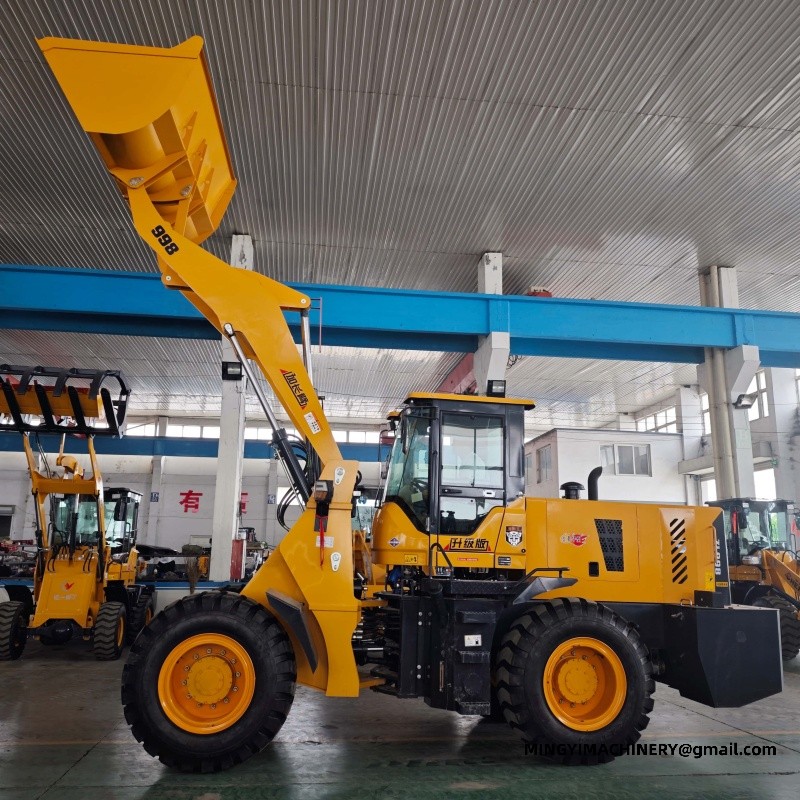
Purchase decision is the smallest of the three numbers that matter; the other two are downtime and residual value, and both are decided by the frame. A machine built with 16 mm rear hinge plates and a 16 mm cross-member, as on the standard 2.8 m low-profile wheel loader, will be tight at year three in light duty. A machine with 20 mm and 30 mm, as on the heavy-duty 3.2 m low-profile wheel loader, will still be tight in heavy duty.
Fuel, tyres and filters are the predictable takes, and they scale with duty rather than with capacity. A 0.3 m³ bucket working a short cycle on a 30.8 L (48# large tank, 20.5/70-16 tyres); 24.6 L (48# small tank, 8.25-16 tyres) tank takes less per day than a 0.4 m³ bucket on 54 L (50# tank) working a long one — and moves less material. The honest comparison is effort per tonne moved, which needs your cycle, not a brochure.
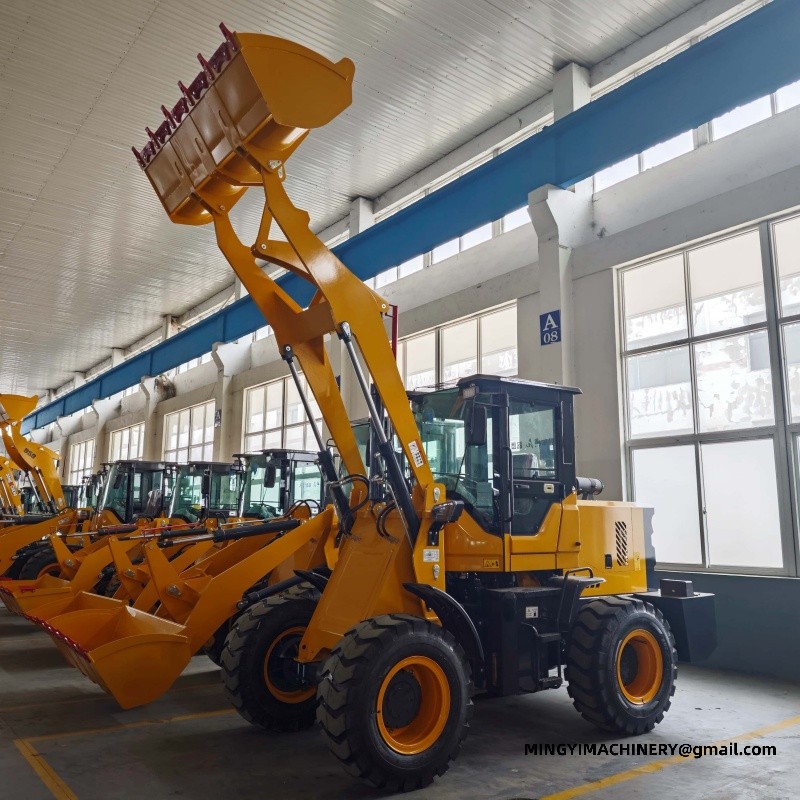
Stockpile work is the hardest duty a loader sees: the machine drives into a face, breaks out, reverses under load and turns, all day. The components that govern life are the rear hinge plate, the cross-member and the cooling pack. On the standard 2.8 m low-profile wheel loader those are 16 mm and 16 mm with 4100 core; on the heavy-duty 3.2 m low-profile wheel loader they are 20 mm and 30 mm with 4100 core (490 engine); 4105 core (4102T engine).
Traction is the second half. A stockyard floor is rarely compacted and often rutted, which argues for the wheel-side reduction axle and the 1.5 m (wheel-side reduction axle); 1.45 m (Isuzu axle) track rather than the lighter axle. Add the raised radiator core where the material is fine and dry — cement raw meal, lime, crushed fines — because a blanked core stops the machine in the middle of a shift, and a stopped loader stops everything behind it.
How do I choose the axle on a mining wheel loader?
By surface. Track is 1.2 m (Isuzu axle); 1.3 m (wheel-side reduction axle) here; where two figures are listed the wider one is the hub-reduction axle for soft or rutted ground, the narrower one suits hard standing.
How much clearance do I need over a truck board?
Dump height is measured at the bucket edge, so subtract the crest of the material. The heavy-duty 3.5 m small-frame wheel-side reduction wheel loader gives 3.5 m and the heavy-duty 4.2 m small-frame wheel-side reduction wheel loader gives 4.2 m; the board has to sit under the lower of the two with allowance.
What affects operator fatigue on a mining wheel loader?
Seat, visibility and how much the machine has to be corrected. A tight frame wanders less; a loose one behind the 30 mm plate is tiring to hold on the road.
How is dump height on a mining wheel loader measured?
At the bucket edge, arm at full lift, machine level. The heavy-duty 3.5 m small-frame wheel-side reduction wheel loader publishes 3.5 m and the heavy-duty 3.8 m small-frame wheel-side reduction wheel loader publishes 3.8 m, measured the same way, so the two can be compared directly.
Is a mining wheel loader noisy to work beside?
Engine and hydraulic noise, with the pump a contributor: 32 pump on this build. A pump that is cavitating is louder than a healthy one, so noise is also a diagnostic.
Which records should I keep for a mining wheel loader?
The delivery measurements and the specification. Bucket 0.4 m³, lift 3.2 m, cylinders centre cylinder 45 / side cylinder 45, pump 40 pump (490 engine); 1045 pump (4102 turbo engine) and track 1.5 m (wheel-side reduction axle); 1.45 m (Isuzu axle) identify the build for parts and for resale.
Which tyre fitment does a mining wheel loader use?
It follows the tank and axle specification: 64.7 L (75# small tank) on this build. The larger fitment goes with the larger tank and the heavier duty.
None of this requires taking a mining wheel loader on faith. The rows are published, the machines can be measured on delivery, and the five figures that matter — bucket, dump height, cylinders, track and hinge steel — are checkable in twenty minutes.
Reading the early symptoms on Mining Wheel Loader: Dust, Heat and Cooling Care
Operators notice things first because they hear the machine every day. Encouraging the person on Mining Wheel Loader: Dust, Heat and Cooling Care to report small changes, and acting on them, is the most effective maintenance programme there is.
Storage and long idle periods for Mining Wheel Loader: Dust, Heat and Cooling Care
The battery and the fuel are the first things to suffer in storage. Preparing Mining Wheel Loader: Dust, Heat and Cooling Care properly at the start of the idle period avoids the flat battery and the contaminated tank that greet an unprepared machine.
Contact MINGYI Machinery for the current wheel loader lineup, configuration options and a formal specification for your market. E-mail: sales@mingycn.com | LINE (ID): mingyicn
Agricultural Wheel Loader: Yard, Gate and Shed Clearance · Payloader Machine: Specifying One for Mixed Site Work · OEM Wheel Loader Manufacturer: Build Records and Model Mixes · Wheel Loader









