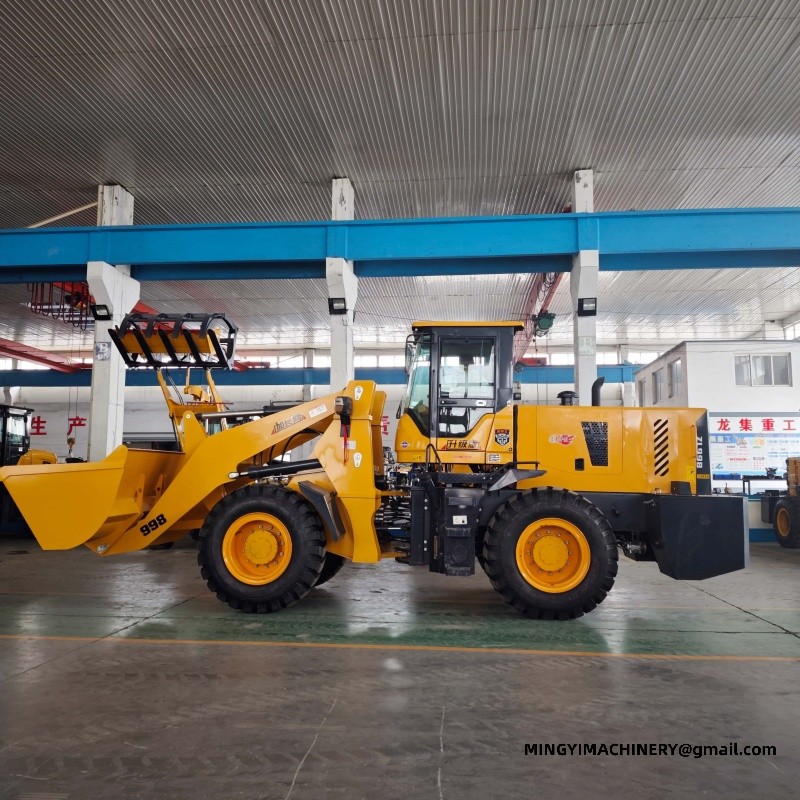
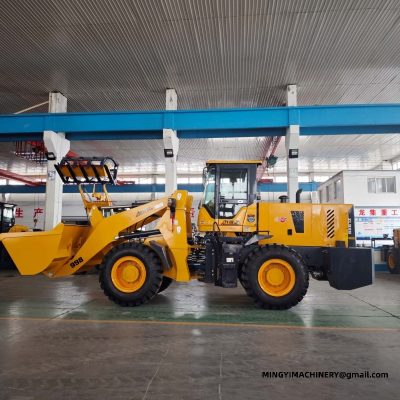
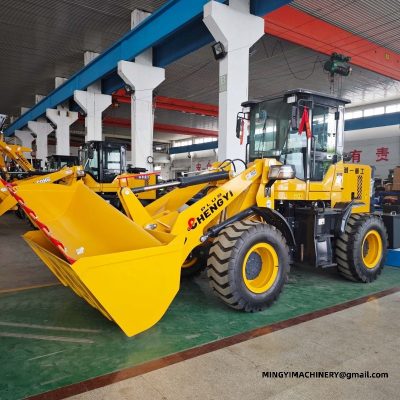
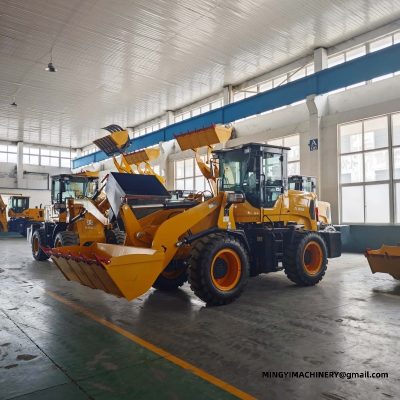
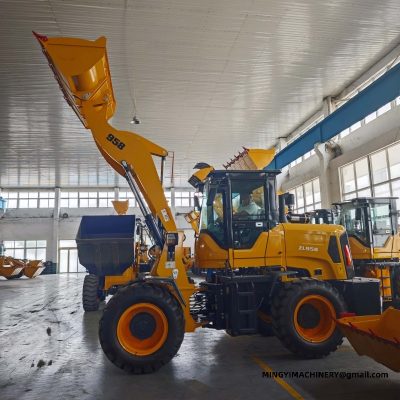
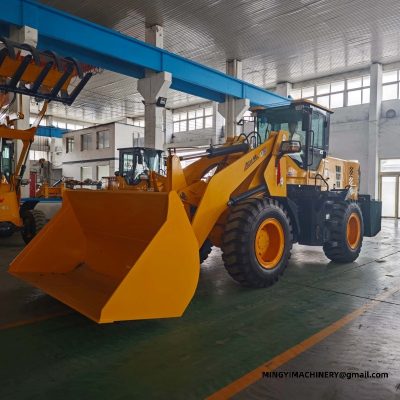
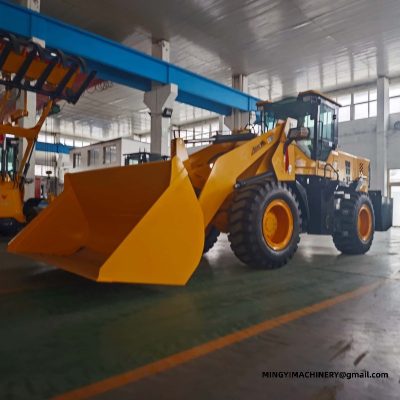
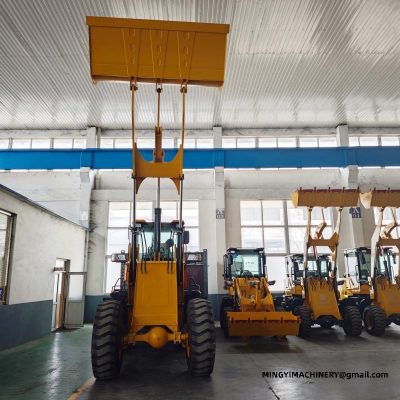
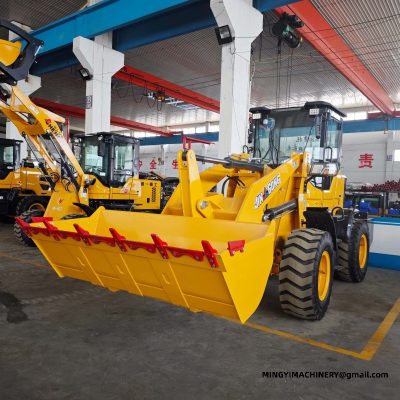
Fleet buyers read a agricultural wheel loader sheet differently from owner-operators. Fleets care whether the next machine matches the last one: same 40 pump (490 engine); 1045 pump (4102 turbo engine) pump, same 4100 core (490 engine); 4105 core (4102T engine) radiator, same 60 Ah (490 engine); 80 Ah (4102 turbo engine) battery, because that is what keeps one spares bin covering ten machines. Owner-operators care whether this one machine fits the job. This page is written to serve both, comparing the light-duty 3.5 m small-frame wheel-side reduction wheel loader and the light-duty 3.8 m small-frame wheel-side reduction wheel loader row by row, and saying plainly which rows matter for which kind of buyer.
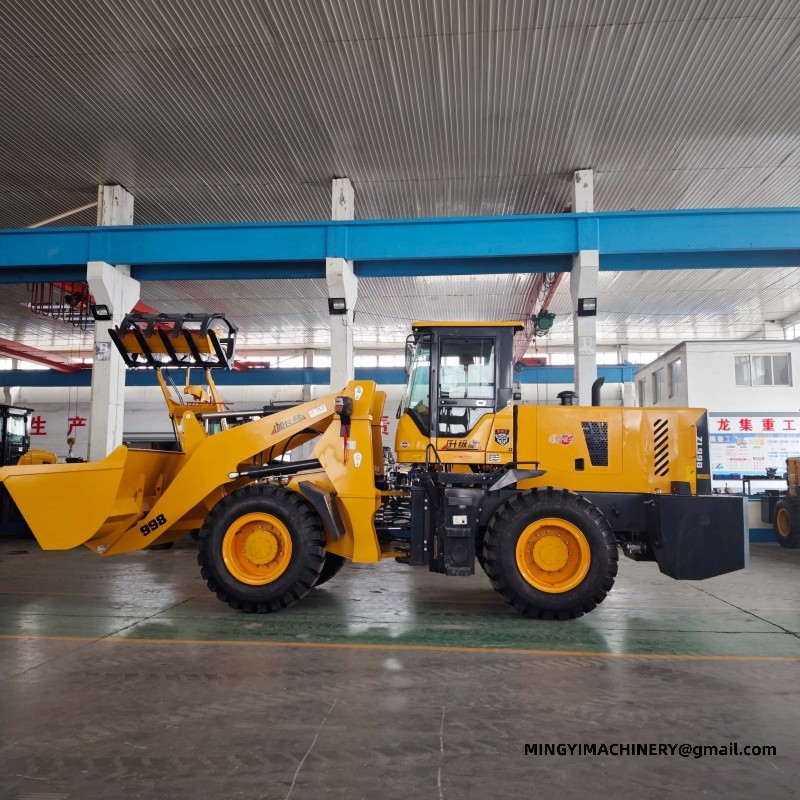
Two loaders can carry the same bucket and behave nothing alike, and the boom is usually why. Compare the light-duty 4.2 m small-frame wheel-side reduction wheel loader with the heavy-duty 3.8 m medium-frame wheel-side reduction wheel loader: bucket 0.38 m³ against 0.65 m³, but boom length 3.15 m against 2.9 m and section width 370 mm against 500 mm. The longer arm reaches further and dumps higher; the wider section survives being levered sideways. Both matter, and neither appears in a headline specification.
Wall thickness is the figure that separates a boom engineered for the frame from one merely bolted to it. The light-duty 4.2 m small-frame wheel-side reduction wheel loader runs 25 mm; the heavy-duty 3.8 m medium-frame wheel-side reduction wheel loader runs 30 mm. Centre distance — 890 mm against 920 mm — completes the picture, because pin loads fall as spacing rises. If your work involves breaking out from a stockpile face rather than shovelling loose stock, ask for those three numbers before you ask about bucket volume.
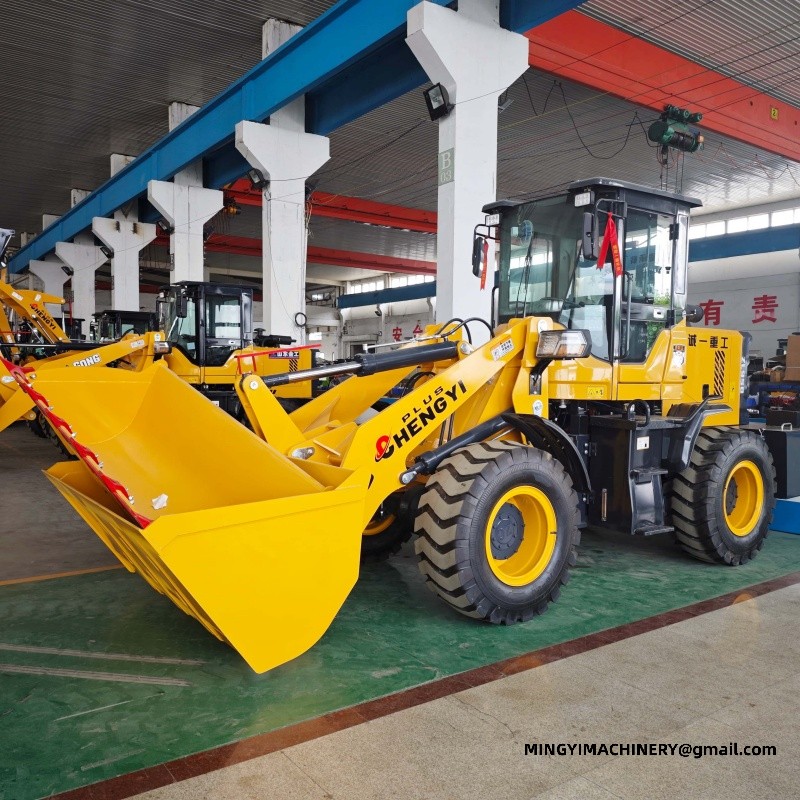
On a farm the loader is judged by whether it can get to the work. The light-duty 3.5 m small-frame wheel-side reduction wheel loader at 1.5 m (wheel-side reduction axle); 1.45 m (Isuzu axle) track and 4 m length turns in places the light-duty 3.8 m small-frame wheel-side reduction wheel loader at 1.5 m (wheel-side reduction axle); 1.45 m (Isuzu axle) and 4.1 m cannot enter. Capacity — 0.38 m³ against 0.38 m³ — is the last consideration, not the first.
Dump height still matters, because feed wagons and high-sided trailers are tall: 3.5 m on the light-duty 3.5 m small-frame wheel-side reduction wheel loader, 3.8 m on the light-duty 3.8 m small-frame wheel-side reduction wheel loader. Measure the wagon side, then measure the shed door. Where both fit, take the larger bucket; where only one fits, take the machine that fits. Attachments specification against the boom section — 370 mm against 370 mm — so the tool carrier is decided in the same conversation.
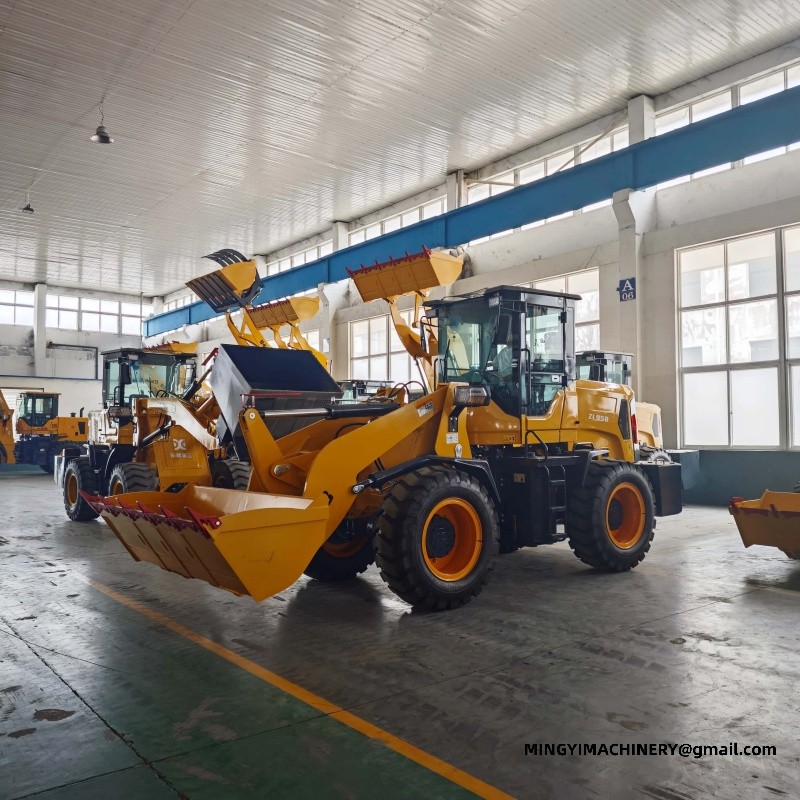
Front-wheel-to-counterweight length is the figure that decides whether a machine fits your site: 4 m on the light-duty 3.5 m small-frame wheel-side reduction wheel loader against 4.1 m on the light-duty 3.8 m small-frame wheel-side reduction wheel loader. Track width is the second: 1.5 m (wheel-side reduction axle); 1.45 m (Isuzu axle) against 1.5 m (wheel-side reduction axle); 1.45 m (Isuzu axle). Together they set the turning circle and the narrowest gap the machine will pass, and they are the two numbers least likely to be stated in a sales conversation.
Access is a hard constraint and it fails silently. A loader that cannot turn in a shed is a loader that cannot work in that shed, whatever its bucket capacity. Compare 4 m at 1.5 m (wheel-side reduction axle); 1.45 m (Isuzu axle) on the light-duty 3.5 m small-frame wheel-side reduction wheel loader with 4.1 m at 1.5 m (wheel-side reduction axle); 1.45 m (Isuzu axle) on the light-duty 3.8 m small-frame wheel-side reduction wheel loader, measure your tightest turn and your narrowest doorway, and buy the machine that passes. Where the gap is marginal, the 4 m machine with its 0.38 m³ bucket will earn more than the 4.1 m one with 0.38 m³.
| Specification extract — heavy-duty 4.5 m small-frame wheel-side reduction wheel loader | |
|---|---|
| Bucket capacity | 0.4 m³ |
| Dump height | 4.5 m |
| Track width | 1.5 m (wheel-side reduction axle); 1.45 m (Isuzu axle) |
| Boom arm thickness | 25 mm |
| Boom arm width | 500 mm |
| Boom arm length | 3.15 m |
| Boom arm centre distance | 890 mm |
| Cross-member thickness | 30 mm |
| Front hinge plate thickness | 30 mm |
| Rear hinge plate thickness | 20 mm |
| Rear frame section | 280 mm high x 800 mm wide |
| Hydraulic cylinders | centre cylinder 45 / side cylinder 45 |
| Fuel tank | 64.7 L (75# small tank) |
| Battery | 60 Ah (490 engine); 80 Ah (4102 turbo engine) |
| Front wheel to counterweight | 4.25 m |
| Radiator | 4100 core (490 engine); 4105 core (4102T engine) |
| Work pump | 40 pump (490 engine); 1045 pump (4102 turbo engine) |
| Travel pump | 316 pump |
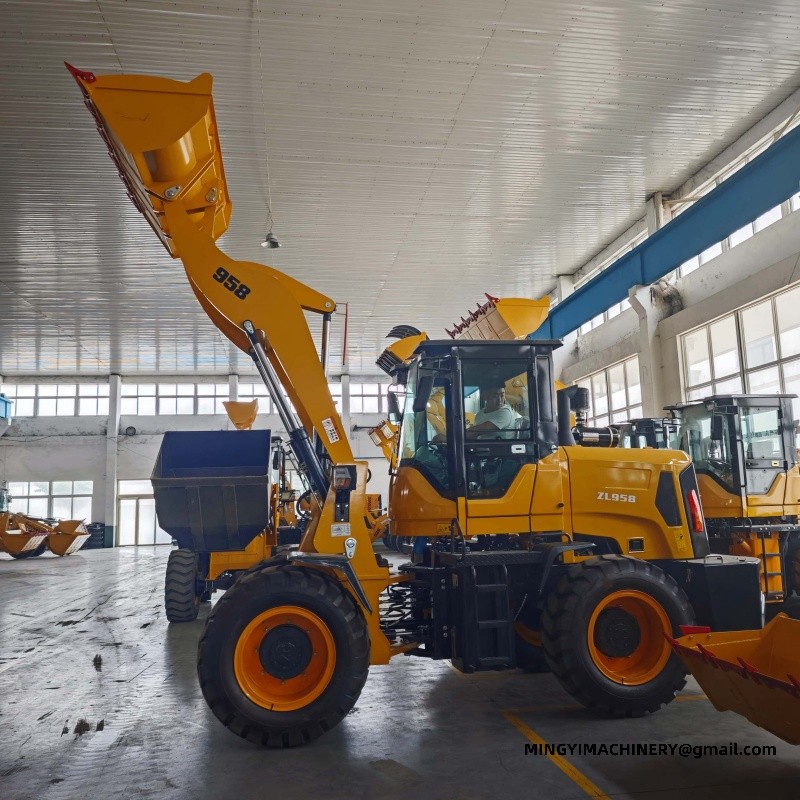
Soft ground punishes driveline parts before it punishes the frame. Sand, clay and loose overburden all increase rolling resistance, which increases torque at the hub, which is exactly where a non-reduction axle is weakest. Where the specification lists two track figures, as it does here at 1.5 m (wheel-side reduction axle); 1.45 m (Isuzu axle), the wider one belongs to the hub-reduction axle and is the specification for that ground.
Hard ground is the opposite case. On concrete, compacted hardstand or a paved yard, rolling resistance is low and sustained travel speed is high, so heat rather than torque becomes the limit. The heavy-duty 4.2 m medium-frame wheel-side reduction wheel loader lists 1.6 m, and the narrower figure there is the one for hard standing. Matching axle to surface takes nothing at the order stage and saves a driveline later.
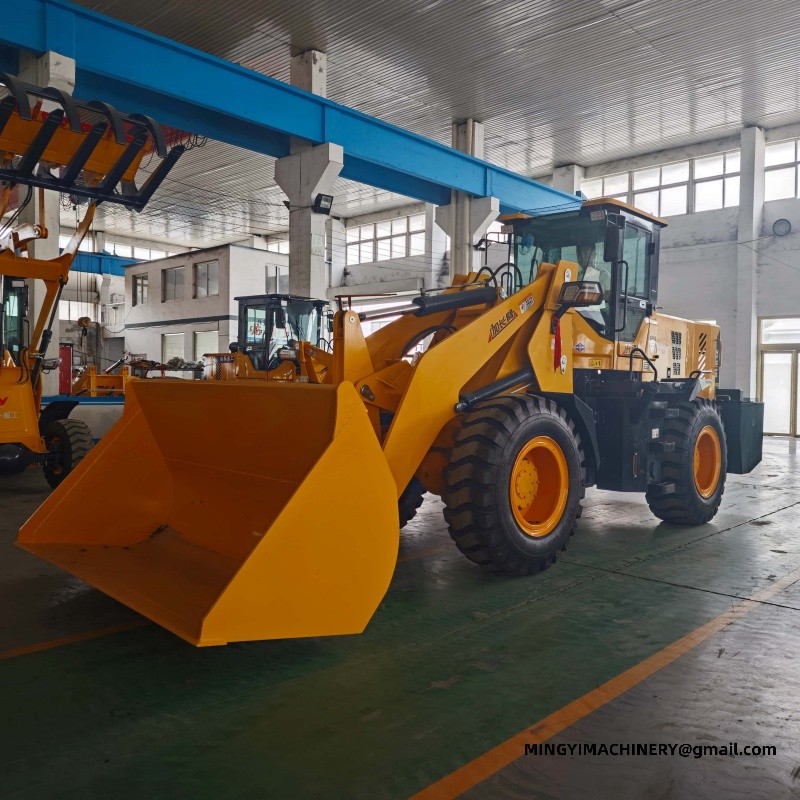
Over a full season, the differences that matter are not the ones on the sales sheet. Two machines, the light-duty 4.2 m small-frame wheel-side reduction wheel loader with 0.38 m³ at 4.2 m and the heavy-duty 3.8 m medium-frame wheel-side reduction wheel loader with 0.65 m³ at 3.8 m, will differ in fuel by less than they differ in uptime, and they will differ in uptime mostly because of the cooling package — 4100 core (490 engine); 4105 core (4102T engine) against 4105 core — and the frame — 20 mm against 30 mm.
plan on the duty, then check the specification supports it. A light build in a quarry is a false economy; a heavy build on a farm is money spent for nothing. Where the duty is mixed, buy the frame for the hardest week of the year and the bucket for the average one — buckets are simple, frames are not, and the 40 pump (490 engine); 1045 pump (4102 turbo engine) and 316 pump on the light-duty 4.2 m small-frame wheel-side reduction wheel loader will run either.
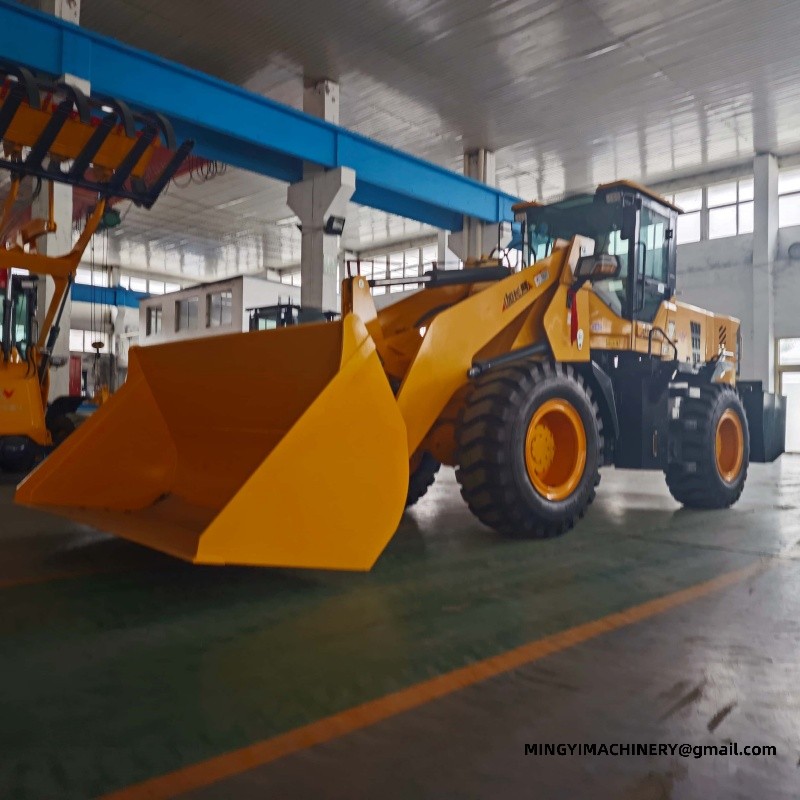
Machines kept past warranty should be bought on steel. Hinge plates 25 mm and 14 mm, cross-member 25 mm, rear frame 280 mm high x 800 mm wide: those are the figures that decide whether year five is a service year or a rebuild year.
The second decision is how repairable the machine is, and that is a parts question. Cylinders centre cylinder 45 / side cylinder 40, pump 40 pump (490 engine); 1045 pump (4102 turbo engine), radiator 4100 core (490 engine); 4105 core (4102T engine), battery 60 Ah (490 engine); 80 Ah (4102 turbo engine): if all four are standard items within the range, a machine can be kept indefinitely. If any is unique to one build, it cannot, and that is worth knowing before the order rather than at year six.
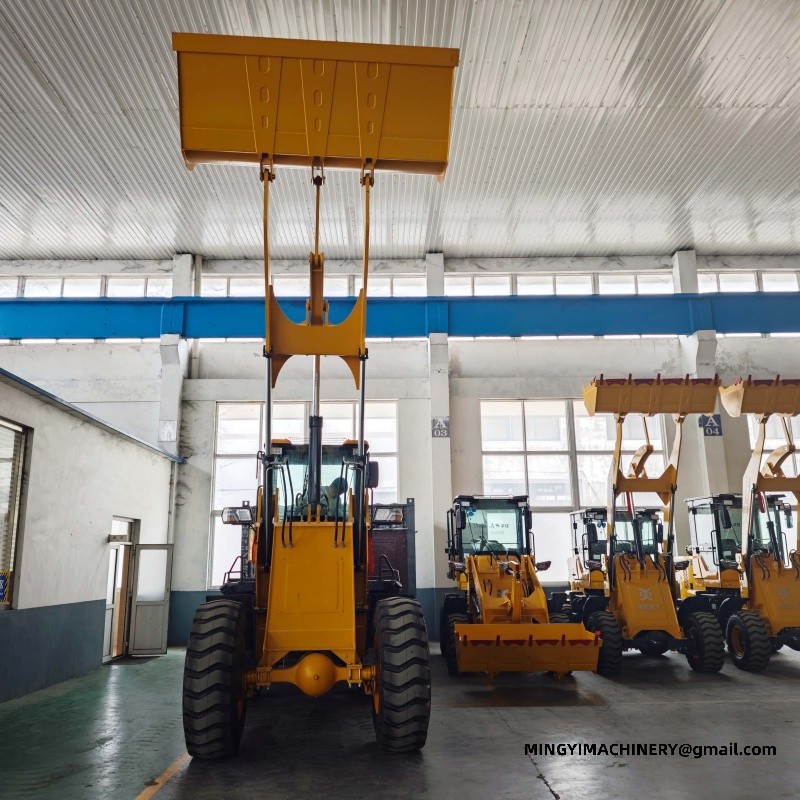
Keep the delivery photographs and the specification sheet with the machine. Bucket 0.38 m³, dump height 4.2 m, cylinders centre cylinder 45 / side cylinder 40, pump 40 pump (490 engine); 1045 pump (4102 turbo engine), track 1.5 m (wheel-side reduction axle); 1.45 m (Isuzu axle): a buyer who can verify five figures against the machine will pay for the certainty.
The frame figures do the rest. 25 mm and 20 mm hinge plates, 25 mm cross-member, 280 mm high x 800 mm wide rear section. Two machines of the same age and hours can be worth materially different amounts on those four rows alone, because they tell the buyer how much life is left in the part that is most lengthy to put right.
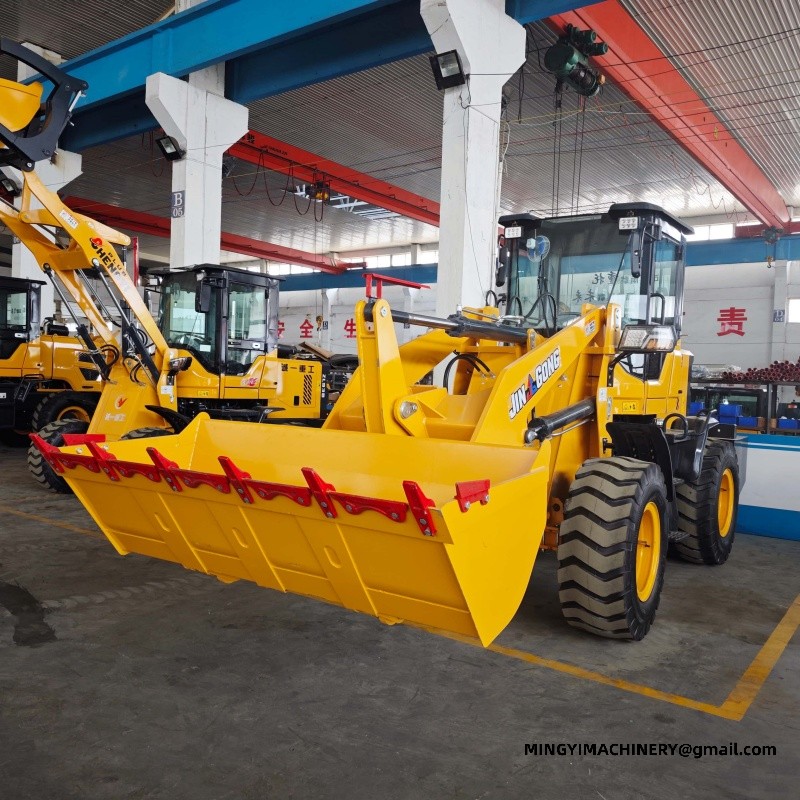
Fleet size falls out of cycle count, and cycle count falls out of bucket volume and dump height together. Take the daily tonnage, divide by what one bucket carries at 0.38 m³, and check that the receiving bodies sit under 3.5 m. If they do not, the calculation is wrong before it starts, and the light-duty 3.8 m small-frame wheel-side reduction wheel loader at 3.8 m is the machine the fleet actually needs.
Reserve capacity matters more than peak capacity because a fleet runs on its worst day, with one machine down and the face further away. Specifying the whole fleet on one build keeps that simple: same centre cylinder 45 / side cylinder 40, same 40 pump (490 engine); 1045 pump (4102 turbo engine), same 1.5 m (wheel-side reduction axle); 1.45 m (Isuzu axle), so one spare parts bin covers every machine and any operator can take any unit.
Will a agricultural wheel loader ship assembled in a container?
It depends on the longest dimension, 4 m from front wheel to counterweight, and on track, 1.5 m (wheel-side reduction axle); 1.45 m (Isuzu axle). The bucket usually comes off; the arm must be lowered to clear the door.
What extra care does a agricultural wheel loader need in dusty work?
Core cleaning at the end of every shift and more frequent air filter changes. The core is 4100 core (490 engine); 4105 core (4102T engine); a blocked one shows up as a slow loss of power rather than a stoppage.
Why does my agricultural wheel loader bucket only fill two-thirds?
The material is denser than the bucket was matched to. At 0.38 m³ on the light-duty 3.8 m small-frame wheel-side reduction wheel loader against 0.65 m³ on the heavy-duty 4.2 m medium-frame wheel-side reduction wheel loader, a smaller bucket that fills completely moves more per hour than a larger one that does not.
How is a agricultural wheel loader transported between sites?
On a low-loader, arm strapped down, secured to the frame rather than the cylinders. Front wheel to counterweight is 4.1 m and track is 1.5 m (wheel-side reduction axle); 1.45 m (Isuzu axle), which is what the haulier needs.
Is a agricultural wheel loader suitable for night work?
With adequate lighting, yes. Electrical capacity is the constraint and the rating is 60 Ah (490 engine); 80 Ah (4102 turbo engine); extra lamps and beacons come out of the same plan.
Can a agricultural wheel loader work inside a building?
Clearance and ventilation are the constraints. Lift height is 3.5 m and the core is 4100 core (490 engine); 4105 core (4102T engine), which has to reject heat into air that is not moving.
What makes a used agricultural wheel loader easy to sell?
A verifiable specification. Bucket 0.38 m³, lift 3.8 m, plates 25 mm and 14 mm and a 25 mm cross-member can all be measured, and a buyer who can check them will pay for the certainty.
Two builds, light-duty 3.5 m small-frame wheel-side reduction wheel loader and light-duty 3.8 m small-frame wheel-side reduction wheel loader, have carried the comparisons on this page. The same rows can be produced for any machine in the range, and for the engine options that change the pump, radiator and battery with them.
Hot, humid and dusty conditions around Agricultural Wheel Loader: Yard, Gate and Shed Clearance
Humidity attacks the parts that are not used. Storage in a damp climate means Agricultural Wheel Loader: Yard, Gate and Shed Clearance needs the exposed metal protected and the machine run regularly, because standing still does more damage than working.
Wear items and spares worth holding for Agricultural Wheel Loader: Yard, Gate and Shed Clearance
Holding spares is about downtime rather than the shelf itself. The question for Agricultural Wheel Loader: Yard, Gate and Shed Clearance is not how large the part is but how long the machine sits while it is found, and a small shelf answers that better than a fast courier.
Contact MINGYI Machinery for the current wheel loader lineup, configuration options and a formal specification for your market. E-mail: sales@mingycn.com | LINE (ID): mingyicn
Payloader Machine: Specifying One for Mixed Site Work · Bucket Loader Machine: Filling the Bucket Every Pass · China Wheel Loader Factory Supplier: Range, Spares, Loading · Wheel Loader









