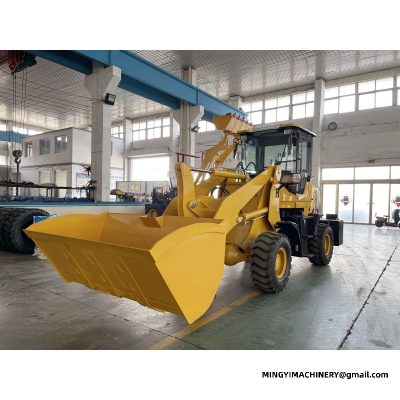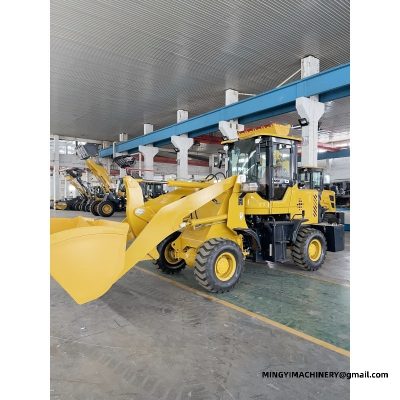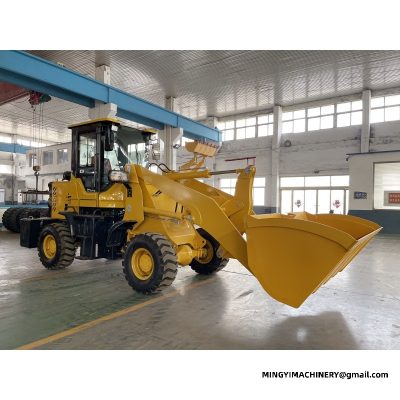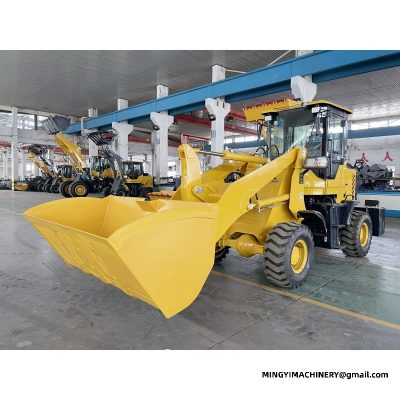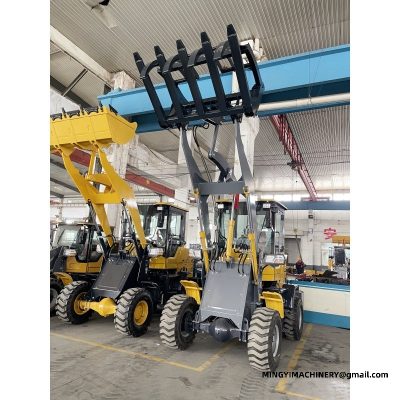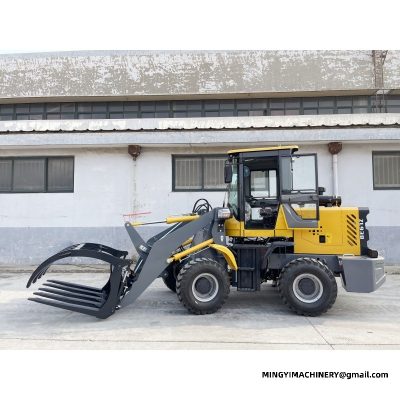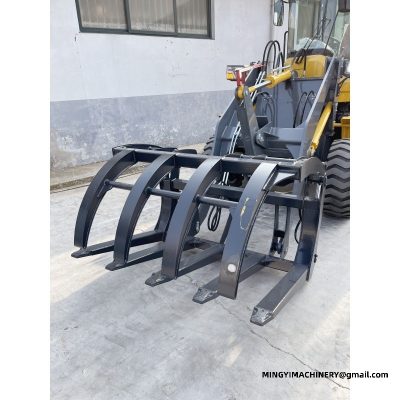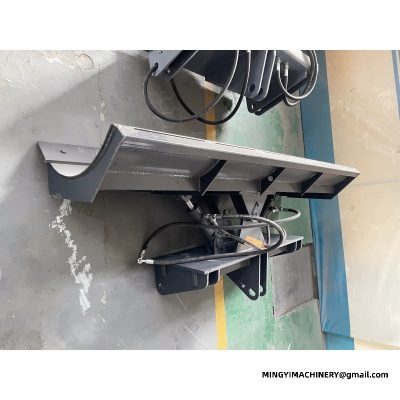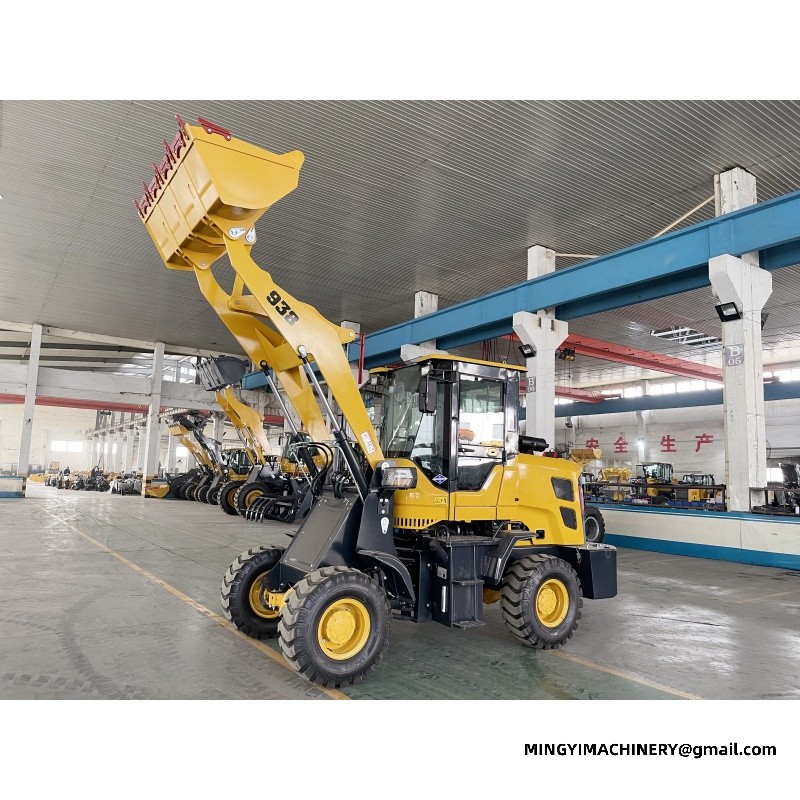
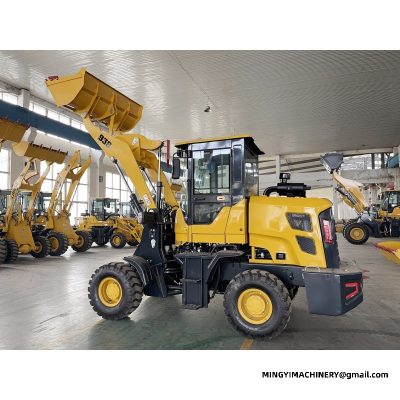
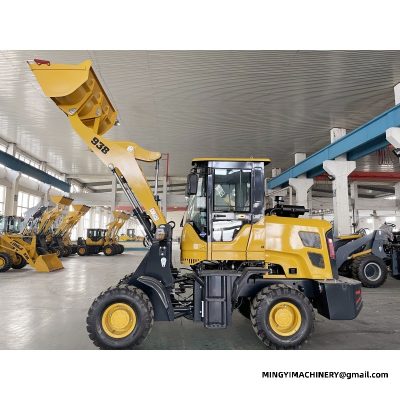
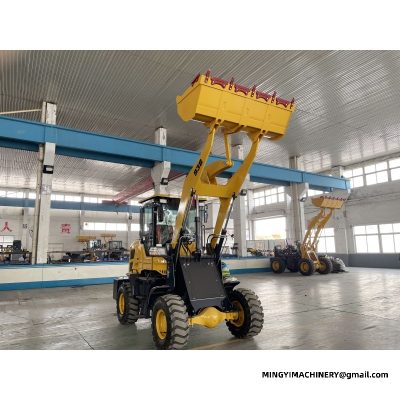
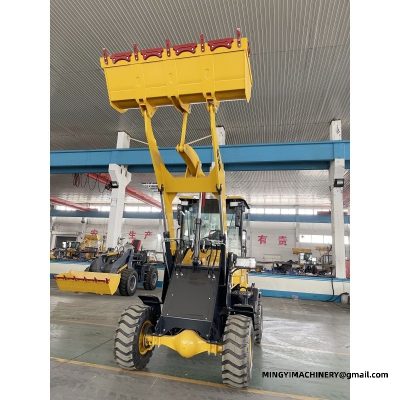
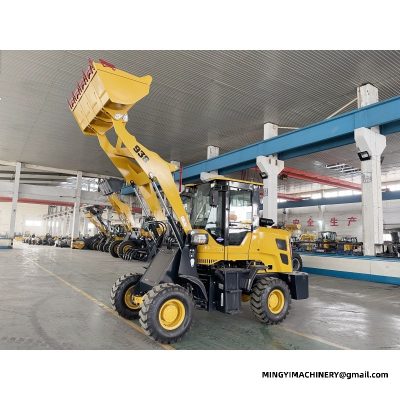
Specify a china wheel loader factory supplier from the work backwards, not from the catalogue forwards. Start with what it loads into — that fixes dump height, 3.8 m on the light-duty 3.8 m small-frame wheel-side reduction wheel loader or 4.2 m on the light-duty 4.2 m small-frame wheel-side reduction wheel loader. Then the narrowest gap it must pass — that fixes track, 1.5 m (wheel-side reduction axle); 1.45 m (Isuzu axle) or 1.5 m (wheel-side reduction axle); 1.45 m (Isuzu axle). Only then look at bucket volume, 0.38 m³ or 0.38 m³. What follows is the full sequence, with the steel, hydraulic and cooling figures that separate one build from the next and the reasoning behind each.
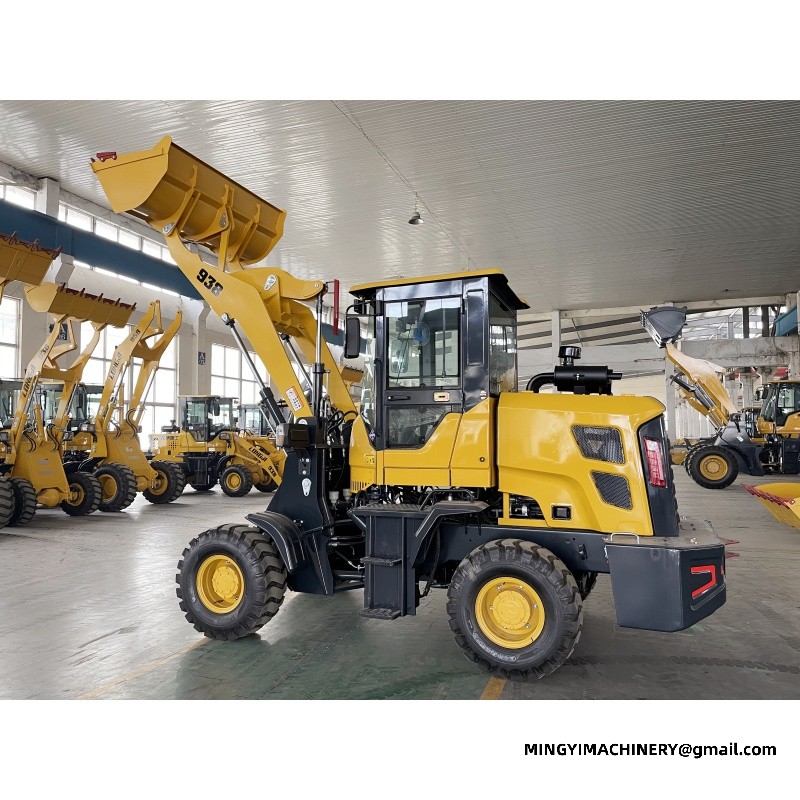
Two axle families appear across the range and the choice is about ground, not preference. Track width is the visible difference — 1.2 m (Isuzu axle); 1.3 m (wheel-side reduction axle) on the standard 2.8 m low-profile wheel loader against 1.5 m (wheel-side reduction axle); 1.45 m (Isuzu axle) on the light-duty 3.8 m small-frame wheel-side reduction wheel loader — but the mechanical difference is where the final reduction happens. An Isuzu-pattern axle reduces at the differential and sends torque down the shafts; a wheel-side reduction axle reduces at the hub.
Hub reduction is the right answer for soft lanes, ramps, uncompacted yards and pits, because torque arrives at the wheel instead of through a faster final drive that can spin. It is the wrong answer for long, fast, level transfers, where the extra unsprung mass and the lower top speed effort more than the traction gains. Read the track figures with the footprint — 3.5 m on the standard 2.8 m low-profile wheel loader, 4.1 m on the light-duty 3.8 m small-frame wheel-side reduction wheel loader — and the choice usually makes itself.
Soft ground punishes driveline parts before it punishes the frame. Sand, clay and loose overburden all increase rolling resistance, which increases torque at the hub, which is exactly where a non-reduction axle is weakest. Where the specification lists two track figures, as it does here at 1.5 m (wheel-side reduction axle); 1.45 m (Isuzu axle), the wider one belongs to the hub-reduction axle and is the specification for that ground.
Hard ground is the opposite case. On concrete, compacted hardstand or a paved yard, rolling resistance is low and sustained travel speed is high, so heat rather than torque becomes the limit. The heavy-duty 4.5 m medium-frame wheel-side reduction wheel loader lists 1.6 m, and the narrower figure there is the one for hard standing. Matching axle to surface takes nothing at the order stage and saves a driveline later.
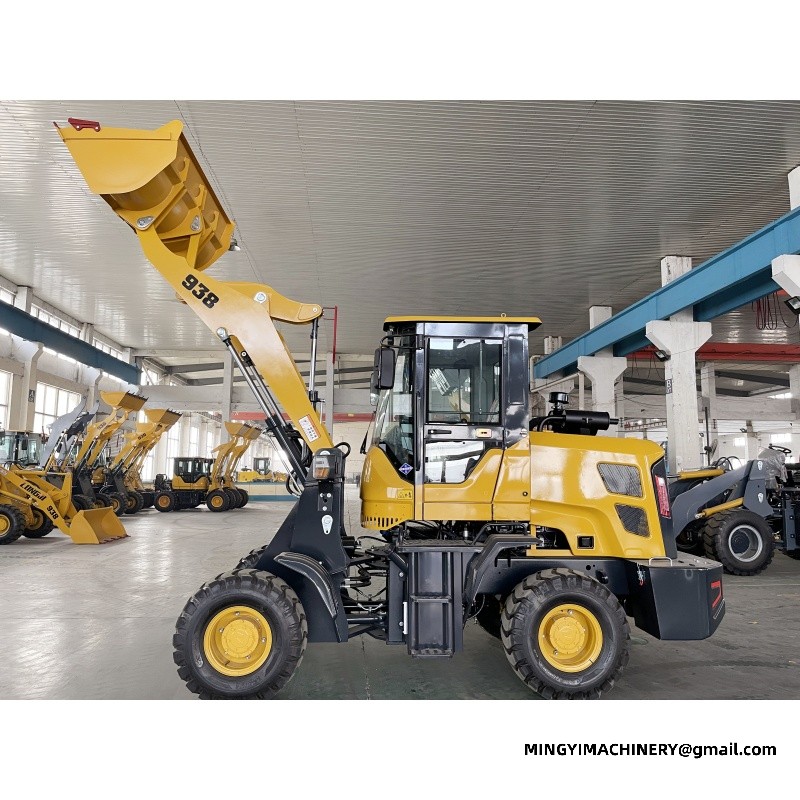
Frames do not usually fail at the boom. They fail at the hinge plates and the cross-member that ties them together, because that is where the articulated joint concentrates every steering and breakout load. On the light-duty 3.8 m small-frame wheel-side reduction wheel loader those figures are 25 mm front, 14 mm rear and 25 mm across; on the heavy-duty 4.2 m medium-frame wheel-side reduction wheel loader they are 45 mm, 30 mm and 45 mm. The rear frame sections are 280 mm high x 800 mm wide and 300 mm high x 800 mm wide.
Why the rear plate is the one to watch even though it is the thinner of the two: the front hinge sees the boom loads, which are predictable and largely vertical; the rear sees articulation loads, which are sideways, repeated and often shock-loaded when an operator turns while breaking out. A machine specified with a 30 mm rear plate and a 45 mm cross-member will still be tight at year three in reverse-loading cycles where a 14 mm plate has started to ovalise its pin bores. If your fleet keeps machines past warranty, this is the row of the table to read twice.
| Reference specification — light-duty 3.8 m small-frame wheel-side reduction wheel loader | |
|---|---|
| Bucket capacity | 0.38 m³ |
| Dump height | 3.8 m |
| Track width | 1.5 m (wheel-side reduction axle); 1.45 m (Isuzu axle) |
| Boom arm thickness | 25 mm |
| Boom arm width | 370 mm |
| Boom arm length | 2.61 m |
| Boom arm centre distance | 890 mm |
| Cross-member thickness | 25 mm |
| Front hinge plate thickness | 25 mm |
| Rear hinge plate thickness | 14 mm |
| Rear frame section | 280 mm high x 800 mm wide |
| Hydraulic cylinders | centre cylinder 45 / side cylinder 40 |
| Fuel tank | 64.7 L (75# small tank) |
| Battery | 60 Ah (490 engine); 80 Ah (4102 turbo engine) |
| Front wheel to counterweight | 4.1 m |
| Radiator | 4100 core (490 engine); 4105 core (4102T engine) |
| Work pump | 40 pump (490 engine); 1045 pump (4102 turbo engine) |
| Travel pump | 316 pump |
Parts are matched to a build, and the build is identified by its hydraulics and its engine long before its name. Specification centre cylinder 60 / side cylinder 50 and 2063 pump and the pump is identified; specification 4105 core and the engine is identified; specification 80 Ah and the electrical specification is identified.
Frame parts are identified by the steel: 45 mm front plate, 30 mm rear plate, 45 mm cross-member, 300 mm high x 800 mm wide rear section. Sending those four with an enquiry removes the usual round of photographs and gets the right part on the first shipment.
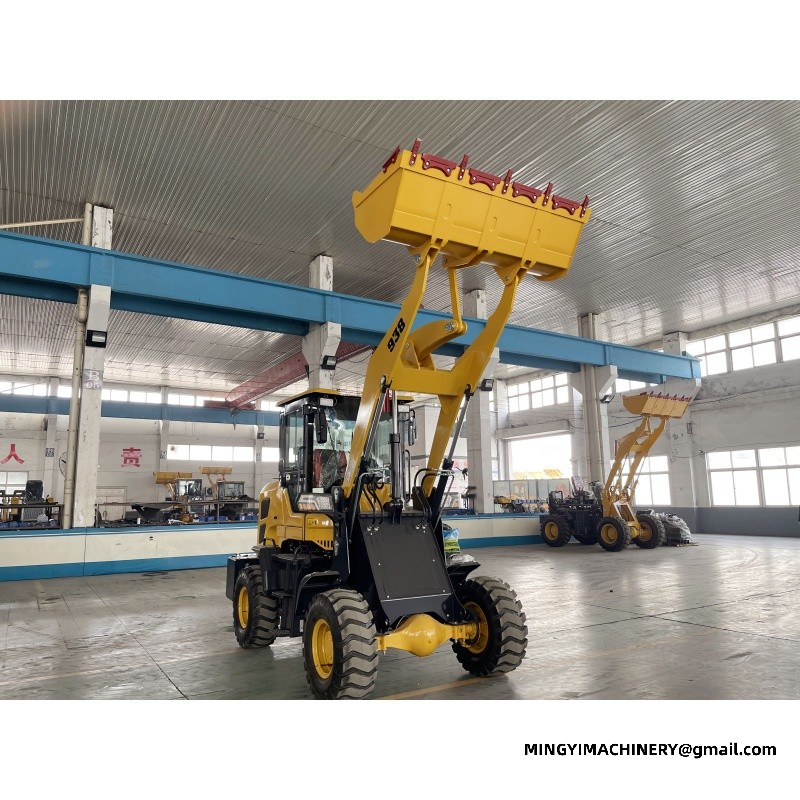
Work from the longest dimension. 4.55 m from front wheel to counterweight on this machine, 4.55 m on the heavy-duty 4.2 m medium-frame wheel-side reduction wheel loader. The bucket usually comes off; the counterweight usually stays, because removing it changes the securing plan far more than the space it saves.
Track is the second constraint, 1.6 m, and it is the one that decides whether two machines can travel side by side. Where a build offers two axles the track differs slightly between them, so confirm which axle is on the unit before booking space. Fuel is drained to a residue for shipping, and the tank on this build is 70 L (75# large tank); that figure matters for the hazmat paperwork rather than for the loading plan.
A site loader spends its life doing the same cycle, and the cycle punishes three components: the rear hinge, the cooling pack and the tyres. On the light-duty 3.8 m small-frame wheel-side reduction wheel loader the rear hinge is 14 mm over a 25 mm cross-member; on the heavy-duty 4.2 m medium-frame wheel-side reduction wheel loader it is 30 mm over 45 mm. Which of those you need depends on how often the machine turns under load.
Cycle time is the economics. A 0.38 m³ bucket at 3.8 m on a 2.61 m arm loaded by centre cylinder 45 / side cylinder 40 cylinders is quick in a tight site; a 0.65 m³ bucket at 4.2 m on a 3.16 m arm with centre cylinder 60 / side cylinder 50 is quicker where there is room to work. Neither is universally faster, and any supplier who claims otherwise is describing a different site from yours.
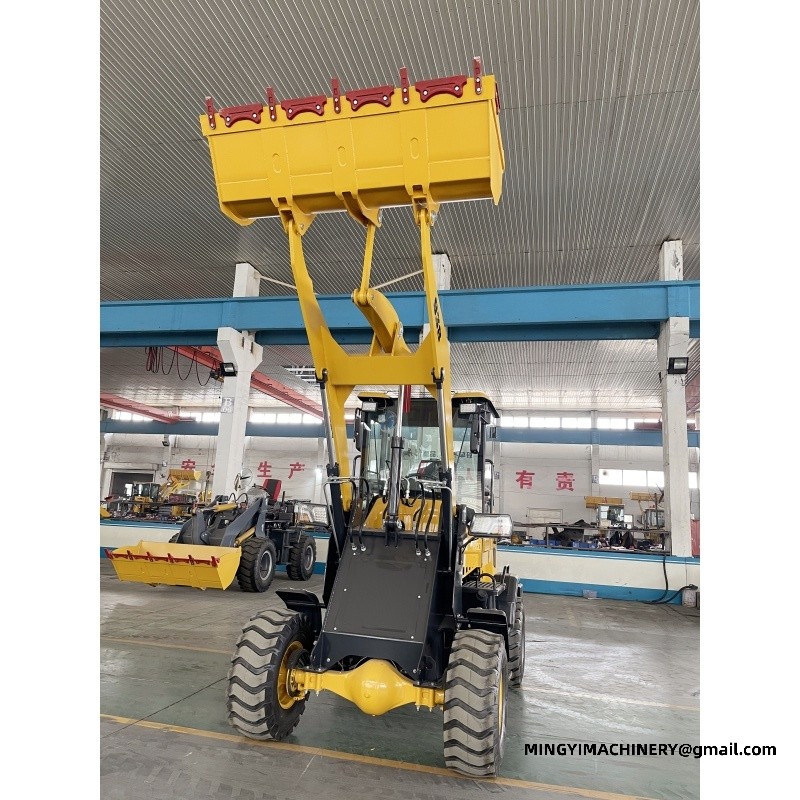
Front wheel to counterweight is the figure that decides whether a machine fits the space you have. Here it is 3.5 m on the standard 2.8 m low-profile wheel loader and 4.1 m on the light-duty 3.8 m small-frame wheel-side reduction wheel loader. Measure your tightest working bay, add the swing of the bucket, and compare — because a loader that has to reverse out of every corner loses more time than a bigger bucket ever recovers.
Track width closes the same question from the side. 1.2 m (Isuzu axle); 1.3 m (wheel-side reduction axle) on this build. Where two figures are listed, the narrower belongs to the hard-ground axle, and a narrow machine on a narrow gate is often the right answer even where the work itself would suit something bigger. The rear frame section, 200 mm high x 750 mm wide, is what keeps a compact machine from feeling flimsy once it is loaded.
Articulated loaders wear at the pins, and pins wear because they were dry. Front plate 30 mm, rear plate 20 mm, and the cross-member behind them at 30 mm: that assembly is what steering works through, several hundred times a shift. Grease intervals are measured in hours, not months, on a machine doing short cycles.
The boom pivots are the second set, and they are the ones an operator feels first. A 3.15 m arm on a 890 mm spacing, lifted by centre cylinder 45 / side cylinder 45, loads its pins every pass. If the machine develops a clunk on lift, look there before looking at the pump — the pump, 40 pump (490 engine); 1045 pump (4102 turbo engine), is usually fine and the pin is usually not.
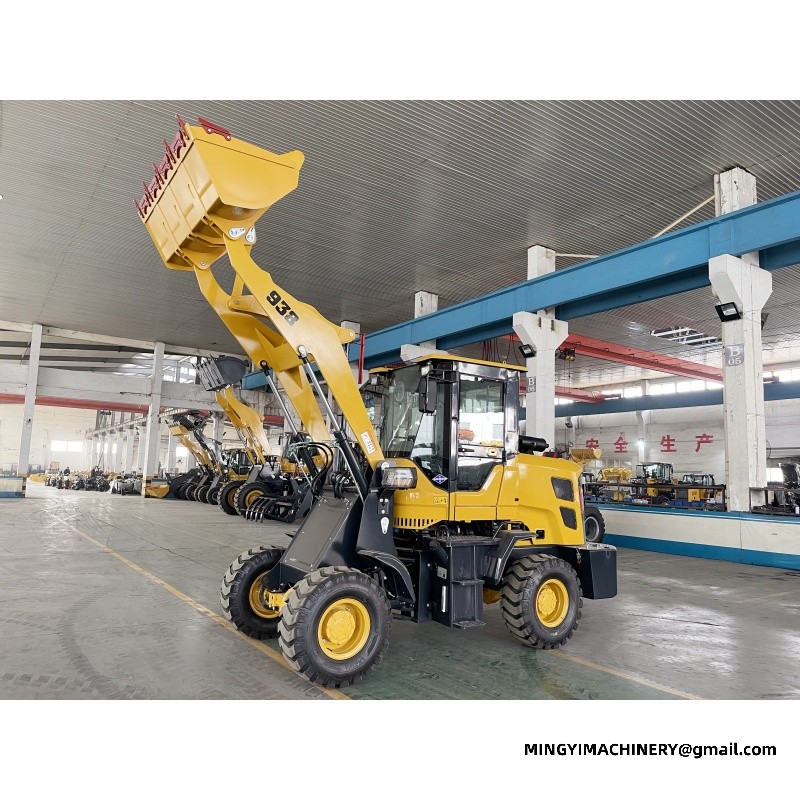
How is the battery specified on a china wheel loader factory supplier?
60 Ah (490 engine); 80 Ah (4102 turbo engine) on the light-duty 4.2 m small-frame wheel-side reduction wheel loader, matched to the engine it has to crank. The higher capacity belongs to the turbo option and matters in cold climates.
How do I pick between the frame tiers of a china wheel loader factory supplier?
By reach and duty. The light-duty 3.8 m small-frame wheel-side reduction wheel loader carries 0.38 m³ to 3.8 m on a 25 mm cross-member; the light-duty 4.2 m small-frame wheel-side reduction wheel loader carries 0.38 m³ to 4.2 m on 25 mm.
Will a china wheel loader factory supplier start in a cold climate?
With the right pack, yes: 80 Ah on the heavy-duty 3.5 m medium-frame wheel-side reduction wheel loader, the larger capacity where the turbo engine is fitted. Specify an isolator for anything shipping long-distance.
How is the counterweight mounted on a china wheel loader factory supplier?
Bolted to the rear frame section, 280 mm high x 800 mm wide on the light-duty 3.8 m small-frame wheel-side reduction wheel loader, rather than hung off brackets. Bracket-mounted ballast is what cracks under daily face work.
What engine options are offered on a china wheel loader factory supplier?
Where two are offered, cooling and electrics change with them: 4100 core radiator and 45 Ah (24 V) battery on the standard 2.8 m low-profile wheel loader, with the raised core belonging to the turbo option.
How often should the articulation of a china wheel loader factory supplier be greased?
Every shift in stockpile or face work, weekly in light duty. The 25 mm front and 14 mm rear plates take every steering load, and missed greasing takes pins and bores.
What spares should I keep for a china wheel loader factory supplier?
Filters, a hose set for the centre cylinder 45 / side cylinder 40 cylinders, pins and bushes for the 890 mm boom mounts and a cutting edge. One pump per fleet is usually enough.
The short version for any china wheel loader factory supplier: fix the dump height first, check the track against your narrowest opening second, and read the rear hinge plate — 14 mm on the light-duty 3.8 m small-frame wheel-side reduction wheel loader, 20 mm on the light-duty 4.2 m small-frame wheel-side reduction wheel loader — third. Everything else on the sheet is detail.
Moving China Wheel Loader Factory Supplier: Range, Spares, Loading between sites
Securing the load is not optional. Lashing China Wheel Loader Factory Supplier: Range, Spares, Loading at the points intended for it, checking the tension before the vehicle moves and rechecking after the first kilometres is standard practice rather than extra care.
Fuel, oil and fluid quality for China Wheel Loader Factory Supplier: Range, Spares, Loading
Most engine trouble starts with what went into the tank. Clean fuel, stored properly and filtered before it reaches China Wheel Loader Factory Supplier: Range, Spares, Loading, prevents more downtime than any other single habit an owner can adopt.
Pre-delivery inspection before China Wheel Loader Factory Supplier: Range, Spares, Loading leaves the shop
Inspection is a list, not a glance. Before China Wheel Loader Factory Supplier: Range, Spares, Loading is released the fluid levels, belt tension, electrical connections and safety decals are each ticked off, and anything that fails stays in the shop rather than travelling with the machine.
Contact MINGYI Machinery for the current wheel loader lineup, configuration options and a formal specification for your market. E-mail: sales@mingycn.com | LINE (ID): mingyicn
Wheel Loader Manufacturer China: Range, Builds and Export Terms · Wheel Loader Series: Reliable Builds from Entry to Medium Frame · Wheel Loader Factory China: Build Records and Traceability · Loaders