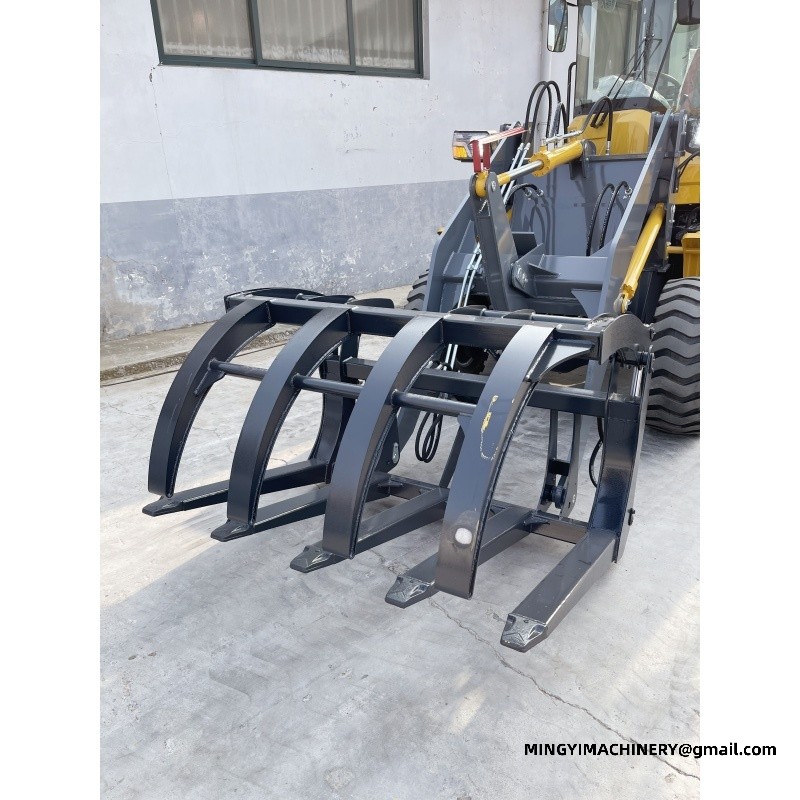
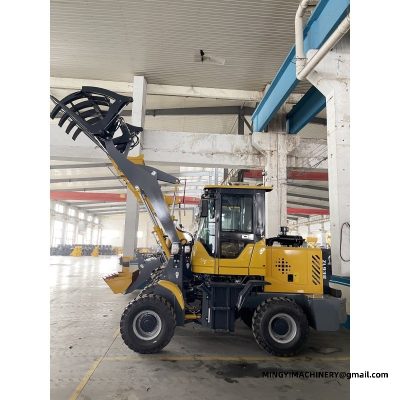
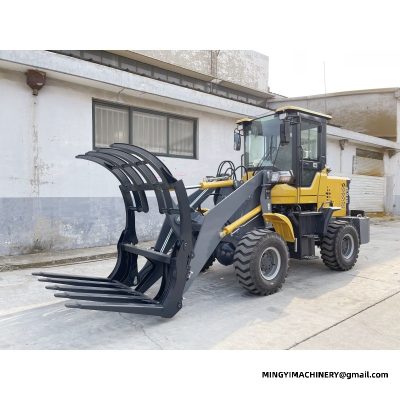
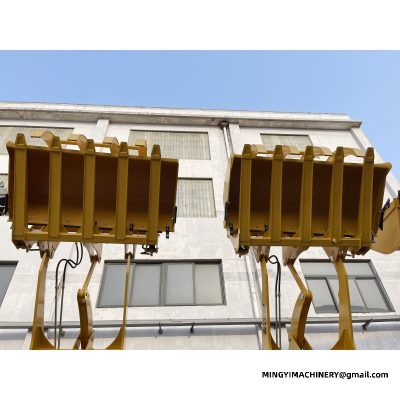
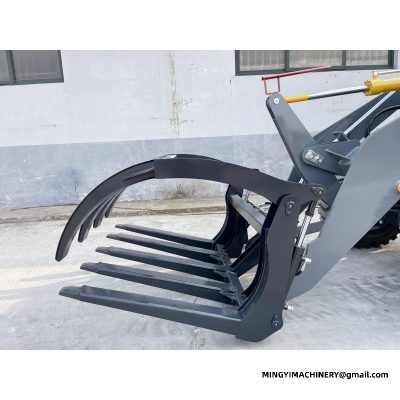
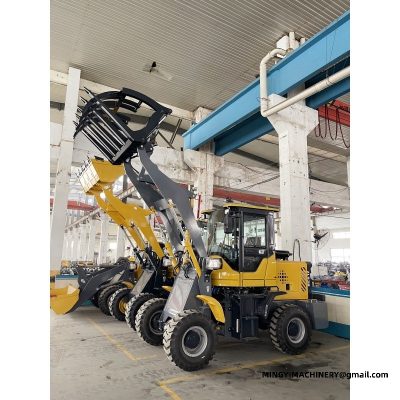
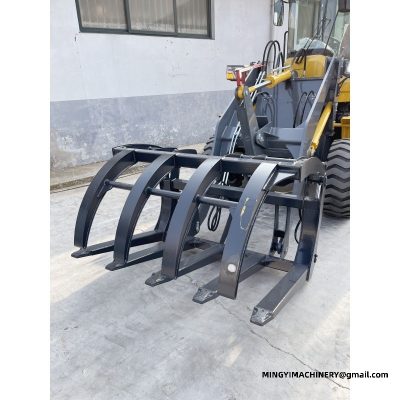
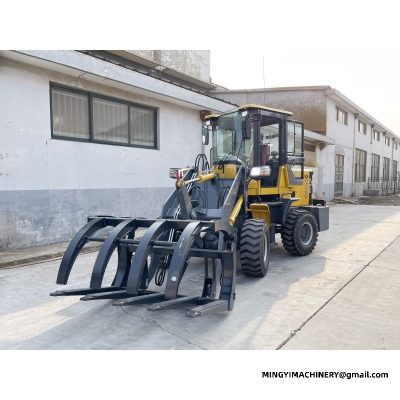
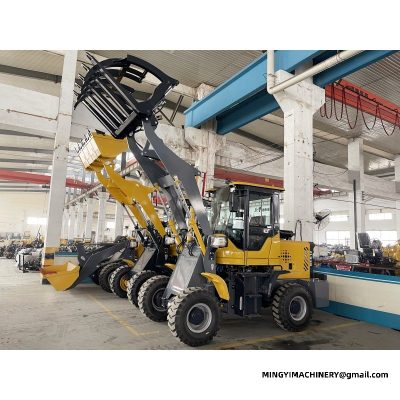
There are two ways to buy a wheel loader log grapple: from the brochure, or from the numbers that decide whether it works. This page is the second. Bucket 0.3 m³ to 0.4 m³. Dump height 2.8 m to 3.2 m. Boom 2.05 m long, 300 mm wide and 20 mm thick on the lighter build; 2.3 m, 430 mm and 25 mm on the heavier one. Cylinders centre cylinder 45 / side cylinder 40 against centre cylinder 45 / side cylinder 45, pumps 32 pump against 40 pump (490 engine); 1045 pump (4102 turbo engine), radiators 4100 core against 4100 core (490 engine); 4105 core (4102T engine). Each figure is explained below in terms of what it does on site.
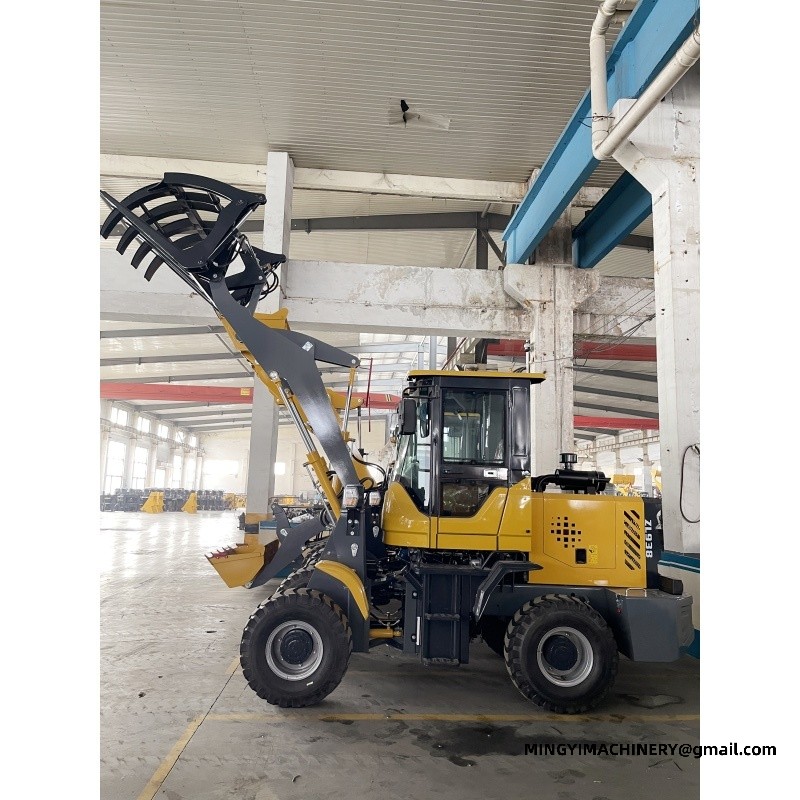
A bucket that fills completely every pass beats a larger one that fills partly, because a partly filled bucket is carrying air at the same effort as material. On a dense face, 0.4 m³ will fill where 0.52 m³ might not, and the smaller machine finishes the job first while putting less load into the 30 mm hinge.
There is also the question of what the load does to the machine in motion. Carrying a full bucket across rough ground loads the front axle, the hinge and the boom all at once. At 4.1 m front wheel to counterweight and 1.5 m (wheel-side reduction axle); 1.45 m (Isuzu axle) of track, the shorter machine with the right bucket is more stable as well as quicker, and stability is what keeps a cycle time consistent rather than occasionally fast.
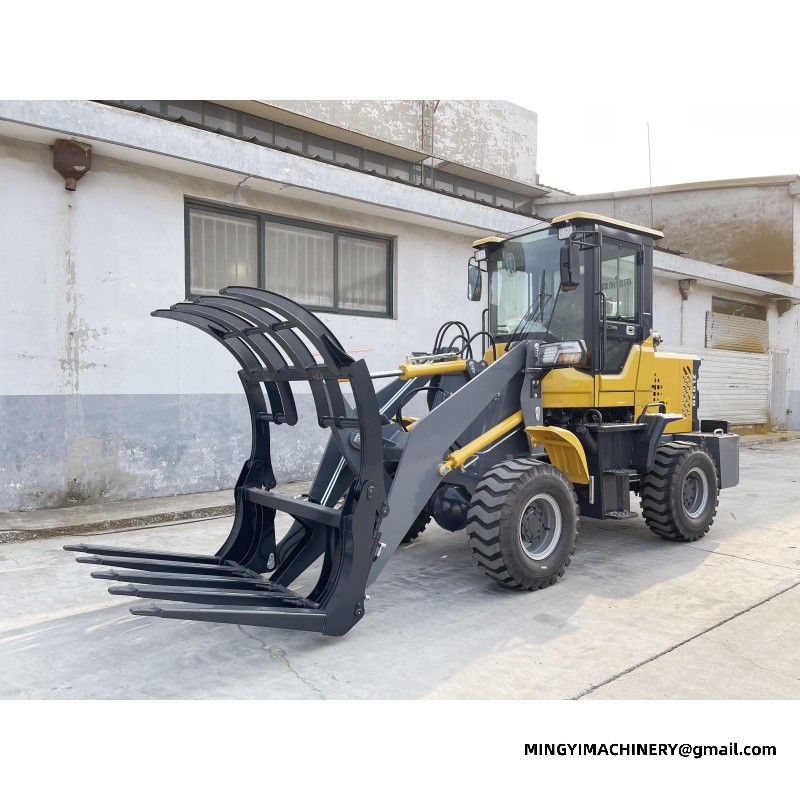
Fuel and cooling capacity are not comfort figures; they are shift-planning figures. A 64.7 L (75# small tank) tank on the heavy-duty 3.2 m small-frame wheel-side reduction wheel loader is sized so a full working day at operating throttle does not need a mid-shift refuel, which matters on sites where the bowser is a long way from the face. The heavy-duty 3.2 m low-profile wheel loader carries 54 L (50# tank).
The radiator is the other side of the same question. 4100 core (490 engine); 4105 core (4102T engine) on this build against 4100 core (490 engine); 4105 core (4102T engine) on the other. Where a build offers two cores, the raised one serves the turbo engine, and it is the correct specification for dusty work, high ambient temperature, or any duty where the machine spends its day at high load and low speed with little air passing through the core.
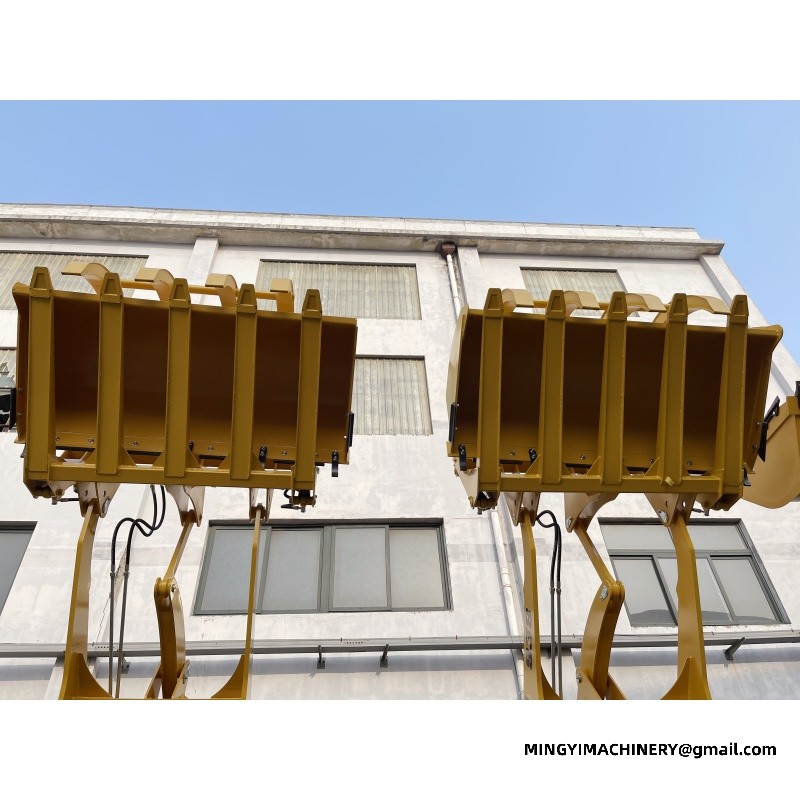
Electrical specification is short but consequential. The heavy-duty 3.2 m low-profile wheel loader lists 60 Ah (490 engine); 80 Ah (4102 turbo engine); the light-duty 3.8 m medium-frame wheel-side reduction wheel loader lists 80 Ah. Where a build offers two engines, the higher capacity belongs to the turbo — more compression to turn, more glow-plug load, and in a cold market that difference is the whole of a morning.
Beyond the battery, specify an isolator switch and confirm the alternator output matches the load you intend to add. Work lights, a beacon, a reversing alarm and a hydraulic third-circuit solenoid all draw from the same pack, and the 40 pump (490 engine); 1045 pump (4102 turbo engine) driven hydraulics on the heavy-duty 3.2 m low-profile wheel loader do not reduce that draw. On the light-duty 3.8 m medium-frame wheel-side reduction wheel loader the same applies with 2063 pump. If the machine will sit for more than a month before commissioning, specify the isolator and a maintenance charge interval.
| Sample build from the range — light-duty 3.5 m medium-frame wheel-side reduction wheel loader | |
|---|---|
| Bucket capacity | 0.52 m³ |
| Dump height | 3.5 m |
| Track width | 1.6 m |
| Boom arm thickness | 30 mm |
| Boom arm width | 430 mm |
| Boom arm length | 2.63 m |
| Boom arm centre distance | 900 mm |
| Cross-member thickness | 45 mm |
| Front hinge plate thickness | 45 mm |
| Rear hinge plate thickness | 30 mm |
| Rear frame section | 300 mm high x 800 mm wide |
| Hydraulic cylinders | centre cylinder 60 / side cylinder 50 |
| Fuel tank | 70 L (75# large tank) |
| Battery | 80 Ah |
| Front wheel to counterweight | 4.3 m |
| Radiator | 4105 core |
| Work pump | 2063 pump |
| Travel pump | 25 pump |
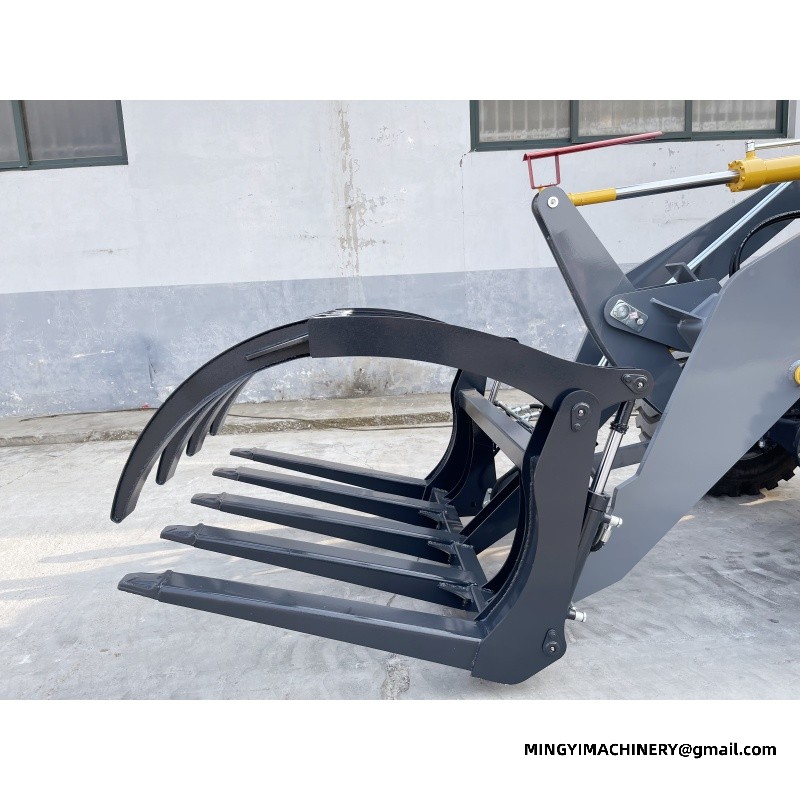
Four numbers describe a loader frame: front hinge plate, rear hinge plate, cross-member thickness and rear frame section. The heavy-duty 3.2 m low-profile wheel loader lists 30 mm, 20 mm, 30 mm and 230 mm high x 800 mm wide. The light-duty 3.8 m medium-frame wheel-side reduction wheel loader lists 45 mm, 30 mm, 45 mm and 280 mm high x 800 mm wide. Everything else on a specification sheet — paint, cab trim, lighting package — is cosmetic next to those four.
The rear frame section is the one that surprises people. A wider rear frame lets the counterweight bolt directly to the chassis instead of hanging off brackets, and bracket-mounted counterweights crack. On the heavy-duty 3.2 m low-profile wheel loader the 230 mm high x 800 mm wide section carries the ballast for a 0.4 m³ bucket at 3.2 m; on the light-duty 3.8 m medium-frame wheel-side reduction wheel loader the 280 mm high x 800 mm wide section carries it for 0.52 m³ at 3.8 m. Compare those against the 4.1 m and 4.3 m front-wheel-to-counterweight lengths and you have the whole stability picture in four figures.
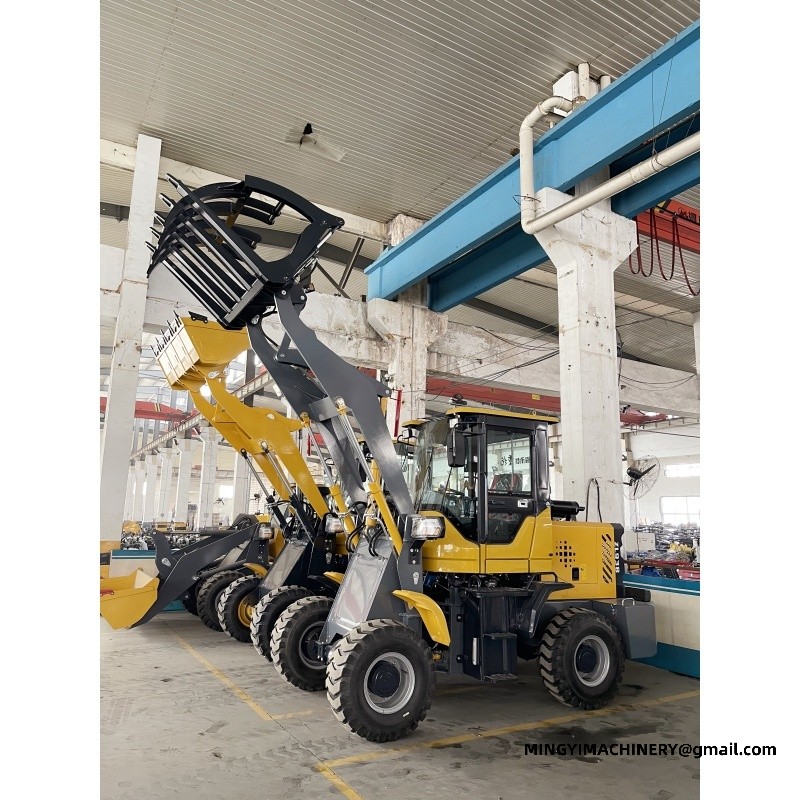
A loader that is greased, cool and clean will run for years on its original frame. The components that need attention are the articulation — 45 mm and 30 mm hinge plates on the light-duty 3.5 m medium-frame wheel-side reduction wheel loader — the boom mounts at 900 mm, and the cooling pack, 4105 core.
Set the intervals by duty, not by calendar. A machine working a dusty stockyard needs its core blown out daily; the same machine on a farm needs it monthly. A machine loading a face needs its pins greased every shift; one moving pallets needs it weekly. The specification tells you what to check — centre cylinder 60 / side cylinder 50 cylinders, 2063 pump and 25 pump on the light-duty 3.5 m medium-frame wheel-side reduction wheel loader, centre cylinder 60 / side cylinder 50, 2063 pump and 25 pump on the light-duty 3.8 m medium-frame wheel-side reduction wheel loader — and the duty tells you how often.
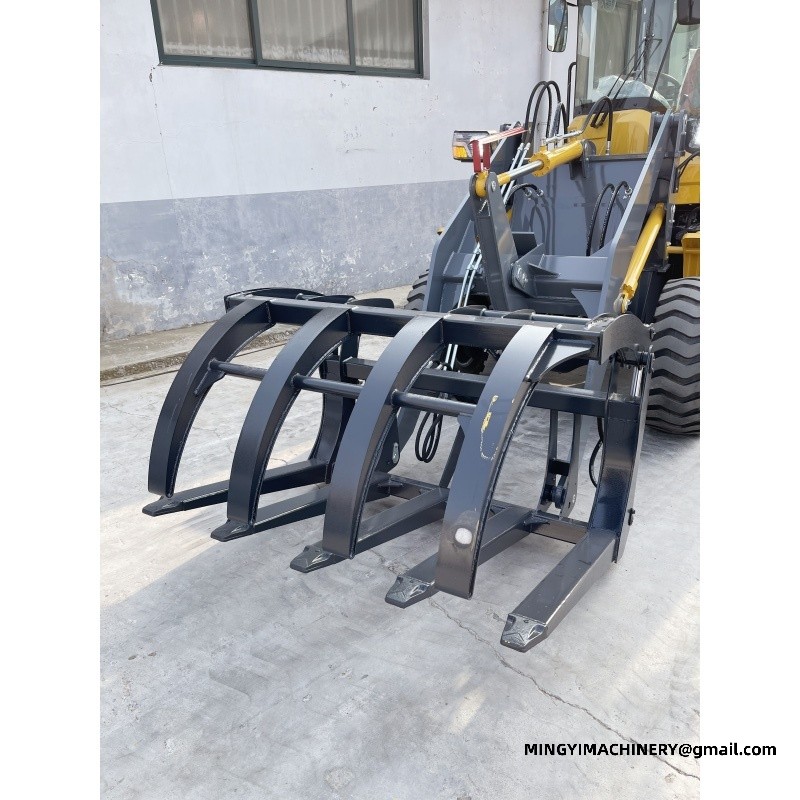
Every unit leaves the factory knock-down: booms and counterweights loose, tanks removed, batteries boxed and disconnected. Because rear frame sections stay within the 200 mm high x 750 mm wide to 280 mm high x 800 mm wide band across the range, two to three loaders ship in one forty-foot container.
What arrives is a machine plus a commissioning job. On the standard 2.8 m low-profile wheel loader that means fitting the 2.05 m boom to the 680 mm mounts, torquing the 16 mm hinge pins, filling the 30.8 L (48# large tank, 20.5/70-16 tyres); 24.6 L (48# small tank, 8.25-16 tyres) tank and the 4100 core cooling system, and connecting the battery. On the heavy-duty 3.8 m small-frame wheel-side reduction wheel loader the same sequence applies with 2.61 m, 30 mm, 64.7 L (75# small tank) and 4100 core (490 engine); 4105 core (4102T engine). Allow a day per machine, and allow for the fact that the battery will have sat for weeks.
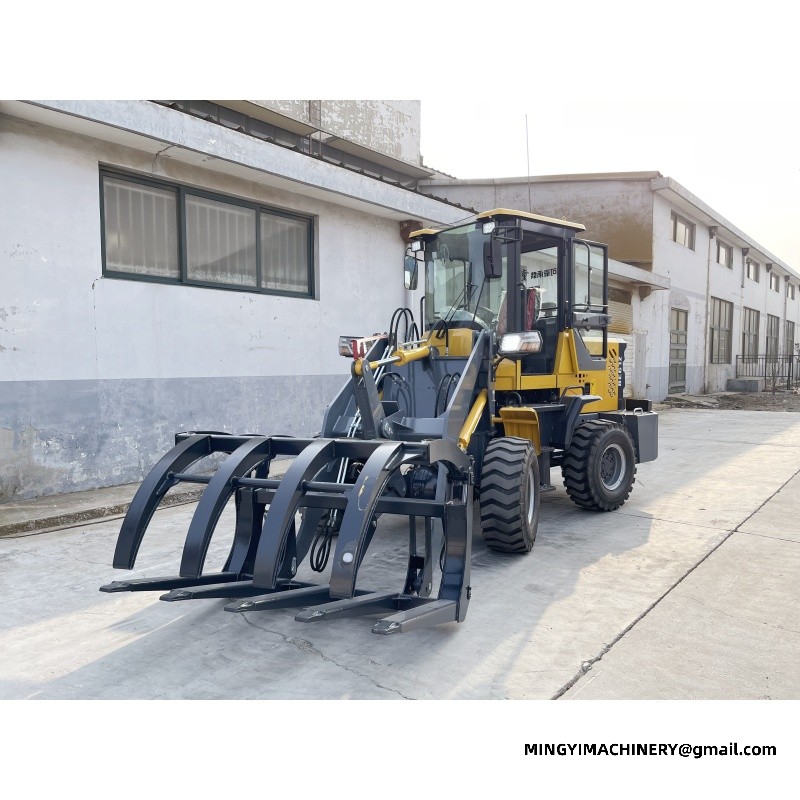
Spares consolidate by frame family rather than by model, which is the point of building a range this way. One cylinder seal kit covers the centre cylinder 45 / side cylinder 45 set across the builds that share it; one pump set covers 40 pump (490 engine); 1045 pump (4102 turbo engine) and 316 pump; pins, bushes and cutting edges are common within a family. On the heavy-duty 3.8 m small-frame wheel-side reduction wheel loader and the light-duty 3.5 m medium-frame wheel-side reduction wheel loader, where the two share a family, that is four line items.
What to keep on the shelf depends on the duty. A single machine on a farm needs a cutting edge, a hydraulic hose set, filters and a pin and bush kit. A fleet in a quarry needs those plus a cylinder seal kit, a pump, and one spare wheel-end. Because the 30 mm and 45 mm cross-members and the 20 mm and 30 mm hinge plates differ between builds, order wear parts against the model name, not against the frame.
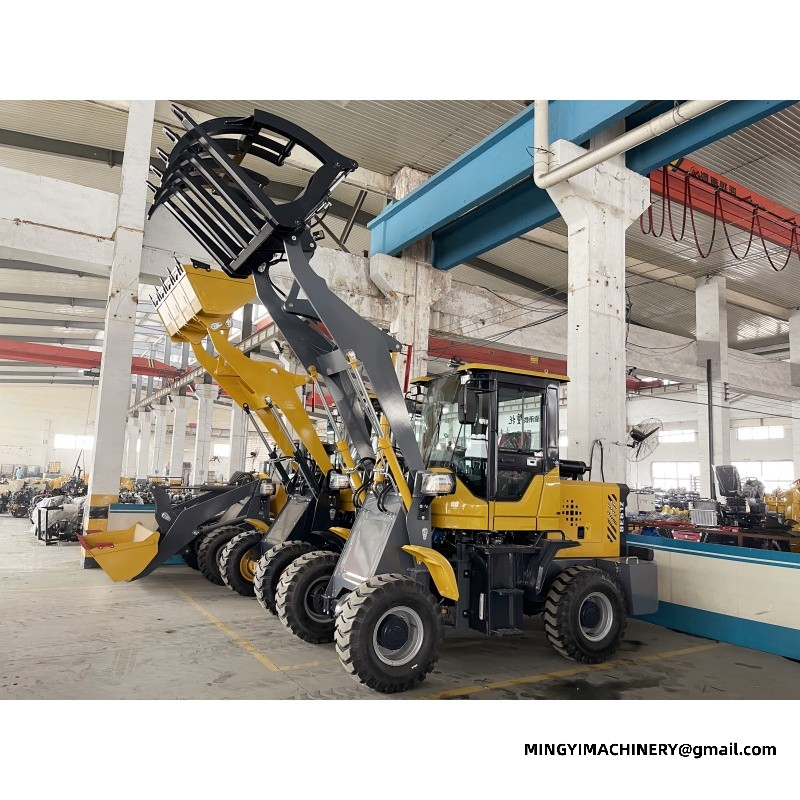
Fleet size falls out of cycle count, and cycle count falls out of bucket volume and dump height together. Take the daily tonnage, divide by what one bucket carries at 0.4 m³, and check that the receiving bodies sit under 3.8 m. If they do not, the calculation is wrong before it starts, and the heavy-duty 4.2 m small-frame wheel-side reduction wheel loader at 4.2 m is the machine the fleet actually needs.
Reserve capacity matters more than peak capacity because a fleet runs on its worst day, with one machine down and the face further away. Specifying the whole fleet on one build keeps that simple: same centre cylinder 45 / side cylinder 45, same 40 pump (490 engine); 1045 pump (4102 turbo engine), same 1.5 m (wheel-side reduction axle); 1.45 m (Isuzu axle), so one spare parts bin covers every machine and any operator can take any unit.
Will a wheel loader log grapple start in a cold climate?
With the right pack, yes: 45 Ah (24 V) on the standard 2.8 m low-profile wheel loader, the larger capacity where the turbo engine is fitted. Specify an isolator for anything shipping long-distance.
How do I choose the right dump height for a wheel loader log grapple?
Measure the receiving body at the front board rather than the side: 4.2 m on the heavy-duty 4.2 m small-frame wheel-side reduction wheel loader, 3.8 m on the light-duty 3.8 m medium-frame wheel-side reduction wheel loader. Clearance decides whether the pass is possible at all.
What should the first service on a wheel loader log grapple cover?
Torque the hinge pins, grease the 890 mm boom mounts, check the centre cylinder 45 / side cylinder 45 cylinder connections and the 4100 core (490 engine); 4105 core (4102T engine) cooling circuit, then re-check the build figures.
What is the fuel tank capacity of a wheel loader log grapple?
64.7 L (75# small tank) on the heavy-duty 3.8 m small-frame wheel-side reduction wheel loader and 70 L (75# large tank) on the light-duty 3.5 m medium-frame wheel-side reduction wheel loader, both sized for a full shift at working throttle without a mid-day refuel.
What does a wheel loader log grapple need to run a grapple?
A grapple sized to the 430 mm boom section and a hydraulic third circuit. The 40 pump (490 engine); 1045 pump (4102 turbo engine) work pump is specified per build, so order the circuit with the machine.
How many hours a day can a wheel loader log grapple run?
As many as the cooling and fuel allow: a 30.8 L (48# large tank, 20.5/70-16 tyres); 24.6 L (48# small tank, 8.25-16 tyres) tank on the standard 2.8 m low-profile wheel loader and a 4100 core radiator. In dusty work the radiator, not the tank, is usually what sets the limit.
What is the largest wheel loader log grapple in the range?
The medium-frame heavy builds: a 0.4 m³ bucket at 3.8 m on a 2.61 m boom with centre cylinder 45 / side cylinder 45 cylinders.
Every wheel loader log grapple in this range ships with the same five recorded figures — boom wall, boom width, front hinge, rear hinge and cross-member — checked against the published table before it leaves the factory. Ask for that record on any unit you are stated.
Pre-delivery inspection before Wheel Loader Log Grapple: Grapple Loads and Hinge Steel leaves the shop
What the customer sees on arrival is decided before departure. The walk-around given to Wheel Loader Log Grapple: Grapple Loads and Hinge Steel covers the same points the operator will check on day one, so there are no surprises when the crate is opened at the destination.
Reading the early symptoms on Wheel Loader Log Grapple: Grapple Loads and Hinge Steel
The symptom is usually not at the fault. A hydraulic function that has become sluggish on Wheel Loader Log Grapple: Grapple Loads and Hinge Steel may point to a filter, a relief setting or a pump, and starting with the simple checks avoids the wrong guess.
Contact MINGYI Machinery for the current wheel loader lineup, configuration options and a formal specification for your market. E-mail: sales@mingycn.com | LINE (ID): mingyicn
Front End Loader Log Grapple: Section Widths and Pin Geometry · Hydraulic Wheel Loader Log Grapple: Circuit and Cylinders · Loader Machine for Construction: Pass Count and Cycle Plan · Loaders








