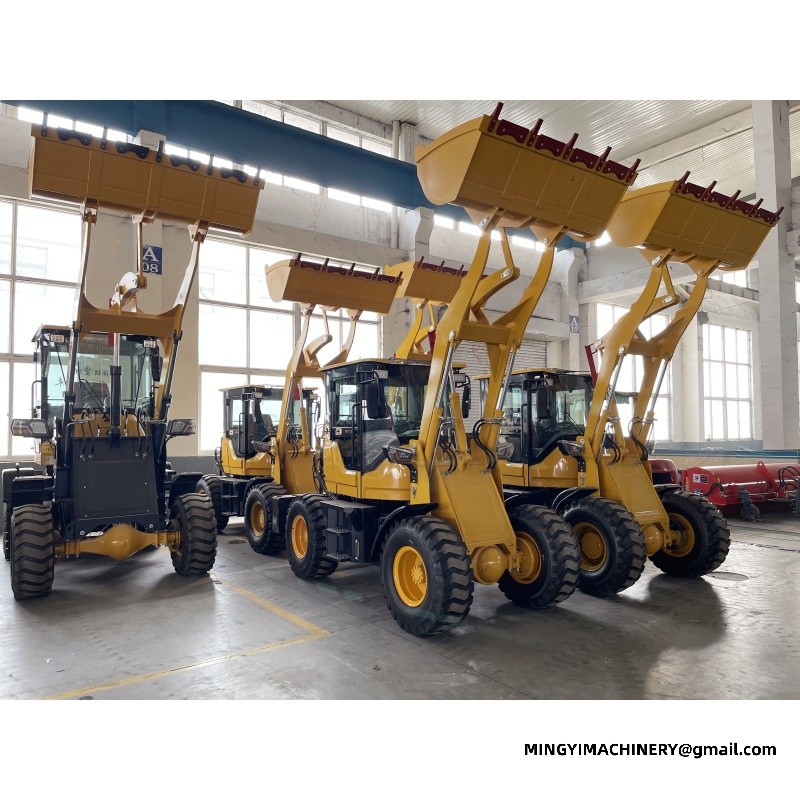
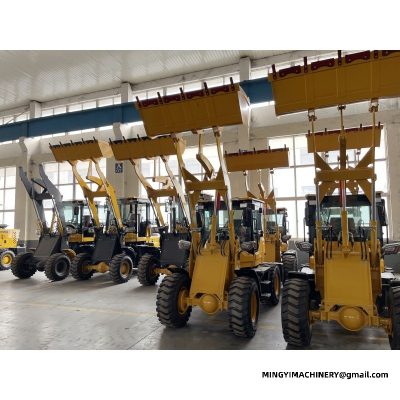
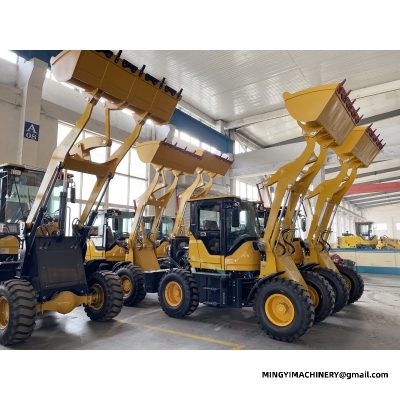
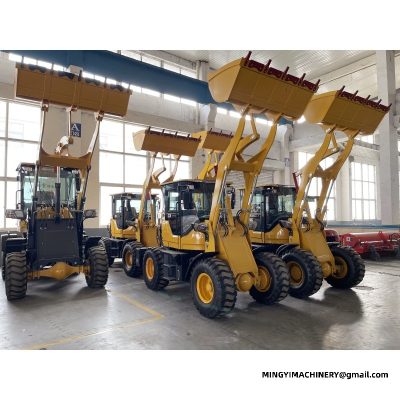
Fleet buyers read a loader machine for construction sheet differently from owner-operators. Fleets care whether the next machine matches the last one: same 2063 pump pump, same 4105 core radiator, same 80 Ah battery, because that is what keeps one spares bin covering ten machines. Owner-operators care whether this one machine fits the job. This page is written to serve both, comparing the heavy-duty 4.2 m medium-frame wheel-side reduction wheel loader and the heavy-duty 4.5 m medium-frame wheel-side reduction wheel loader row by row, and saying plainly which rows matter for which kind of buyer.
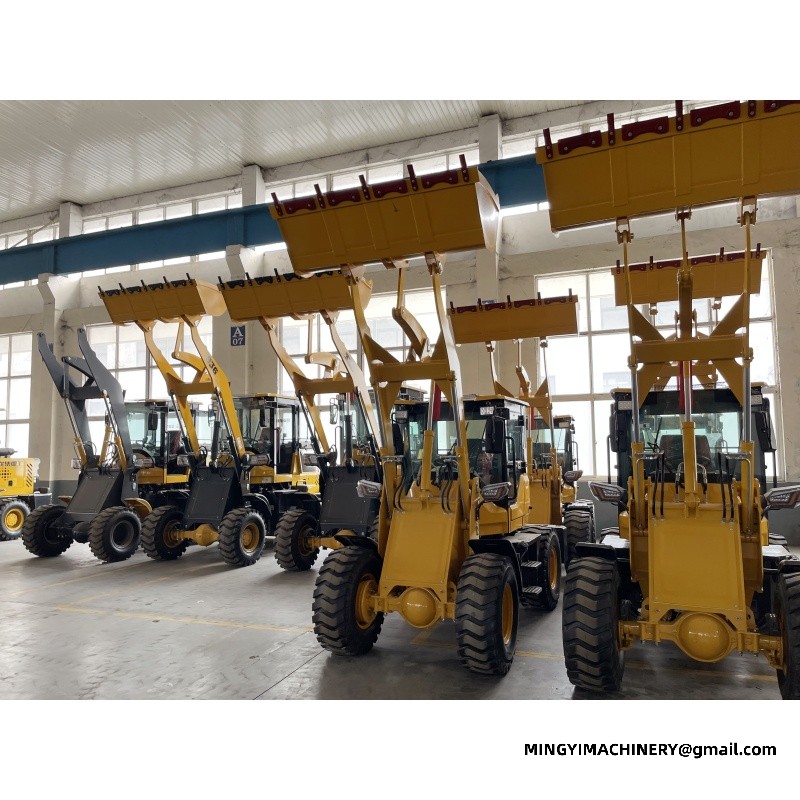
Attachments are specified against the carrier, not against the machine's size class. The figures that matter are the boom section and the hinge geometry: 520 mm on the heavy-duty 4.2 m medium-frame wheel-side reduction wheel loader against 520 mm on the heavy-duty 4.5 m medium-frame wheel-side reduction wheel loader, and centre distance 960 mm against 960 mm. Two loaders of the same rated capacity from different frame families will not share a fork frame.
Within one frame family the section and spacing match, so a single tool set covers the light and heavy builds of that frame — a genuine advantage for a mixed fleet. Across families it does not work. If you intend to run hydraulically actuated tools, a grapple, a four-in-one bucket or a hydraulic snow blade, order the third circuit at build time; the 2063 pump and 2063 pump circuits are specified per build and plumbing added later is the most common source of field leaks.
Cold cranking is the one specification that is easy to ignore and impossible to work around at five in the morning. This build is specified with 60 Ah (490 engine); 80 Ah (4102 turbo engine), matched to the engine it has to turn. Capacity in ampere-hours is only half the story; the other half is whether the rating is honest at low temperature, which is why the figure should be read together with the engine option.
Where two engines are offered, the turbo option asks for more from the battery and gets it: the higher rating in 60 Ah (490 engine); 80 Ah (4102 turbo engine) belongs to that build. If the machine will start cold, stop often, or run a short-haul duty with many restarts, specify the higher capacity at the order stage rather than discovering the limit in January.
Machines kept past warranty should be bought on steel. Hinge plates 30 mm and 20 mm, cross-member 30 mm, rear frame 280 mm high x 800 mm wide: those are the figures that decide whether year five is a service year or a rebuild year.
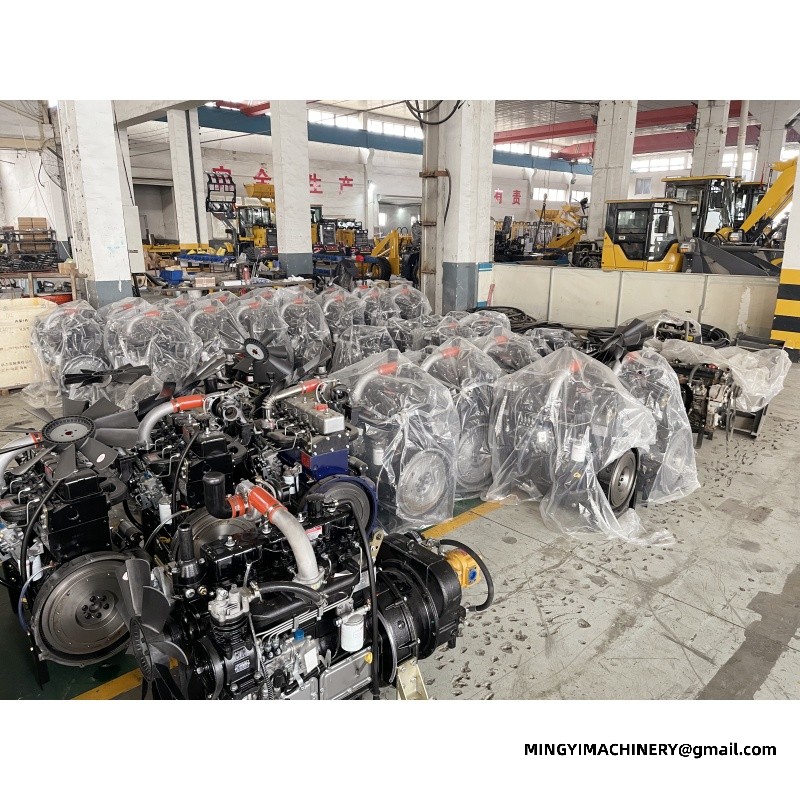
The second decision is how repairable the machine is, and that is a parts question. Cylinders centre cylinder 45 / side cylinder 40, pump 40 pump (490 engine); 1045 pump (4102 turbo engine), radiator 4100 core (490 engine); 4105 core (4102T engine), battery 60 Ah (490 engine); 80 Ah (4102 turbo engine): if all four are standard items within the range, a machine can be kept indefinitely. If any is unique to one build, it cannot, and that is worth knowing before the order rather than at year six.
| Specification extract — heavy-duty 3.2 m low-profile wheel loader | |
|---|---|
| Bucket capacity | 0.4 m³ |
| Dump height | 3.2 m |
| Track width | 1.5 m (wheel-side reduction axle); 1.45 m (Isuzu axle) |
| Boom arm thickness | 25 mm |
| Boom arm width | 430 mm |
| Boom arm length | 2.3 m |
| Boom arm centre distance | 890 mm |
| Cross-member thickness | 30 mm |
| Front hinge plate thickness | 30 mm |
| Rear hinge plate thickness | 20 mm |
| Rear frame section | 230 mm high x 800 mm wide |
| Hydraulic cylinders | centre cylinder 45 / side cylinder 45 |
| Fuel tank | 54 L (50# tank) |
| Battery | 60 Ah (490 engine); 80 Ah (4102 turbo engine) |
| Front wheel to counterweight | 4.1 m |
| Radiator | 4100 core (490 engine); 4105 core (4102T engine) |
| Work pump | 40 pump (490 engine); 1045 pump (4102 turbo engine) |
| Travel pump | 316 pump |
Model names are marketing; build codes are what the shop floor works from. Two machines with the same name can leave the factory with different hinge steel, and the difference is invisible until something wears. On this range the differences are published: 30 mm of cross-member against 30 mm, 30 mm of front hinge plate against 30 mm.
Specify the machine the way you would specify a pump: by the numbers. Bucket 0.4 m³, dump height 3.5 m, cylinders centre cylinder 45 / side cylinder 40, track 1.5 m (wheel-side reduction axle); 1.45 m (Isuzu axle). Write those into the order and the confirmation, and the machine that arrives is the machine you compared. Anything else relies on a name meaning the same thing to two people.
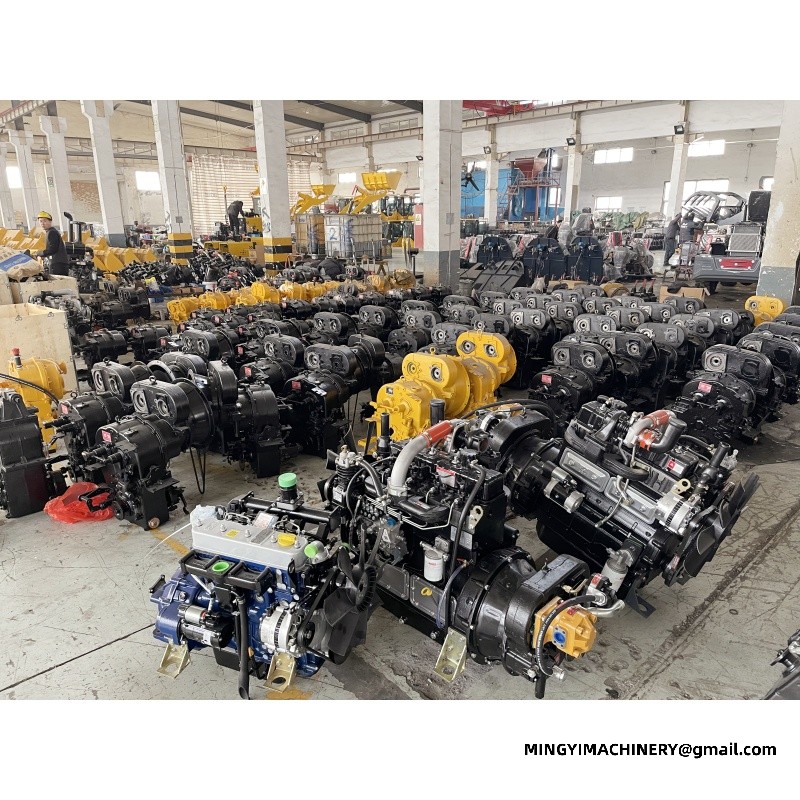
A rebuild is worth doing when the frame is sound and the running gear is not. Check the hinge plates, 16 mm and 16 mm, and the cross-member, 16 mm, for movement and cracking. If those are tight, cylinders centre cylinder 45 / side cylinder 40, pump 32 pump and radiator 4100 core are all replaceable items and the machine has years left.
If the frame has gone, it has gone: re-machining pin bores restores geometry for a while and never for long, because the 200 mm high x 750 mm wide section has been flexing the whole time. That is the point to compare against a new build rather than a repair, and it is why the plate figures are worth reading at purchase rather than at disposal.
Every unit leaves the factory knock-down: booms and counterweights loose, tanks removed, batteries boxed and disconnected. Because rear frame sections stay within the 300 mm high x 800 mm wide to 300 mm high x 800 mm wide band across the range, two to three loaders ship in one forty-foot container.
What arrives is a machine plus a commissioning job. On the heavy-duty 4.2 m medium-frame wheel-side reduction wheel loader that means fitting the 3.16 m boom to the 960 mm mounts, torquing the 45 mm hinge pins, filling the 70 L (75# large tank) tank and the 4105 core cooling system, and connecting the battery. On the heavy-duty 4.5 m medium-frame wheel-side reduction wheel loader the same sequence applies with 3.35 m, 45 mm, 70 L (75# large tank) and 4105 core. Allow a day per machine, and allow for the fact that the battery will have sat for weeks.
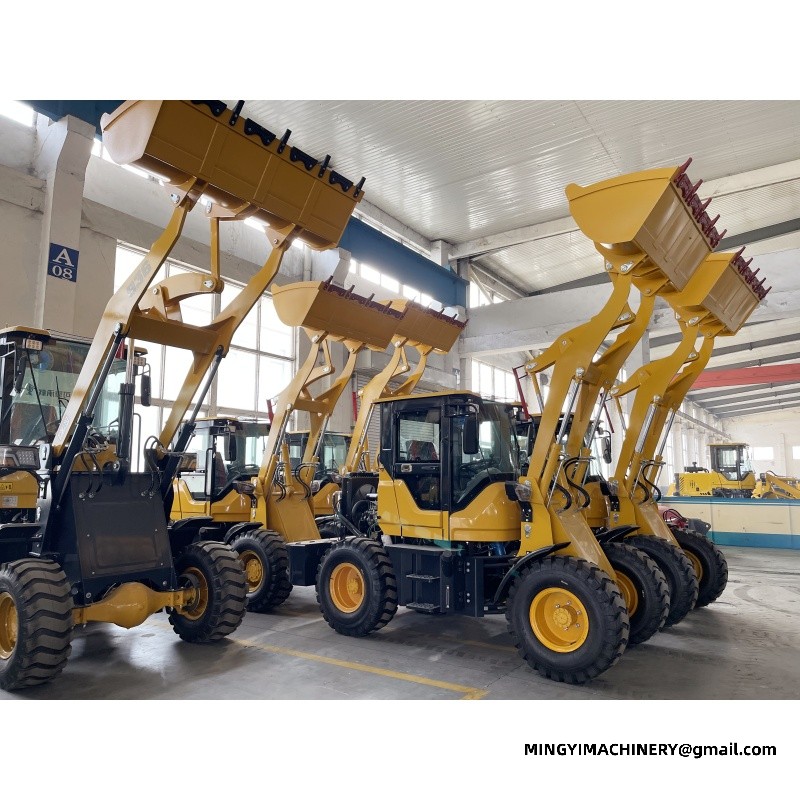
Shipping is a dimensions problem before it is a freight problem. Front wheel to counterweight is 4.1 m on this build and 4.55 m on the heavy-duty 4.2 m medium-frame wheel-side reduction wheel loader; track is 1.5 m (wheel-side reduction axle); 1.45 m (Isuzu axle). Those two figures, plus the bucket, decide how many units fit a container and whether the machine travels assembled.
Dump height matters here for a reason that surprises people: a machine shipped with the arm raised will not fit under a container door. At 3.2 m of lift height the arm has to be strapped down, and the securing points are on the frame — the 230 mm high x 800 mm wide rear section and the cross-member behind it, not the cylinders.
Site work is a truck-loading problem. The machine fills, reverses, turns, approaches and dumps, several hundred times a day, and the numbers that govern it are dump height, hinge steel and cycle time. The heavy-duty 4.2 m small-frame wheel-side reduction wheel loader brings 0.4 m³ at 4.2 m with 30 mm and 20 mm hinge plates; the heavy-duty 4.2 m medium-frame wheel-side reduction wheel loader brings 0.65 m³ at 4.2 m with 45 mm and 30 mm.
Backfilling and heel-in work load the rear hinge harder than loading does, because the machine turns while pushing. That is why the rear plate figure — 20 mm against 30 mm — is the one to read for a site machine, ahead of engine power. Add the cooling question: site dust loads a radiator fast, so the raised core and the 4105 core package earn their keep where the 4100 core (490 engine); 4105 core (4102T engine) spec would need blowing out at lunch.
How should the battery on a loader machine for construction be cared for?
Keep the terminals clean and tight and use the isolator if the machine will stand. The rating is 60 Ah (490 engine); 80 Ah (4102 turbo engine), and a machine left connected for weeks will not start when it is needed.
Should I go up a bucket size on a loader machine for construction?
Only if the material is light enough to fill it. 0.4 m³ against 0.4 m³ looks like a gain on paper and is a loss on dense material, and the extra weight lands on the hinge.
Is a loader machine for construction suitable for night work?
With adequate lighting, yes. Electrical capacity is the constraint and the rating is 60 Ah (490 engine); 80 Ah (4102 turbo engine); extra lamps and beacons come out of the same plan.
Which engine option should a loader machine for construction be ordered with?
It follows the duty. The engine drags three rows with it: pump 40 pump (490 engine); 1045 pump (4102 turbo engine), core 4100 core (490 engine); 4105 core (4102T engine) and battery 60 Ah (490 engine); 80 Ah (4102 turbo engine). Choose it early rather than accepting whatever is in stock.
Can a loader machine for construction work inside a building?
Clearance and ventilation are the constraints. Lift height is 3.5 m and the core is 4100 core (490 engine); 4105 core (4102T engine), which has to reject heat into air that is not moving.
How many passes will fill a truck with a loader machine for construction?
Divide body volume by bucket volume, then check the height. Against 4.2 m of lift with a 0.65 m³ bucket, a body that is too tall is not a pass-count problem at all.
Which tyre fitment does a loader machine for construction use?
It follows the tank and axle specification: 64.7 L (75# small tank) on this build. The larger fitment goes with the larger tank and the heavier duty.
Every figure stated on this page — bucket 0.65 m³, lift 4.2 m, hinge plates 45 mm and 30 mm — comes from the published build data for the heavy-duty 4.2 m medium-frame wheel-side reduction wheel loader and the heavy-duty 4.5 m medium-frame wheel-side reduction wheel loader. Send your board heights, material and shift pattern and the comparison can be run against your own numbers.
Handover and getting familiar with Loader Machine for Construction: Pass Count and Cycle Plan
A good handover covers the awkward cases, not just the easy ones. Starting Loader Machine for Construction: Pass Count and Cycle Plan on a slope, turning in a confined space and recovering from soft ground are the situations an operator should meet first with someone beside them.
Documents that travel with Loader Machine for Construction: Pass Count and Cycle Plan
A clear parts book saves more time than any other document. When Loader Machine for Construction: Pass Count and Cycle Plan needs a replacement, the illustration and the part number are what turn a phone call into a shipment instead of a description.
Wear items and spares worth holding for Loader Machine for Construction: Pass Count and Cycle Plan
Holding spares is about downtime rather than the shelf itself. The question for Loader Machine for Construction: Pass Count and Cycle Plan is not how large the part is but how long the machine sits while it is found, and a small shelf answers that better than a fast courier.
Moving Loader Machine for Construction: Pass Count and Cycle Plan between sites
A machine that works on one site still has to reach the next. The overall dimensions and the operating weight of Loader Machine for Construction: Pass Count and Cycle Plan decide what trailer or truck is needed, and that decision belongs before the job is booked.
Planning the season around Loader Machine for Construction: Pass Count and Cycle Plan
Workload is rarely even across the year, and the machine should be specified for the busy weeks. A Loader Machine for Construction: Pass Count and Cycle Plan sized only for the average month will be the limiting factor exactly when the work is worth the most.
Contact MINGYI Machinery for the current wheel loader lineup, configuration options and a formal specification for your market. E-mail: sales@mingycn.com | LINE (ID): mingyicn
Wheel Loader for Mining: Cooling Care on Every Shift · Wheel Loader for Agriculture: Gates, Yards and Wagon Sides · Wheel Loader Snow Blower: Hydraulic Circuits and Winter Duty · Wheel Loader









