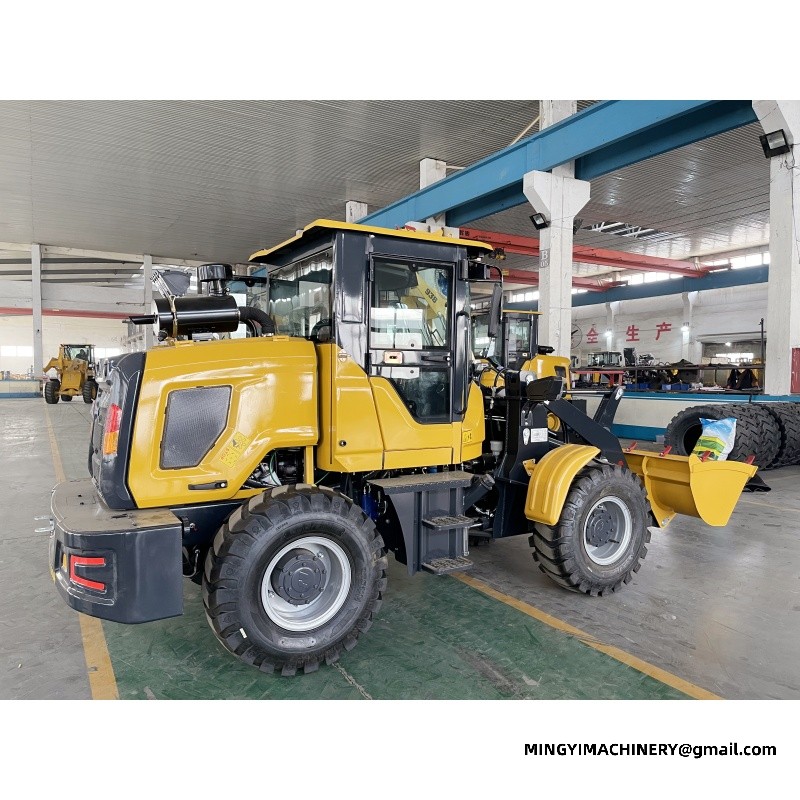
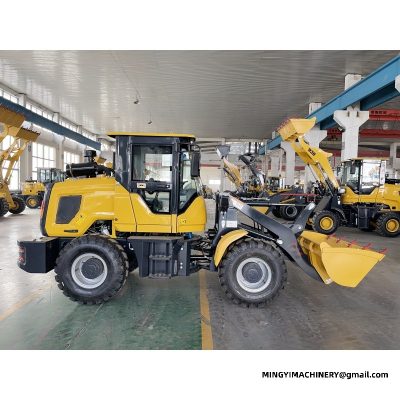
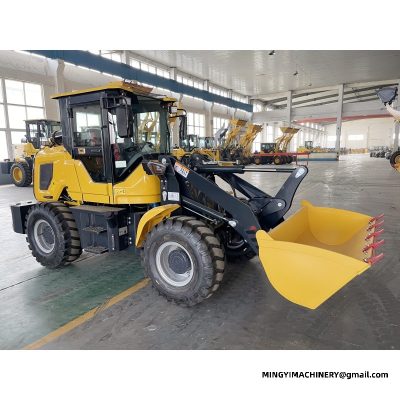
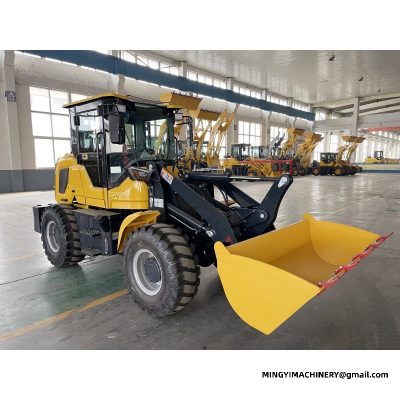
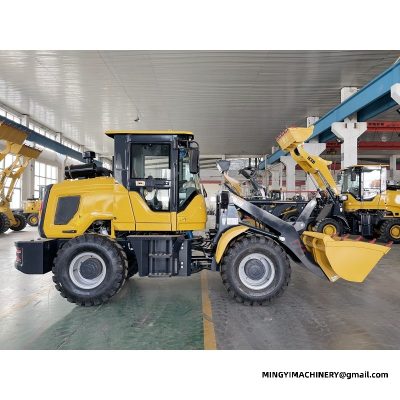
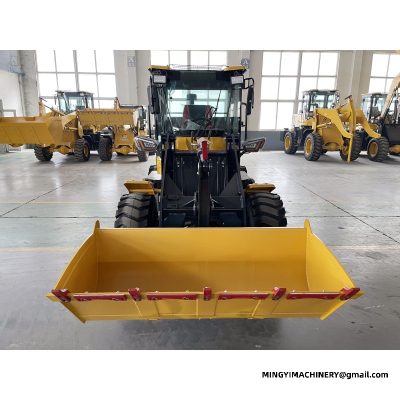
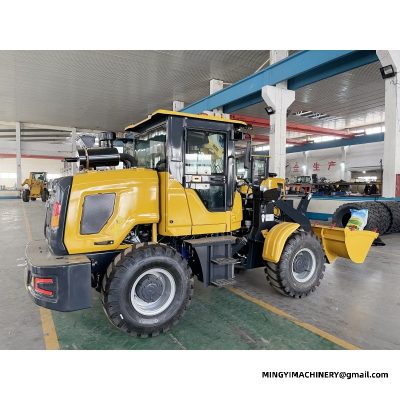
Specification sheets exist so that two people can mean the same thing. Without them, a wheel loader for agriculture order is a name and a hope. With them, it is a bucket of 0.4 m³, a lift of 3.5 m, a track of 1.5 m (wheel-side reduction axle); 1.45 m (Isuzu axle), cylinders of centre cylinder 45 / side cylinder 40 and a radiator of 4100 core (490 engine); 4105 core (4102T engine). This page is written for the moment before an order goes in: which rows to pin down, which to leave flexible, and which will come back to matter at delivery. The heavy-duty 3.5 m small-frame wheel-side reduction wheel loader and the heavy-duty 3.8 m small-frame wheel-side reduction wheel loader carry the comparisons.
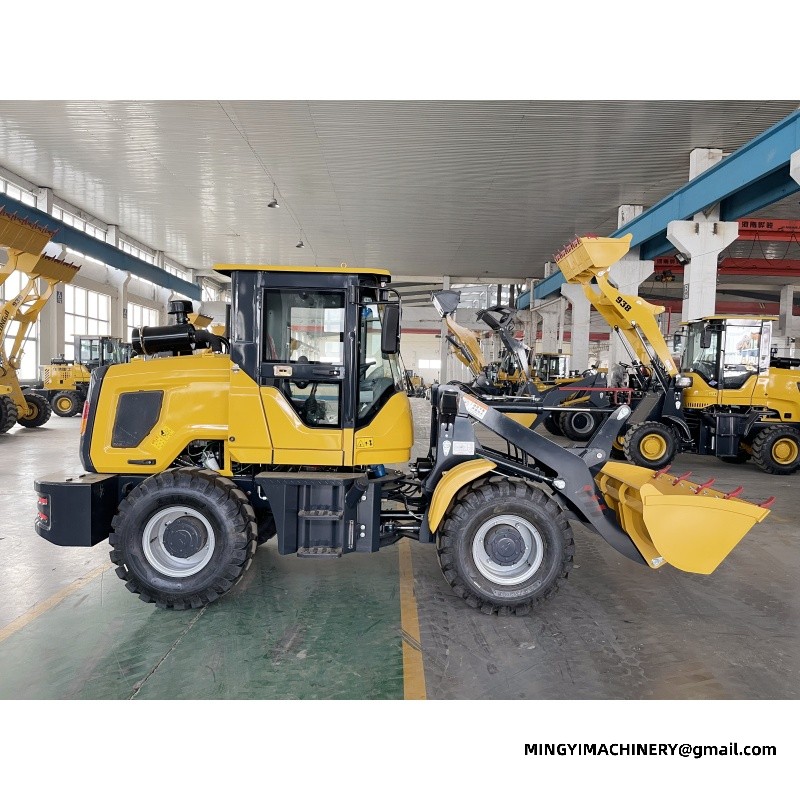
The two axle options on this range are differentiated by track: 1.5 m (wheel-side reduction axle); 1.45 m (Isuzu axle) on the heavy-duty 3.5 m small-frame wheel-side reduction wheel loader, 1.5 m (wheel-side reduction axle); 1.45 m (Isuzu axle) on the heavy-duty 3.8 m small-frame wheel-side reduction wheel loader. Behind the number is a different reduction layout. The Isuzu-pattern bridge is lighter, faster on hard ground and simpler to service. The wheel-side reduction bridge puts the final drive at the hub, which lowers the load on the shafts and raises the torque available at the tyre.
Choose by surface and gradient. On compacted hardstanding and long haul roads the Isuzu-pattern axle is the better machine; on a soft lane, a loading ramp or an uncompacted stockyard, hub reduction is what keeps the machine moving when a wheel would otherwise spin. Track width interacts with it: 1.5 m (wheel-side reduction axle); 1.45 m (Isuzu axle) on the heavy-duty 3.5 m small-frame wheel-side reduction wheel loader and 1.5 m (wheel-side reduction axle); 1.45 m (Isuzu axle) on the heavy-duty 3.8 m small-frame wheel-side reduction wheel loader are the figures to check against your narrowest gate, door or aisle before anything else on the sheet.
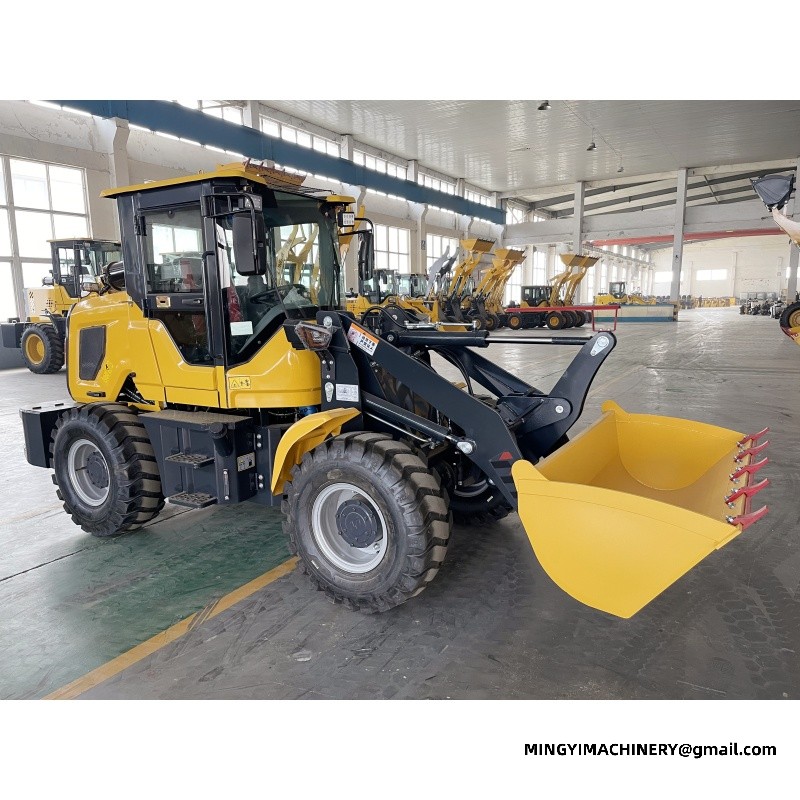
A bucket that fills completely every pass beats a larger one that fills partly, because a partly filled bucket is carrying air at the same effort as material. On a dense face, 0.4 m³ will fill where 0.4 m³ might not, and the smaller machine finishes the job first while putting less load into the 30 mm hinge.
There is also the question of what the load does to the machine in motion. Carrying a full bucket across rough ground loads the front axle, the hinge and the boom all at once. At 4.2 m front wheel to counterweight and 1.5 m (wheel-side reduction axle); 1.45 m (Isuzu axle) of track, the shorter machine with the right bucket is more stable as well as quicker, and stability is what keeps a cycle time consistent rather than occasionally fast.
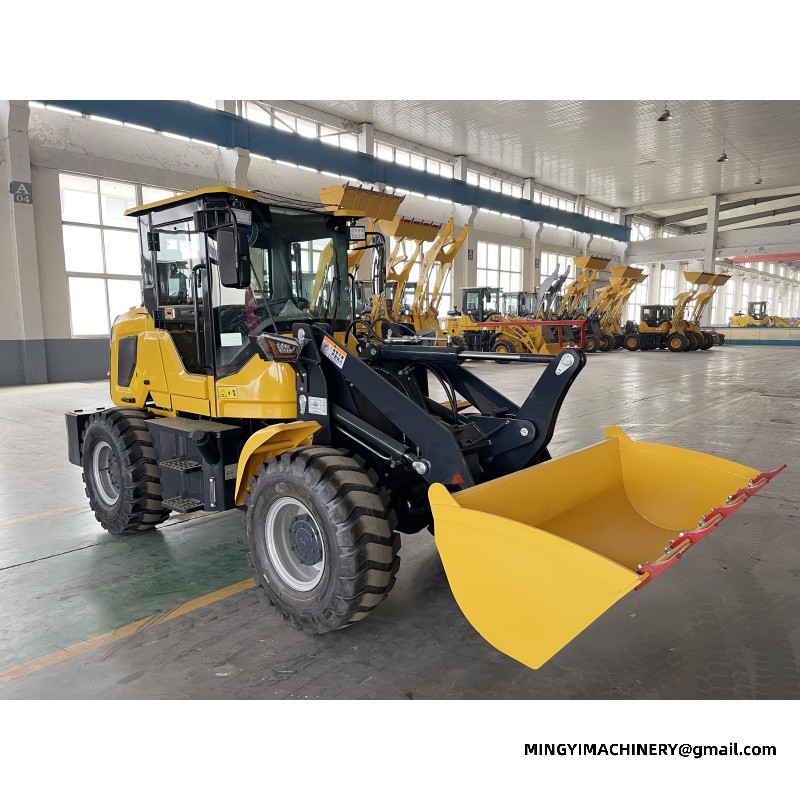
A boom is a beam, and a beam is specified by length, section and material thickness. On the heavy-duty 3.5 m small-frame wheel-side reduction wheel loader that means 2.62 m long, 430 mm wide and 25 mm thick, mounted on a 890 mm centre distance. On the heavy-duty 3.8 m small-frame wheel-side reduction wheel loader the same three figures are 2.61 m, 430 mm and 25 mm on a 890 mm spacing. Those six numbers decide breakout behaviour, side-load tolerance and how the machine feels on the last metre of lift.
The practical test is simple. If your day is loose material on level ground, a shorter arm on a tight machine will out-cycle a longer one, because every millimetre of reach is travel time. If your day is faces, banks and truck loading, the longer arm of the two — 2.62 m at 3.5 m — earns its keep, provided the 25 mm wall and 430 mm section are there to carry it. Ask which bucket the boom was engineered around — 0.4 m³ on the heavy-duty 3.5 m small-frame wheel-side reduction wheel loader, 0.4 m³ on the heavy-duty 3.8 m small-frame wheel-side reduction wheel loader — and you will know whether the arm and the frame were designed together.
| Reference specification — standard 2.4 m low-profile wheel loader | |
|---|---|
| Bucket capacity | 0.3 m³ |
| Dump height | 2.4 m |
| Track width | 1.2 m (Isuzu axle); 1.3 m (wheel-side reduction axle) |
| Boom arm thickness | 20 mm |
| Boom arm width | 280 mm |
| Boom arm length | 1.85 m |
| Boom arm centre distance | 680 mm |
| Cross-member thickness | 16 mm |
| Front hinge plate thickness | 16 mm |
| Rear hinge plate thickness | 16 mm |
| Rear frame section | 200 mm high x 750 mm wide |
| Hydraulic cylinders | centre cylinder 40 / side cylinder 40 |
| Fuel tank | 30.8 L (48# large tank, 20.5/70-16 tyres); 24.6 L (48# small tank, 8.25-16 tyres) |
| Battery | 45 Ah (24 V) |
| Front wheel to counterweight | 3.5 m |
| Radiator | 4100 core |
| Work pump | 32 pump |
| Travel pump | 316 pump |
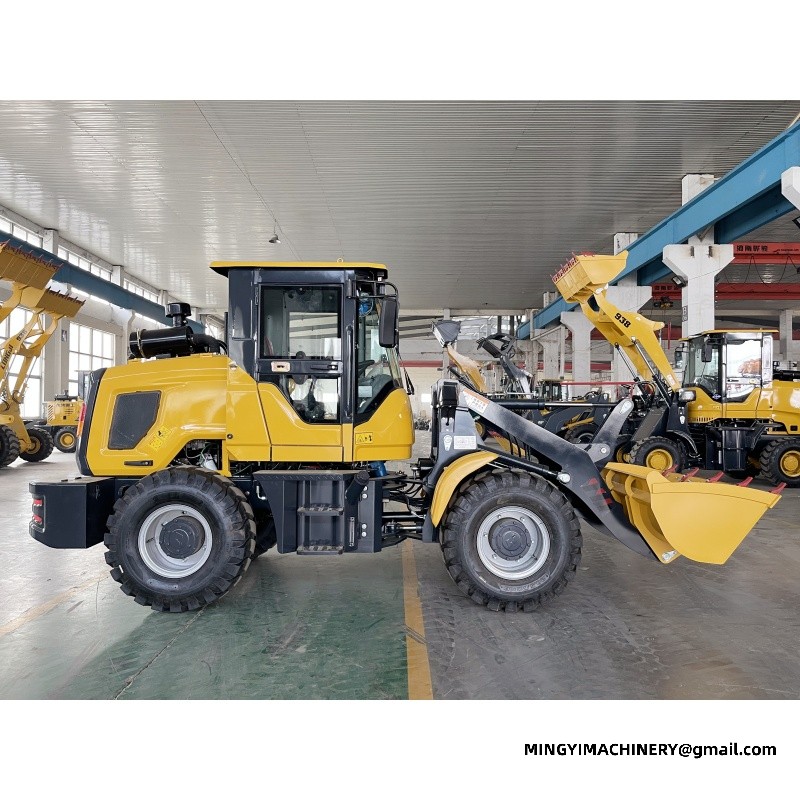
Every loader purchase starts with the thing being loaded into. On this range the choice runs from 3.5 m on the heavy-duty 3.5 m small-frame wheel-side reduction wheel loader to 3.8 m on the heavy-duty 3.8 m small-frame wheel-side reduction wheel loader, and the gap between those two figures is the gap between a machine that feeds a small mixer and one that feeds a highway truck.
Take the measurement at the highest point the bucket must clear, on the near side, with the truck loaded — a suspension that settles under load lowers the board. Then add allowance for the operator's approach angle. The heavy-duty 3.5 m small-frame wheel-side reduction wheel loader at 3.5 m with a 0.4 m³ bucket and a 2.62 m arm is a compact answer; the heavy-duty 3.8 m small-frame wheel-side reduction wheel loader at 3.8 m with 0.4 m³ and a 2.61 m arm is the answer where the board is high.
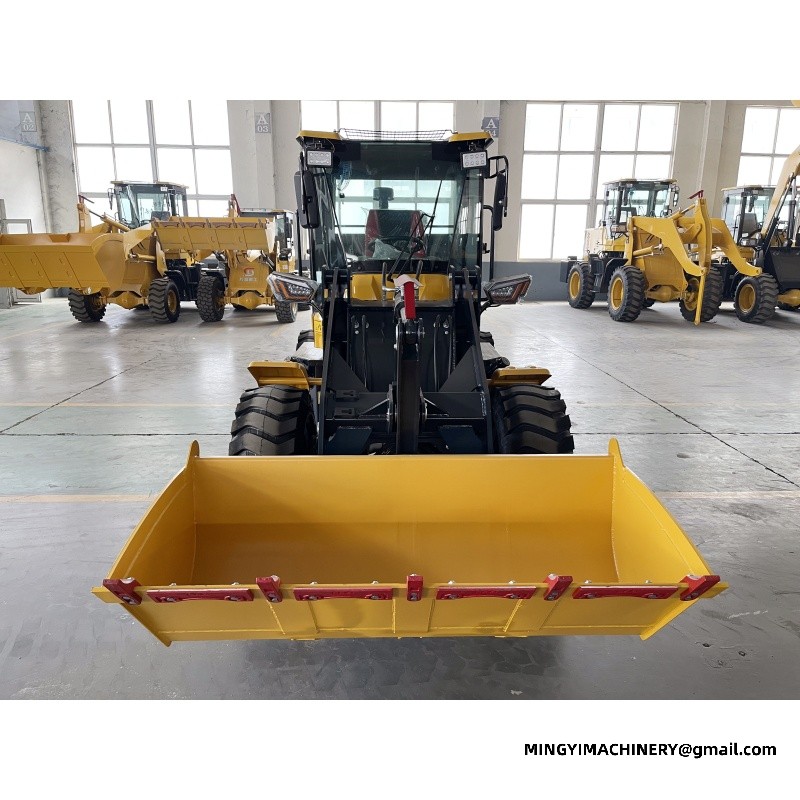
Hinge plates carry the pin loads that the boom and the steering articulation put into the frame, and they are where a loader shows its age first. The standard 2.4 m low-profile wheel loader runs 16 mm front plates and 16 mm rear plates over a 16 mm cross-member; the heavy-duty 3.8 m small-frame wheel-side reduction wheel loader runs 30 mm and 20 mm over 30 mm. Rear frame sections follow at 200 mm high x 750 mm wide and 280 mm high x 800 mm wide respectively.
The rear plate is the more telling of the two. Articulated steering loads the rear hinge every time the machine turns under load, and reversing out of a face with a full bucket doubles it. A 16 mm rear plate with a 16 mm cross-member is a light-duty specification; 20 mm over 30 mm is a heavy-duty one. Put those alongside the 0.3 m³ and 0.4 m³ buckets and the specification difference between the two builds stops looking arbitrary — it is steel.
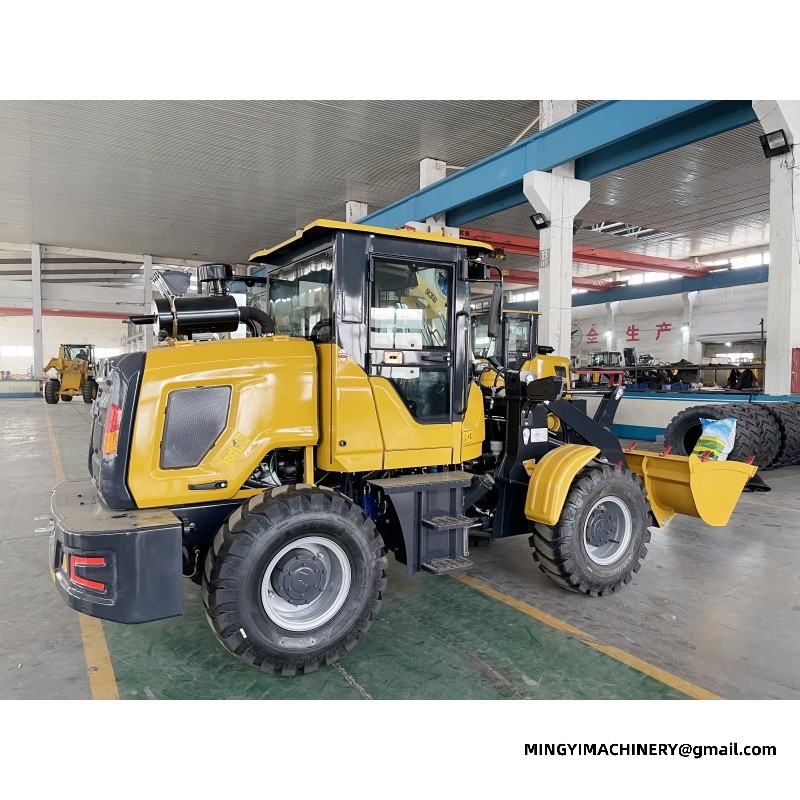
The first hour of running tells you more than the first month of paperwork. Watch the cooling: 4100 core (490 engine); 4105 core (4102T engine) should hold temperature at working load without the fan running continuously. Listen to the hydraulics: centre cylinder 45 / side cylinder 45 on a 40 pump (490 engine); 1045 pump (4102 turbo engine) should lift a full 0.4 m³ bucket to 3.8 m without the relief valve complaining.
Then check the electrical side under load, which is what the 60 Ah (490 engine); 80 Ah (4102 turbo engine) rating exists for. Restart the machine hot, restart it cold, and watch the cranking. A battery that is marginal on day one will fail in the first cold week, and it is far easier to settle at commissioning than six months later.
Keep the delivery photographs and the specification sheet with the machine. Bucket 0.3 m³, dump height 2.4 m, cylinders centre cylinder 40 / side cylinder 40, pump 32 pump, track 1.2 m (Isuzu axle); 1.3 m (wheel-side reduction axle): a buyer who can verify five figures against the machine will pay for the certainty.
The frame figures do the rest. 16 mm and 16 mm hinge plates, 16 mm cross-member, 200 mm high x 750 mm wide rear section. Two machines of the same age and hours can be worth materially different amounts on those four rows alone, because they tell the buyer how much life is left in the part that is most lengthy to put right.
Export loading is a dimension problem. Rear frame width is the governing figure and it stays in a narrow band across this range — 280 mm high x 800 mm wide on the heavy-duty 3.5 m small-frame wheel-side reduction wheel loader, 280 mm high x 800 mm wide on the heavy-duty 3.8 m small-frame wheel-side reduction wheel loader — so two to three units load in a single forty-foot container with the booms and counterweights packed alongside.
Commissioning is the part buyers under-plan. Before the first start: torque the hinge pins, fill the 64.7 L (75# small tank) tank and the 4100 core (490 engine); 4105 core (4102T engine) circuit, check the 40 pump (490 engine); 1045 pump (4102 turbo engine) and 316 pump connections, and charge or replace a battery that has sat through a voyage. Then check the five build figures — boom wall, boom width, front and rear hinge plates, cross-member — against the published table, because that is the one moment when a discrepancy is simple to fix.
How do I choose the axle on a wheel loader for agriculture?
By surface. Track is 1.5 m (wheel-side reduction axle); 1.45 m (Isuzu axle) here; where two figures are listed the wider one is the hub-reduction axle for soft or rutted ground, the narrower one suits hard standing.
How does wet ground change how a wheel loader for agriculture is used?
Rolling resistance rises, so wheel spin and driveline load rise with it. Track is 1.6 m, and the hub-reduction option is the one for soft ground.
How often should the hinge pins of a wheel loader for agriculture be greased?
Measured in hours, not weeks, on short-cycle work. The pins behind the 30 mm and 20 mm plates take every steering input; dry pins are how a frame goes loose.
Which spares should I hold for a wheel loader for agriculture?
Hoses and seals for the centre cylinder 45 / side cylinder 40, filters, belts and a battery to the 60 Ah (490 engine); 80 Ah (4102 turbo engine) rating. Do not stock welded items; plates at 30 mm and 20 mm are a repair, not a spare.
Can worn pins on a wheel loader for agriculture be repaired?
Yes, if the plates are sound. Re-machining restores geometry for a while; once the 30 mm cross-member and 280 mm high x 800 mm wide rear section have been flexing, it will not hold.
What are the signs of a failing pump on a wheel loader for agriculture?
Slow lift with normal breakout points to flow, which is the 40 pump (490 engine); 1045 pump (4102 turbo engine). Weak lift and weak breakout together point to pressure. Noise under load usually means aeration or a suction leak.
How often will a wheel loader for agriculture need refuelling?
The tank is 64.7 L (75# small tank), sized for a full shift at working throttle without a mid-day stop. Machines on short cycles with a lot of idling will use more than the figure suggests.
Keep this page against the delivery paperwork. Bucket 0.4 m³, lift 3.5 m, track 1.5 m (wheel-side reduction axle); 1.45 m (Isuzu axle) and cylinders centre cylinder 45 / side cylinder 40 are the four rows that settle any later question about what was actually ordered.
Documents that travel with Wheel Loader for Agriculture: Gates, Yards and Wagon Sides
A clear parts book saves more time than any other document. When Wheel Loader for Agriculture: Gates, Yards and Wagon Sides needs a replacement, the illustration and the part number are what turn a phone call into a shipment instead of a description.
Commissioning Wheel Loader for Agriculture: Gates, Yards and Wagon Sides on site
Transport shakes things loose. A short check of Wheel Loader for Agriculture: Gates, Yards and Wagon Sides after the crate is opened, covering the same points the pre-delivery inspection covered, is the most useful insurance available on delivery day.
Contact MINGYI Machinery for the current wheel loader lineup, configuration options and a formal specification for your market. E-mail: sales@mingycn.com | LINE (ID): mingyicn
Wheel Loader for Construction Site: Working Beside Tippers · Wheel Loader for Material Handling: Pallets and Bulk Loads · Wheel Loader Snow Pusher: Frame Loads and Cold-Weather Starting · Wheel Loader









