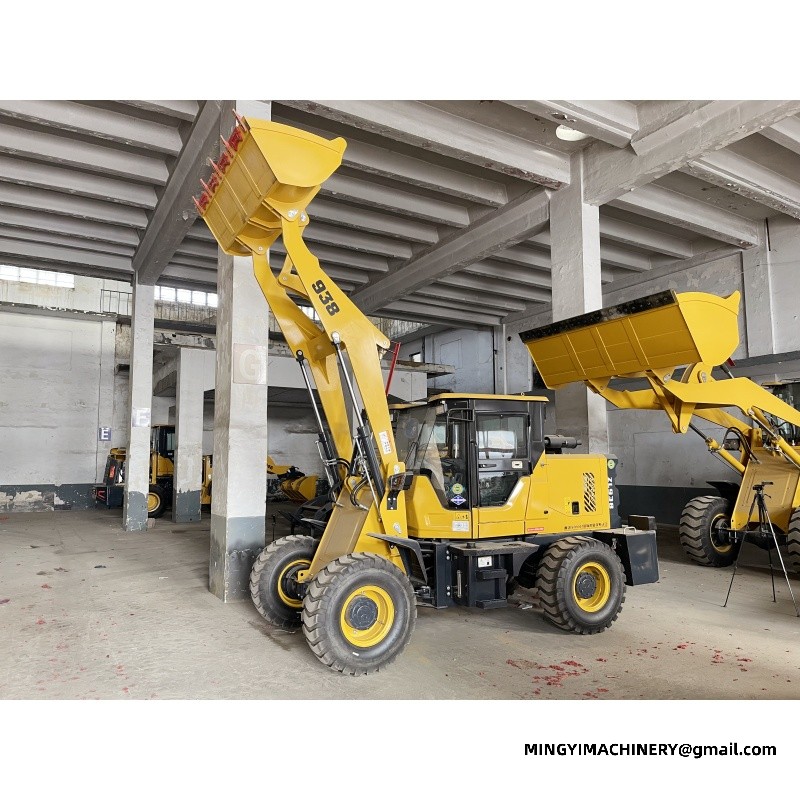
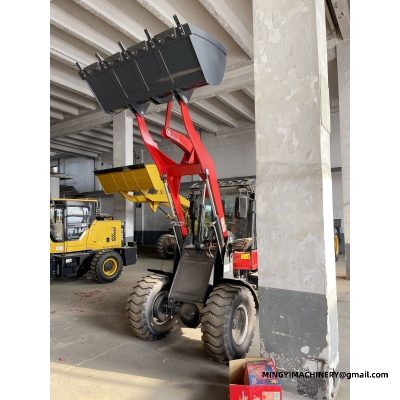
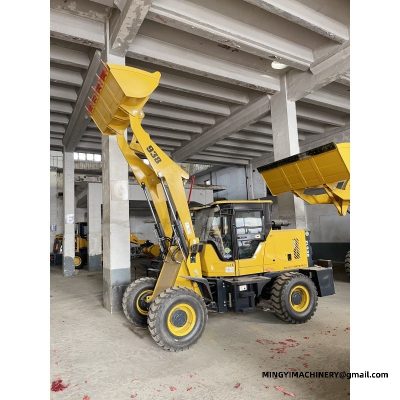
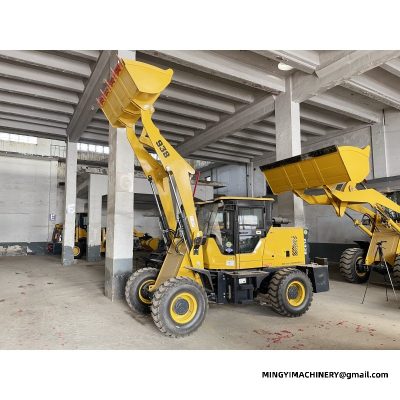
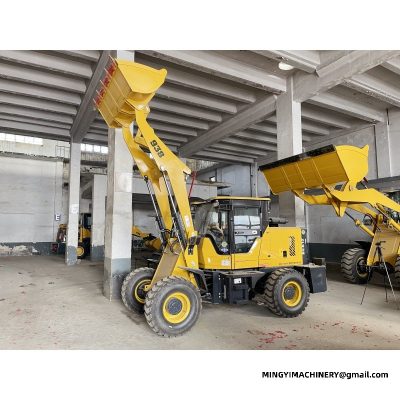
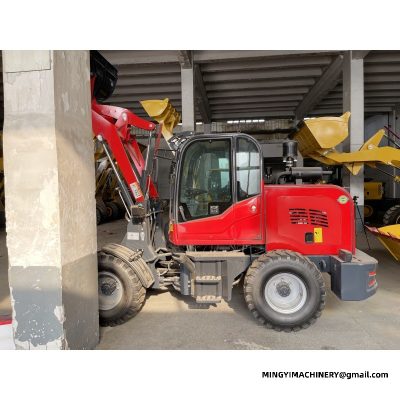
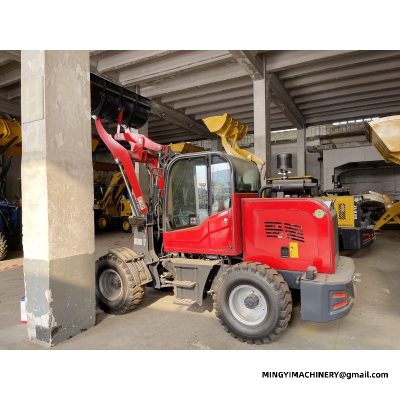
Everything on a wheel loader for material handling is a compromise, and the sheet shows which one was made. Reach against stability. Capacity against weight. Speed against heat. The light-duty 4.2 m medium-frame wheel-side reduction wheel loader runs a 2.9 m arm with a 30 mm wall and 900 mm of spacing behind a 0.52 m³ bucket; the light-duty 4.5 m medium-frame wheel-side reduction wheel loader runs 3.35 m, 30 mm and 960 mm behind 0.52 m³. Neither is the better machine in the abstract. This page is about reading those trade-offs against your own ground, your own bodies and your own shift pattern.
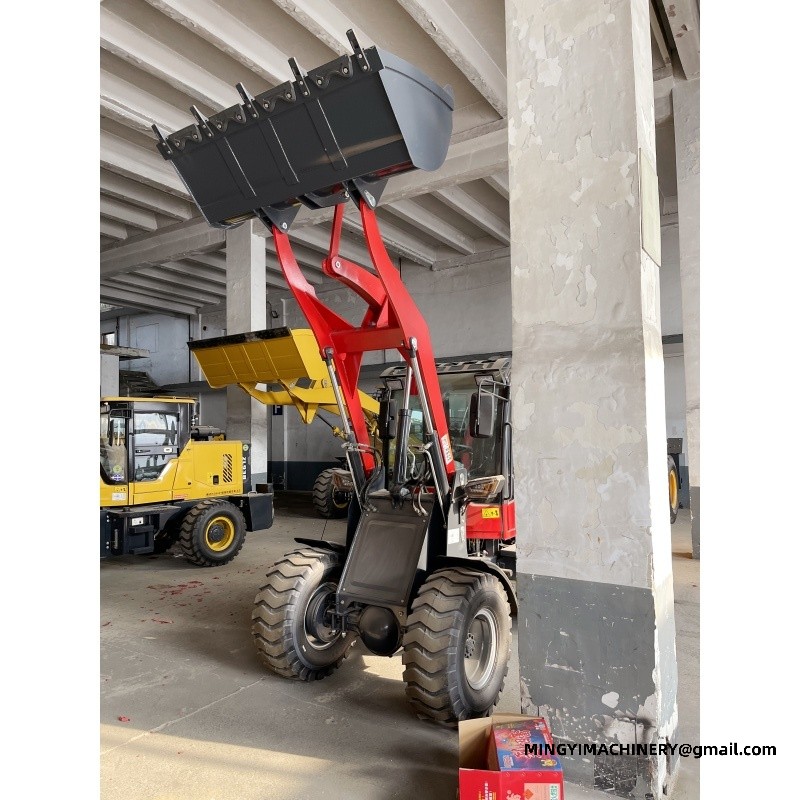
Before specifying anything else, measure the tallest body the loader will ever have to clear, at the front board, loaded, on the worst ground on site. That number decides the machine. The light-duty 4.2 m medium-frame wheel-side reduction wheel loader in this comparison dumps at 4.2 m; the light-duty 4.2 m medium-frame wheel-side reduction wheel loader at 4.2 m. The difference looks small on paper and is decisive at the face, because a loader that cannot clear the board cannot be worked around.
Once the height is settled, capacity sets the number of passes. 0.38 m³ on the light-duty 3.2 m low-profile wheel loader against 0.52 m³ on the light-duty 4.2 m medium-frame wheel-side reduction wheel loader. Multiply by your material weight per cubic metre and check it against what the chassis is carrying, not what the bucket holds — the frame, at 25 mm across the member, is the limit that arrives first.
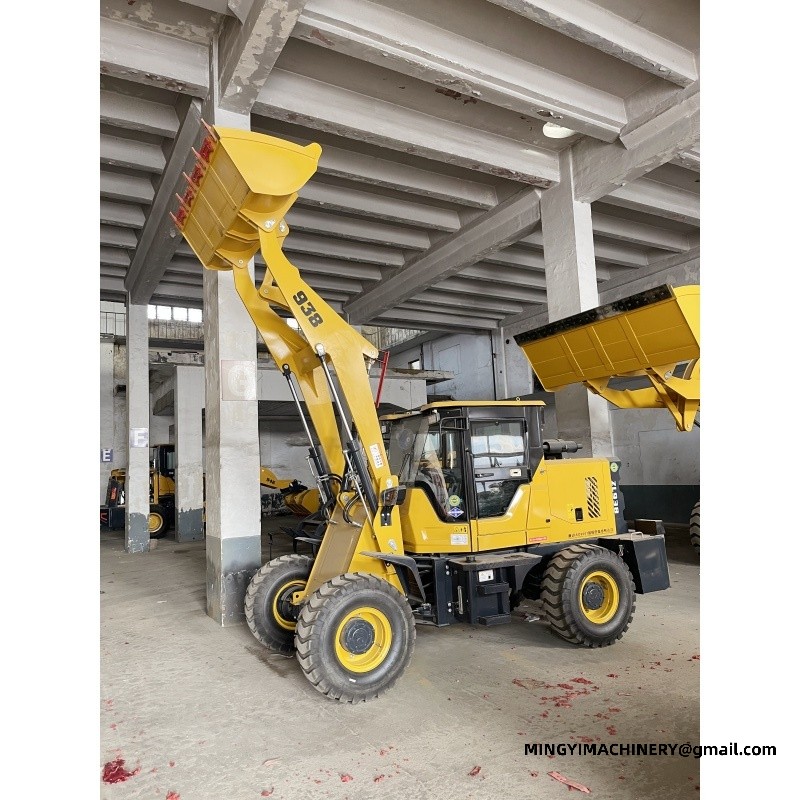
The boom section is the mounting standard. On the light-duty 4.2 m medium-frame wheel-side reduction wheel loader it is 450 mm with a 900 mm centre distance; on the light-duty 4.5 m medium-frame wheel-side reduction wheel loader it is 450 mm with 960 mm. Fork frames, grapples and snow tools specification against those two numbers, which is why "forks to suit a three-ton loader" is not a specification.
For a mixed fleet the practical set is four tools: a bucket for bulk, forks for pallets and bagged goods, a grapple for loose material and demolition, and a snow tool for winter work. Mechanical sets need no hydraulic circuit and swap in minutes; hydraulic sets need the circuit ordered with the machine. The 25 pump and 25 pump travel pumps keep drive independent either way, so steering is unaffected by tool load.
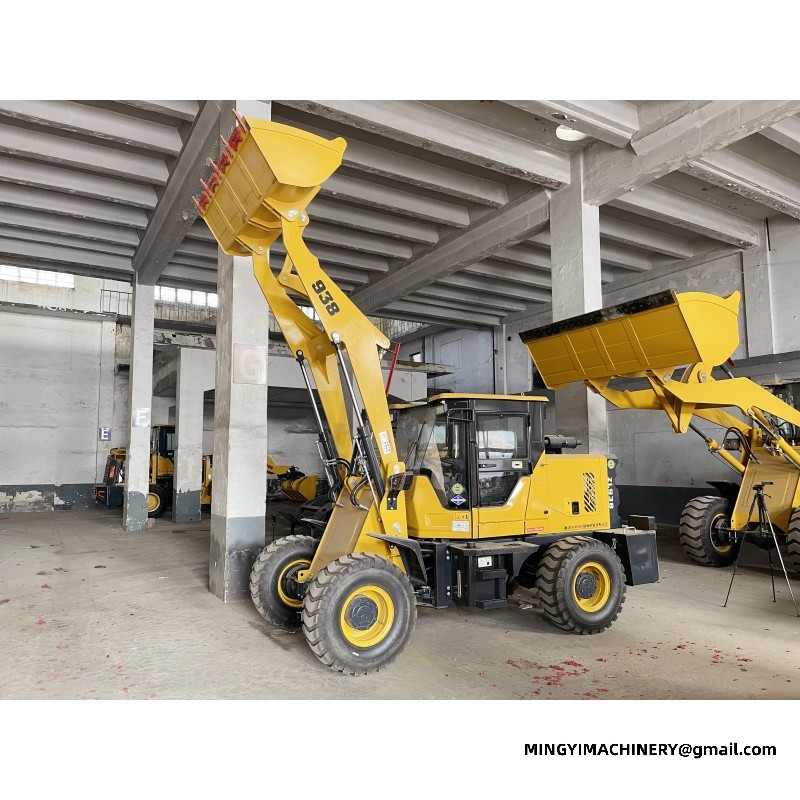
A boom is a beam, and a beam is specified by length, section and material thickness. On the light-duty 4.2 m medium-frame wheel-side reduction wheel loader that means 2.9 m long, 450 mm wide and 30 mm thick, mounted on a 900 mm centre distance. On the light-duty 4.5 m medium-frame wheel-side reduction wheel loader the same three figures are 3.35 m, 450 mm and 30 mm on a 960 mm spacing. Those six numbers decide breakout behaviour, side-load tolerance and how the machine feels on the last metre of lift.
The practical test is simple. If your day is loose material on level ground, a shorter arm on a tight machine will out-cycle a longer one, because every millimetre of reach is travel time. If your day is faces, banks and truck loading, the longer arm of the two — 3.35 m at 4.5 m — earns its keep, provided the 30 mm wall and 450 mm section are there to carry it. Ask which bucket the boom was engineered around — 0.52 m³ on the light-duty 4.2 m medium-frame wheel-side reduction wheel loader, 0.52 m³ on the light-duty 4.5 m medium-frame wheel-side reduction wheel loader — and you will know whether the arm and the frame were designed together.
| Specification extract — light-duty 3.2 m low-profile wheel loader | |
|---|---|
| Bucket capacity | 0.38 m³ |
| Dump height | 3.2 m |
| Track width | 1.5 m (wheel-side reduction axle); 1.45 m (Isuzu axle) |
| Boom arm thickness | 25 mm |
| Boom arm width | 370 mm |
| Boom arm length | 2.3 m |
| Boom arm centre distance | 890 mm |
| Cross-member thickness | 25 mm |
| Front hinge plate thickness | 25 mm |
| Rear hinge plate thickness | 14 mm |
| Rear frame section | 230 mm high x 800 mm wide |
| Hydraulic cylinders | centre cylinder 45 / side cylinder 40 |
| Fuel tank | 54 L (50# tank) |
| Battery | 60 Ah (490 engine); 80 Ah (4102 turbo engine) |
| Front wheel to counterweight | 4 m |
| Radiator | 4100 core (490 engine); 4105 core (4102T engine) |
| Work pump | 40 pump (490 engine); 1045 pump (4102 turbo engine) |
| Travel pump | 316 pump |
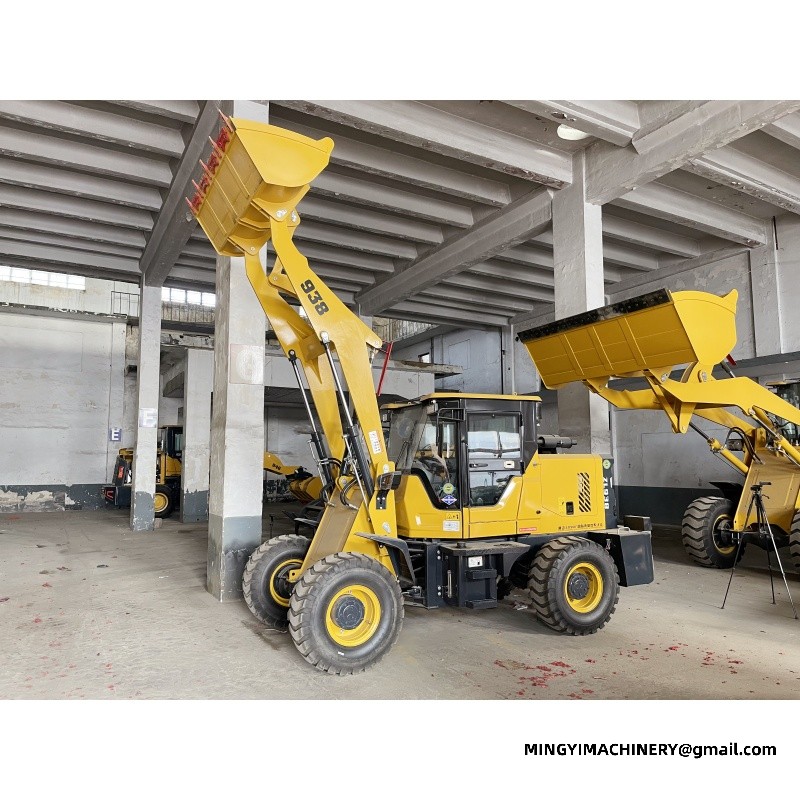
The useful way to read a range is as three decisions: how high, how heavy, and how wide. How high is dump height, 4.2 m against 4.5 m. How heavy is the steel, cross-member 45 mm against 45 mm and rear frame 300 mm high x 800 mm wide against 300 mm high x 800 mm wide. How wide is track, 1.6 m against 1.6 m.
Once those three are settled, the bucket follows from the material and the boom from the height: 0.52 m³ on a 2.9 m arm here, 0.52 m³ on 3.35 m there. Reading it in that order means the specification is decided by the work rather than by whichever machine happened to be in stock.
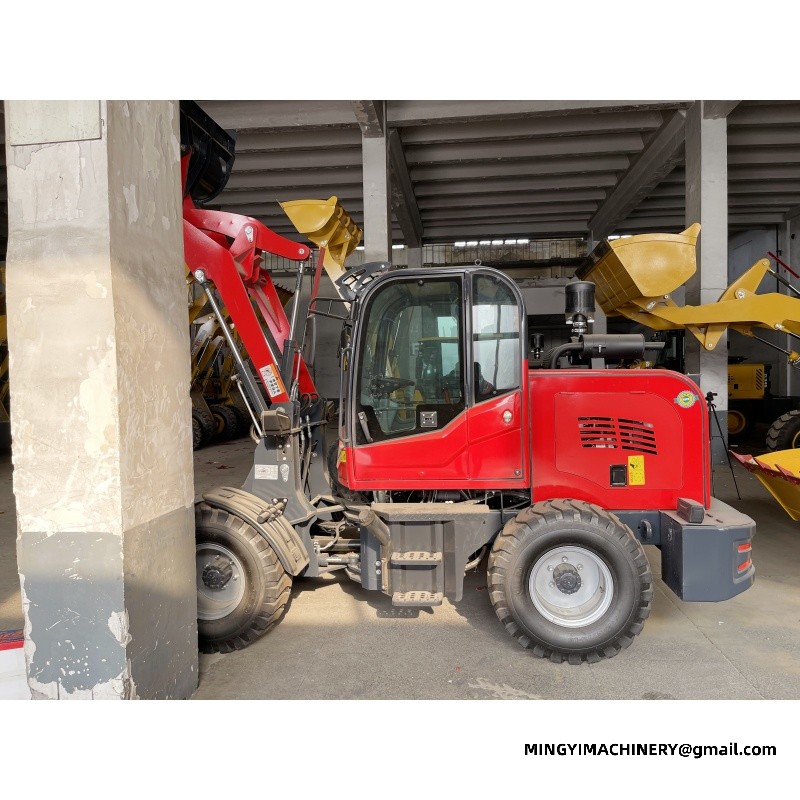
Bucket capacity decides how many passes you make; dump height decides whether the pass is possible at all. The light-duty 4.2 m medium-frame wheel-side reduction wheel loader clears 4.2 m; the light-duty 4.5 m medium-frame wheel-side reduction wheel loader clears 4.5 m. Measure the receiving body at the front board rather than the side, because side boards sit lower and a machine that clears the side can still clip the front when it slews under load.
That single measurement eliminates most of the range before anything else is discussed. A low pan mixer or a one-ton site truck is served by 4.2 m; a body-up site tipper needs more; a crusher feed hopper or a high-board highway truck needs 4.5 m. Get it wrong and no amount of bucket volume, engine power or pump flow rescues the machine — it simply cannot put material where it has to go.
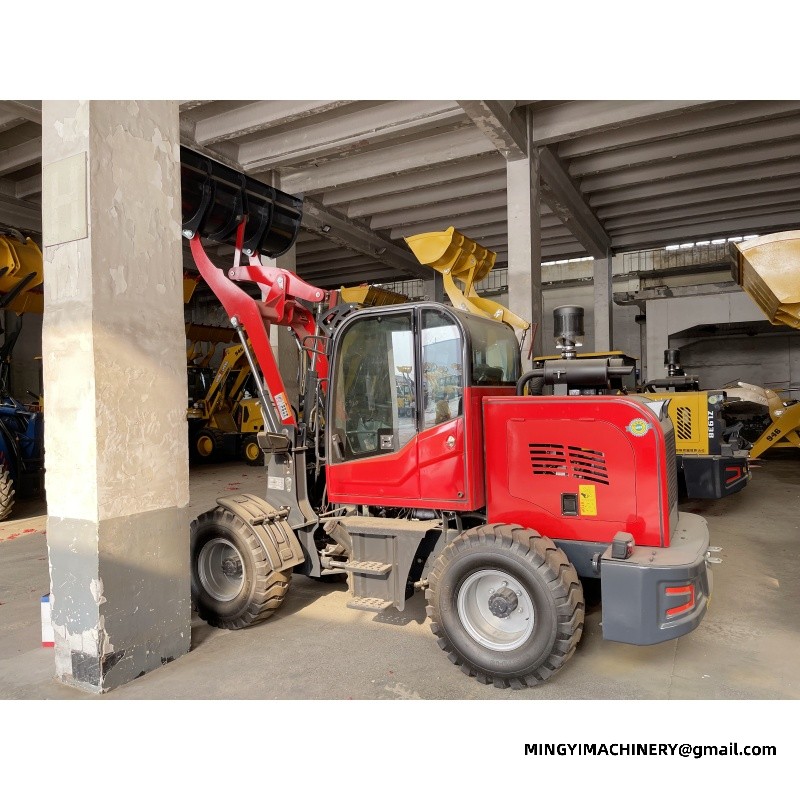
Relief pressure is only half the story; the other half is lever geometry, and lever geometry is decided by the boom and hinge dimensions. The light-duty 4.2 m medium-frame wheel-side reduction wheel loader pairs a centre cylinder 60 / side cylinder 50 cylinder set with a 900 mm boom centre distance and a 2.9 m arm; the light-duty 4.5 m medium-frame wheel-side reduction wheel loader pairs centre cylinder 60 / side cylinder 50 with a 960 mm spacing and a 3.35 m arm. Wider spacing means the cylinders work through a better lever, which is how a bigger bucket is lifted without simply raising system pressure and heat.
Pump pairing is the second half. Work pump and travel pump are separate circuits on both machines — 2063 pump and 25 pump on the light-duty 4.2 m medium-frame wheel-side reduction wheel loader, 2063 pump and 25 pump on the light-duty 4.5 m medium-frame wheel-side reduction wheel loader — so steering and drive do not steal flow from the boom at the top of a lift. If you intend to run hydraulically actuated attachments, a grapple or a four-in-one bucket, order the third circuit at build time; retrofitting a valve block and plumbing in the field takes far more than specifying it on the order.
Photograph the specification plate, the cylinder markings and the frame plates on the day the machine arrives. Cylinders on this build are centre cylinder 40 / side cylinder 40; the pump is 32 pump; the radiator is 4100 core. Those three identify the build more reliably than any nameplate, because they are the parts that change between engine options.
Then photograph the geometry, because it is what a later claim will turn on. Dump height 2.4 m at full lift, arm length 1.85 m, spacing 680 mm, track 1.2 m (Isuzu axle); 1.3 m (wheel-side reduction axle). If a machine ever fails to clear a body it was sold to clear, those four photographs are the difference between a warranty claim and an argument.
The commercial logic of a family-built range is parts commonality. Within a frame family the centre cylinder 60 / side cylinder 50 cylinder set, the 2063 pump work pump and the 25 pump travel pump are shared, and the boom section — 450 mm on the light-duty 4.2 m medium-frame wheel-side reduction wheel loader — is the same, so attachments interchange. Across families, as between the light-duty 4.2 m medium-frame wheel-side reduction wheel loader and the light-duty 4.5 m medium-frame wheel-side reduction wheel loader, the cylinder set moves to centre cylinder 60 / side cylinder 50 and the section to 450 mm.
For a distributor that translates into a small, fast-moving inventory: one seal kit per cylinder family, one pump pair per family, pins and bushes per boom section, and cutting edges per bucket. Add the model-specific items — the 45 mm or 45 mm cross-member is not a wear part and does not need stocking — and the whole range is supported from a shelf that fits in a container.
A radiator does not fail; it gets blocked. On this build the core is 4105 core, and in dusty or chaff-heavy work it needs cleaning from the clean side outwards, in the reverse direction to normal airflow, because pushing debris further into the fins makes the blockage permanent.
Watch the cap and the seat while you are there. A system that loses pressure boils at a lower temperature, and the symptom is intermittent overheating under load that disappears on the level - - which is routinely misdiagnosed as a pump problem. The pump is 2063 pump; the travel circuit is 25 pump; neither produces that symptom. A cap does.
What affects operator fatigue on a wheel loader for material handling?
Seat, visibility and how much the machine has to be corrected. A tight frame wanders less; a loose one behind the 45 mm plate is tiring to hold on the road.
Will a wheel loader for material handling ship assembled in a container?
It depends on the longest dimension, 4.3 m from front wheel to counterweight, and on track, 1.6 m. The bucket usually comes off; the arm must be lowered to clear the door.
What should I check before running a grapple on a wheel loader for material handling?
Side load. A grapple levers the arm in a way a bucket does not, so the 30 mm wall and 450 mm section matter more than capacity. The hinge plates at 45 mm take the reaction.
What does winter duty change on a wheel loader for material handling?
Cold cranking, oil viscosity and operator access. Battery 80 Ah covers the first; the 70 L (75# large tank) tank covers the longer idling that cold work brings.
What are the signs of a failing pump on a wheel loader for material handling?
Slow lift with normal breakout points to flow, which is the 2063 pump. Weak lift and weak breakout together point to pressure. Noise under load usually means aeration or a suction leak.
Is it worth rebuilding an older wheel loader for material handling?
If the frame is tight, yes: cylinders centre cylinder 60 / side cylinder 50, pump 2063 pump and core 4105 core are all replaceable. If the pins have ovalised their bores, the geometry will not come back.
Why does my wheel loader for material handling wander on the road?
Worn hinge pins. Load the bucket, hold the machine on a slope and watch the joint while the steering is rocked; movement there is wear behind the 45 mm and 30 mm plates.
Two builds, light-duty 4.2 m medium-frame wheel-side reduction wheel loader and light-duty 4.5 m medium-frame wheel-side reduction wheel loader, have carried the comparisons on this page. The same rows can be produced for any machine in the range, and for the engine options that change the pump, radiator and battery with them.
Contact MINGYI Machinery for the current wheel loader lineup, configuration options and a formal specification for your market. E-mail: sales@mingycn.com | LINE (ID): mingyicn
Wheel Loader for Aggregate Yard: Stockpile Discipline · OEM Wheel Loader Manufacturer: Build Consistency by Order · Front End Loader Log Grapple: Section Widths and Pin Geometry · Wheel Loader









