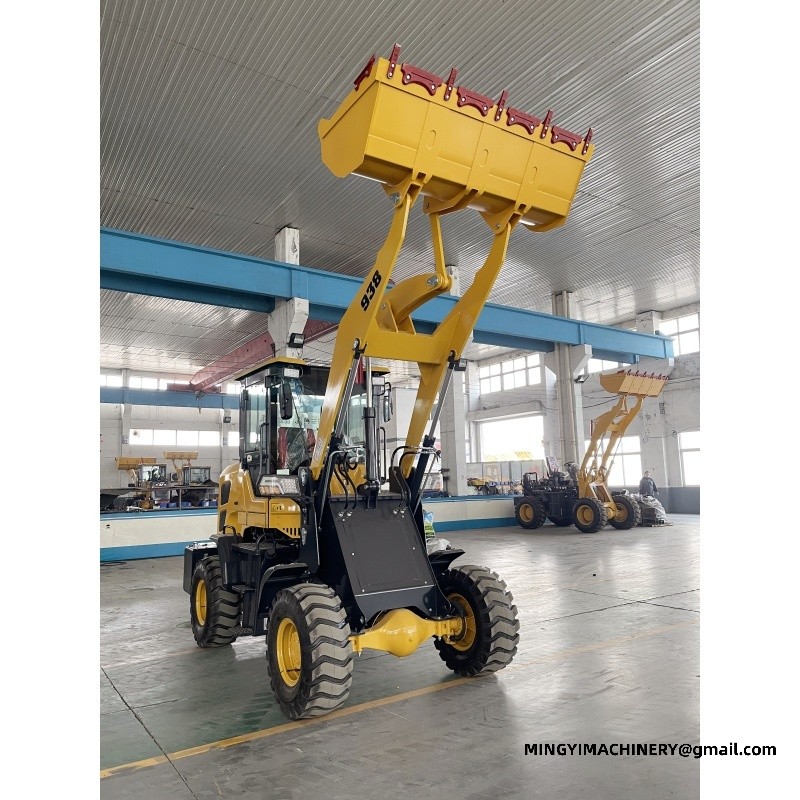
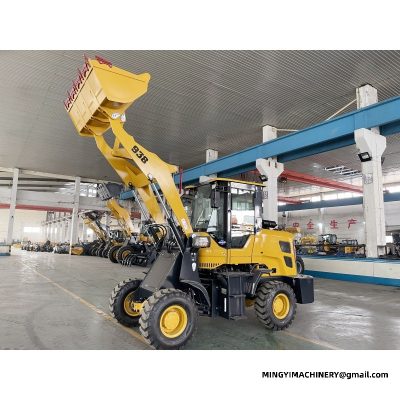
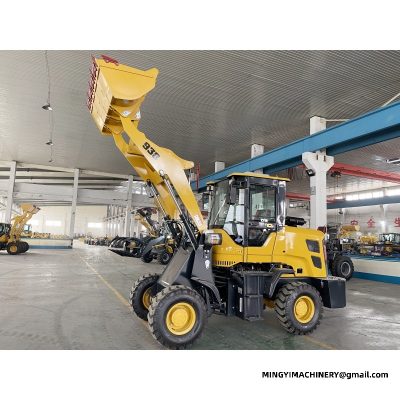
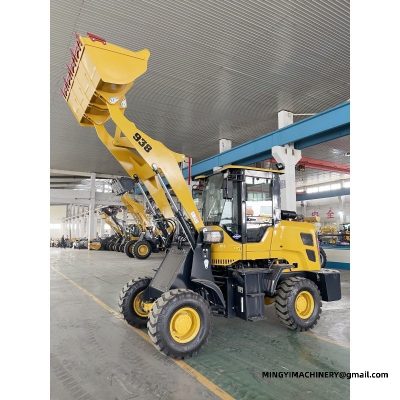
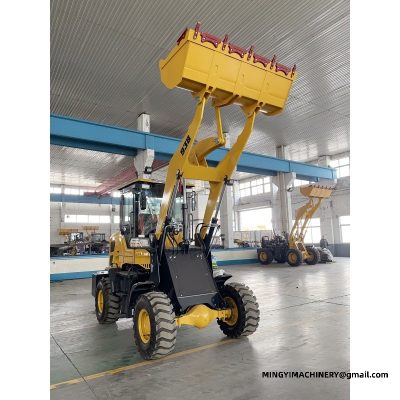
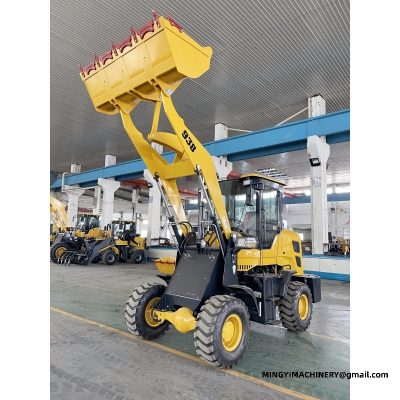
A OEM wheel loader manufacturer earns its keep in the fourth hour of a shift, not the first. By then the cooling system is heat-soaked, the operator has stopped being careful, and the machine is working the face it will work all week. What holds up is what was specified: radiator 4100 core (490 engine); 4105 core (4102T engine), tank 64.7 L (75# small tank), cylinders centre cylinder 45 / side cylinder 40. What fails is usually what was assumed. This page follows a working day through the specification, from cold start to shut-down, using the light-duty 3.5 m small-frame wheel-side reduction wheel loader and the light-duty 3.8 m small-frame wheel-side reduction wheel loader as the two reference builds.
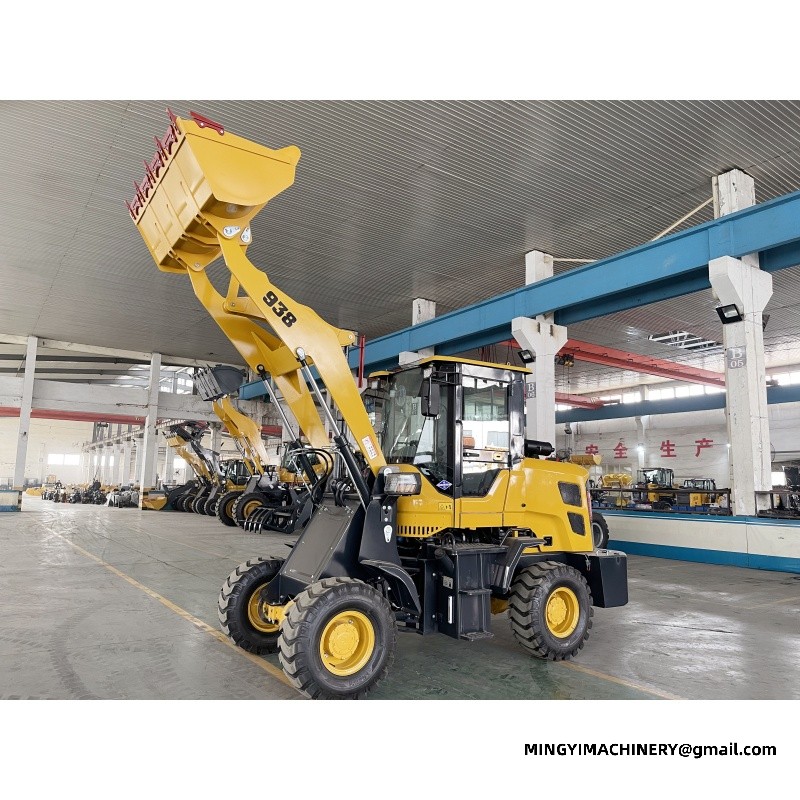
Adding a circuit after delivery is possible and never as good as specifying it at build. The pump is the constraint: 40 pump (490 engine); 1045 pump (4102 turbo engine) on this machine, 316 pump alongside it. Flow has to be shared, and a circuit added later shares it through plumbing that was not laid out for it.
The cylinders are less often the limit than people assume. centre cylinder 45 / side cylinder 40 gives the mechanical advantage; the pump gives the speed. If an attachment works but works slowly, look at flow before looking at bore. If it works but the arm twists, look at section instead: 370 mm of width and 890 mm of spacing resist that, and neither can be improved after the frame is welded.
Cooling capacity is sized to the engine's heat rejection, so it appears in the table as a specification rather than a choice: 4100 core (490 engine); 4105 core (4102T engine) on the light-duty 3.5 m small-frame wheel-side reduction wheel loader, 4100 core (490 engine); 4105 core (4102T engine) on the light-duty 3.8 m small-frame wheel-side reduction wheel loader. Where the build offers two engines — the 490 with a 4100 core, the 4102 turbo with a 4105 raised core — the raised core is the one for hot climates, high altitude and any site where fine material hangs in the air.
Practical advice that takes nothing: blow the core out at the end of every shift in dusty work, in the reverse direction to airflow, and check the cap seat before blaming the radiator. On the light-duty 3.5 m small-frame wheel-side reduction wheel loader the 4100 core (490 engine); 4105 core (4102T engine) core sits behind a 280 mm high x 800 mm wide rear frame with limited airflow at low engine speed; on the light-duty 3.8 m small-frame wheel-side reduction wheel loader the 4100 core (490 engine); 4105 core (4102T engine) core is served by the same 316 pump driven circuit. Neither is difficult to keep clean, and both will lose a season to neglect.
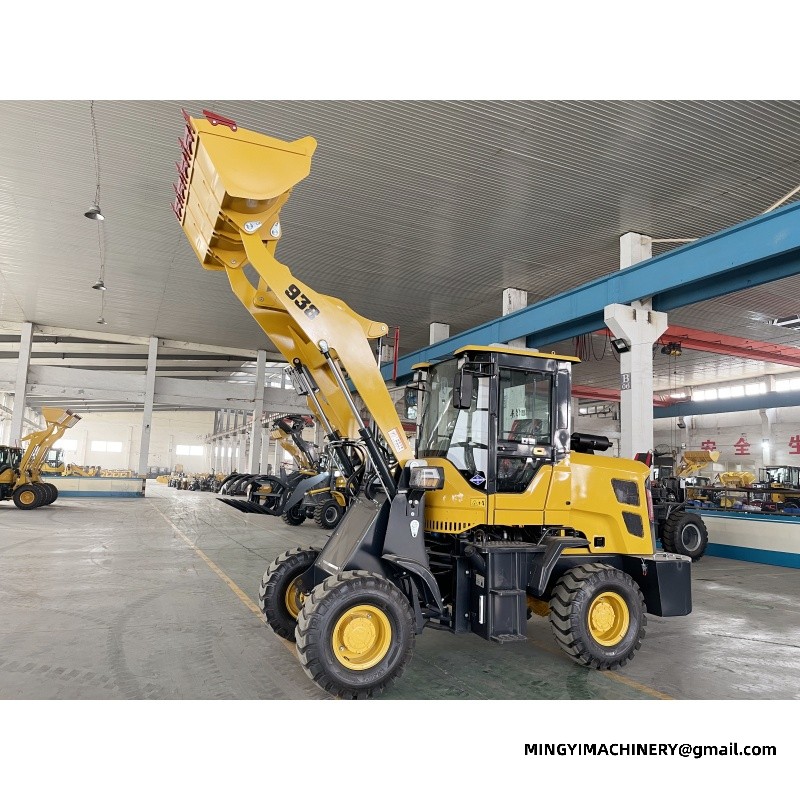
Three things stop a loader mid-shift, and two of them are in the specification. Fuel is the first: 64.7 L (75# small tank) on the light-duty 3.8 m small-frame wheel-side reduction wheel loader. Cooling is the second: 4100 core (490 engine); 4105 core (4102T engine), and it is the one that announces itself as a gradual loss of power rather than a stoppage, so it gets ignored until the machine is derating every afternoon.
The third is electrical, and it is specified as well: 60 Ah (490 engine); 80 Ah (4102 turbo engine). Cranking capacity falls with temperature, so a battery that starts a warm engine happily can fail the same engine at dawn in winter. Where the build offers two ratings, the higher one belongs to the turbo option and is worth specifying for cold climates or for machines that start cold and stop often.
| Reference specification — heavy-duty 4.5 m medium-frame wheel-side reduction wheel loader | |
|---|---|
| Bucket capacity | 0.65 m³ |
| Dump height | 4.5 m |
| Track width | 1.6 m |
| Boom arm thickness | 30 mm |
| Boom arm width | 520 mm |
| Boom arm length | 3.35 m |
| Boom arm centre distance | 960 mm |
| Cross-member thickness | 45 mm |
| Front hinge plate thickness | 45 mm |
| Rear hinge plate thickness | 30 mm |
| Rear frame section | 300 mm high x 800 mm wide |
| Hydraulic cylinders | centre cylinder 60 / side cylinder 50 |
| Fuel tank | 70 L (75# large tank) |
| Battery | 80 Ah |
| Front wheel to counterweight | 4.95 m |
| Radiator | 4105 core |
| Work pump | 2063 pump |
| Travel pump | 25 pump |
Two figures govern refuelling: tank capacity and consumption per hour, and only the first is published — 64.7 L (75# small tank) on the light-duty 3.5 m small-frame wheel-side reduction wheel loader, 64.7 L (75# small tank) on the light-duty 3.8 m small-frame wheel-side reduction wheel loader. Consumption depends on duty, and the duty differences between a 0.38 m³ bucket at 3.5 m and a 0.38 m³ bucket at 3.8 m are mostly about how hard the engine works per cycle.
What you can plan on: a machine working a short, level cycle will finish a shift on one tank; the same machine ripping from a face or loading up a ramp will not. If your site has no refuelling point, size the tank to the worst day rather than the average one, and specify the larger option where a build offers it. The cooling package is the other half of the same calculation — 4100 core (490 engine); 4105 core (4102T engine) on the light-duty 3.5 m small-frame wheel-side reduction wheel loader and 4100 core (490 engine); 4105 core (4102T engine) on the light-duty 3.8 m small-frame wheel-side reduction wheel loader — because a machine that stops for temperature stops wherever it is.
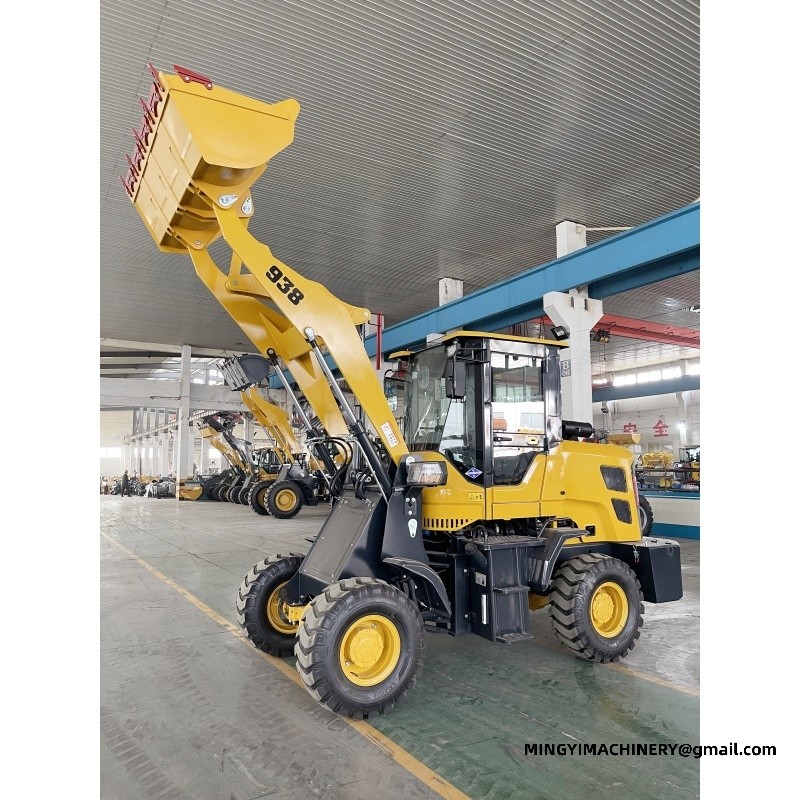
On broken ground the rear frame takes the twisting. Cabin and counterweight sit at one end, the articulation joint at the other, and every rut loads the section between them. Here that section is 280 mm high x 800 mm wide, and it is worth reading as a beam: the height resists vertical bending, the width resists twist.
The cross-member is the other half of the same job. 25 mm on the light-duty 3.8 m small-frame wheel-side reduction wheel loader against 45 mm on the heavy-duty 3.8 m medium-frame wheel-side reduction wheel loader. Thicker steel there means the mounting faces stay aligned through seasons of flexing, which is what keeps the rear hinge pin, at 14 mm, from wearing oval. Frames rarely break; they go loose, and looseness starts at the pins.
A loader that is greased, cool and clean will run for years on its original frame. The components that need attention are the articulation — 25 mm and 14 mm hinge plates on the light-duty 3.5 m small-frame wheel-side reduction wheel loader — the boom mounts at 890 mm, and the cooling pack, 4100 core (490 engine); 4105 core (4102T engine).
Set the intervals by duty, not by calendar. A machine working a dusty stockyard needs its core blown out daily; the same machine on a farm needs it monthly. A machine loading a face needs its pins greased every shift; one moving pallets needs it weekly. The specification tells you what to check — centre cylinder 45 / side cylinder 40 cylinders, 40 pump (490 engine); 1045 pump (4102 turbo engine) and 316 pump on the light-duty 3.5 m small-frame wheel-side reduction wheel loader, centre cylinder 45 / side cylinder 40, 40 pump (490 engine); 1045 pump (4102 turbo engine) and 316 pump on the light-duty 3.8 m small-frame wheel-side reduction wheel loader — and the duty tells you how often.
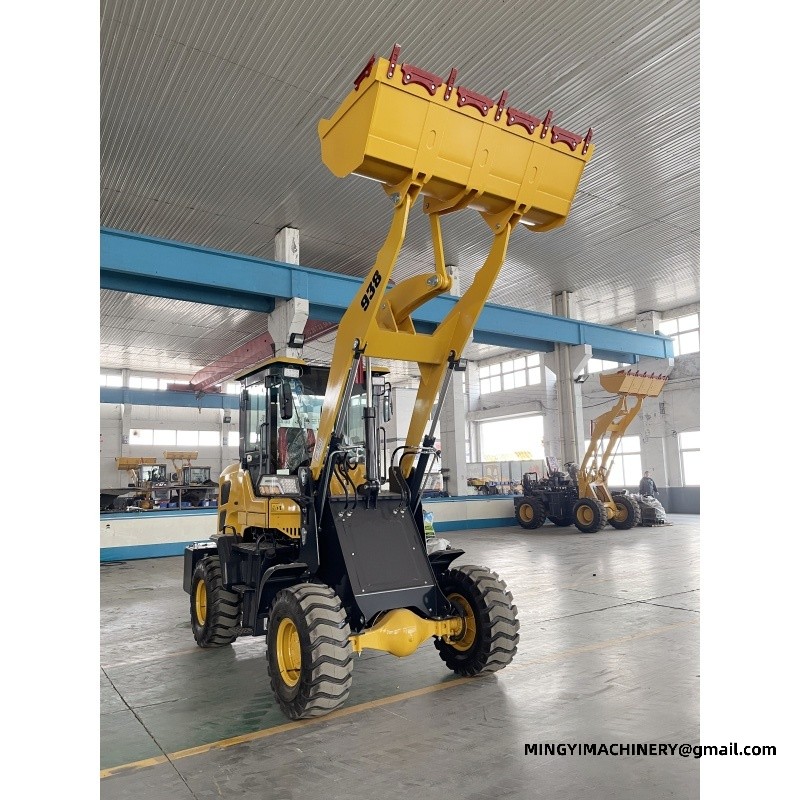
Machines kept past warranty should be bought on steel. Hinge plates 45 mm and 30 mm, cross-member 45 mm, rear frame 300 mm high x 800 mm wide: those are the figures that decide whether year five is a service year or a rebuild year.
The second decision is how repairable the machine is, and that is a parts question. Cylinders centre cylinder 60 / side cylinder 50, pump 2063 pump, radiator 4105 core, battery 80 Ah: if all four are standard items within the range, a machine can be kept indefinitely. If any is unique to one build, it cannot, and that is worth knowing before the order rather than at year six.
A site loader spends its life doing the same cycle, and the cycle punishes three components: the rear hinge, the cooling pack and the tyres. On the light-duty 3.5 m small-frame wheel-side reduction wheel loader the rear hinge is 14 mm over a 25 mm cross-member; on the light-duty 3.8 m small-frame wheel-side reduction wheel loader it is 14 mm over 25 mm. Which of those you need depends on how often the machine turns under load.
Cycle time is the economics. A 0.38 m³ bucket at 3.5 m on a 2.62 m arm loaded by centre cylinder 45 / side cylinder 40 cylinders is quick in a tight site; a 0.38 m³ bucket at 3.8 m on a 2.61 m arm with centre cylinder 45 / side cylinder 40 is quicker where there is room to work. Neither is universally faster, and any supplier who claims otherwise is describing a different site from yours.
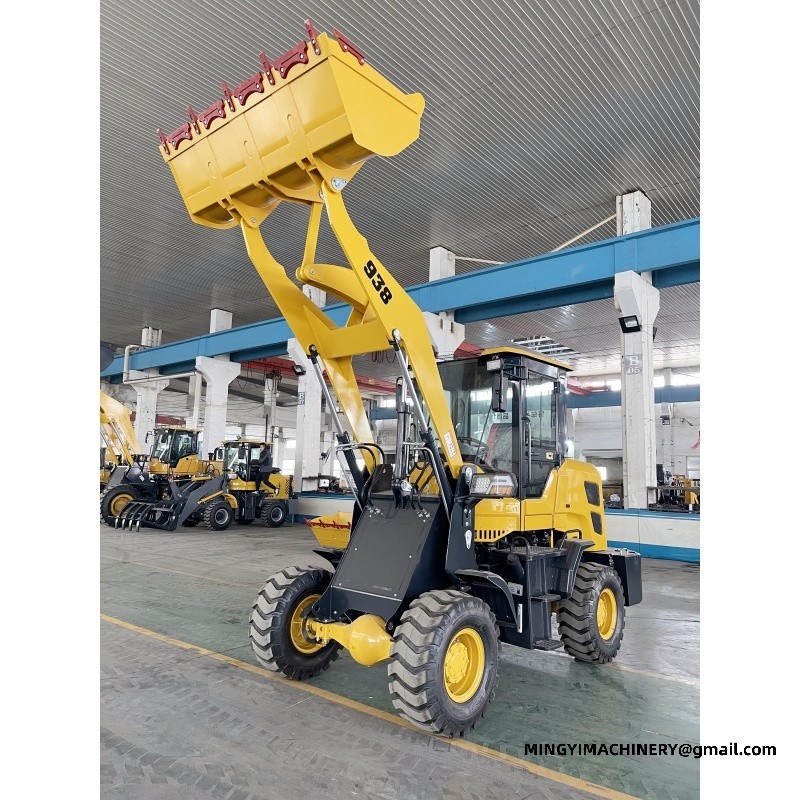
Continuous stockpile duty is where light builds are separated from heavy ones, and the separation is visible in steel. The light-duty 3.8 m small-frame wheel-side reduction wheel loader lists 25 mm front and 14 mm rear hinge plates over a 25 mm cross-member and a 280 mm high x 800 mm wide rear frame, carrying 0.38 m³ to 3.8 m. The light-duty 3.5 m small-frame wheel-side reduction wheel loader lists 25 mm, 14 mm, 25 mm and 280 mm high x 800 mm wide, carrying 0.38 m³ to 3.5 m.
Choose by cycle count rather than by material. Below twenty truck loads a day the lighter machine is the better economics; above it, the heavier frame pays for itself in avoided downtime. Then specify the cooling package for the material — 4100 core (490 engine); 4105 core (4102T engine) raised core for fines and dust — and the axle for the floor. Both are simple at order time and neither is simple later.
What affects operator fatigue on a OEM wheel loader manufacturer?
Seat, visibility and how much the machine has to be corrected. A tight frame wanders less; a loose one behind the 25 mm plate is tiring to hold on the road.
How do I clean the radiator on a OEM wheel loader manufacturer working in dust?
From the clean side outwards, against normal airflow, so debris comes out rather than being pushed deeper. The core on this build is 4100 core (490 engine); 4105 core (4102T engine); blocked fins are the usual cause of gradual power loss.
How do I keep one spares bin covering a mixed fleet?
Buy within one frame family and one engine. That keeps the 40 pump (490 engine); 1045 pump (4102 turbo engine) pump, the 4100 core (490 engine); 4105 core (4102T engine) core and the 60 Ah (490 engine); 80 Ah (4102 turbo engine) battery common across every machine.
My OEM wheel loader manufacturer overheats every afternoon. What is the cause?
In order of likelihood: blocked fins on the 4100 core (490 engine); 4105 core (4102T engine) core, a cap that will not hold pressure, a fan drive problem, or genuine overloading. Clean the core first, from the clean side.
Which spares should I hold for a OEM wheel loader manufacturer?
Hoses and seals for the centre cylinder 45 / side cylinder 40, filters, belts and a battery to the 60 Ah (490 engine); 80 Ah (4102 turbo engine) rating. Do not stock welded items; plates at 25 mm and 14 mm are a repair, not a spare.
What makes a used OEM wheel loader manufacturer easy to sell?
A verifiable specification. Bucket 0.65 m³, lift 3.5 m, plates 45 mm and 30 mm and a 45 mm cross-member can all be measured, and a buyer who can check them will pay for the certainty.
Which tyre fitment does a OEM wheel loader manufacturer use?
It follows the tank and axle specification: 64.7 L (75# small tank) on this build. The larger fitment goes with the larger tank and the heavier duty.
If the comparison here is close, decide on the rows that outlast the job: cross-member 25 mm against 25 mm, rear frame 280 mm high x 800 mm wide against 280 mm high x 800 mm wide. Capacity can be changed with a bucket; steel cannot be changed at all.
Contact MINGYI Machinery for the current wheel loader lineup, configuration options and a formal specification for your market. E-mail: sales@mingycn.com | LINE (ID): mingyicn
China Wheel Loader Factory Supplier: Container and Spares Plan · Wheel Loader Manufacturer | China Factory: Order and Delivery · Compact Wheel Loader: Choosing Between the Two Entry Builds · Wheel Loader









