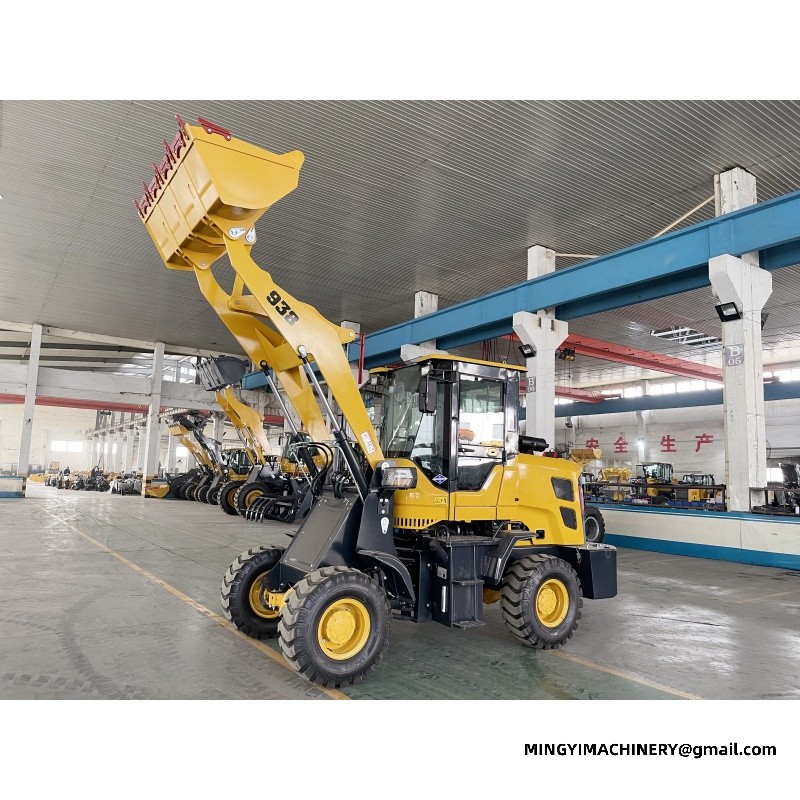
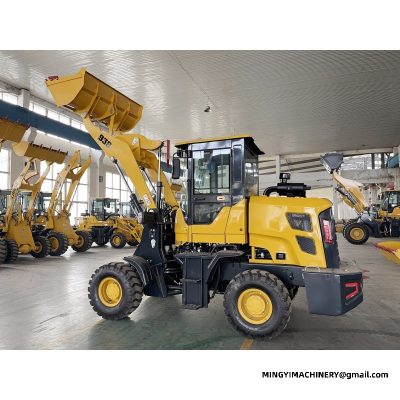
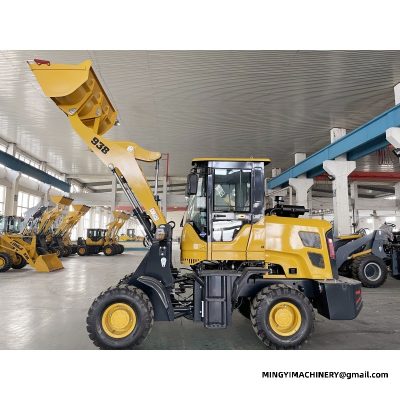
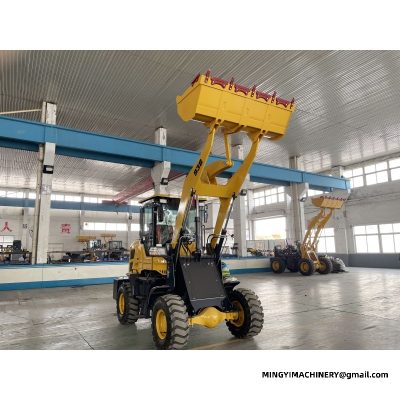
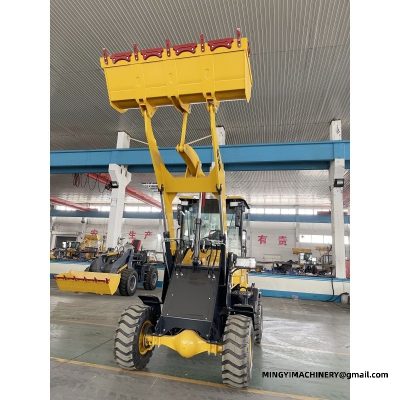
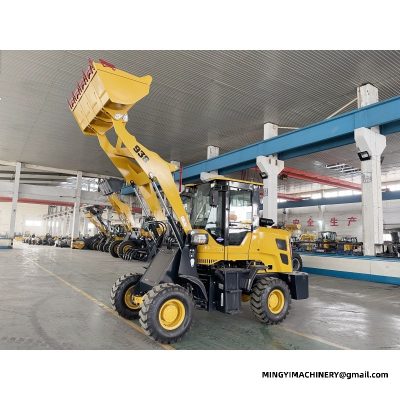
A china wheel loader factory supplier that suits the work is quiet about it. It clears the board on the first pass, it does not hunt for grip, and nothing under it leaks at the end of the shift. Machines that draw attention are usually mis-specified rather than badly built. This page works through the rows that produce the quiet ones — 4.2 m of dump height, 1.5 m (wheel-side reduction axle); 1.45 m (Isuzu axle) of track, 30 mm across the cross-member — and compares the heavy-duty 4.2 m small-frame wheel-side reduction wheel loader against the light-duty 3.5 m medium-frame wheel-side reduction wheel loader at each step.
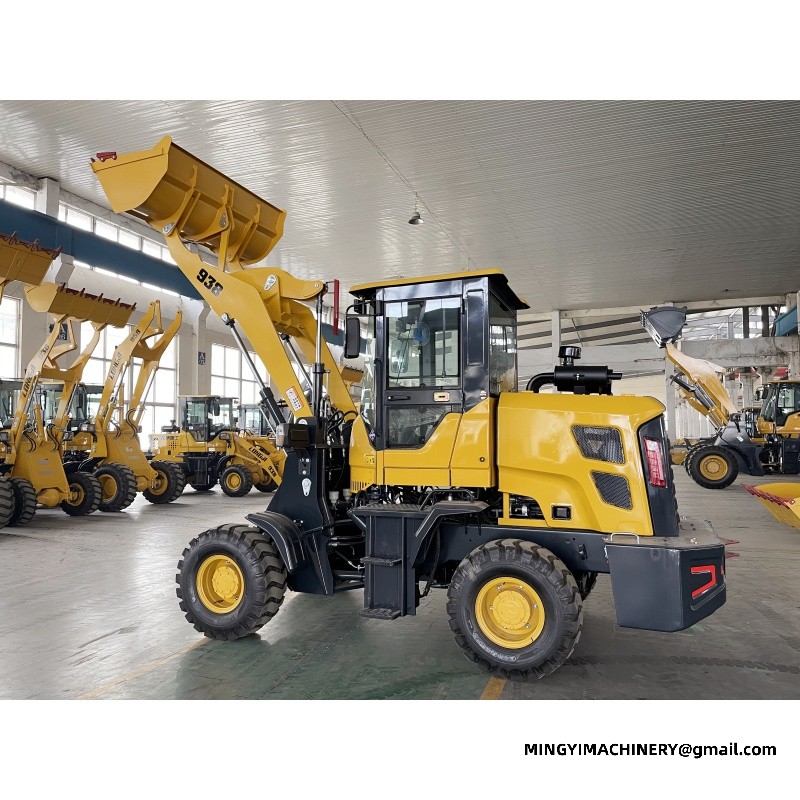
Two loaders can carry the same bucket and behave nothing alike, and the boom is usually why. Compare the heavy-duty 4.2 m small-frame wheel-side reduction wheel loader with the light-duty 3.5 m medium-frame wheel-side reduction wheel loader: bucket 0.4 m³ against 0.52 m³, but boom length 3.15 m against 2.63 m and section width 500 mm against 430 mm. The longer arm reaches further and dumps higher; the wider section survives being levered sideways. Both matter, and neither appears in a headline specification.
Wall thickness is the figure that separates a boom engineered for the frame from one merely bolted to it. The heavy-duty 4.2 m small-frame wheel-side reduction wheel loader runs 25 mm; the light-duty 3.5 m medium-frame wheel-side reduction wheel loader runs 30 mm. Centre distance — 890 mm against 900 mm — completes the picture, because pin loads fall as spacing rises. If your work involves breaking out from a stockpile face rather than shovelling loose stock, ask for those three numbers before you ask about bucket volume.
A battery specification is really an engine specification in disguise. 60 Ah (490 engine); 80 Ah (4102 turbo engine) tells you what the engine needs to turn over, and where two figures are listed it tells you the build is offered with more than one engine. The larger figure is the turbo; the smaller, the naturally aspirated option.
Match that to how the machine will be used. Continuous duty — one start, one long shift — is easy on a battery. Intermittent duty — yard work where the engine is stopped every time the operator gets out — is the hard case, and it is where the higher rating earns its keep. The rest of the electrical load is modest, so cranking is what the 60 Ah (490 engine); 80 Ah (4102 turbo engine) figure is really buying.
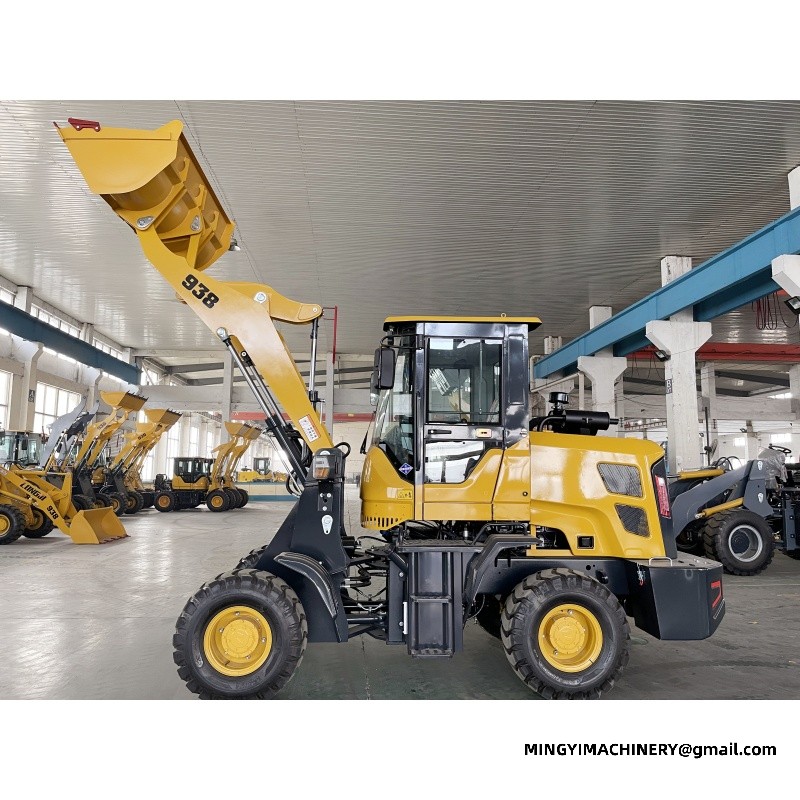
An agricultural loader is a small machine doing varied work, and the specification that matters is the one that lets it into the buildings. Track width 1.5 m (wheel-side reduction axle); 1.45 m (Isuzu axle) on the heavy-duty 4.2 m small-frame wheel-side reduction wheel loader against 1.6 m on the light-duty 3.5 m medium-frame wheel-side reduction wheel loader, footprint 4.25 m against 4.3 m, and dump height 4.2 m against 3.5 m for the wagon or hopper it fills.
Duty is seasonal and mostly light, which is why the light builds exist: a 0.4 m³ bucket with 30 mm cross-member and 20 mm rear hinge plates is correctly specified for silage, bagged goods and yard scraping. Where the machine also does heavy work — muck-out with a loaded bucket, or winter snow clearing — step to the heavier build with 45 mm and 30 mm. Over-specifying takes money once; under-specifying takes a frame.
| Published build data — light-duty 3.5 m medium-frame wheel-side reduction wheel loader | |
|---|---|
| Bucket capacity | 0.52 m³ |
| Dump height | 3.5 m |
| Track width | 1.6 m |
| Boom arm thickness | 30 mm |
| Boom arm width | 430 mm |
| Boom arm length | 2.63 m |
| Boom arm centre distance | 900 mm |
| Cross-member thickness | 45 mm |
| Front hinge plate thickness | 45 mm |
| Rear hinge plate thickness | 30 mm |
| Rear frame section | 300 mm high x 800 mm wide |
| Hydraulic cylinders | centre cylinder 60 / side cylinder 50 |
| Fuel tank | 70 L (75# large tank) |
| Battery | 80 Ah |
| Front wheel to counterweight | 4.3 m |
| Radiator | 4105 core |
| Work pump | 2063 pump |
| Travel pump | 25 pump |
Tank size is a shift-planning figure. The heavy-duty 4.2 m small-frame wheel-side reduction wheel loader carries 64.7 L (75# small tank); the light-duty 3.5 m medium-frame wheel-side reduction wheel loader carries 70 L (75# large tank). Both are sized for a full working day at operating throttle without a mid-shift refuel, which matters on sites where the bowser is a ten-minute round trip away and on farms where refuelling means driving back to the yard.
The number to combine it with is cooling: 4100 core (490 engine); 4105 core (4102T engine) on the heavy-duty 4.2 m small-frame wheel-side reduction wheel loader, 4105 core on the light-duty 3.5 m medium-frame wheel-side reduction wheel loader. A machine that runs out of coolant capacity is stopped in the middle of a shift wherever it happens to be; a machine that runs low on fuel is stopped somewhere you chose. If the site has no refuelling point, the difference between the two tank sizes is a daily ten minutes, and over a season it is a working week.
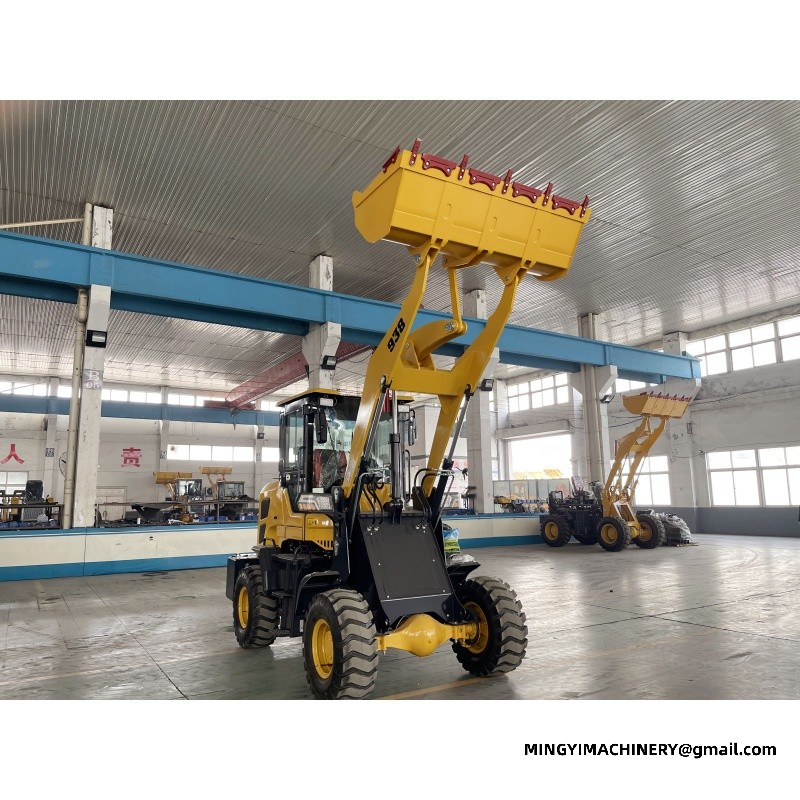
Fleet effort is driven by the size of the spares bin, and that is decided at purchase. Machines sharing an engine share a pump, 40 pump (490 engine); 1045 pump (4102 turbo engine), a radiator, 4100 core (490 engine); 4105 core (4102T engine), and a battery rating, 60 Ah (490 engine); 80 Ah (4102 turbo engine). Machines sharing a frame share cylinder sizes, centre cylinder 45 / side cylinder 45, and hinge geometry. Buy within one frame family and the bin halves.
The figures to compare are the ones that differ: bucket 0.4 m³ against 0.52 m³, dump height 4.2 m against 3.5 m, track 1.5 m (wheel-side reduction axle); 1.45 m (Isuzu axle) against 1.6 m. Where those differ, the wearing parts behind them usually differ too. Where they match, one part number covers both machines.
Machines ship knock-down, and rear frame width is what decides how many fit a box. Across the range that figure stays between 280 mm high x 800 mm wide and 300 mm high x 800 mm wide, which allows two to three units in a forty-foot container with booms and counterweights packed loose, tanks removed and batteries boxed disconnected.
Plan the container around the model mix rather than around a unit count. A pair of the heavy-duty 4.2 m small-frame wheel-side reduction wheel loader with its 4.25 m footprint loads differently from the light-duty 3.5 m medium-frame wheel-side reduction wheel loader at 4.3 m, and a mixed order can often be arranged to use the space better than a uniform one. Container plans are stated per order against the actual mix.
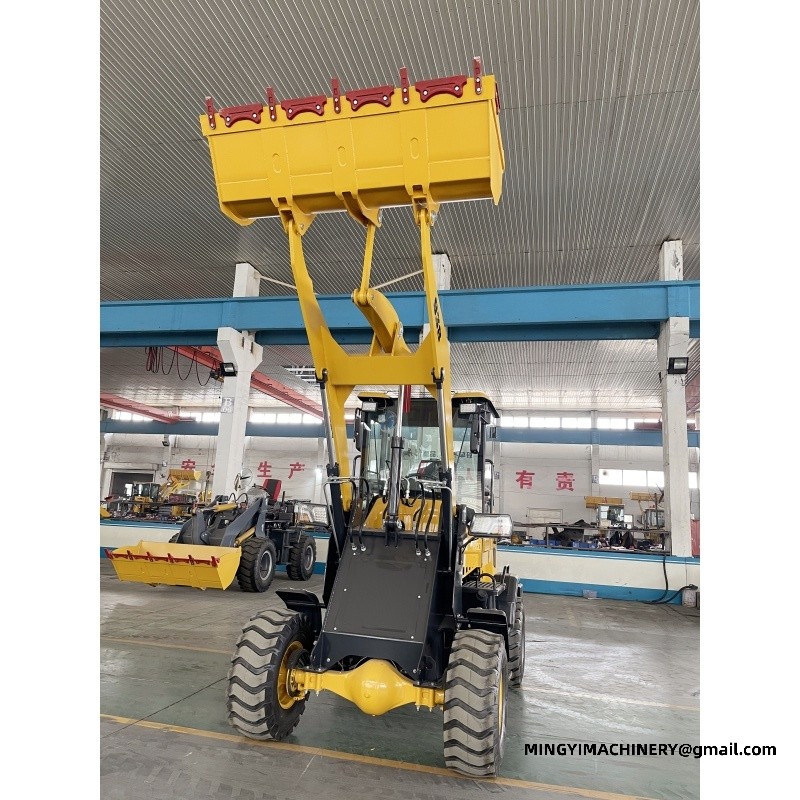
Work from the longest dimension. 3.5 m from front wheel to counterweight on this machine, 4.7 m on the light-duty 4.5 m medium-frame wheel-side reduction wheel loader. The bucket usually comes off; the counterweight usually stays, because removing it changes the securing plan far more than the space it saves.
Track is the second constraint, 1.2 m (Isuzu axle); 1.3 m (wheel-side reduction axle), and it is the one that decides whether two machines can travel side by side. Where a build offers two axles the track differs slightly between them, so confirm which axle is on the unit before booking space. Fuel is drained to a residue for shipping, and the tank on this build is 30.8 L (48# large tank, 20.5/70-16 tyres); 24.6 L (48# small tank, 8.25-16 tyres); that figure matters for the hazmat paperwork rather than for the loading plan.
A loader standing idle while a truck reverses is the most common waste on a site, and it is usually a layout problem rather than a machine problem. What the machine contributes is turn radius and visibility, and both come out of the dimensions: 4.25 m from front wheel to counterweight, 1.5 m (wheel-side reduction axle); 1.45 m (Isuzu axle) of track, and a rear frame section of 280 mm high x 800 mm wide. A shorter machine turns inside its own length and works a tighter bay.
The other half is dump geometry. With 4.2 m of clearance and a 3.15 m arm, the heavy-duty 4.2 m small-frame wheel-side reduction wheel loader can stand back from the body and still place material where the driver wants it, which is safer than crowding the board. The light-duty 4.2 m medium-frame wheel-side reduction wheel loader reaches 4.2 m with a 2.9 m arm; on a narrow bay the shorter of the two may be the faster machine even if it holds less.
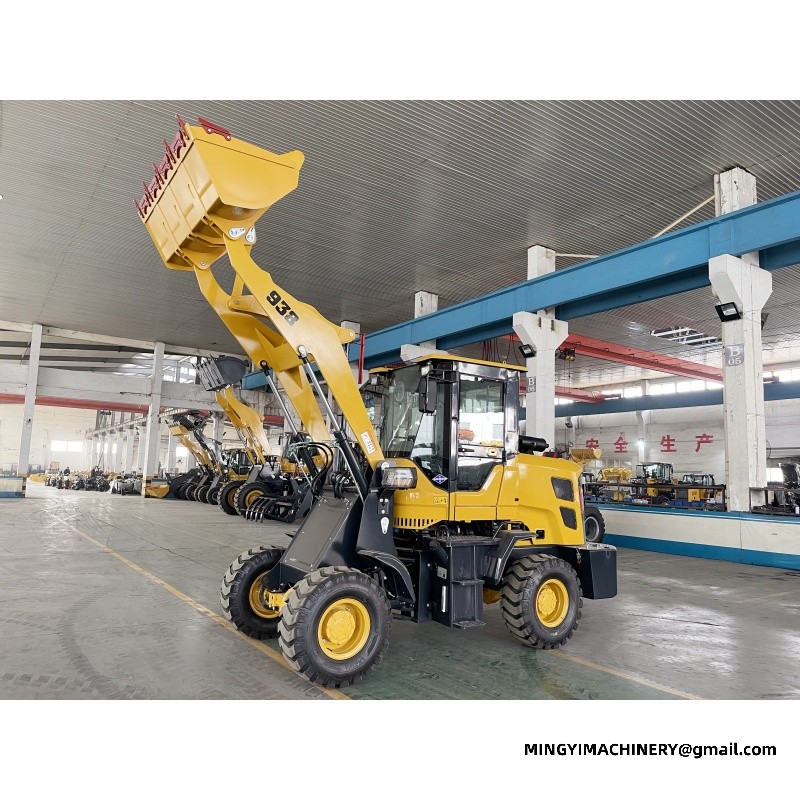
Ask any yard operator which part fails first and the answer is the articulation, not the engine. The rear hinge plate takes every reversing and turning load: 20 mm on the heavy-duty 4.2 m small-frame wheel-side reduction wheel loader against 30 mm on the light-duty 3.8 m medium-frame wheel-side reduction wheel loader, on cross-members of 30 mm and 45 mm respectively. That pair of figures predicts whether the machine is still tight at year three.
The rest of the specification follows the duty. A 0.4 m³ bucket at 4.2 m with centre cylinder 45 / side cylinder 45 cylinders is right for loose stock and loading out; 0.52 m³ at 3.8 m with centre cylinder 60 / side cylinder 50 is right where the machine has to break out of a face. Ground decides the axle — 1.5 m (wheel-side reduction axle); 1.45 m (Isuzu axle) against 1.6 m — and the material decides the radiator.
What does a daily check on a china wheel loader factory supplier actually consist of?
Look at the ground under the machine, check coolant and oil, grease the hinge pins behind the 25 mm front and 14 mm rear plates, and glance at the cylinder rods. Ten minutes, every shift.
How is a china wheel loader factory supplier transported between sites?
On a low-loader, arm strapped down, secured to the frame rather than the cylinders. Front wheel to counterweight is 4.25 m and track is 1.5 m (wheel-side reduction axle); 1.45 m (Isuzu axle), which is what the haulier needs.
How does wet ground change how a china wheel loader factory supplier is used?
Rolling resistance rises, so wheel spin and driveline load rise with it. Track is 1.5 m (wheel-side reduction axle); 1.45 m (Isuzu axle), and the hub-reduction option is the one for soft ground.
Is a china wheel loader factory supplier suitable for night work?
With adequate lighting, yes. Electrical capacity is the constraint and the rating is 45 Ah (24 V); extra lamps and beacons come out of the same plan.
Which engine option should a china wheel loader factory supplier be ordered with?
It follows the duty. The engine drags three rows with it: pump 40 pump (490 engine); 1045 pump (4102 turbo engine), core 4100 core (490 engine); 4105 core (4102T engine) and battery 60 Ah (490 engine); 80 Ah (4102 turbo engine). Choose it early rather than accepting whatever is in stock.
Can a china wheel loader factory supplier work safely on a slope?
Track decides that: 1.5 m (wheel-side reduction axle); 1.45 m (Isuzu axle) on this build, with the wider figure belonging to the hub-reduction axle. Work up and down the slope rather than across it.
What is involved in changing attachments on a china wheel loader factory supplier?
Mechanical mounting plus hydraulics. The cylinders are centre cylinder 45 / side cylinder 45 and the pump is 40 pump (490 engine); 1045 pump (4102 turbo engine); flow, not force, is usually what limits an added service.
Where the duty is continuous rather than intermittent, the cooling and electrical rows move up the list: 4100 core (490 engine); 4105 core (4102T engine) of core and 60 Ah (490 engine); 80 Ah (4102 turbo engine) of battery on the heavy-duty 4.2 m small-frame wheel-side reduction wheel loader. Where it is intermittent, the frame rows do. Deciding which case you are in is most of the specification.
Contact MINGYI Machinery for the current wheel loader lineup, configuration options and a formal specification for your market. E-mail: sales@mingycn.com | LINE (ID): mingyicn
Wheel Loader Manufacturer | China Factory: Order and Delivery · Wheel Loader Series: A Range Built for Daily Work · Small Wheel Loader: Light Builds for Farms and Nurseries · Wheel Loader









