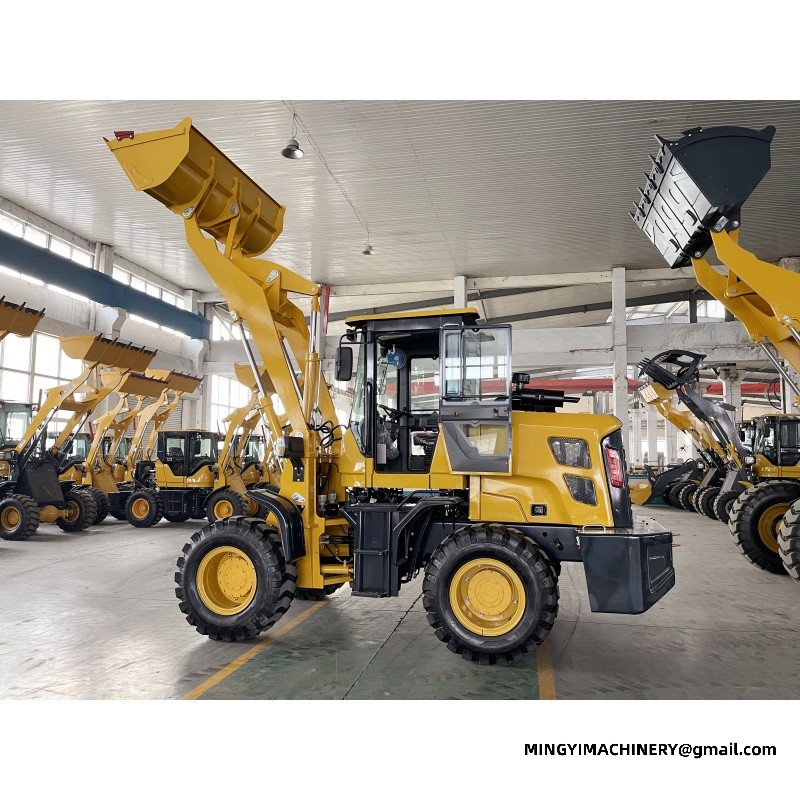
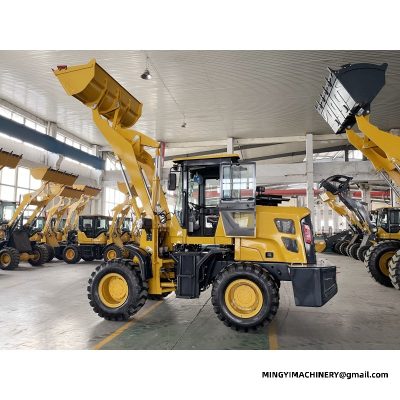
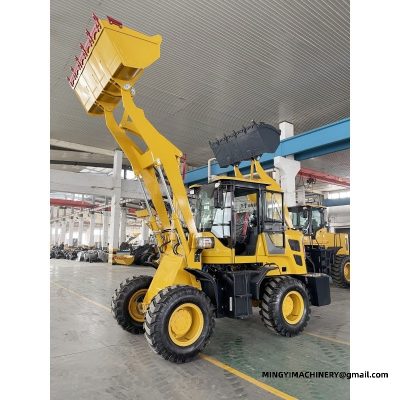
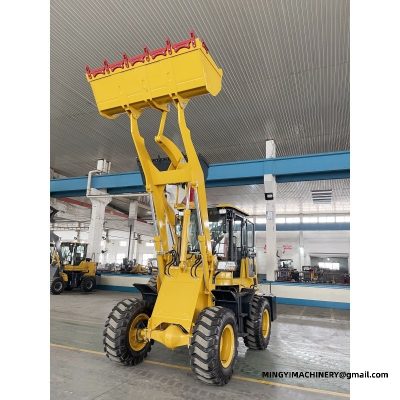
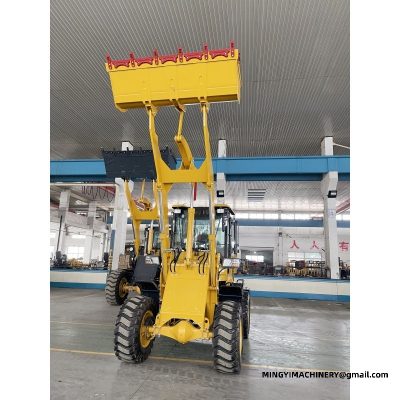
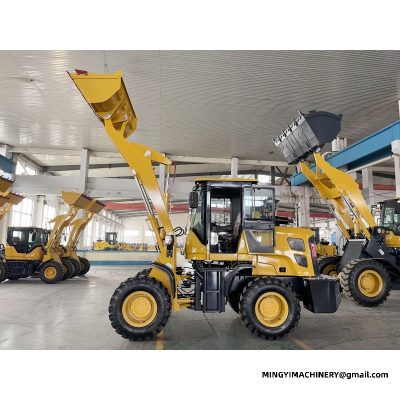
Ask two fleets what they want from a wheel loader series and you get the same three answers: it starts, it clears the body, and it stays tight. Everything else is preference. Those three map directly onto published rows — battery 45 Ah (24 V), dump height 2.4 m, and hinge plates 16 mm front with 16 mm rear over a 16 mm cross-member. This page takes those three answers as its structure, and uses the standard 2.4 m low-profile wheel loader and the light-duty 3.2 m low-profile wheel loader throughout so that every claim on it can be checked against the table.
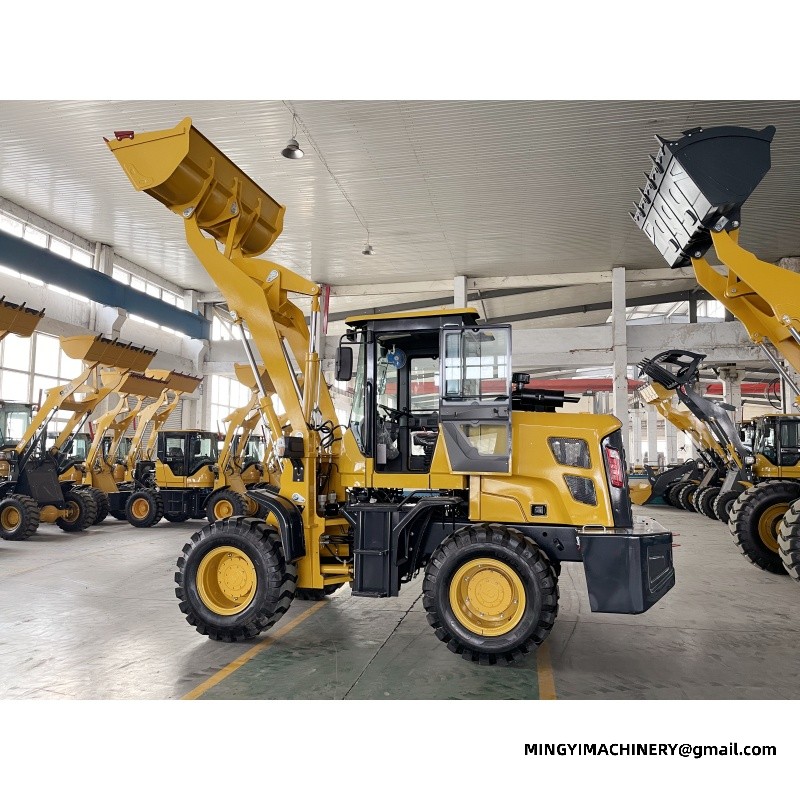
Two axle families appear across the range and the choice is about ground, not preference. Track width is the visible difference — 1.2 m (Isuzu axle); 1.3 m (wheel-side reduction axle) on the standard 2.4 m low-profile wheel loader against 1.5 m (wheel-side reduction axle); 1.45 m (Isuzu axle) on the light-duty 3.2 m low-profile wheel loader — but the mechanical difference is where the final reduction happens. An Isuzu-pattern axle reduces at the differential and sends torque down the shafts; a wheel-side reduction axle reduces at the hub.
Hub reduction is the right answer for soft lanes, ramps, uncompacted yards and pits, because torque arrives at the wheel instead of through a faster final drive that can spin. It is the wrong answer for long, fast, level transfers, where the extra unsprung mass and the lower top speed effort more than the traction gains. Read the track figures with the footprint — 3.5 m on the standard 2.4 m low-profile wheel loader, 4 m on the light-duty 3.2 m low-profile wheel loader — and the choice usually makes itself.
Breakout happens when the bucket is driven into the face and lifted, and it loads the boom in bending. The figures that resist it are wall 25 mm, width 370 mm, and the spacing between the two arms, 890 mm. A wider spacing spreads the load across the pins instead of concentrating it.
Length works against you here. A 2.62 m arm gives reach and height and multiplies the bending moment at the same time, which is why long-arm builds carry thicker walls. On the heavy-duty 4.5 m small-frame wheel-side reduction wheel loader the same comparison is 3.15 m of length against 25 mm of wall. Where the material is hard to break out, the shorter, thicker combination is usually the better machine.
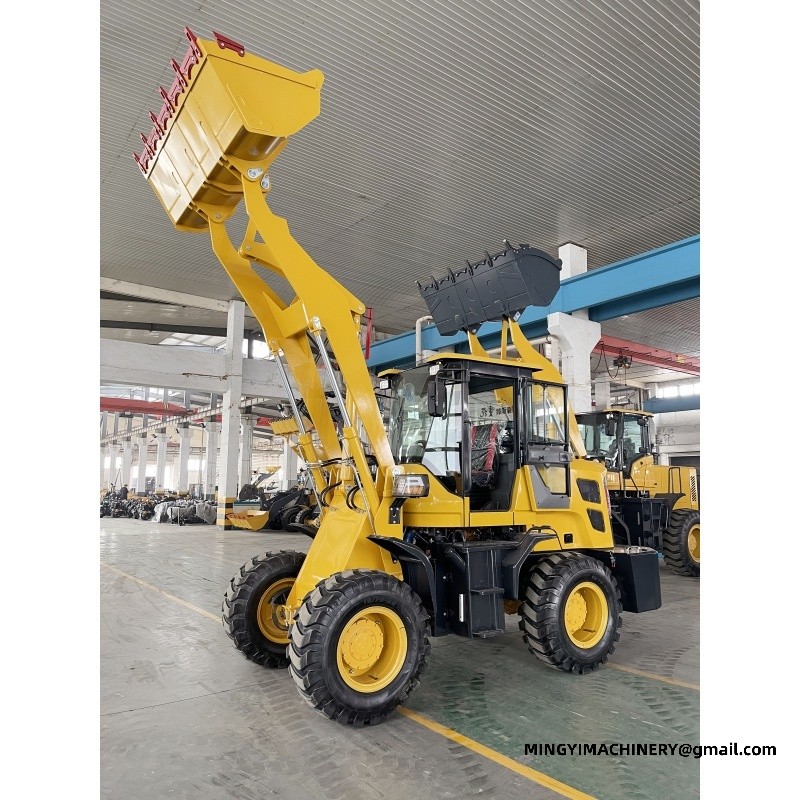
A boom is a beam, and a beam is specified by length, section and material thickness. On the standard 2.4 m low-profile wheel loader that means 1.85 m long, 280 mm wide and 20 mm thick, mounted on a 680 mm centre distance. On the light-duty 3.2 m low-profile wheel loader the same three figures are 2.3 m, 370 mm and 25 mm on a 890 mm spacing. Those six numbers decide breakout behaviour, side-load tolerance and how the machine feels on the last metre of lift.
The practical test is simple. If your day is loose material on level ground, a shorter arm on a tight machine will out-cycle a longer one, because every millimetre of reach is travel time. If your day is faces, banks and truck loading, the longer arm of the two — 2.3 m at 3.2 m — earns its keep, provided the 25 mm wall and 370 mm section are there to carry it. Ask which bucket the boom was engineered around — 0.3 m³ on the standard 2.4 m low-profile wheel loader, 0.38 m³ on the light-duty 3.2 m low-profile wheel loader — and you will know whether the arm and the frame were designed together.
| Sample build from the range — light-duty 4.2 m small-frame wheel-side reduction wheel loader | |
|---|---|
| Bucket capacity | 0.38 m³ |
| Dump height | 4.2 m |
| Track width | 1.5 m (wheel-side reduction axle); 1.45 m (Isuzu axle) |
| Boom arm thickness | 25 mm |
| Boom arm width | 370 mm |
| Boom arm length | 3.15 m |
| Boom arm centre distance | 890 mm |
| Cross-member thickness | 25 mm |
| Front hinge plate thickness | 25 mm |
| Rear hinge plate thickness | 20 mm |
| Rear frame section | 280 mm high x 800 mm wide |
| Hydraulic cylinders | centre cylinder 45 / side cylinder 40 |
| Fuel tank | 64.7 L (75# small tank) |
| Battery | 60 Ah (490 engine); 80 Ah (4102 turbo engine) |
| Front wheel to counterweight | 4.1 m |
| Radiator | 4100 core (490 engine); 4105 core (4102T engine) |
| Work pump | 40 pump (490 engine); 1045 pump (4102 turbo engine) |
| Travel pump | 316 pump |
Winter changes three things: the battery has less to give, the oil is thicker, and the operator is working in gloves. The first two are specification questions. 60 Ah (490 engine); 80 Ah (4102 turbo engine) covers the first. The hydraulic side, centre cylinder 45 / side cylinder 40 with a 40 pump (490 engine); 1045 pump (4102 turbo engine), is sized for the loads it will see at working temperature and will simply be slower until it warms.
The third is a machine-layout question and comes down to the rear frame and the tank: 280 mm high x 800 mm wide of rear section and 64.7 L (75# small tank) of fuel. Cold-weather work also means more idling, so tank capacity should be read against winter consumption rather than summer consumption. A machine that needs refuelling at minus ten with an operator standing outside is a specification failure, not a weather problem.
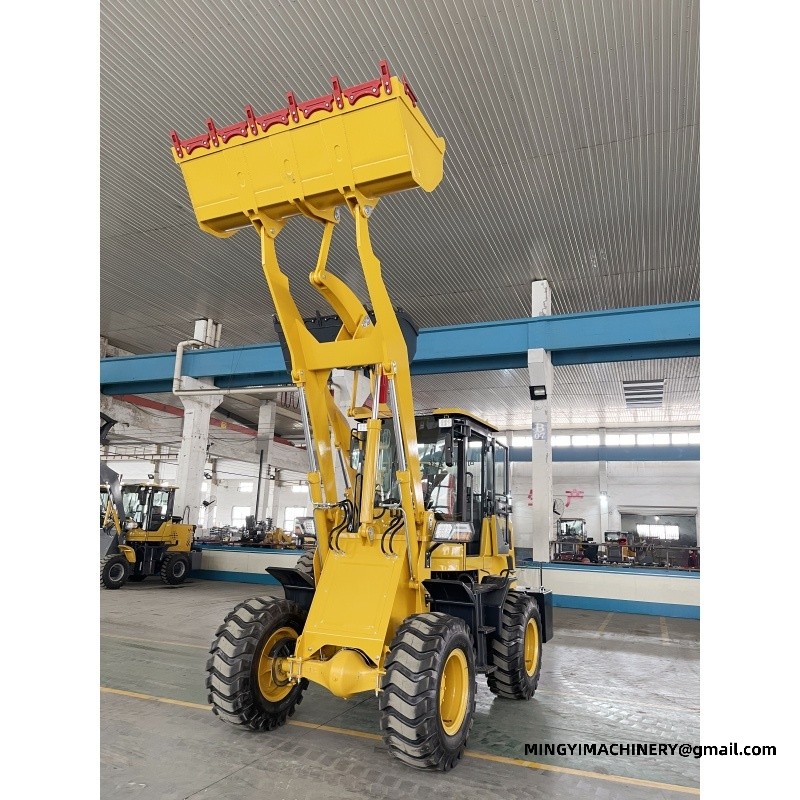
Tank size is a shift-planning figure. The standard 2.4 m low-profile wheel loader carries 30.8 L (48# large tank, 20.5/70-16 tyres); 24.6 L (48# small tank, 8.25-16 tyres); the light-duty 3.2 m low-profile wheel loader carries 54 L (50# tank). Both are sized for a full working day at operating throttle without a mid-shift refuel, which matters on sites where the bowser is a ten-minute round trip away and on farms where refuelling means driving back to the yard.
The number to combine it with is cooling: 4100 core on the standard 2.4 m low-profile wheel loader, 4100 core (490 engine); 4105 core (4102T engine) on the light-duty 3.2 m low-profile wheel loader. A machine that runs out of coolant capacity is stopped in the middle of a shift wherever it happens to be; a machine that runs low on fuel is stopped somewhere you chose. If the site has no refuelling point, the difference between the two tank sizes is a daily ten minutes, and over a season it is a working week.
A rebuild is worth doing when the frame is sound and the running gear is not. Check the hinge plates, 25 mm and 14 mm, and the cross-member, 25 mm, for movement and cracking. If those are tight, cylinders centre cylinder 45 / side cylinder 40, pump 40 pump (490 engine); 1045 pump (4102 turbo engine) and radiator 4100 core (490 engine); 4105 core (4102T engine) are all replaceable items and the machine has years left.
If the frame has gone, it has gone: re-machining pin bores restores geometry for a while and never for long, because the 230 mm high x 800 mm wide section has been flexing the whole time. That is the point to compare against a new build rather than a repair, and it is why the plate figures are worth reading at purchase rather than at disposal.
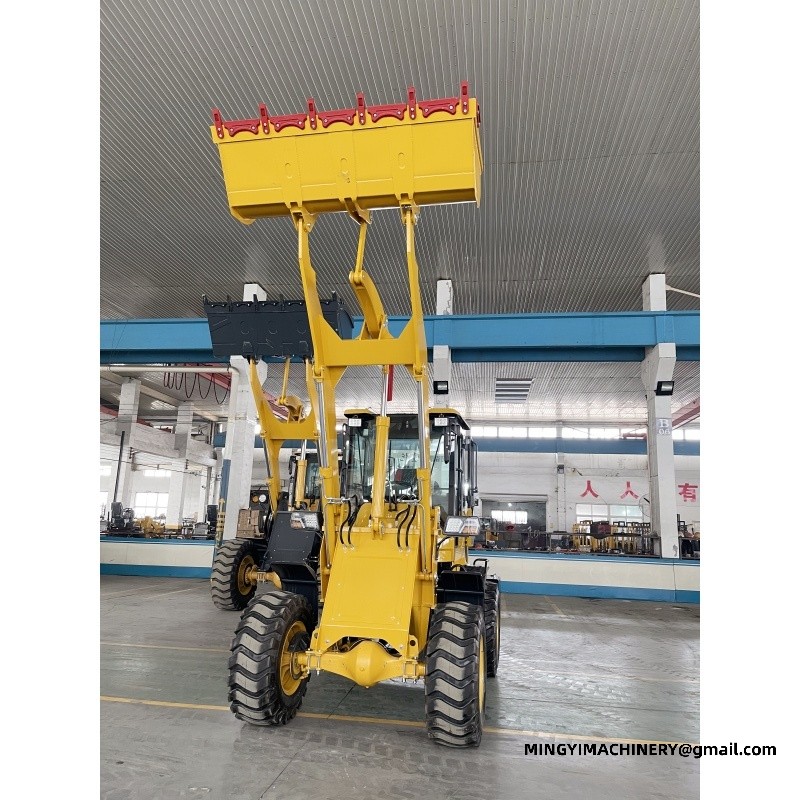
A machine crossing an ocean is exposed to salt air for weeks, and the parts that suffer are the ones that were never painted: cylinder rods, hinge pins and electrical terminals. This build carries centre cylinder 40 / side cylinder 40 and hinge plates of 16 mm and 16 mm; all three should be greased and wrapped before loading rather than cleaned on arrival.
The battery is the other item to plan for. 45 Ah (24 V) will not survive a long voyage connected, and a flat machine cannot be driven off a container. Specify a disconnect, and specify the radiator, 4100 core, to be checked for fin corrosion on arrival — salt air attacks the core from outside and the symptom is overheating in the first month, which everyone blames on the thermostat.
A machine that wanders on the road and feels vague in the turn has worn hinge pins. The plates are 25 mm front and 14 mm rear over a 25 mm cross-member; when the pin bores ovalise, the geometry the frame was built to hold is gone, and no amount of steering adjustment brings it back.
Check it by loading the bucket, holding the machine on a slope and watching the joint while an operator rocks the steering. Movement there is wear; movement at the rear, over the 280 mm high x 800 mm wide section, is a different and more serious problem. Catching the first case takes a set of pins; missing it takes a frame.
How should the battery on a wheel loader series be cared for?
Keep the terminals clean and tight and use the isolator if the machine will stand. The rating is 45 Ah (24 V), and a machine left connected for weeks will not start when it is needed.
Will a wheel loader series ship assembled in a container?
It depends on the longest dimension, 3.5 m from front wheel to counterweight, and on track, 1.2 m (Isuzu axle); 1.3 m (wheel-side reduction axle). The bucket usually comes off; the arm must be lowered to clear the door.
My wheel loader series overheats every afternoon. What is the cause?
In order of likelihood: blocked fins on the 4100 core (490 engine); 4105 core (4102T engine) core, a cap that will not hold pressure, a fan drive problem, or genuine overloading. Clean the core first, from the clean side.
How is dump height on a wheel loader series measured?
At the bucket edge, arm at full lift, machine level. The light-duty 3.2 m low-profile wheel loader publishes 3.2 m and the light-duty 4.2 m small-frame wheel-side reduction wheel loader publishes 4.2 m, measured the same way, so the two can be compared directly.
Is it worth rebuilding an older wheel loader series?
If the frame is tight, yes: cylinders centre cylinder 40 / side cylinder 40, pump 32 pump and core 4100 core are all replaceable. If the pins have ovalised their bores, the geometry will not come back.
Can I order the same wheel loader series build again next year?
Yes, if the order is written by figures rather than by name: bucket 0.38 m³, lift 3.2 m, cylinders centre cylinder 45 / side cylinder 40, pump 40 pump (490 engine); 1045 pump (4102 turbo engine). Names change; rows do not.
Can a wheel loader series work safely on a slope?
Track decides that: 1.2 m (Isuzu axle); 1.3 m (wheel-side reduction axle) on this build, with the wider figure belonging to the hub-reduction axle. Work up and down the slope rather than across it.
The range exists so that a wheel loader series can be matched to the work rather than approximated to it. Start with dump height, check the steel, then let bucket volume follow from the material — that order gets it right more often than any other.
Pre-delivery inspection before Wheel Loader Series: A Range Built for Daily Work leaves the shop
A machine should be inspected while it is still on our floor rather than after it lands. For Wheel Loader Series: A Range Built for Daily Work that means the engine is run to temperature, the hydraulics are cycled through full travel, and every function is checked against the build sheet before the crate is closed.
Packing, loading and shipment of Wheel Loader Series: A Range Built for Daily Work
Export packing is part of the machine, not an afterthought. Wheel Loader Series: A Range Built for Daily Work is blocked and braced inside the container so that it arrives in the same condition it left, and the load plan is decided by the dimensions rather than by what fits loosely.
A second operator for Wheel Loader Series: A Range Built for Daily Work
A machine that only one person can use is a single point of failure. Training a second operator on Wheel Loader Series: A Range Built for Daily Work takes a day and removes the dependency that otherwise governs holidays, illness and busy weeks.
Contact MINGYI Machinery for the current wheel loader lineup, configuration options and a formal specification for your market. E-mail: sales@mingycn.com | LINE (ID): mingyicn
Wheel Loader Fork Attachment: Load Centres and Fork Length · Wheel Loader Snow Blower: Winter Duty and Cold Starts · Wheel Loader Manufacturer: Five Figures to Ask For · Wheel Loader









