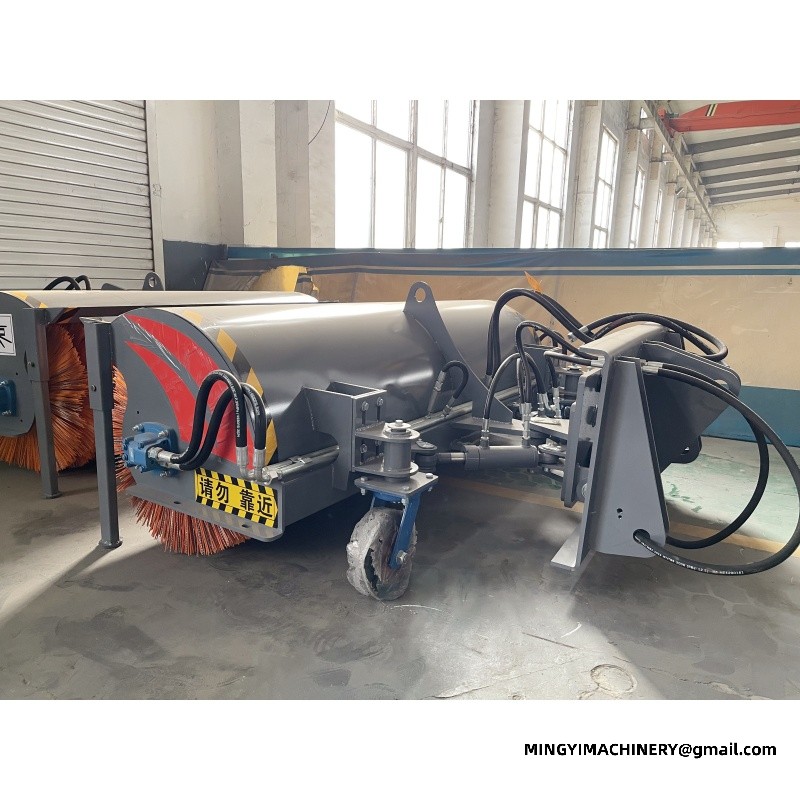
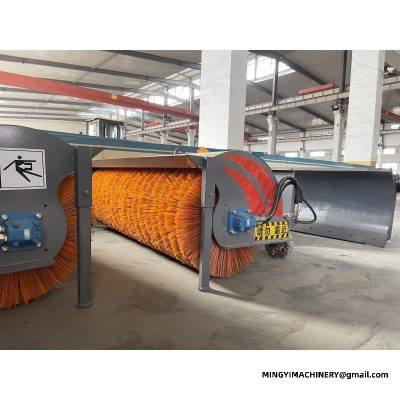
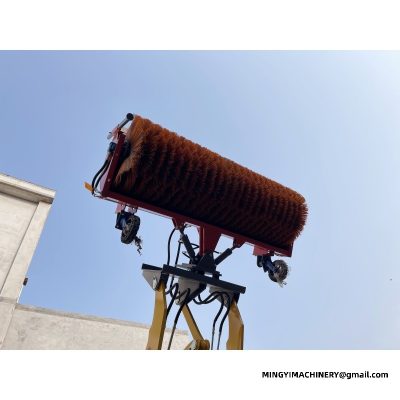
The simplest wheel loader snow blower decision is the one made on paper.Choosing the wrong dump height takes a machine; choosing the wrong axle takes a driveline; choosing the wrong hinge steel takes a frame. Each of those is a row on a specification sheet, and each is published for every build here. The two machines compared throughout are the light-duty 4.2 m small-frame wheel-side reduction wheel loader, lifting 4.2 m, and the heavy-duty 4.5 m small-frame wheel-side reduction wheel loader, lifting 4.5 m. Read the rows in the order they will effort you money and the choice usually makes itself.
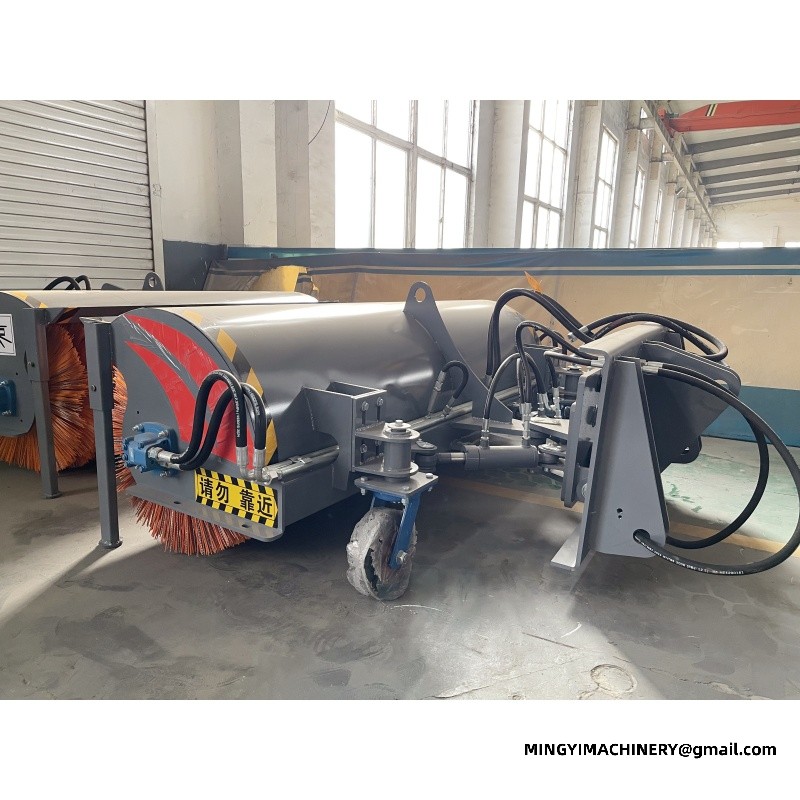
Attachments are specified against the carrier, not against the machine's size class. The figures that matter are the boom section and the hinge geometry: 370 mm on the light-duty 4.2 m small-frame wheel-side reduction wheel loader against 500 mm on the heavy-duty 4.5 m small-frame wheel-side reduction wheel loader, and centre distance 890 mm against 890 mm. Two loaders of the same rated capacity from different frame families will not share a fork frame.
Within one frame family the section and spacing match, so a single tool set covers the light and heavy builds of that frame — a genuine advantage for a mixed fleet. Across families it does not work. If you intend to run hydraulically actuated tools, a grapple, a four-in-one bucket or a hydraulic snow blade, order the third circuit at build time; the 40 pump (490 engine); 1045 pump (4102 turbo engine) and 40 pump (490 engine); 1045 pump (4102 turbo engine) circuits are specified per build and plumbing added later is the most common source of field leaks.
The boom is the part that turns engine power into a loaded bucket at height, and four figures describe it. Length runs 3.15 m on the light-duty 4.2 m small-frame wheel-side reduction wheel loader against 3.15 m on the heavy-duty 4.5 m small-frame wheel-side reduction wheel loader; wall thickness 25 mm against 25 mm; section width 370 mm against 500 mm; and the mount spacing — boom centre distance — 890 mm against 890 mm. Read together, those four numbers tell you more about how a machine will behave than bucket capacity ever will.
Length buys reach and takes stability, because every extra millimetre moves the load centre further from the front axle. Wall thickness resists bending; section width resists twisting. Centre distance is the one most buyers never ask about, and it is the one that decides whether the arm takes a side load cleanly or twists the pins — which matters the moment an operator digs one corner of the bucket into a heap instead of squaring up to it. On the light-duty 4.2 m small-frame wheel-side reduction wheel loader the combination of a 3.15 m arm, a 25 mm wall and a 890 mm spacing is matched to a 0.38 m³ bucket, and that match is what keeps the frame tight over a full season.
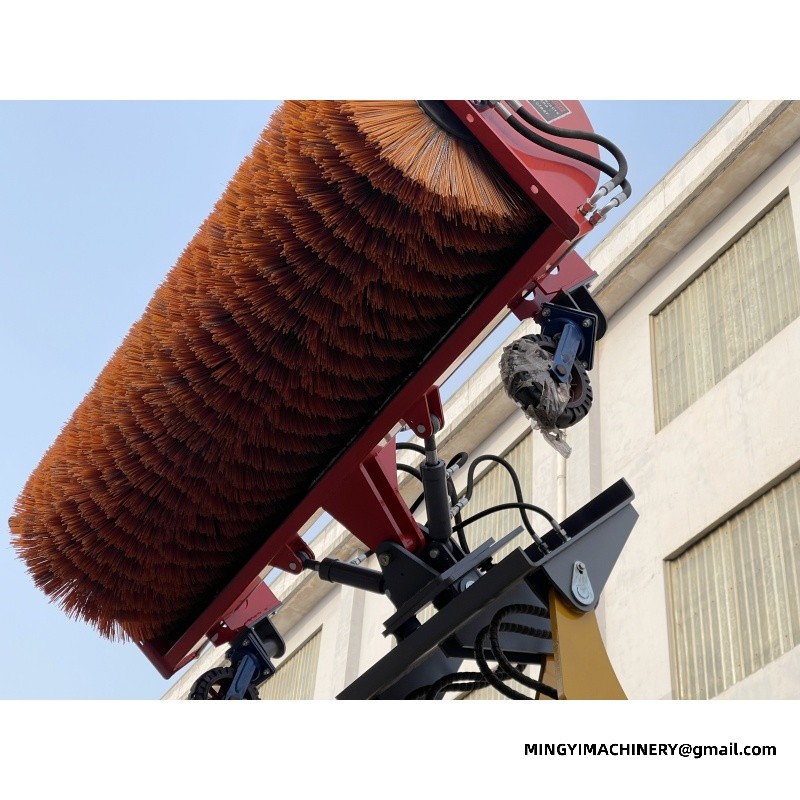
Operators get blamed for slow cycles that were decided in the frame shop. Where the lift is long, the pump and the cylinders set the pace: this build runs 32 pump with centre cylinder 45 / side cylinder 40. Where the run between face and truck is long, travel matters more, and that is the 316 pump and the 3.5 m wheelbase. Where the heap is packed, breakout matters most, and breakout comes from boom wall, 20 mm, working against bucket width.
Compare two builds on the same heap and the difference shows up as a few seconds a pass. The heavy-duty 3.8 m medium-frame wheel-side reduction wheel loader carries 0.65 m³ against 0.3 m³ on the standard 2.8 m low-profile wheel loader, and lifts to 3.8 m against 2.8 m. Bigger is not automatically faster: a bucket that fills completely in two passes beats one that fills partly in three, and the frame that stays tight keeps doing it in month thirty.
| Published build data — heavy-duty 4.5 m small-frame wheel-side reduction wheel loader | |
|---|---|
| Bucket capacity | 0.4 m³ |
| Dump height | 4.5 m |
| Track width | 1.5 m (wheel-side reduction axle); 1.45 m (Isuzu axle) |
| Boom arm thickness | 25 mm |
| Boom arm width | 500 mm |
| Boom arm length | 3.15 m |
| Boom arm centre distance | 890 mm |
| Cross-member thickness | 30 mm |
| Front hinge plate thickness | 30 mm |
| Rear hinge plate thickness | 20 mm |
| Rear frame section | 280 mm high x 800 mm wide |
| Hydraulic cylinders | centre cylinder 45 / side cylinder 45 |
| Fuel tank | 64.7 L (75# small tank) |
| Battery | 60 Ah (490 engine); 80 Ah (4102 turbo engine) |
| Front wheel to counterweight | 4.25 m |
| Radiator | 4100 core (490 engine); 4105 core (4102T engine) |
| Work pump | 40 pump (490 engine); 1045 pump (4102 turbo engine) |
| Travel pump | 316 pump |
Every loader purchase starts with the thing being loaded into. On this range the choice runs from 4.2 m on the light-duty 4.2 m small-frame wheel-side reduction wheel loader to 4.5 m on the heavy-duty 4.5 m small-frame wheel-side reduction wheel loader, and the gap between those two figures is the gap between a machine that feeds a small mixer and one that feeds a highway truck.
Take the measurement at the highest point the bucket must clear, on the near side, with the truck loaded — a suspension that settles under load lowers the board. Then add allowance for the operator's approach angle. The light-duty 4.2 m small-frame wheel-side reduction wheel loader at 4.2 m with a 0.38 m³ bucket and a 3.15 m arm is a compact answer; the heavy-duty 4.5 m small-frame wheel-side reduction wheel loader at 4.5 m with 0.4 m³ and a 3.15 m arm is the answer where the board is high.
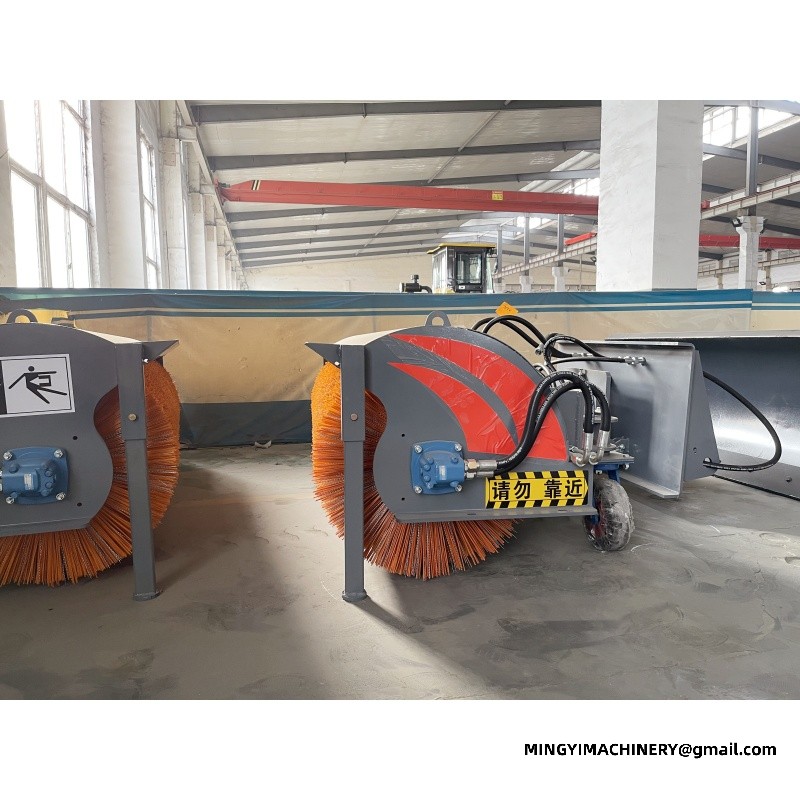
Breakout force is advertised; what you feel in the cab is the combination behind it. On the light-duty 4.2 m small-frame wheel-side reduction wheel loader that is a centre cylinder 45 / side cylinder 40 cylinder set on a 3.15 m boom with a 890 mm centre distance, lifting a 0.38 m³ bucket to 4.2 m. On the heavy-duty 3.8 m medium-frame wheel-side reduction wheel loader it is centre cylinder 60 / side cylinder 50 on a 2.9 m arm with 920 mm spacing, lifting 0.65 m³ to 3.8 m.
Heat is the failure mode nobody plans for. A pump working at the top of its flow all shift, in dust, at altitude, will cook its oil — and the 40 pump (490 engine); 1045 pump (4102 turbo engine) on the light-duty 4.2 m small-frame wheel-side reduction wheel loader and the 2063 pump on the heavy-duty 3.8 m medium-frame wheel-side reduction wheel loader were each sized against their own cylinder volumes and duty. The matching travel pumps, 316 pump and 25 pump, keep drive independent so a loaded climb does not stall the boom. Specify the third circuit at order time if a hydraulic tool is in the plan; plumbing added later is the most common source of leaks we see in the field.
Second-hand buyers check three things and none of them is the hour meter. They rock the hinge and look for movement at the 45 mm front and 30 mm rear plates. They look along the boom for twist, which is a 500 mm section and 920 mm spacing question. They start it cold and listen, which is a 80 Ah question.
Steel thickness is what makes the first check pass or fail, and it is on the sheet: cross-member 45 mm, rear frame 300 mm high x 800 mm wide. A machine built with those figures published and verifiable is easier to sell than one with a lower hour count and no specification, because the buyer can check the claim instead of trusting it.
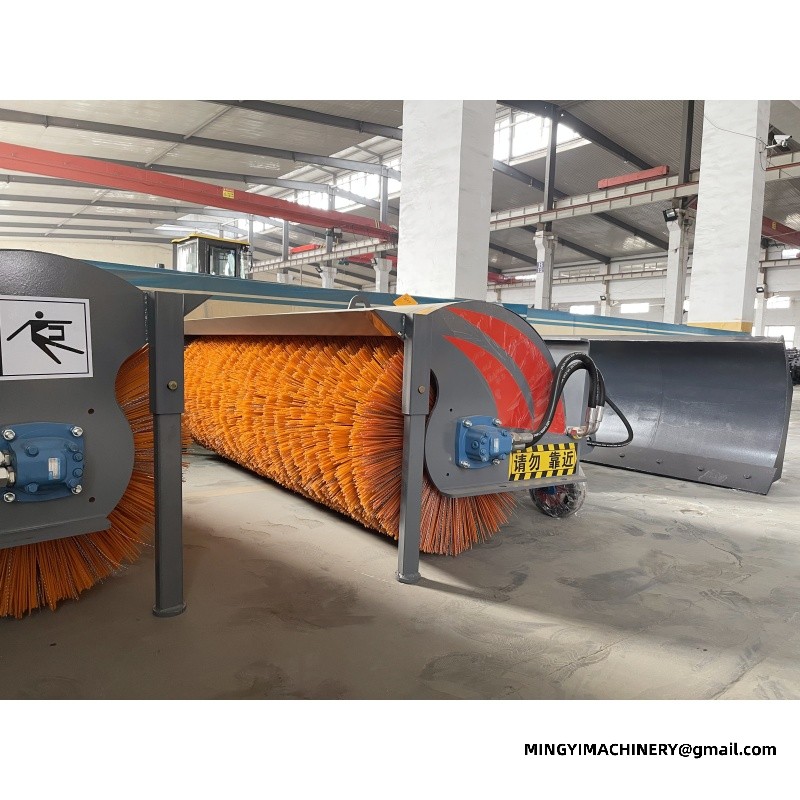
Work from the longest dimension. 3.5 m from front wheel to counterweight on this machine, 4.1 m on the heavy-duty 3.2 m low-profile wheel loader. The bucket usually comes off; the counterweight usually stays, because removing it changes the securing plan far more than the space it saves.
Track is the second constraint, 1.2 m (Isuzu axle); 1.3 m (wheel-side reduction axle), and it is the one that decides whether two machines can travel side by side. Where a build offers two axles the track differs slightly between them, so confirm which axle is on the unit before booking space. Fuel is drained to a residue for shipping, and the tank on this build is 30.8 L (48# large tank, 20.5/70-16 tyres); 24.6 L (48# small tank, 8.25-16 tyres); that figure matters for the hazmat paperwork rather than for the loading plan.
Continuous stockpile duty is where light builds are separated from heavy ones, and the separation is visible in steel. The heavy-duty 4.5 m small-frame wheel-side reduction wheel loader lists 30 mm front and 20 mm rear hinge plates over a 30 mm cross-member and a 280 mm high x 800 mm wide rear frame, carrying 0.4 m³ to 4.5 m. The light-duty 4.2 m small-frame wheel-side reduction wheel loader lists 25 mm, 20 mm, 25 mm and 280 mm high x 800 mm wide, carrying 0.38 m³ to 4.2 m.
Choose by cycle count rather than by material. Below twenty truck loads a day the lighter machine is the better economics; above it, the heavier frame pays for itself in avoided downtime. Then specify the cooling package for the material — 4100 core (490 engine); 4105 core (4102T engine) raised core for fines and dust — and the axle for the floor. Both are simple at order time and neither is simple later.
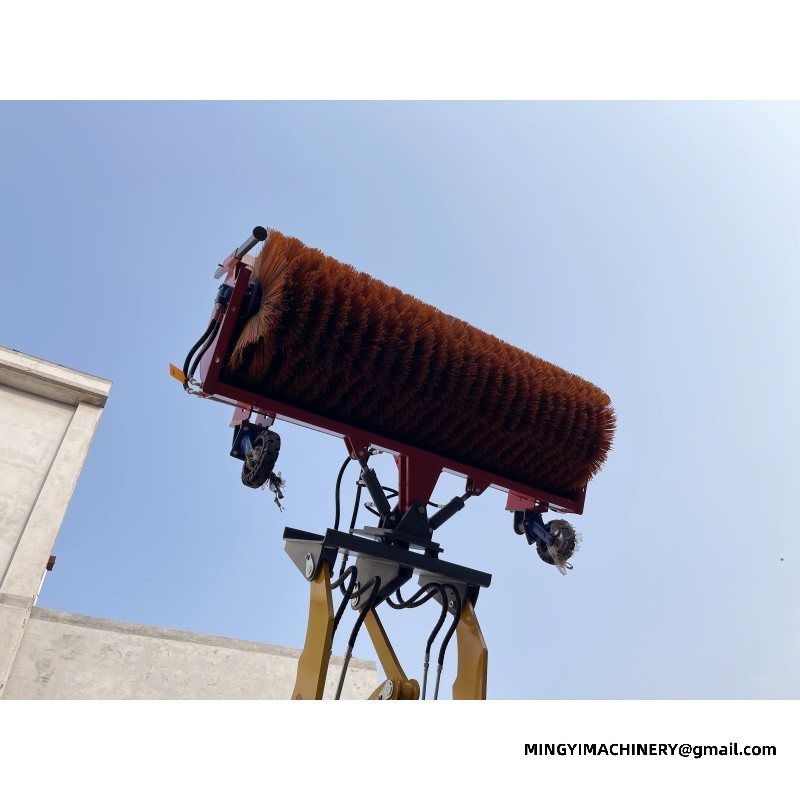
What do I check the day a wheel loader snow blower is delivered?
Bucket 0.65 m³, lift 4.2 m, cylinders centre cylinder 60 / side cylinder 50, track 1.6 m and length 4.55 m. Photograph all five; they settle any later question about what was ordered.
Should I go up a bucket size on a wheel loader snow blower?
Only if the material is light enough to fill it. 0.38 m³ against 0.4 m³ looks like a gain on paper and is a loss on dense material, and the extra weight lands on the hinge.
Is a wheel loader snow blower suitable for night work?
With adequate lighting, yes. Electrical capacity is the constraint and the rating is 60 Ah (490 engine); 80 Ah (4102 turbo engine); extra lamps and beacons come out of the same plan.
Is it worth rebuilding an older wheel loader snow blower?
If the frame is tight, yes: cylinders centre cylinder 45 / side cylinder 40, pump 40 pump (490 engine); 1045 pump (4102 turbo engine) and core 4100 core (490 engine); 4105 core (4102T engine) are all replaceable. If the pins have ovalised their bores, the geometry will not come back.
Which records should I keep for a wheel loader snow blower?
The delivery measurements and the specification. Bucket 0.38 m³, lift 4.2 m, cylinders centre cylinder 45 / side cylinder 40, pump 40 pump (490 engine); 1045 pump (4102 turbo engine) and track 1.5 m (wheel-side reduction axle); 1.45 m (Isuzu axle) identify the build for parts and for resale.
Why does my wheel loader snow blower wander on the road?
Worn hinge pins. Load the bucket, hold the machine on a slope and watch the joint while the steering is rocked; movement there is wear behind the 16 mm and 16 mm plates.
How much does material weight matter on a wheel loader snow blower?
It sets the real limit, not the bucket. Volume is 0.65 m³; what the frame takes is set by the 45 mm cross-member and the 300 mm high x 800 mm wide rear section behind it.
None of this requires taking a wheel loader snow blower on faith. The rows are published, the machines can be measured on delivery, and the five figures that matter — bucket, dump height, cylinders, track and hinge steel — are checkable in twenty minutes.
Documents that travel with Wheel Loader Snow Blower: Winter Duty and Cold Starts
The machine is only half of what arrives. The parts book, the service schedule and the declarations that come with Wheel Loader Snow Blower: Winter Duty and Cold Starts are what let the owner register, insure and maintain it without a second round of emails.
Cold weather and winter care for Wheel Loader Snow Blower: Winter Duty and Cold Starts
Starting is only the first problem. Until Wheel Loader Snow Blower: Winter Duty and Cold Starts reaches working temperature the hydraulic response is slower and the seals are stiffer, and warming the machine before asking for full output avoids unnecessary strain.
Contact MINGYI Machinery for the current wheel loader lineup, configuration options and a formal specification for your market. E-mail: sales@mingycn.com | LINE (ID): mingyicn
Wheel Loader Snow Blower: Running the Third Circuit · Wheel Loader Snow Pusher: Pushing Loads on Cold Ground · China Wheel Loader Factory: How Each Model Is Built and Checked · Wheel Loader









