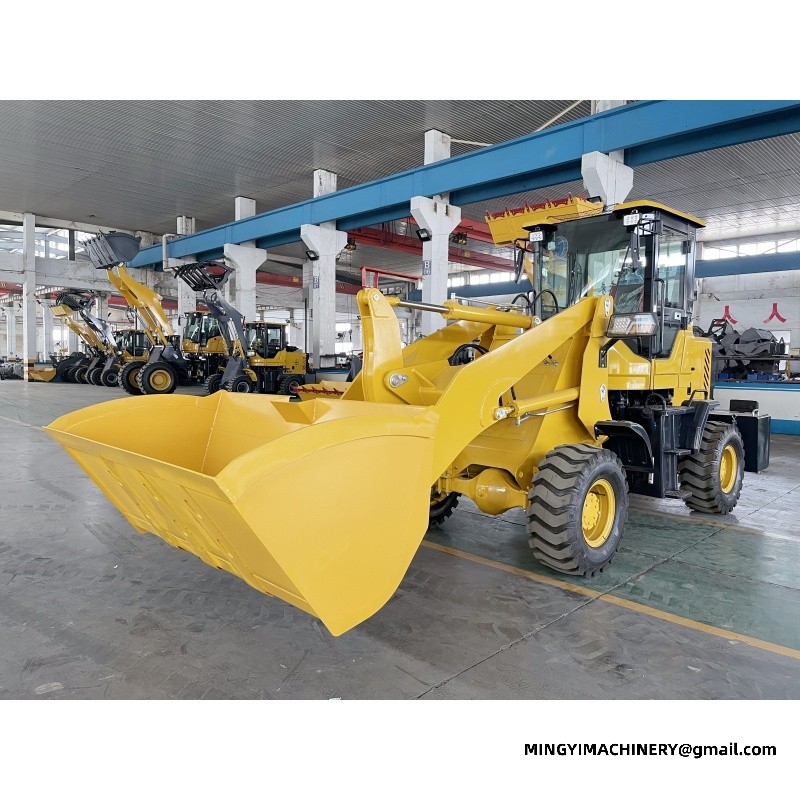
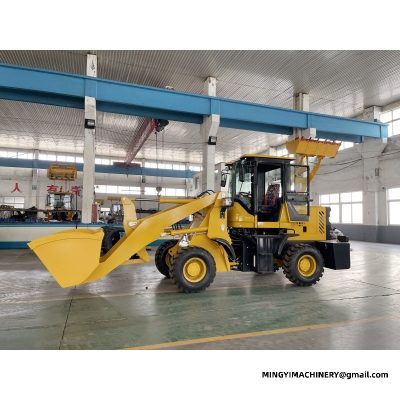
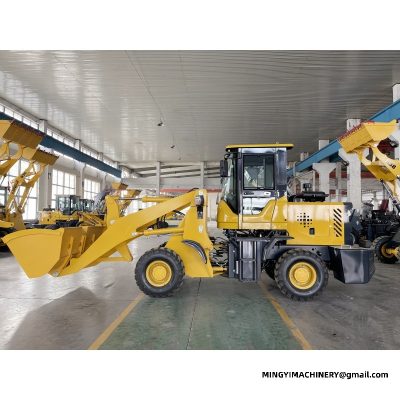
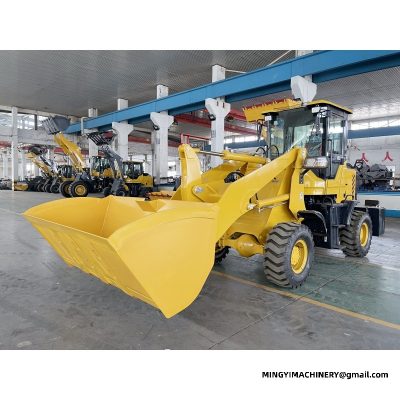
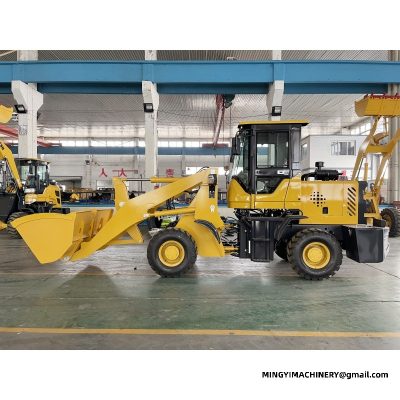
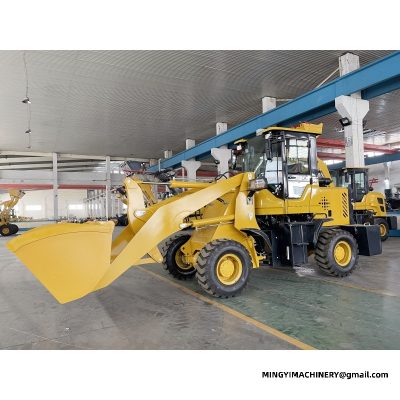
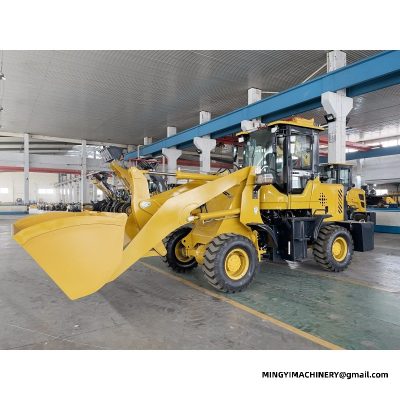
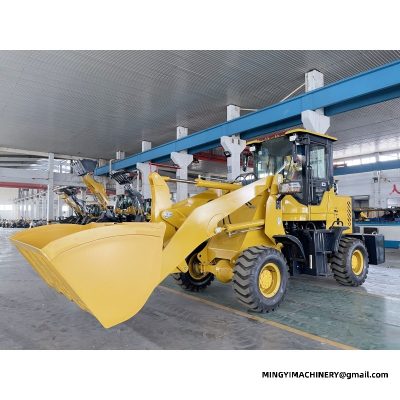
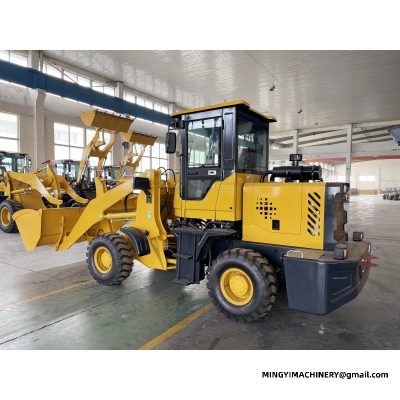
The first month tells you whether a compact wheel loader was specified correctly. Cooling holds or it does not. The bucket matches the material or it does not. The pins stay tight or they start to move. All three are visible in the first few weeks and all three trace back to rows on the sheet: 4105 core, 0.52 m³ and 45 mm respectively. This page orders those rows by how soon they show up, using the light-duty 4.5 m medium-frame wheel-side reduction wheel loader and the standard 2.4 m low-profile wheel loader as the worked examples.
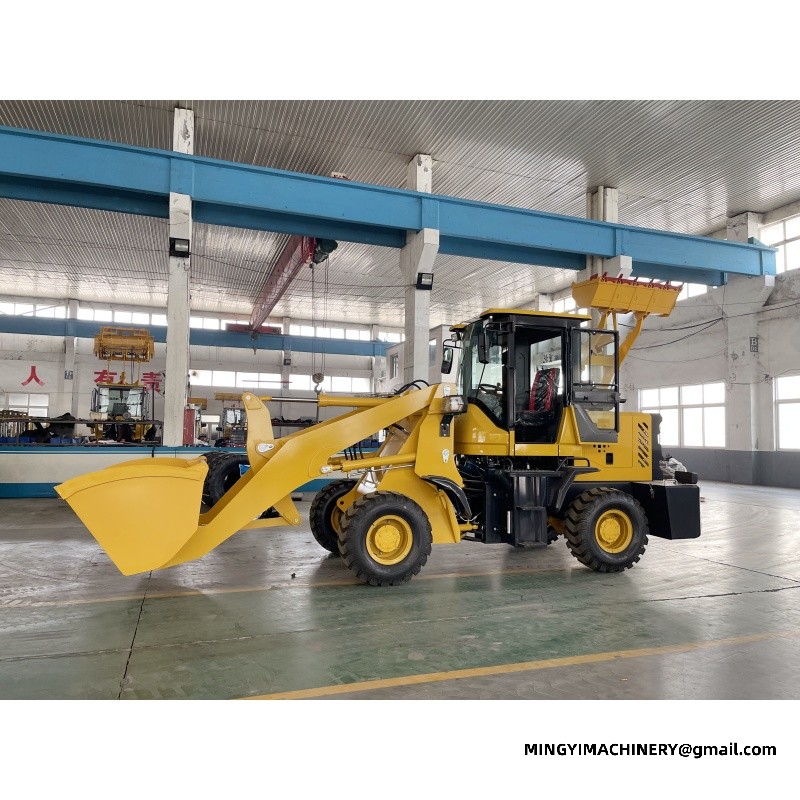
Every axle specification is a compromise between traction and speed, and the range resolves it with two families: 1.5 m (wheel-side reduction axle); 1.45 m (Isuzu axle) track on the heavy-duty 4.5 m small-frame wheel-side reduction wheel loader and 1.6 m on the light-duty 4.5 m medium-frame wheel-side reduction wheel loader. The wider track adds stability; the reduction layout decides whether the torque reaches the ground. Ask which ground the machine will spend eighty per cent of its hours on, then read the axle line.
Stability also comes from elsewhere in the table. The heavy-duty 4.5 m small-frame wheel-side reduction wheel loader carries a 4.25 m front-wheel-to-counterweight length and a 0.4 m³ bucket at 4.5 m; the light-duty 4.5 m medium-frame wheel-side reduction wheel loader carries 4.7 m with 0.52 m³ at 4.5 m. A wide track on a short wheelbase is less stable than a narrower track on a long one, which is why the footprint figure belongs in the same conversation as the axle. On soft or rutted ground, take the hub reduction every time.
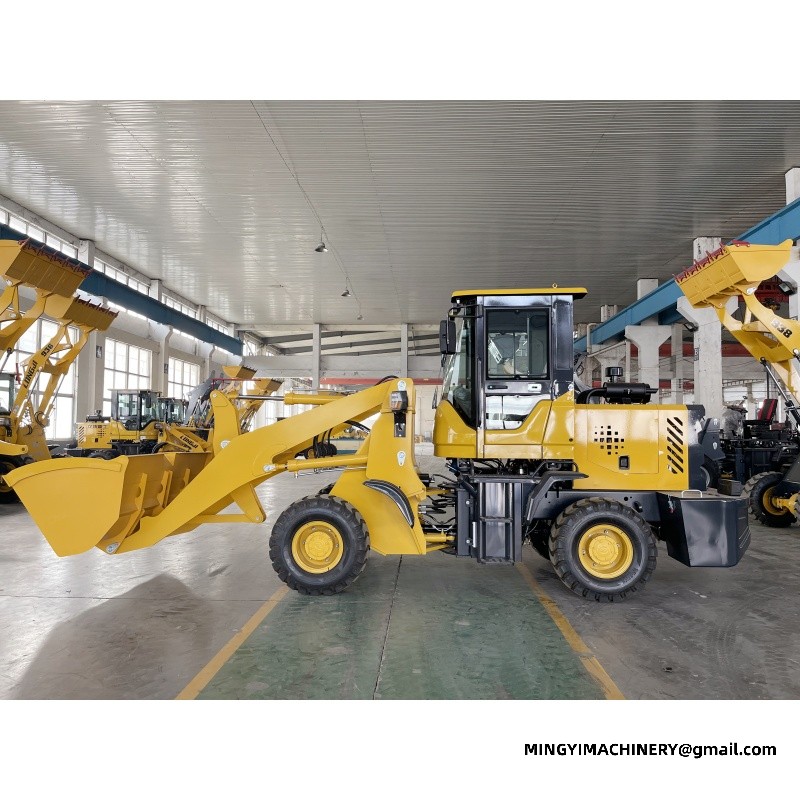
Breakout happens when the bucket is driven into the face and lifted, and it loads the boom in bending. The figures that resist it are wall 25 mm, width 370 mm, and the spacing between the two arms, 890 mm. A wider spacing spreads the load across the pins instead of concentrating it.
Length works against you here. A 2.3 m arm gives reach and height and multiplies the bending moment at the same time, which is why long-arm builds carry thicker walls. On the heavy-duty 4.5 m small-frame wheel-side reduction wheel loader the same comparison is 3.15 m of length against 25 mm of wall. Where the material is hard to break out, the shorter, thicker combination is usually the better machine.
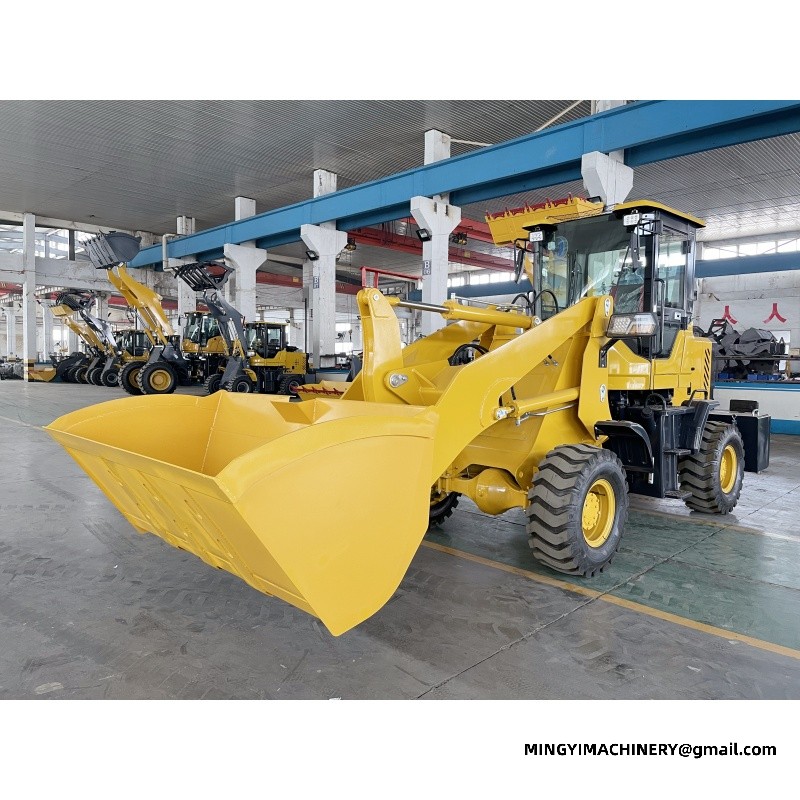
Cooling capacity is sized to the engine's heat rejection, so it appears in the table as a specification rather than a choice: 4105 core on the light-duty 4.5 m medium-frame wheel-side reduction wheel loader, 4100 core on the standard 2.4 m low-profile wheel loader. Where the build offers two engines — the 490 with a 4100 core, the 4102 turbo with a 4105 raised core — the raised core is the one for hot climates, high altitude and any site where fine material hangs in the air.
Practical advice that takes nothing: blow the core out at the end of every shift in dusty work, in the reverse direction to airflow, and check the cap seat before blaming the radiator. On the light-duty 4.5 m medium-frame wheel-side reduction wheel loader the 4105 core core sits behind a 300 mm high x 800 mm wide rear frame with limited airflow at low engine speed; on the standard 2.4 m low-profile wheel loader the 4100 core core is served by the same 316 pump driven circuit. Neither is difficult to keep clean, and both will lose a season to neglect.
| Sample build from the range — light-duty 3.8 m small-frame wheel-side reduction wheel loader | |
|---|---|
| Bucket capacity | 0.38 m³ |
| Dump height | 3.8 m |
| Track width | 1.5 m (wheel-side reduction axle); 1.45 m (Isuzu axle) |
| Boom arm thickness | 25 mm |
| Boom arm width | 370 mm |
| Boom arm length | 2.61 m |
| Boom arm centre distance | 890 mm |
| Cross-member thickness | 25 mm |
| Front hinge plate thickness | 25 mm |
| Rear hinge plate thickness | 14 mm |
| Rear frame section | 280 mm high x 800 mm wide |
| Hydraulic cylinders | centre cylinder 45 / side cylinder 40 |
| Fuel tank | 64.7 L (75# small tank) |
| Battery | 60 Ah (490 engine); 80 Ah (4102 turbo engine) |
| Front wheel to counterweight | 4.1 m |
| Radiator | 4100 core (490 engine); 4105 core (4102T engine) |
| Work pump | 40 pump (490 engine); 1045 pump (4102 turbo engine) |
| Travel pump | 316 pump |
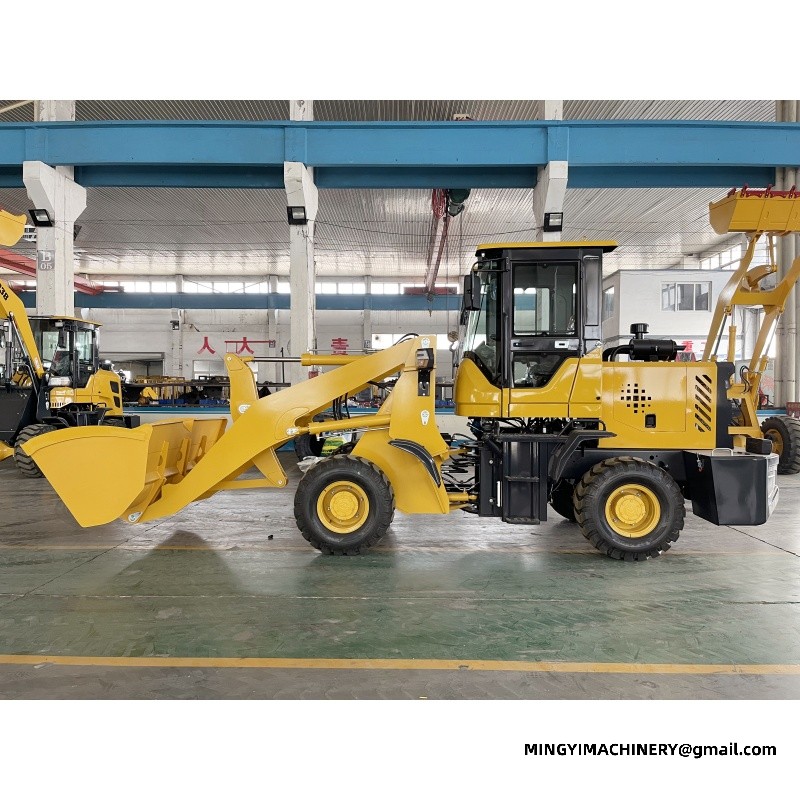
The battery is specified against the engine it has to crank: 80 Ah on the light-duty 4.5 m medium-frame wheel-side reduction wheel loader and 45 Ah (24 V) on the standard 2.4 m low-profile wheel loader. Where a build lists two figures, they belong to two engine options — a smaller capacity for the naturally aspirated unit, a larger one for the turbo — and the difference is starting torque in cold weather rather than anything you would notice in July.
For fleets shipping to cold markets, specify the larger capacity and a battery isolator; machines shipped knock-down arrive with batteries boxed and disconnected, and a machine that has sat for six weeks at anchor will not crank on a marginal battery. Check the rest of the electrical package at the same time — the 2063 pump and 25 pump circuits on the light-duty 4.5 m medium-frame wheel-side reduction wheel loader share the same harness, and a poor earth there presents as slow hydraulics rather than as an electrical fault.
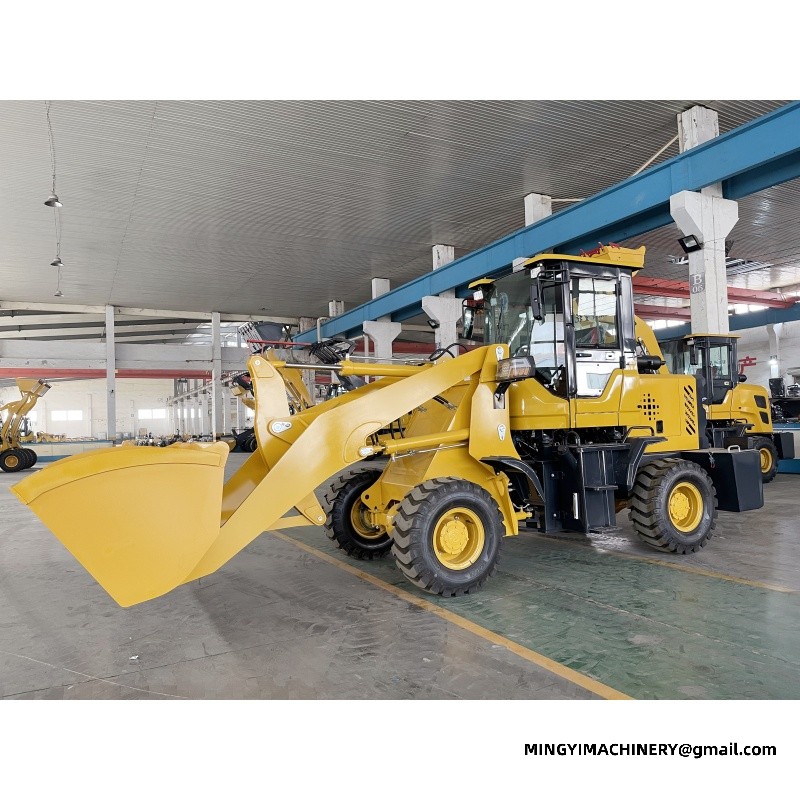
Two dimensions decide whether a loader is usable on a given site: the 4.7 m front-to-counterweight length of the light-duty 4.5 m medium-frame wheel-side reduction wheel loader against the 3.5 m of the standard 2.4 m low-profile wheel loader, and track width at 1.6 m against 1.2 m (Isuzu axle); 1.3 m (wheel-side reduction axle). Everything else on the sheet — engine, pump, cylinder bore — matters only after the machine fits.
The pairing matters too. A 0.52 m³ bucket lifted to 4.5 m on a 4.7 m footprint is a different machine in practice from a 0.3 m³ bucket at 2.4 m on 3.5 m, even where the track figures are close. Where access is tight, take the shorter machine and accept the extra pass; where the ground is open, take the longer one and take the stability it buys with the 16 mm rear hinge plate.
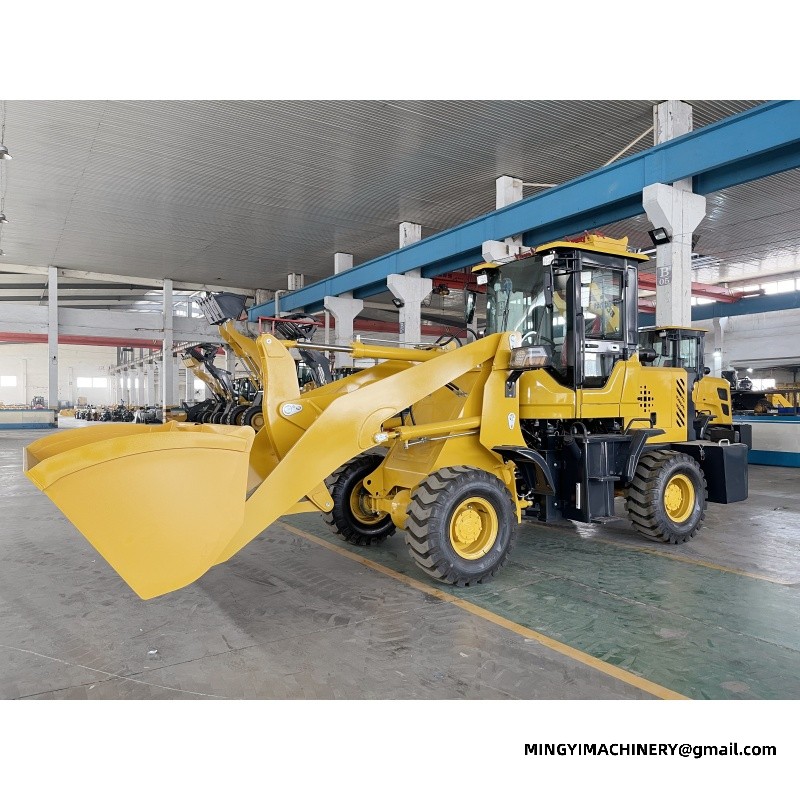
Purchase decision is the smallest of the three numbers that matter; the other two are downtime and residual value, and both are decided by the frame. A machine built with 30 mm rear hinge plates and a 45 mm cross-member, as on the light-duty 4.5 m medium-frame wheel-side reduction wheel loader, will be tight at year three in light duty. A machine with 16 mm and 16 mm, as on the standard 2.4 m low-profile wheel loader, will still be tight in heavy duty.
Fuel, tyres and filters are the predictable takes, and they scale with duty rather than with capacity. A 0.52 m³ bucket working a short cycle on a 70 L (75# large tank) tank takes less per day than a 0.3 m³ bucket on 30.8 L (48# large tank, 20.5/70-16 tyres); 24.6 L (48# small tank, 8.25-16 tyres) working a long one — and moves less material. The honest comparison is effort per tonne moved, which needs your cycle, not a brochure.
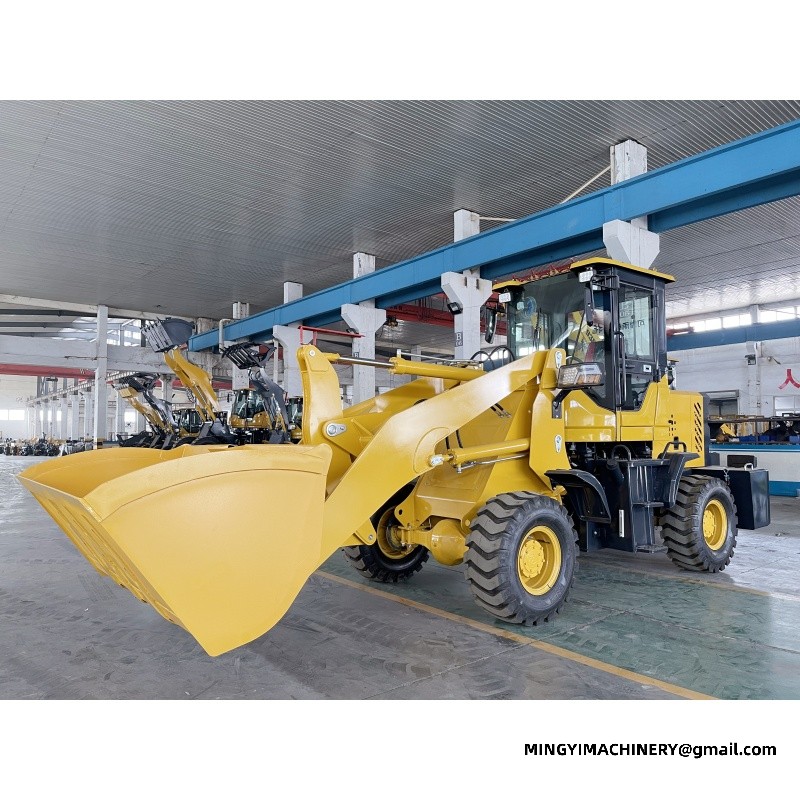
Machines ship knock-down, and rear frame width is what decides how many fit a box. Across the range that figure stays between 300 mm high x 800 mm wide and 200 mm high x 750 mm wide, which allows two to three units in a forty-foot container with booms and counterweights packed loose, tanks removed and batteries boxed disconnected.
Plan the container around the model mix rather than around a unit count. A pair of the light-duty 4.5 m medium-frame wheel-side reduction wheel loader with its 4.7 m footprint loads differently from the standard 2.4 m low-profile wheel loader at 3.5 m, and a mixed order can often be arranged to use the space better than a uniform one. Container plans are stated per order against the actual mix.
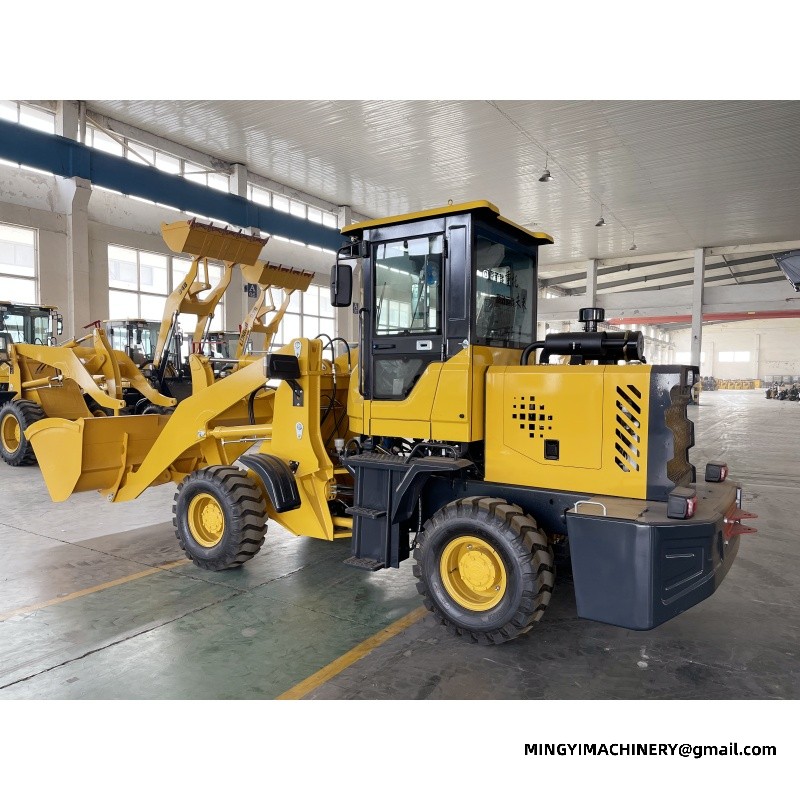
Fleet size falls out of cycle count, and cycle count falls out of bucket volume and dump height together. Take the daily tonnage, divide by what one bucket carries at 0.52 m³, and check that the receiving bodies sit under 4.5 m. If they do not, the calculation is wrong before it starts, and the standard 2.4 m low-profile wheel loader at 2.4 m is the machine the fleet actually needs.
Reserve capacity matters more than peak capacity because a fleet runs on its worst day, with one machine down and the face further away. Specifying the whole fleet on one build keeps that simple: same centre cylinder 60 / side cylinder 50, same 2063 pump, same 1.6 m, so one spare parts bin covers every machine and any operator can take any unit.
How do I keep one spares bin covering a mixed fleet?
Buy within one frame family and one engine. That keeps the 32 pump pump, the 4100 core core and the 45 Ah (24 V) battery common across every machine.
How often do hydraulic hoses need replacing?
On condition rather than on a calendar: look for cracking, rubbing and weeping at the crimps. The circuit runs centre cylinder 60 / side cylinder 50 on a 2063 pump, and a burst hose is a day while a failed pump is a week.
Can a compact wheel loader work inside a building?
Clearance and ventilation are the constraints. Lift height is 4.5 m and the core is 4100 core (490 engine); 4105 core (4102T engine), which has to reject heat into air that is not moving.
Can I order the same compact wheel loader build again next year?
Yes, if the order is written by figures rather than by name: bucket 0.38 m³, lift 3.2 m, cylinders centre cylinder 45 / side cylinder 40, pump 40 pump (490 engine); 1045 pump (4102 turbo engine). Names change; rows do not.
How far can a compact wheel loader travel under its own power?
Short moves between faces, not road haulage. The travel circuit is 316 pump and sustained high-speed running generates heat the 4100 core (490 engine); 4105 core (4102T engine) core was not sized to reject.
Which tyre fitment does a compact wheel loader use?
It follows the tank and axle specification: 70 L (75# large tank) on this build. The larger fitment goes with the larger tank and the heavier duty.
Why does my compact wheel loader wander on the road?
Worn hinge pins. Load the bucket, hold the machine on a slope and watch the joint while the steering is rocked; movement there is wear behind the 16 mm and 16 mm plates.
The range exists so that a compact wheel loader can be matched to the work rather than approximated to it. Start with dump height, check the steel, then let bucket volume follow from the material — that order gets it right more often than any other.
Planning the season around Compact Wheel Loader: Choosing Light Builds for Daily Use
Seasonal work rewards a machine that can change duty. Through the year Compact Wheel Loader: Choosing Light Builds for Daily Use may move from one task to another, and the attachment list should be chosen for the whole year rather than for the first job.
Hot, humid and dusty conditions around Compact Wheel Loader: Choosing Light Builds for Daily Use
Tropical operation is a specification question as much as a maintenance one. The cooling capacity, the sealing and the corrosion protection fitted to Compact Wheel Loader: Choosing Light Builds for Daily Use are what make the difference once the ambient temperature rises.
Pre-delivery inspection before Compact Wheel Loader: Choosing Light Builds for Daily Use leaves the shop
What the customer sees on arrival is decided before departure. The walk-around given to Compact Wheel Loader: Choosing Light Builds for Daily Use covers the same points the operator will check on day one, so there are no surprises when the crate is opened at the destination.
Contact MINGYI Machinery for the current wheel loader lineup, configuration options and a formal specification for your market. E-mail: sales@mingycn.com | LINE (ID): mingyicn
Small Wheel Loader: Light Work on Farms and Nurseries · Wheel Loader for Sale: Comparing Builds Side by Side · Wheel Loader for Construction Site: Tipper Clearance and Cycle Time · Wheel Loader








