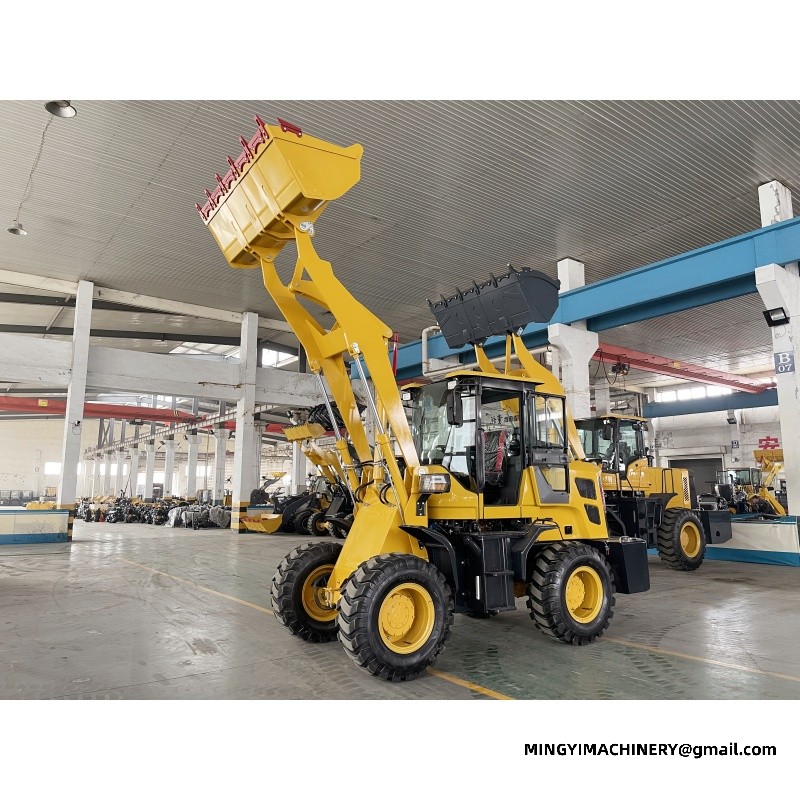
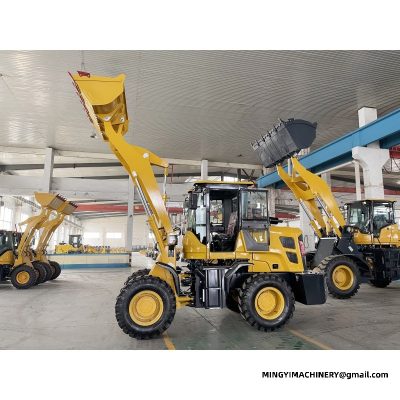
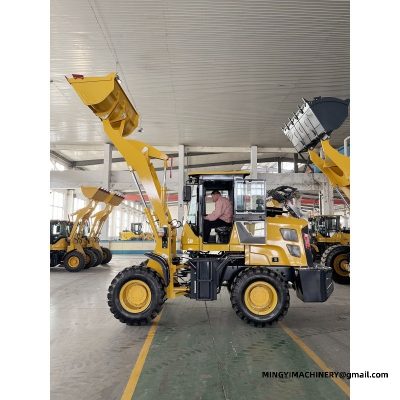
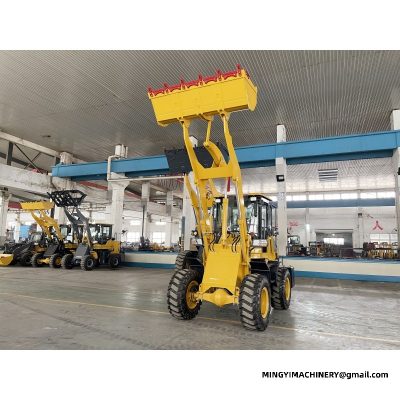
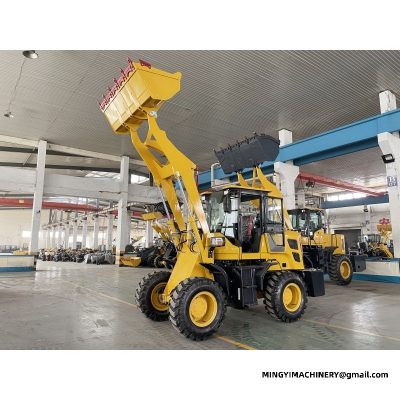
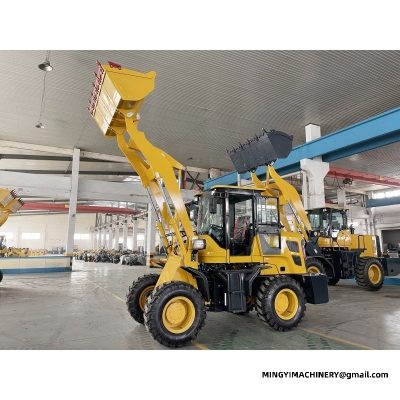
Owners judge a China wheel loader manufacturer on things a brochure never lists. Does it start on a cold morning. Does it clear the body it was bought to clear. Does the steering still feel tight after two seasons. Those outcomes are decided by published figures: battery 80 Ah, dump height 3.8 m, hinge plates 45 mm front and 30 mm rear. This page takes each of them in turn, using two builds from the range — the heavy-duty 3.8 m medium-frame wheel-side reduction wheel loader and the heavy-duty 4.2 m medium-frame wheel-side reduction wheel loader — to show what the numbers mean once the machine is working.
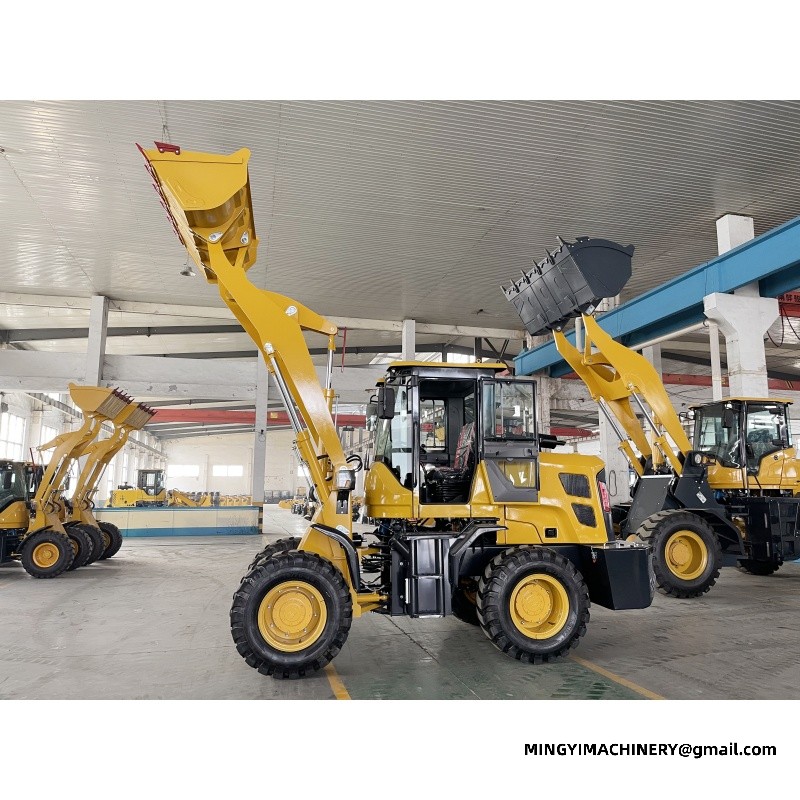
The boom is the part that turns engine power into a loaded bucket at height, and four figures describe it. Length runs 2.9 m on the heavy-duty 3.8 m medium-frame wheel-side reduction wheel loader against 3.16 m on the heavy-duty 4.2 m medium-frame wheel-side reduction wheel loader; wall thickness 30 mm against 30 mm; section width 500 mm against 520 mm; and the mount spacing — boom centre distance — 920 mm against 960 mm. Read together, those four numbers tell you more about how a machine will behave than bucket capacity ever will.
Length buys reach and takes stability, because every extra millimetre moves the load centre further from the front axle. Wall thickness resists bending; section width resists twisting. Centre distance is the one most buyers never ask about, and it is the one that decides whether the arm takes a side load cleanly or twists the pins — which matters the moment an operator digs one corner of the bucket into a heap instead of squaring up to it. On the heavy-duty 3.8 m medium-frame wheel-side reduction wheel loader the combination of a 2.9 m arm, a 30 mm wall and a 920 mm spacing is matched to a 0.65 m³ bucket, and that match is what keeps the frame tight over a full season.
A loading cycle is four movements repeated a few hundred times a shift: approach, fill, lift, dump. Each one loads a different part of the machine, and the specification that matters changes with the movement. Filling asks for bucket volume and breakout, so 0.4 m³ on the heavy-duty 3.8 m small-frame wheel-side reduction wheel loader is the first figure to read. Lifting asks for boom section and cylinder size, which is 25 mm of wall and centre cylinder 45 / side cylinder 45. Dumping asks for height over the receiving board, 3.8 m here against 4.2 m on the heavy-duty 4.2 m medium-frame wheel-side reduction wheel loader.
The approach is the movement nobody specifies for, and it is where frames age. Every run at a face loads the front hinge plate, 30 mm on this build against 20 mm at the rear; the rear plate carries the weight of the counterweight and the swing of the whole rear frame, which is why it is the heavier of the two. A 4.2 m wheelbase keeps the machine settled when the bucket meets resistance rather than air.
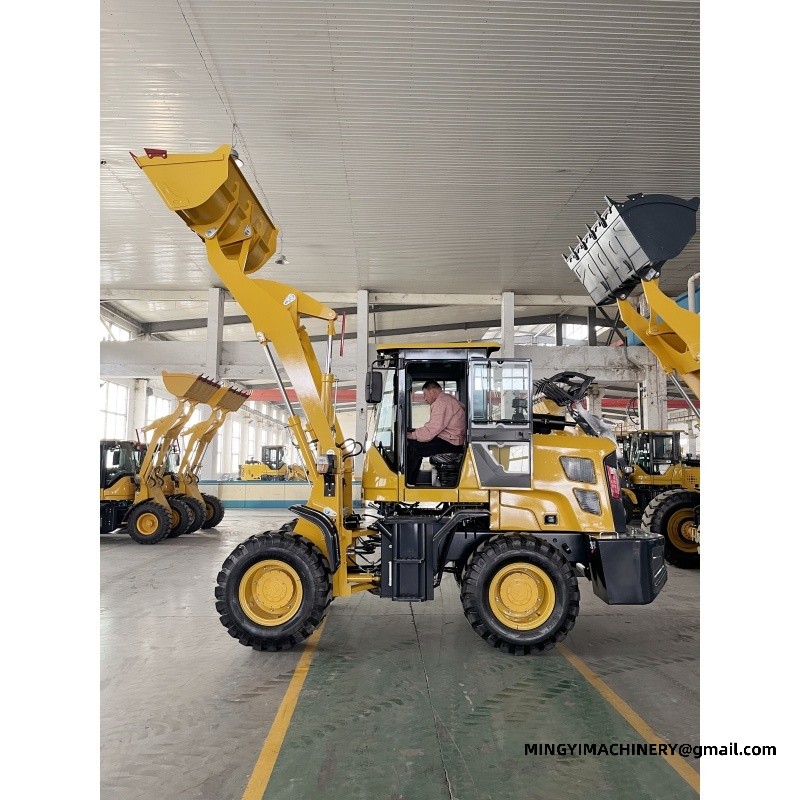
On a farm the loader is judged by whether it can get to the work. The heavy-duty 3.8 m small-frame wheel-side reduction wheel loader at 1.5 m (wheel-side reduction axle); 1.45 m (Isuzu axle) track and 4.2 m length turns in places the heavy-duty 3.8 m medium-frame wheel-side reduction wheel loader at 1.6 m and 4.55 m cannot enter. Capacity — 0.4 m³ against 0.65 m³ — is the last consideration, not the first.
Dump height still matters, because feed wagons and high-sided trailers are tall: 3.8 m on the heavy-duty 3.8 m small-frame wheel-side reduction wheel loader, 3.8 m on the heavy-duty 3.8 m medium-frame wheel-side reduction wheel loader. Measure the wagon side, then measure the shed door. Where both fit, take the larger bucket; where only one fits, take the machine that fits. Attachments specification against the boom section — 430 mm against 500 mm — so the tool carrier is decided in the same conversation.
| Specification extract — standard 2.8 m low-profile wheel loader | |
|---|---|
| Bucket capacity | 0.3 m³ |
| Dump height | 2.8 m |
| Track width | 1.2 m (Isuzu axle); 1.3 m (wheel-side reduction axle) |
| Boom arm thickness | 20 mm |
| Boom arm width | 300 mm |
| Boom arm length | 2.05 m |
| Boom arm centre distance | 680 mm |
| Cross-member thickness | 16 mm |
| Front hinge plate thickness | 16 mm |
| Rear hinge plate thickness | 16 mm |
| Rear frame section | 200 mm high x 750 mm wide |
| Hydraulic cylinders | centre cylinder 45 / side cylinder 40 |
| Fuel tank | 30.8 L (48# large tank, 20.5/70-16 tyres); 24.6 L (48# small tank, 8.25-16 tyres) |
| Battery | 45 Ah (24 V) |
| Front wheel to counterweight | 3.5 m |
| Radiator | 4100 core |
| Work pump | 32 pump |
| Travel pump | 316 pump |
Two dimensions decide whether a loader is usable on a given site: the 3.5 m front-to-counterweight length of the standard 2.8 m low-profile wheel loader against the 4.1 m of the heavy-duty 3.5 m small-frame wheel-side reduction wheel loader, and track width at 1.2 m (Isuzu axle); 1.3 m (wheel-side reduction axle) against 1.5 m (wheel-side reduction axle); 1.45 m (Isuzu axle). Everything else on the sheet — engine, pump, cylinder bore — matters only after the machine fits.
The pairing matters too. A 0.3 m³ bucket lifted to 2.8 m on a 3.5 m footprint is a different machine in practice from a 0.4 m³ bucket at 3.5 m on 4.1 m, even where the track figures are close. Where access is tight, take the shorter machine and accept the extra pass; where the ground is open, take the longer one and take the stability it buys with the 20 mm rear hinge plate.
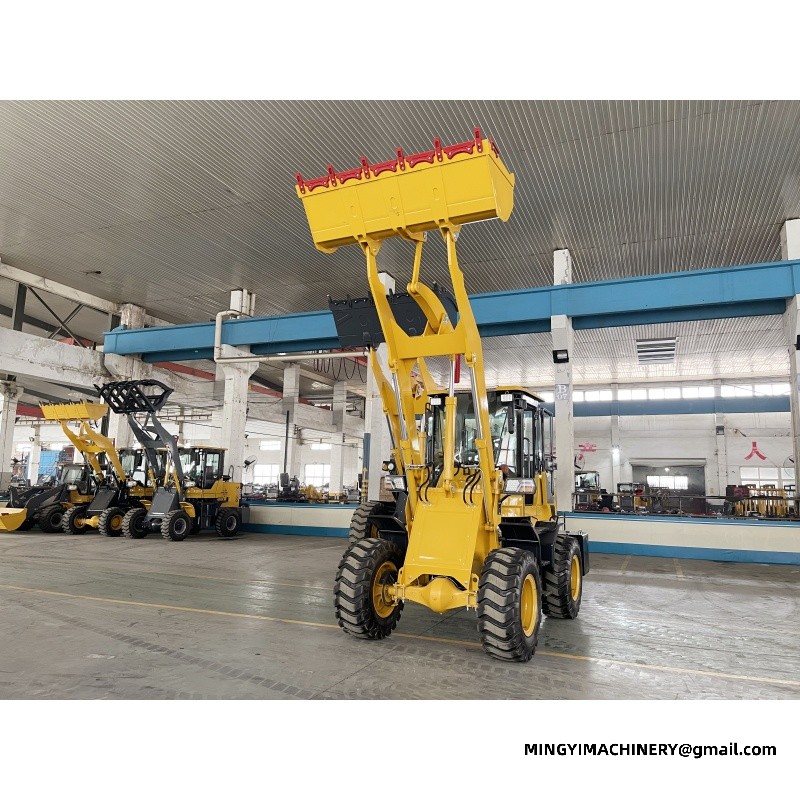
Operators describe a good machine as tight and a tired one as loose, and they are describing the hinge pins. New, the geometry is set by the plates: 30 mm forward, 20 mm aft. After a few thousand hours the geometry is set by how much those plates have allowed the pins to move, which is a function of thickness and of the 30 mm cross-member behind them.
This is why the figures are worth asking for rather than assuming. On the heavy-duty 3.5 m small-frame wheel-side reduction wheel loader the same two numbers are 30 mm and 20 mm. A machine that will spend its life on short cycles — many steering inputs per hour — should be bought on these figures rather than on bucket capacity, because capacity is simple to add and hinge life is not.
A rebuild is worth doing when the frame is sound and the running gear is not. Check the hinge plates, 30 mm and 20 mm, and the cross-member, 30 mm, for movement and cracking. If those are tight, cylinders centre cylinder 45 / side cylinder 40, pump 40 pump (490 engine); 1045 pump (4102 turbo engine) and radiator 4100 core (490 engine); 4105 core (4102T engine) are all replaceable items and the machine has years left.
If the frame has gone, it has gone: re-machining pin bores restores geometry for a while and never for long, because the 280 mm high x 800 mm wide section has been flexing the whole time. That is the point to compare against a new build rather than a repair, and it is why the plate figures are worth reading at purchase rather than at disposal.
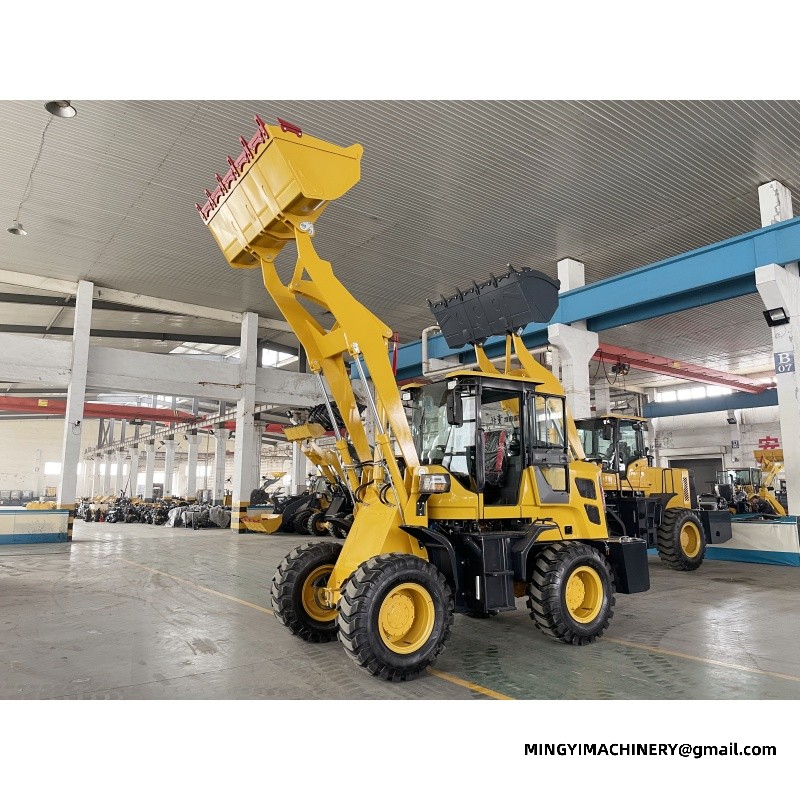
Front wheel to counterweight is the figure that decides whether a machine fits the space you have. Here it is 3.5 m on the standard 2.8 m low-profile wheel loader and 4.95 m on the heavy-duty 4.5 m medium-frame wheel-side reduction wheel loader. Measure your tightest working bay, add the swing of the bucket, and compare — because a loader that has to reverse out of every corner loses more time than a bigger bucket ever recovers.
Track width closes the same question from the side. 1.2 m (Isuzu axle); 1.3 m (wheel-side reduction axle) on this build. Where two figures are listed, the narrower belongs to the hard-ground axle, and a narrow machine on a narrow gate is often the right answer even where the work itself would suit something bigger. The rear frame section, 200 mm high x 750 mm wide, is what keeps a compact machine from feeling flimsy once it is loaded.
Daily: walk the machine, look at the ground under it, check the coolant level in the 4100 core (490 engine); 4105 core (4102T engine) package, and grease the hinge pins. Weekly: check the cylinder rods for scoring — centre cylinder 45 / side cylinder 45 — and the pins behind the 30 mm front plate for movement. Monthly: check the cross-member and rear frame, 230 mm high x 800 mm wide, for cracks at the weld toes.
None of that needs a workshop, and all of it is what keeps a machine tight. The parts that fail without warning are the ones nobody looks at: the pins, the hoses behind the 40 pump (490 engine); 1045 pump (4102 turbo engine), and the battery terminals on 60 Ah (490 engine); 80 Ah (4102 turbo engine). A ten-minute walk-round finds all three before they stop the machine.
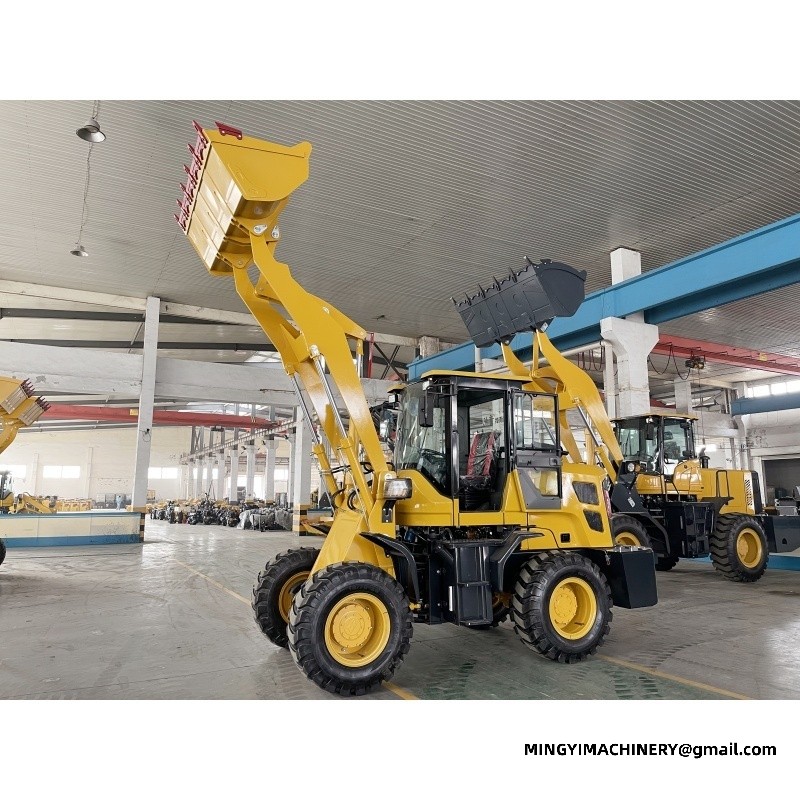
Before specifying anything else, measure the tallest body the loader will ever have to clear, at the front board, loaded, on the worst ground on site. That number decides the machine. The heavy-duty 4.5 m medium-frame wheel-side reduction wheel loader in this comparison dumps at 4.5 m; the heavy-duty 4.5 m medium-frame wheel-side reduction wheel loader at 4.5 m. The difference looks small on paper and is decisive at the face, because a loader that cannot clear the board cannot be worked around.
Once the height is settled, capacity sets the number of passes. 0.4 m³ on the heavy-duty 3.8 m small-frame wheel-side reduction wheel loader against 0.65 m³ on the heavy-duty 4.5 m medium-frame wheel-side reduction wheel loader. Multiply by your material weight per cubic metre and check it against what the chassis is carrying, not what the bucket holds — the frame, at 30 mm across the member, is the limit that arrives first.
Why does my China wheel loader manufacturer bucket only fill two-thirds?
The material is denser than the bucket was matched to. At 0.4 m³ on the heavy-duty 3.5 m small-frame wheel-side reduction wheel loader against 0.65 m³ on the heavy-duty 4.2 m medium-frame wheel-side reduction wheel loader, a smaller bucket that fills completely moves more per hour than a larger one that does not.
Why does my China wheel loader manufacturer turn over slowly on cold mornings?
Cranking capacity falls with temperature, and the rating is 80 Ah on this build. Where two engines are offered the higher rating belongs to the turbo; specify it if the machine starts cold or stops often.
How often should the hinge pins of a China wheel loader manufacturer be greased?
Measured in hours, not weeks, on short-cycle work. The pins behind the 16 mm and 16 mm plates take every steering input; dry pins are how a frame goes loose.
What should I check before the first start of a China wheel loader manufacturer?
Coolant level in the 4100 core (490 engine); 4105 core (4102T engine) package, oil level, battery charge to the 60 Ah (490 engine); 80 Ah (4102 turbo engine) rating, and a walk-round for anything loosened in transit. Then run it light for ten minutes before loading it.
How should a China wheel loader manufacturer be stored for a season?
Isolate the battery, which is rated 80 Ah, grease the pins, and protect the cylinder rods on the centre cylinder 60 / side cylinder 50. Machines stored outside suffer at the pins and the electrics.
What should an operator be shown on a new China wheel loader manufacturer?
Board clearance against the 3.5 m of lift, why the bucket should be squared to the face, and the daily walk-round. Most frame damage comes from corner-loading, not from overloading.
Which tyre fitment does a China wheel loader manufacturer use?
It follows the tank and axle specification: 30.8 L (48# large tank, 20.5/70-16 tyres); 24.6 L (48# small tank, 8.25-16 tyres) on this build. The larger fitment goes with the larger tank and the heavier duty.
Every figure stated on this page — bucket 0.65 m³, lift 3.8 m, hinge plates 45 mm and 30 mm — comes from the published build data for the heavy-duty 3.8 m medium-frame wheel-side reduction wheel loader and the heavy-duty 4.2 m medium-frame wheel-side reduction wheel loader. Send your board heights, material and shift pattern and the comparison can be run against your own numbers.
Contact MINGYI Machinery for the current wheel loader lineup, configuration options and a formal specification for your market. E-mail: sales@mingycn.com | LINE (ID): mingyicn
Wheel Loader Series: A Range Built for Daily Work · Wheel Loader Fork Attachment: Load Centres and Fork Length · Wheel Loader for Sale: Builds, Options and Container Planning · Wheel Loader









