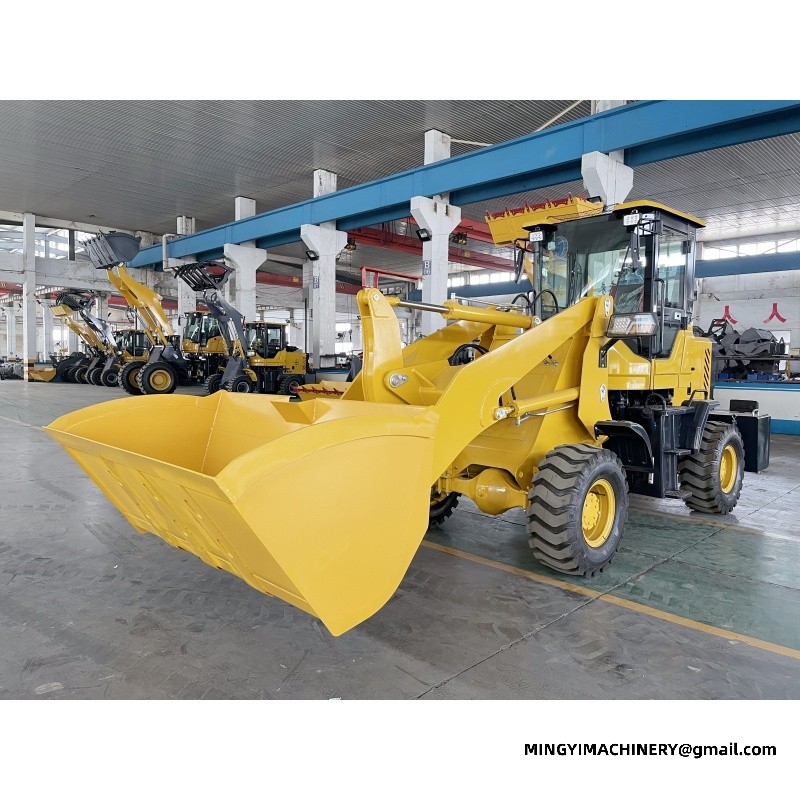
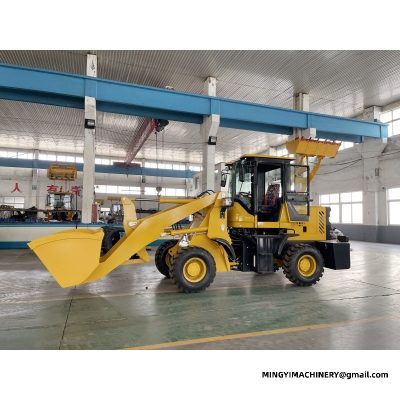
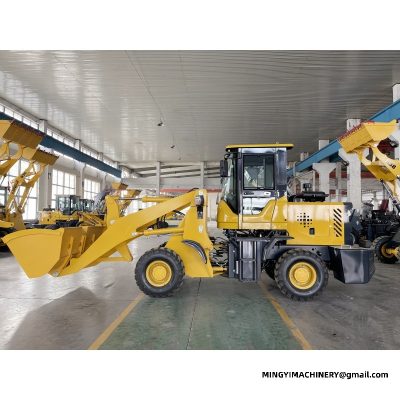
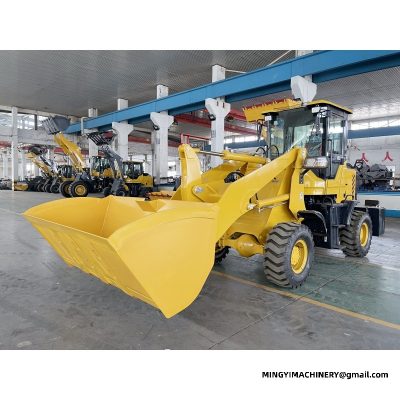
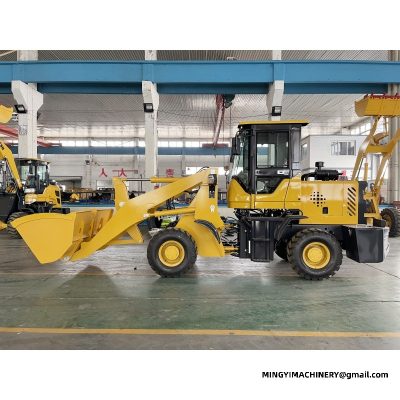
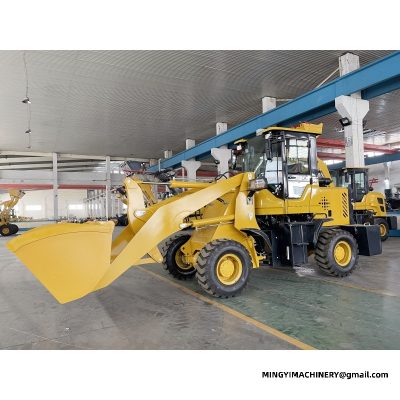
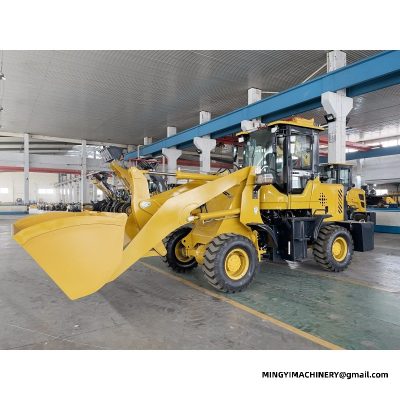
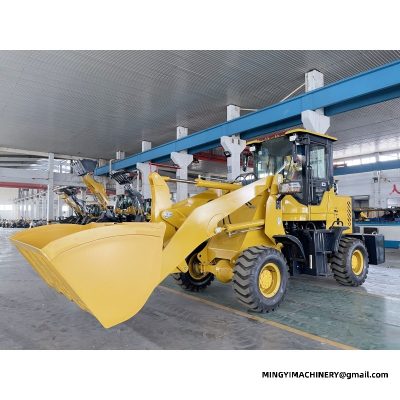
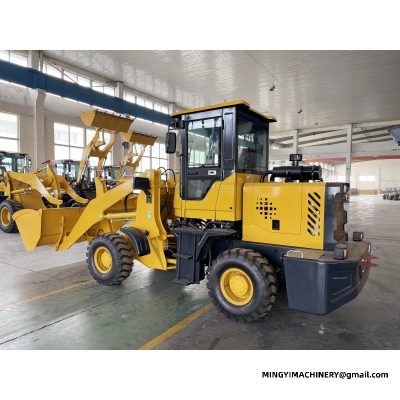
Buying a compact wheel loader on capacity alone is the most common and most lengthy mistake in this class of machine.Capacity is simple to advertise and easy to change; stability, reach and frame life are neither. The heavy-duty 3.8 m medium-frame wheel-side reduction wheel loader carries 0.65 m³ to 3.8 m on a 2.9 m boom with a 920 mm centre distance, while the heavy-duty 4.2 m medium-frame wheel-side reduction wheel loader carries 0.65 m³ to 4.2 m on 3.16 m and 960 mm. Those are the figures that decide what the machine can do on your site, and this page walks through them in the order a buyer should read them.
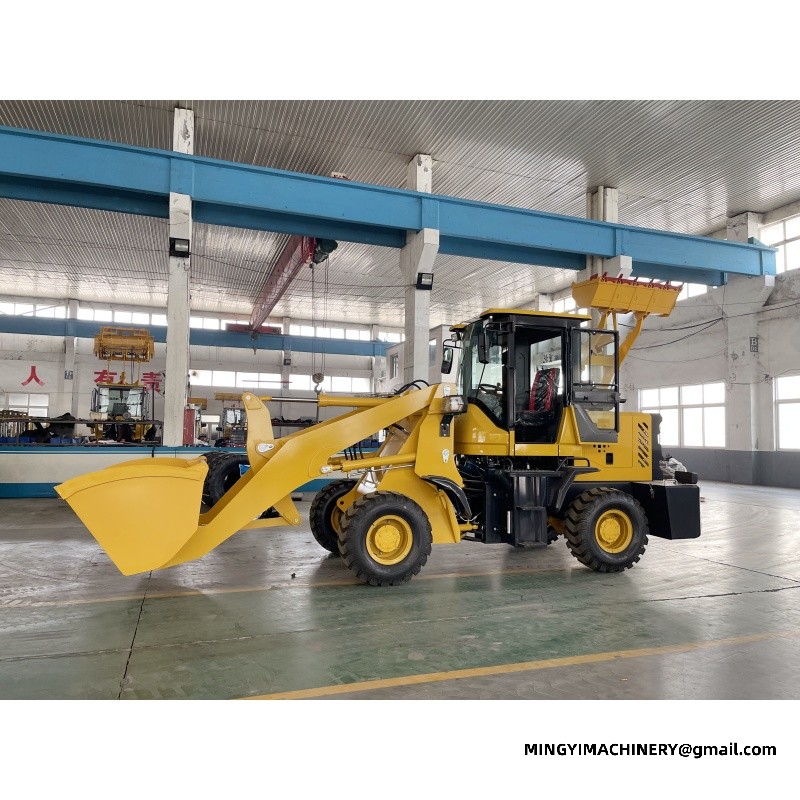
Adding a circuit after delivery is possible and never as good as specifying it at build. The pump is the constraint: 40 pump (490 engine); 1045 pump (4102 turbo engine) on this machine, 316 pump alongside it. Flow has to be shared, and a circuit added later shares it through plumbing that was not laid out for it.
The cylinders are less often the limit than people assume. centre cylinder 45 / side cylinder 45 gives the mechanical advantage; the pump gives the speed. If an attachment works but works slowly, look at flow before looking at bore. If it works but the arm twists, look at section instead: 430 mm of width and 890 mm of spacing resist that, and neither can be improved after the frame is welded.
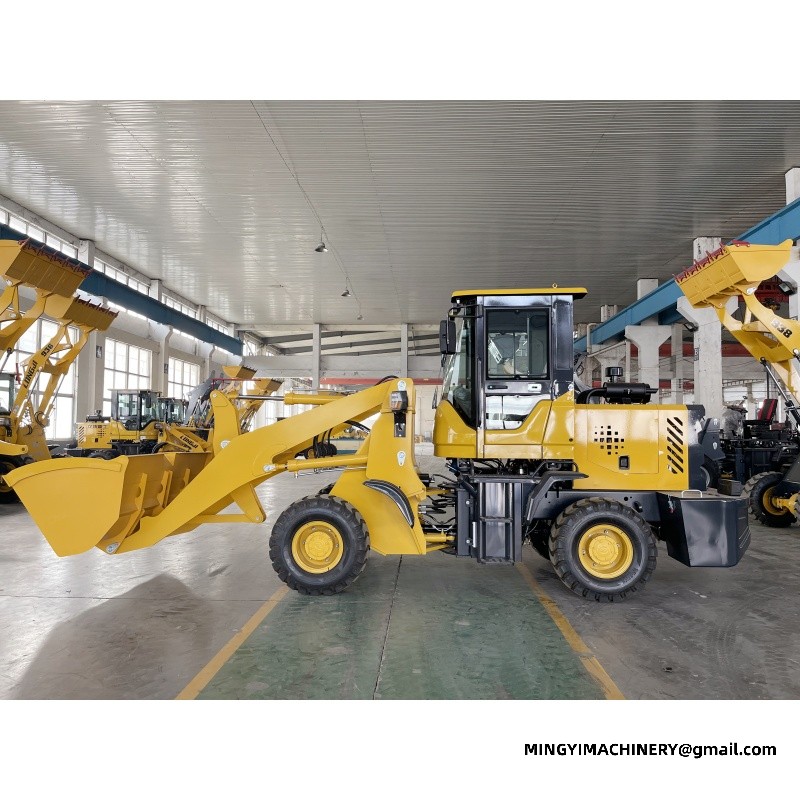
Airborne dust is the hardest thing a cooling system has to deal with, because it blocks the fin passages from the outside while the engine keeps producing heat. Core size is the buffer: 4100 core (490 engine); 4105 core (4102T engine) here against 4105 core on the heavy-duty 3.8 m medium-frame wheel-side reduction wheel loader. Screen area and access for cleaning matter as much as volume, so ask how the core is mounted before asking how big it is.
Work pumps generate heat too, not only the engine. This build runs 40 pump (490 engine); 1045 pump (4102 turbo engine) alongside 316 pump, and sustained hydraulic work in a hot climate adds load that the radiator was not sized for on a temperate machine. Where the duty is continuous rather than intermittent — a stockpile that never stops rather than a site that loads three trucks an hour — specify the larger core even if the engine is the same.
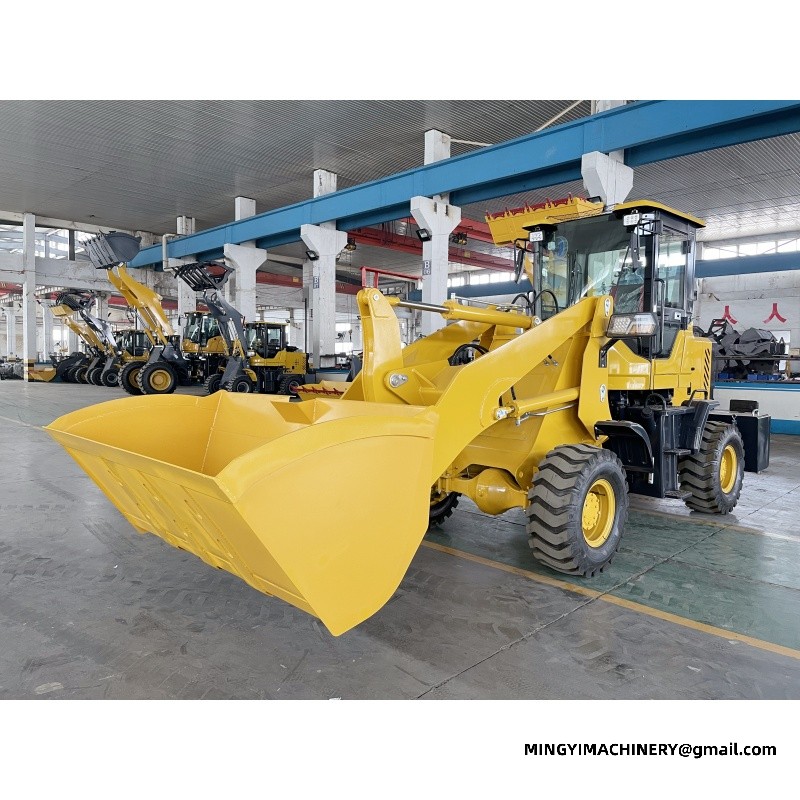
An articulated loader turns by bending in the middle, and the hinge is where that bending happens. Front plate 30 mm, rear plate 20 mm. The front is the thicker of the two on every build in the range, because it carries the boom and the payload directly, while the rear carries the engine and the counterweight through every steering movement and is sized for the twisting those movements produce rather than for the weight alone.
Pin wear is how hinges fail, and it shows up as a machine that wanders and a steering that feels vague. The cross-member is what prevents it: 30 mm holding the two sides of the frame at a fixed distance so the pins stay square. Compare 30 mm on the heavy-duty 3.5 m small-frame wheel-side reduction wheel loader and the difference in plate thickness starts to make sense — they are specified together, not separately.
| Specification extract — heavy-duty 3.2 m low-profile wheel loader | |
|---|---|
| Bucket capacity | 0.4 m³ |
| Dump height | 3.2 m |
| Track width | 1.5 m (wheel-side reduction axle); 1.45 m (Isuzu axle) |
| Boom arm thickness | 25 mm |
| Boom arm width | 430 mm |
| Boom arm length | 2.3 m |
| Boom arm centre distance | 890 mm |
| Cross-member thickness | 30 mm |
| Front hinge plate thickness | 30 mm |
| Rear hinge plate thickness | 20 mm |
| Rear frame section | 230 mm high x 800 mm wide |
| Hydraulic cylinders | centre cylinder 45 / side cylinder 45 |
| Fuel tank | 54 L (50# tank) |
| Battery | 60 Ah (490 engine); 80 Ah (4102 turbo engine) |
| Front wheel to counterweight | 4.1 m |
| Radiator | 4100 core (490 engine); 4105 core (4102T engine) |
| Work pump | 40 pump (490 engine); 1045 pump (4102 turbo engine) |
| Travel pump | 316 pump |
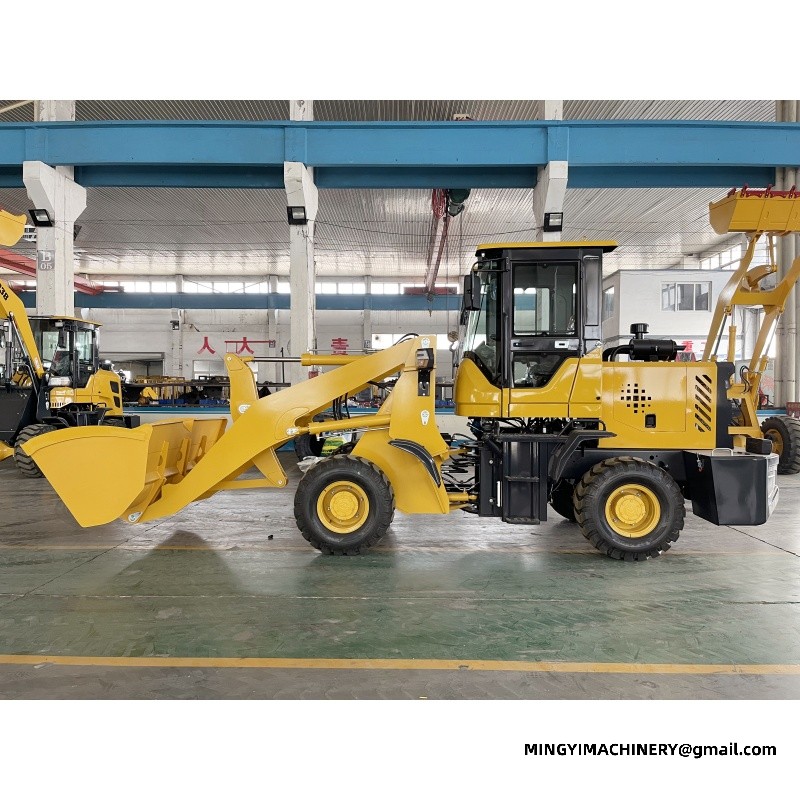
Photograph the specification plate, the cylinder markings and the frame plates on the day the machine arrives. Cylinders on this build are centre cylinder 45 / side cylinder 45; the pump is 40 pump (490 engine); 1045 pump (4102 turbo engine); the radiator is 4100 core (490 engine); 4105 core (4102T engine). Those three identify the build more reliably than any nameplate, because they are the parts that change between engine options.
Then photograph the geometry, because it is what a later claim will turn on. Dump height 3.2 m at full lift, arm length 2.3 m, spacing 890 mm, track 1.5 m (wheel-side reduction axle); 1.45 m (Isuzu axle). If a machine ever fails to clear a body it was sold to clear, those four photographs are the difference between a warranty claim and an argument.
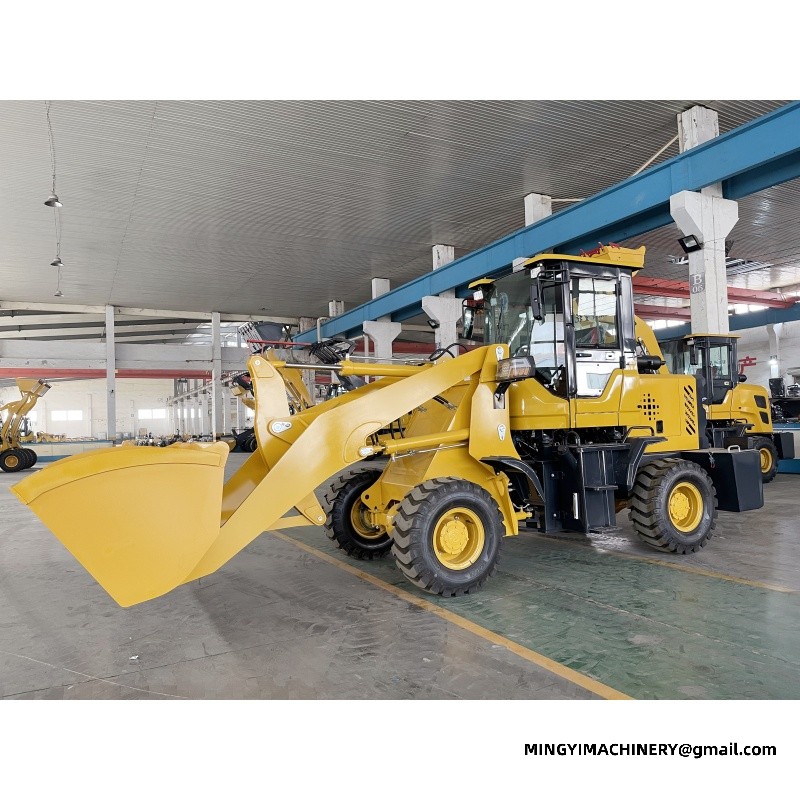
Over a full season, the differences that matter are not the ones on the sales sheet. Two machines, the heavy-duty 3.8 m small-frame wheel-side reduction wheel loader with 0.4 m³ at 3.8 m and the heavy-duty 4.2 m medium-frame wheel-side reduction wheel loader with 0.65 m³ at 4.2 m, will differ in fuel by less than they differ in uptime, and they will differ in uptime mostly because of the cooling package — 4100 core (490 engine); 4105 core (4102T engine) against 4105 core — and the frame — 20 mm against 30 mm.
plan on the duty, then check the specification supports it. A light build in a quarry is a false economy; a heavy build on a farm is money spent for nothing. Where the duty is mixed, buy the frame for the hardest week of the year and the bucket for the average one — buckets are simple, frames are not, and the 40 pump (490 engine); 1045 pump (4102 turbo engine) and 316 pump on the heavy-duty 3.8 m small-frame wheel-side reduction wheel loader will run either.
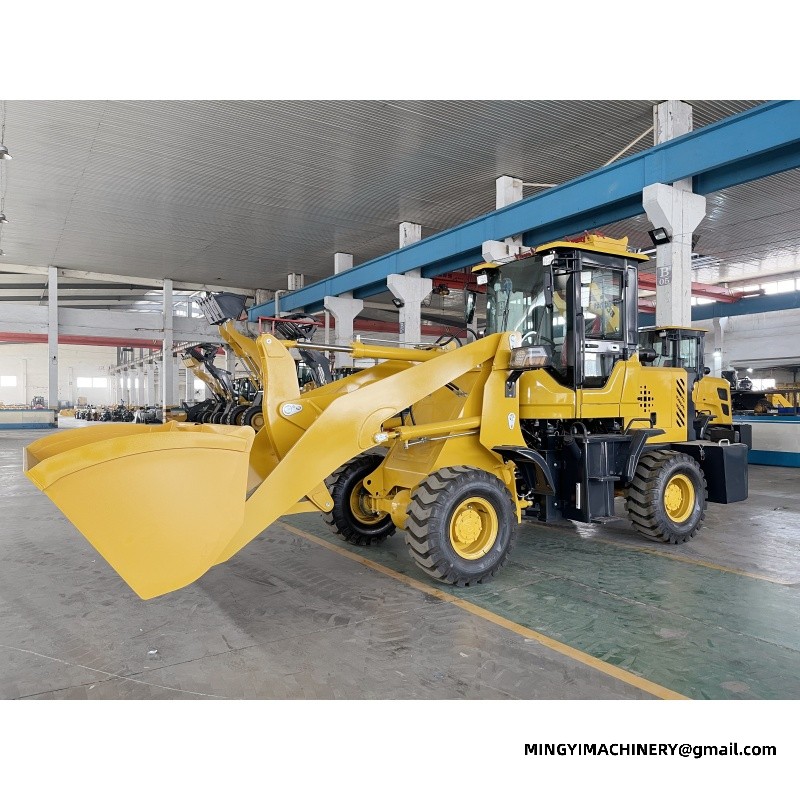
A rebuild is worth doing when the frame is sound and the running gear is not. Check the hinge plates, 30 mm and 20 mm, and the cross-member, 30 mm, for movement and cracking. If those are tight, cylinders centre cylinder 45 / side cylinder 45, pump 40 pump (490 engine); 1045 pump (4102 turbo engine) and radiator 4100 core (490 engine); 4105 core (4102T engine) are all replaceable items and the machine has years left.
If the frame has gone, it has gone: re-machining pin bores restores geometry for a while and never for long, because the 230 mm high x 800 mm wide section has been flexing the whole time. That is the point to compare against a new build rather than a repair, and it is why the plate figures are worth reading at purchase rather than at disposal.
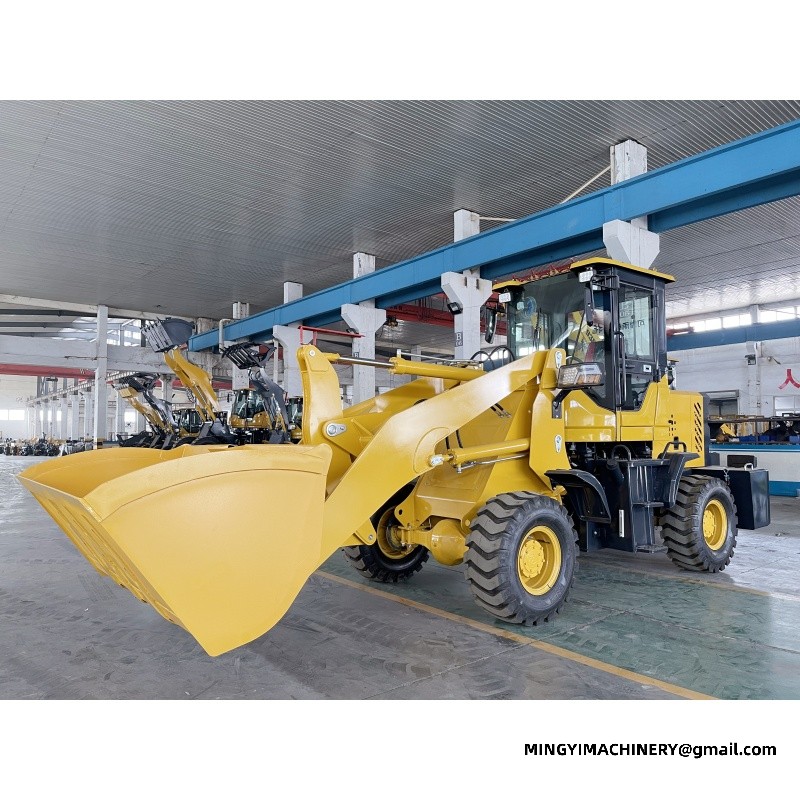
A site loader spends its life doing the same cycle, and the cycle punishes three components: the rear hinge, the cooling pack and the tyres. On the heavy-duty 3.5 m small-frame wheel-side reduction wheel loader the rear hinge is 20 mm over a 30 mm cross-member; on the heavy-duty 4.2 m medium-frame wheel-side reduction wheel loader it is 30 mm over 45 mm. Which of those you need depends on how often the machine turns under load.
Cycle time is the economics. A 0.4 m³ bucket at 3.5 m on a 2.62 m arm loaded by centre cylinder 45 / side cylinder 40 cylinders is quick in a tight site; a 0.65 m³ bucket at 4.2 m on a 3.16 m arm with centre cylinder 60 / side cylinder 50 is quicker where there is room to work. Neither is universally faster, and any supplier who claims otherwise is describing a different site from yours.
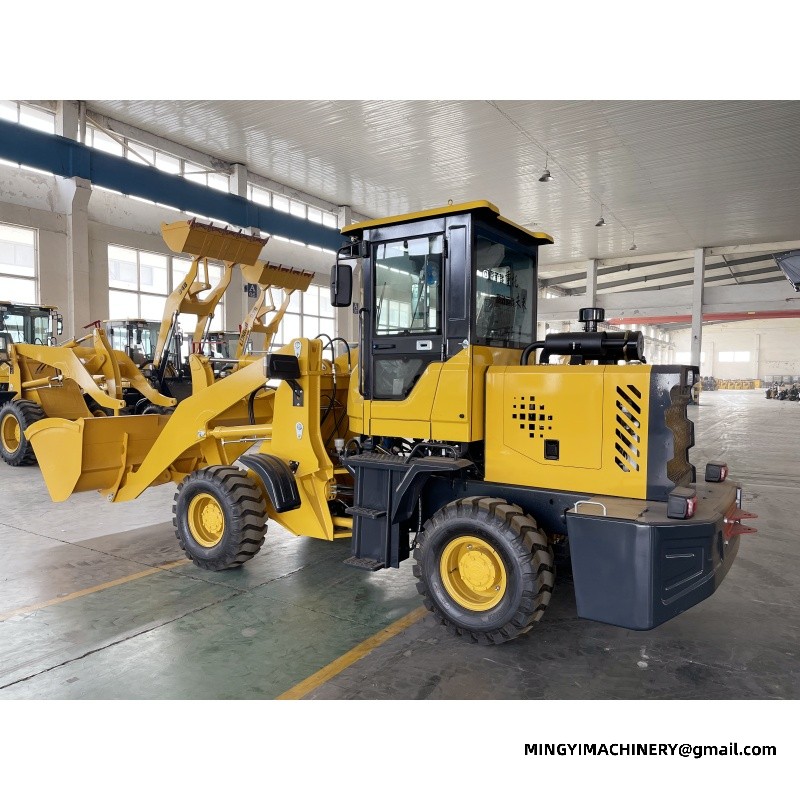
Articulated steering lets a loader turn inside its footprint, and every one of those turns is carried by two plates. Front hinge 30 mm, rear hinge 20 mm. The rear is the heavier because it carries the counterweight and the whole rear frame through every steering input.
Short wheelbase machines articulate harder and more often, which is why plate thickness matters more on a compact build, not less. At 4.1 m front wheel to counterweight and 1.5 m (wheel-side reduction axle); 1.45 m (Isuzu axle) of track, this machine will spend its life turning in tight spaces; a 30 mm cross-member is what keeps those plates in line while it does.
Stockpile work is the hardest duty a loader sees: the machine drives into a face, breaks out, reverses under load and turns, all day. The components that govern life are the rear hinge plate, the cross-member and the cooling pack. On the heavy-duty 3.2 m low-profile wheel loader those are 20 mm and 30 mm with 4100 core (490 engine); 4105 core (4102T engine); on the heavy-duty 3.2 m small-frame wheel-side reduction wheel loader they are 20 mm and 30 mm with 4100 core (490 engine); 4105 core (4102T engine).
Traction is the second half. A stockyard floor is rarely compacted and often rutted, which argues for the wheel-side reduction axle and the 1.5 m (wheel-side reduction axle); 1.45 m (Isuzu axle) track rather than the lighter axle. Add the raised radiator core where the material is fine and dry — cement raw meal, lime, crushed fines — because a blanked core stops the machine in the middle of a shift, and a stopped loader stops everything behind it.
Can a compact wheel loader be built with a non-standard bucket?
Yes, provided the volume suits the frame: the 0.65 m³ bucket on the heavy-duty 3.8 m medium-frame wheel-side reduction wheel loader and the 0.65 m³ bucket on the heavy-duty 4.2 m medium-frame wheel-side reduction wheel loader are the engineered sizes, and heavier material means a smaller bucket.
How is the counterweight mounted on a compact wheel loader?
Bolted to the rear frame section, 280 mm high x 800 mm wide on the heavy-duty 3.8 m small-frame wheel-side reduction wheel loader, rather than hung off brackets. Bracket-mounted ballast is what cracks under daily face work.
How does a compact wheel loader cope with dust?
Specify the raised core: 4105 core on the heavy-duty 3.8 m medium-frame wheel-side reduction wheel loader against 4105 core on the heavy-duty 4.2 m medium-frame wheel-side reduction wheel loader, and blow the fins out at the end of every shift in fines or grain.
Can a compact wheel loader work indoors?
The low-profile builds can, where height and footprint allow: 4.55 m front-to-counterweight length and 1.6 m track on the heavy-duty 3.8 m medium-frame wheel-side reduction wheel loader. Ventilation is the other constraint to check.
What radiator comes with this compact wheel loader build?
4100 core (490 engine); 4105 core (4102T engine) on the heavy-duty 3.8 m small-frame wheel-side reduction wheel loader and 4105 core on the heavy-duty 4.5 m medium-frame wheel-side reduction wheel loader. Where a build offers two engines, the raised core serves the turbo and is the one to specify for dusty work.
How much reach does the boom of a compact wheel loader give?
Boom length is 2.9 m on the heavy-duty 3.8 m medium-frame wheel-side reduction wheel loader and 3.16 m on the heavy-duty 4.2 m medium-frame wheel-side reduction wheel loader. Length buys reach and takes stability, so match it to the height you actually have to clear.
How do I verify the build of a compact wheel loader on delivery?
Five figures against the published table: boom wall 30 mm, boom width 500 mm, front hinge 45 mm, rear hinge 30 mm and cross-member 45 mm.
Whether the duty is farm, site or stockpile, the compact wheel loader choice comes back to ground, board height and cycle count. Tell us those three and the build follows: axle, radiator, cylinder set and the 0.65 m³ or 0.65 m³ bucket to suit.
Planning the season around Compact Wheel Loader: Choosing Between the Two Entry Builds
Seasonal work rewards a machine that can change duty. Through the year Compact Wheel Loader: Choosing Between the Two Entry Builds may move from one task to another, and the attachment list should be chosen for the whole year rather than for the first job.
Moving Compact Wheel Loader: Choosing Between the Two Entry Builds between sites
A machine that works on one site still has to reach the next. The overall dimensions and the operating weight of Compact Wheel Loader: Choosing Between the Two Entry Builds decide what trailer or truck is needed, and that decision belongs before the job is booked.
Contact MINGYI Machinery for the current wheel loader lineup, configuration options and a formal specification for your market. E-mail: sales@mingycn.com | LINE (ID): mingyicn
Small Wheel Loader: Light Builds for Farms and Nurseries · Wheel Loader for Sale: Builds, Options and Container Planning · Construction Wheel Loader: Keeping a Site Cycle Moving · Loaders








