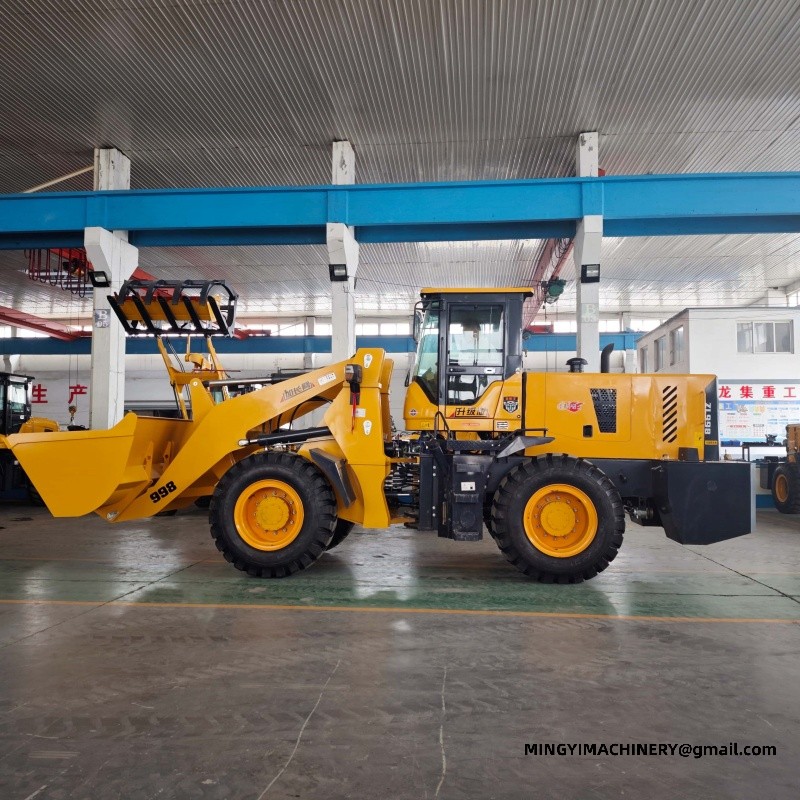
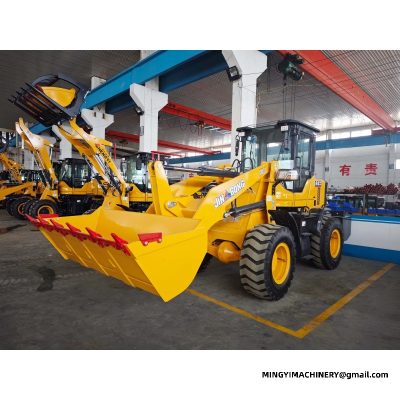
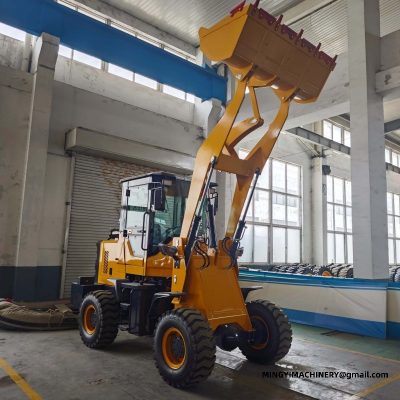
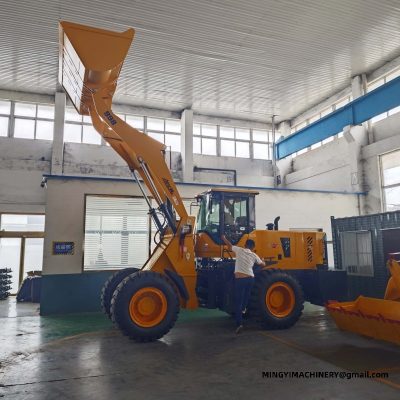
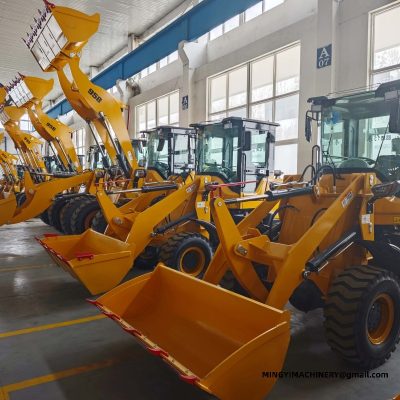
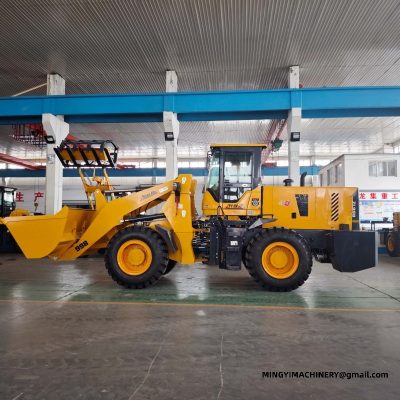
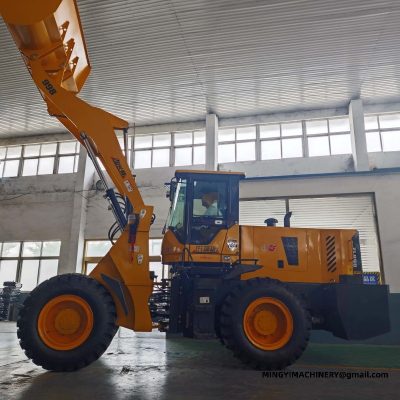
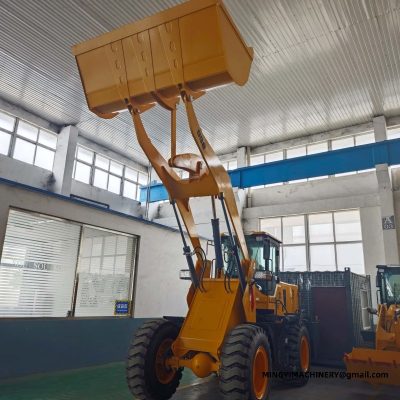
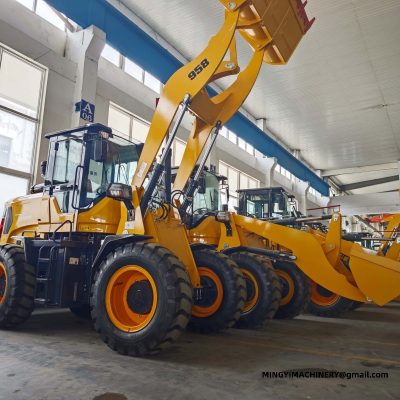
Buying a construction wheel loader is mostly deciding what you are willing to give up.Reach takes stability, capacity takes weight, speed takes heat, and a longer arm loads the hinge harder on every pass. The range publishes each of those trade-offs, so the decision can be made deliberately. Taking the light-duty 4.2 m medium-frame wheel-side reduction wheel loader — 0.52 m³ bucket, 4.2 m of lift, 45 mm cross-member — against the light-duty 4.5 m medium-frame wheel-side reduction wheel loader at 0.52 m³, 4.5 m and 45 mm, this page shows what each choice buys and what it takes.
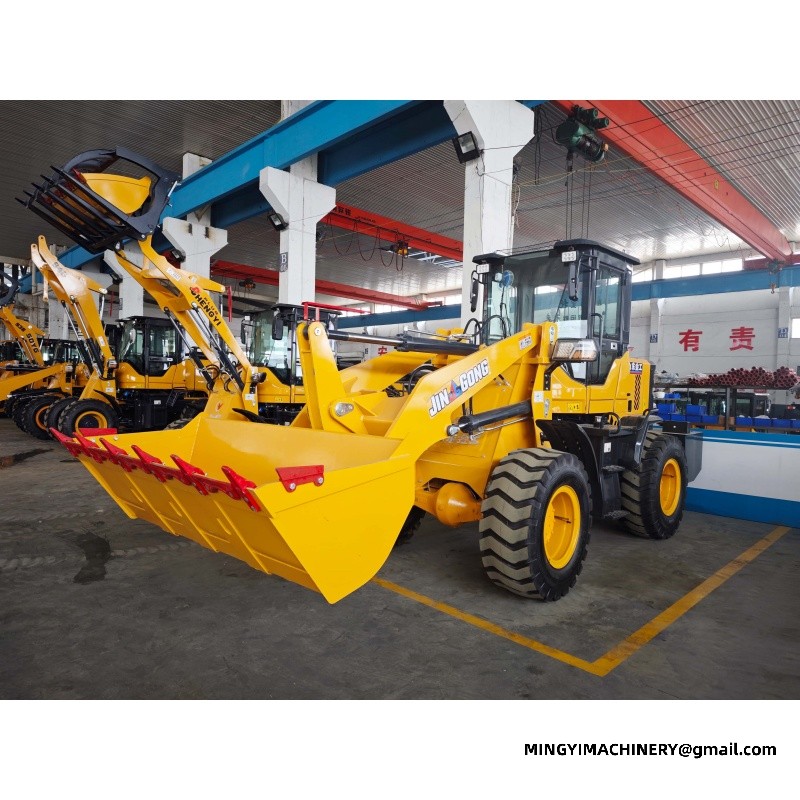
A boom is a beam, and a beam is specified by length, section and material thickness. On the light-duty 4.2 m medium-frame wheel-side reduction wheel loader that means 2.9 m long, 450 mm wide and 30 mm thick, mounted on a 900 mm centre distance. On the light-duty 4.5 m medium-frame wheel-side reduction wheel loader the same three figures are 3.35 m, 450 mm and 30 mm on a 960 mm spacing. Those six numbers decide breakout behaviour, side-load tolerance and how the machine feels on the last metre of lift.
The practical test is simple. If your day is loose material on level ground, a shorter arm on a tight machine will out-cycle a longer one, because every millimetre of reach is travel time. If your day is faces, banks and truck loading, the longer arm of the two — 3.35 m at 4.5 m — earns its keep, provided the 30 mm wall and 450 mm section are there to carry it. Ask which bucket the boom was engineered around — 0.52 m³ on the light-duty 4.2 m medium-frame wheel-side reduction wheel loader, 0.52 m³ on the light-duty 4.5 m medium-frame wheel-side reduction wheel loader — and you will know whether the arm and the frame were designed together.
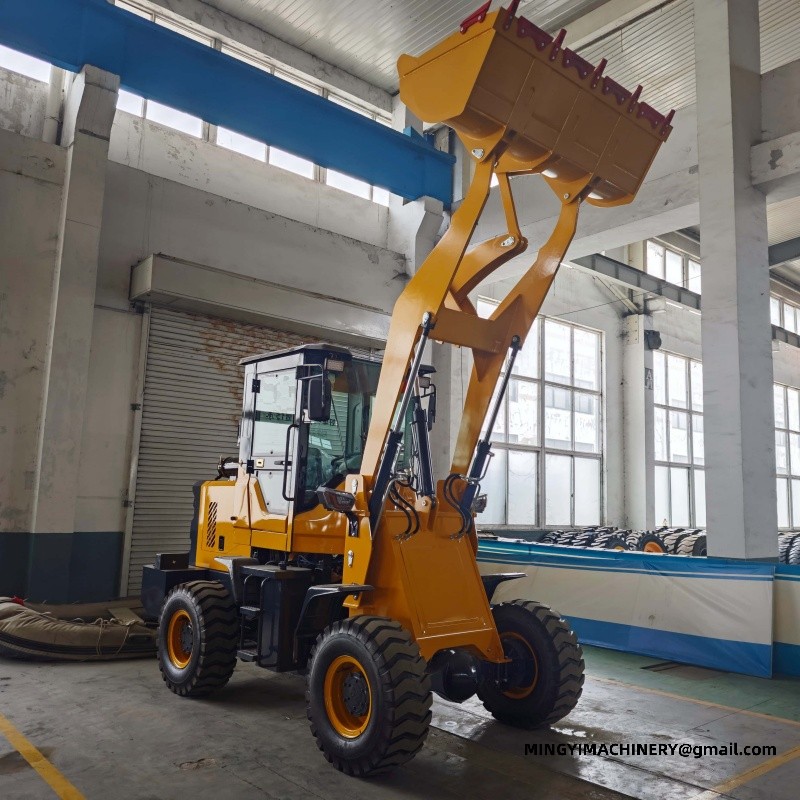
A battery specification is really an engine specification in disguise. 60 Ah (490 engine); 80 Ah (4102 turbo engine) tells you what the engine needs to turn over, and where two figures are listed it tells you the build is offered with more than one engine. The larger figure is the turbo; the smaller, the naturally aspirated option.
Match that to how the machine will be used. Continuous duty — one start, one long shift — is easy on a battery. Intermittent duty — yard work where the engine is stopped every time the operator gets out — is the hard case, and it is where the higher rating earns its keep. The rest of the electrical load is modest, so cranking is what the 60 Ah (490 engine); 80 Ah (4102 turbo engine) figure is really buying.
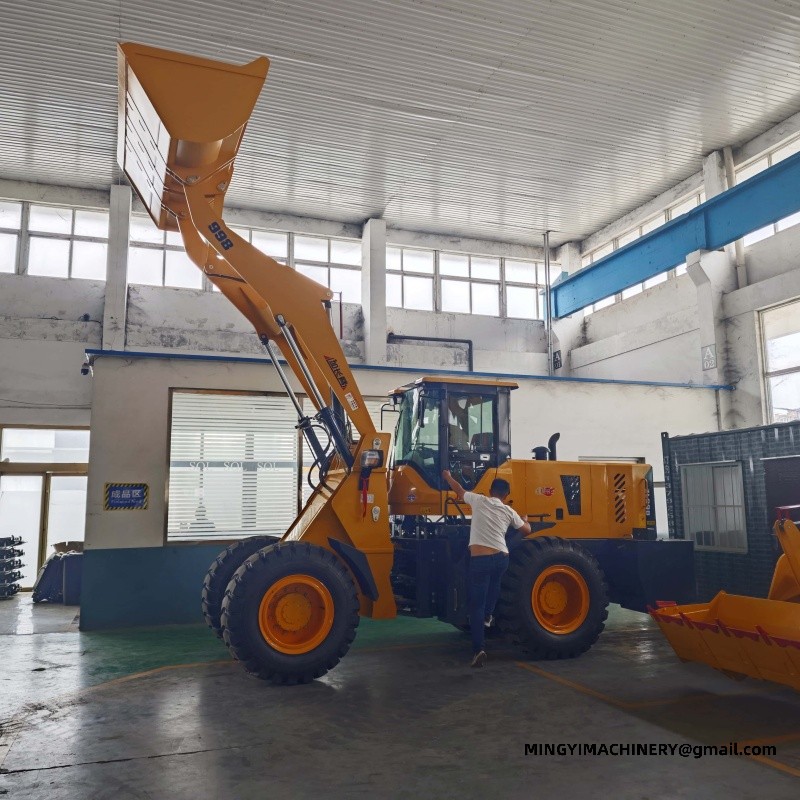
Operators get blamed for slow cycles that were decided in the frame shop. Where the lift is long, the pump and the cylinders set the pace: this build runs 40 pump (490 engine); 1045 pump (4102 turbo engine) with centre cylinder 45 / side cylinder 40. Where the run between face and truck is long, travel matters more, and that is the 316 pump and the 4.1 m wheelbase. Where the heap is packed, breakout matters most, and breakout comes from boom wall, 25 mm, working against bucket width.
Compare two builds on the same heap and the difference shows up as a few seconds a pass. The light-duty 4.2 m medium-frame wheel-side reduction wheel loader carries 0.52 m³ against 0.38 m³ on the light-duty 4.2 m small-frame wheel-side reduction wheel loader, and lifts to 4.2 m against 4.2 m. Bigger is not automatically faster: a bucket that fills completely in two passes beats one that fills partly in three, and the frame that stays tight keeps doing it in month thirty.
| Reference specification — light-duty 4.2 m small-frame wheel-side reduction wheel loader | |
|---|---|
| Bucket capacity | 0.38 m³ |
| Dump height | 4.2 m |
| Track width | 1.5 m (wheel-side reduction axle); 1.45 m (Isuzu axle) |
| Boom arm thickness | 25 mm |
| Boom arm width | 370 mm |
| Boom arm length | 3.15 m |
| Boom arm centre distance | 890 mm |
| Cross-member thickness | 25 mm |
| Front hinge plate thickness | 25 mm |
| Rear hinge plate thickness | 20 mm |
| Rear frame section | 280 mm high x 800 mm wide |
| Hydraulic cylinders | centre cylinder 45 / side cylinder 40 |
| Fuel tank | 64.7 L (75# small tank) |
| Battery | 60 Ah (490 engine); 80 Ah (4102 turbo engine) |
| Front wheel to counterweight | 4.1 m |
| Radiator | 4100 core (490 engine); 4105 core (4102T engine) |
| Work pump | 40 pump (490 engine); 1045 pump (4102 turbo engine) |
| Travel pump | 316 pump |
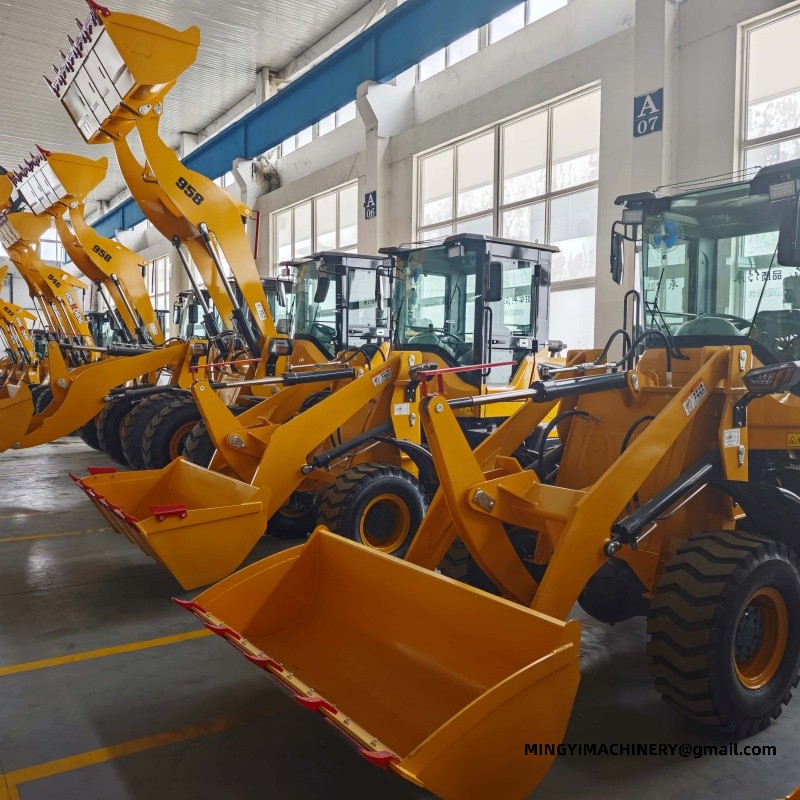
On broken ground the rear frame takes the twisting. Cabin and counterweight sit at one end, the articulation joint at the other, and every rut loads the section between them. Here that section is 280 mm high x 800 mm wide, and it is worth reading as a beam: the height resists vertical bending, the width resists twist.
The cross-member is the other half of the same job. 25 mm on the light-duty 3.5 m small-frame wheel-side reduction wheel loader against 25 mm on the light-duty 3.8 m small-frame wheel-side reduction wheel loader. Thicker steel there means the mounting faces stay aligned through seasons of flexing, which is what keeps the rear hinge pin, at 14 mm, from wearing oval. Frames rarely break; they go loose, and looseness starts at the pins.
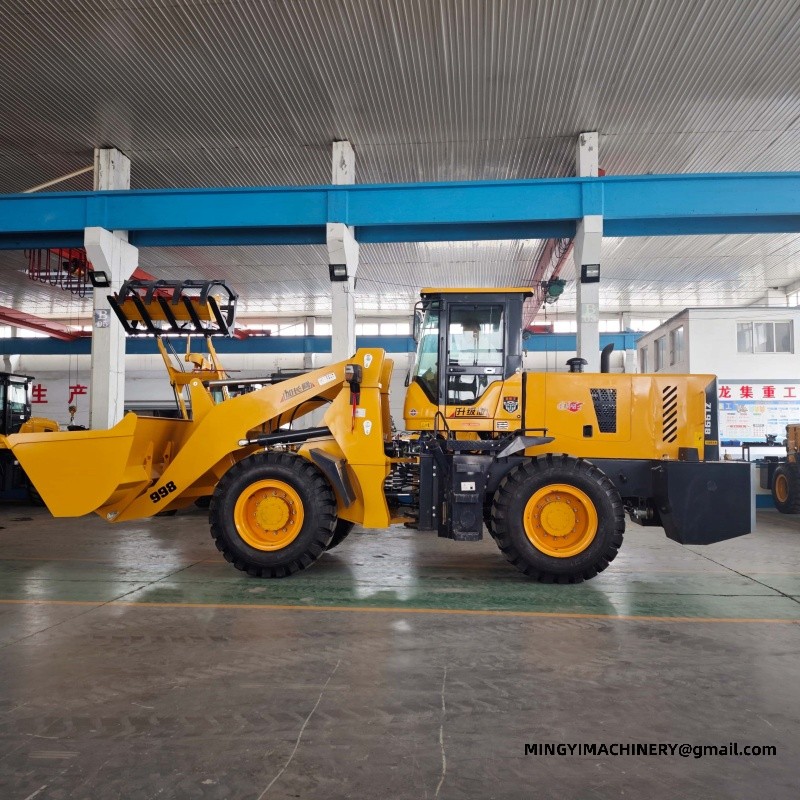
When a loaded machine turns, the load does not go straight down through the hinge. It goes through the plates at an angle, and the rear frame takes the twist. Rear section here is 280 mm high x 800 mm wide; cross-member 25 mm; rear hinge plate 14 mm. Read those three together and you have the answer to how a frame behaves when it is both loaded and turning.
The front plate, at 25 mm, is the thicker of the pair, and the boom ahead of it is designed to give way first anyway: the bucket hits the ground, the arm takes the shock, and the cylinders at centre cylinder 45 / side cylinder 40 absorb what is left. That is the intended load path. Protecting it means protecting the pins, and protecting the pins means the cross-member stays at the thickness it was built with.
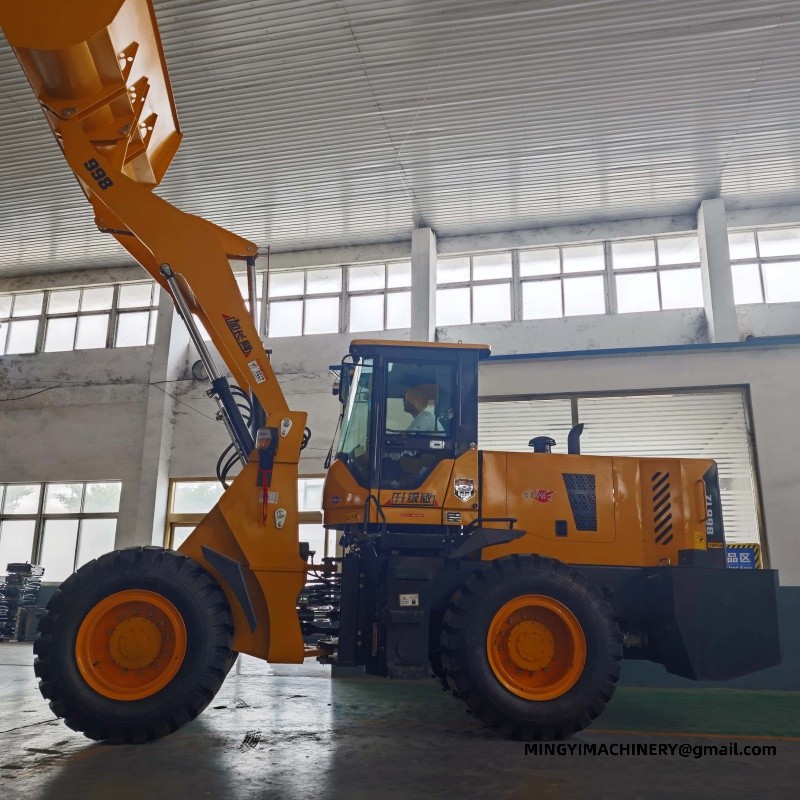
Lift and tilt come from a cylinder set and a pump pair, and both are specified per build. The light-duty 4.2 m medium-frame wheel-side reduction wheel loader runs centre cylinder 60 / side cylinder 50 with a 2063 pump work pump and a 25 pump travel pump; the light-duty 4.5 m medium-frame wheel-side reduction wheel loader runs centre cylinder 60 / side cylinder 50 with a 2063 pump work pump and a 25 pump travel pump. Splitting lift from travel is what keeps boom speed up while the machine is climbing a ramp loaded.
Cycle time is a product, not a published figure: bucket fill, lift height, travel distance and the operator's line all move it. What you can compare honestly is the hardware behind it. A centre cylinder 60 / side cylinder 50 set working a 2.9 m arm to 4.2 m is a different proposition from a centre cylinder 60 / side cylinder 50 set working 3.35 m to 4.5 m. On a short haul the smaller combination wins; over a longer push, or where the bucket is digging rather than shovelling, the larger bore and the 960 mm centre distance earn back the extra seconds of lift.
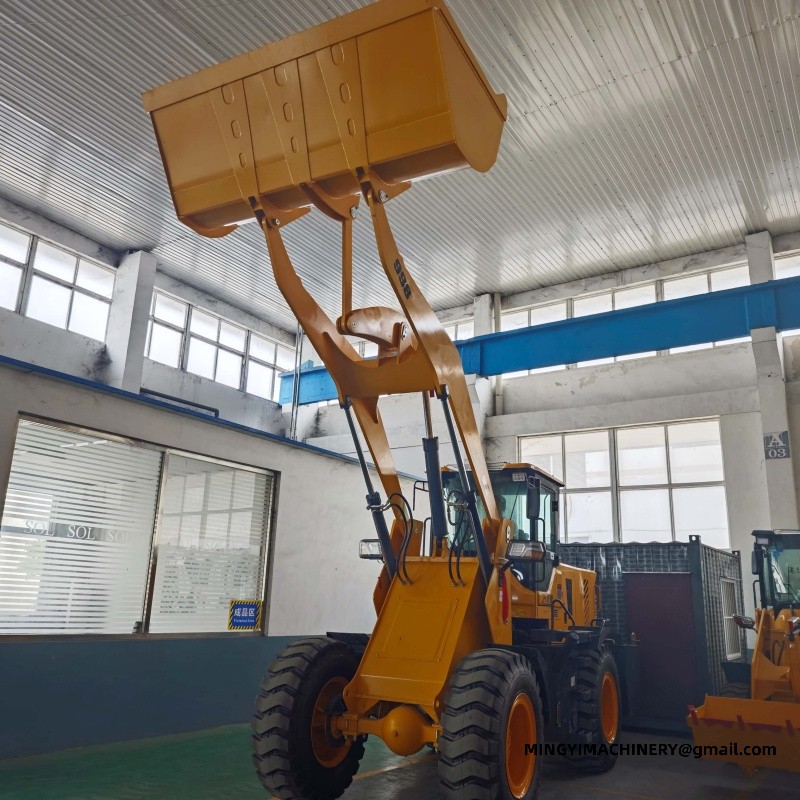
A boom that lifts slowly is usually a flow question, not a force question. The cylinders on this build are centre cylinder 45 / side cylinder 40 and the pump is 40 pump (490 engine); 1045 pump (4102 turbo engine); if lift is slow but breakout is normal, look at flow before looking at the cylinders. If breakout is weak as well, look at pressure.
Before either, rule out the simple causes: a blocked return filter, a low oil level, a suction leak, or a relief valve that has been tampered with to make a weak machine feel strong. Raising relief pressure above the setting the 25 mm wall and 25 mm cross-member were specified for is how frames get bent, and it is the most common fault found on machines that arrived second-hand.
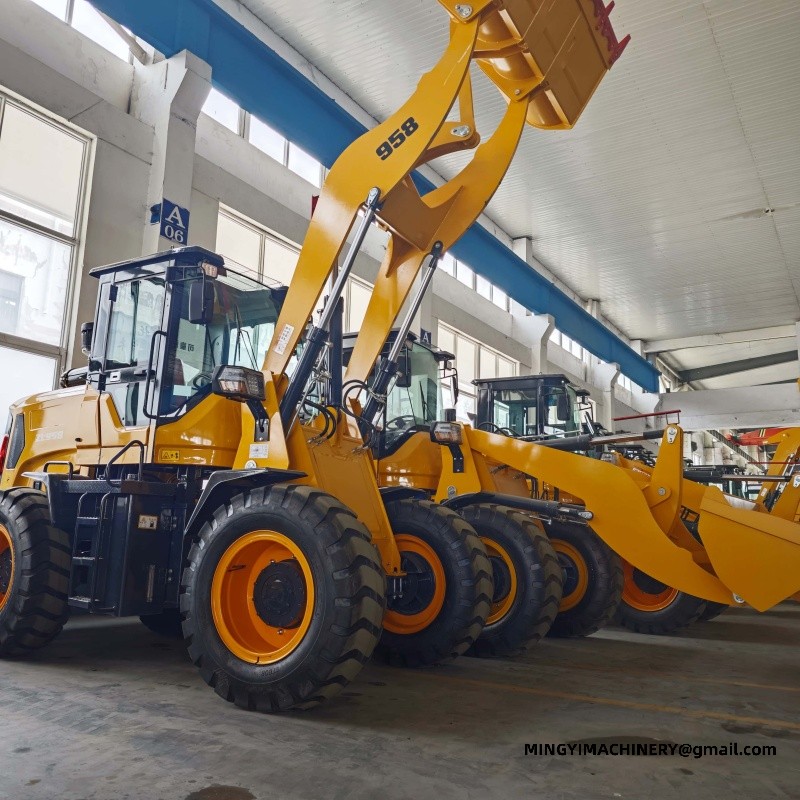
A loader standing idle while a truck reverses is the most common waste on a site, and it is usually a layout problem rather than a machine problem. What the machine contributes is turn radius and visibility, and both come out of the dimensions: 3.8 m from front wheel to counterweight, 1.5 m (wheel-side reduction axle); 1.45 m (Isuzu axle) of track, and a rear frame section of 280 mm high x 800 mm wide. A shorter machine turns inside its own length and works a tighter bay.
The other half is dump geometry. With 3.2 m of clearance and a 2.3 m arm, the light-duty 3.2 m small-frame wheel-side reduction wheel loader can stand back from the body and still place material where the driver wants it, which is safer than crowding the board. The light-duty 3.5 m small-frame wheel-side reduction wheel loader reaches 3.5 m with a 2.62 m arm; on a narrow bay the shorter of the two may be the faster machine even if it holds less.
Should I go up a bucket size on a construction wheel loader?
Only if the material is light enough to fill it. 0.3 m³ against 0.38 m³ looks like a gain on paper and is a loss on dense material, and the extra weight lands on the hinge.
How do I clean the radiator on a construction wheel loader working in dust?
From the clean side outwards, against normal airflow, so debris comes out rather than being pushed deeper. The core on this build is 4100 core (490 engine); 4105 core (4102T engine); blocked fins are the usual cause of gradual power loss.
Can a construction wheel loader be used with forks?
Yes, and the load centre moves forward, so capacity drops. Check the boom section, 370 mm wide with 890 mm of spacing, before hanging a long carriage off it.
How does wet ground change how a construction wheel loader is used?
Rolling resistance rises, so wheel spin and driveline load rise with it. Track is 1.2 m (Isuzu axle); 1.3 m (wheel-side reduction axle), and the hub-reduction option is the one for soft ground.
How often should the hinge pins of a construction wheel loader be greased?
Measured in hours, not weeks, on short-cycle work. The pins behind the 25 mm and 20 mm plates take every steering input; dry pins are how a frame goes loose.
Can I order the same construction wheel loader build again next year?
Yes, if the order is written by figures rather than by name: bucket 0.38 m³, lift 3.2 m, cylinders centre cylinder 45 / side cylinder 40, pump 40 pump (490 engine); 1045 pump (4102 turbo engine). Names change; rows do not.
What should an operator be shown on a new construction wheel loader?
Board clearance against the 3.2 m of lift, why the bucket should be squared to the face, and the daily walk-round. Most frame damage comes from corner-loading, not from overloading.
Keep this page against the delivery paperwork. Bucket 0.52 m³, lift 4.2 m, track 1.6 m and cylinders centre cylinder 60 / side cylinder 50 are the four rows that settle any later question about what was actually ordered.
Handover and getting familiar with Construction Wheel Loader: Keeping a Site Cycle Moving
The first day with a new machine sets the pattern for the next five years. Handover for Construction Wheel Loader: Keeping a Site Cycle Moving covers the control layout, the daily check points and the limits the operator needs to know before the first real load is lifted or carried.
Commissioning Construction Wheel Loader: Keeping a Site Cycle Moving on site
Transport shakes things loose. A short check of Construction Wheel Loader: Keeping a Site Cycle Moving after the crate is opened, covering the same points the pre-delivery inspection covered, is the most useful insurance available on delivery day.
Contact MINGYI Machinery for the current wheel loader lineup, configuration options and a formal specification for your market. E-mail: sales@mingycn.com | LINE (ID): mingyicn
Mining Wheel Loader: Dust, Heat and Cooling Care · Agricultural Wheel Loader: Yard, Gate and Shed Clearance · Wheel Loader for Aggregate Yard: Dust, Fines and Heavy Builds · Wheel Loader









