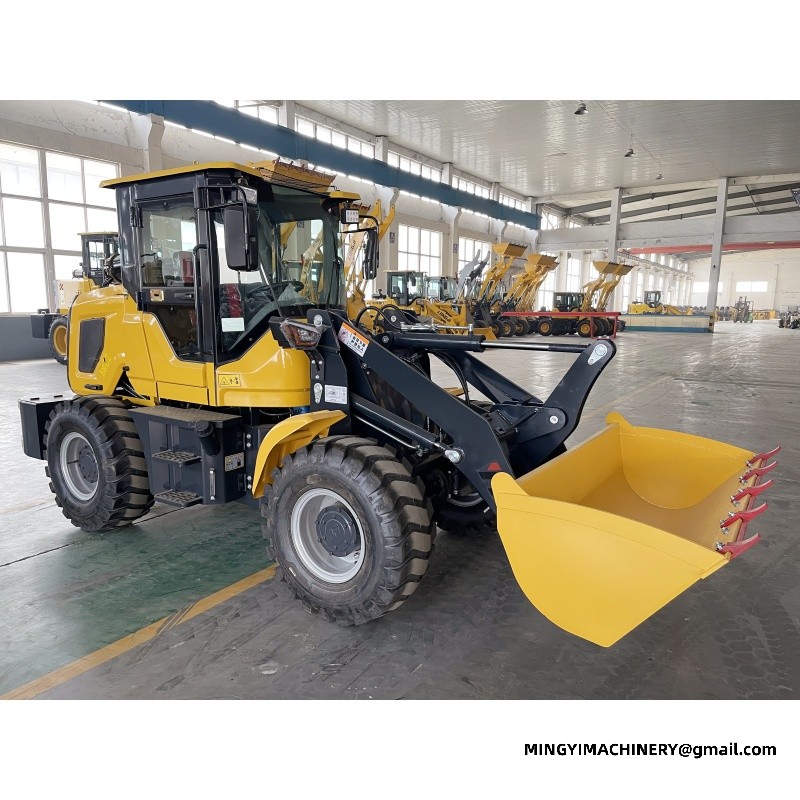
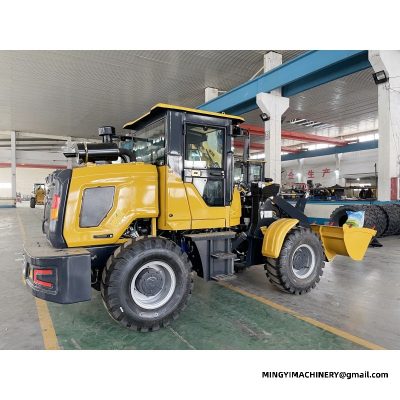
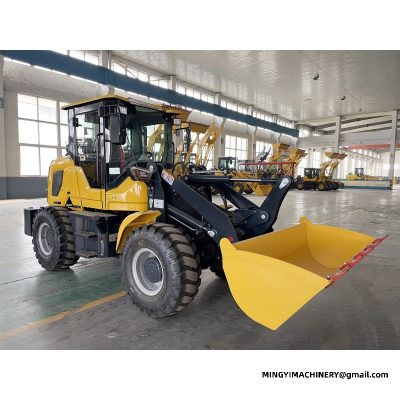
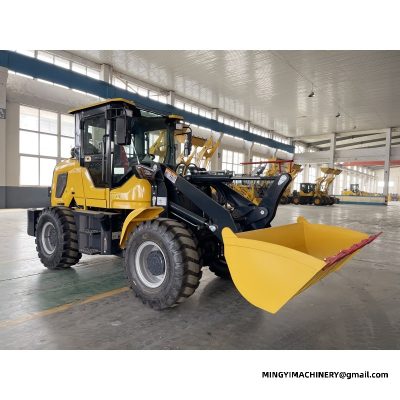
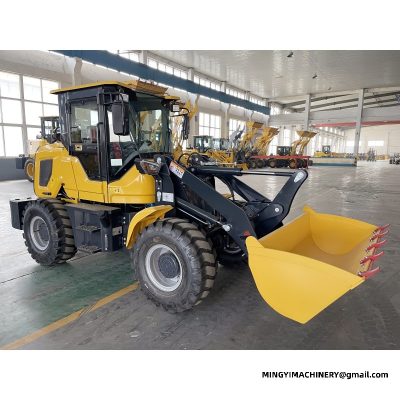
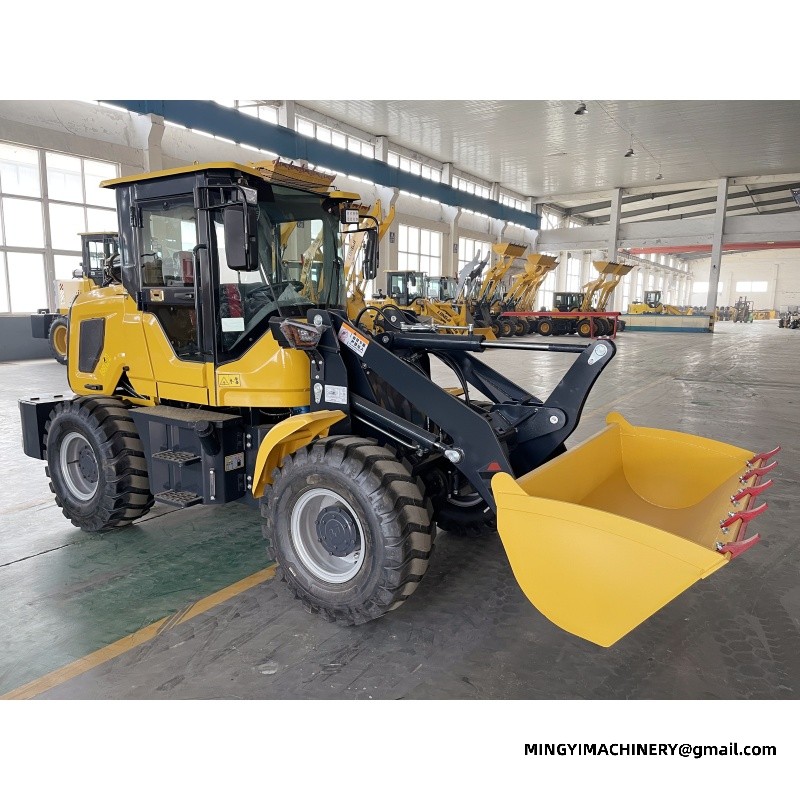
Most wheel loader for construction site problems are decided before the machine arrives. A bucket that is too big for the material, a dump height that misses the board by a hand's width, a hinge plate thinner than the duty needs — none of those can be fixed afterwards, and all of them are printed on the sheet. This page walks the figures in the order an owner meets them: what the machine carries, where it puts it, what wears first, and what to check before it leaves the factory. Two builds run through the comparisons, the heavy-duty 4.5 m small-frame wheel-side reduction wheel loader at 4.5 m and the heavy-duty 3.5 m medium-frame wheel-side reduction wheel loader at 3.5 m.
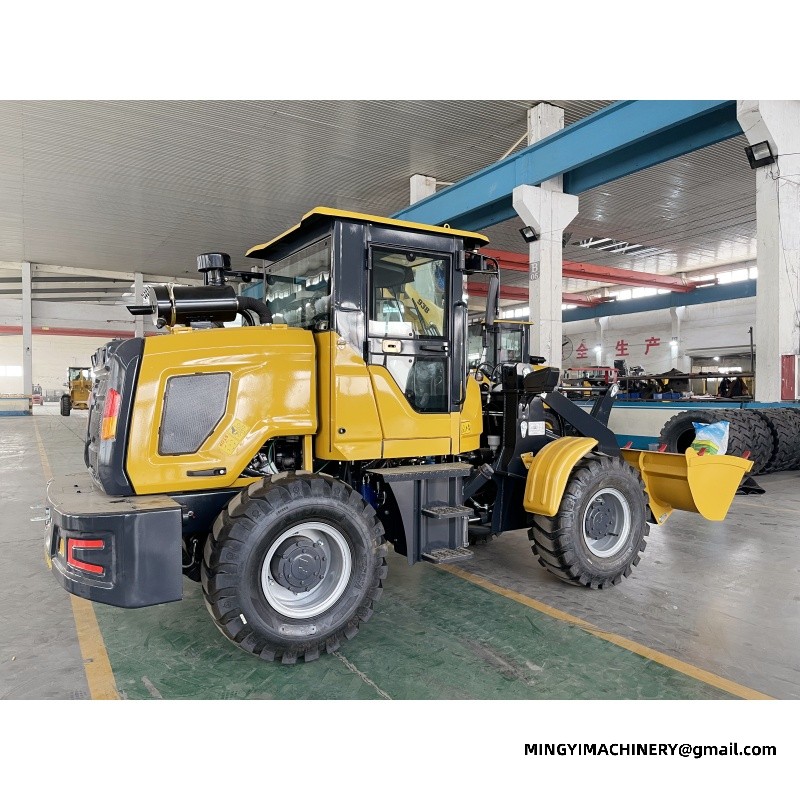
The bucket figures in the table are engineering capacities: 0.4 m³ on the heavy-duty 4.5 m small-frame wheel-side reduction wheel loader, 0.65 m³ on the heavy-duty 3.5 m medium-frame wheel-side reduction wheel loader. They assume a material density, and the machine is stable with them at full lift because the counterweight and the 4.25 m or 4.55 m footprint were sized around that density.
Change the material and you change the limit, not the machine. Light material — grain, woodchip, compost, snow — lets you run a larger bucket and a higher cycle. Heavy material — wet sand, crushed stone, ore — means the 0.65 m³ bucket needs the 30 mm rear hinge plate and 45 mm cross-member behind it, and the 0.4 m³ bucket on the lighter frame is the honest specification for the lighter material. Tell the factory what you are moving and let them match the bucket to it.
Put the two builds side by side and read four rows only. Bucket: 0.4 m³ against 0.65 m³. Dump height: 3.2 m against 3.5 m. Hinge steel: 30 mm and 20 mm against 45 mm and 30 mm. Cross-member: 30 mm against 45 mm.
Those four decide what the machine can carry, where it can put it, and how long the frame lasts doing it. Everything else on a specification sheet — paint, cab trim, lighting package — is cosmetic next to them. The pumps, 40 pump (490 engine); 1045 pump (4102 turbo engine) against 2063 pump, are the fifth row and matter only if the work is hydraulic rather than loading.
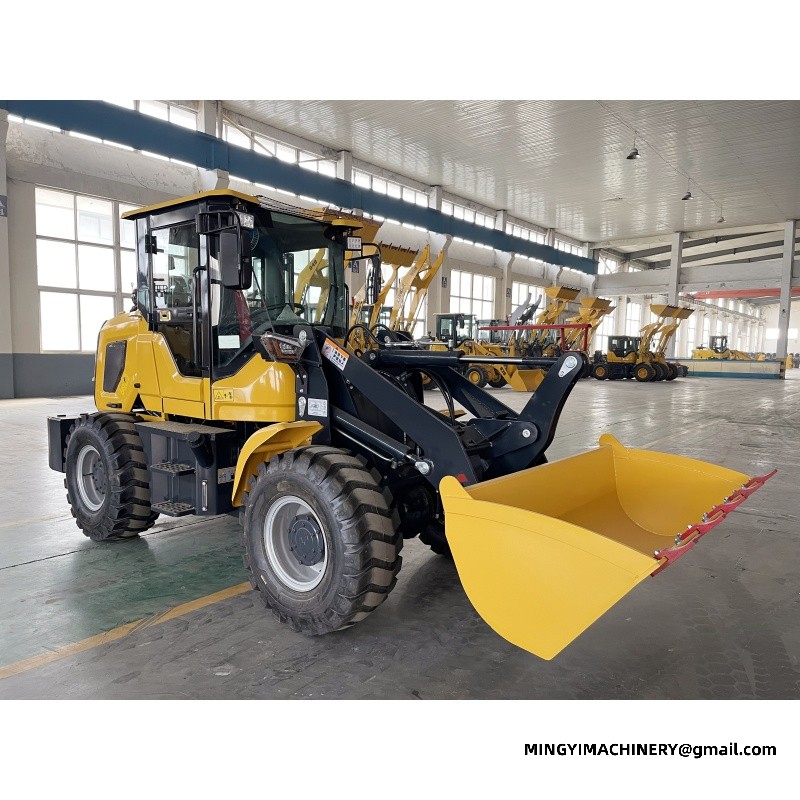
Bucket capacity decides how many passes you make; dump height decides whether the pass is possible at all. The heavy-duty 4.5 m small-frame wheel-side reduction wheel loader clears 4.5 m; the heavy-duty 3.5 m medium-frame wheel-side reduction wheel loader clears 3.5 m. Measure the receiving body at the front board rather than the side, because side boards sit lower and a machine that clears the side can still clip the front when it slews under load.
That single measurement eliminates most of the range before anything else is discussed. A low pan mixer or a one-ton site truck is served by 4.5 m; a body-up site tipper needs more; a crusher feed hopper or a high-board highway truck needs 3.5 m. Get it wrong and no amount of bucket volume, engine power or pump flow rescues the machine — it simply cannot put material where it has to go.
| Published build data — heavy-duty 3.5 m medium-frame wheel-side reduction wheel loader | |
|---|---|
| Bucket capacity | 0.65 m³ |
| Dump height | 3.5 m |
| Track width | 1.6 m |
| Boom arm thickness | 30 mm |
| Boom arm width | 500 mm |
| Boom arm length | 3.15 m |
| Boom arm centre distance | 920 mm |
| Cross-member thickness | 45 mm |
| Front hinge plate thickness | 45 mm |
| Rear hinge plate thickness | 30 mm |
| Rear frame section | 300 mm high x 800 mm wide |
| Hydraulic cylinders | centre cylinder 60 / side cylinder 50 |
| Fuel tank | 70 L (75# large tank) |
| Battery | 80 Ah |
| Front wheel to counterweight | 4.55 m |
| Radiator | 4105 core |
| Work pump | 2063 pump |
| Travel pump | 25 pump |
On a farm the loader is judged by whether it can get to the work. The heavy-duty 4.5 m small-frame wheel-side reduction wheel loader at 1.5 m (wheel-side reduction axle); 1.45 m (Isuzu axle) track and 4.25 m length turns in places the heavy-duty 3.5 m medium-frame wheel-side reduction wheel loader at 1.6 m and 4.55 m cannot enter. Capacity — 0.4 m³ against 0.65 m³ — is the last consideration, not the first.
Dump height still matters, because feed wagons and high-sided trailers are tall: 4.5 m on the heavy-duty 4.5 m small-frame wheel-side reduction wheel loader, 3.5 m on the heavy-duty 3.5 m medium-frame wheel-side reduction wheel loader. Measure the wagon side, then measure the shed door. Where both fit, take the larger bucket; where only one fits, take the machine that fits. Attachments specification against the boom section — 500 mm against 500 mm — so the tool carrier is decided in the same conversation.
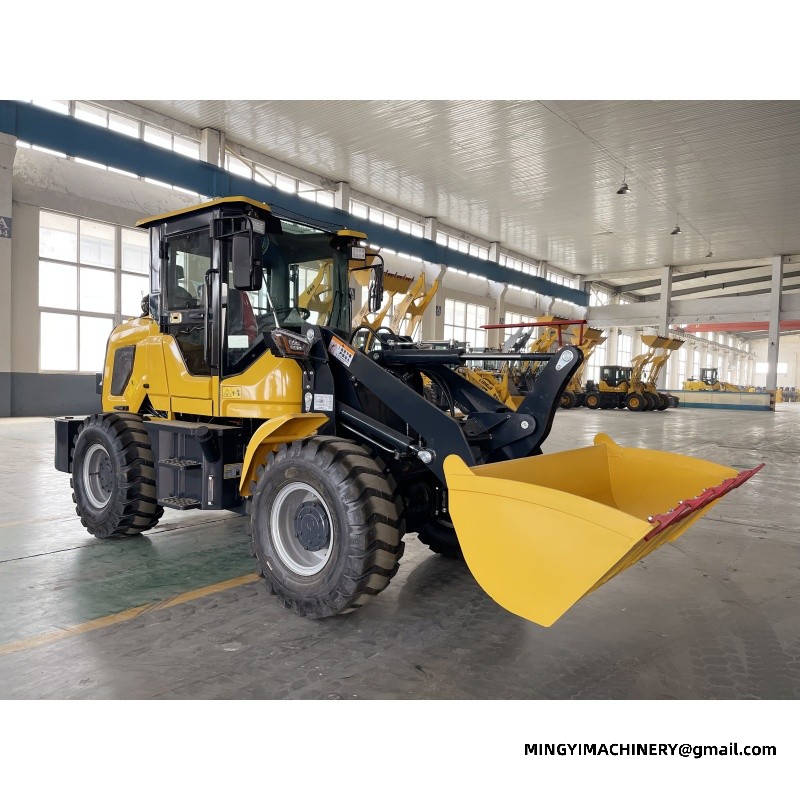
Three takes dominate ownership: fuel, downtime and the residual value of the machine when it is sold. Fuel is set by duty and tank planning — 64.7 L (75# small tank) on the heavy-duty 4.5 m small-frame wheel-side reduction wheel loader, 70 L (75# large tank) on the heavy-duty 3.5 m medium-frame wheel-side reduction wheel loader. Residual value is set by whether the frame is still tight, which is set by the 20 mm and 30 mm rear hinge plates and the 30 mm and 45 mm cross-members.
Downtime is the lengthy one, and it is usually caused by the simplest components: a hose on the centre cylinder 45 / side cylinder 45 circuit, a blocked 4100 core (490 engine); 4105 core (4102T engine) core, a flat battery from a machine that sat on the dock. None of them is a reason to buy a bigger machine, and all of them are reasons to keep a small spares box. plan for filters, hoses and a cutting edge per year, and for pins and bushes every second year.
Fuel is visible and downtime is not, which is why fleets optimise the wrong one. A machine with a 54 L (50# tank) tank works a full shift without a refuel stop; that is worth a fraction of what a single day lost to a failed pump takes, and the pump is identified on the sheet as 40 pump (490 engine); 1045 pump (4102 turbo engine).
The parts worth specifying against downtime are the ones that cannot be improvised: the battery rating, 60 Ah (490 engine); 80 Ah (4102 turbo engine), the radiator, 4100 core (490 engine); 4105 core (4102T engine), and the cylinders, centre cylinder 45 / side cylinder 45. All three are simple at build and lengthy in a field, and all three are listed. Read them as an availability decision rather than as a comfort one.
Hold the parts that stop the machine and cannot be improvised: hoses and seals for the centre cylinder 45 / side cylinder 45, a belt set, filters, and a battery to the 60 Ah (490 engine); 80 Ah (4102 turbo engine) rating. Do not hold the parts that are welded in — hinge plates at 30 mm and 20 mm, the 30 mm cross-member. Those are a repair, not a spare, and they are the same steel on every machine in the family.
The pump is the judgement call. 40 pump (490 engine); 1045 pump (4102 turbo engine) is a stocked item and a week of downtime if it is not; the 316 pump fails less often and is the one most fleets choose to order rather than hold. Decide on that by distance from the supplier, not by the effort of the part.
Indoor work changes the priority completely. Height clearance replaces dump height as the first figure, and the machine has to lift its load under a lintel rather than over a truck board. The heavy-duty 3.2 m small-frame wheel-side reduction wheel loader reaches 3.2 m, which is the outdoor figure; what matters indoors is whether that height is usable in the space available.
Length and track matter next. 4.1 m from front wheel to counterweight and 1.5 m (wheel-side reduction axle); 1.45 m (Isuzu axle) of track. Ventilation matters too, which is an engine question rather than a frame one, and the cooling specification is the place it shows: 4100 core (490 engine); 4105 core (4102T engine), sized for air that is not moving. Where the machine works inside, the larger core is the safer specification even in a temperate climate.
Stockpile work is the hardest duty a loader sees: the machine drives into a face, breaks out, reverses under load and turns, all day. The components that govern life are the rear hinge plate, the cross-member and the cooling pack. On the heavy-duty 4.5 m small-frame wheel-side reduction wheel loader those are 20 mm and 30 mm with 4100 core (490 engine); 4105 core (4102T engine); on the heavy-duty 3.5 m medium-frame wheel-side reduction wheel loader they are 30 mm and 45 mm with 4105 core.
Traction is the second half. A stockyard floor is rarely compacted and often rutted, which argues for the wheel-side reduction axle and the 1.6 m track rather than the lighter axle. Add the raised radiator core where the material is fine and dry — cement raw meal, lime, crushed fines — because a blanked core stops the machine in the middle of a shift, and a stopped loader stops everything behind it.
How should the battery on a wheel loader for construction site be cared for?
Keep the terminals clean and tight and use the isolator if the machine will stand. The rating is 45 Ah (24 V), and a machine left connected for weeks will not start when it is needed.
Can a wheel loader for construction site be used with forks?
Yes, and the load centre moves forward, so capacity drops. Check the boom section, 430 mm wide with 890 mm of spacing, before hanging a long carriage off it.
How is dump height on a wheel loader for construction site measured?
At the bucket edge, arm at full lift, machine level. The heavy-duty 3.2 m small-frame wheel-side reduction wheel loader publishes 3.2 m and the heavy-duty 4.5 m small-frame wheel-side reduction wheel loader publishes 4.5 m, measured the same way, so the two can be compared directly.
Is a wheel loader for construction site noisy to work beside?
Engine and hydraulic noise, with the pump a contributor: 40 pump (490 engine); 1045 pump (4102 turbo engine) on this build. A pump that is cavitating is louder than a healthy one, so noise is also a diagnostic.
Which records should I keep for a wheel loader for construction site?
The delivery measurements and the specification. Bucket 0.4 m³, lift 4.5 m, cylinders centre cylinder 45 / side cylinder 45, pump 40 pump (490 engine); 1045 pump (4102 turbo engine) and track 1.5 m (wheel-side reduction axle); 1.45 m (Isuzu axle) identify the build for parts and for resale.
How should a wheel loader for construction site be stored for a season?
Isolate the battery, which is rated 60 Ah (490 engine); 80 Ah (4102 turbo engine), grease the pins, and protect the cylinder rods on the centre cylinder 45 / side cylinder 45. Machines stored outside suffer at the pins and the electrics.
How far can a wheel loader for construction site travel under its own power?
Short moves between faces, not road haulage. The travel circuit is 316 pump and sustained high-speed running generates heat the 4100 core (490 engine); 4105 core (4102T engine) core was not sized to reject.
None of this requires taking a wheel loader for construction site on faith. The rows are published, the machines can be measured on delivery, and the five figures that matter — bucket, dump height, cylinders, track and hinge steel — are checkable in twenty minutes.
Later additions and retrofits on Wheel Loader for Construction Site: Working Beside Tippers
Retrofitting is limited by the base machine. Before anything is added to Wheel Loader for Construction Site: Working Beside Tippers the hydraulic flow, the mounting interface and the stability allowance have to be checked, because those limits are what decide what is sensible.
Wear items and spares worth holding for Wheel Loader for Construction Site: Working Beside Tippers
A spares list should follow the duty cycle. A Wheel Loader for Construction Site: Working Beside Tippers working every day in abrasive dust consumes filters and cutting edges far faster than the same machine used once a week, and the shelf should be stocked for the harder case.
Contact MINGYI Machinery for the current wheel loader lineup, configuration options and a formal specification for your market. E-mail: sales@mingycn.com | LINE (ID): mingyicn
Wheel Loader for Material Handling: Pallets and Bulk Loads · Wheel Loader for Aggregate Yard: Stockpile Discipline · Wheel Loader Log Grapple: Grapple Loads and Hinge Steel · Wheel Loader









