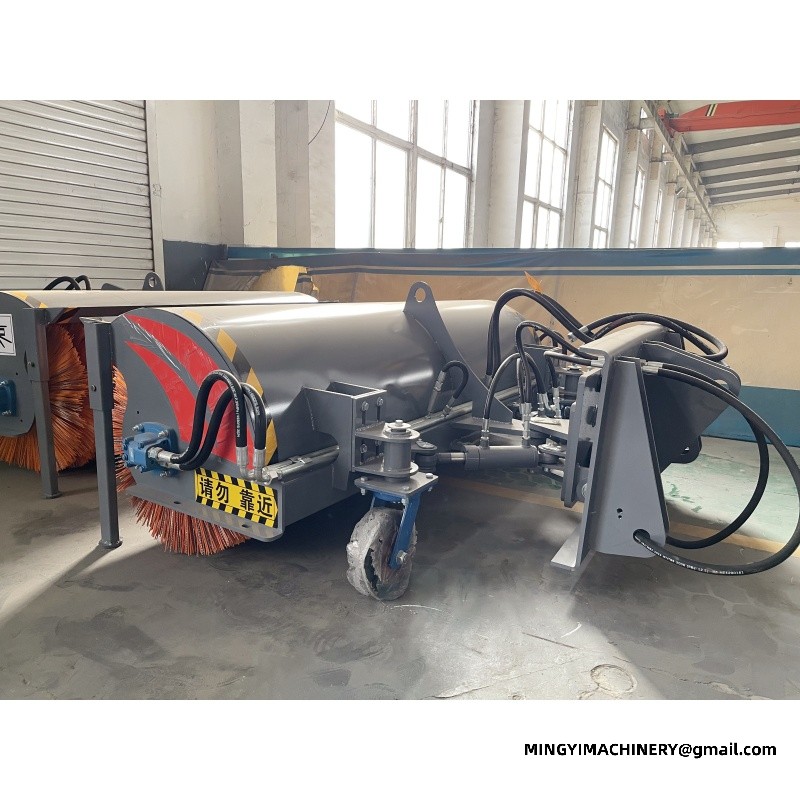

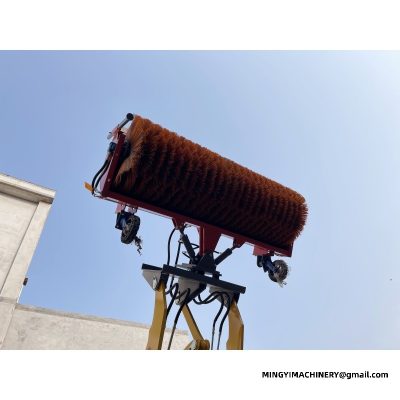
The specification gap between two wheel loader snow blower builds is usually steel, and the steel is in four places. Boom wall: 25 mm against 25 mm. Front hinge plate: 30 mm against 30 mm. Rear hinge plate: 20 mm against 20 mm. Cross-member: 30 mm against 30 mm. Everything else — the 0.4 m³ bucket against the 0.4 m³ bucket, the centre cylinder 45 / side cylinder 40 cylinder set against centre cylinder 45 / side cylinder 45 — follows from those four. This page goes through each in turn, then through the cooling, axle and delivery questions that decide the rest.
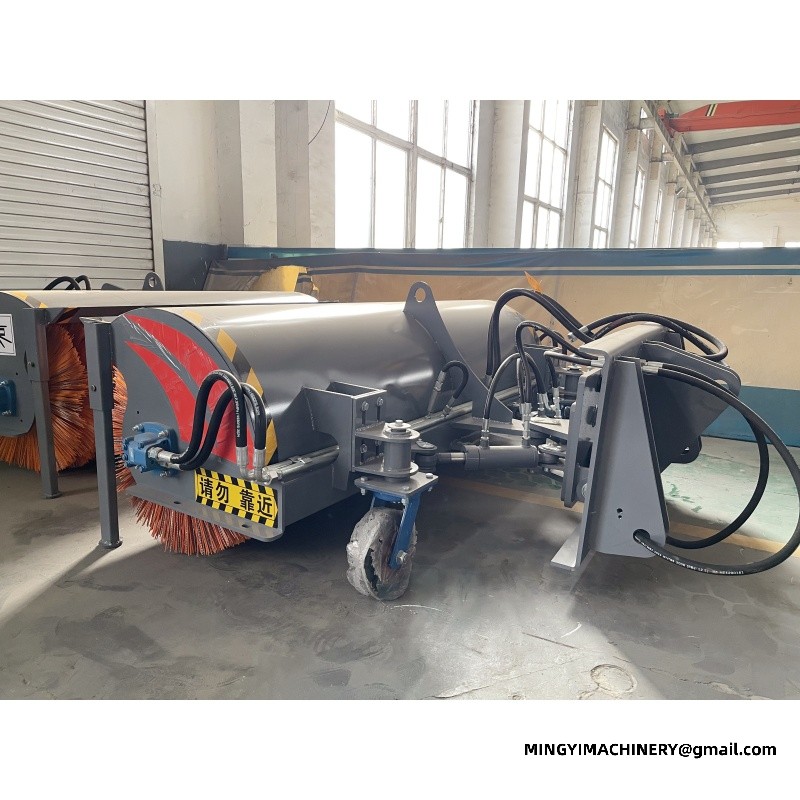
A loader is a tool carrier that happens to come with a bucket. What it can carry is decided at the factory — section width and pin geometry — which is why the standard 2.4 m low-profile wheel loader with its 280 mm section and the heavy-duty 4.2 m small-frame wheel-side reduction wheel loader with 500 mm do not share tooling even where their bucket capacities look close.
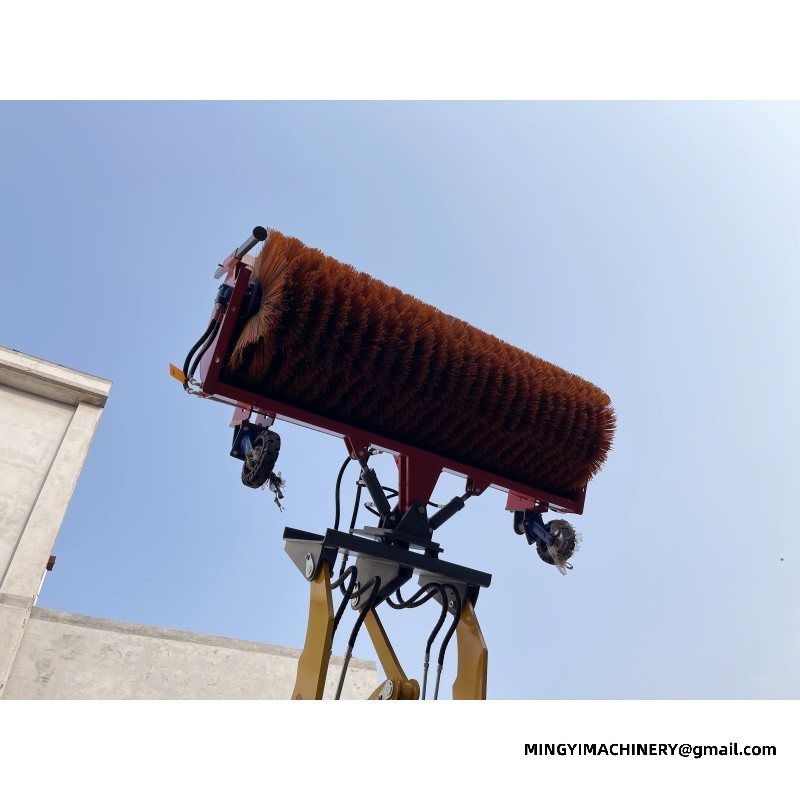
Plan the tool set with the machine order. Bucket plus forks covers most general work; add a grapple for silage, scrap or demolition; add a snow tool where winters are real. If any tool is hydraulically actuated, order the third circuit now, because the 32 pump on the standard 2.4 m low-profile wheel loader and the 40 pump (490 engine); 1045 pump (4102 turbo engine) on the heavy-duty 4.2 m small-frame wheel-side reduction wheel loader were sized for the base machine and a retrofit means a valve block, plumbing and labour in the field.
0.52 m³ on the light-duty 3.8 m medium-frame wheel-side reduction wheel loader is a volume, and what it means depends entirely on what goes into it. Sand, gravel and crushed rock all weigh differently per cubic metre, and a bucket that is correct for one will overload the frame with another. The frame limit is the cross-member at 45 mm and the hinge plates behind it.
The practical method is to work backwards from the receiving body. If a truck takes four passes from 0.52 m³, it takes three from 0.52 m³ on the light-duty 4.2 m medium-frame wheel-side reduction wheel loader, and the saving is real only if the loader clears the board — 3.8 m here against 4.2 m. Capacity without clearance is a specification that looks better in a brochure than on a site.
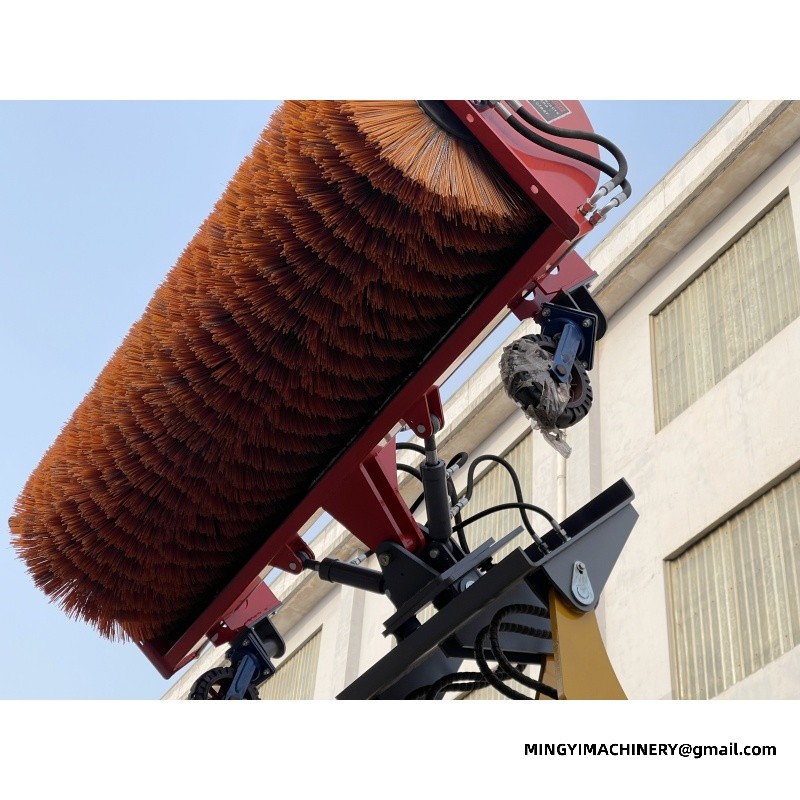
Three things stop a loader mid-shift, and two of them are in the specification. Fuel is the first: 64.7 L (75# small tank) on the heavy-duty 3.5 m small-frame wheel-side reduction wheel loader. Cooling is the second: 4100 core (490 engine); 4105 core (4102T engine), and it is the one that announces itself as a gradual loss of power rather than a stoppage, so it gets ignored until the machine is derating every afternoon.
The third is electrical, and it is specified as well: 60 Ah (490 engine); 80 Ah (4102 turbo engine). Cranking capacity falls with temperature, so a battery that starts a warm engine happily can fail the same engine at dawn in winter. Where the build offers two ratings, the higher one belongs to the turbo option and is worth specifying for cold climates or for machines that start cold and stop often.
| Reference specification — heavy-duty 3.5 m small-frame wheel-side reduction wheel loader | |
|---|---|
| Bucket capacity | 0.4 m³ |
| Dump height | 3.5 m |
| Track width | 1.5 m (wheel-side reduction axle); 1.45 m (Isuzu axle) |
| Boom arm thickness | 25 mm |
| Boom arm width | 430 mm |
| Boom arm length | 2.62 m |
| Boom arm centre distance | 890 mm |
| Cross-member thickness | 30 mm |
| Front hinge plate thickness | 30 mm |
| Rear hinge plate thickness | 20 mm |
| Rear frame section | 280 mm high x 800 mm wide |
| Hydraulic cylinders | centre cylinder 45 / side cylinder 40 |
| Fuel tank | 64.7 L (75# small tank) |
| Battery | 60 Ah (490 engine); 80 Ah (4102 turbo engine) |
| Front wheel to counterweight | 4.1 m |
| Radiator | 4100 core (490 engine); 4105 core (4102T engine) |
| Work pump | 40 pump (490 engine); 1045 pump (4102 turbo engine) |
| Travel pump | 316 pump |
Two dimensions decide whether a loader is usable on a given site: the 4.25 m front-to-counterweight length of the heavy-duty 4.2 m small-frame wheel-side reduction wheel loader against the 4.3 m of the light-duty 3.8 m medium-frame wheel-side reduction wheel loader, and track width at 1.5 m (wheel-side reduction axle); 1.45 m (Isuzu axle) against 1.6 m. Everything else on the sheet — engine, pump, cylinder bore — matters only after the machine fits.
The pairing matters too. A 0.4 m³ bucket lifted to 4.2 m on a 4.25 m footprint is a different machine in practice from a 0.52 m³ bucket at 3.8 m on 4.3 m, even where the track figures are close. Where access is tight, take the shorter machine and accept the extra pass; where the ground is open, take the longer one and take the stability it buys with the 30 mm rear hinge plate.
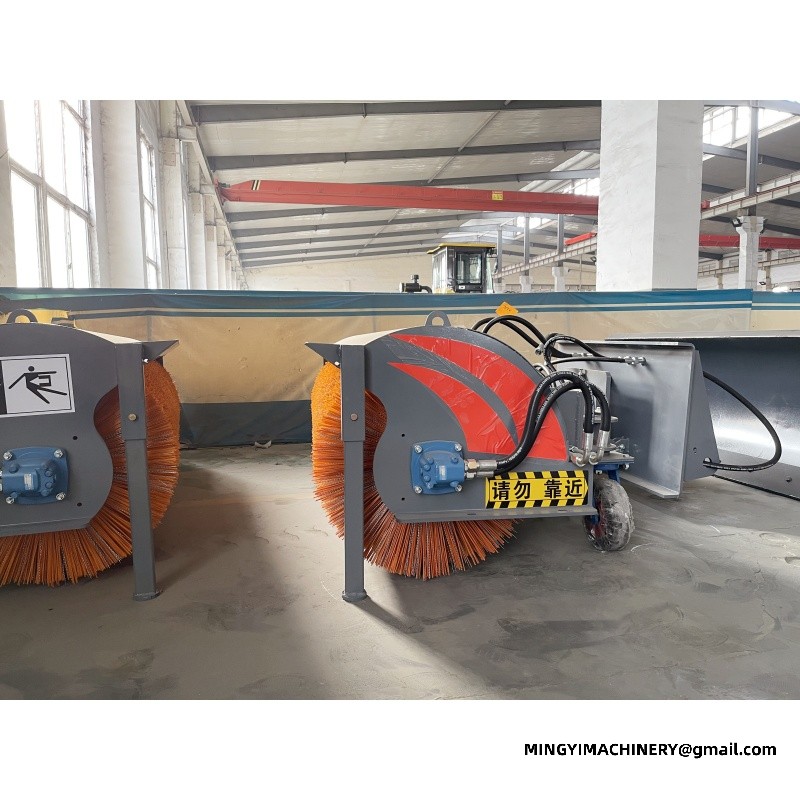
Fuel capacity on this range is specified per frame rather than per model: 70 L (75# large tank) on the light-duty 3.5 m medium-frame wheel-side reduction wheel loader and 70 L (75# large tank) on the light-duty 4.2 m medium-frame wheel-side reduction wheel loader. Both are intended to cover a full shift at working throttle, and both assume the machine is not idling for hours between loads — idling is where a "full day" tank becomes a half-day tank.
Plan refuelling around the tank, not around the clock. On the light-duty 3.5 m medium-frame wheel-side reduction wheel loader with 70 L (75# large tank) and a 0.52 m³ bucket at 3.5 m, a day of continuous loading will run the tank down; on the light-duty 4.2 m medium-frame wheel-side reduction wheel loader with 70 L (75# large tank) and 0.52 m³ at 4.2 m, the same day leaves allowance. Where a site has no bowser, that allowance is the difference between finishing at four and stopping at two.
Breakout force is advertised; what you feel in the cab is the combination behind it. On the heavy-duty 3.8 m small-frame wheel-side reduction wheel loader that is a centre cylinder 45 / side cylinder 45 cylinder set on a 2.61 m boom with a 890 mm centre distance, lifting a 0.4 m³ bucket to 3.8 m. On the light-duty 4.2 m medium-frame wheel-side reduction wheel loader it is centre cylinder 60 / side cylinder 50 on a 2.9 m arm with 900 mm spacing, lifting 0.52 m³ to 4.2 m.
Heat is the failure mode nobody plans for. A pump working at the top of its flow all shift, in dust, at altitude, will cook its oil — and the 40 pump (490 engine); 1045 pump (4102 turbo engine) on the heavy-duty 3.8 m small-frame wheel-side reduction wheel loader and the 2063 pump on the light-duty 4.2 m medium-frame wheel-side reduction wheel loader were each sized against their own cylinder volumes and duty. The matching travel pumps, 316 pump and 25 pump, keep drive independent so a loaded climb does not stall the boom. Specify the third circuit at order time if a hydraulic tool is in the plan; plumbing added later is the most common source of leaks we see in the field.
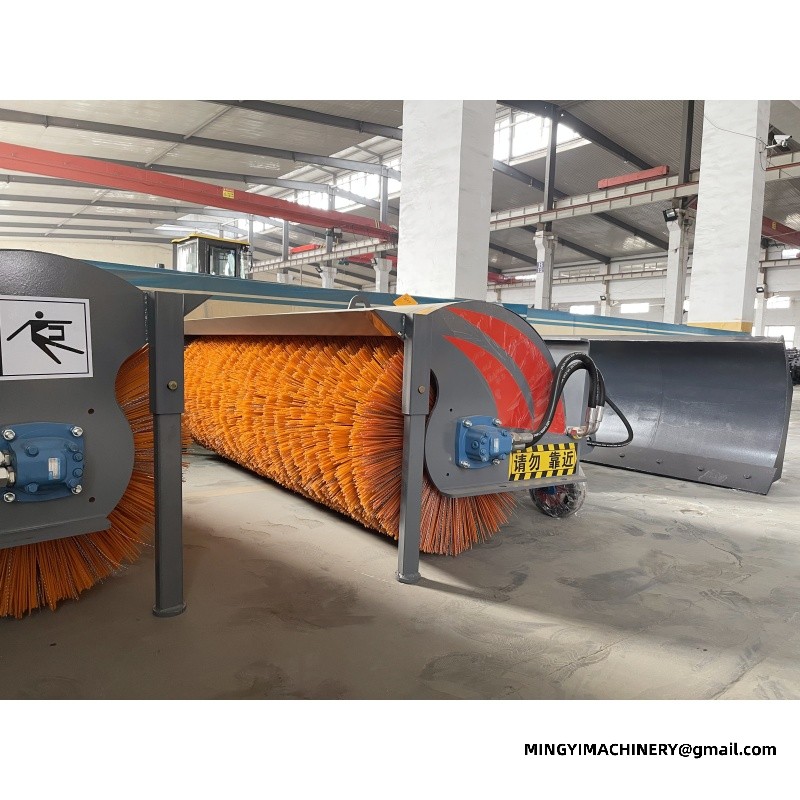
Model names are marketing; build codes are what the shop floor works from. Two machines with the same name can leave the factory with different hinge steel, and the difference is invisible until something wears. On this range the differences are published: 30 mm of cross-member against 30 mm, 30 mm of front hinge plate against 30 mm.
Specify the machine the way you would specify a pump: by the numbers. Bucket 0.4 m³, dump height 3.8 m, cylinders centre cylinder 45 / side cylinder 45, track 1.5 m (wheel-side reduction axle); 1.45 m (Isuzu axle). Write those into the order and the confirmation, and the machine that arrives is the machine you compared. Anything else relies on a name meaning the same thing to two people.
Construction duty is repetitive, dusty and unforgiving of a light frame. Specified for it, the heavy-duty 3.8 m small-frame wheel-side reduction wheel loader carries a 0.4 m³ bucket to 3.8 m on 30 mm front and 20 mm rear hinge plates with a 30 mm cross-member and a 280 mm high x 800 mm wide rear frame. Lighter builds — the heavy-duty 3.5 m small-frame wheel-side reduction wheel loader at 0.4 m³, 3.5 m, 20 mm and 30 mm — suit smaller sites and lighter material.
Two site conditions change the specification. The first is the board height of the trucks, which fixes dump height and is measured, not guessed. The second is ground: a rough, rutted site with soft spots wants the wheel-side reduction axle at 1.5 m (wheel-side reduction axle); 1.45 m (Isuzu axle) track over the lighter axle, and a site with long internal haul roads wants the opposite. Tell the factory both and the axle choice follows from the site, not from the catalogue.
How is the counterweight mounted on a wheel loader snow blower?
Bolted to the rear frame section, 280 mm high x 800 mm wide on the heavy-duty 4.2 m small-frame wheel-side reduction wheel loader, rather than hung off brackets. Bracket-mounted ballast is what cracks under daily face work.
How is a wheel loader snow blower prepared for export?
Knock-down: booms and counterweights packed loose, tanks removed, batteries boxed and disconnected. Rear frame sections stay between 280 mm high x 800 mm wide and 300 mm high x 800 mm wide.
What is the difference between the two hinge plates on a wheel loader snow blower?
The front plate carries boom loads, which are mostly vertical; the rear carries articulation, which is sideways and shock-loaded. Hence 45 mm front against 30 mm rear.
How are the pumps specified on a wheel loader snow blower?
Lift and travel are separate circuits: a 40 pump (490 engine); 1045 pump (4102 turbo engine) work pump with a 316 pump travel pump, so a loaded climb does not take flow away from the boom.
Which wheel loader snow blower build suits quarry or stockpile work?
The heavy build with the raised core: a 0.4 m³ bucket, 20 mm rear hinge plate, 30 mm cross-member and the 4100 core (490 engine); 4105 core (4102T engine) radiator for fines and dust.
What should I check before a wheel loader snow blower works a ramp?
Traction and cooling. A 1.6 m track with wheel-side reduction holds on a ramp where an Isuzu-pattern axle would spin, and the 4105 core radiator keeps working at low speed.
Can a wheel loader snow blower run a hydraulic attachment?
Yes, provided the third circuit is ordered with the machine. The 32 pump work pump and 316 pump travel pump are specified per build, and plumbing added later is the usual source of leaks.
Five figures settle any wheel loader snow blower enquiry: dump height, track width, boom wall, rear hinge plate and cross-member. On the heavy-duty 3.8 m small-frame wheel-side reduction wheel loader those are 3.8 m, 1.5 m (wheel-side reduction axle); 1.45 m (Isuzu axle), 25 mm, 20 mm and 30 mm. Send us yours and we will tell you which build meets them.
Pre-delivery inspection before Wheel Loader Snow Blower: Hydraulic Circuits and Winter Duty leaves the shop
A machine should be inspected while it is still on our floor rather than after it lands. For Wheel Loader Snow Blower: Hydraulic Circuits and Winter Duty that means the engine is run to temperature, the hydraulics are cycled through full travel, and every function is checked against the build sheet before the crate is closed.
Cold weather and winter care for Wheel Loader Snow Blower: Hydraulic Circuits and Winter Duty
Cold exposes weak batteries, thick oil and water in the fuel. Preparing Wheel Loader Snow Blower: Hydraulic Circuits and Winter Duty for winter means the right grade of oil, a battery in good condition and fuel that will not wax in the tank overnight.
Contact MINGYI Machinery for the current wheel loader lineup, configuration options and a formal specification for your market. E-mail: sales@mingycn.com | LINE (ID): mingyicn
Wheel Loader Snow Blower: Specifying the Third Circuit · Wheel Loader Snow Pusher: Frame Loads and Cold-Weather Starting · Heavy Duty Wheel Loader: Steel That Takes the Duty · Loaders









