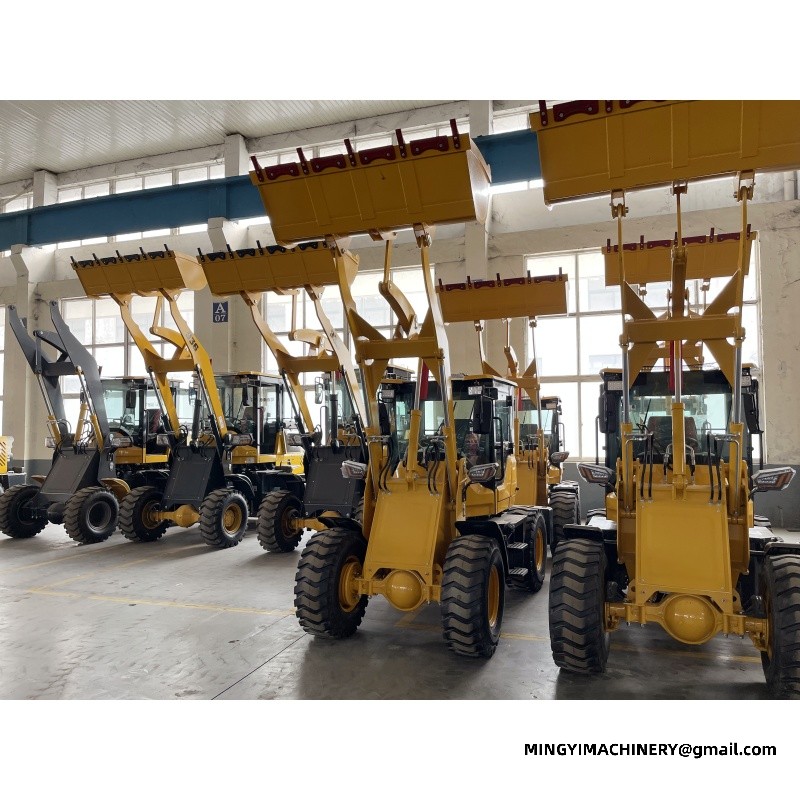
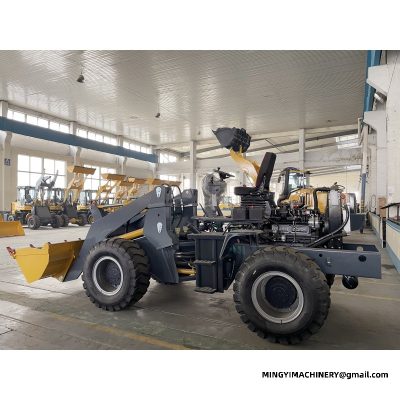
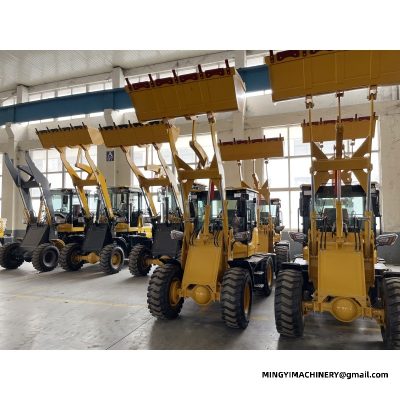
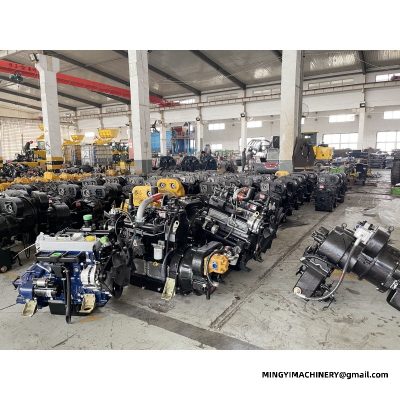
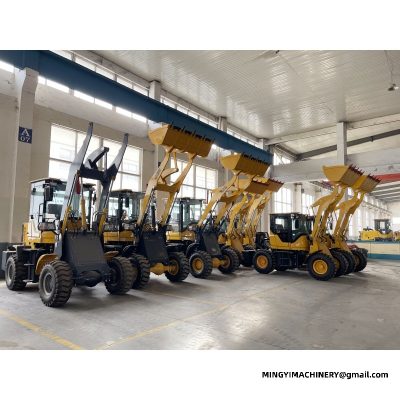
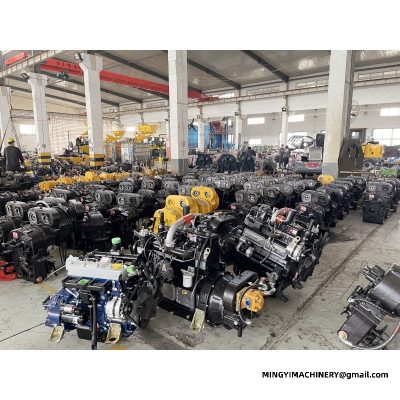
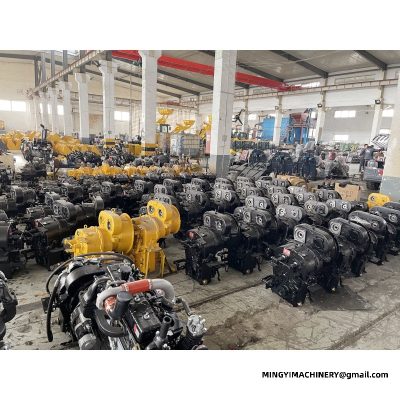
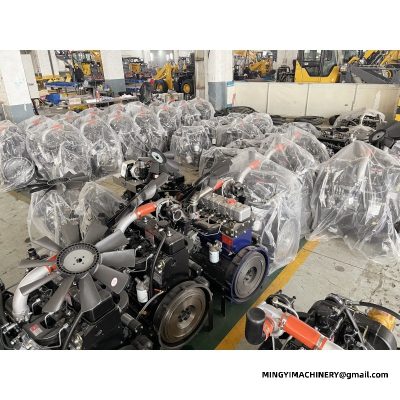
Ask two fleets what they want from a heavy duty wheel loader and you get the same three answers: it starts, it clears the body, and it stays tight. Everything else is preference. Those three map directly onto published rows — battery 60 Ah (490 engine); 80 Ah (4102 turbo engine), dump height 3.2 m, and hinge plates 30 mm front with 20 mm rear over a 30 mm cross-member. This page takes those three answers as its structure, and uses the heavy-duty 3.2 m low-profile wheel loader and the heavy-duty 3.2 m small-frame wheel-side reduction wheel loader throughout so that every claim on it can be checked against the table.
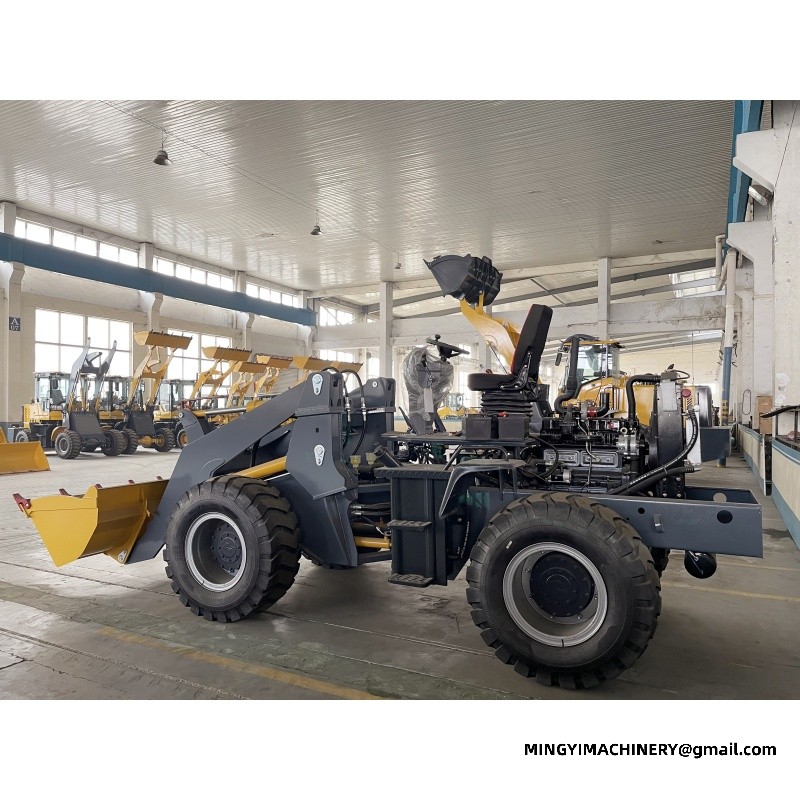
The boom is the part that turns engine power into a loaded bucket at height, and four figures describe it. Length runs 2.3 m on the heavy-duty 3.2 m low-profile wheel loader against 2.3 m on the heavy-duty 3.2 m small-frame wheel-side reduction wheel loader; wall thickness 25 mm against 25 mm; section width 430 mm against 430 mm; and the mount spacing — boom centre distance — 890 mm against 890 mm. Read together, those four numbers tell you more about how a machine will behave than bucket capacity ever will.
Length buys reach and takes stability, because every extra millimetre moves the load centre further from the front axle. Wall thickness resists bending; section width resists twisting. Centre distance is the one most buyers never ask about, and it is the one that decides whether the arm takes a side load cleanly or twists the pins — which matters the moment an operator digs one corner of the bucket into a heap instead of squaring up to it. On the heavy-duty 3.2 m low-profile wheel loader the combination of a 2.3 m arm, a 25 mm wall and a 890 mm spacing is matched to a 0.4 m³ bucket, and that match is what keeps the frame tight over a full season.
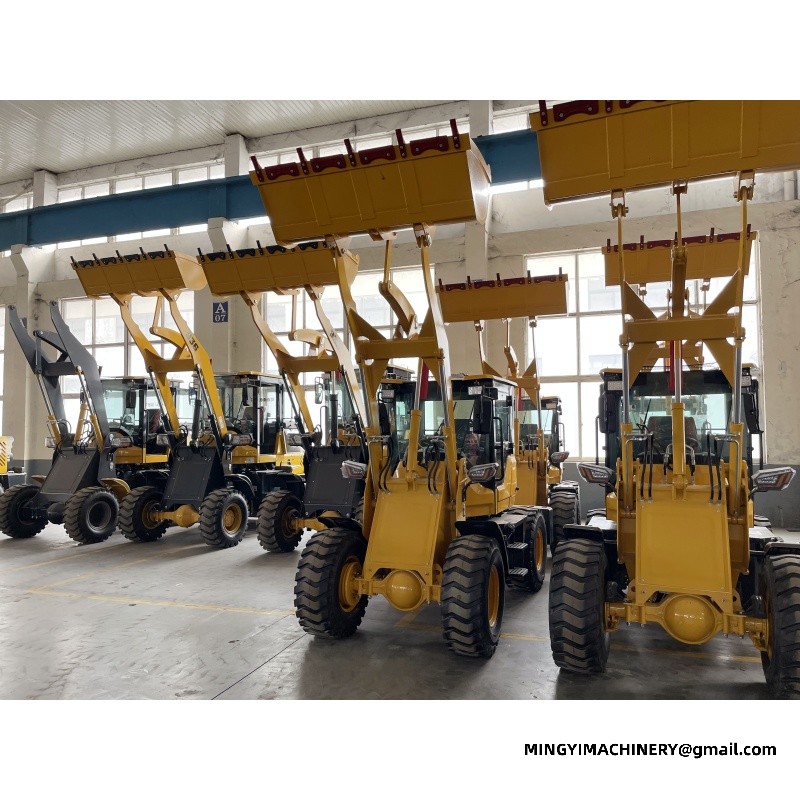
Volume is simple and stability is not. Across the range the buckets run 0.4 m³ on the heavy-duty 3.2 m low-profile wheel loader to 0.4 m³ on the heavy-duty 3.2 m small-frame wheel-side reduction wheel loader, and the machines behind them are built to match: 25 mm boom wall and 30 mm cross-member against 25 mm and 30 mm. That is why a bigger bucket on a lighter frame is a poor bargain.
Decide in three steps. First, what are you loading into — that fixes dump height, 3.2 m on the heavy-duty 3.2 m low-profile wheel loader or 3.2 m on the heavy-duty 3.2 m small-frame wheel-side reduction wheel loader. Second, what is the material's weight per cubic metre — that fixes whether 0.4 m³ or 0.4 m³ is honest. Third, how many passes a day — that fixes whether the extra volume saves enough time to pay for the heavier frame. Skip the second step and you buy a machine that is either slow or overloaded.
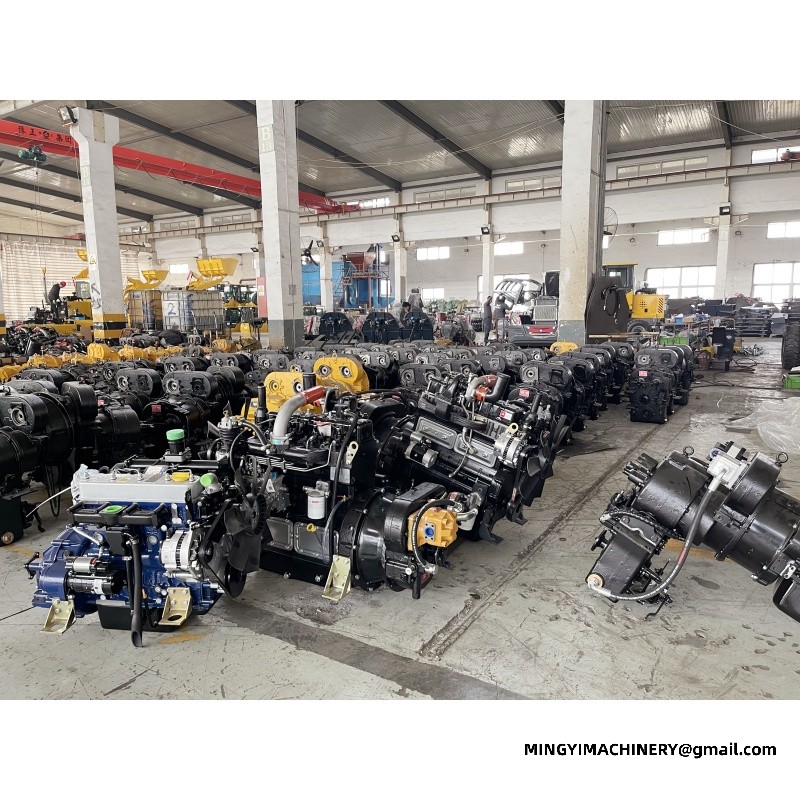
The battery is specified against the engine it has to crank: 60 Ah (490 engine); 80 Ah (4102 turbo engine) on the heavy-duty 3.2 m low-profile wheel loader and 60 Ah (490 engine); 80 Ah (4102 turbo engine) on the heavy-duty 3.2 m small-frame wheel-side reduction wheel loader. Where a build lists two figures, they belong to two engine options — a smaller capacity for the naturally aspirated unit, a larger one for the turbo — and the difference is starting torque in cold weather rather than anything you would notice in July.
For fleets shipping to cold markets, specify the larger capacity and a battery isolator; machines shipped knock-down arrive with batteries boxed and disconnected, and a machine that has sat for six weeks at anchor will not crank on a marginal battery. Check the rest of the electrical package at the same time — the 40 pump (490 engine); 1045 pump (4102 turbo engine) and 316 pump circuits on the heavy-duty 3.2 m low-profile wheel loader share the same harness, and a poor earth there presents as slow hydraulics rather than as an electrical fault.
| Sample build from the range — light-duty 3.5 m medium-frame wheel-side reduction wheel loader | |
|---|---|
| Bucket capacity | 0.52 m³ |
| Dump height | 3.5 m |
| Track width | 1.6 m |
| Boom arm thickness | 30 mm |
| Boom arm width | 430 mm |
| Boom arm length | 2.63 m |
| Boom arm centre distance | 900 mm |
| Cross-member thickness | 45 mm |
| Front hinge plate thickness | 45 mm |
| Rear hinge plate thickness | 30 mm |
| Rear frame section | 300 mm high x 800 mm wide |
| Hydraulic cylinders | centre cylinder 60 / side cylinder 50 |
| Fuel tank | 70 L (75# large tank) |
| Battery | 80 Ah |
| Front wheel to counterweight | 4.3 m |
| Radiator | 4105 core |
| Work pump | 2063 pump |
| Travel pump | 25 pump |
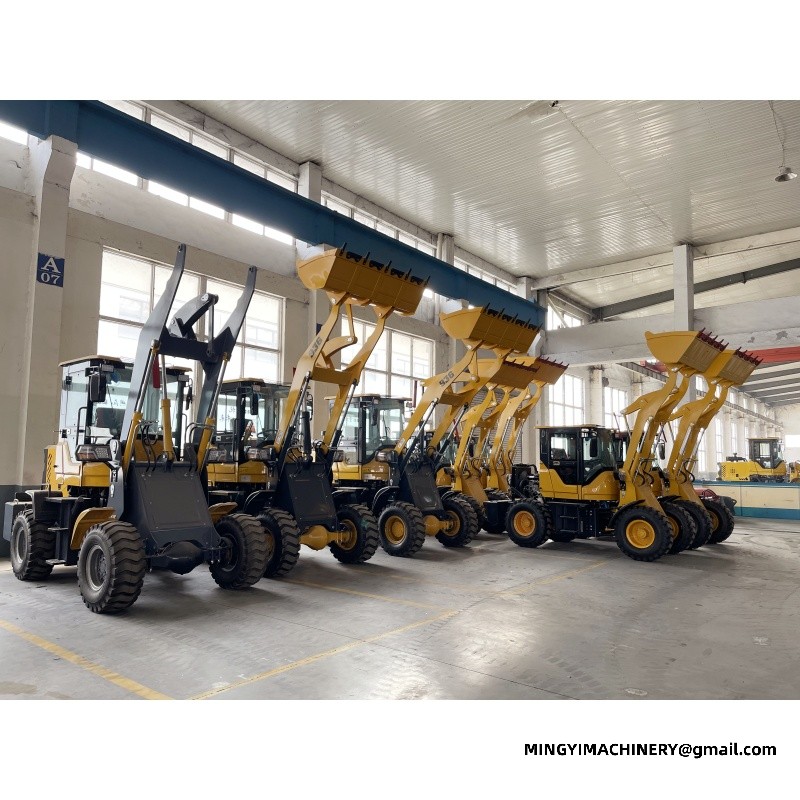
The most lengthy mistake in buying a loader is specifying capacity first. The heavy-duty 3.2 m low-profile wheel loader and the heavy-duty 3.2 m small-frame wheel-side reduction wheel loader differ by 3.2 m against 3.2 m of clearance, and that difference decides which bodies each can fill. Capacity only decides how many passes it takes once clearance exists.
Where clearance is marginal, look at the boom rather than the machine: the heavy-duty 3.2 m low-profile wheel loader works a 2.3 m arm from a 890 mm centre distance, the heavy-duty 3.2 m small-frame wheel-side reduction wheel loader a 2.3 m arm from 890 mm. A longer arm on a lighter frame buys height at the effort of stability, so match the arm to the counterweight — 4.1 m against 4.1 m — and not to a brochure figure.
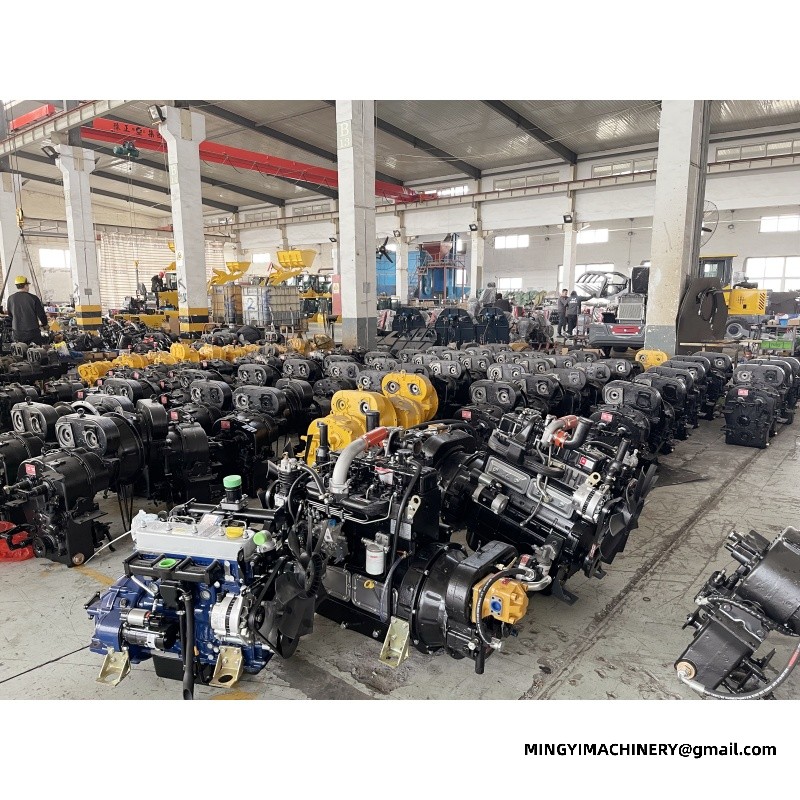
Three things stop a loader mid-shift, and two of them are in the specification. Fuel is the first: 54 L (50# tank) on the heavy-duty 3.2 m low-profile wheel loader. Cooling is the second: 4100 core (490 engine); 4105 core (4102T engine), and it is the one that announces itself as a gradual loss of power rather than a stoppage, so it gets ignored until the machine is derating every afternoon.
The third is electrical, and it is specified as well: 60 Ah (490 engine); 80 Ah (4102 turbo engine). Cranking capacity falls with temperature, so a battery that starts a warm engine happily can fail the same engine at dawn in winter. Where the build offers two ratings, the higher one belongs to the turbo option and is worth specifying for cold climates or for machines that start cold and stop often.
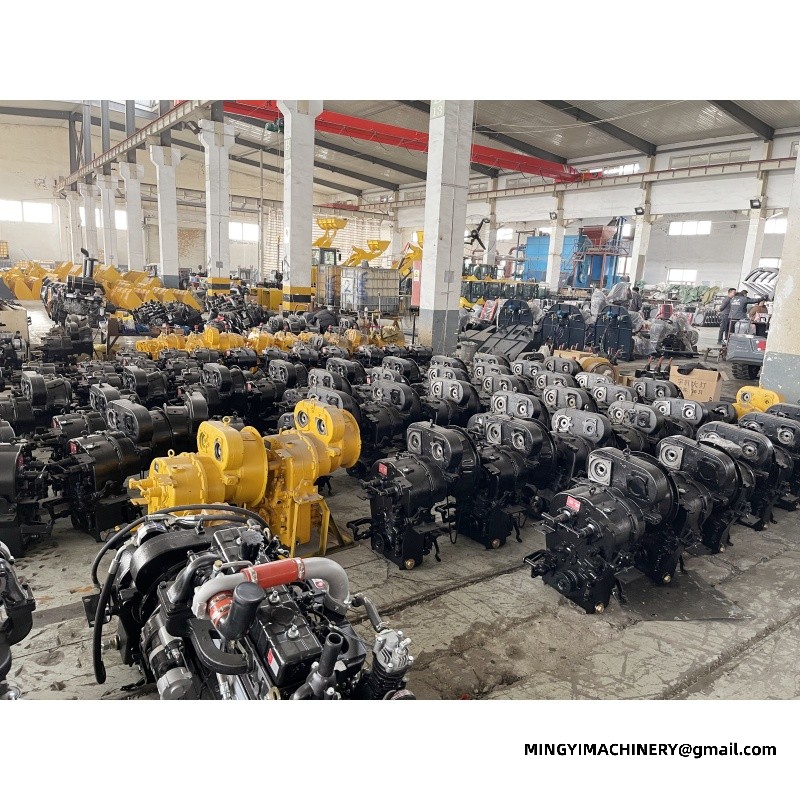
Most loader downtime is avoidable and most of what is avoidable is grease, coolant and hoses. Grease the articulation and the boom pins on the interval — on the heavy-duty 3.2 m low-profile wheel loader that is the 30 mm and 20 mm plates and the 890 mm boom mounts. Keep the 4100 core (490 engine); 4105 core (4102T engine) core clean, because overheating presents as lost power long before it presents as a fault.
Hoses are the second most common cause of a stopped machine and the easiest to plan for: a chafing hose on the centre cylinder 45 / side cylinder 45 circuit weeps before it bursts, and a weekly look finds it. Pumps — 40 pump (490 engine); 1045 pump (4102 turbo engine) and 316 pump on the heavy-duty 3.2 m low-profile wheel loader — rarely fail without warning; they get noisy first. On the heavy-duty 3.2 m small-frame wheel-side reduction wheel loader the equivalents are centre cylinder 45 / side cylinder 45, 40 pump (490 engine); 1045 pump (4102 turbo engine) and 316 pump. Keep a hose set and a filter set on site and most of this becomes a tea break rather than a week.
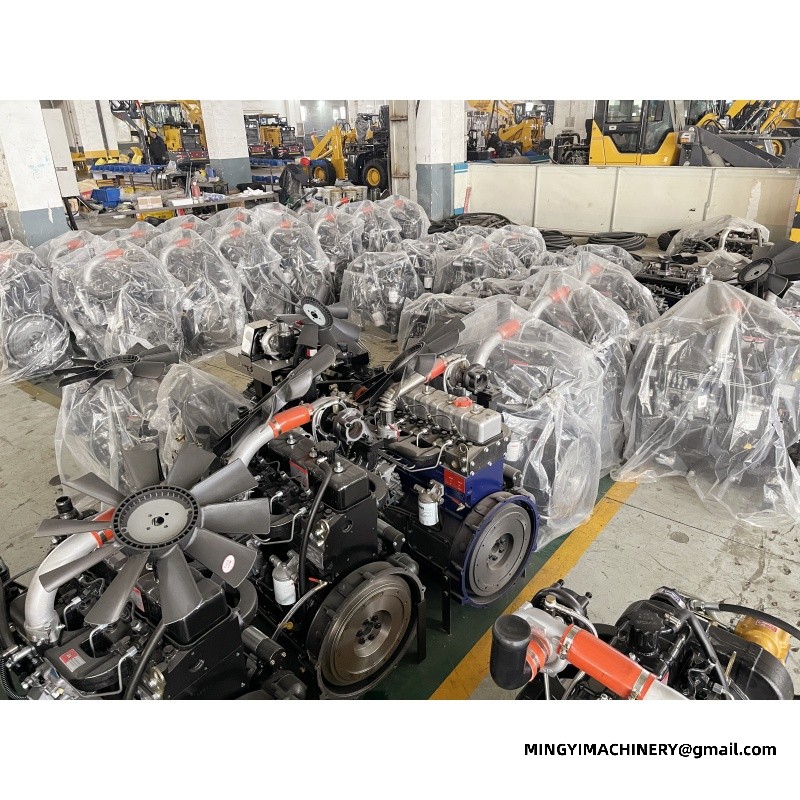
Articulated steering lets a loader turn inside its footprint, and every one of those turns is carried by two plates. Front hinge 30 mm, rear hinge 20 mm. The rear is the heavier because it carries the counterweight and the whole rear frame through every steering input.
Short wheelbase machines articulate harder and more often, which is why plate thickness matters more on a compact build, not less. At 4.1 m front wheel to counterweight and 1.5 m (wheel-side reduction axle); 1.45 m (Isuzu axle) of track, this machine will spend its life turning in tight spaces; a 30 mm cross-member is what keeps those plates in line while it does.
A radiator does not fail; it gets blocked. On this build the core is 4100 core (490 engine); 4105 core (4102T engine), and in dusty or chaff-heavy work it needs cleaning from the clean side outwards, in the reverse direction to normal airflow, because pushing debris further into the fins makes the blockage permanent.
Watch the cap and the seat while you are there. A system that loses pressure boils at a lower temperature, and the symptom is intermittent overheating under load that disappears on the level - - which is routinely misdiagnosed as a pump problem. The pump is 40 pump (490 engine); 1045 pump (4102 turbo engine); the travel circuit is 316 pump; neither produces that symptom. A cap does.
How do I choose the axle on a heavy duty wheel loader?
By surface. Track is 1.5 m (wheel-side reduction axle); 1.45 m (Isuzu axle) here; where two figures are listed the wider one is the hub-reduction axle for soft or rutted ground, the narrower one suits hard standing.
Will a heavy duty wheel loader ship assembled in a container?
It depends on the longest dimension, 4.1 m from front wheel to counterweight, and on track, 1.5 m (wheel-side reduction axle); 1.45 m (Isuzu axle). The bucket usually comes off; the arm must be lowered to clear the door.
Where do frames on a heavy duty wheel loader crack first?
Weld toes at the cross-member and around the rear hinge. The section is 230 mm high x 800 mm wide over a 30 mm member on this build; check both monthly on hard duty.
Why does my heavy duty wheel loader bucket only fill two-thirds?
The material is denser than the bucket was matched to. At 0.4 m³ on the heavy-duty 3.2 m low-profile wheel loader against 0.4 m³ on the heavy-duty 3.2 m small-frame wheel-side reduction wheel loader, a smaller bucket that fills completely moves more per hour than a larger one that does not.
Is a heavy duty wheel loader noisy to work beside?
Engine and hydraulic noise, with the pump a contributor: 40 pump (490 engine); 1045 pump (4102 turbo engine) on this build. A pump that is cavitating is louder than a healthy one, so noise is also a diagnostic.
Which engine option should a heavy duty wheel loader be ordered with?
It follows the duty. The engine drags three rows with it: pump 40 pump (490 engine); 1045 pump (4102 turbo engine), core 4100 core (490 engine); 4105 core (4102T engine) and battery 60 Ah (490 engine); 80 Ah (4102 turbo engine). Choose it early rather than accepting whatever is in stock.
Can I order the same heavy duty wheel loader build again next year?
Yes, if the order is written by figures rather than by name: bucket 0.4 m³, lift 3.2 m, cylinders centre cylinder 45 / side cylinder 45, pump 40 pump (490 engine); 1045 pump (4102 turbo engine). Names change; rows do not.
Those are the rows that decide how a heavy duty wheel loader behaves once it is working. The full table for every build in the range is available on request, along with the engine options that change the pump, radiator and battery figures stated here.
Keeping a service record for Heavy Duty Wheel Loader: Steel That Takes the Duty
Patterns show up in the record before they show up in the machine. Rising oil consumption or a filter that keeps blocking on Heavy Duty Wheel Loader: Steel That Takes the Duty is obvious on paper long before it becomes a failure on site.
Storage and long idle periods for Heavy Duty Wheel Loader: Steel That Takes the Duty
Standing still is harder on a machine than working. Preparing Heavy Duty Wheel Loader: Steel That Takes the Duty for a long idle period means clean fluids, a charged battery and protection for the exposed surfaces, because neglect is not the same as rest.
Contact MINGYI Machinery for the current wheel loader lineup, configuration options and a formal specification for your market. E-mail: sales@mingycn.com | LINE (ID): mingyicn
Compact Wheel Loader: Small Builds, Daily Yard Work · Front Wheel Loader: Steering Feel and Pin Condition · Wheel Loader Manufacturer China: Range, Builds and Export Terms · Wheel Loader









