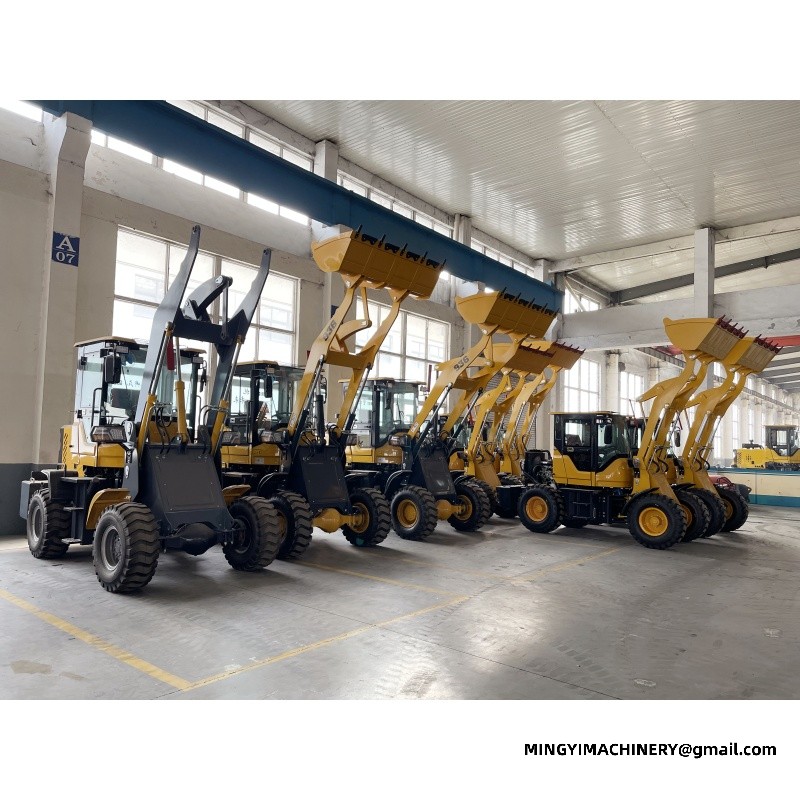
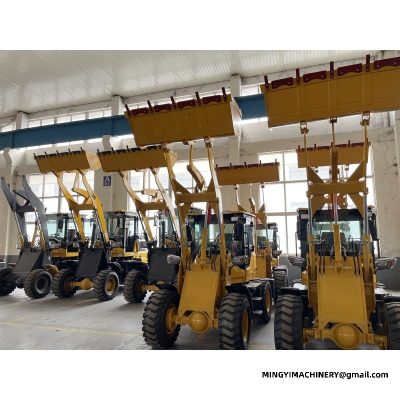
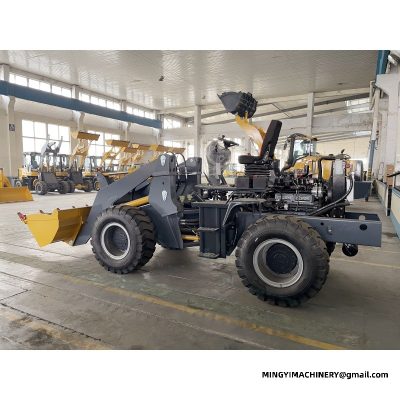
Buying a compact wheel loader is mostly deciding what you are willing to give up.Reach takes stability, capacity takes weight, speed takes heat, and a longer arm loads the hinge harder on every pass. The range publishes each of those trade-offs, so the decision can be made deliberately. Taking the light-duty 3.8 m small-frame wheel-side reduction wheel loader — 0.38 m³ bucket, 3.8 m of lift, 25 mm cross-member — against the light-duty 4.2 m small-frame wheel-side reduction wheel loader at 0.38 m³, 4.2 m and 25 mm, this page shows what each choice buys and what it takes.
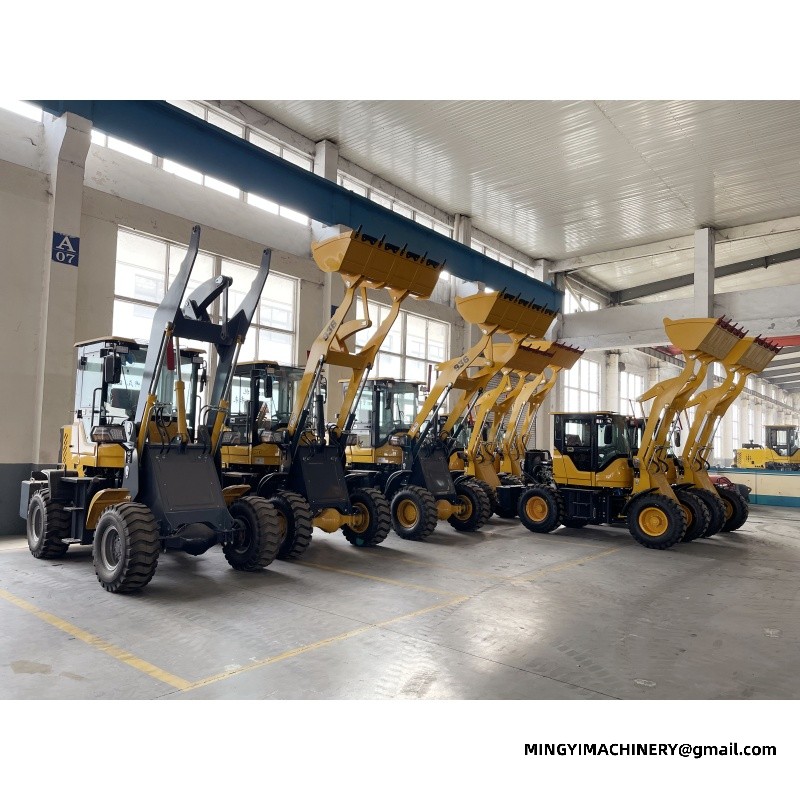
Adding a circuit after delivery is possible and never as good as specifying it at build. The pump is the constraint: 32 pump on this machine, 316 pump alongside it. Flow has to be shared, and a circuit added later shares it through plumbing that was not laid out for it.
The cylinders are less often the limit than people assume. centre cylinder 45 / side cylinder 40 gives the mechanical advantage; the pump gives the speed. If an attachment works but works slowly, look at flow before looking at bore. If it works but the arm twists, look at section instead: 300 mm of width and 680 mm of spacing resist that, and neither can be improved after the frame is welded.
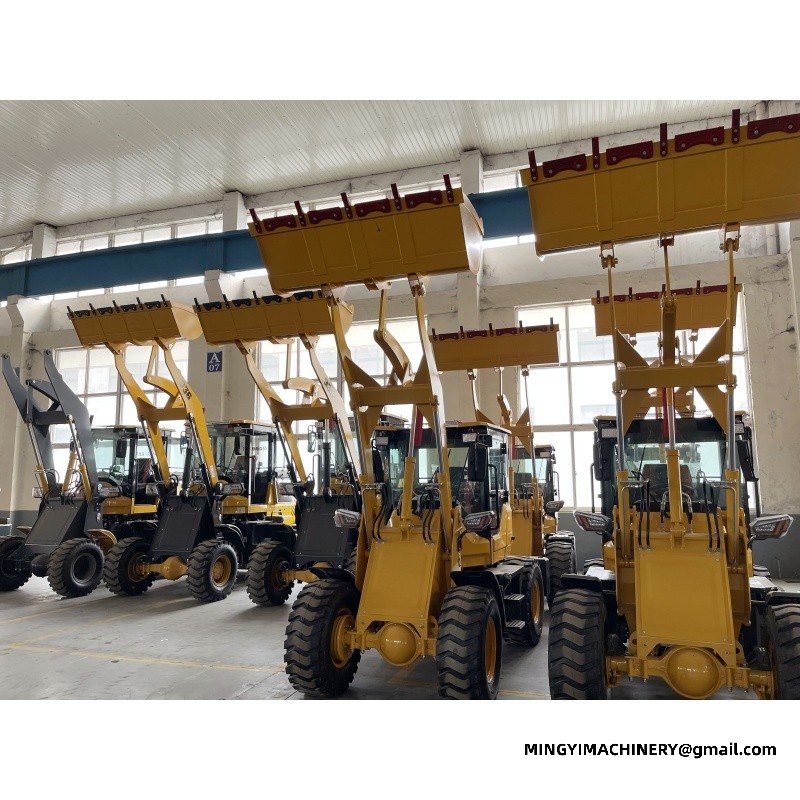
Radiator size follows the engine, not the frame. The light-duty 3.8 m small-frame wheel-side reduction wheel loader lists 4100 core (490 engine); 4105 core (4102T engine); the light-duty 4.2 m small-frame wheel-side reduction wheel loader lists 4100 core (490 engine); 4105 core (4102T engine). Where two engine options exist on one build, the cores differ — a 4100 core on the 490 engine and a 4105 on the 4102 turbo — and the taller, raised core is the one to specify wherever dust, chaff or dry sand blankets a standard radiator part-way through a shift.
Overheating is the single most common cause of a loader losing days rather than hours. It presents as power loss, then as a shift cut short, then as a head gasket. Choosing the raised core takes almost nothing at order time and cannot be retrofitted easily later. Pair that with the electrical package — 60 Ah (490 engine); 80 Ah (4102 turbo engine) on the light-duty 3.8 m small-frame wheel-side reduction wheel loader, 60 Ah (490 engine); 80 Ah (4102 turbo engine) on the light-duty 4.2 m small-frame wheel-side reduction wheel loader — and note that a battery specified for a naturally aspirated engine is often marginal for a turbo one in cold climates.
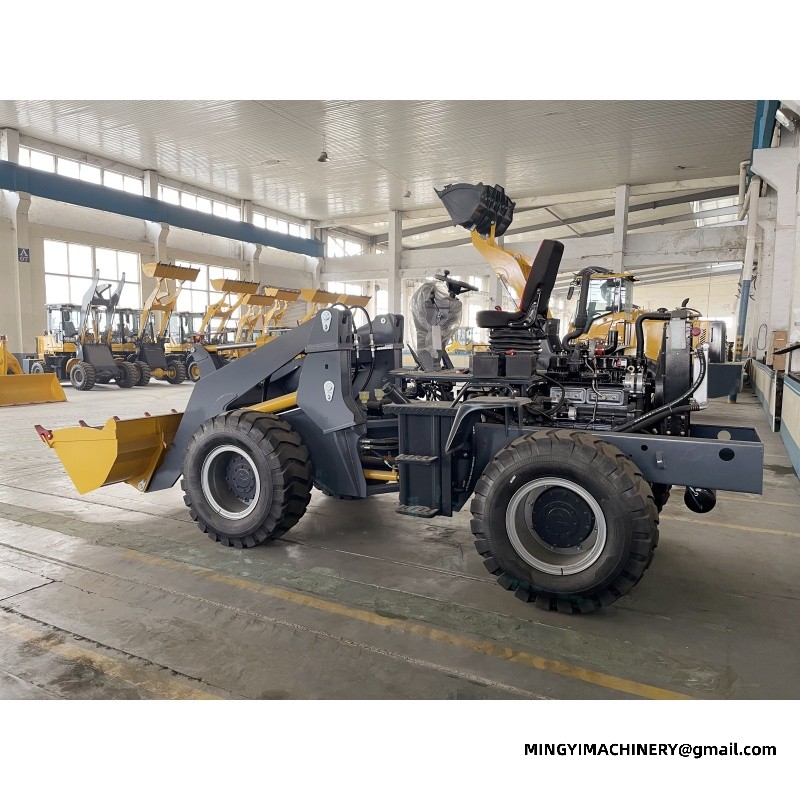
The battery is specified against the engine it has to crank: 60 Ah (490 engine); 80 Ah (4102 turbo engine) on the light-duty 3.8 m small-frame wheel-side reduction wheel loader and 60 Ah (490 engine); 80 Ah (4102 turbo engine) on the light-duty 4.2 m small-frame wheel-side reduction wheel loader. Where a build lists two figures, they belong to two engine options — a smaller capacity for the naturally aspirated unit, a larger one for the turbo — and the difference is starting torque in cold weather rather than anything you would notice in July.
For fleets shipping to cold markets, specify the larger capacity and a battery isolator; machines shipped knock-down arrive with batteries boxed and disconnected, and a machine that has sat for six weeks at anchor will not crank on a marginal battery. Check the rest of the electrical package at the same time — the 40 pump (490 engine); 1045 pump (4102 turbo engine) and 316 pump circuits on the light-duty 3.8 m small-frame wheel-side reduction wheel loader share the same harness, and a poor earth there presents as slow hydraulics rather than as an electrical fault.
| Reference specification — standard 2.8 m low-profile wheel loader | |
|---|---|
| Bucket capacity | 0.3 m³ |
| Dump height | 2.8 m |
| Track width | 1.2 m (Isuzu axle); 1.3 m (wheel-side reduction axle) |
| Boom arm thickness | 20 mm |
| Boom arm width | 300 mm |
| Boom arm length | 2.05 m |
| Boom arm centre distance | 680 mm |
| Cross-member thickness | 16 mm |
| Front hinge plate thickness | 16 mm |
| Rear hinge plate thickness | 16 mm |
| Rear frame section | 200 mm high x 750 mm wide |
| Hydraulic cylinders | centre cylinder 45 / side cylinder 40 |
| Fuel tank | 30.8 L (48# large tank, 20.5/70-16 tyres); 24.6 L (48# small tank, 8.25-16 tyres) |
| Battery | 45 Ah (24 V) |
| Front wheel to counterweight | 3.5 m |
| Radiator | 4100 core |
| Work pump | 32 pump |
| Travel pump | 316 pump |
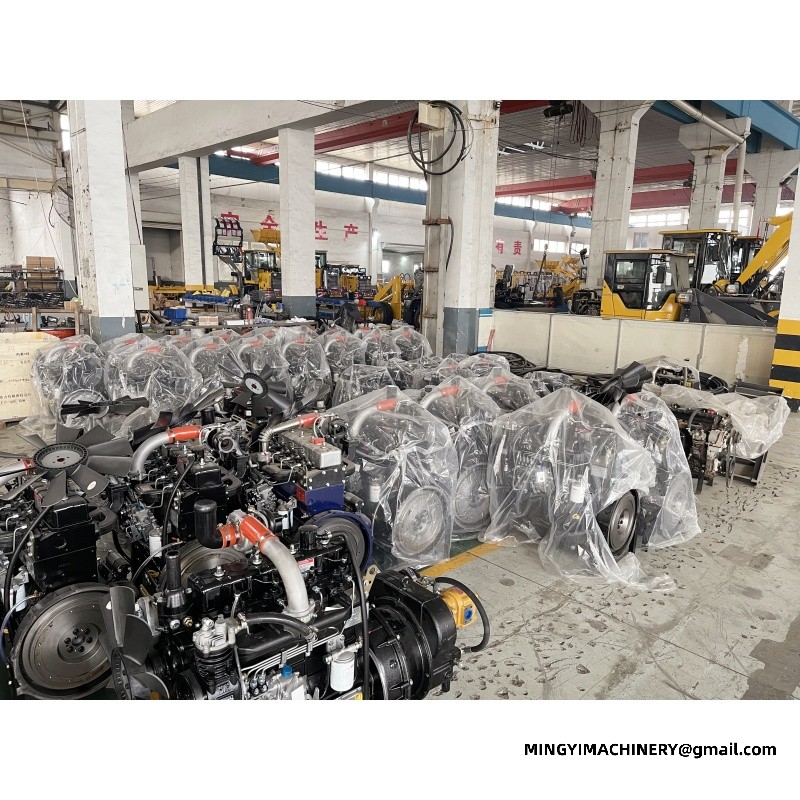
Fuel capacity on this range is specified per frame rather than per model: 64.7 L (75# small tank) on the light-duty 3.8 m small-frame wheel-side reduction wheel loader and 64.7 L (75# small tank) on the light-duty 4.2 m small-frame wheel-side reduction wheel loader. Both are intended to cover a full shift at working throttle, and both assume the machine is not idling for hours between loads — idling is where a "full day" tank becomes a half-day tank.
Plan refuelling around the tank, not around the clock. On the light-duty 3.8 m small-frame wheel-side reduction wheel loader with 64.7 L (75# small tank) and a 0.38 m³ bucket at 3.8 m, a day of continuous loading will run the tank down; on the light-duty 4.2 m small-frame wheel-side reduction wheel loader with 64.7 L (75# small tank) and 0.38 m³ at 4.2 m, the same day leaves allowance. Where a site has no bowser, that allowance is the difference between finishing at four and stopping at two.
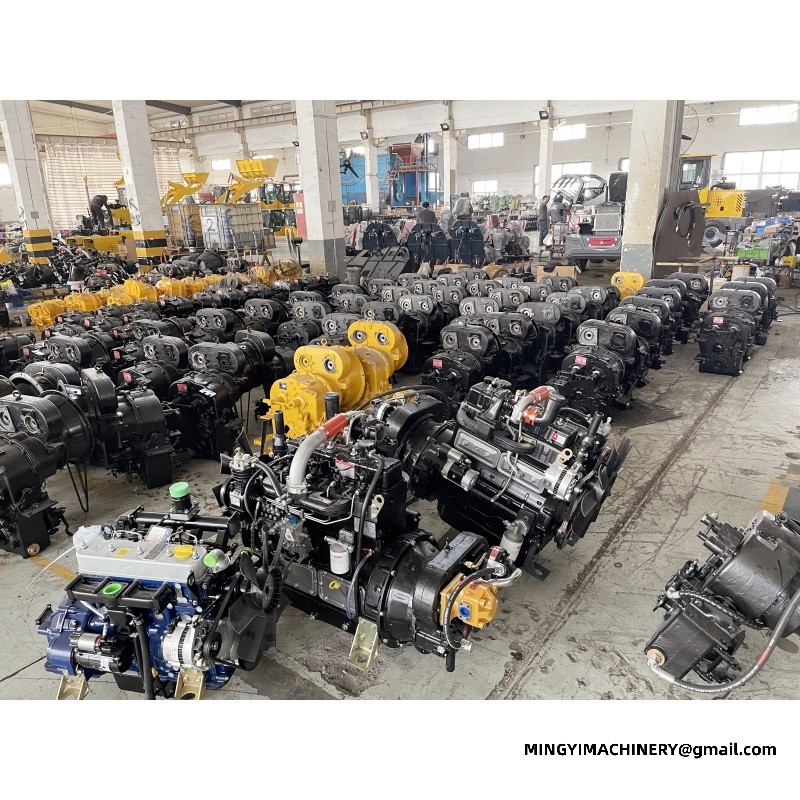
Fleet effort is driven by the size of the spares bin, and that is decided at purchase. Machines sharing an engine share a pump, 40 pump (490 engine); 1045 pump (4102 turbo engine), a radiator, 4100 core (490 engine); 4105 core (4102T engine), and a battery rating, 60 Ah (490 engine); 80 Ah (4102 turbo engine). Machines sharing a frame share cylinder sizes, centre cylinder 45 / side cylinder 40, and hinge geometry. Buy within one frame family and the bin halves.
The figures to compare are the ones that differ: bucket 0.38 m³ against 0.65 m³, dump height 3.8 m against 4.2 m, track 1.5 m (wheel-side reduction axle); 1.45 m (Isuzu axle) against 1.6 m. Where those differ, the wearing parts behind them usually differ too. Where they match, one part number covers both machines.
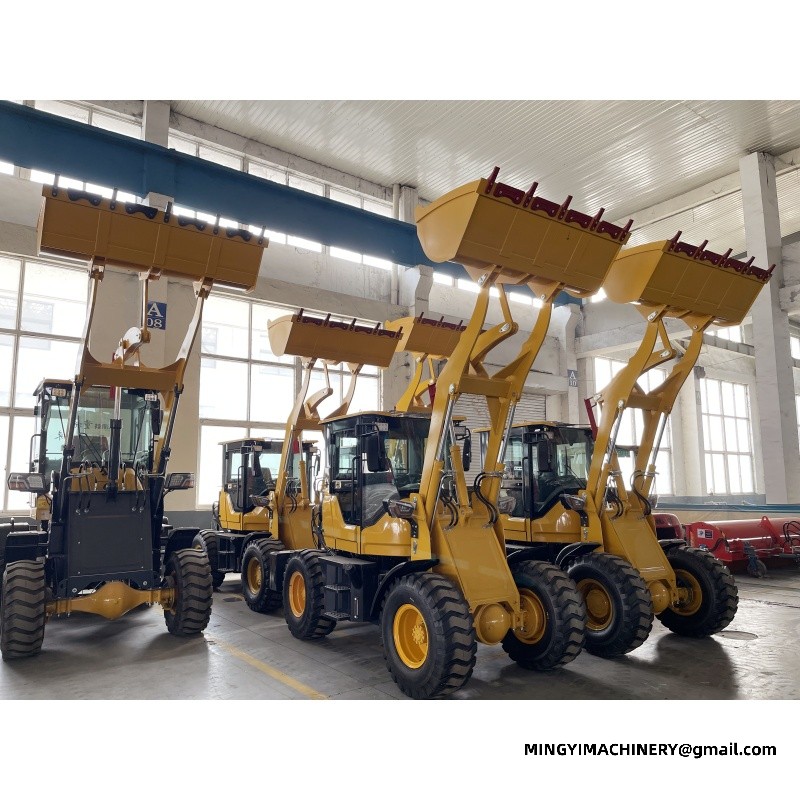
Every unit leaves the factory knock-down: booms and counterweights loose, tanks removed, batteries boxed and disconnected. Because rear frame sections stay within the 280 mm high x 800 mm wide to 280 mm high x 800 mm wide band across the range, two to three loaders ship in one forty-foot container.
What arrives is a machine plus a commissioning job. On the light-duty 3.8 m small-frame wheel-side reduction wheel loader that means fitting the 2.61 m boom to the 890 mm mounts, torquing the 25 mm hinge pins, filling the 64.7 L (75# small tank) tank and the 4100 core (490 engine); 4105 core (4102T engine) cooling system, and connecting the battery. On the light-duty 4.2 m small-frame wheel-side reduction wheel loader the same sequence applies with 3.15 m, 25 mm, 64.7 L (75# small tank) and 4100 core (490 engine); 4105 core (4102T engine). Allow a day per machine, and allow for the fact that the battery will have sat for weeks.
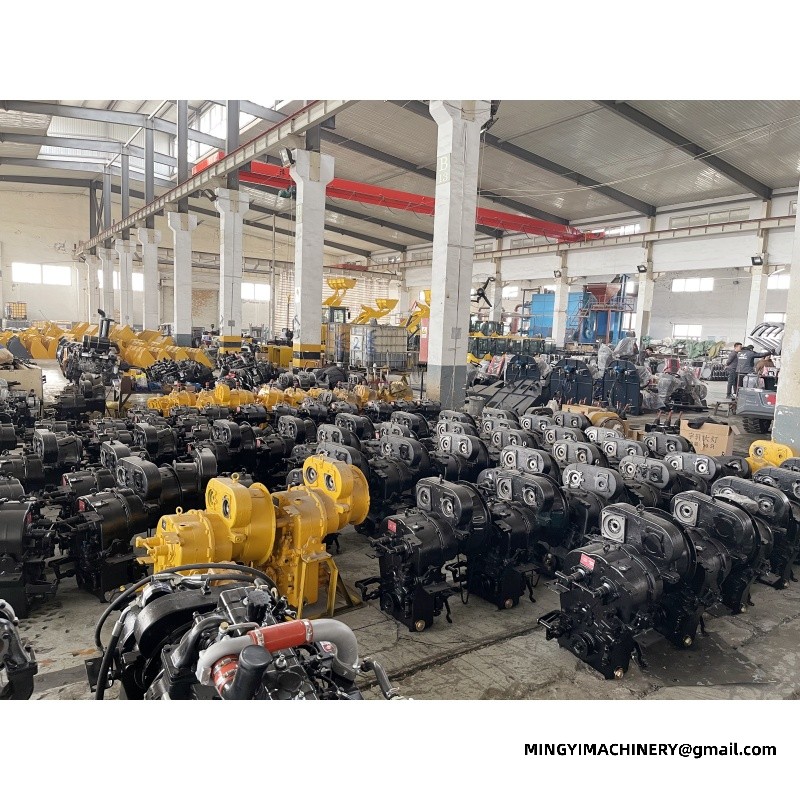
Daily: walk the machine, look at the ground under it, check the coolant level in the 4105 core package, and grease the hinge pins. Weekly: check the cylinder rods for scoring — centre cylinder 60 / side cylinder 50 — and the pins behind the 45 mm front plate for movement. Monthly: check the cross-member and rear frame, 300 mm high x 800 mm wide, for cracks at the weld toes.
None of that needs a workshop, and all of it is what keeps a machine tight. The parts that fail without warning are the ones nobody looks at: the pins, the hoses behind the 2063 pump, and the battery terminals on 80 Ah. A ten-minute walk-round finds all three before they stop the machine.
A boom that lifts slowly is usually a flow question, not a force question. The cylinders on this build are centre cylinder 45 / side cylinder 40 and the pump is 40 pump (490 engine); 1045 pump (4102 turbo engine); if lift is slow but breakout is normal, look at flow before looking at the cylinders. If breakout is weak as well, look at pressure.
Before either, rule out the simple causes: a blocked return filter, a low oil level, a suction leak, or a relief valve that has been tampered with to make a weak machine feel strong. Raising relief pressure above the setting the 25 mm wall and 25 mm cross-member were specified for is how frames get bent, and it is the most common fault found on machines that arrived second-hand.
What does a daily check on a compact wheel loader actually consist of?
Look at the ground under the machine, check coolant and oil, grease the hinge pins behind the 25 mm front and 14 mm rear plates, and glance at the cylinder rods. Ten minutes, every shift.
How often do hydraulic hoses need replacing?
On condition rather than on a calendar: look for cracking, rubbing and weeping at the crimps. The circuit runs centre cylinder 45 / side cylinder 45 on a 40 pump (490 engine); 1045 pump (4102 turbo engine), and a burst hose is a day while a failed pump is a week.
My compact wheel loader overheats every afternoon. What is the cause?
In order of likelihood: blocked fins on the 4100 core (490 engine); 4105 core (4102T engine) core, a cap that will not hold pressure, a fan drive problem, or genuine overloading. Clean the core first, from the clean side.
Which records should I keep for a compact wheel loader?
The delivery measurements and the specification. Bucket 0.3 m³, lift 2.8 m, cylinders centre cylinder 45 / side cylinder 40, pump 32 pump and track 1.2 m (Isuzu axle); 1.3 m (wheel-side reduction axle) identify the build for parts and for resale.
What makes a used compact wheel loader easy to sell?
A verifiable specification. Bucket 0.38 m³, lift 4.2 m, plates 25 mm and 20 mm and a 25 mm cross-member can all be measured, and a buyer who can check them will pay for the certainty.
What should I check before the first start of a compact wheel loader?
Coolant level in the 4105 core package, oil level, battery charge to the 80 Ah rating, and a walk-round for anything loosened in transit. Then run it light for ten minutes before loading it.
How much does material weight matter on a compact wheel loader?
It sets the real limit, not the bucket. Volume is 0.38 m³; what the frame takes is set by the 25 mm cross-member and the 280 mm high x 800 mm wide rear section behind it.
If the comparison here is close, decide on the rows that outlast the job: cross-member 25 mm against 25 mm, rear frame 280 mm high x 800 mm wide against 280 mm high x 800 mm wide. Capacity can be changed with a bucket; steel cannot be changed at all.
Hot, humid and dusty conditions around Compact Wheel Loader: Small Builds, Daily Yard Work
Heat and dust shorten service intervals rather than machine life. In these conditions the filters on Compact Wheel Loader: Small Builds, Daily Yard Work need attention more often, and the cooling surfaces need to be kept clear to hold the working temperature.
Later additions and retrofits on Compact Wheel Loader: Small Builds, Daily Yard Work
Later changes are easier when they were anticipated. Asking for the extra hydraulic circuit or the heavier mounting plate on Compact Wheel Loader: Small Builds, Daily Yard Work at build time adds little and leaves the option open.
Reading the early symptoms on Compact Wheel Loader: Small Builds, Daily Yard Work
The symptom is usually not at the fault. A hydraulic function that has become sluggish on Compact Wheel Loader: Small Builds, Daily Yard Work may point to a filter, a relief setting or a pump, and starting with the simple checks avoids the wrong guess.
Contact MINGYI Machinery for the current wheel loader lineup, configuration options and a formal specification for your market. E-mail: sales@mingycn.com | LINE (ID): mingyicn
Front Wheel Loader: Steering Feel and Pin Condition · Loader Machine for Construction: Pass Count and Cycle Plan · Wheel Loader Series: Reliable Builds from Entry to Medium Frame · Wheel Loader









