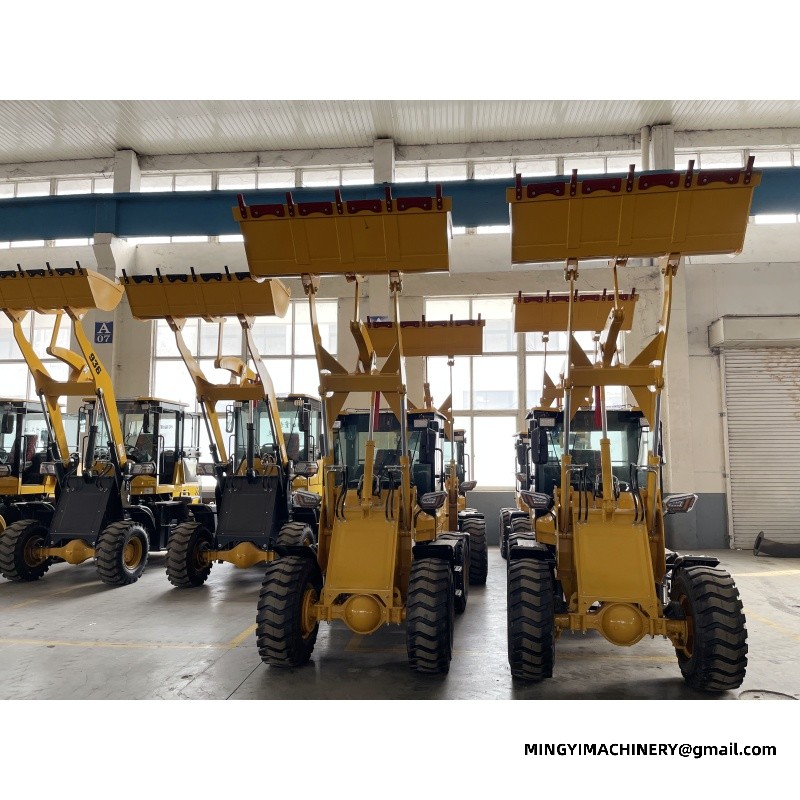
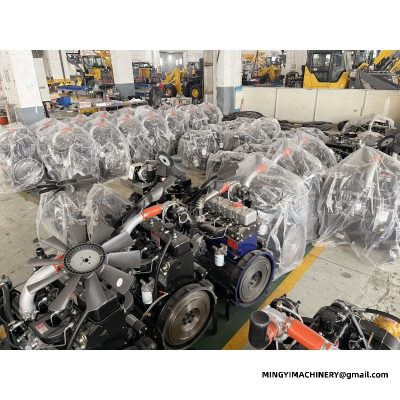
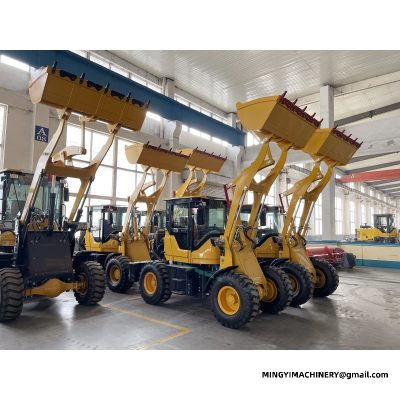
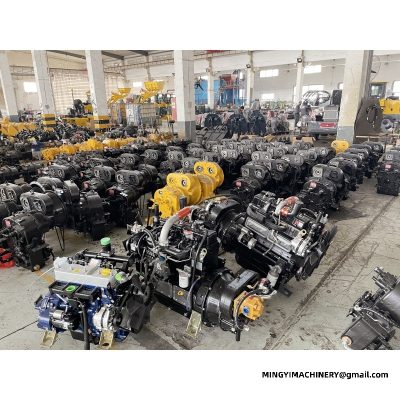
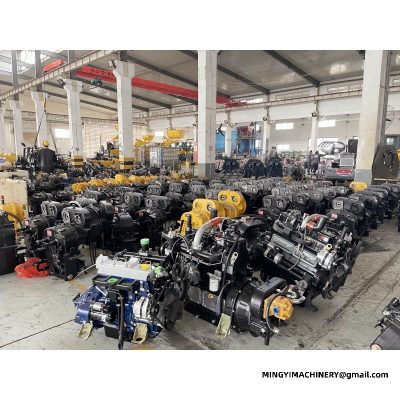
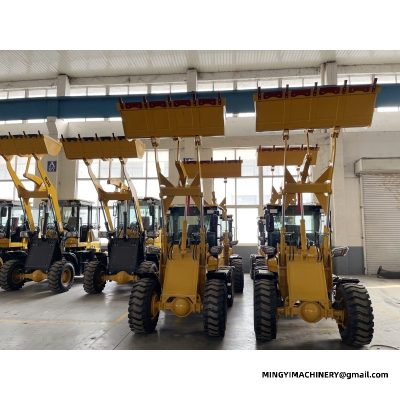
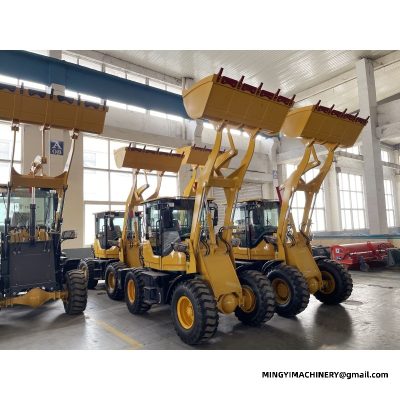
The simplest front wheel loader decision is the one made on paper.Choosing the wrong dump height takes a machine; choosing the wrong axle takes a driveline; choosing the wrong hinge steel takes a frame. Each of those is a row on a specification sheet, and each is published for every build here. The two machines compared throughout are the light-duty 3.5 m medium-frame wheel-side reduction wheel loader, lifting 3.5 m, and the light-duty 3.8 m medium-frame wheel-side reduction wheel loader, lifting 3.8 m. Read the rows in the order they will effort you money and the choice usually makes itself.
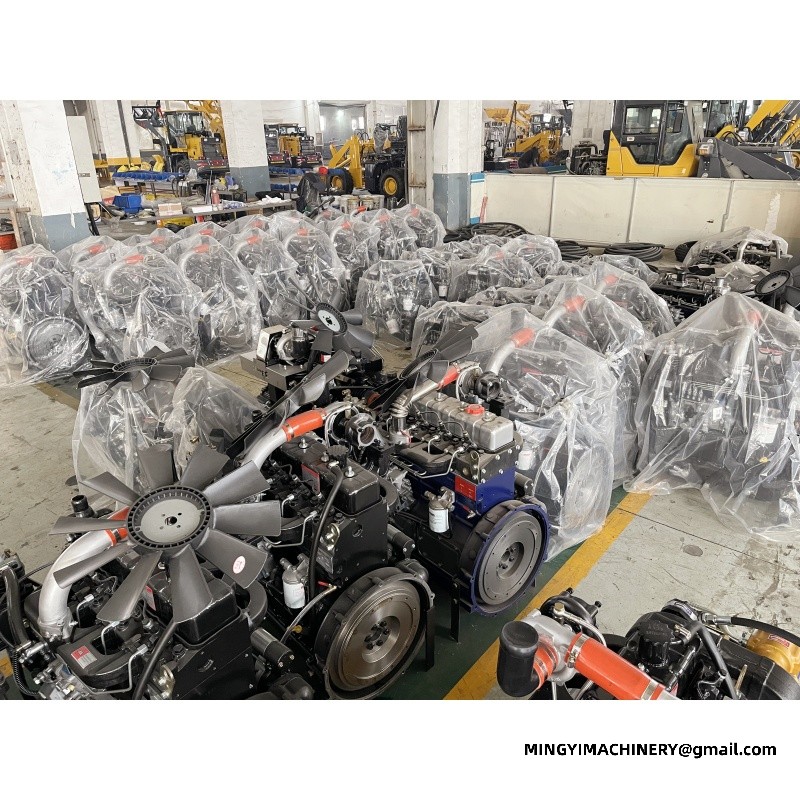
The useful way to read a range is as three decisions: how high, how heavy, and how wide. How high is dump height, 3.2 m against 3.2 m. How heavy is the steel, cross-member 25 mm against 25 mm and rear frame 280 mm high x 800 mm wide against 230 mm high x 800 mm wide. How wide is track, 1.5 m (wheel-side reduction axle); 1.45 m (Isuzu axle) against 1.5 m (wheel-side reduction axle); 1.45 m (Isuzu axle).
Once those three are settled, the bucket follows from the material and the boom from the height: 0.38 m³ on a 2.3 m arm here, 0.38 m³ on 2.3 m there. Reading it in that order means the specification is decided by the work rather than by whichever machine happened to be in stock.
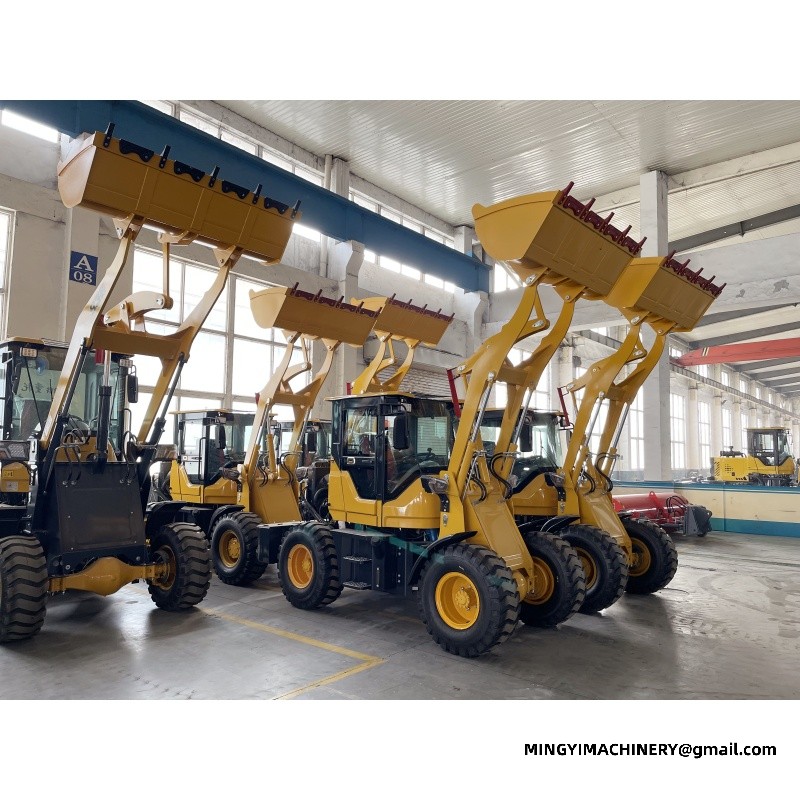
Winter changes three things: the battery has less to give, the oil is thicker, and the operator is working in gloves. The first two are specification questions. 45 Ah (24 V) covers the first. The hydraulic side, centre cylinder 40 / side cylinder 40 with a 32 pump, is sized for the loads it will see at working temperature and will simply be slower until it warms.
The third is a machine-layout question and comes down to the rear frame and the tank: 200 mm high x 750 mm wide of rear section and 30.8 L (48# large tank, 20.5/70-16 tyres); 24.6 L (48# small tank, 8.25-16 tyres) of fuel. Cold-weather work also means more idling, so tank capacity should be read against winter consumption rather than summer consumption. A machine that needs refuelling at minus ten with an operator standing outside is a specification failure, not a weather problem.
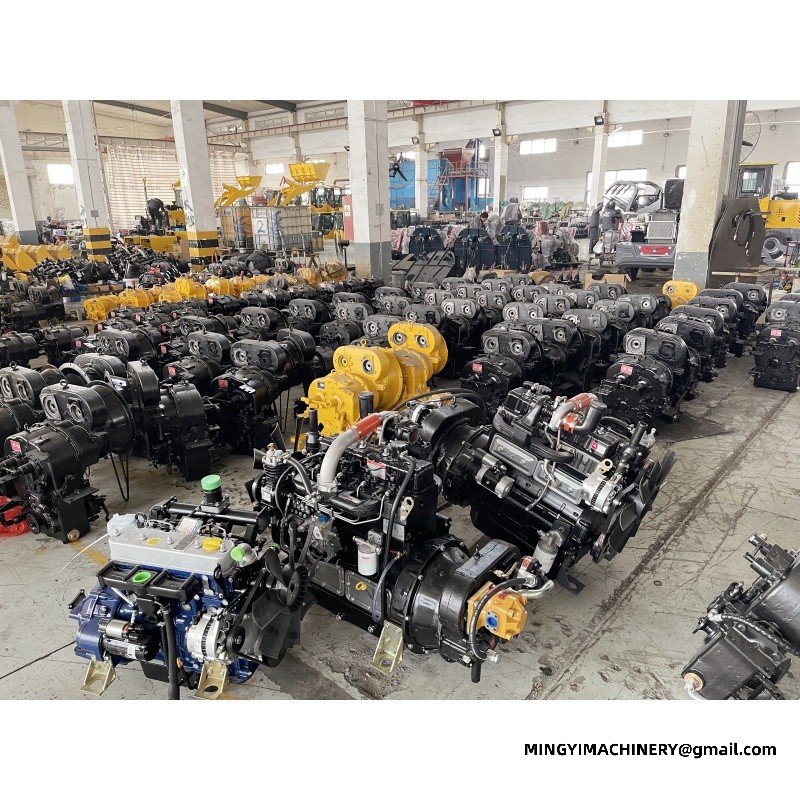
Front-wheel-to-counterweight length is the figure that decides whether a machine fits your site: 4.3 m on the light-duty 3.5 m medium-frame wheel-side reduction wheel loader against 4.3 m on the light-duty 3.8 m medium-frame wheel-side reduction wheel loader. Track width is the second: 1.6 m against 1.6 m. Together they set the turning circle and the narrowest gap the machine will pass, and they are the two numbers least likely to be stated in a sales conversation.
Access is a hard constraint and it fails silently. A loader that cannot turn in a shed is a loader that cannot work in that shed, whatever its bucket capacity. Compare 4.3 m at 1.6 m on the light-duty 3.5 m medium-frame wheel-side reduction wheel loader with 4.3 m at 1.6 m on the light-duty 3.8 m medium-frame wheel-side reduction wheel loader, measure your tightest turn and your narrowest doorway, and buy the machine that passes. Where the gap is marginal, the 4.3 m machine with its 0.52 m³ bucket will earn more than the 4.3 m one with 0.52 m³.
| Published build data — light-duty 3.8 m medium-frame wheel-side reduction wheel loader | |
|---|---|
| Bucket capacity | 0.52 m³ |
| Dump height | 3.8 m |
| Track width | 1.6 m |
| Boom arm thickness | 30 mm |
| Boom arm width | 430 mm |
| Boom arm length | 2.9 m |
| Boom arm centre distance | 900 mm |
| Cross-member thickness | 45 mm |
| Front hinge plate thickness | 45 mm |
| Rear hinge plate thickness | 30 mm |
| Rear frame section | 280 mm high x 800 mm wide |
| Hydraulic cylinders | centre cylinder 60 / side cylinder 50 |
| Fuel tank | 70 L (75# large tank) |
| Battery | 80 Ah |
| Front wheel to counterweight | 4.3 m |
| Radiator | 4105 core |
| Work pump | 2063 pump |
| Travel pump | 25 pump |
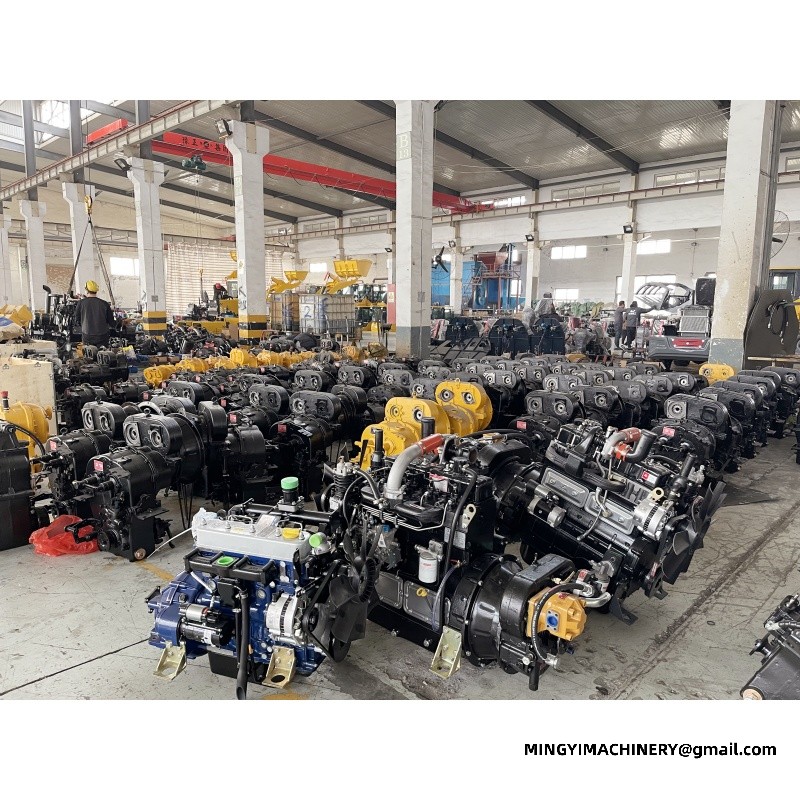
Daily: walk the machine, look at the ground under it, check the coolant level in the 4105 core package, and grease the hinge pins. The hinge is where wear starts, and on the light-duty 3.5 m medium-frame wheel-side reduction wheel loader those are 45 mm front and 30 mm rear plates over a 45 mm cross-member — a greasing interval missed there takes pins and bores, not just grease.
Weekly: check the centre cylinder 60 / side cylinder 50 cylinder rods for scoring, the hoses for chafe, and the 2063 pump and 25 pump connections for weeping. Monthly: torque the boom mount pins to the 900 mm spacing and inspect the cutting edge. On the light-duty 3.8 m medium-frame wheel-side reduction wheel loader the same schedule applies with 4105 core, centre cylinder 60 / side cylinder 50, 2063 pump and 900 mm. None of it is skilled work, and all of it is simpler than the failure it prevents.
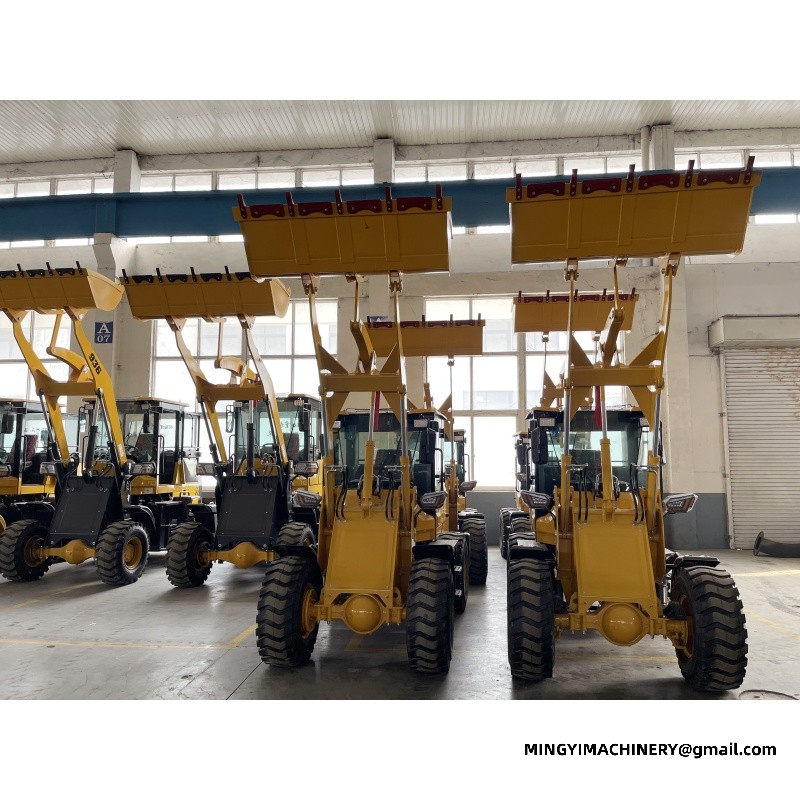
Export loading is a dimension problem. Rear frame width is the governing figure and it stays in a narrow band across this range — 300 mm high x 800 mm wide on the light-duty 3.5 m medium-frame wheel-side reduction wheel loader, 280 mm high x 800 mm wide on the light-duty 3.8 m medium-frame wheel-side reduction wheel loader — so two to three units load in a single forty-foot container with the booms and counterweights packed alongside.
Commissioning is the part buyers under-plan. Before the first start: torque the hinge pins, fill the 70 L (75# large tank) tank and the 4105 core circuit, check the 2063 pump and 25 pump connections, and charge or replace a battery that has sat through a voyage. Then check the five build figures — boom wall, boom width, front and rear hinge plates, cross-member — against the published table, because that is the one moment when a discrepancy is simple to fix.
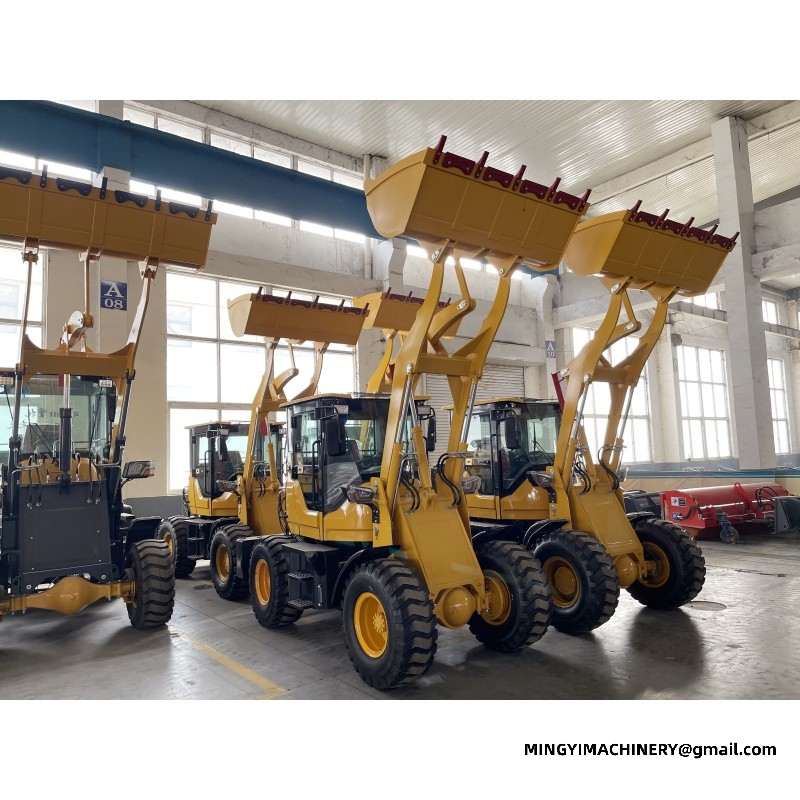
Site work is a truck-loading problem. The machine fills, reverses, turns, approaches and dumps, several hundred times a day, and the numbers that govern it are dump height, hinge steel and cycle time. The light-duty 3.5 m medium-frame wheel-side reduction wheel loader brings 0.52 m³ at 3.5 m with 45 mm and 30 mm hinge plates; the light-duty 3.8 m medium-frame wheel-side reduction wheel loader brings 0.52 m³ at 3.8 m with 45 mm and 30 mm.
Backfilling and heel-in work load the rear hinge harder than loading does, because the machine turns while pushing. That is why the rear plate figure — 30 mm against 30 mm — is the one to read for a site machine, ahead of engine power. Add the cooling question: site dust loads a radiator fast, so the raised core and the 4105 core package earn their keep where the 4105 core spec would need blowing out at lunch.
Spares consolidate by frame family rather than by model, which is the point of building a range this way. One cylinder seal kit covers the centre cylinder 40 / side cylinder 40 set across the builds that share it; one pump set covers 32 pump and 316 pump; pins, bushes and cutting edges are common within a family. On the standard 2.4 m low-profile wheel loader and the light-duty 3.8 m medium-frame wheel-side reduction wheel loader, where the two share a family, that is four line items.
What to keep on the shelf depends on the duty. A single machine on a farm needs a cutting edge, a hydraulic hose set, filters and a pin and bush kit. A fleet in a quarry needs those plus a cylinder seal kit, a pump, and one spare wheel-end. Because the 16 mm and 45 mm cross-members and the 16 mm and 30 mm hinge plates differ between builds, order wear parts against the model name, not against the frame.
A boom that lifts slowly is usually a flow question, not a force question. The cylinders on this build are centre cylinder 45 / side cylinder 40 and the pump is 40 pump (490 engine); 1045 pump (4102 turbo engine); if lift is slow but breakout is normal, look at flow before looking at the cylinders. If breakout is weak as well, look at pressure.
Before either, rule out the simple causes: a blocked return filter, a low oil level, a suction leak, or a relief valve that has been tampered with to make a weak machine feel strong. Raising relief pressure above the setting the 25 mm wall and 25 mm cross-member were specified for is how frames get bent, and it is the most common fault found on machines that arrived second-hand.
What affects operator fatigue on a front wheel loader?
Seat, visibility and how much the machine has to be corrected. A tight frame wanders less; a loose one behind the 16 mm plate is tiring to hold on the road.
How often do hydraulic hoses need replacing?
On condition rather than on a calendar: look for cracking, rubbing and weeping at the crimps. The circuit runs centre cylinder 45 / side cylinder 40 on a 40 pump (490 engine); 1045 pump (4102 turbo engine), and a burst hose is a day while a failed pump is a week.
How many passes will fill a truck with a front wheel loader?
Divide body volume by bucket volume, then check the height. Against 3.2 m of lift with a 0.38 m³ bucket, a body that is too tall is not a pass-count problem at all.
Can worn pins on a front wheel loader be repaired?
Yes, if the plates are sound. Re-machining restores geometry for a while; once the 45 mm cross-member and 300 mm high x 800 mm wide rear section have been flexing, it will not hold.
Can I order the same front wheel loader build again next year?
Yes, if the order is written by figures rather than by name: bucket 0.38 m³, lift 3.2 m, cylinders centre cylinder 45 / side cylinder 40, pump 40 pump (490 engine); 1045 pump (4102 turbo engine). Names change; rows do not.
What is involved in changing attachments on a front wheel loader?
Mechanical mounting plus hydraulics. The cylinders are centre cylinder 45 / side cylinder 40 and the pump is 40 pump (490 engine); 1045 pump (4102 turbo engine); flow, not force, is usually what limits an added service.
What should an operator be shown on a new front wheel loader?
Board clearance against the 3.5 m of lift, why the bucket should be squared to the face, and the daily walk-round. Most frame damage comes from corner-loading, not from overloading.
Where the duty is continuous rather than intermittent, the cooling and electrical rows move up the list: 4105 core of core and 80 Ah of battery on the light-duty 3.5 m medium-frame wheel-side reduction wheel loader. Where it is intermittent, the frame rows do. Deciding which case you are in is most of the specification.
Cold weather and winter care for Front Wheel Loader: Steering Feel and Pin Condition
Winter is hard on rubber and on seals as much as on the engine. Parking Front Wheel Loader: Steering Feel and Pin Condition under cover, keeping the tracks or tyres off standing water and checking the hoses for cracking are all part of the season.
Later additions and retrofits on Front Wheel Loader: Steering Feel and Pin Condition
Most additions are easier to plan than to add. Hydraulic services, mounting brackets and electrical capacity on Front Wheel Loader: Steering Feel and Pin Condition are build items, and deciding them at the specification stage is far easier than doing it later.
Wear items and spares worth holding for Front Wheel Loader: Steering Feel and Pin Condition
Holding spares is about downtime rather than the shelf itself. The question for Front Wheel Loader: Steering Feel and Pin Condition is not how large the part is but how long the machine sits while it is found, and a small shelf answers that better than a fast courier.
Contact MINGYI Machinery for the current wheel loader lineup, configuration options and a formal specification for your market. E-mail: sales@mingycn.com | LINE (ID): mingyicn
Loader Machine for Construction: Pass Count and Cycle Plan · Wheel Loader for Mining: Cooling Care on Every Shift · Wheel Loader Fork Attachment: Matching Forks to the Boom Section · Wheel Loader









