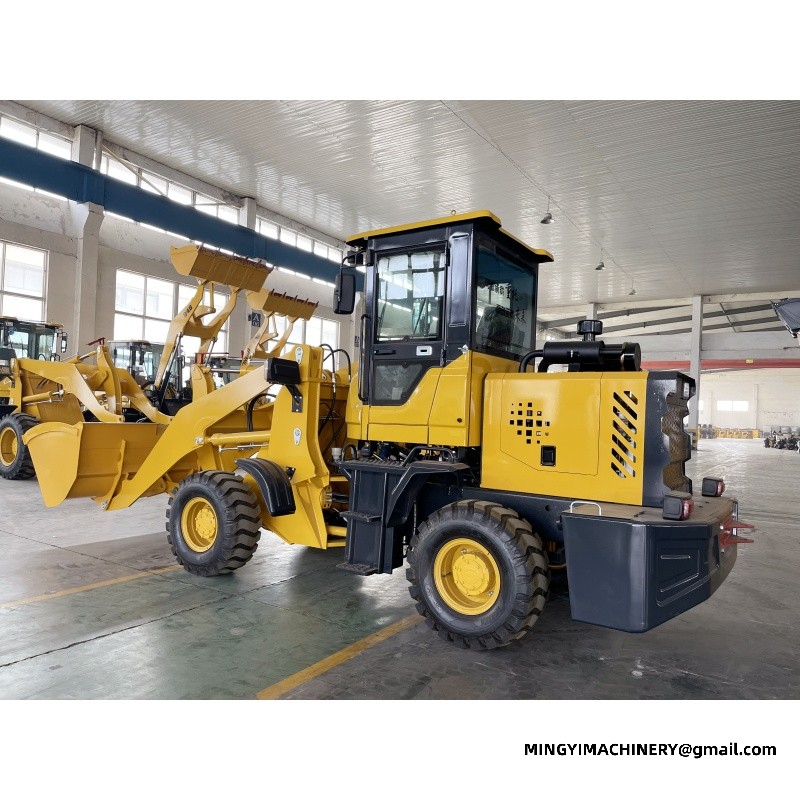
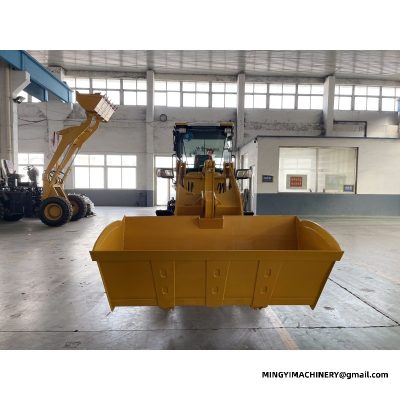
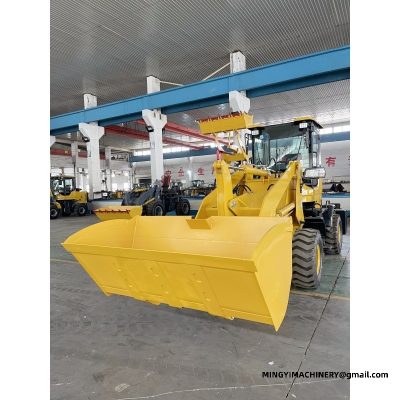
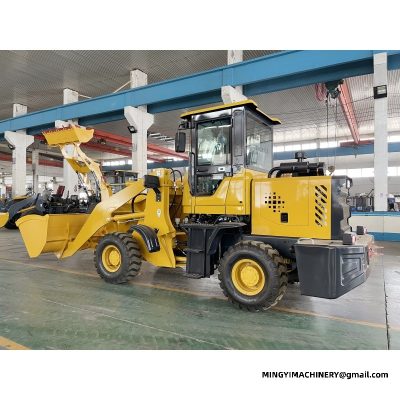
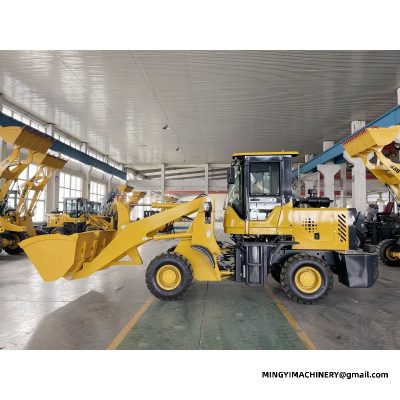
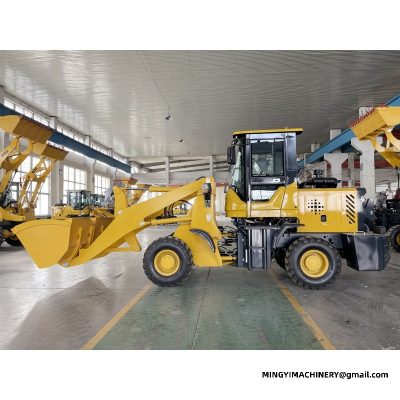
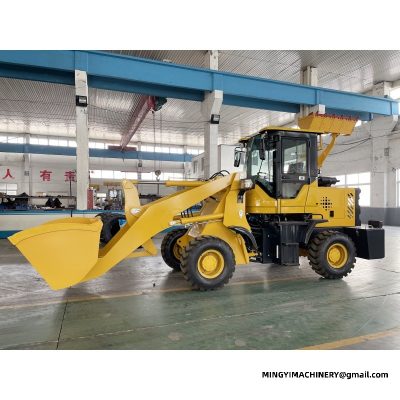
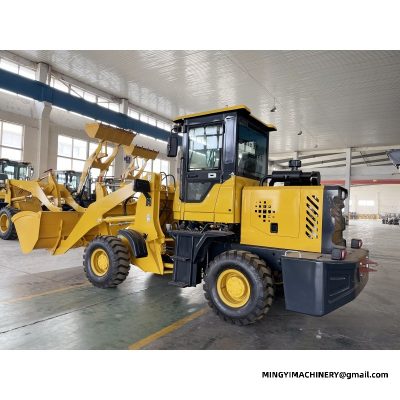
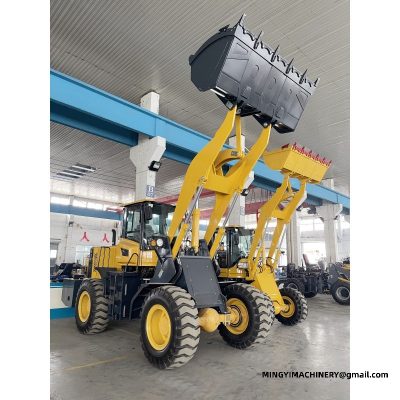
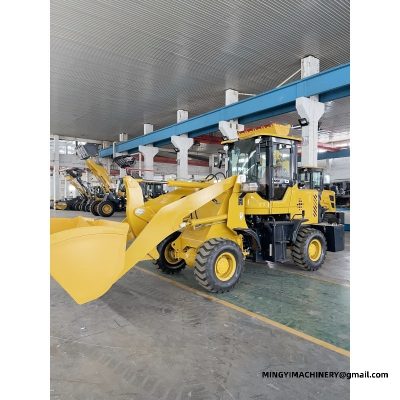
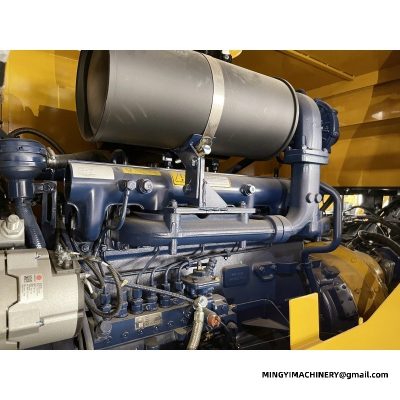
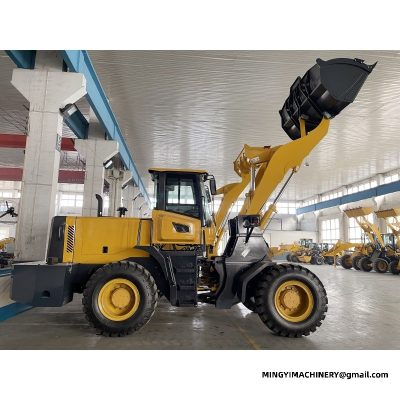
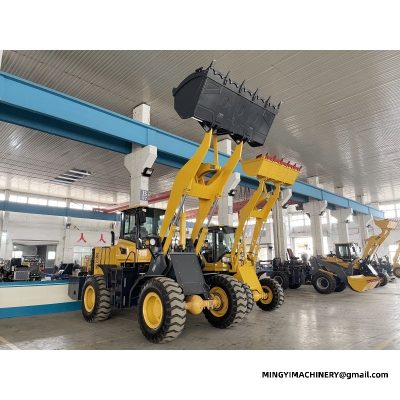
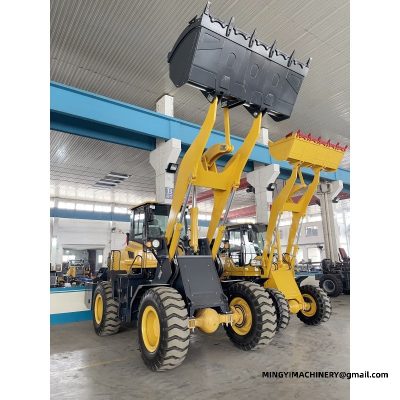
A wheel loader supplier earns its keep in the fourth hour of a shift, not the first. By then the cooling system is heat-soaked, the operator has stopped being careful, and the machine is working the face it will work all week. What holds up is what was specified: radiator 4100 core (490 engine); 4105 core (4102T engine), tank 64.7 L (75# small tank), cylinders centre cylinder 45 / side cylinder 45. What fails is usually what was assumed. This page follows a working day through the specification, from cold start to shut-down, using the heavy-duty 3.8 m small-frame wheel-side reduction wheel loader and the heavy-duty 4.2 m small-frame wheel-side reduction wheel loader as the two reference builds.
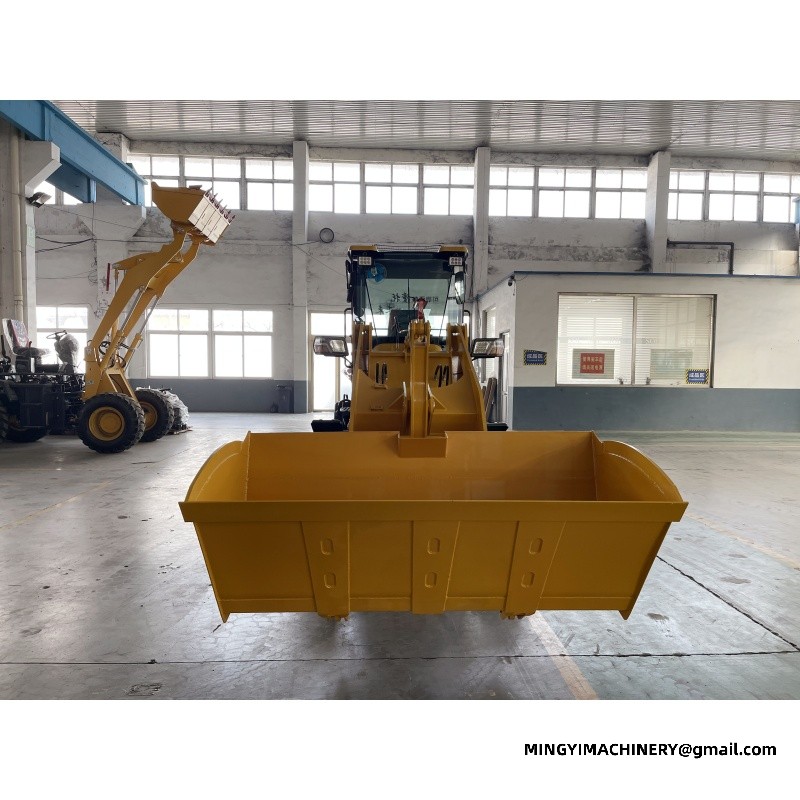
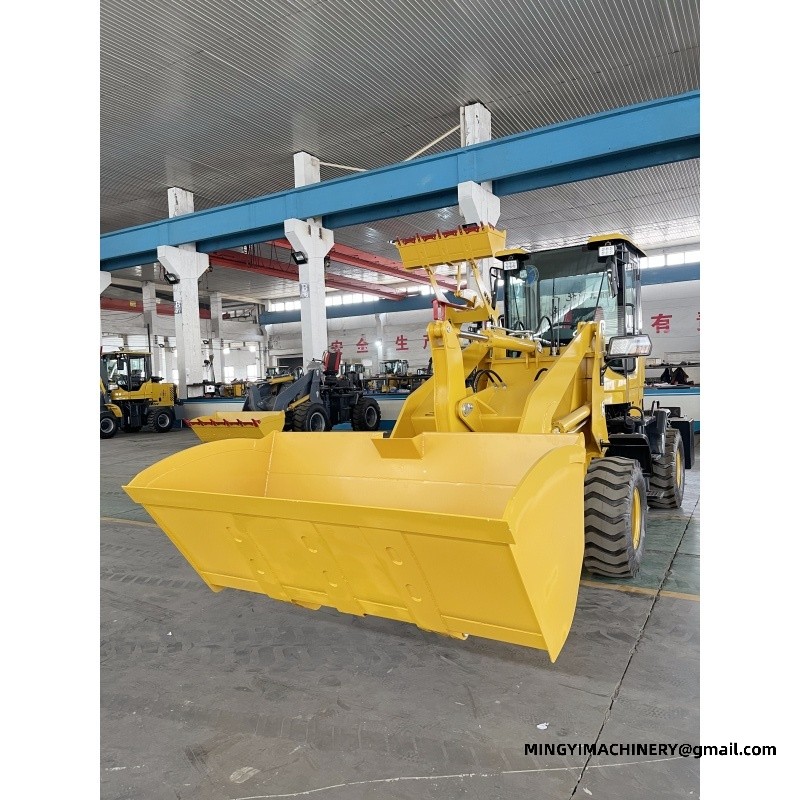
An attachment is only as useful as the hydraulics behind it. This build runs centre cylinder 60 / side cylinder 50 fed by a 2063 pump, and those two figures set the force available at the boom and the speed at which it arrives. A grapple, a fork carriage or a snow blower all ask for more flow than a bucket does.
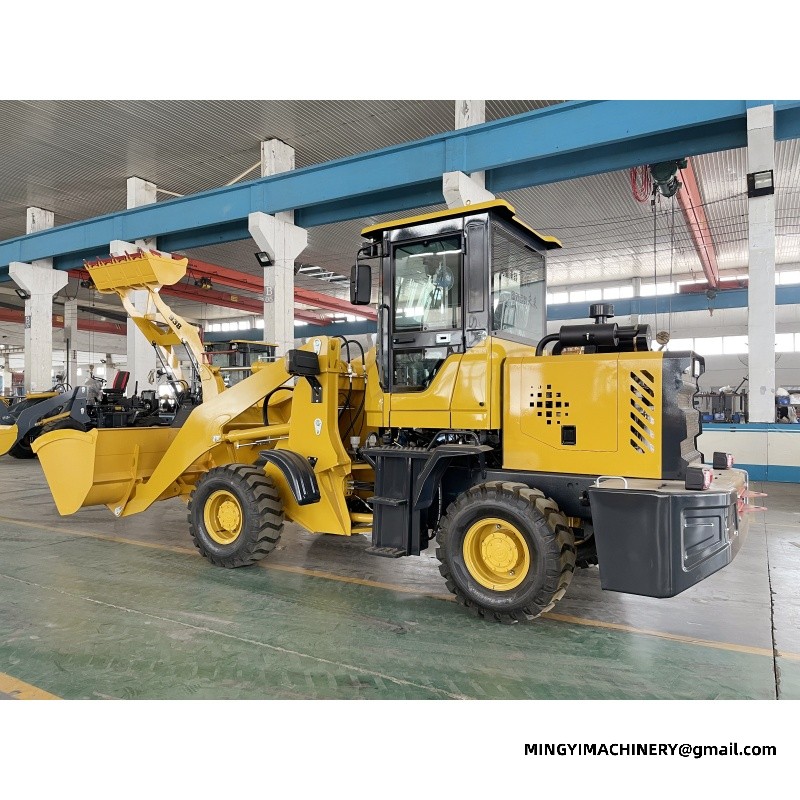
The centre cylinder does the lifting and the side cylinders do the tilting, and they are specified together for a reason. On the light-duty 4.5 m medium-frame wheel-side reduction wheel loader the pair is centre cylinder 60 / side cylinder 50. If an attachment needs a third service, the question to ask is whether the pump has the flow to run it without starving the lift circuit, because a machine that lifts slowly with a grapple on is not a machine with a grapple problem. It has a 2063 pump problem.
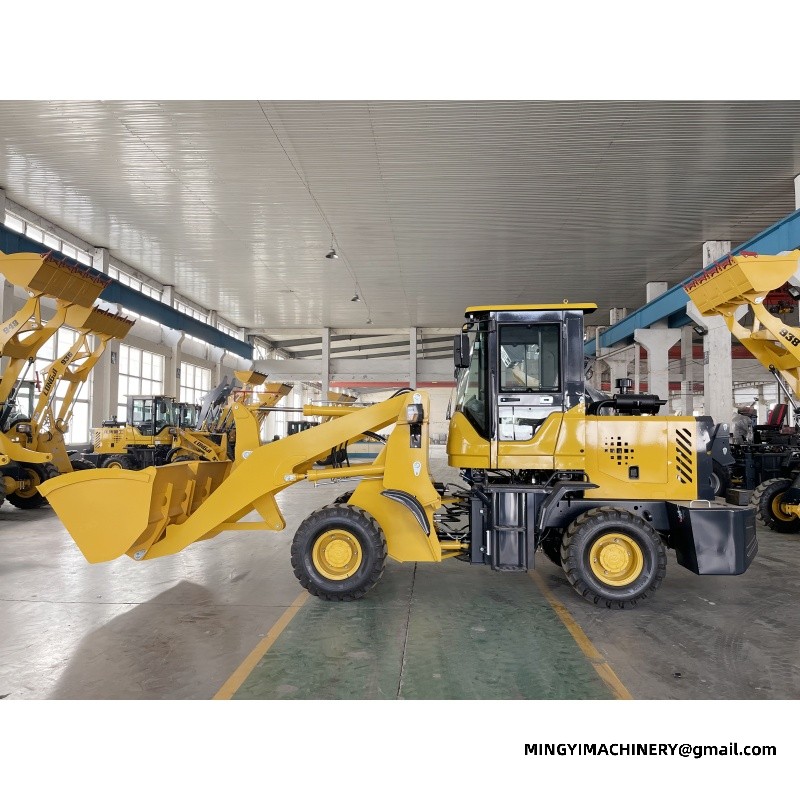
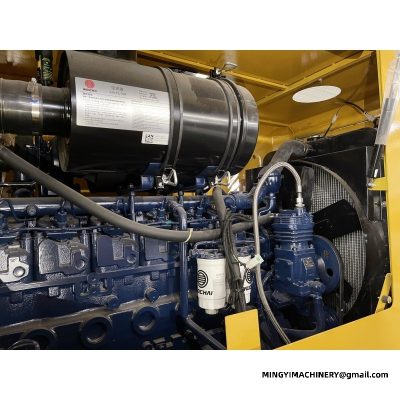
On builds with two engine options the cooling package changes with the engine, which is why the radiator line in the table reads as a pair: 4100 core (490 engine); 4105 core (4102T engine) on the heavy-duty 3.8 m small-frame wheel-side reduction wheel loader and 4100 core (490 engine); 4105 core (4102T engine) on the heavy-duty 4.2 m small-frame wheel-side reduction wheel loader. The 4100 core serves the 490 engine; the 4105 raised core serves the 4102 turbo. The raised core is not a marketing variant — it is more core area in the same footprint, and it is the difference between finishing a dusty shift and stopping at noon to blow out the fins.
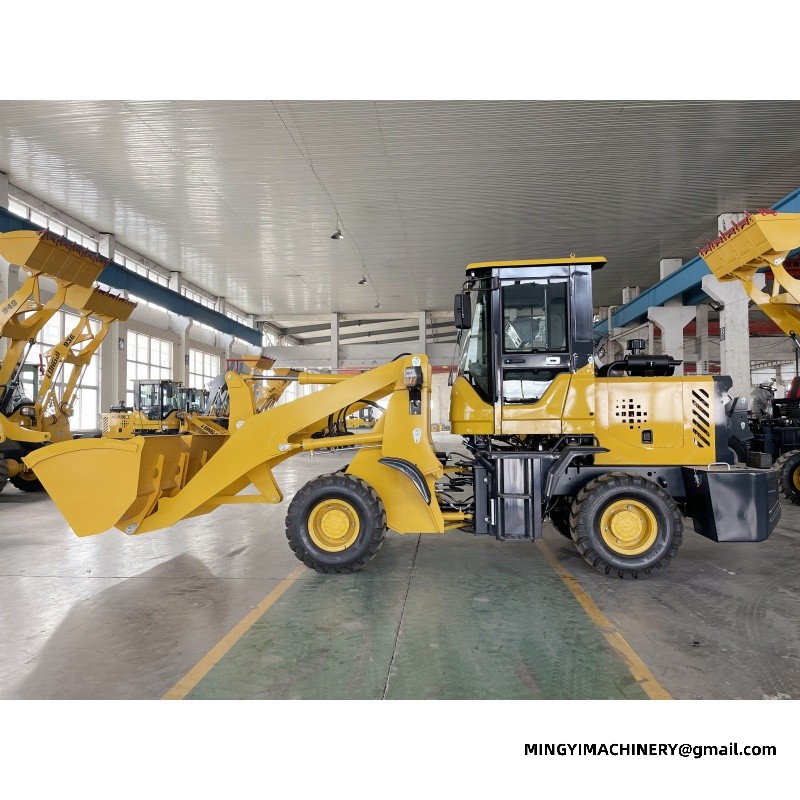
Where the machine will work is the deciding factor. Grain handling, lime, cement raw meal, crushing and screening all load a radiator with fine material; road building on a wet day does not. If the application is dusty, specify the raised core and a reversible fan if offered. Then check the rest of the package matches: 64.7 L (75# small tank) fuel on the heavy-duty 3.8 m small-frame wheel-side reduction wheel loader against 64.7 L (75# small tank) on the heavy-duty 4.2 m small-frame wheel-side reduction wheel loader, and the battery at 60 Ah (490 engine); 80 Ah (4102 turbo engine) against 60 Ah (490 engine); 80 Ah (4102 turbo engine).
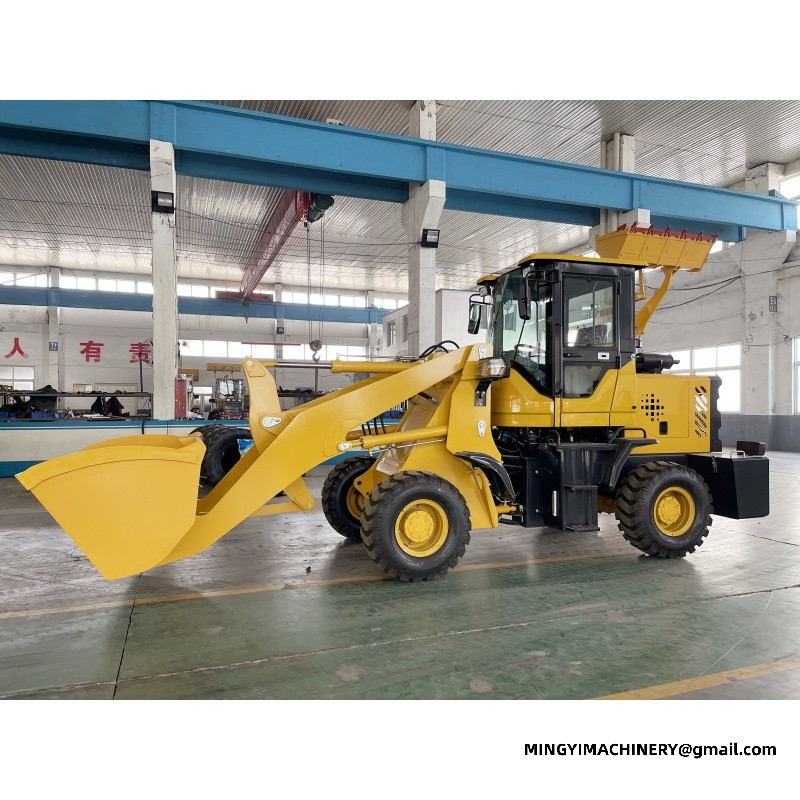
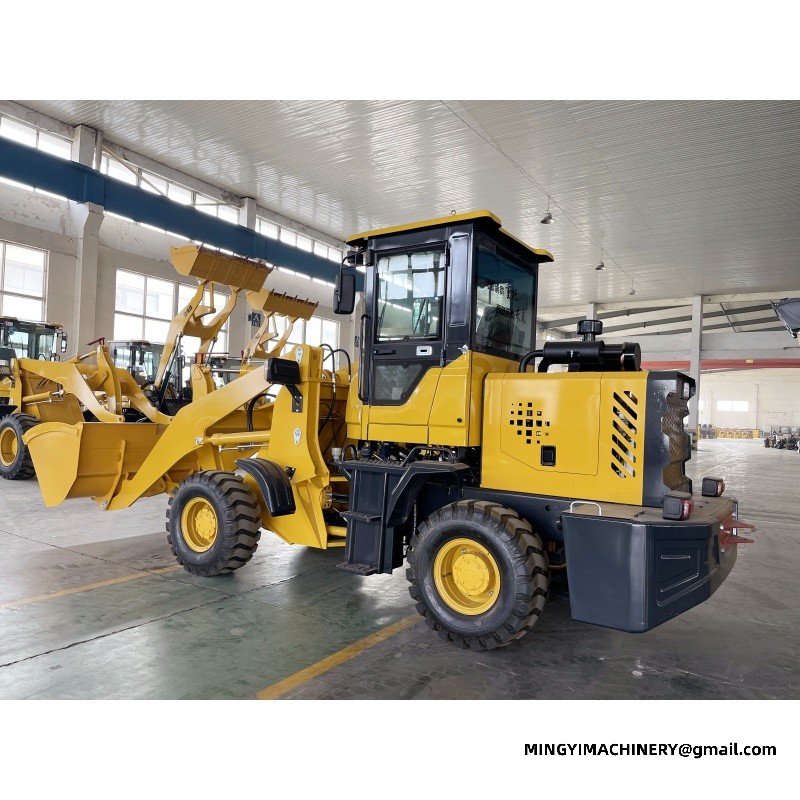
Operators get blamed for slow cycles that were decided in the frame shop. Where the lift is long, the pump and the cylinders set the pace: this build runs 40 pump (490 engine); 1045 pump (4102 turbo engine) with centre cylinder 45 / side cylinder 45. Where the run between face and truck is long, travel matters more, and that is the 316 pump and the 4.25 m wheelbase. Where the heap is packed, breakout matters most, and breakout comes from boom wall, 25 mm, working against bucket width.
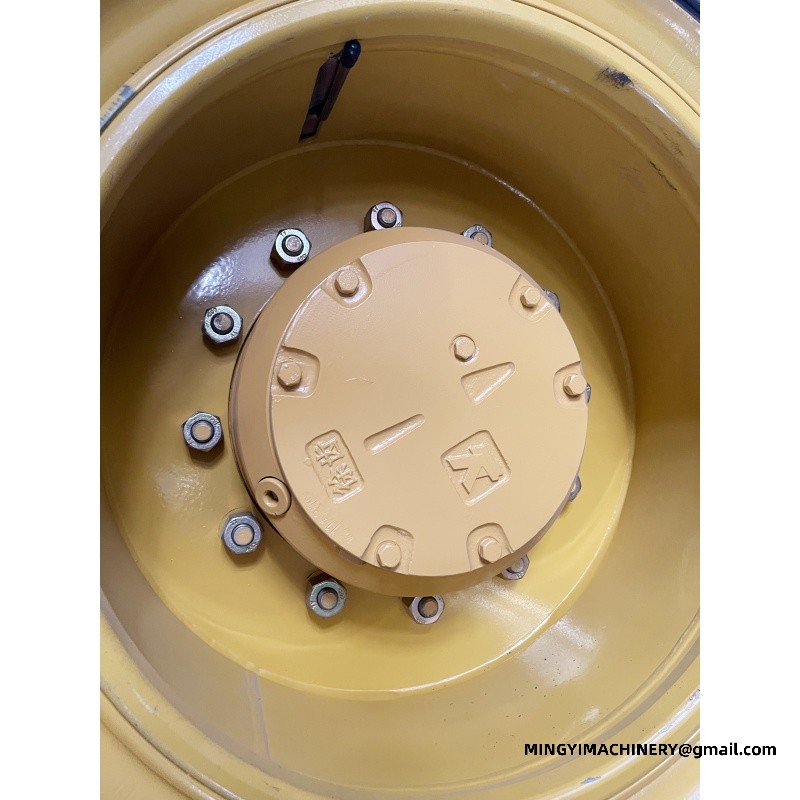
Compare two builds on the same heap and the difference shows up as a few seconds a pass. The light-duty 4.5 m medium-frame wheel-side reduction wheel loader carries 0.52 m³ against 0.4 m³ on the heavy-duty 4.2 m small-frame wheel-side reduction wheel loader, and lifts to 4.5 m against 4.2 m. Bigger is not automatically faster: a bucket that fills completely in two passes beats one that fills partly in three, and the frame that stays tight keeps doing it in month thirty.
| Reference specification — light-duty 3.2 m low-profile wheel loader | |
|---|---|
| Bucket capacity | 0.38 m³ |
| Dump height | 3.2 m |
| Track width | 1.5 m (wheel-side reduction axle); 1.45 m (Isuzu axle) |
| Boom arm thickness | 25 mm |
| Boom arm width | 370 mm |
| Boom arm length | 2.3 m |
| Boom arm centre distance | 890 mm |
| Cross-member thickness | 25 mm |
| Front hinge plate thickness | 25 mm |
| Rear hinge plate thickness | 14 mm |
| Rear frame section | 230 mm high x 800 mm wide |
| Hydraulic cylinders | centre cylinder 45 / side cylinder 40 |
| Fuel tank | 54 L (50# tank) |
| Battery | 60 Ah (490 engine); 80 Ah (4102 turbo engine) |
| Front wheel to counterweight | 4 m |
| Radiator | 4100 core (490 engine); 4105 core (4102T engine) |
| Work pump | 40 pump (490 engine); 1045 pump (4102 turbo engine) |
| Travel pump | 316 pump |
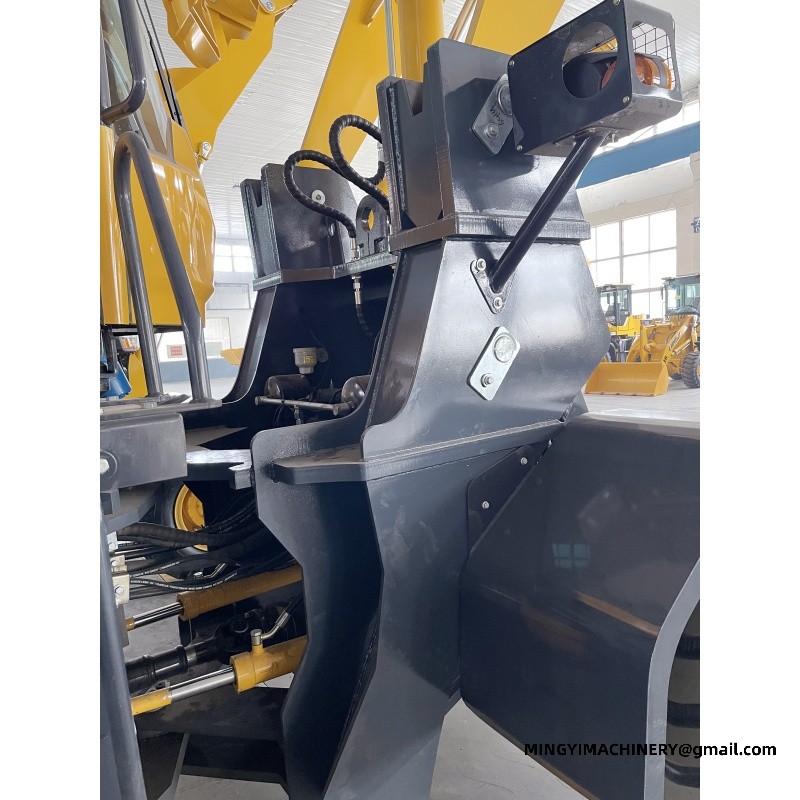
Electrical specification is short but consequential. The heavy-duty 3.8 m small-frame wheel-side reduction wheel loader lists 60 Ah (490 engine); 80 Ah (4102 turbo engine); the heavy-duty 4.2 m small-frame wheel-side reduction wheel loader lists 60 Ah (490 engine); 80 Ah (4102 turbo engine). Where a build offers two engines, the higher capacity belongs to the turbo — more compression to turn, more glow-plug load, and in a cold market that difference is the whole of a morning.
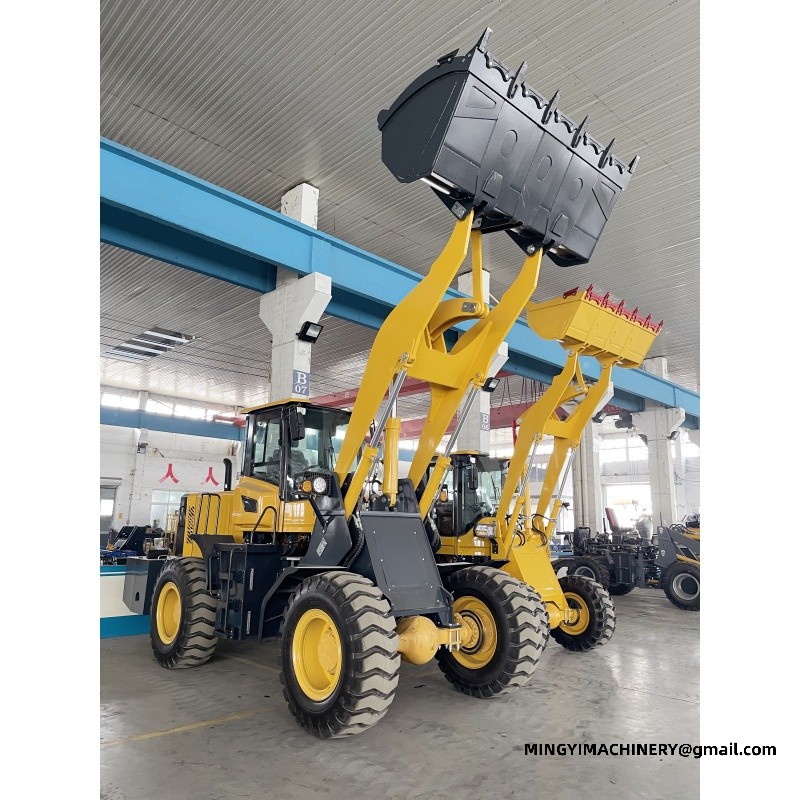
Beyond the battery, specify an isolator switch and confirm the alternator output matches the load you intend to add. Work lights, a beacon, a reversing alarm and a hydraulic third-circuit solenoid all draw from the same pack, and the 40 pump (490 engine); 1045 pump (4102 turbo engine) driven hydraulics on the heavy-duty 3.8 m small-frame wheel-side reduction wheel loader do not reduce that draw. On the heavy-duty 4.2 m small-frame wheel-side reduction wheel loader the same applies with 40 pump (490 engine); 1045 pump (4102 turbo engine). If the machine will sit for more than a month before commissioning, specify the isolator and a maintenance charge interval.
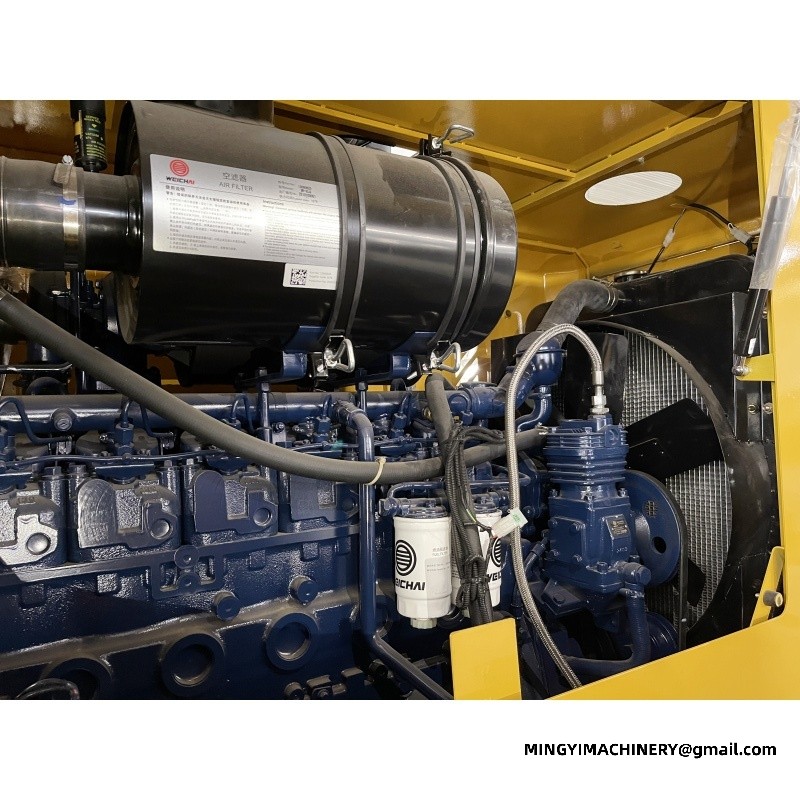
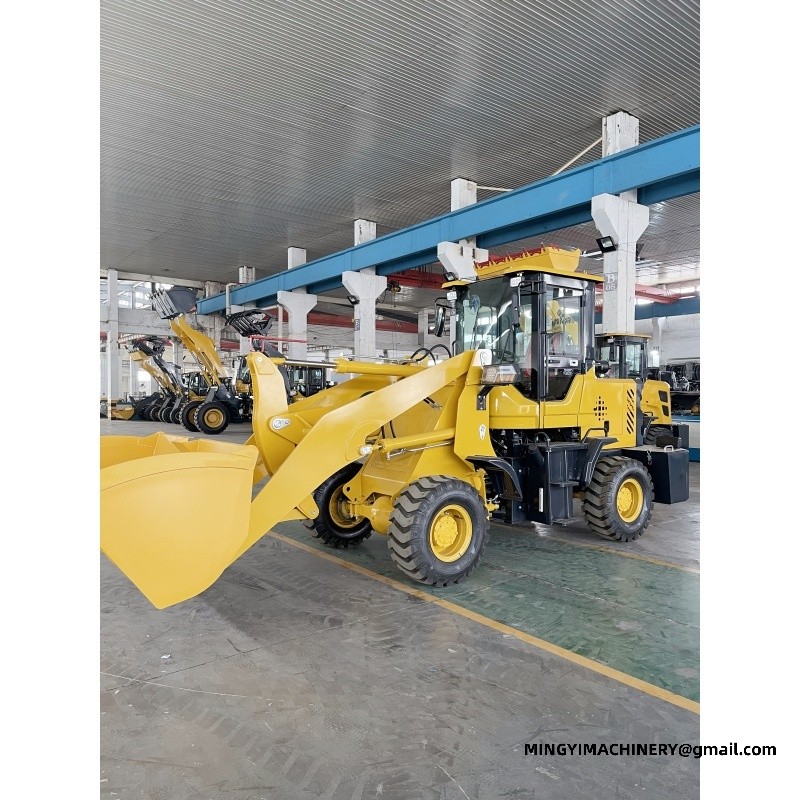
Photograph the specification plate, the cylinder markings and the frame plates on the day the machine arrives. Cylinders on this build are centre cylinder 45 / side cylinder 45; the pump is 40 pump (490 engine); 1045 pump (4102 turbo engine); the radiator is 4100 core (490 engine); 4105 core (4102T engine). Those three identify the build more reliably than any nameplate, because they are the parts that change between engine options.
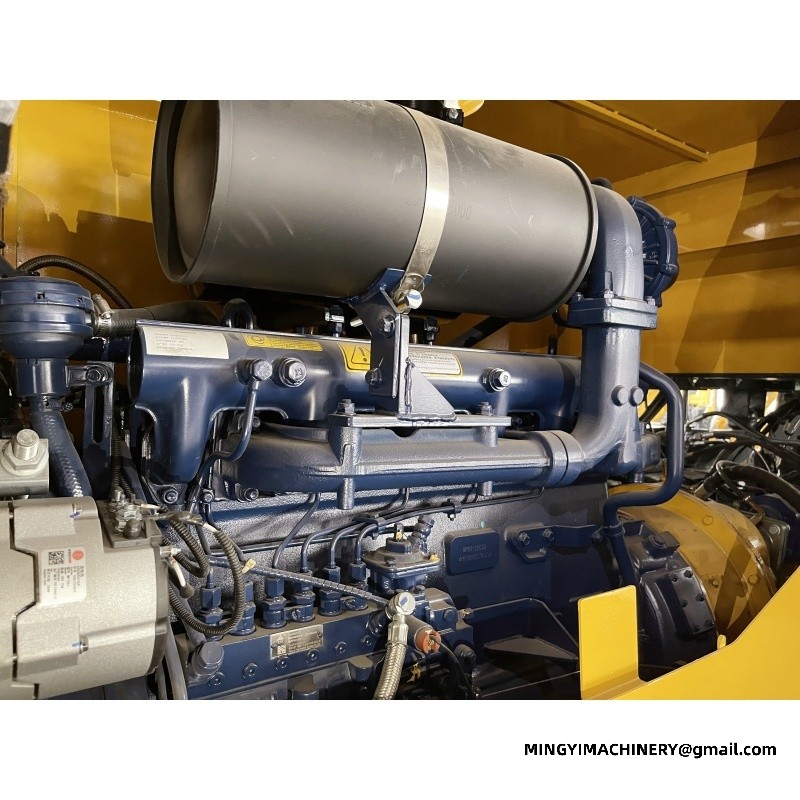
Then photograph the geometry, because it is what a later claim will turn on. Dump height 4.2 m at full lift, arm length 3.15 m, spacing 890 mm, track 1.5 m (wheel-side reduction axle); 1.45 m (Isuzu axle). If a machine ever fails to clear a body it was sold to clear, those four photographs are the difference between a warranty claim and an argument.
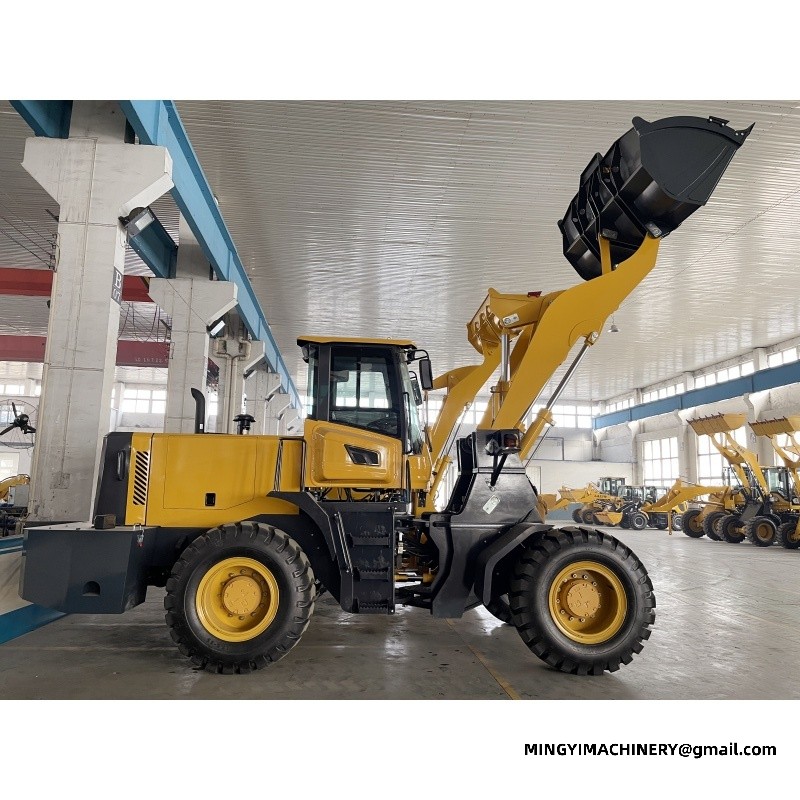
A starter spares box for the light-duty 3.2 m low-profile wheel loader is short: filters to match the 4100 core (490 engine); 4105 core (4102T engine) cooling package and the engine, a hose set for the centre cylinder 45 / side cylinder 40 cylinders, a pin and bush kit for the 890 mm boom mounts, and a cutting edge. On the heavy-duty 3.8 m small-frame wheel-side reduction wheel loader the same list applies with centre cylinder 45 / side cylinder 45, 890 mm and the 4100 core (490 engine); 4105 core (4102T engine) package.
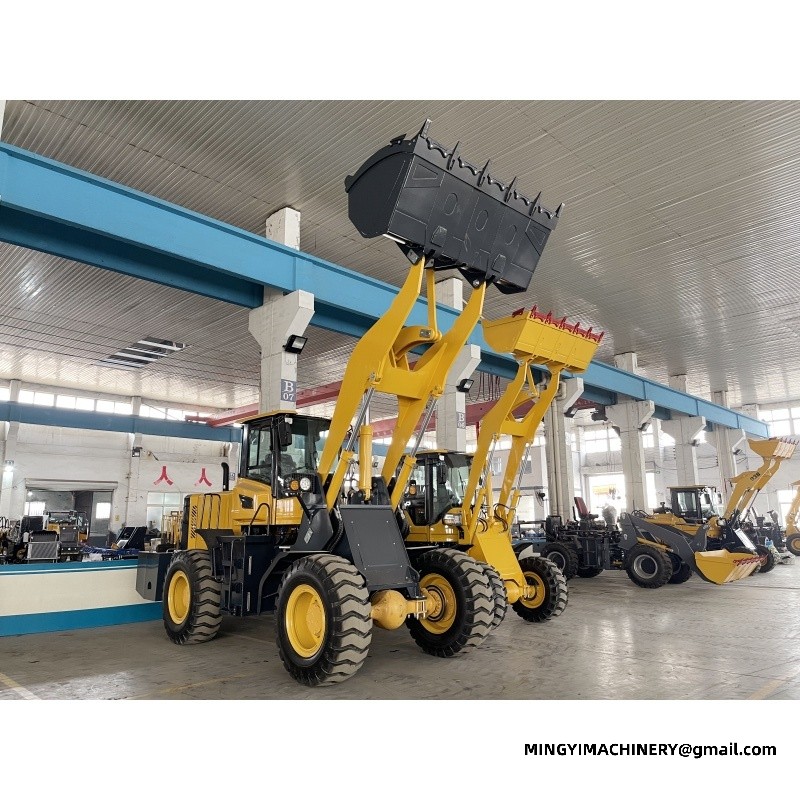
Beyond that, stock by consequence. A failed hose stops the machine for a day; a failed pump stops it for a week; a failed hinge plate stops it for a season. Filters and hoses are simple and universal enough to keep on site. Pumps — 40 pump (490 engine); 1045 pump (4102 turbo engine) and 316 pump on the light-duty 3.2 m low-profile wheel loader, 40 pump (490 engine); 1045 pump (4102 turbo engine) and 316 pump on the heavy-duty 3.8 m small-frame wheel-side reduction wheel loader — are worth one spare per fleet, not per machine.
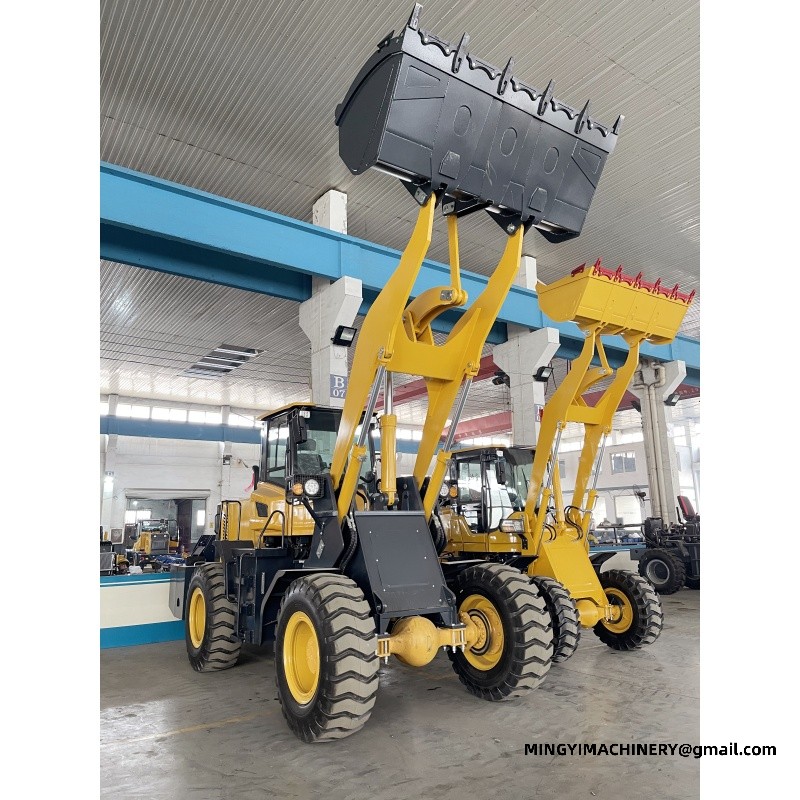
Articulated loaders wear at the pins, and pins wear because they were dry. Front plate 45 mm, rear plate 30 mm, and the cross-member behind them at 45 mm: that assembly is what steering works through, several hundred times a shift. Grease intervals are measured in hours, not months, on a machine doing short cycles.
The boom pivots are the second set, and they are the ones an operator feels first. A 2.63 m arm on a 900 mm spacing, lifted by centre cylinder 60 / side cylinder 50, loads its pins every pass. If the machine develops a clunk on lift, look there before looking at the pump — the pump, 2063 pump, is usually fine and the pin is usually not.
A machine that wanders on the road and feels vague in the turn has worn hinge pins. The plates are 25 mm front and 14 mm rear over a 25 mm cross-member; when the pin bores ovalise, the geometry the frame was built to hold is gone, and no amount of steering adjustment brings it back.
Check it by loading the bucket, holding the machine on a slope and watching the joint while an operator rocks the steering. Movement there is wear; movement at the rear, over the 230 mm high x 800 mm wide section, is a different and more serious problem. Catching the first case takes a set of pins; missing it takes a frame.
How do I clean the radiator on a wheel loader supplier working in dust?
From the clean side outwards, against normal airflow, so debris comes out rather than being pushed deeper. The core on this build is 4100 core; blocked fins are the usual cause of gradual power loss.
Where do frames on a wheel loader supplier crack first?
Weld toes at the cross-member and around the rear hinge. The section is 280 mm high x 800 mm wide over a 30 mm member on this build; check both monthly on hard duty.
What extra care does a wheel loader supplier need in dusty work?
Core cleaning at the end of every shift and more frequent air filter changes. The core is 4105 core; a blocked one shows up as a slow loss of power rather than a stoppage.
Can a wheel loader supplier work safely on a slope?
Track decides that: 1.2 m (Isuzu axle); 1.3 m (wheel-side reduction axle) on this build, with the wider figure belonging to the hub-reduction axle. Work up and down the slope rather than across it.
What should I check before the first start of a wheel loader supplier?
Coolant level in the 4100 core (490 engine); 4105 core (4102T engine) package, oil level, battery charge to the 60 Ah (490 engine); 80 Ah (4102 turbo engine) rating, and a walk-round for anything loosened in transit. Then run it light for ten minutes before loading it.
How should a wheel loader supplier be stored for a season?
Isolate the battery, which is rated 60 Ah (490 engine); 80 Ah (4102 turbo engine), grease the pins, and protect the cylinder rods on the centre cylinder 45 / side cylinder 45. Machines stored outside suffer at the pins and the electrics.
Why does my wheel loader supplier wander on the road?
Worn hinge pins. Load the bucket, hold the machine on a slope and watch the joint while the steering is rocked; movement there is wear behind the 30 mm and 20 mm plates.
Keep this page against the delivery paperwork. Bucket 0.4 m³, lift 3.8 m, track 1.5 m (wheel-side reduction axle); 1.45 m (Isuzu axle) and cylinders centre cylinder 45 / side cylinder 45 are the four rows that settle any later question about what was actually ordered.
Hot, humid and dusty conditions around Wheel Loader Supplier: Keeping One Build in Stock
Dust is the enemy of every rotating joint. Keeping the radiator and the air intake of Wheel Loader Supplier: Keeping One Build in Stock clean, and cleaning them before they are blocked rather than after, is what separates a machine that lasts from one that overheats.
Fuel, oil and fluid quality for Wheel Loader Supplier: Keeping One Build in Stock
Most engine trouble starts with what went into the tank. Clean fuel, stored properly and filtered before it reaches Wheel Loader Supplier: Keeping One Build in Stock, prevents more downtime than any other single habit an owner can adopt.
Contact MINGYI Machinery for the current wheel loader lineup, configuration options and a formal specification for your market. E-mail: sales@mingycn.com | LINE (ID): mingyicn
Construction Wheel Loader: Specifying for Truck Boards · Front End Loader Manufacturer: Weld and Plate Records · Wheel Loader for Aggregate Yard: Dust, Fines and Heavy Builds · Wheel Loader









