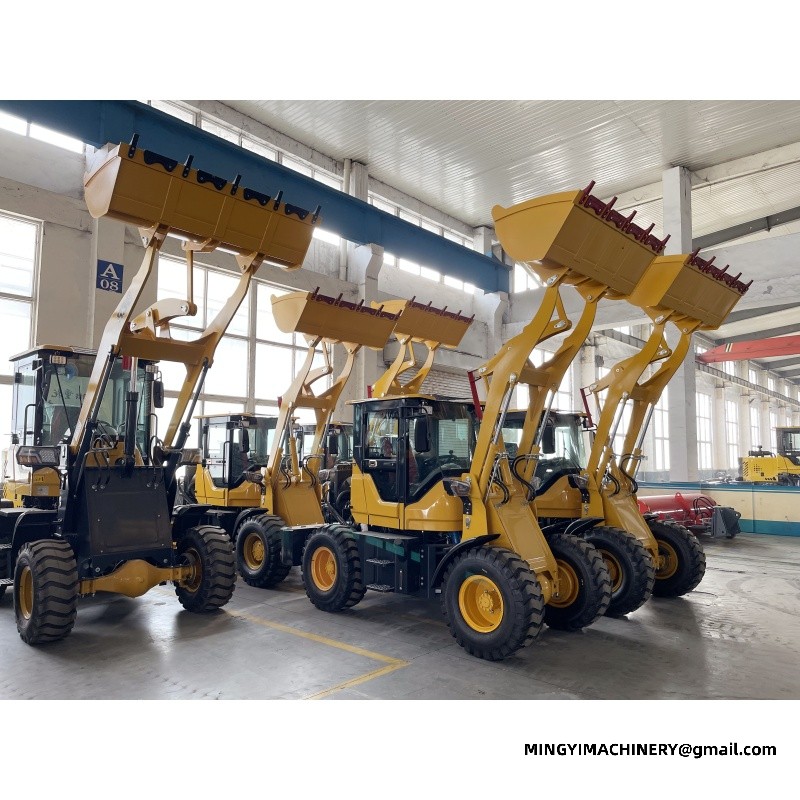
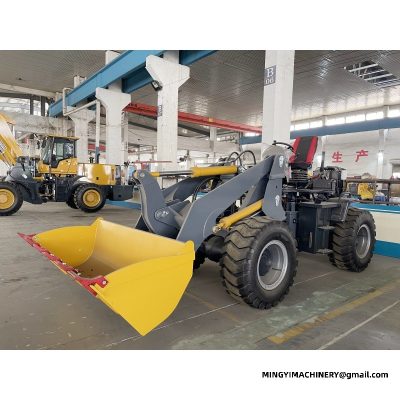
Owners judge a front end loader manufacturer on things a brochure never lists. Does it start on a cold morning. Does it clear the body it was bought to clear. Does the steering still feel tight after two seasons. Those outcomes are decided by published figures: battery 80 Ah, dump height 4.5 m, hinge plates 45 mm front and 30 mm rear. This page takes each of them in turn, using two builds from the range — the light-duty 4.5 m medium-frame wheel-side reduction wheel loader and the standard 2.4 m low-profile wheel loader — to show what the numbers mean once the machine is working.
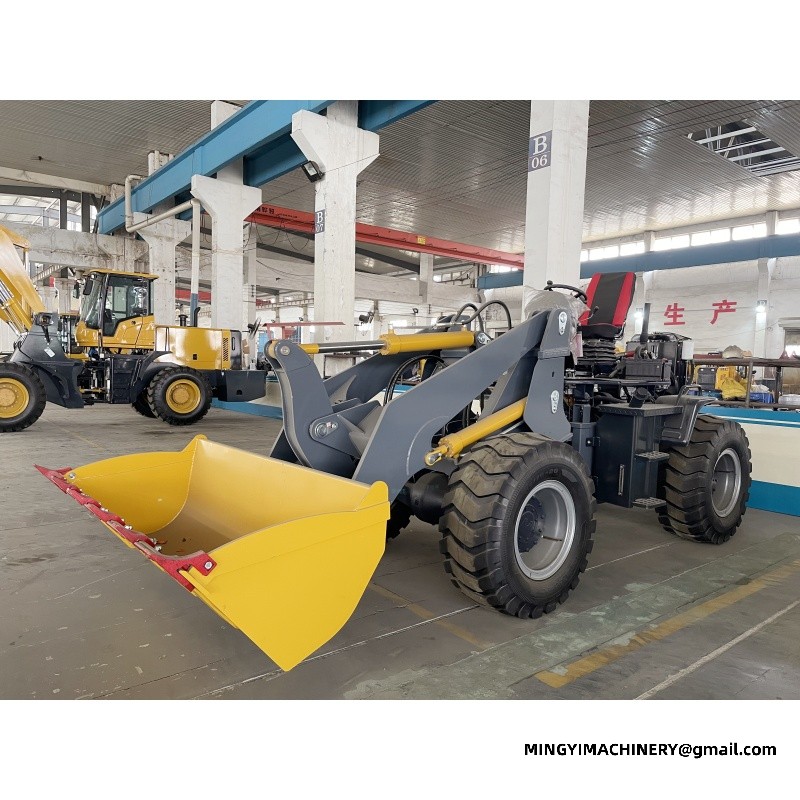
Two axle families appear across the range and the choice is about ground, not preference. Track width is the visible difference — 1.6 m on the light-duty 4.5 m medium-frame wheel-side reduction wheel loader against 1.2 m (Isuzu axle); 1.3 m (wheel-side reduction axle) on the standard 2.4 m low-profile wheel loader — but the mechanical difference is where the final reduction happens. An Isuzu-pattern axle reduces at the differential and sends torque down the shafts; a wheel-side reduction axle reduces at the hub.
Hub reduction is the right answer for soft lanes, ramps, uncompacted yards and pits, because torque arrives at the wheel instead of through a faster final drive that can spin. It is the wrong answer for long, fast, level transfers, where the extra unsprung mass and the lower top speed effort more than the traction gains. Read the track figures with the footprint — 4.7 m on the light-duty 4.5 m medium-frame wheel-side reduction wheel loader, 3.5 m on the standard 2.4 m low-profile wheel loader — and the choice usually makes itself.
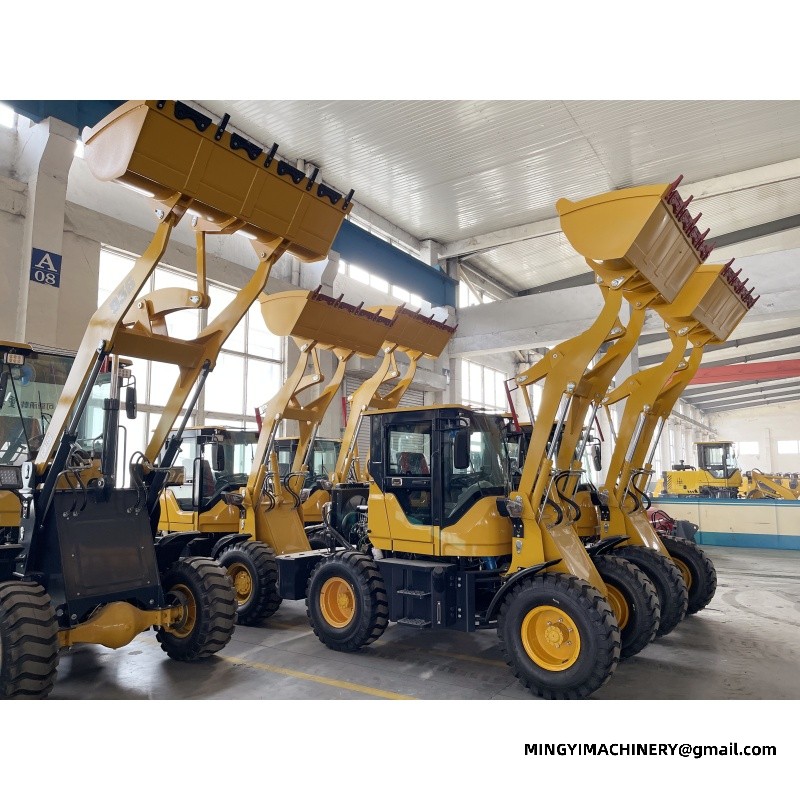
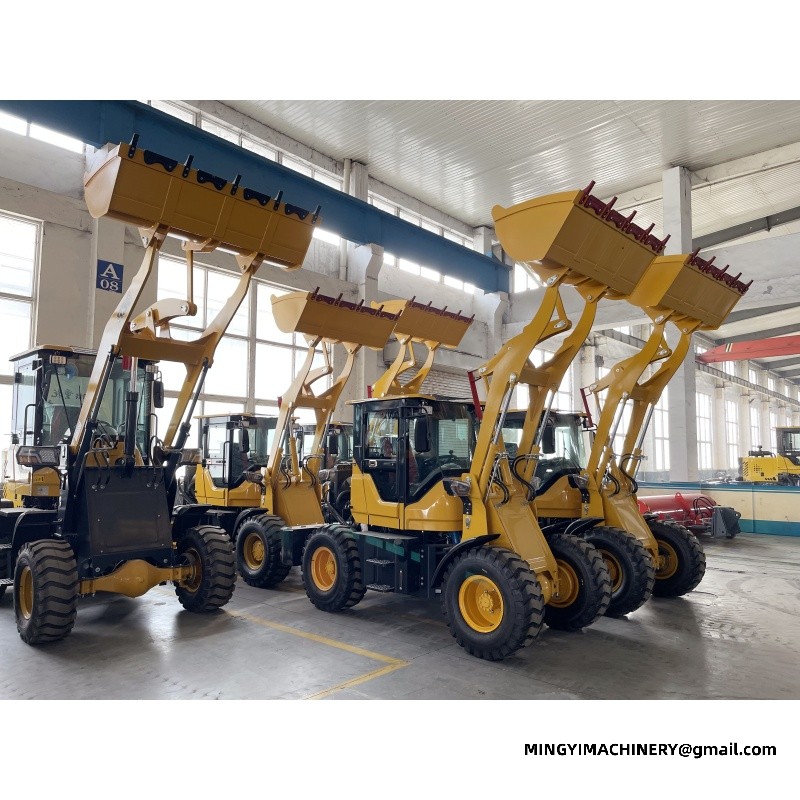
Work out how many passes fill the body, then work backwards. A body that takes four passes from a 0.38 m³ bucket will take three from 0.38 m³, but only if the machine can clear the board, and that is the part people get wrong. The light-duty 3.5 m small-frame wheel-side reduction wheel loader reaches 3.5 m; the light-duty 3.2 m small-frame wheel-side reduction wheel loader reaches 3.2 m. If the board sits between those two figures, the capacity comparison is academic.
The second check is whether the machine can dump without striking. Dump height is measured at the bucket edge with the arm at full lift, so the clearance you actually have is that figure less the height of the material crest. On the light-duty 3.5 m small-frame wheel-side reduction wheel loader the arm is 2.62 m and the spacing between the arms is 890 mm; a longer arm with a wider spacing tips a bucket cleanly instead of rolling it off the corner.
Fuel capacity on this range is specified per frame rather than per model: 70 L (75# large tank) on the light-duty 4.5 m medium-frame wheel-side reduction wheel loader and 30.8 L (48# large tank, 20.5/70-16 tyres); 24.6 L (48# small tank, 8.25-16 tyres) on the standard 2.4 m low-profile wheel loader. Both are intended to cover a full shift at working throttle, and both assume the machine is not idling for hours between loads — idling is where a "full day" tank becomes a half-day tank.
Plan refuelling around the tank, not around the clock. On the light-duty 4.5 m medium-frame wheel-side reduction wheel loader with 70 L (75# large tank) and a 0.52 m³ bucket at 4.5 m, a day of continuous loading will run the tank down; on the standard 2.4 m low-profile wheel loader with 30.8 L (48# large tank, 20.5/70-16 tyres); 24.6 L (48# small tank, 8.25-16 tyres) and 0.3 m³ at 2.4 m, the same day leaves allowance. Where a site has no bowser, that allowance is the difference between finishing at four and stopping at two.
| Specification extract — light-duty 3.2 m small-frame wheel-side reduction wheel loader | |
|---|---|
| Bucket capacity | 0.38 m³ |
| Dump height | 3.2 m |
| Track width | 1.5 m (wheel-side reduction axle); 1.45 m (Isuzu axle) |
| Boom arm thickness | 25 mm |
| Boom arm width | 370 mm |
| Boom arm length | 2.3 m |
| Boom arm centre distance | 890 mm |
| Cross-member thickness | 25 mm |
| Front hinge plate thickness | 25 mm |
| Rear hinge plate thickness | 14 mm |
| Rear frame section | 280 mm high x 800 mm wide |
| Hydraulic cylinders | centre cylinder 45 / side cylinder 40 |
| Fuel tank | 64.7 L (75# small tank) |
| Battery | 60 Ah (490 engine); 80 Ah (4102 turbo engine) |
| Front wheel to counterweight | 3.8 m |
| Radiator | 4100 core (490 engine); 4105 core (4102T engine) |
| Work pump | 40 pump (490 engine); 1045 pump (4102 turbo engine) |
| Travel pump | 316 pump |
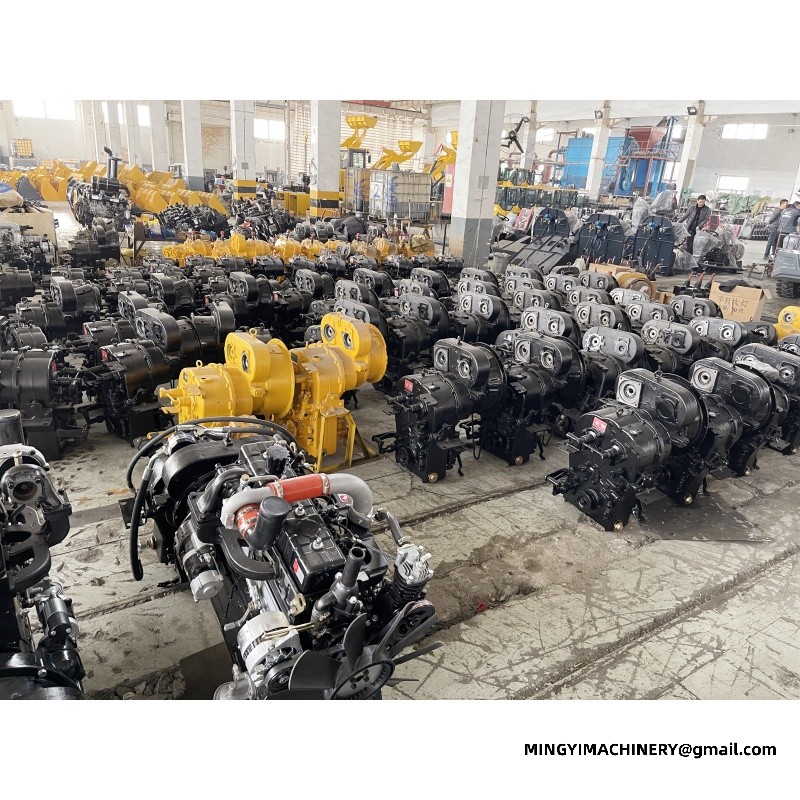
Photograph the specification plate, the cylinder markings and the frame plates on the day the machine arrives. Cylinders on this build are centre cylinder 45 / side cylinder 40; the pump is 40 pump (490 engine); 1045 pump (4102 turbo engine); the radiator is 4100 core (490 engine); 4105 core (4102T engine). Those three identify the build more reliably than any nameplate, because they are the parts that change between engine options.
Then photograph the geometry, because it is what a later claim will turn on. Dump height 3.5 m at full lift, arm length 2.62 m, spacing 890 mm, track 1.5 m (wheel-side reduction axle); 1.45 m (Isuzu axle). If a machine ever fails to clear a body it was sold to clear, those four photographs are the difference between a warranty claim and an argument.
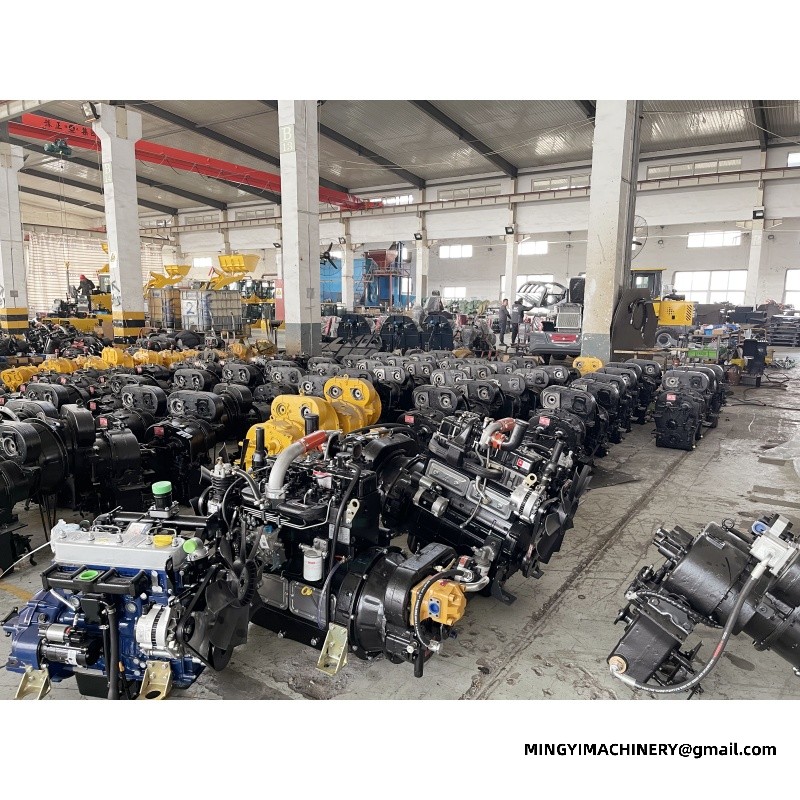
Daily: walk the machine, look at the ground under it, check the coolant level in the 4105 core package, and grease the hinge pins. The hinge is where wear starts, and on the light-duty 4.5 m medium-frame wheel-side reduction wheel loader those are 45 mm front and 30 mm rear plates over a 45 mm cross-member — a greasing interval missed there takes pins and bores, not just grease.
Weekly: check the centre cylinder 60 / side cylinder 50 cylinder rods for scoring, the hoses for chafe, and the 2063 pump and 25 pump connections for weeping. Monthly: torque the boom mount pins to the 960 mm spacing and inspect the cutting edge. On the standard 2.4 m low-profile wheel loader the same schedule applies with 4100 core, centre cylinder 40 / side cylinder 40, 32 pump and 680 mm. None of it is skilled work, and all of it is simpler than the failure it prevents.
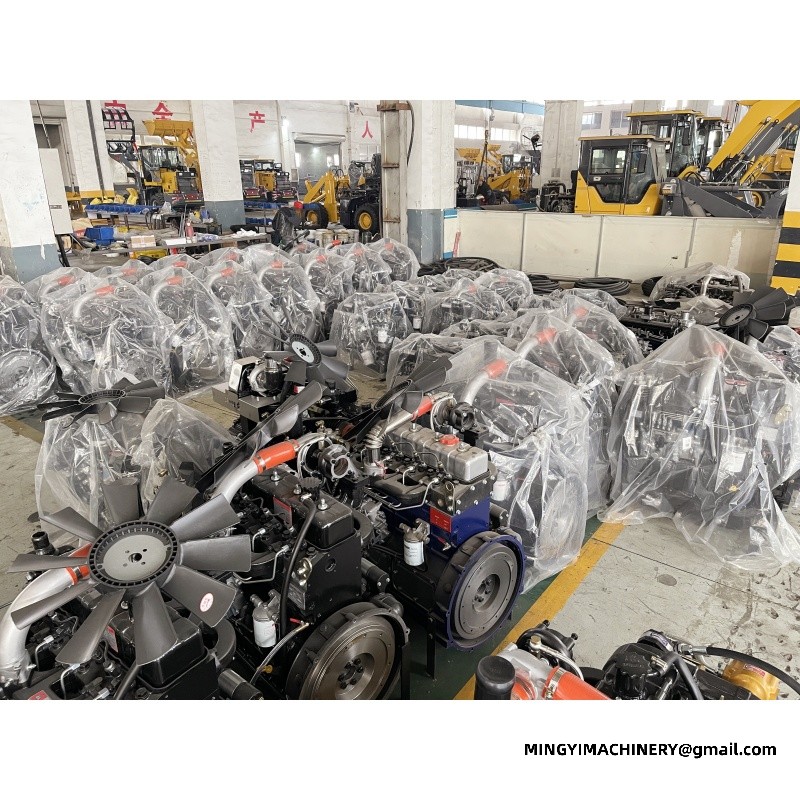
A specification is only as good as the figures on it. Before comparing numbers between suppliers, make sure the same figures appear on both: bucket 0.3 m³, dump height 2.4 m, boom section 280 mm over 20 mm of wall, hinge plates 16 mm front and 16 mm rear, cross-member 16 mm. If a sheet will not give you those five, it is not a specification, it is a description.
The second thing a sheet should let you check is which engine the figures belong to. Where a build offers two engines, the pump and radiator change with it: this one lists 32 pump and 4100 core. Asking for the build by engine, not by model name, is the single change that prevents most delivery disputes.
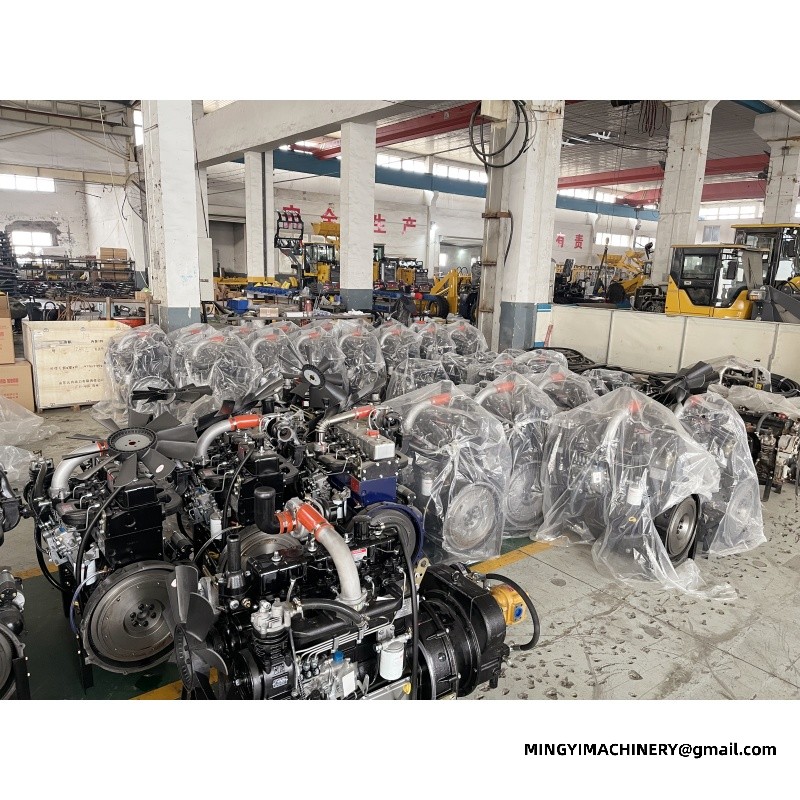
Indoor work changes the priority completely. Height clearance replaces dump height as the first figure, and the machine has to lift its load under a lintel rather than over a truck board. The standard 2.4 m low-profile wheel loader reaches 2.4 m, which is the outdoor figure; what matters indoors is whether that height is usable in the space available.
Length and track matter next. 3.5 m from front wheel to counterweight and 1.2 m (Isuzu axle); 1.3 m (wheel-side reduction axle) of track. Ventilation matters too, which is an engine question rather than a frame one, and the cooling specification is the place it shows: 4100 core, sized for air that is not moving. Where the machine works inside, the larger core is the safer specification even in a temperate climate.
A loader standing idle while a truck reverses is the most common waste on a site, and it is usually a layout problem rather than a machine problem. What the machine contributes is turn radius and visibility, and both come out of the dimensions: 4.1 m from front wheel to counterweight, 1.5 m (wheel-side reduction axle); 1.45 m (Isuzu axle) of track, and a rear frame section of 280 mm high x 800 mm wide. A shorter machine turns inside its own length and works a tighter bay.
The other half is dump geometry. With 3.8 m of clearance and a 2.61 m arm, the light-duty 3.8 m small-frame wheel-side reduction wheel loader can stand back from the body and still place material where the driver wants it, which is safer than crowding the board. The light-duty 4.5 m medium-frame wheel-side reduction wheel loader reaches 4.5 m with a 3.35 m arm; on a narrow bay the shorter of the two may be the faster machine even if it holds less.
How much clearance do I need over a truck board?
Dump height is measured at the bucket edge, so subtract the crest of the material. The light-duty 3.2 m small-frame wheel-side reduction wheel loader gives 3.2 m and the light-duty 4.2 m small-frame wheel-side reduction wheel loader gives 4.2 m; the board has to sit under the lower of the two with allowance.
What extra care does a front end loader manufacturer need in dusty work?
Core cleaning at the end of every shift and more frequent air filter changes. The core is 4100 core (490 engine); 4105 core (4102T engine); a blocked one shows up as a slow loss of power rather than a stoppage.
Can a front end loader manufacturer be used with forks?
Yes, and the load centre moves forward, so capacity drops. Check the boom section, 370 mm wide with 890 mm of spacing, before hanging a long carriage off it.
What should I check before running a grapple on a front end loader manufacturer?
Side load. A grapple levers the arm in a way a bucket does not, so the 20 mm wall and 280 mm section matter more than capacity. The hinge plates at 16 mm take the reaction.
My front end loader manufacturer overheats every afternoon. What is the cause?
In order of likelihood: blocked fins on the 4100 core (490 engine); 4105 core (4102T engine) core, a cap that will not hold pressure, a fan drive problem, or genuine overloading. Clean the core first, from the clean side.
Why does my front end loader manufacturer turn over slowly on cold mornings?
Cranking capacity falls with temperature, and the rating is 60 Ah (490 engine); 80 Ah (4102 turbo engine) on this build. Where two engines are offered the higher rating belongs to the turbo; specify it if the machine starts cold or stops often.
How often will a front end loader manufacturer need refuelling?
The tank is 64.7 L (75# small tank), sized for a full shift at working throttle without a mid-day stop. Machines on short cycles with a lot of idling will use more than the figure suggests.
Two builds, light-duty 4.5 m medium-frame wheel-side reduction wheel loader and standard 2.4 m low-profile wheel loader, have carried the comparisons on this page. The same rows can be produced for any machine in the range, and for the engine options that change the pump, radiator and battery with them.
Pre-delivery inspection before Front End Loader Manufacturer: Weld and Plate Records leaves the shop
A machine should be inspected while it is still on our floor rather than after it lands. For Front End Loader Manufacturer: Weld and Plate Records that means the engine is run to temperature, the hydraulics are cycled through full travel, and every function is checked against the build sheet before the crate is closed.
Commissioning Front End Loader Manufacturer: Weld and Plate Records on site
Commissioning is where the specification meets the ground. The settings chosen for Front End Loader Manufacturer: Weld and Plate Records are confirmed against the actual site, and the working pattern is adjusted before the machine is asked for a full day.
Contact MINGYI Machinery for the current wheel loader lineup, configuration options and a formal specification for your market. E-mail: sales@mingycn.com | LINE (ID): mingyicn
Heavy Duty Wheel Loader: Steel That Takes the Duty · Compact Wheel Loader: Small Builds, Daily Yard Work · China Wheel Loader Factory Supplier: Range, Spares, Loading · Wheel Loader









