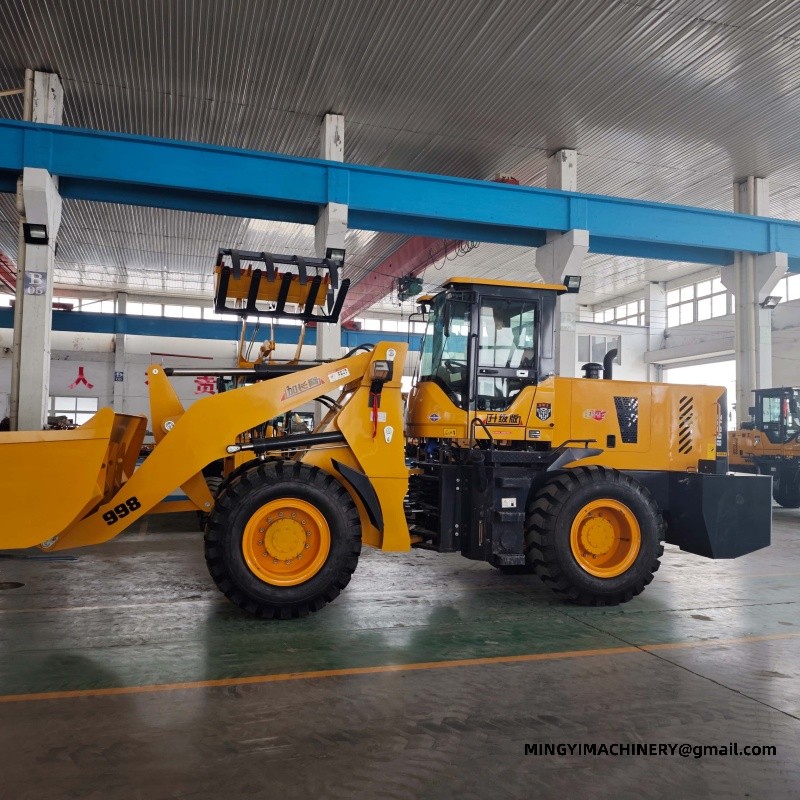
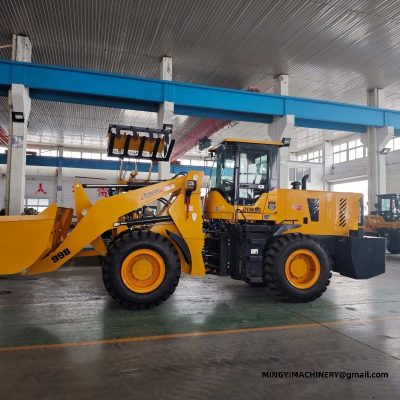
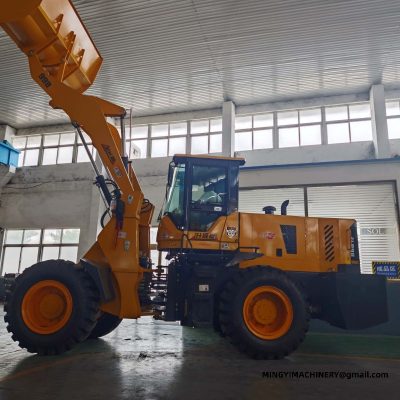
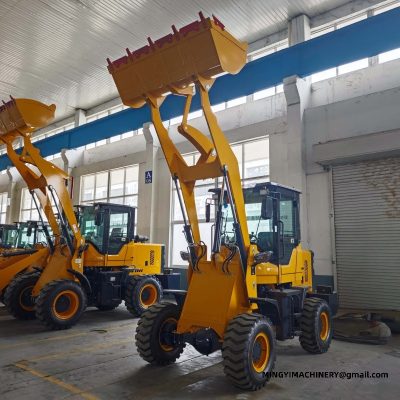
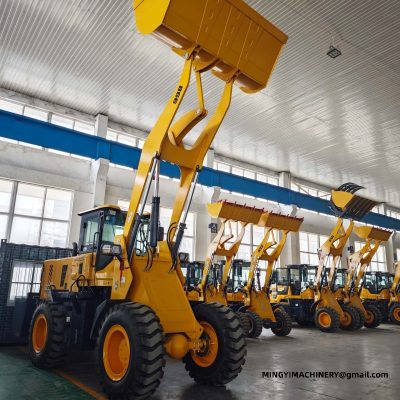
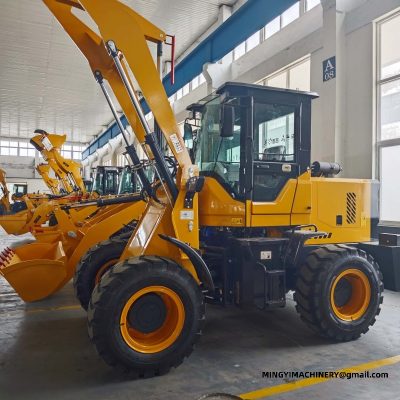
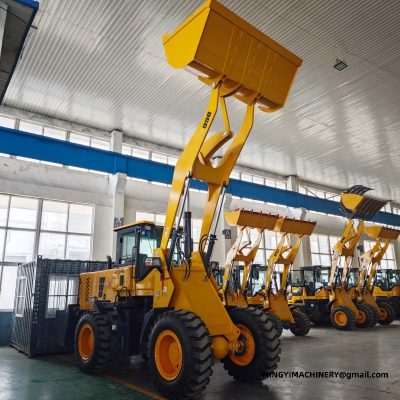
Most construction equipment loader problems are decided before the machine arrives. A bucket that is too big for the material, a dump height that misses the board by a hand's width, a hinge plate thinner than the duty needs — none of those can be fixed afterwards, and all of them are printed on the sheet. This page walks the figures in the order an owner meets them: what the machine carries, where it puts it, what wears first, and what to check before it leaves the factory. Two builds run through the comparisons, the standard 2.4 m low-profile wheel loader at 2.4 m and the light-duty 3.2 m low-profile wheel loader at 3.2 m.
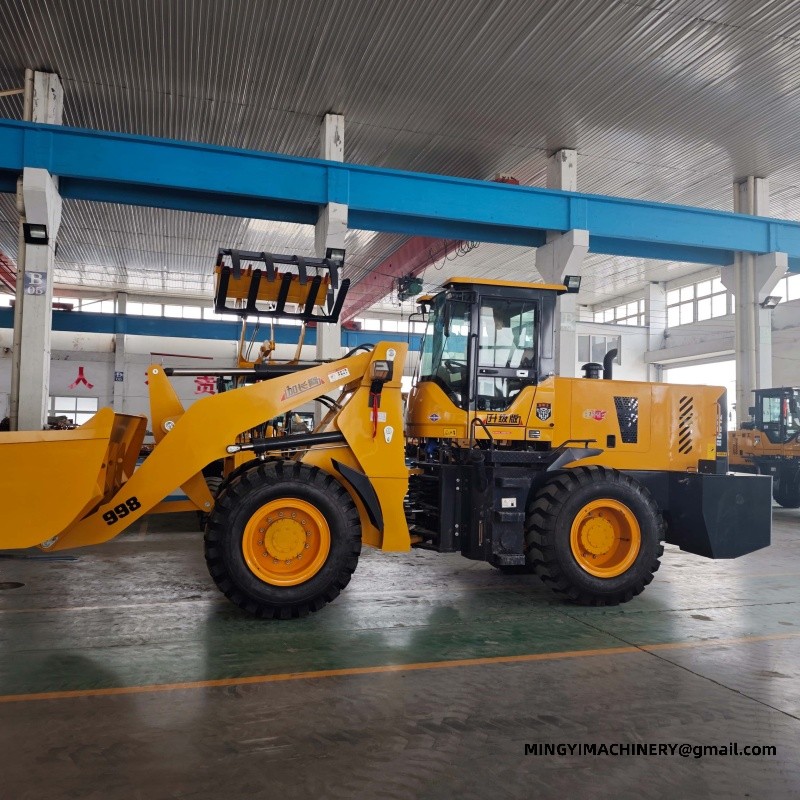
Cold cranking is the one specification that is easy to ignore and impossible to work around at five in the morning. This build is specified with 60 Ah (490 engine); 80 Ah (4102 turbo engine), matched to the engine it has to turn. Capacity in ampere-hours is only half the story; the other half is whether the rating is honest at low temperature, which is why the figure should be read together with the engine option.
Where two engines are offered, the turbo option asks for more from the battery and gets it: the higher rating in 60 Ah (490 engine); 80 Ah (4102 turbo engine) belongs to that build. If the machine will start cold, stop often, or run a short-haul duty with many restarts, specify the higher capacity at the order stage rather than discovering the limit in January.
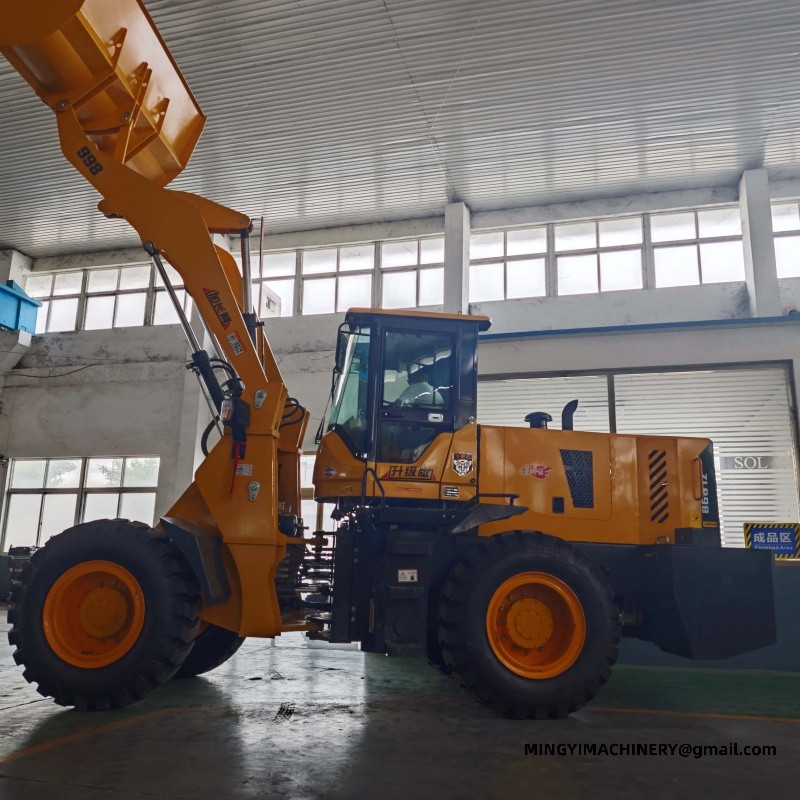
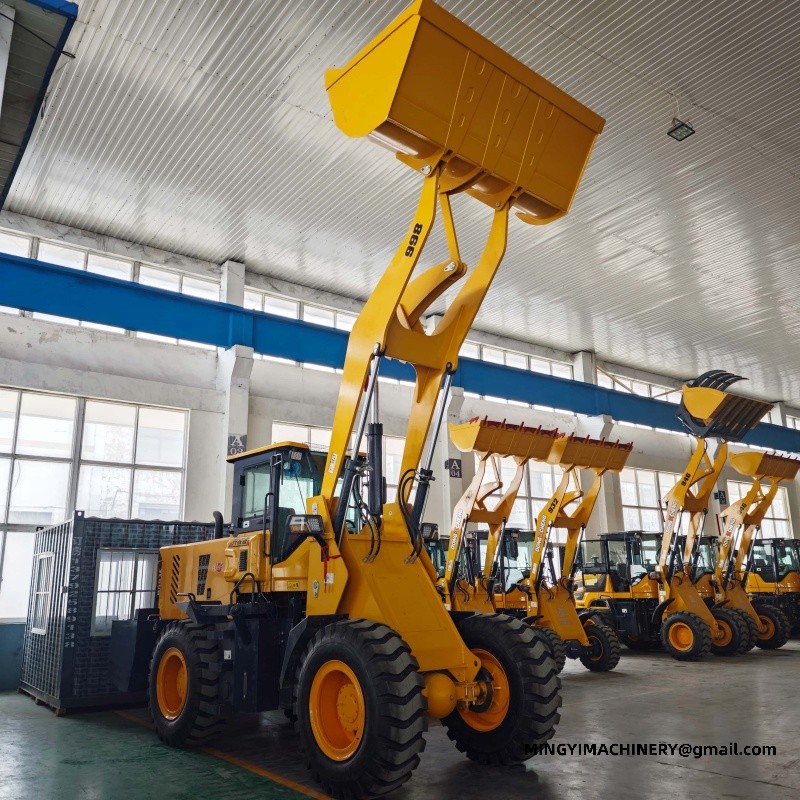
Bucket capacity decides how many passes you make; dump height decides whether the pass is possible at all. The standard 2.4 m low-profile wheel loader clears 2.4 m; the light-duty 3.2 m low-profile wheel loader clears 3.2 m. Measure the receiving body at the front board rather than the side, because side boards sit lower and a machine that clears the side can still clip the front when it slews under load.
That single measurement eliminates most of the range before anything else is discussed. A low pan mixer or a one-ton site truck is served by 2.4 m; a body-up site tipper needs more; a crusher feed hopper or a high-board highway truck needs 3.2 m. Get it wrong and no amount of bucket volume, engine power or pump flow rescues the machine — it simply cannot put material where it has to go.
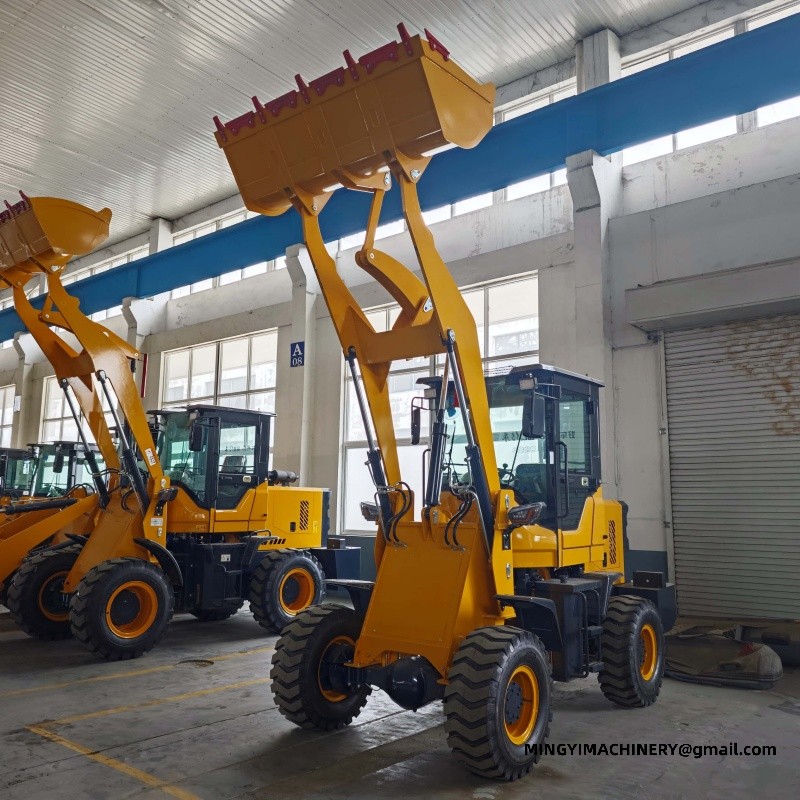
Two dimensions decide whether a loader is usable on a given site: the 3.5 m front-to-counterweight length of the standard 2.4 m low-profile wheel loader against the 4 m of the light-duty 3.2 m low-profile wheel loader, and track width at 1.2 m (Isuzu axle); 1.3 m (wheel-side reduction axle) against 1.5 m (wheel-side reduction axle); 1.45 m (Isuzu axle). Everything else on the sheet — engine, pump, cylinder bore — matters only after the machine fits.
The pairing matters too. A 0.3 m³ bucket lifted to 2.4 m on a 3.5 m footprint is a different machine in practice from a 0.38 m³ bucket at 3.2 m on 4 m, even where the track figures are close. Where access is tight, take the shorter machine and accept the extra pass; where the ground is open, take the longer one and take the stability it buys with the 14 mm rear hinge plate.
| Published build data — light-duty 3.2 m low-profile wheel loader | |
|---|---|
| Bucket capacity | 0.38 m³ |
| Dump height | 3.2 m |
| Track width | 1.5 m (wheel-side reduction axle); 1.45 m (Isuzu axle) |
| Boom arm thickness | 25 mm |
| Boom arm width | 370 mm |
| Boom arm length | 2.3 m |
| Boom arm centre distance | 890 mm |
| Cross-member thickness | 25 mm |
| Front hinge plate thickness | 25 mm |
| Rear hinge plate thickness | 14 mm |
| Rear frame section | 230 mm high x 800 mm wide |
| Hydraulic cylinders | centre cylinder 45 / side cylinder 40 |
| Fuel tank | 54 L (50# tank) |
| Battery | 60 Ah (490 engine); 80 Ah (4102 turbo engine) |
| Front wheel to counterweight | 4 m |
| Radiator | 4100 core (490 engine); 4105 core (4102T engine) |
| Work pump | 40 pump (490 engine); 1045 pump (4102 turbo engine) |
| Travel pump | 316 pump |
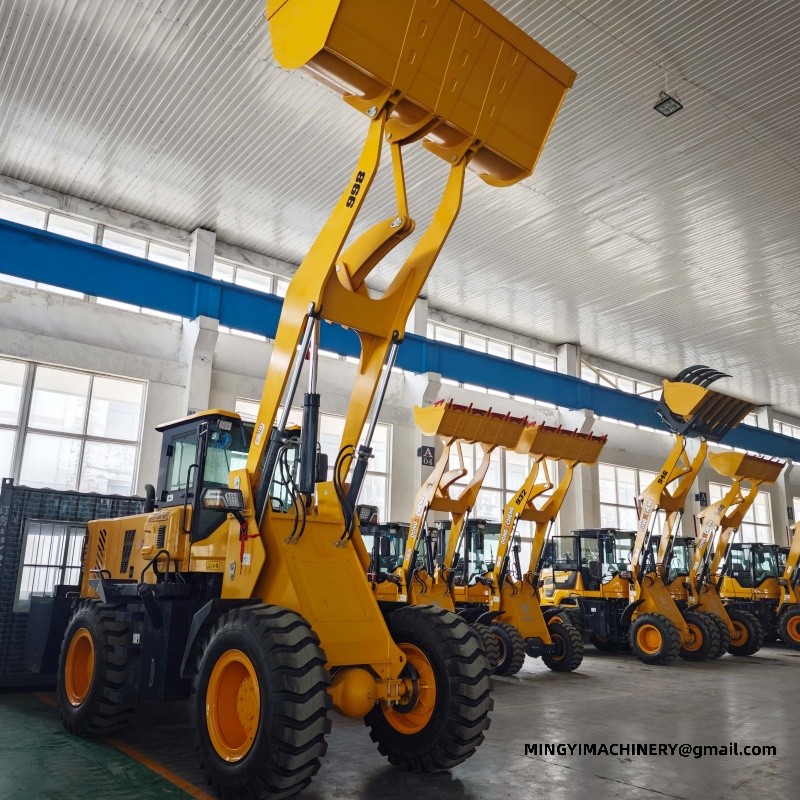
Two figures govern refuelling: tank capacity and consumption per hour, and only the first is published — 30.8 L (48# large tank, 20.5/70-16 tyres); 24.6 L (48# small tank, 8.25-16 tyres) on the standard 2.4 m low-profile wheel loader, 54 L (50# tank) on the light-duty 3.2 m low-profile wheel loader. Consumption depends on duty, and the duty differences between a 0.3 m³ bucket at 2.4 m and a 0.38 m³ bucket at 3.2 m are mostly about how hard the engine works per cycle.
What you can plan on: a machine working a short, level cycle will finish a shift on one tank; the same machine ripping from a face or loading up a ramp will not. If your site has no refuelling point, size the tank to the worst day rather than the average one, and specify the larger option where a build offers it. The cooling package is the other half of the same calculation — 4100 core on the standard 2.4 m low-profile wheel loader and 4100 core (490 engine); 4105 core (4102T engine) on the light-duty 3.2 m low-profile wheel loader — because a machine that stops for temperature stops wherever it is.
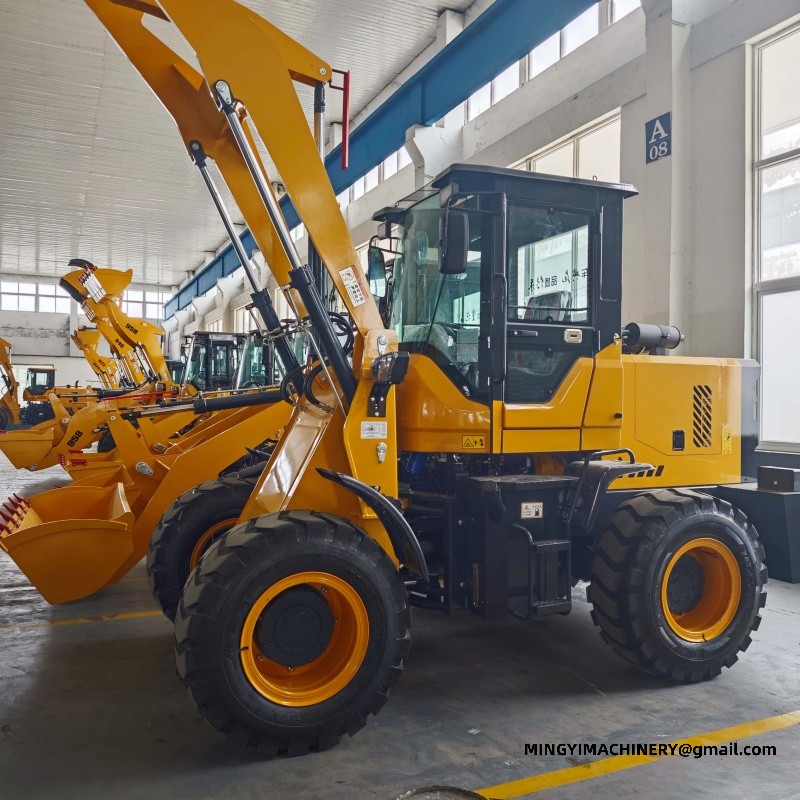
Frames do not usually fail at the boom. They fail at the hinge plates and the cross-member that ties them together, because that is where the articulated joint concentrates every steering and breakout load. On the standard 2.4 m low-profile wheel loader those figures are 16 mm front, 16 mm rear and 16 mm across; on the light-duty 3.2 m low-profile wheel loader they are 25 mm, 14 mm and 25 mm. The rear frame sections are 200 mm high x 750 mm wide and 230 mm high x 800 mm wide.
Why the rear plate is the one to watch even though it is the thinner of the two: the front hinge sees the boom loads, which are predictable and largely vertical; the rear sees articulation loads, which are sideways, repeated and often shock-loaded when an operator turns while breaking out. A machine specified with a 14 mm rear plate and a 25 mm cross-member will still be tight at year three in reverse-loading cycles where a 16 mm plate has started to ovalise its pin bores. If your fleet keeps machines past warranty, this is the row of the table to read twice.
Second-hand buyers check three things and none of them is the hour meter. They rock the hinge and look for movement at the 16 mm front and 16 mm rear plates. They look along the boom for twist, which is a 280 mm section and 680 mm spacing question. They start it cold and listen, which is a 45 Ah (24 V) question.
Steel thickness is what makes the first check pass or fail, and it is on the sheet: cross-member 16 mm, rear frame 200 mm high x 750 mm wide. A machine built with those figures published and verifiable is easier to sell than one with a lower hour count and no specification, because the buyer can check the claim instead of trusting it.
Overheating has four causes and only one of them is the radiator. In order of likelihood: blocked fins, a cap that will not hold pressure, a fan or drive problem, and genuine overloading. The core on this machine is 4100 core; clean it first, from the clean side outwards.
If the machine is genuinely overloaded, the cause is upstream of the cooling system. A bucket carrying more than 0.3 m³ of dense material, cycled without pause, produces more heat than the system was sized to reject. The fix is a smaller bucket or a slower cycle, not a bigger radiator — and the frame, at 16 mm across the member, is the part that suffers if nobody makes that decision.
A loader standing idle while a truck reverses is the most common waste on a site, and it is usually a layout problem rather than a machine problem. What the machine contributes is turn radius and visibility, and both come out of the dimensions: 4.1 m from front wheel to counterweight, 1.5 m (wheel-side reduction axle); 1.45 m (Isuzu axle) of track, and a rear frame section of 280 mm high x 800 mm wide. A shorter machine turns inside its own length and works a tighter bay.
The other half is dump geometry. With 4.2 m of clearance and a 3.15 m arm, the light-duty 4.2 m small-frame wheel-side reduction wheel loader can stand back from the body and still place material where the driver wants it, which is safer than crowding the board. The heavy-duty 4.5 m small-frame wheel-side reduction wheel loader reaches 4.5 m with a 3.15 m arm; on a narrow bay the shorter of the two may be the faster machine even if it holds less.
What do I check the day a construction equipment loader is delivered?
Bucket 0.3 m³, lift 2.4 m, cylinders centre cylinder 40 / side cylinder 40, track 1.2 m (Isuzu axle); 1.3 m (wheel-side reduction axle) and length 3.5 m. Photograph all five; they settle any later question about what was ordered.
How do I choose the axle on a construction equipment loader?
By surface. Track is 1.5 m (wheel-side reduction axle); 1.45 m (Isuzu axle) here; where two figures are listed the wider one is the hub-reduction axle for soft or rutted ground, the narrower one suits hard standing.
How do I keep one spares bin covering a mixed fleet?
Buy within one frame family and one engine. That keeps the 40 pump (490 engine); 1045 pump (4102 turbo engine) pump, the 4100 core (490 engine); 4105 core (4102T engine) core and the 60 Ah (490 engine); 80 Ah (4102 turbo engine) battery common across every machine.
Can a construction equipment loader be used with forks?
Yes, and the load centre moves forward, so capacity drops. Check the boom section, 280 mm wide with 680 mm of spacing, before hanging a long carriage off it.
What are the signs of a failing pump on a construction equipment loader?
Slow lift with normal breakout points to flow, which is the 40 pump (490 engine); 1045 pump (4102 turbo engine). Weak lift and weak breakout together point to pressure. Noise under load usually means aeration or a suction leak.
Can a construction equipment loader work safely on a slope?
Track decides that: 1.2 m (Isuzu axle); 1.3 m (wheel-side reduction axle) on this build, with the wider figure belonging to the hub-reduction axle. Work up and down the slope rather than across it.
What is involved in changing attachments on a construction equipment loader?
Mechanical mounting plus hydraulics. The cylinders are centre cylinder 45 / side cylinder 40 and the pump is 40 pump (490 engine); 1045 pump (4102 turbo engine); flow, not force, is usually what limits an added service.
Where the duty is continuous rather than intermittent, the cooling and electrical rows move up the list: 4100 core of core and 45 Ah (24 V) of battery on the standard 2.4 m low-profile wheel loader. Where it is intermittent, the frame rows do. Deciding which case you are in is most of the specification.
Planning the season around Construction Equipment Loader: Specs Worth Checking Twice
Workload is rarely even across the year, and the machine should be specified for the busy weeks. A Construction Equipment Loader: Specs Worth Checking Twice sized only for the average month will be the limiting factor exactly when the work is worth the most.
Wear items and spares worth holding for Construction Equipment Loader: Specs Worth Checking Twice
A spares list should follow the duty cycle. A Construction Equipment Loader: Specs Worth Checking Twice working every day in abrasive dust consumes filters and cutting edges far faster than the same machine used once a week, and the shelf should be stocked for the harder case.
Contact MINGYI Machinery for the current wheel loader lineup, configuration options and a formal specification for your market. E-mail: sales@mingycn.com | LINE (ID): mingyicn
Earthmoving Wheel Loader: Breaking Out of a Hard Face · Loader Machine Supplier: Parts Support After Delivery · Wheel Loader Fork Attachment: Matching Forks to the Boom Section · Wheel Loader









